Hieroglyphic
The formal, sacred script used for the temple setting.
Rosetta Stone Bibliographical Census
First Edition · 1858
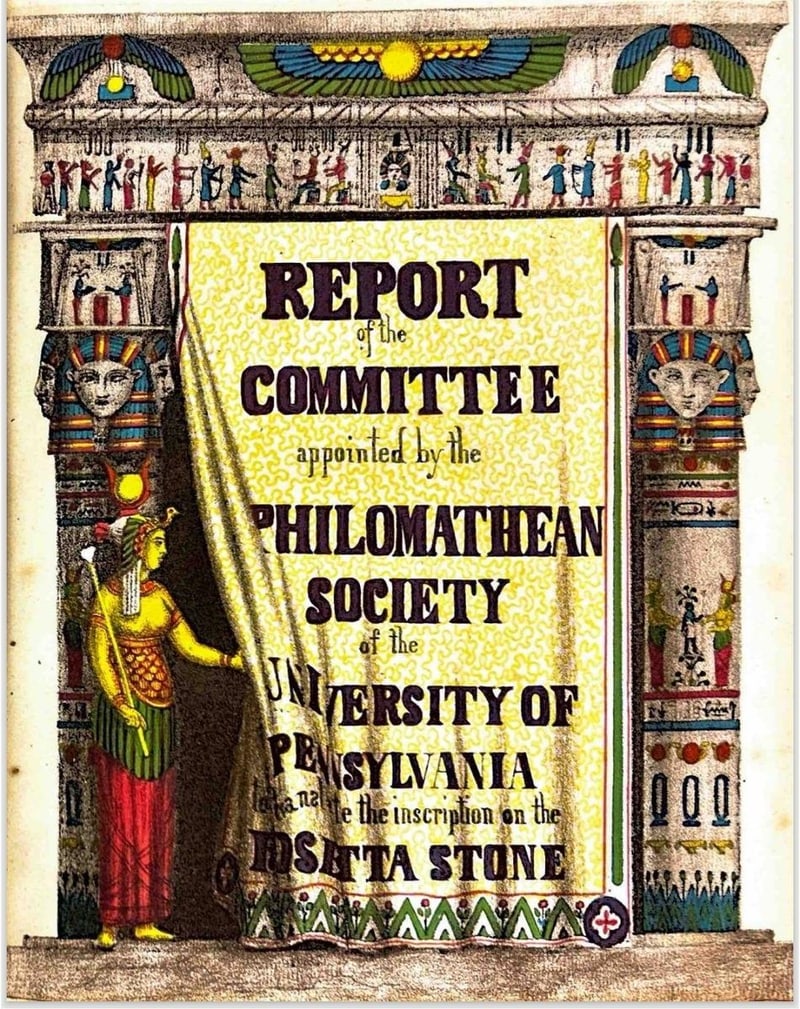
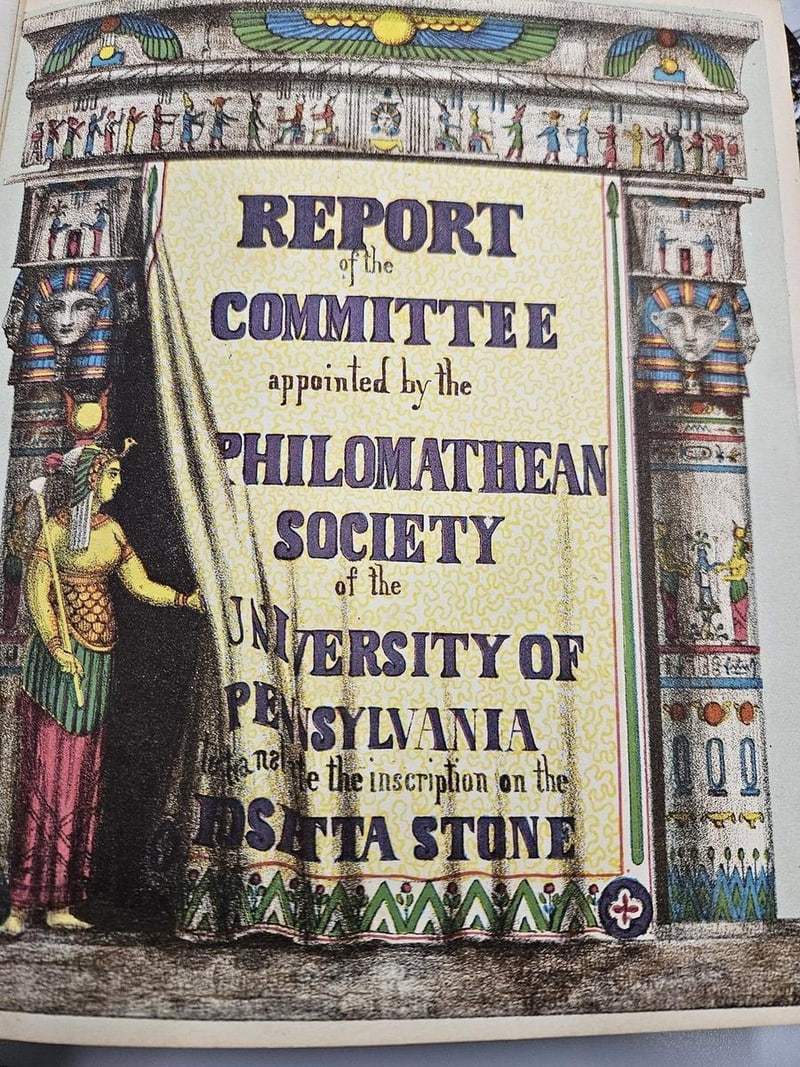
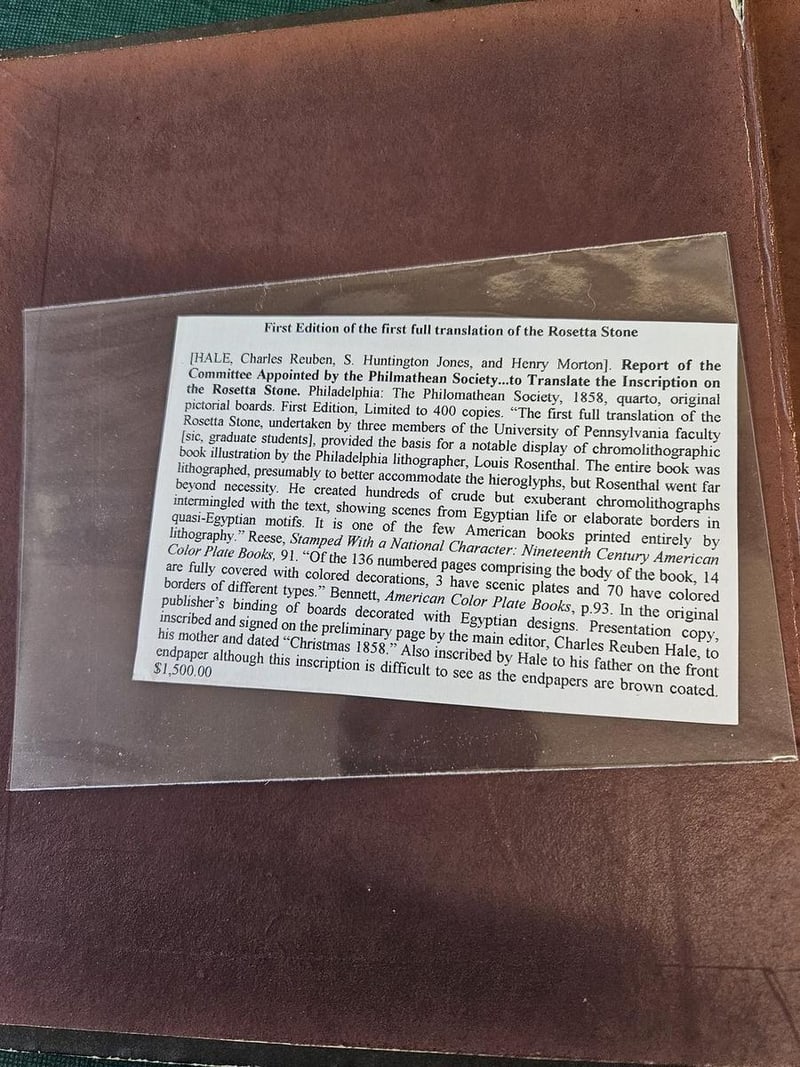
"Report of the Committee Appointed by the Philomathean Society of the University of Pennsylvania to Translate the Inscription on the Rosetta Stone" (1858)
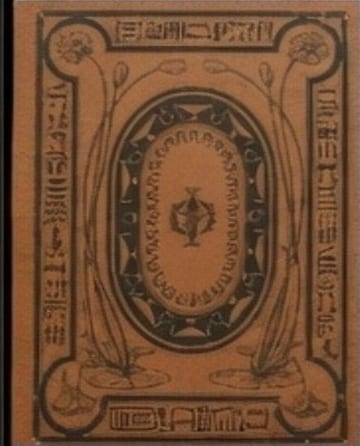
400 copies printed in 185890 surviving copies documented
This census follows the physical books: their bindings, inscriptions, ownership marks, institutional labels, and documented movement from one owner to the next.
In 1858, undergraduate members of the Philomathean Society at the University of Pennsylvania produced the first complete English translation of the Rosetta Stone's inscription — a student project bound in elaborately decorated boards, of which 400 copies were printed. Most were destroyed or lost. This census documents the surviving copies identified so far.
Ninety documented surviving copies. Five original binding variants. A visual record of the inscriptions, bookplates, library marks, and provenance that carried the books across more than a century and a half.
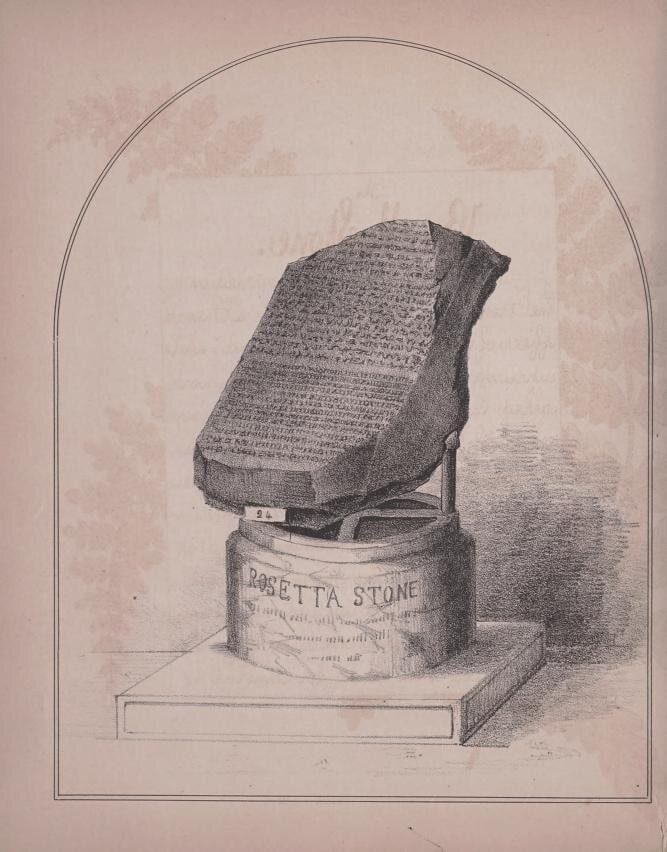
The Rosetta Stone is a surviving fragment of a larger stela. Its text records a decree issued at Memphis in 196 BCE by a council of Egyptian priests during the reign of Ptolemy V. It is not a lost story or a philosophical treatise. It is an official statement of royal benefaction, religious loyalty, and public commemoration.
The formal, sacred script used for the temple setting.
A cursive Egyptian script used in daily and administrative life.
The language of the Ptolemaic ruling administration.
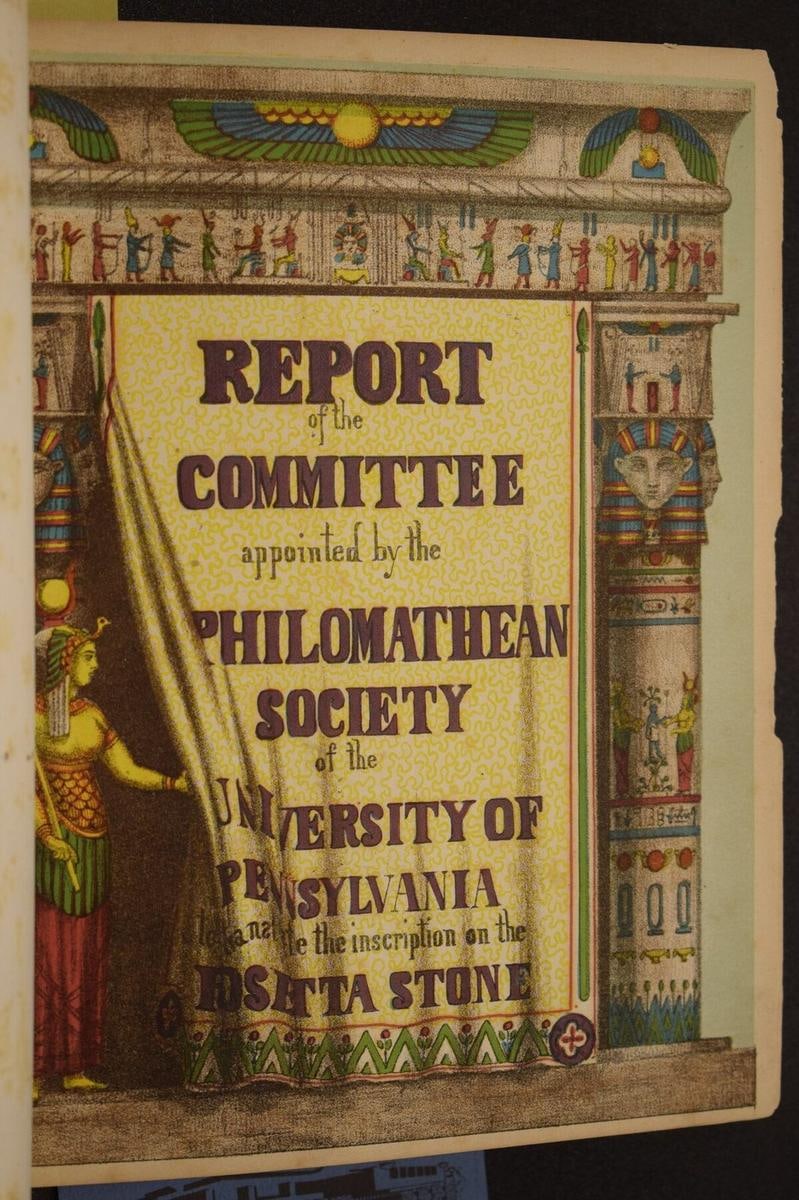
Hieroglyphic and Demotic both record Egyptian; the third text is Greek. Because scholars could read the Greek, the parallel versions supplied crucial points of comparison for recovering the Egyptian scripts. Building on the work of Thomas Young, Jean-François Champollion, and later Egyptologists, Charles R. Hale, Henry Morton, and Samuel Huntington Jones published the first complete English translation of the Stone in this elaborate 1858 Report.
Context: British Museum · University of Pennsylvania Archives · Penn Libraries digital edition
The surviving books document the result; Henry Morton’s later account supplies the principal firsthand narrative of the work. Broader trade history places Rosenthal’s printing within Philadelphia’s rapidly expanding lithographic industry.
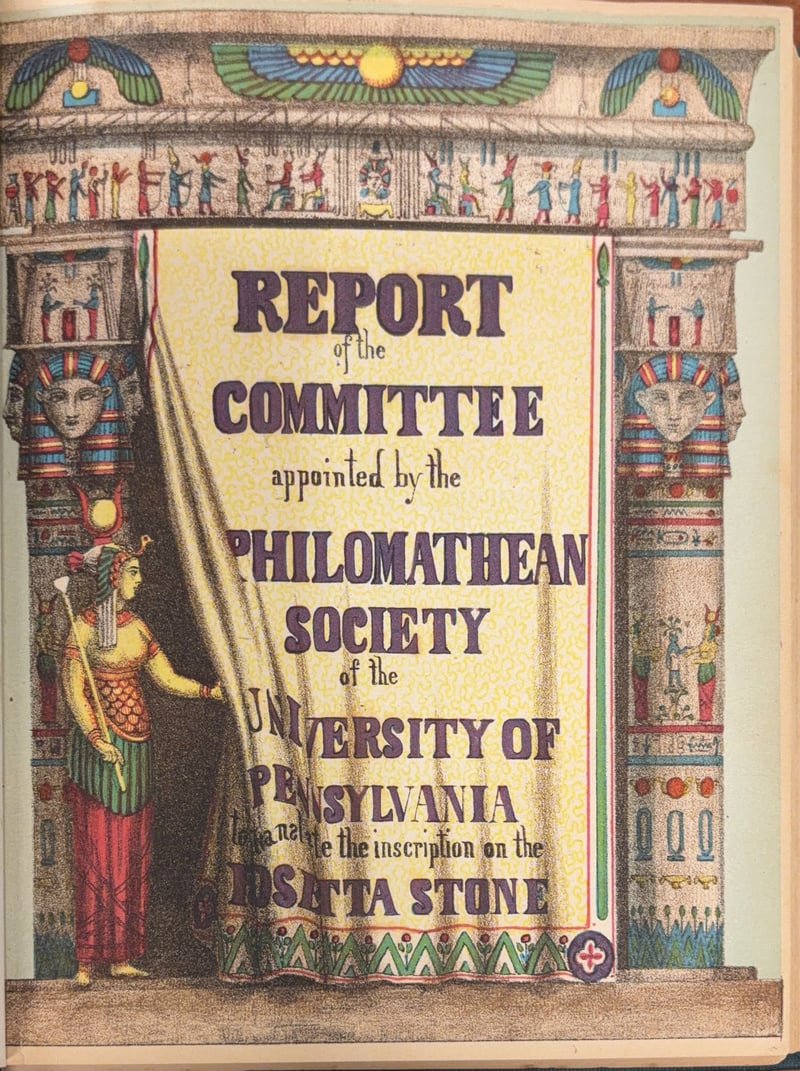
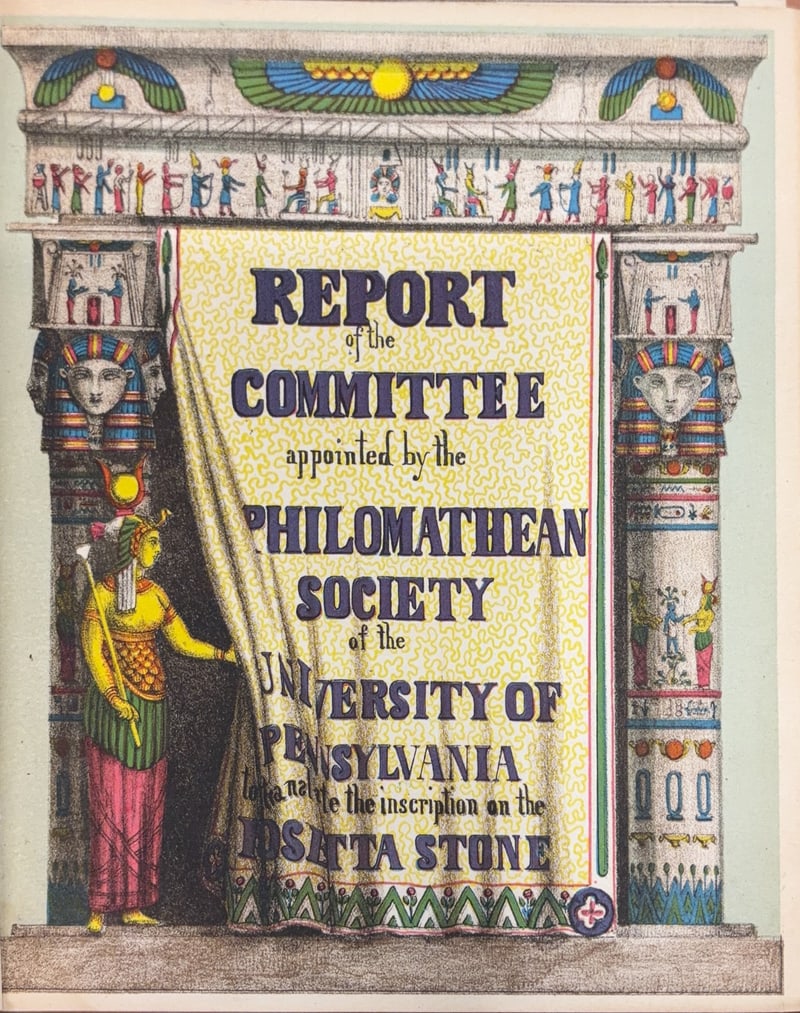
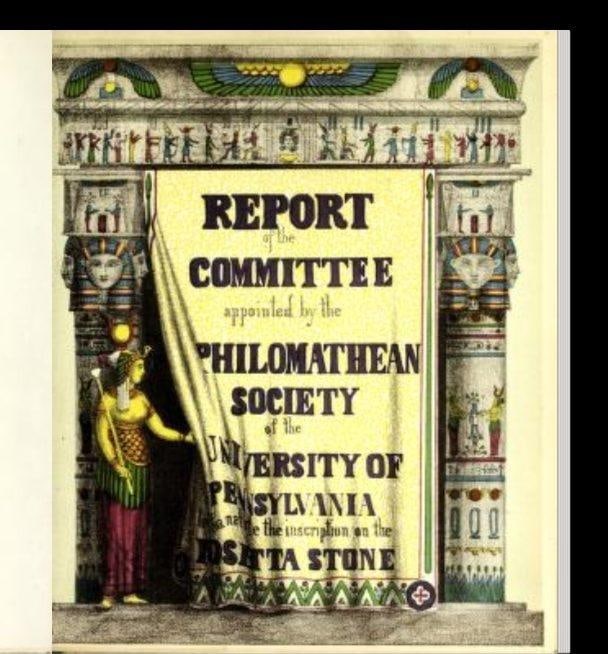
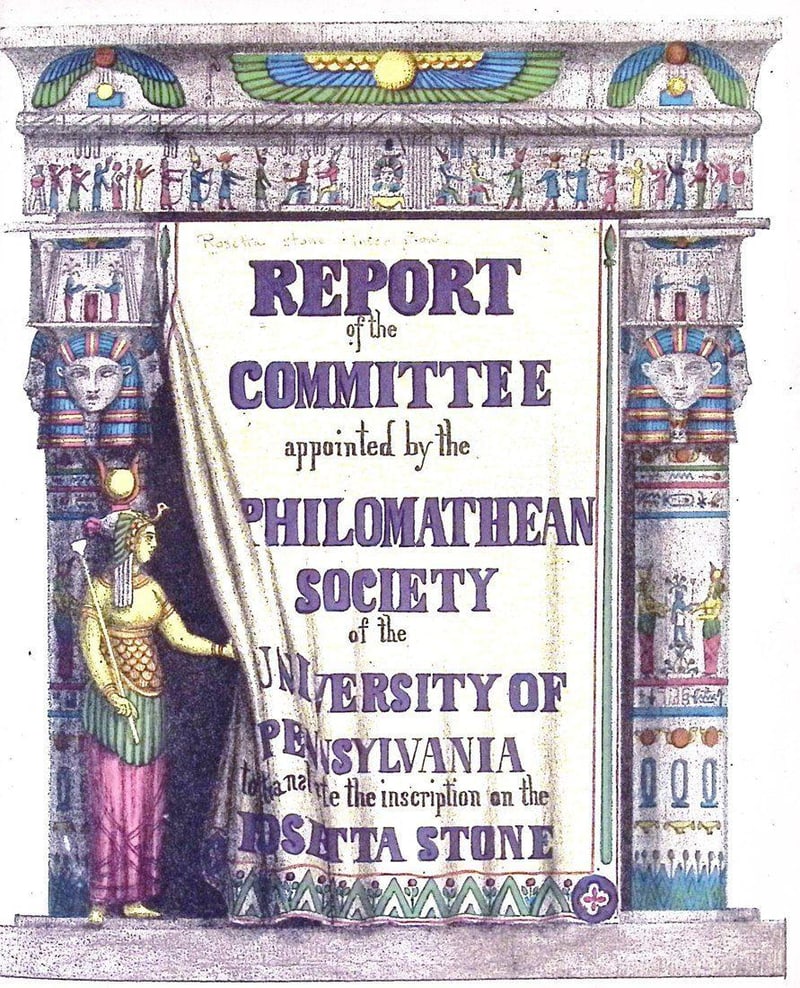
The Philomathean committee divided the intellectual work among Charles Reuben Hale, Henry Morton, and Samuel Huntington Jones. Morton handled the hieroglyphic work and illustrations. The book’s integrated borders, Egyptian figures, inscriptions, and typography made the physical design part of the scholarly argument rather than mere decoration.
The design for each color was prepared on a separate flat limestone printing surface. In lithography, the drawn, grease-receptive areas accepted oily printing ink while dampened blank areas repelled it. Paper was pressed against one inked stone, then passed through the press again for the next color. Registration marks and color bars helped the printer align and order the successive impressions so that the separate colors combined into one image.
Louis N. Rosenthal’s Philadelphia establishment printed the Report, while Penn’s catalog credits Max Rosenthal and Henry Morton with its decorative borders. Morton’s 1892 recollection describes difficult, repeated color printing and close collaboration with the lithographic shop. Together, the committee and the Rosenthals translated Egyptian figures, borders, inscriptions, and ornament into successive, precisely aligned printings. The exact number of stones and press runs used for any page of this book has not yet been established.
No printer’s job book, invoice, production correspondence, original artwork, proof sheets, binding order, or complete technical specification for this edition has yet been located. The census therefore distinguishes the Report’s physical evidence and Morton’s firsthand recollection from general knowledge of nineteenth-century chromolithography. Future archival research should target Rosenthal business records, Philomathean and University accounts, bindery documentation, proofs, and correspondence among the committee, printer, and Society.
Charles R. Hale's father, Reuben Charles Hale, had two sisters: Mary Jane Hale, who married Gideon Welles, and Caroline Amelia Hale, who married George D. Morgan. Both were Charles Hale's paternal aunts, and both husbands sat at the center of Civil War–era events far larger than a family circle. Welles became United States Secretary of the Navy in March 1861. Early in the war he appointed his own brother-in-law, George D. Morgan, as the Navy's purchasing agent in New York, tasked with rapidly converting merchant vessels into warships. Morgan purchased 89 ships for roughly $3.5 million, in an episode historians still call "the Morgan Purchases"—and which became a public nepotism scandal, investigated by the Senate.
The connection to the Navy Department was not only his aunts' marriages. On March 10, 1863, Charles R. Hale was himself commissioned a chaplain in the United States Navy, serving until his resignation in 1871—a commission that fell squarely within Gideon Welles's tenure as Secretary.
The Morgan side of the family carried an independent connection to Irving. George D. Morgan was Irving's neighbor at Sunnyside and, by local historical accounts, his friend and business partner; the two men are credited together with the 1854 renaming of Dearman to Irvington in Irving's honor. On Christmas Day 1856—two years before the Report was written—Irving personally inscribed a copy of The Sketch Book of Geoffrey Crayon, Gent. "To Mrs George D Morgan, from her friend, Washington Irving, Sunnyside Dec 25' 1856." The volume survives and was sold at Sotheby's in the Maurice F. Neville Collection, where the inscription is fully photographed. When Irving died in November 1859, George D. Morgan was among the eight men named as his pallbearers.
No letter has surfaced in which Hale, Welles, or Morgan discusses this book directly, and the route C001 took from Irving's possession into the Owen family medical archive, where it resurfaced generations later, remains an open gap in the record. The network provides a credible social route to Irving: one of Hale's aunts was married to Gideon Welles, while the other was married to Irving's neighbor, friend, and eventual pallbearer. Read against that backdrop, Irving's receipt and possession of Hale's Christmas 1858 gift are the expected outcome—not an improbable coincidence.
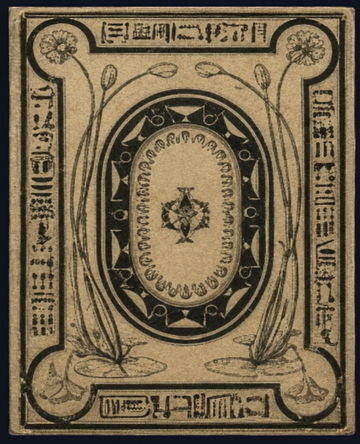
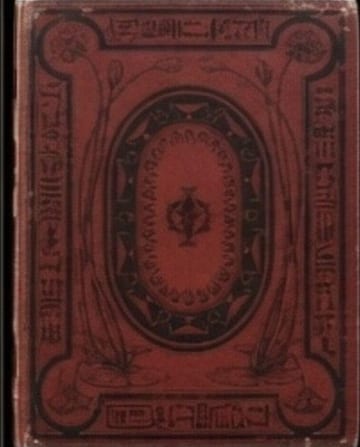
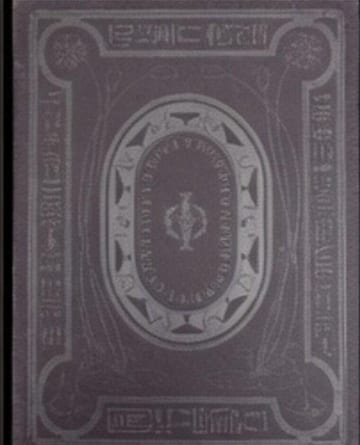
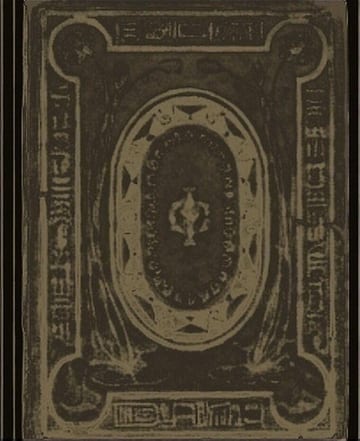
The binding-variant illustrations are shown here together so the edition can be understood at a glance.
These binding-variant illustrations are visual reconstructions based on documented surviving copies; they are not presented as photographs of one specific copy.
Five presentations in Charles R. Hale’s hand. Displayed without overlays, they allow his repeated phrasing, arrangement, letterforms, and signatures to be compared directly.
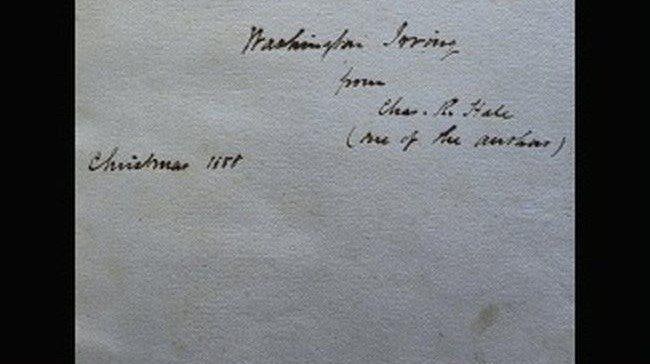
Christmas 1858
Washington IrvingfromChas. R. Hale(one of the authors)Christmas 1858
The private presentation that anchors C001. Hale names Irving, signs in the abbreviated “Chas.” form, and identifies himself as one of the authors.
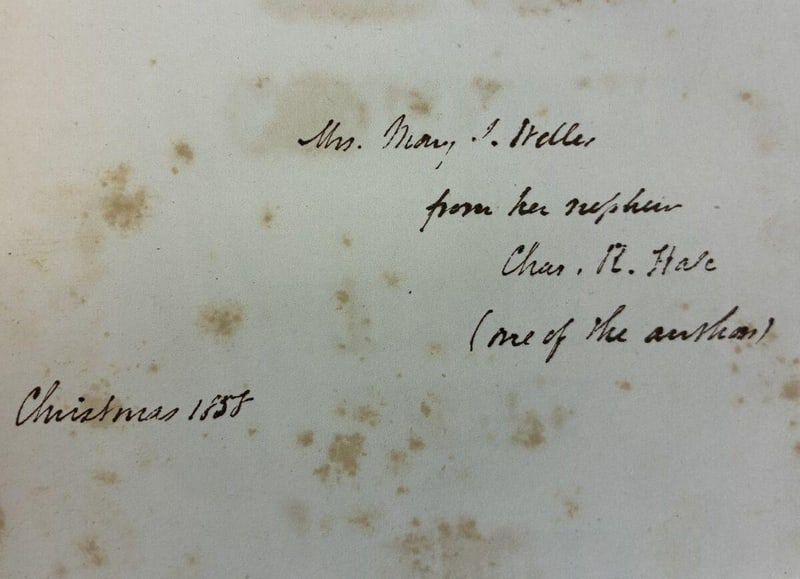
Christmas 1858
Mrs. Mary J. Wellesfrom her nephewChas. R. Hale(one of the authors)Christmas 1858
The wording and descending arrangement closely parallel the Irving inscription, but Hale specifies the family relationship: “from her nephew.”
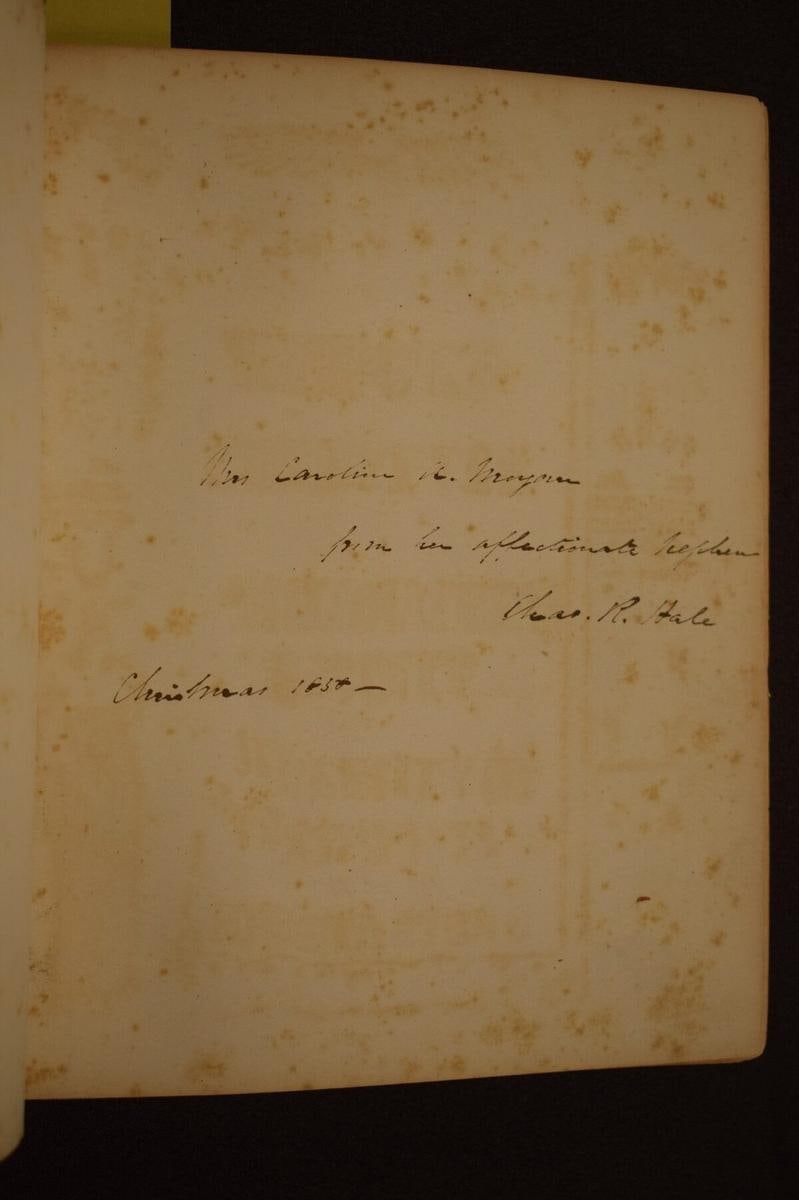
Christmas 1858
Mrs Caroline A. Morganfrom her affectionate nephewChas. R. HaleChristmas 1858—
A second aunt received the same Christmas presentation formula. Here Hale expands the relationship to “her affectionate nephew.”
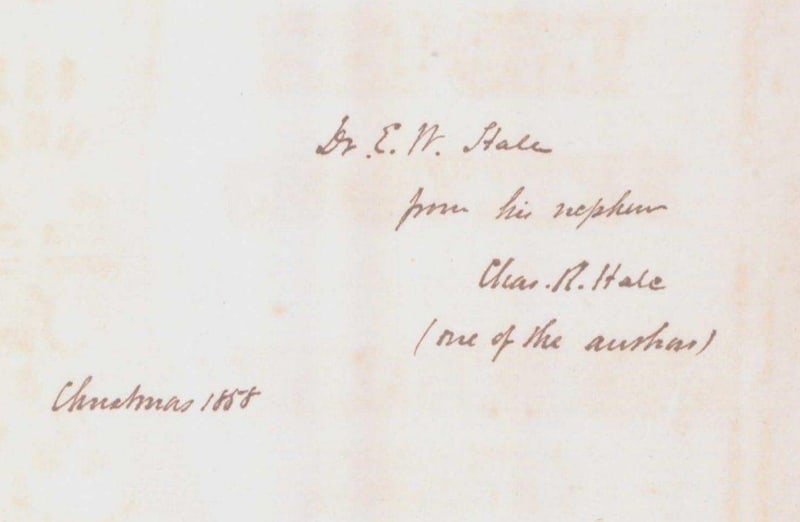
Christmas 1858
Dr. E. W. Halefrom his nephewChas. R. Hale(one of the authors)Christmas 1858
The uncle’s copy repeats the same visual pattern and again includes “one of the authors,” making the handwriting comparison especially direct.
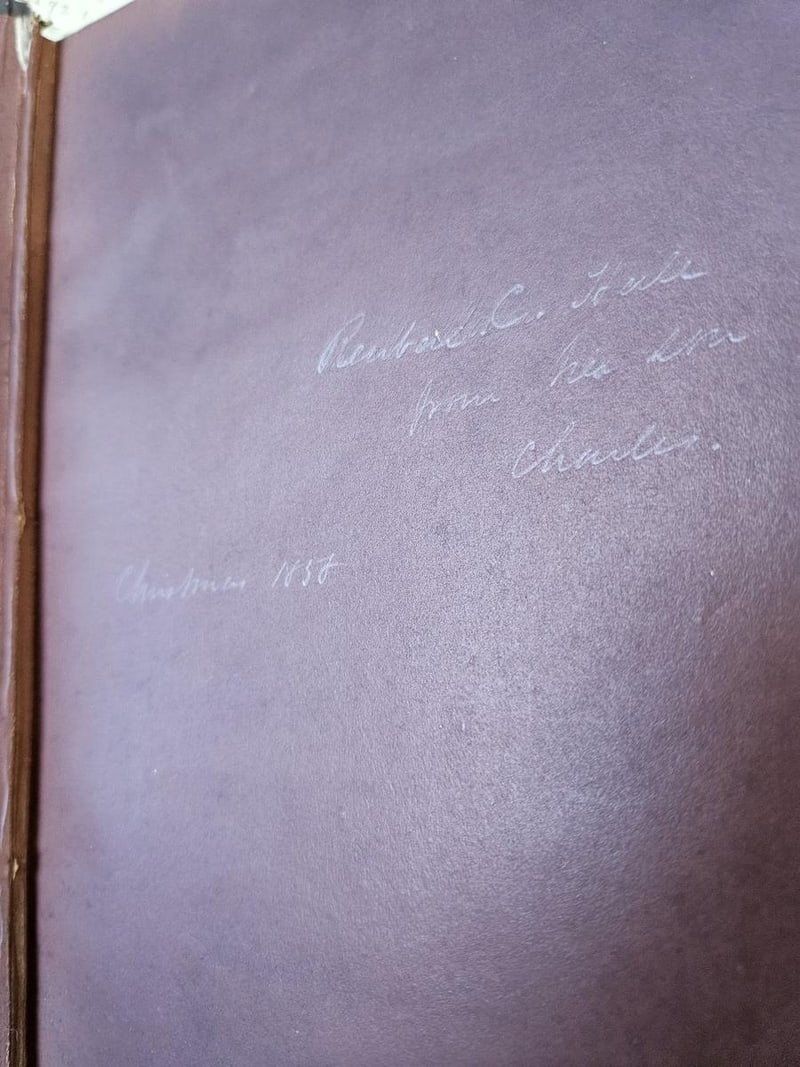 Contrast enhanced for legibility; original image unaltered.
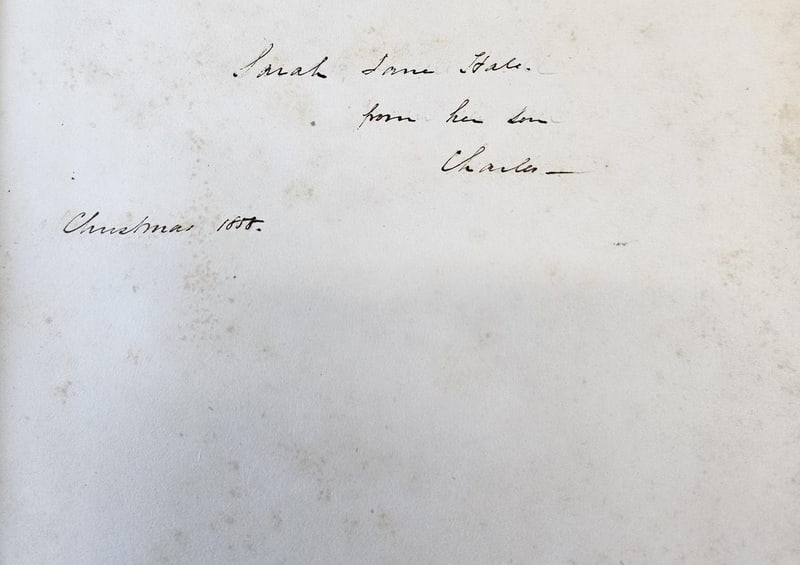
1858 and Christmas 1858
Reuben C. Hale / from his son / Charles R. Hale / 1858.Sarah Jane Hale. / from her son / Charles— / Christmas 1858.
The parents’ copy supplies the revealing variation: Hale writes “Charles” in full in both inscriptions rather than the abbreviated “Chas.” used in the four presentations above.
Images courtesy of Archives and Special Collections, University of Melbourne.
The cover identifies an original binding variant or records a later rebinding, repair, or institutional treatment.
Presentation and ownership inscriptions name the people who gave, received, or later possessed the book.
Bookplates, stamps, labels, accession notes, letters, and catalog records show how a copy reached its present repository.
Images are included only when they show the book, an inscription, a bookplate, a library mark, a repair, or a document tied directly to provenance. Uncertain and wrong-copy images are omitted.
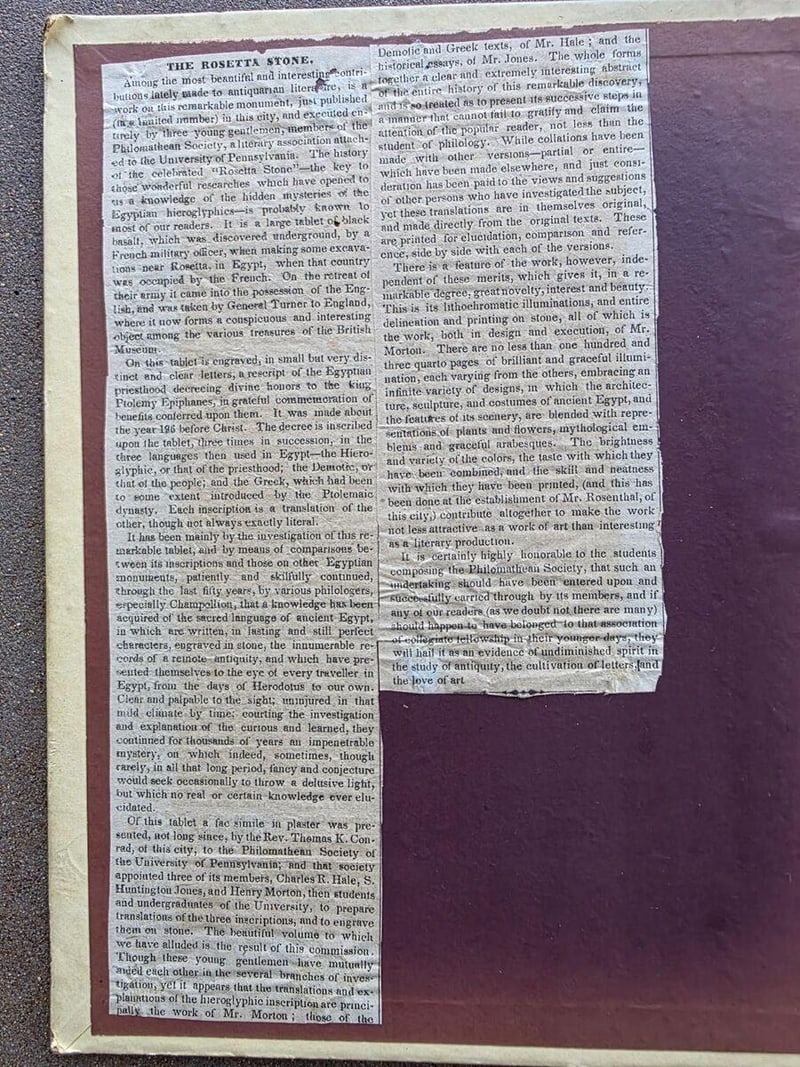
Contemporary reception of the Philomathean Report was immediate and extended beyond Philadelphia. The Historical Magazine reviewed it at length in its February 1859 issue (vol. 3, no. 2, pp. 62–63), praising its accuracy, independent research, and elaborate illuminations, and commending it as evidence of "the bright and ever attractive enthusiasm of youth." A substantial review headed "The Rosetta Stone," textually attributable to the Philadelphia Gazette, was reprinted in Washington's Daily National Intelligencer on April 29, 1859 (p. 2), where it is explicitly credited to the "Phil. Gazette." A detailed New-York Times article of July 13, 1859 also discussed the volume, identified the three student authors and their respective contributions, and reproduced Alexander von Humboldt's letter of acknowledgment to the committee. One surviving copy, C044, preserves a mounted clipping of the Philadelphia Gazette review among its endpapers — copy-specific evidence of the Report's early reception, discussed further in that copy's own record.
A broader search across other Northeastern newspapers from the first half of 1859 — including the New-York Daily Tribune, New York Herald, Springfield Weekly Republican, Baltimore Daily Exchange, National Era, Alexandria Gazette, and a sampled run of the Boston Evening Transcript around the likely reprint windows — did not turn up any further confirmed notices. This reflects the coverage found in the specific runs searched, not a conclusion that no further coverage exists.
The Philomathean Society's translation met with enough demand that the Society issued a second printing in 1859, a year after the original 1858 edition. This census documents only the 90 confirmed 1858 first-edition copies (C001–C090); the 1859 second edition is excluded throughout. Institutional catalog dates are checked against photographs of each physical volume, and edition is assigned from the book's own evidence.
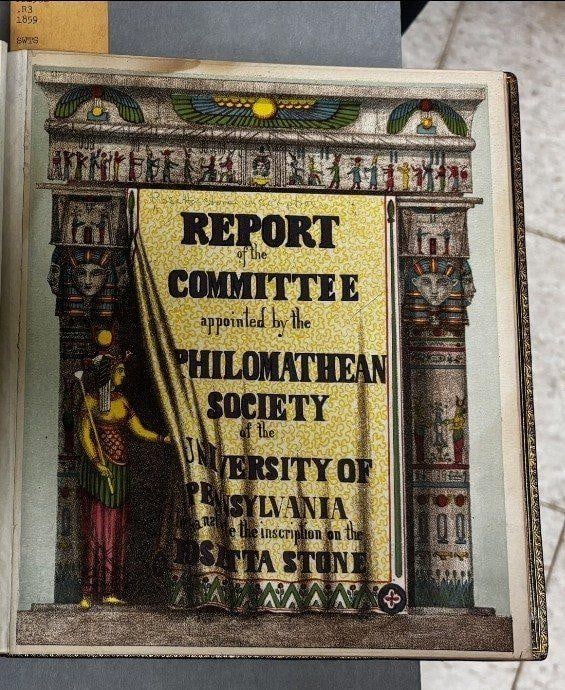
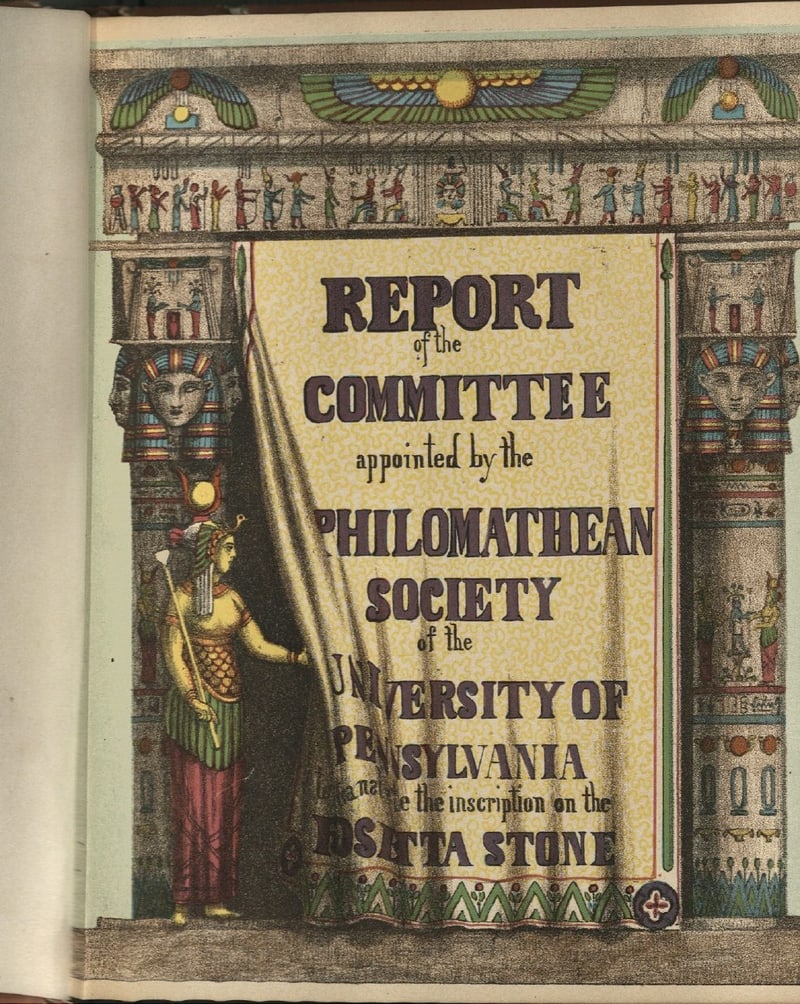
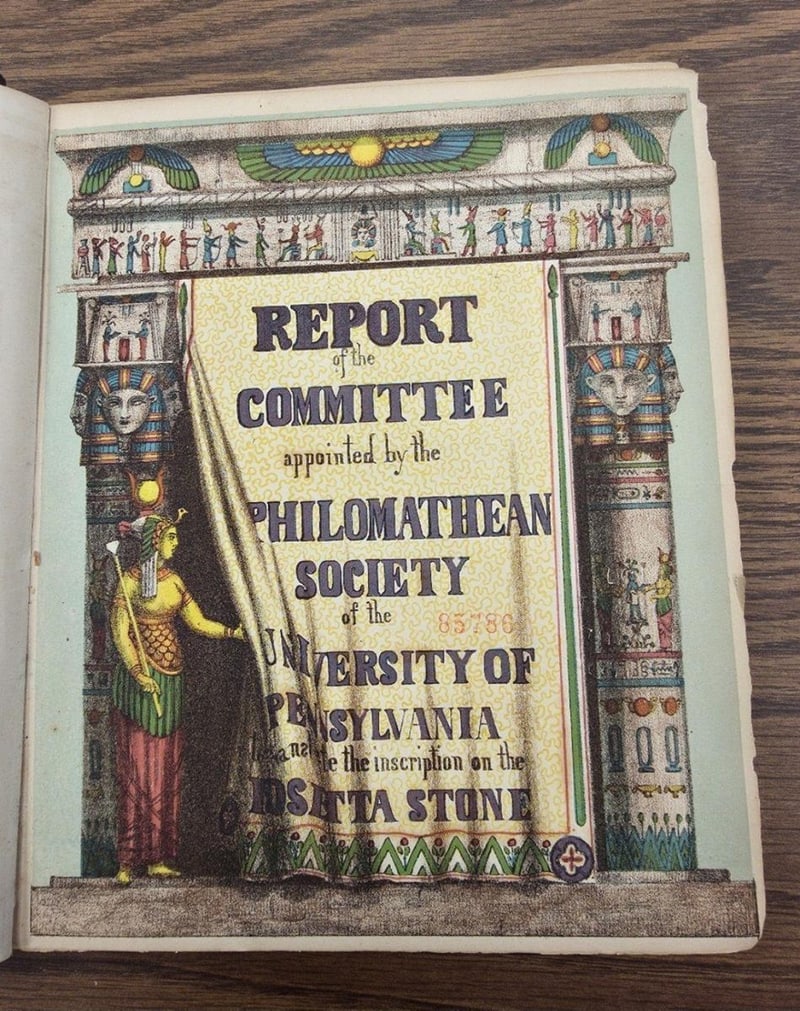
Undated. The illuminated title page carries no year and no edition statement of any kind. This is the diagnostic negative test used throughout the census: an 1858 copy's title page names the Report and the Society but says nothing about which printing it is.
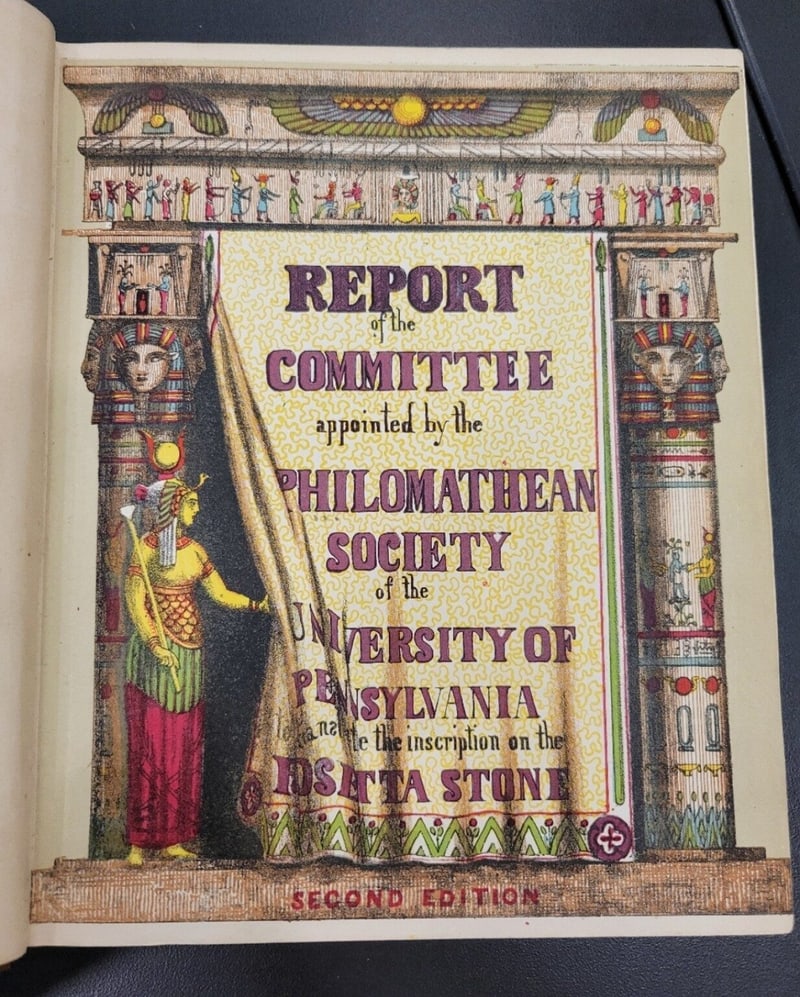
Also undated — neither printing prints a year on the title page — but the 1859 title page adds the words “SECOND EDITION” along the wooden base beneath the curtain, printed in red. The lettering style of that statement is not fixed: it has been observed in both plain block capitals and in a cursive hand across different surviving copies, and it can be faint enough among the ornamentation to miss on a quick look. Where present and legible, it remains the single clearest edition marker available.
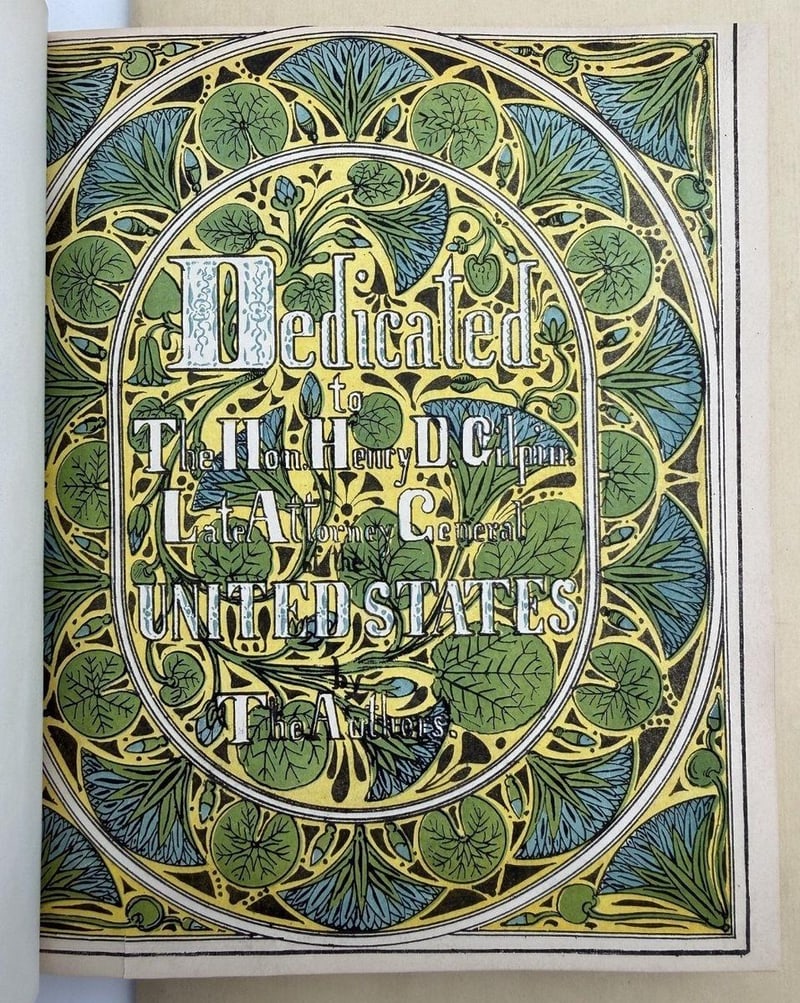
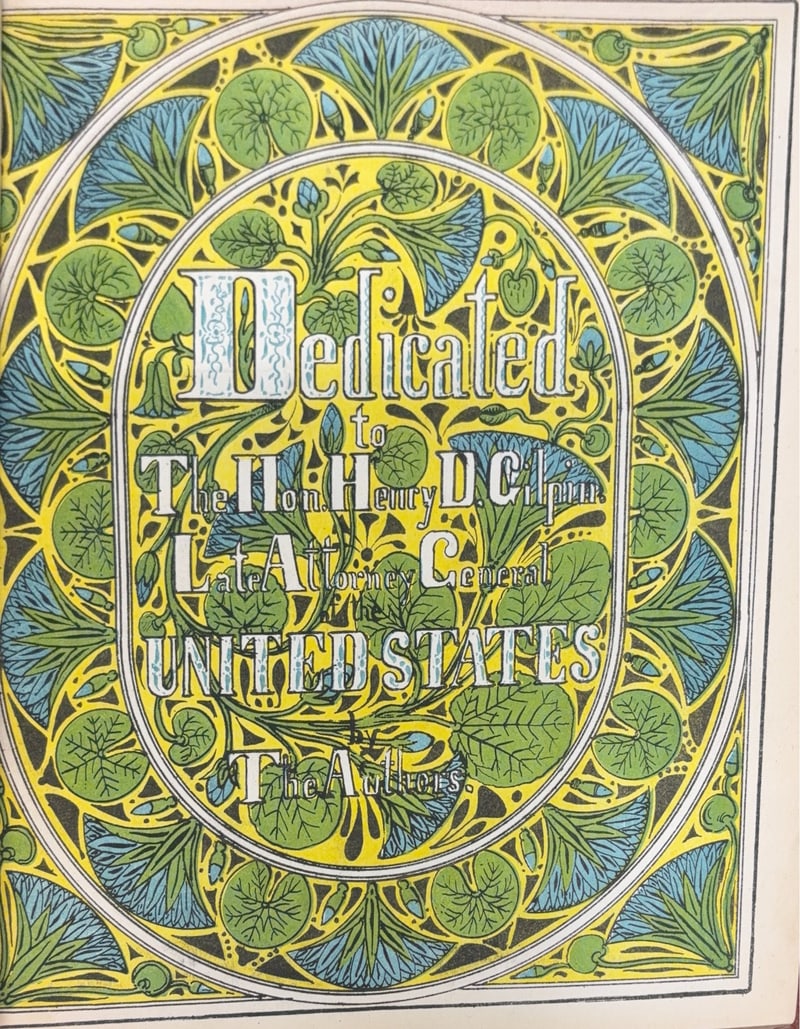
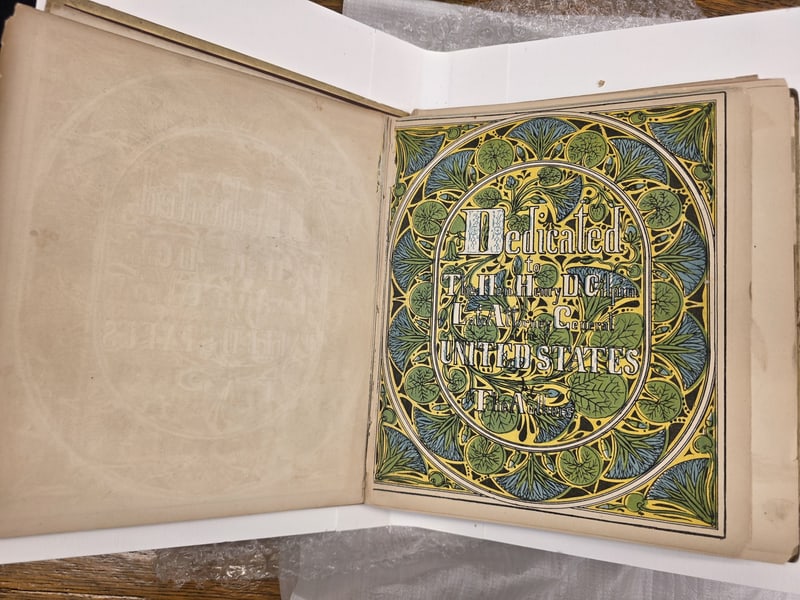
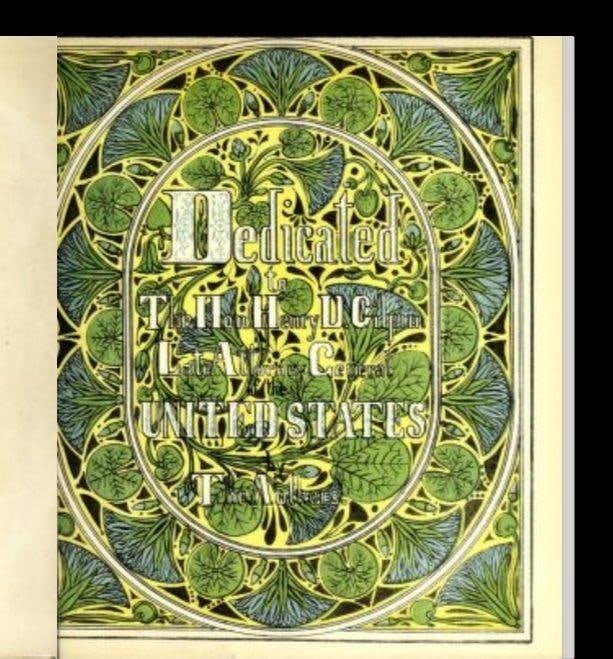
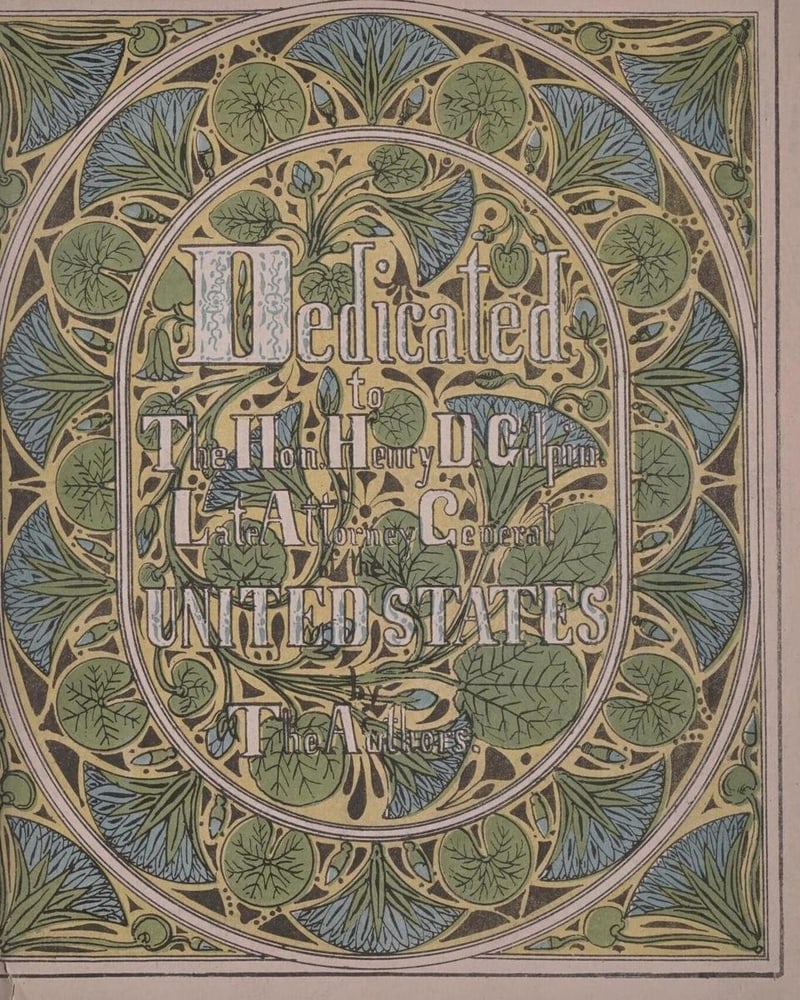
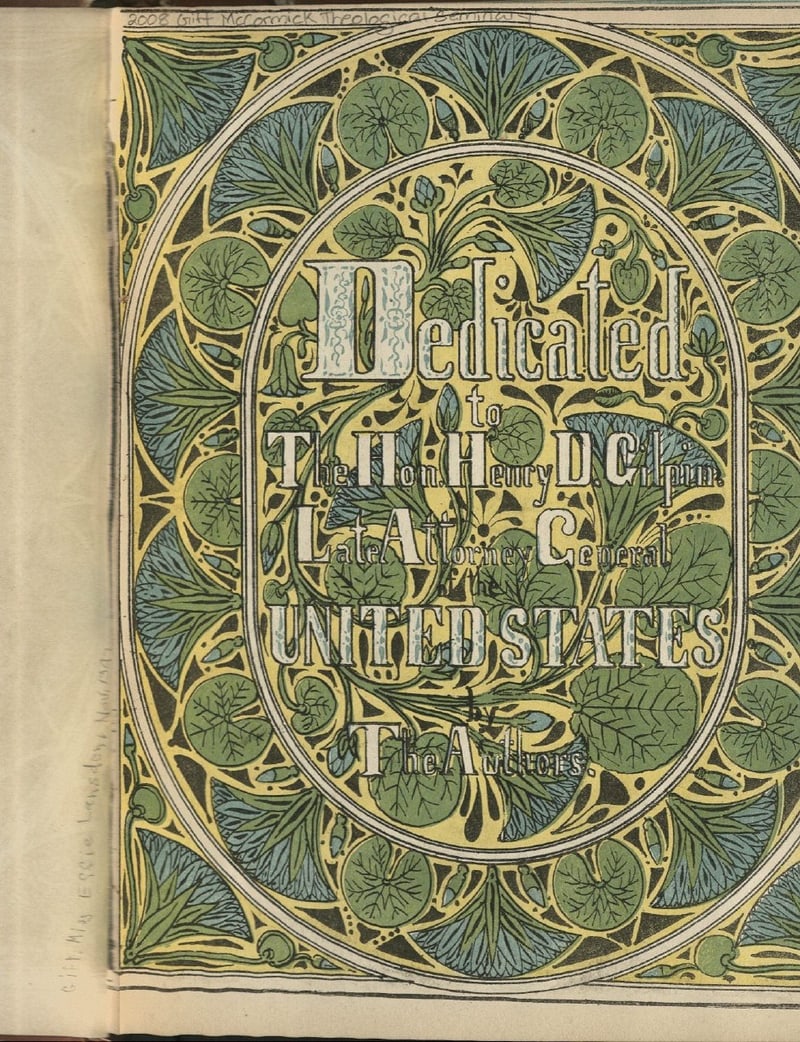
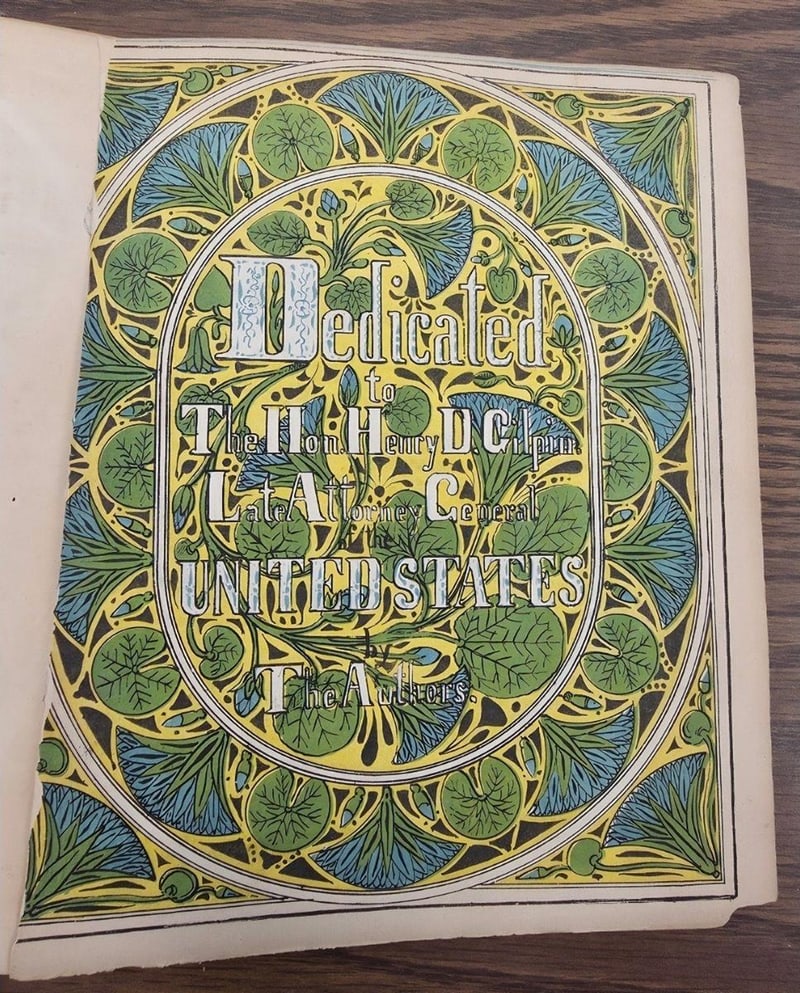
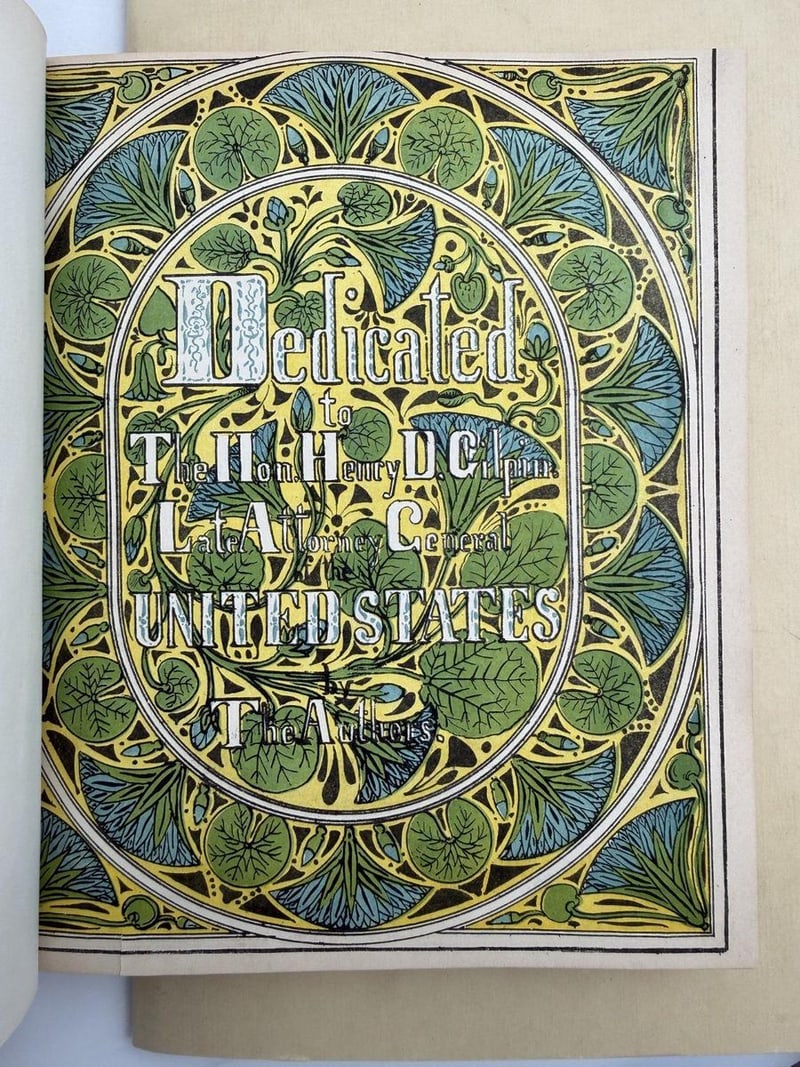
A color-lithographed preliminary leaf dedicating the volume to the Hon. Henry D. Gilpin, in a vivid botanical design. Several first-edition copies in this census (C067, C068, C074, and others) preserve this leaf in the same style.
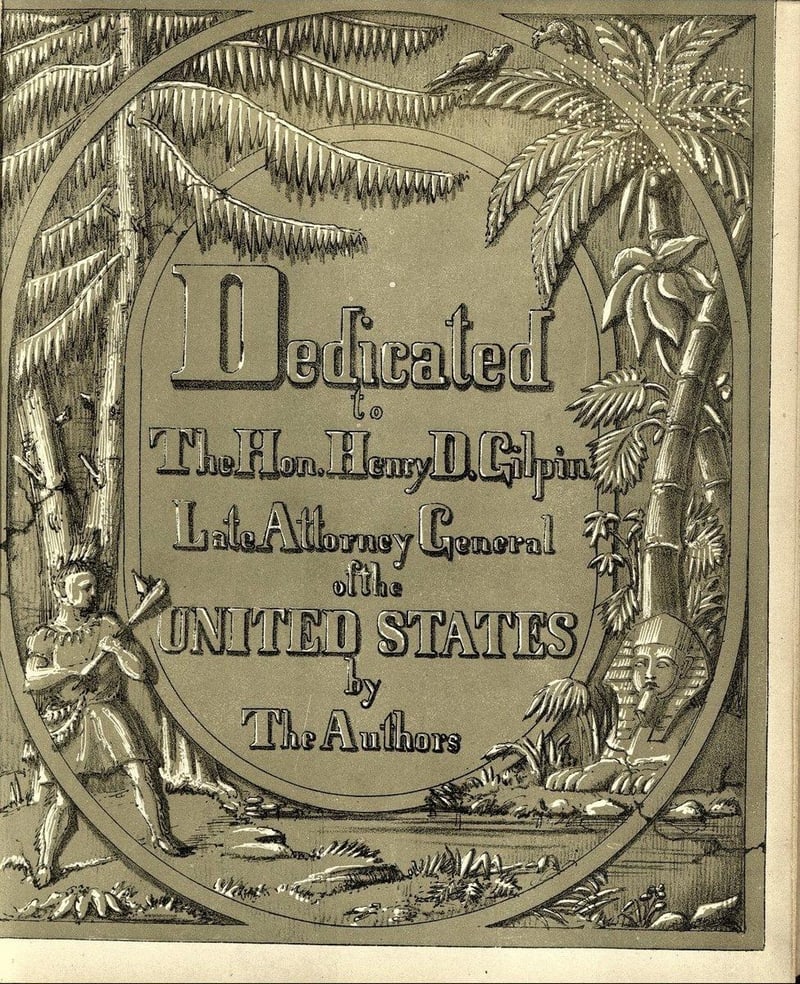
The Gilpin dedication was carried into the second printing but completely redesigned in a darker, Egyptianizing style — palm trees, a sphinx, and a standing figure replace the first edition's botanical ornament. No 1859 copy is currently held in this census; the photograph above is supplied for comparison only and is not tied to any numbered copy record.
The 1858 printing ends with the Report itself. It does not include a membership catalog or any comparable appended matter.
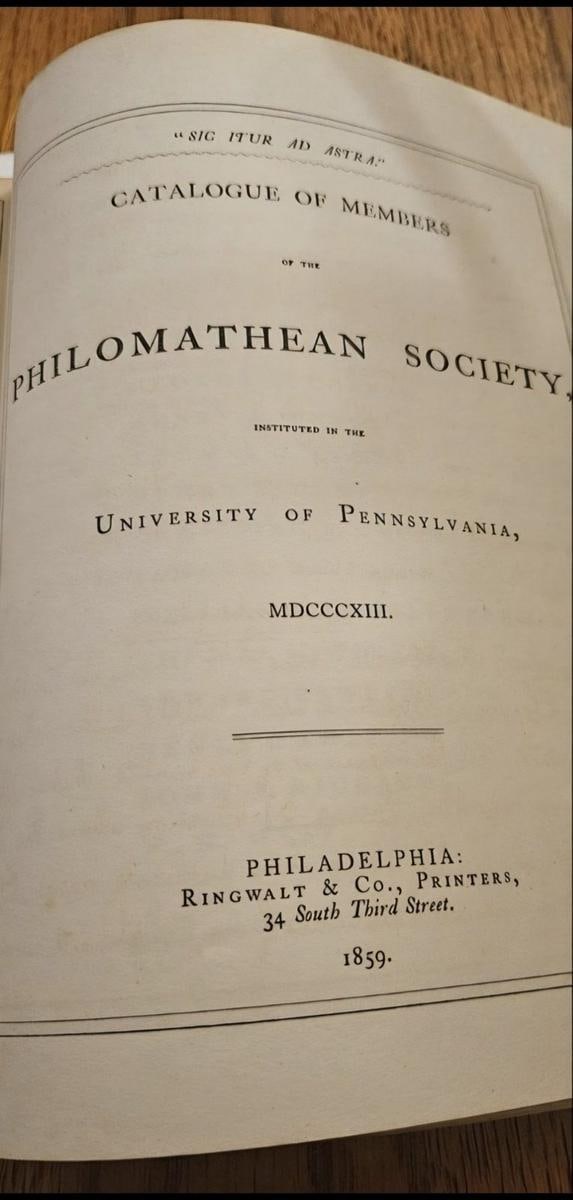
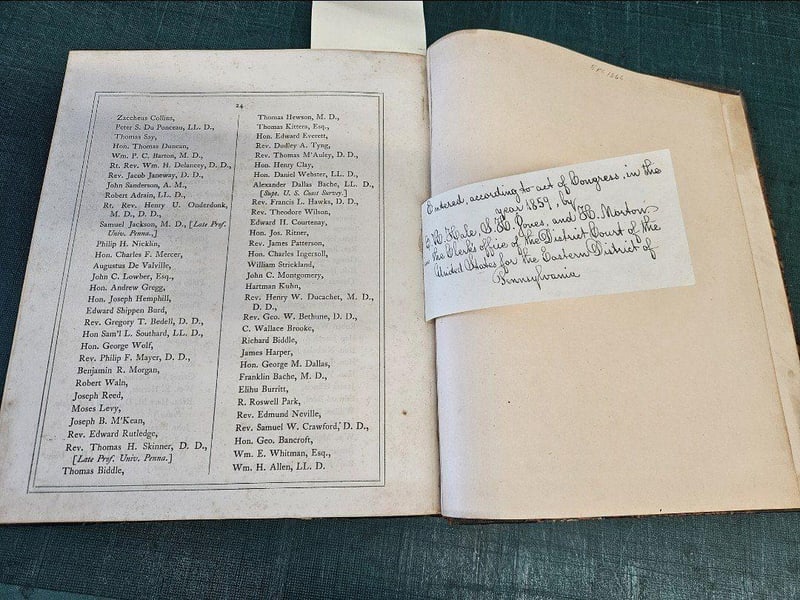
The 1859 printing appends a separately titled 24-page “Catalogue of Members of the Philomathean Society, Instituted in the University of Pennsylvania, MDCCCXIII,” printed by Ringwalt & Co. and dated 1859 on its own title page. A copyright notice slip — “Entered, according to Act of Congress, in the year 1859, by C. R. Hale, S. H. Jones, and H. Morton” — is tipped in among these pages. Neither the membership catalog nor the tipped-in notice appears in the 1858 first edition.
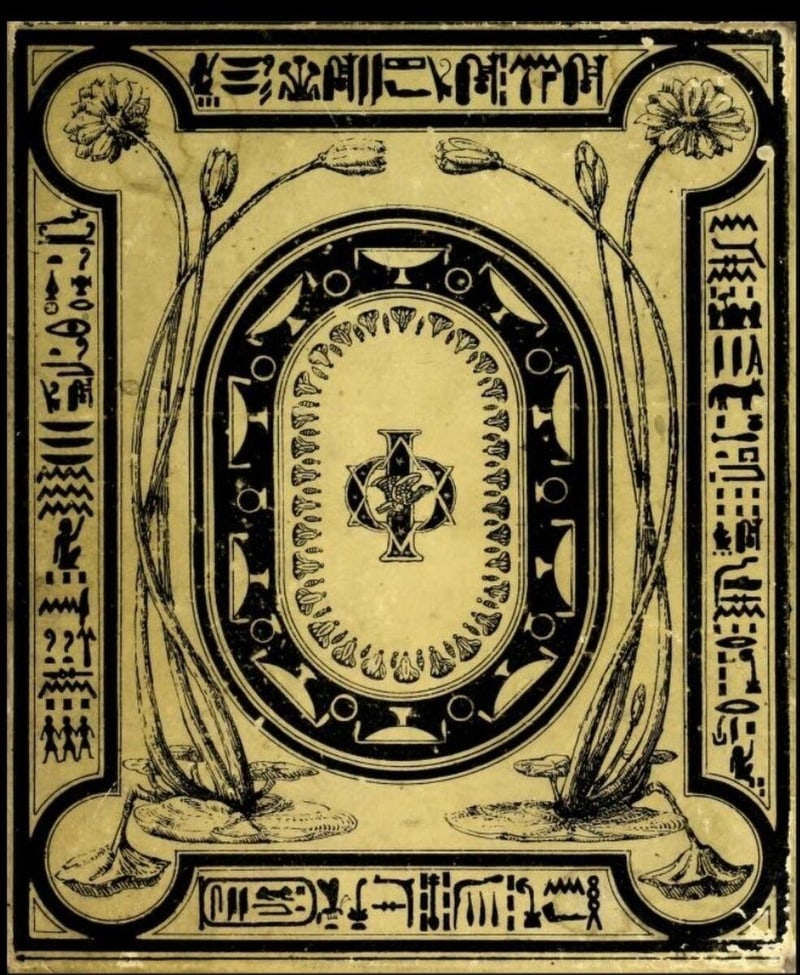
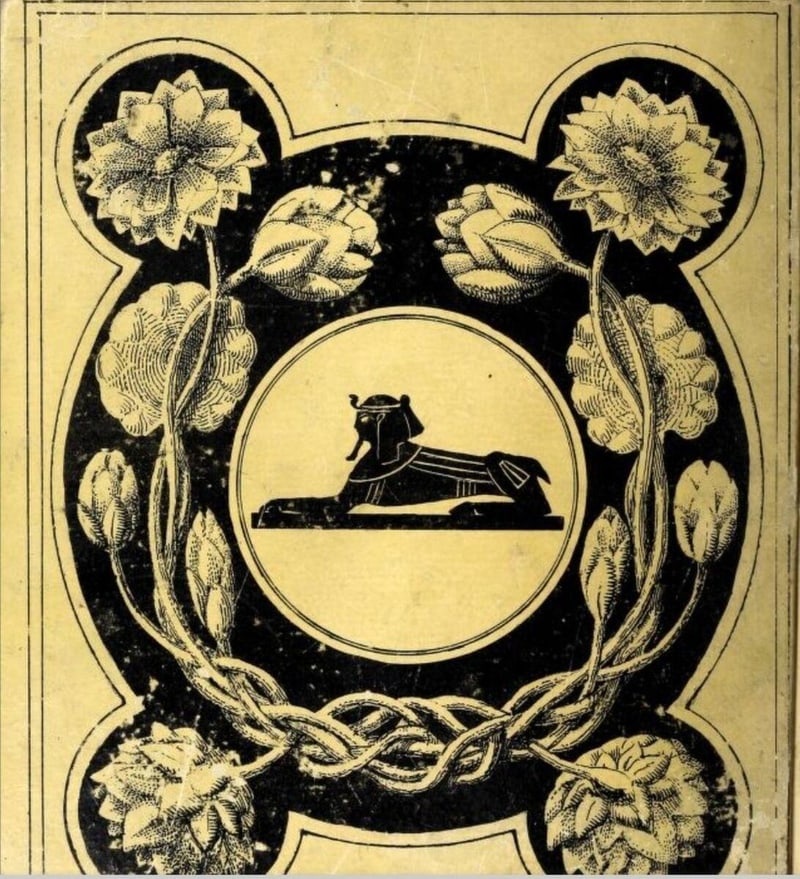
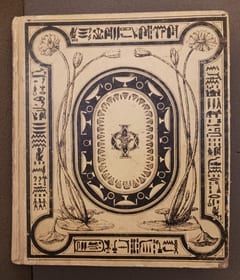
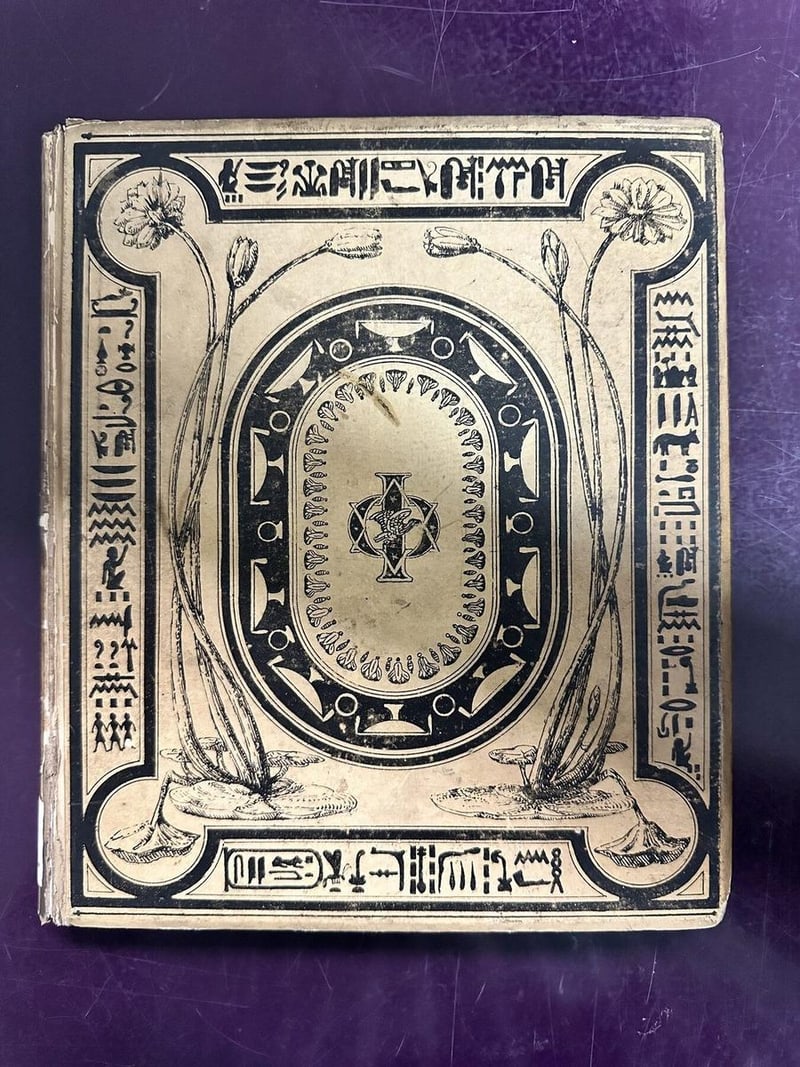
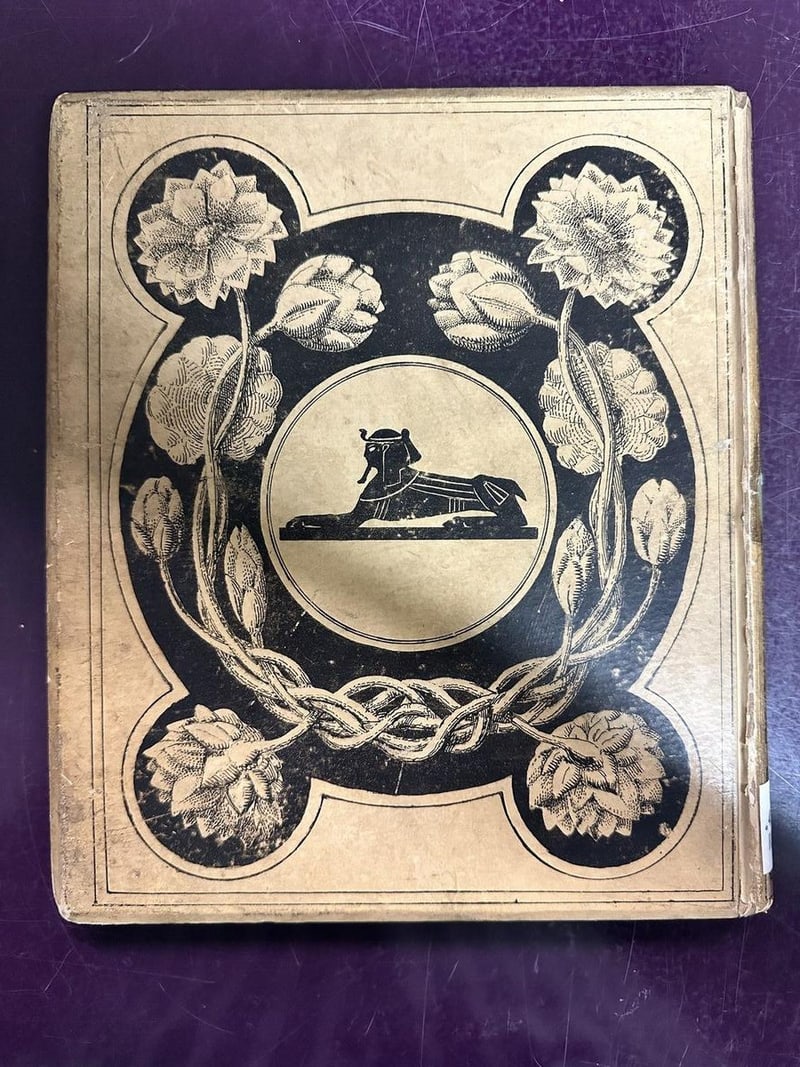
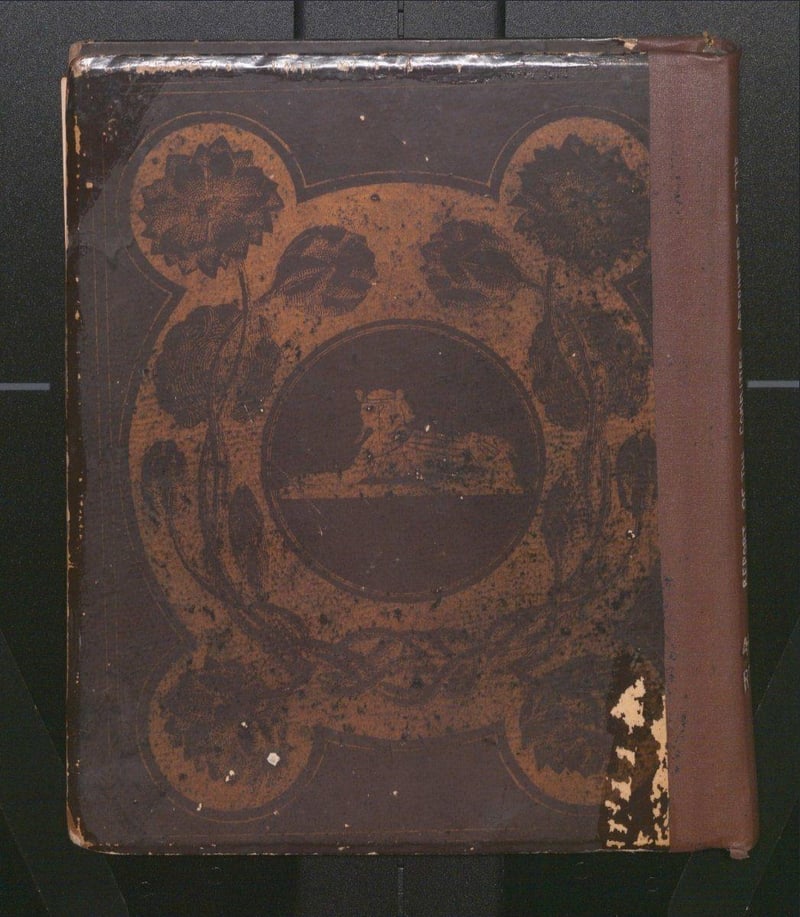
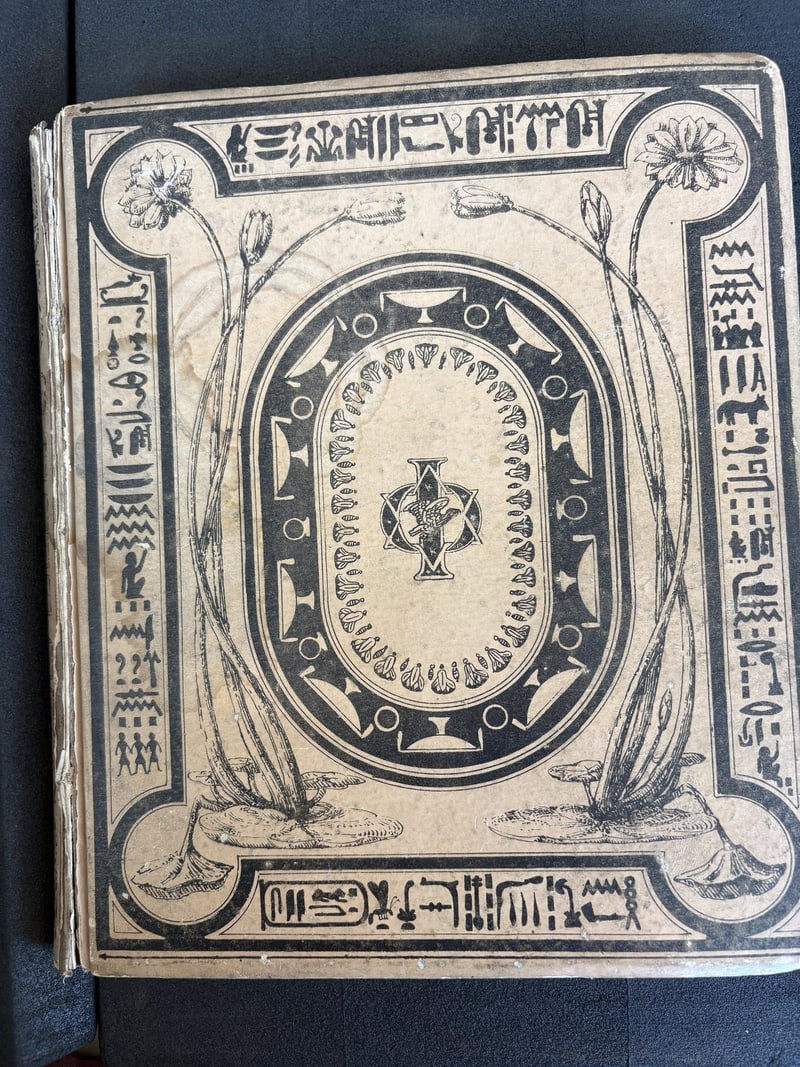
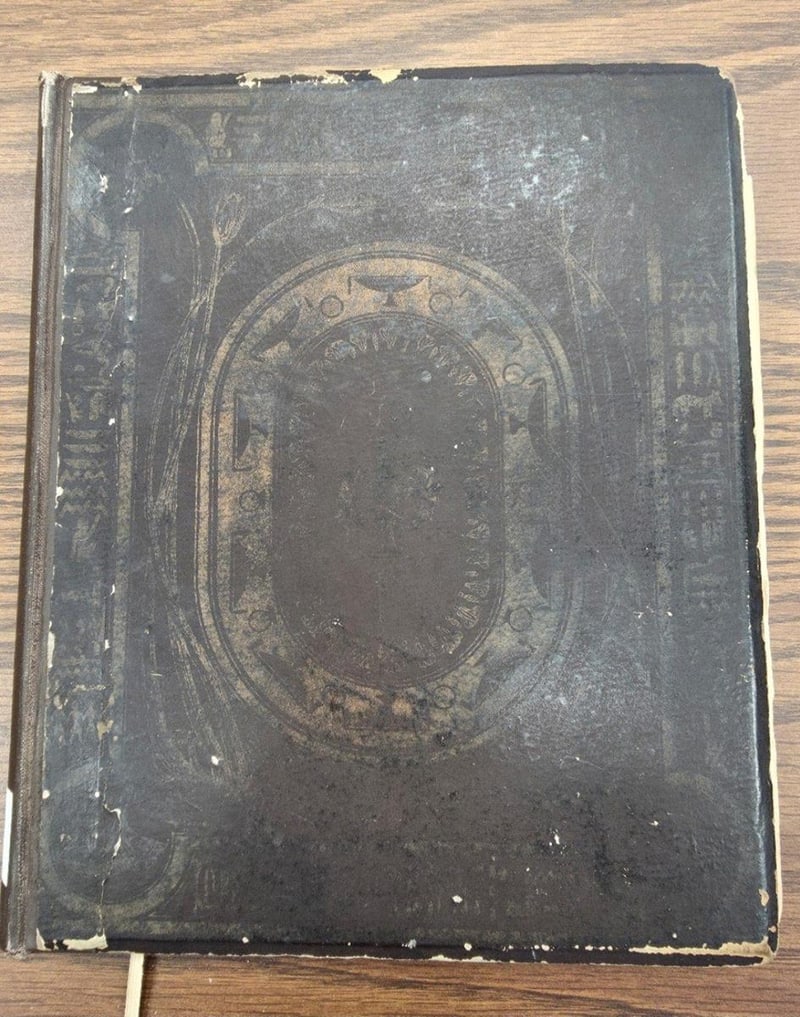
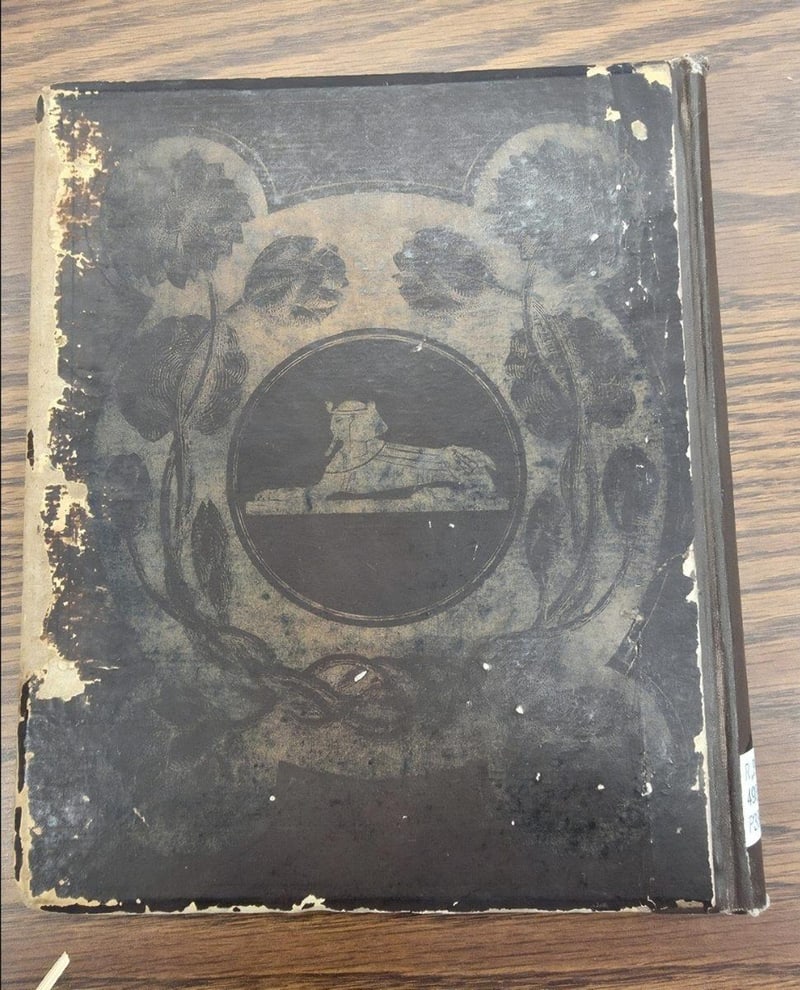
Issued in decorated, paper-covered publisher's boards, not cloth. This census documents five original binding variants — Cream, red/maroon, brown, dark puce, and orange — each with a smooth board surface and a stamped sphinx-and-medallion design in the corresponding metallic ink. No cloth-bound first-edition copy has been documented.
Independent rare-book dealer descriptions of the second edition's original publisher's binding consistently identify it as cloth, not paper-covered boards — for example, dark blue cloth with blind-stamped decorative borders and a gilt sphinx vignette on both covers, and green cloth, both with gilt lettering on the spine. A dealer description of one second-edition copy in three-quarter morocco and marbled boards appears to reflect a later rebinding or a premium binding rather than the standard publisher's issue. No 1859 copy is currently held in this census; this description is supplied for comparison only and is not tied to any numbered copy record.
The University of Pennsylvania's own archives record that the 1858 translation met with enough demand that publication went into a second printing the following year. Bibliographic sources add more detail: the second edition was reportedly recreated in its entirety because the original lithographic printing stones had been destroyed after the first run, and the new setting also corrected pagination errors present in the first edition — though errors reportedly remain between pages 97 and 128 of some second-edition copies (Bennett, American Color Plate Books, p.93).
Every edition-diagnostic claim on this page is drawn from features already documented on individual 1858 copies elsewhere in this census, from directly photographed comparison material, from the Penn University Archives' own account of the Report's publication history, or from the bibliographic citation given above. The dedication-leaf and back-matter photographs illustrate the 1859 edition generally; they are not linked to any specific numbered copy in this census.
Separate from both editions described above, at least three institutions hold an unusual oversized construction made from two ordinary copies of the 1859 second edition: their printed leaves removed and individually mounted, recto-only, on larger sheets. Randolph G. Adams described one such volume — owned by the Philadelphia lawyer and bibliophile John Marshall Gest — as approximately 33 × 26 cm, bound in black tooled morocco with a gold sphinx stamped on both covers, and containing an 1859 New York newspaper clipping mentioning Humboldt, Washington Irving, George Grote, and William Everett.
Catalog records currently identify at least three institutional examples of this oversized mounted format: the University of Pennsylvania's Kislak Rare Book Collection (36 × 27 cm, cataloged as "Autographed and mounted"), Indiana University (36 × 27 cm), and the University of Michigan. The Philomathean Society authorized 600 copies of the 1859 second edition, but no known production record states how many were later converted into this oversized mounted format, so the total number that once existed remains unknown.
Working hypothesis, unresolved: whether the Kislak volume is specifically Gest's copy has not been established. The Kislak catalog record does not carry Gest's name, and its recorded dimensions differ slightly from Adams's description of Gest's volume. Confirming or ruling out that identification would require examining the binding for black tooled morocco and a gold sphinx on both covers, locating the 1859 newspaper clipping, and finding Gest's bookplate, signature, or other ownership evidence — none of which has yet been done. The Kislak volume may be Gest's copy, or it may be one of the other known examples.
These oversized 1859 constructions are cataloged elsewhere and are not part of the confirmed 90-copy first-edition census (C001–C090).
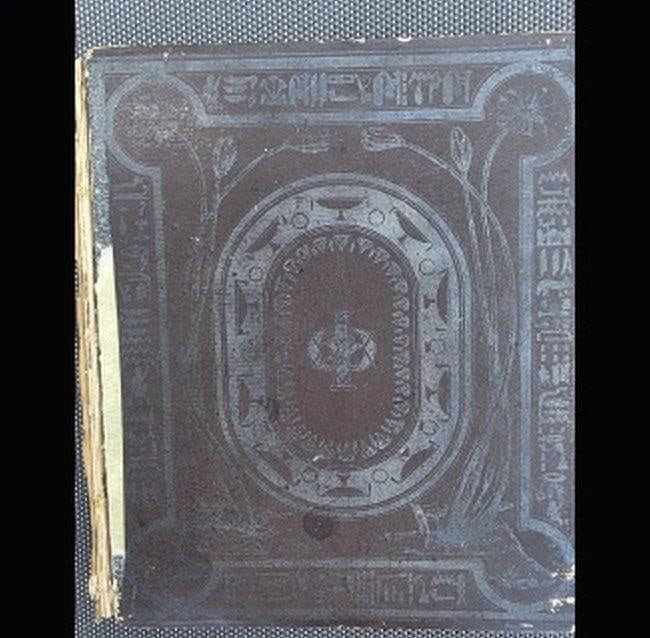
Private Collection
Original dark-puce publisher-issued boards with silver-gray decoration.
Authorial presentation by Charles R. Hale to Washington Irving, Christmas 1858.
Charles R. Hale → Washington Irving → unresolved gap → Owen Family Medical Archive → Private Collection
Charles R. Hale’s Christmas 1858 presentation identifies him as an author. The next documented custody is the Owen Family Medical Archive, with which the volume was recovered at an Asheville-area estate sale. The transfer from Irving to the Owen family is unrecorded.
Current-owner physical examination and copy-specific photographs; estate-sale acquisition documentation for the Owen Family Medical Archive; inscription, binding, and provenance evidence reproduced in this census.
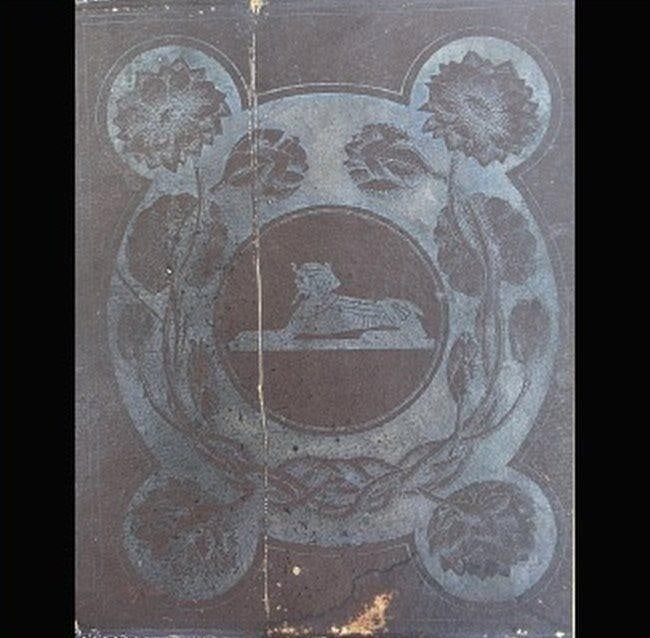
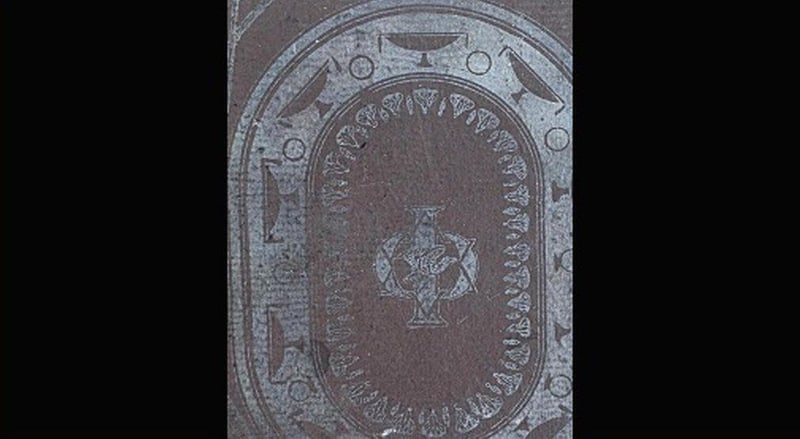
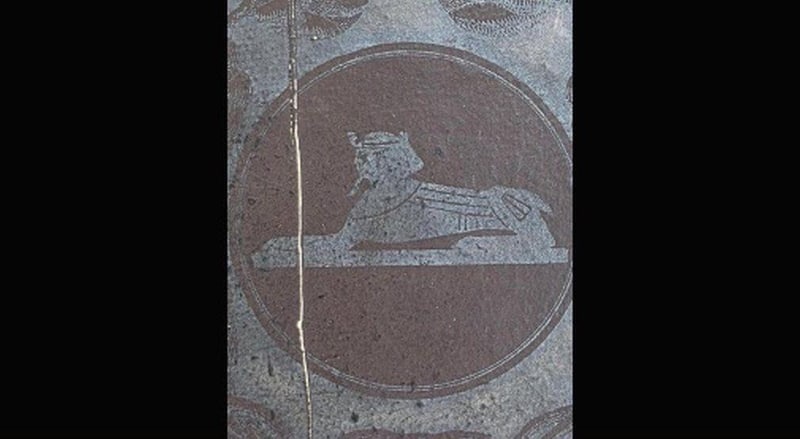
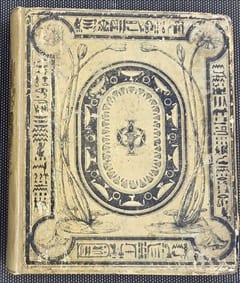
Private Collection
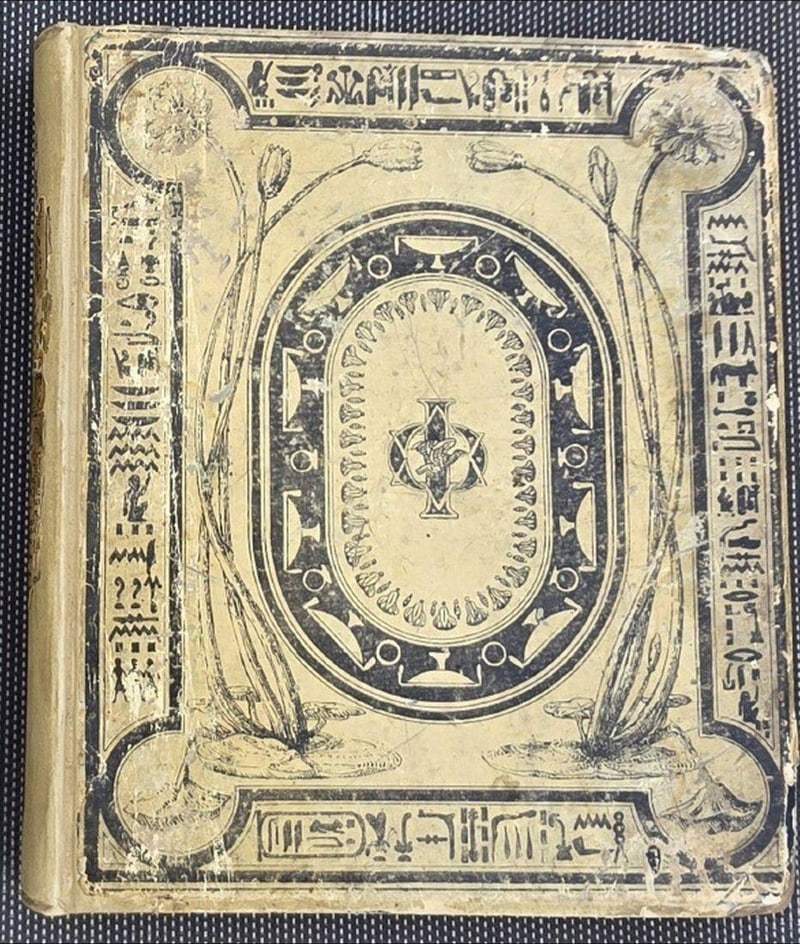
Original cream publisher-issued boards with black decoration.
No presentation inscription, ownership inscription, or bookplate identified.
Unidentified online bookseller → Jeremy Norman → Private Collection, 2026
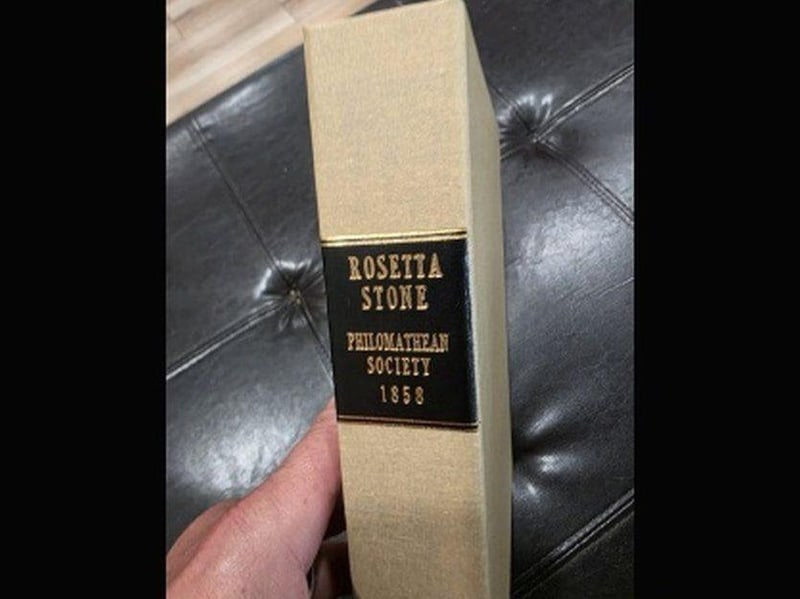
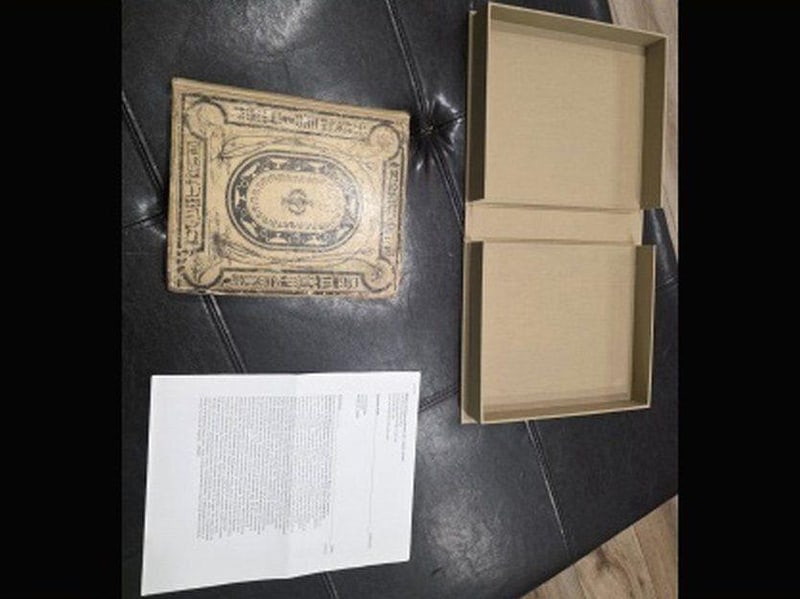
Jeremy Norman acquired the volume from an online bookseller. During Norman’s ownership the spine was rebacked and a protective box was commissioned. The present private collector acquired it from Norman in 2026. Ownership before the online bookseller remains unresolved.
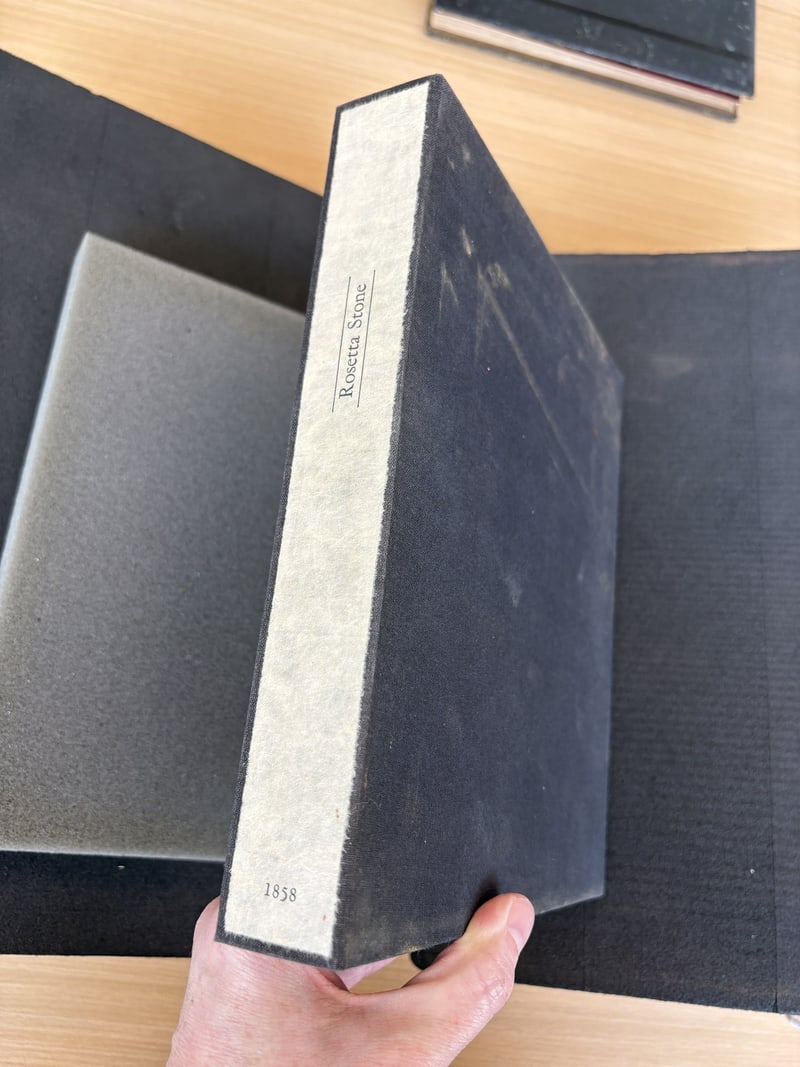
The spine was rebacked and a fitted protective box commissioned during Norman’s ownership; both are later additions.
Private-owner and rare-book-dealer correspondence documenting the unidentified online-bookseller source, later spine rebacking, and fitted protective box; copy-specific photographs reproduced in this census.
Harvard University, Houghton Library
Cambridge, Massachusetts
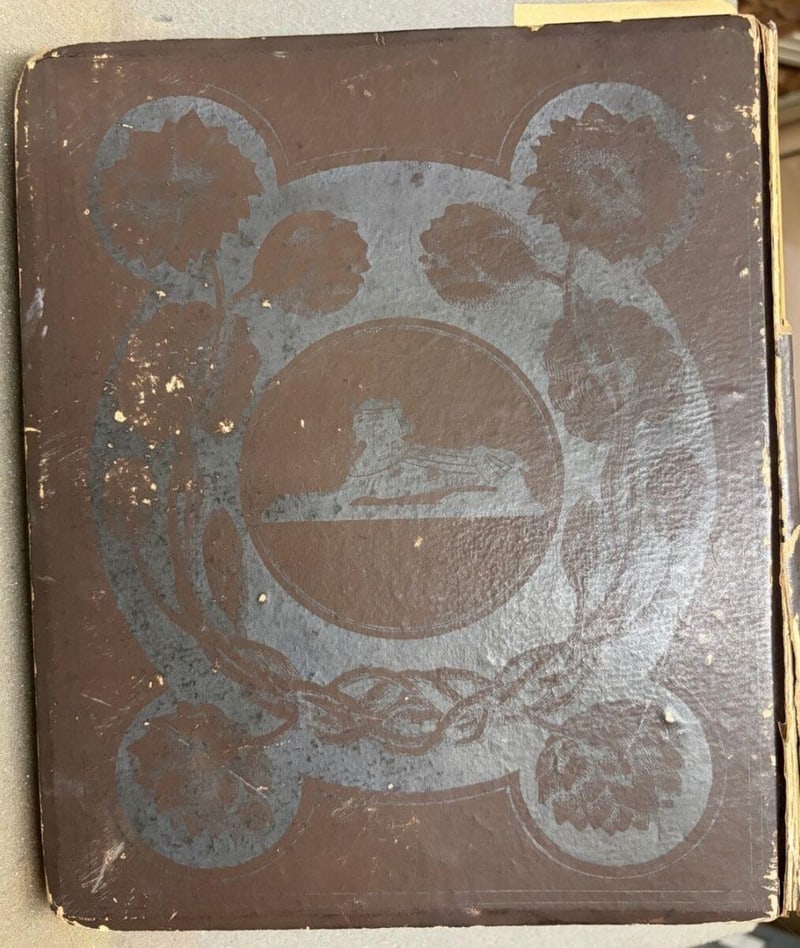
Original dark-puce publisher-issued boards with silver-gray decoration.
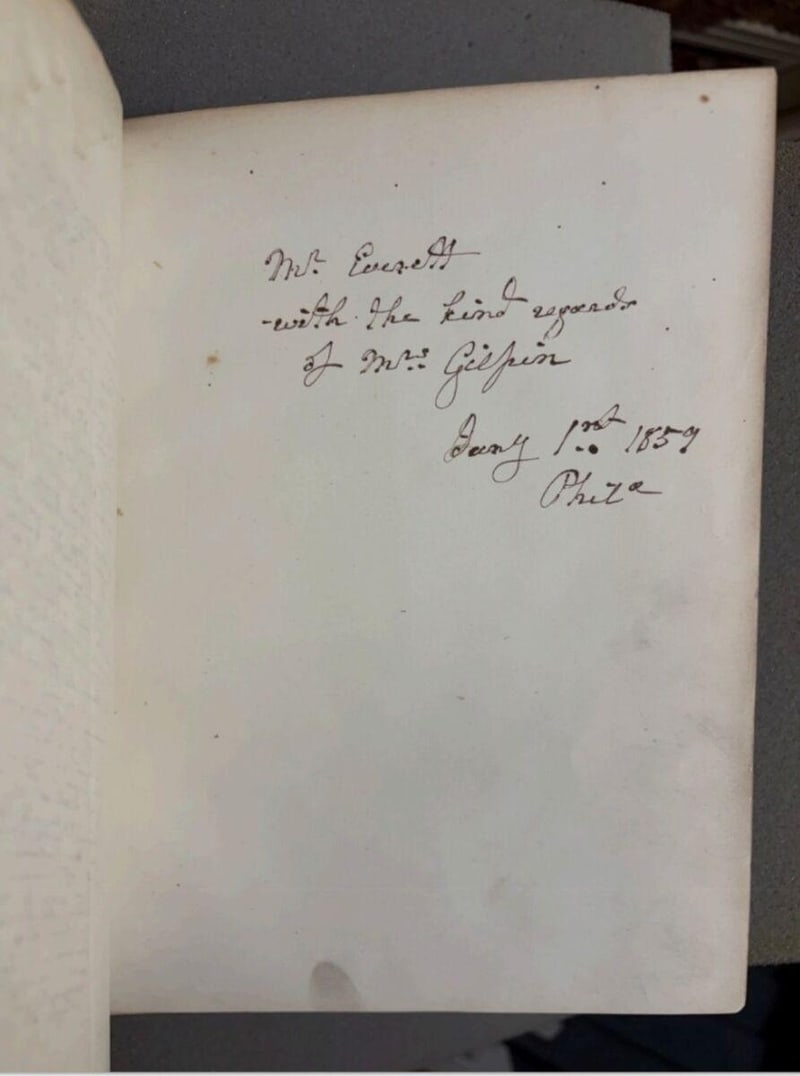
‘Mrs. Everett—with the kind regards of Mrs. Gilpin—Jany 1st 1859—Phila.’ The presenter is strongly identified as Ann Eliza Sibley Johnston Gilpin; Charlotte Gray Brooks Everett is the probable recipient.
“Mrs. Gilpin” → “Mrs. Everett,” January 1, 1859 → unresolved gap → William Everett → Harvard College Library, September 25, 1878 → Houghton Library
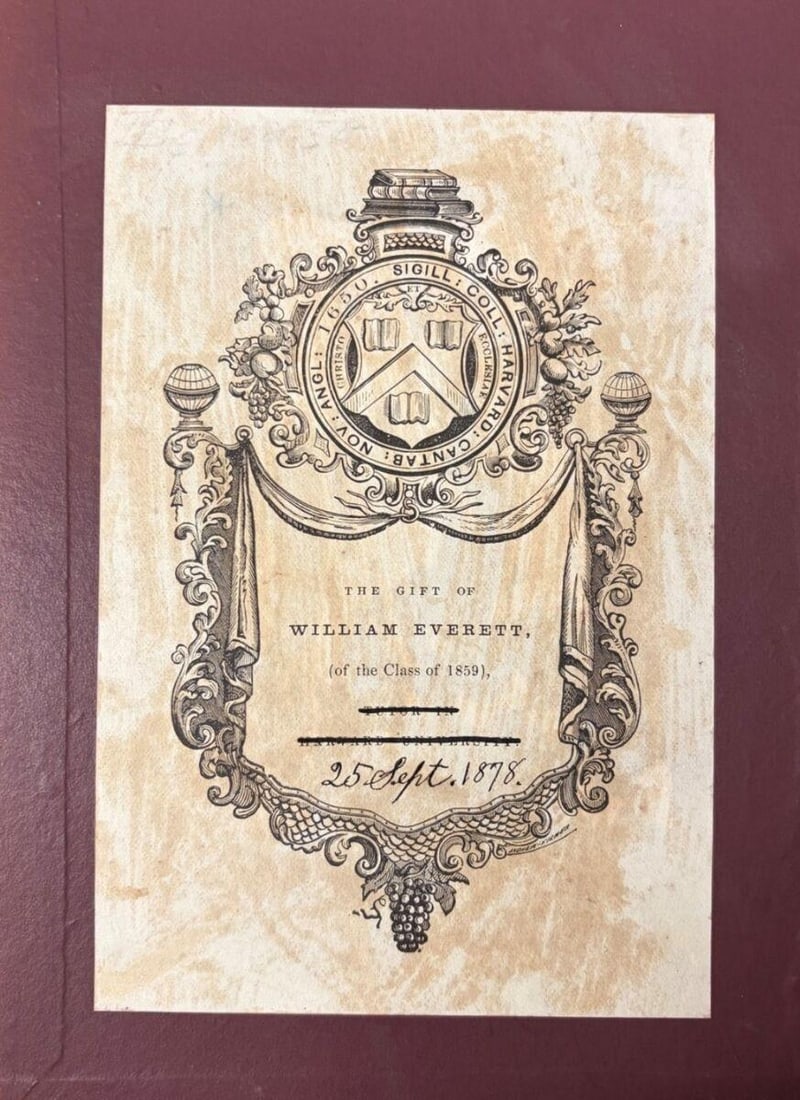
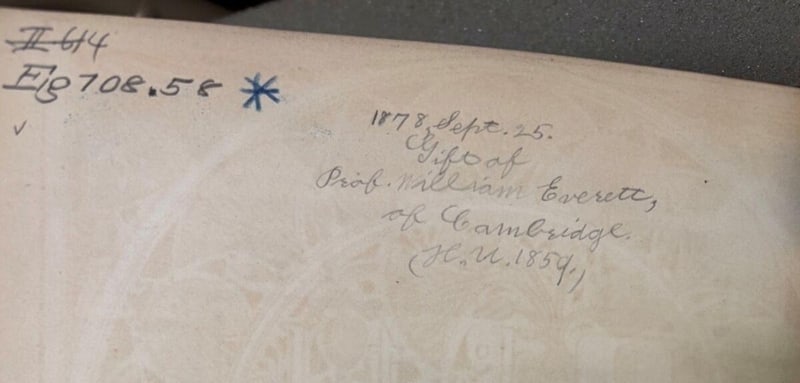
William Everett’s gift bookplate and acquisition note record his Harvard gift on September 25, 1878. The transfer from the first recipient to William is unrecorded.
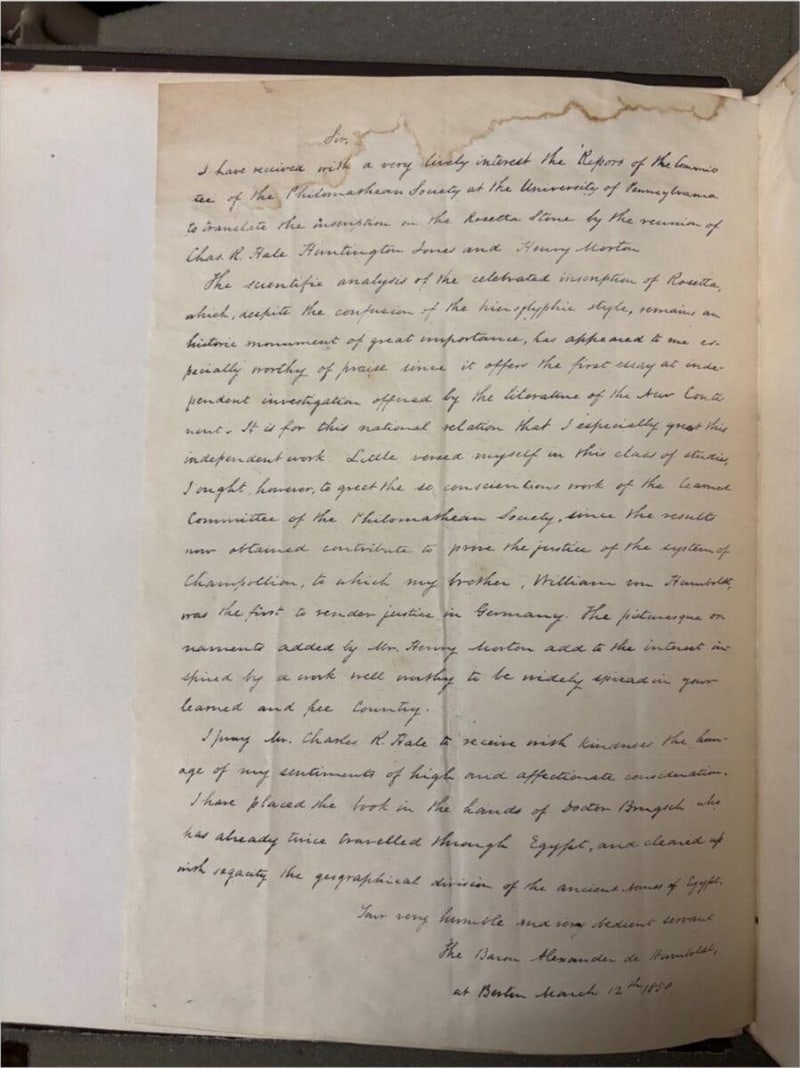
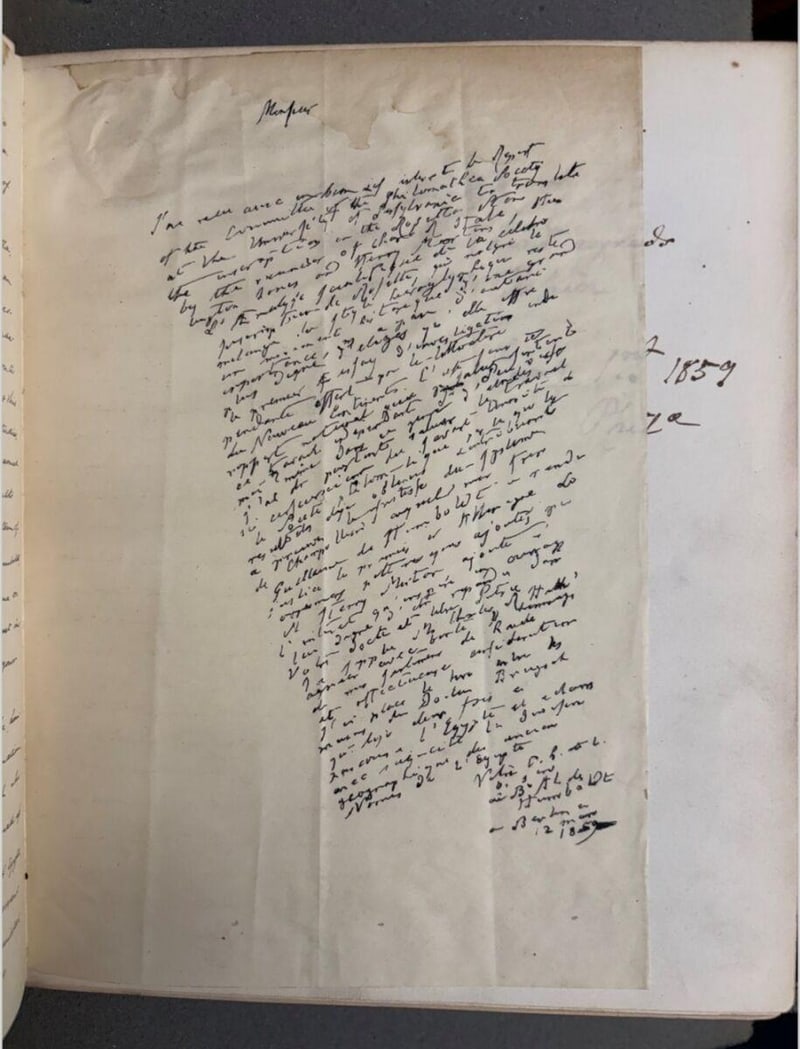
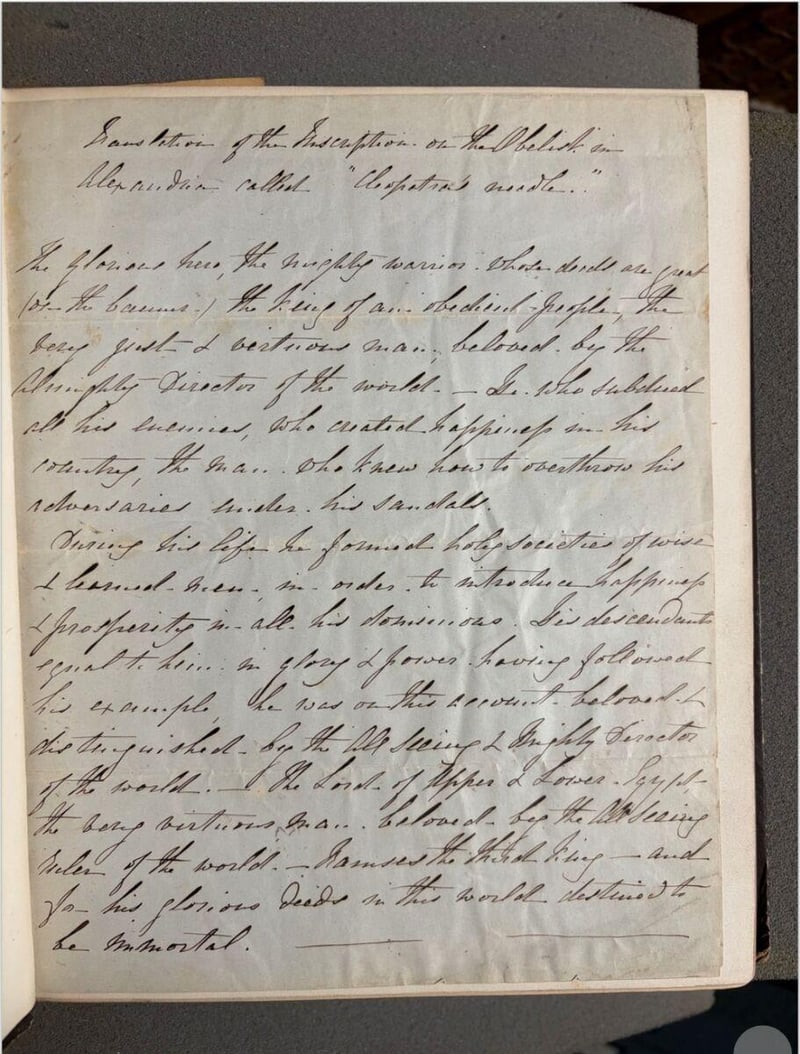
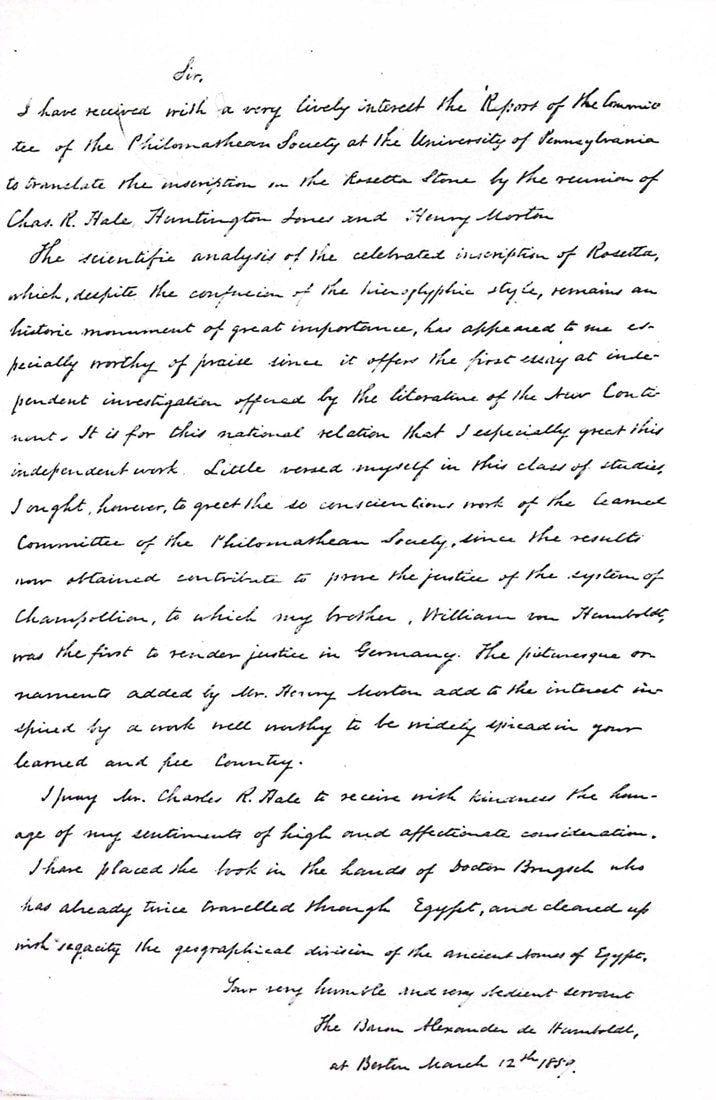
The Humboldt letter facsimile, dated March 12, 1859, its English rendering, and a manuscript-style translation of the inscription on ‘Cleopatra’s needle’ survive. Comparable copies contain the same material; these are edition-associated leaves.
Harvard University, Houghton Library catalog and acquisition documentation; the January 1, 1859 presentation inscription, William Everett gift bookplate, September 25, 1878 acquisition note, and copy-specific photographs reproduced in this census.
Harvard HOLLIS catalog record · Biographical Directory of the United States Congress: William Everett · Historical Society of Pennsylvania: Josiah Stoddard Johnston papers · U.S. Department of Justice: Henry D. Gilpin
Arizona State University, Hayden Library
Tempe, Arizona
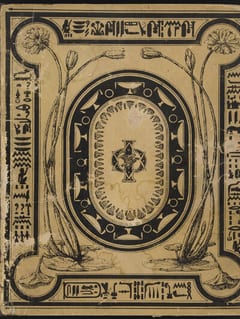
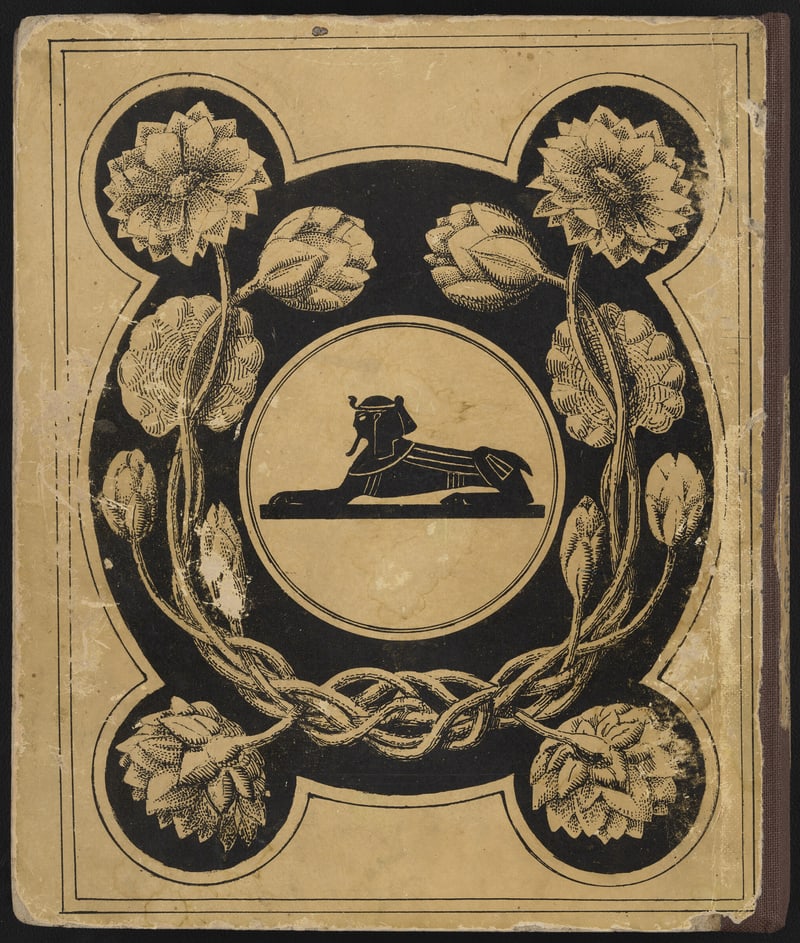
Original cream publisher-issued boards with black decoration.
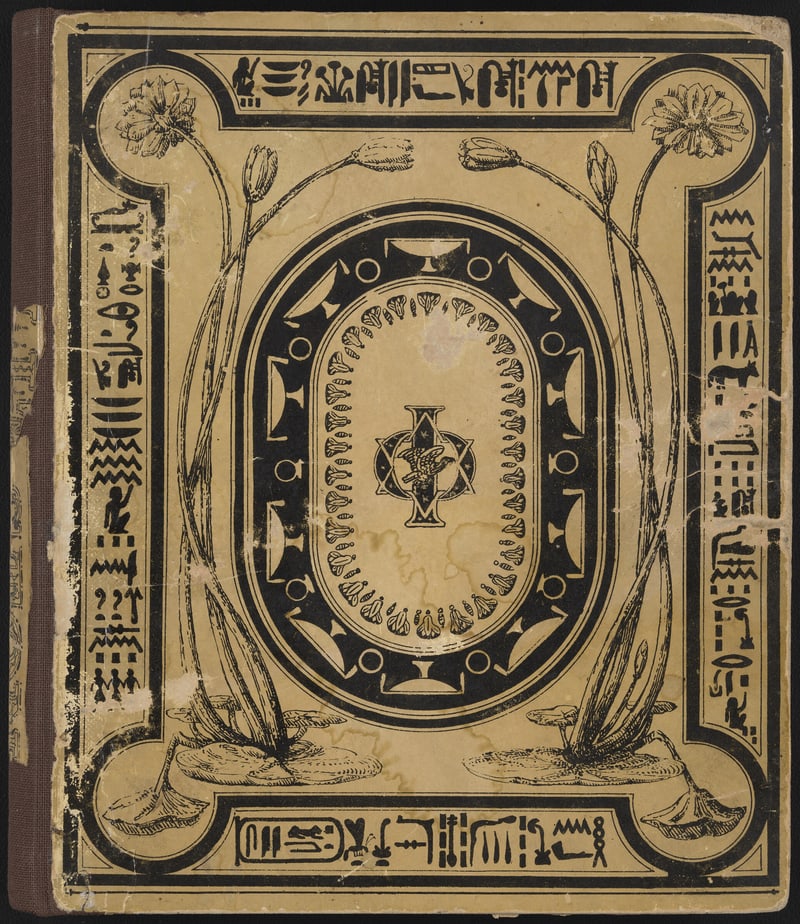
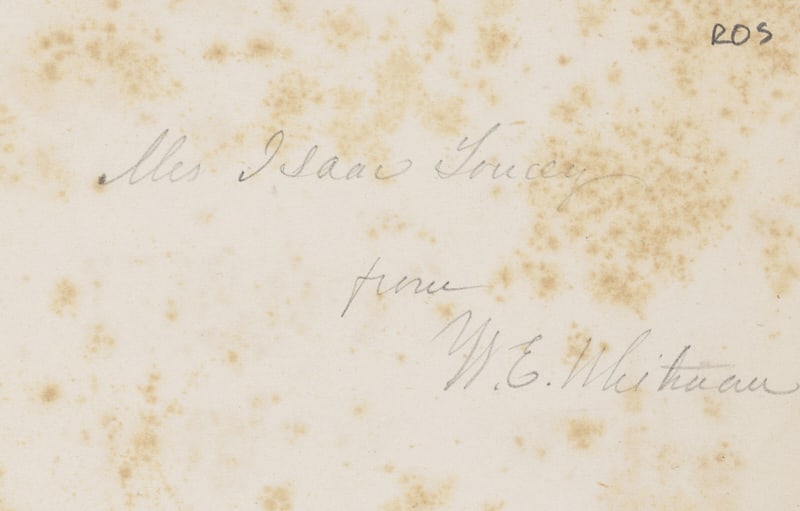
Pencil inscription: “Mrs Isaac Toucey from W. E. Whitman.”
An additional documented institutional example of the cream publisher-issued binding variant.
W. E. Whitman, presenter (undated) → Mrs. Isaac Toucey → unresolved gap → Arizona State University, Hayden Library
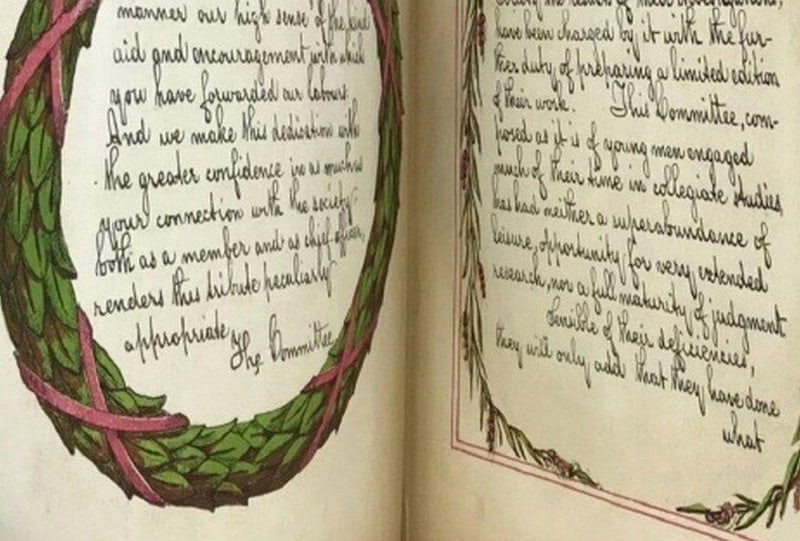
Arizona State University, Hayden Library catalog and holdings documentation; copy-specific photographs of the cream publisher binding, decoration, committee leaf, and dedication leaf.

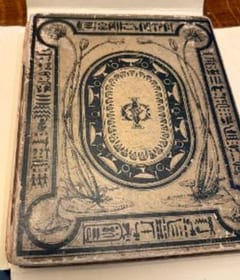
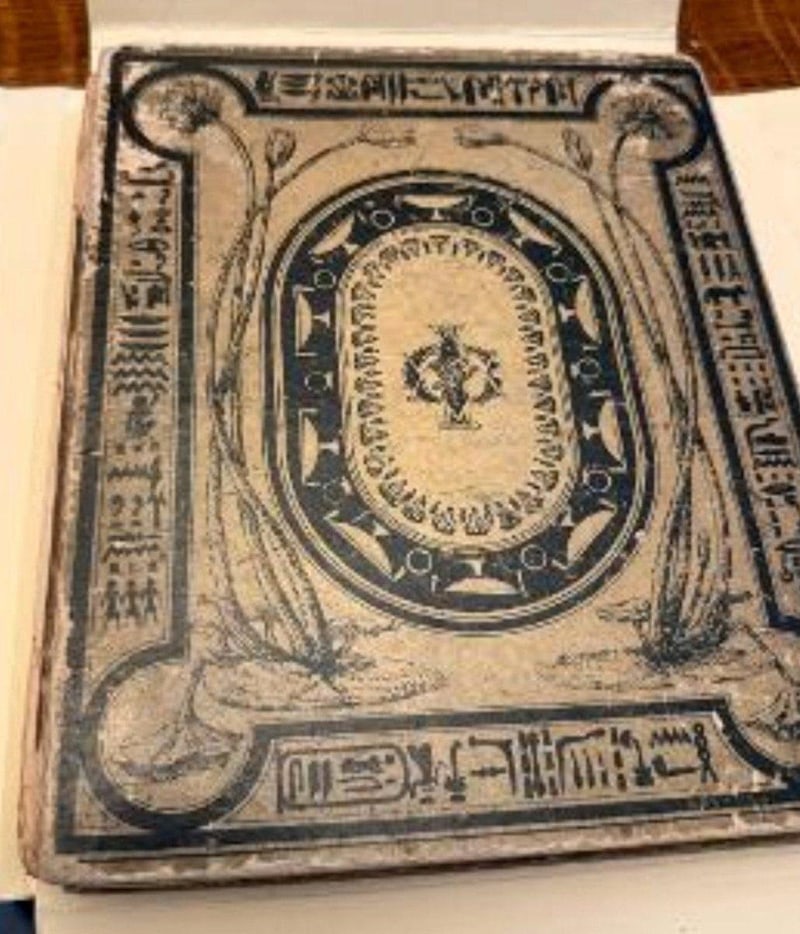
Philomathean Society, University of Pennsylvania
Philadelphia, Pennsylvania
Original cream publisher-issued boards with black decoration.
Gift of Reuben C. Hale to Edward C. Herrick, January 21, 1859.
Reuben C. Hale → Edward C. Herrick → Philomathean Society
Philomathean Society collection documentation and copy-specific photograph of C005’s cream publisher-issued front board; Yale University Archives, Edward Claudius Herrick papers; Thomas Anthony Thacher’s 1862 memorial biography documenting Herrick’s non-collegiate education, honorary Yale A.M. in 1838, librarianship, and treasurership.
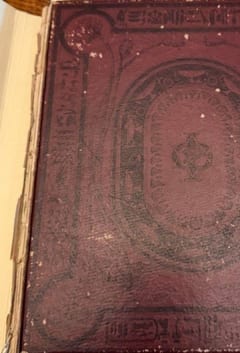
Philomathean Society, University of Pennsylvania
Philadelphia, Pennsylvania
Original red publisher-issued boards with black decoration; later black cloth rebacking.
Gift of Henry D. Gilpin to J. Francis Fisher, January 1859.
Henry D. Gilpin → J. Francis Fisher → unresolved gap → Philomathean Society
Philomathean Society collection documentation and copy-specific photograph of C006’s red publisher-issued front board; Philomathean Society moderator and alumni rolls; Genealogy of the Fisher Family, 1682 to 1896; and Samuel Carpenter and His Descendants.
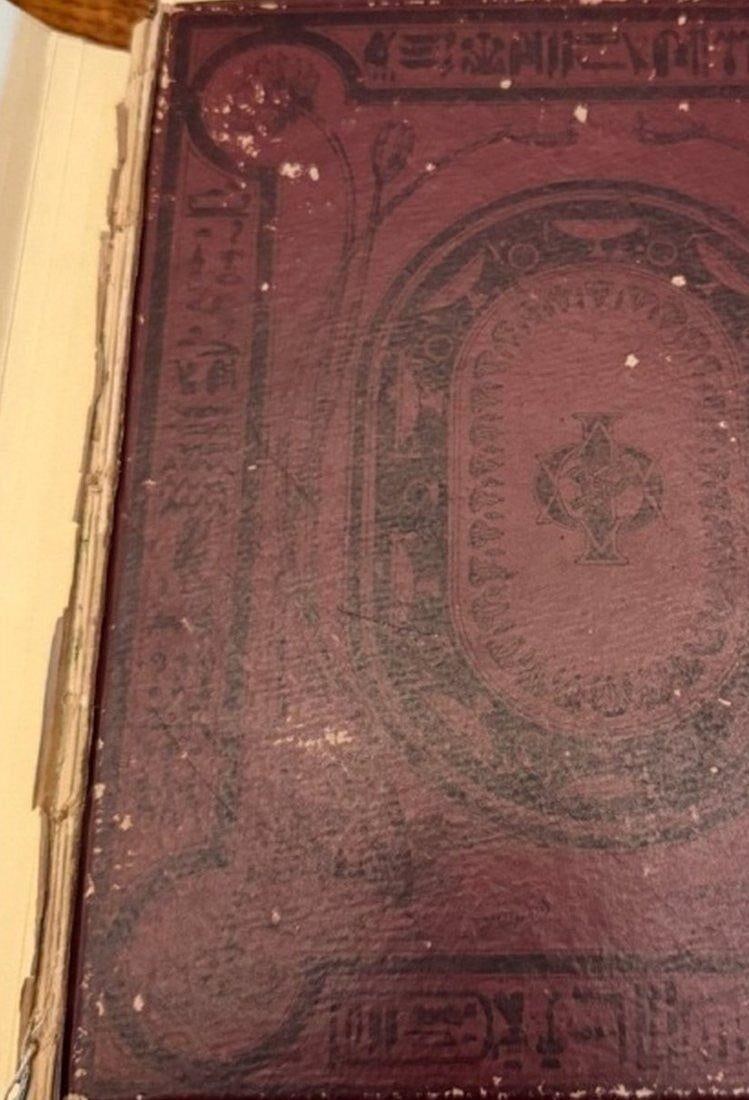
Philomathean Society, University of Pennsylvania
Philadelphia, Pennsylvania
Original red publisher-issued boards with black decoration; later black cloth rebacking.
No presentation inscription identified.
Unrecorded earlier ownership → Philomathean Society, University of Pennsylvania
Philomathean Society collection documentation and representative photograph supplied for the Society’s red first-edition copies.
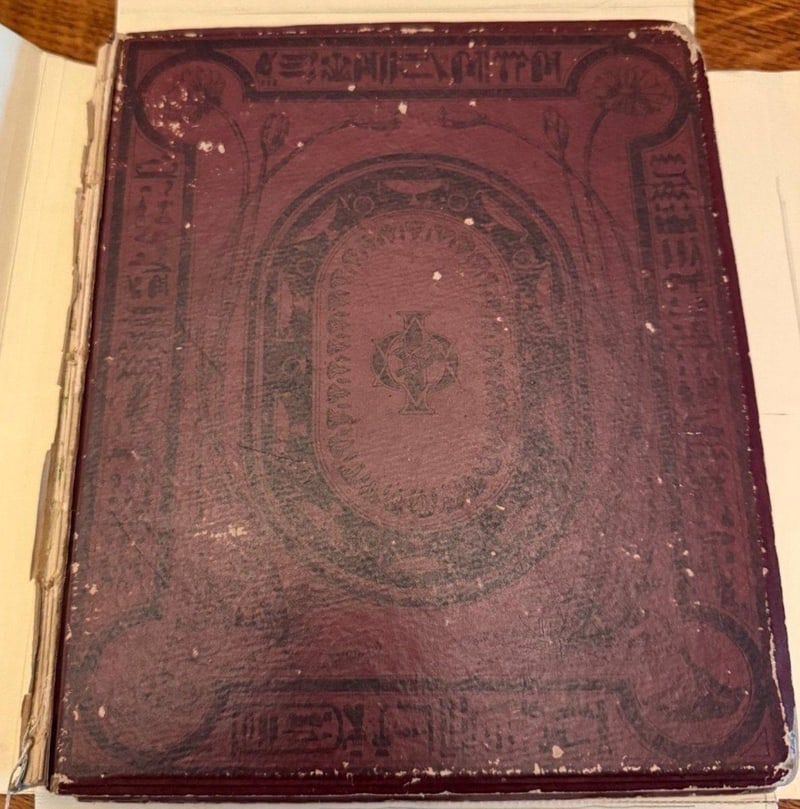
Philomathean Society, University of Pennsylvania
Philadelphia, Pennsylvania
Original brown publisher-issued boards with gold decoration.
No presentation inscription identified.
Unrecorded earlier ownership → Philomathean Society, University of Pennsylvania
Philomathean Society collection documentation and copy-specific photograph of C008’s surviving brown rear board and missing front board.
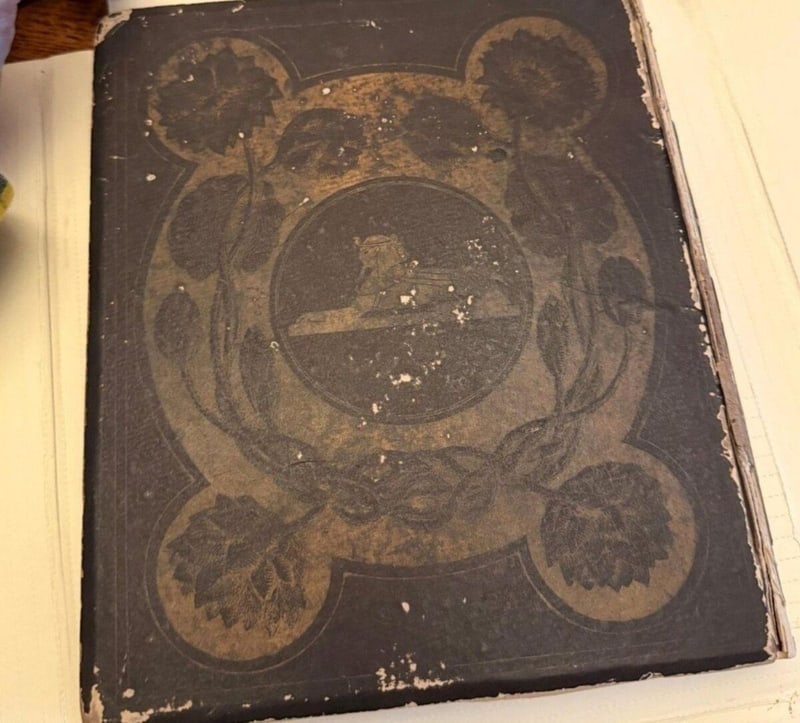
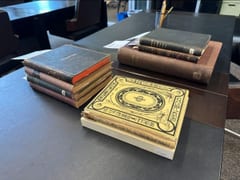
Kislak Center, University of Pennsylvania
Philadelphia, Pennsylvania
Original cream publisher-issued boards with black decoration.
No early presentation inscription identified.
Unrecorded earlier ownership → Kislak Center
Kislak Center for Special Collections, Rare Books and Manuscripts catalog and holdings documentation; first-edition holdings photograph identifying C009.
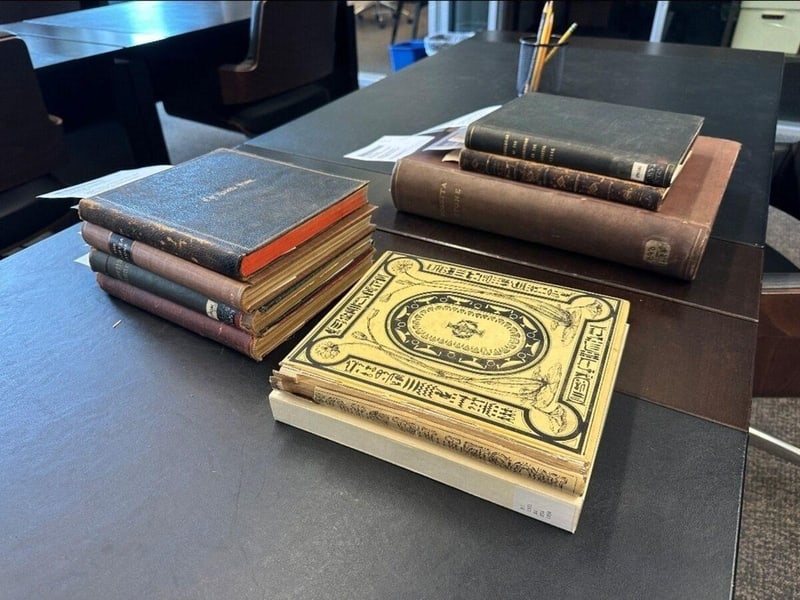
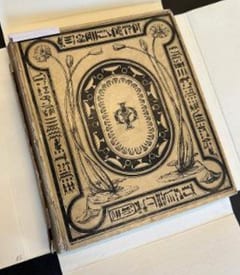
Kislak Center, University of Pennsylvania
Philadelphia, Pennsylvania
Original cream publisher-issued boards with black decoration.
Twentieth-century institutional gift, not an 1858–59 presentation.
Harriet Cutler Cunningham Binney → Kislak Center
A twentieth-century family donation that returned an original cream-board copy to the University of Pennsylvania.
Kislak Center catalog and holdings documentation; copy-specific photographs of C010’s cream publisher binding and two ownership or donation notes.
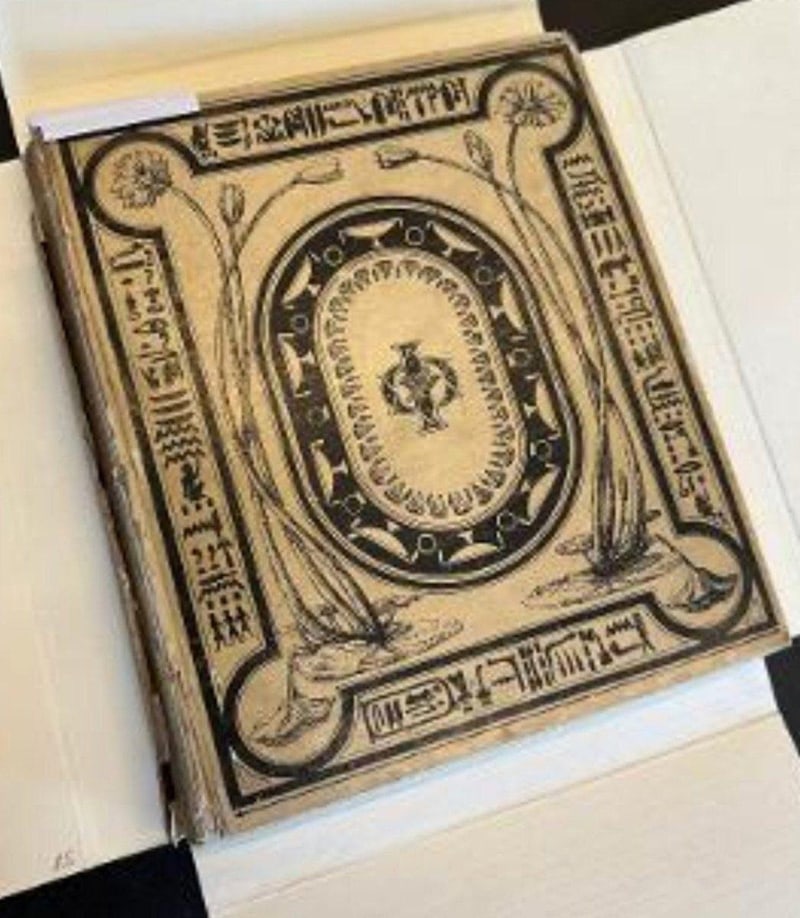
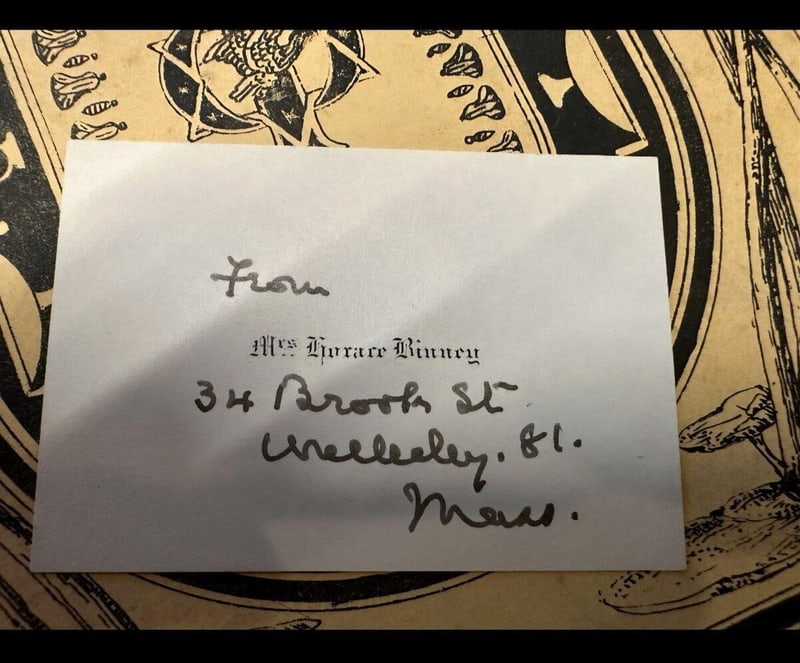
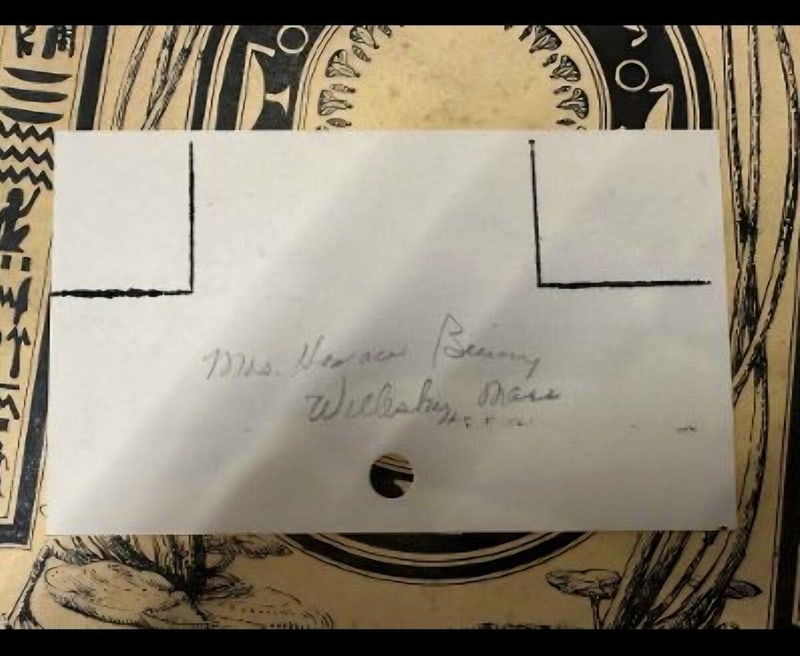
Kislak Center, University of Pennsylvania
Philadelphia, Pennsylvania
Later reddish-brown institutional binding.
No early presentation inscription identified.
Julia Cox Biddle bequest → University of Pennsylvania → Kislak Center
Julia Biddle’s bequest bookplate records how a nineteenth-century private library entered Penn’s collections.
Kislak Center catalog, bequest, and holdings documentation; copy-specific photographs of the Julia Cox Biddle bequest bookplate and rebound volumes.
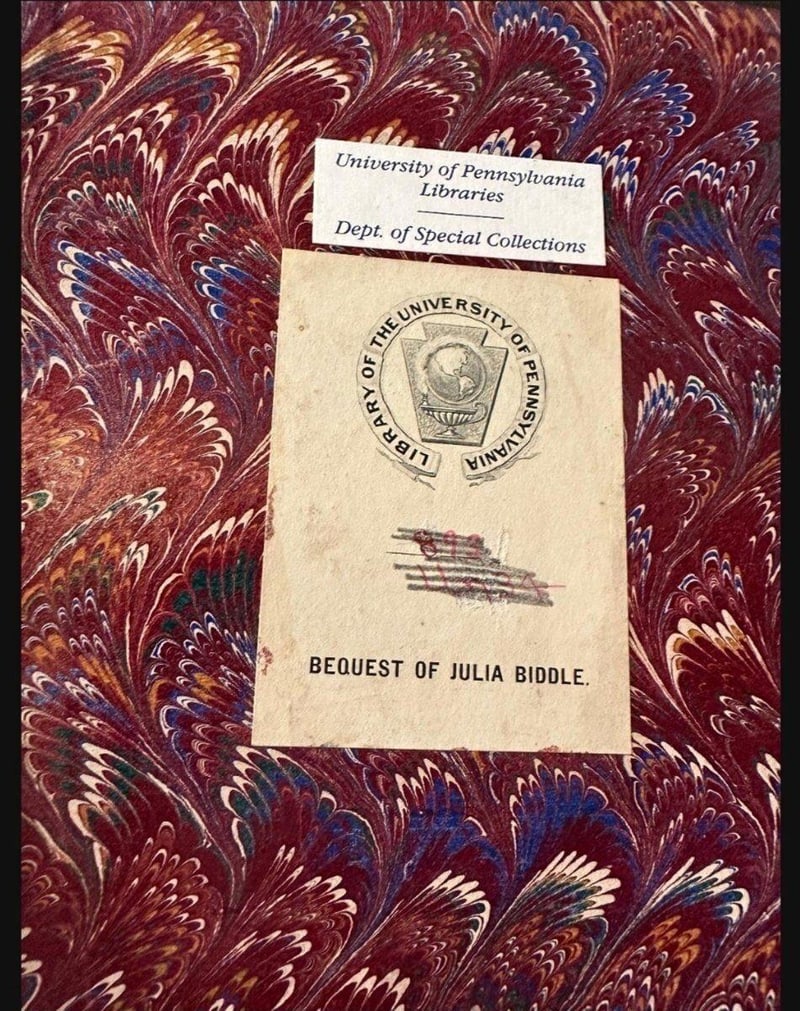
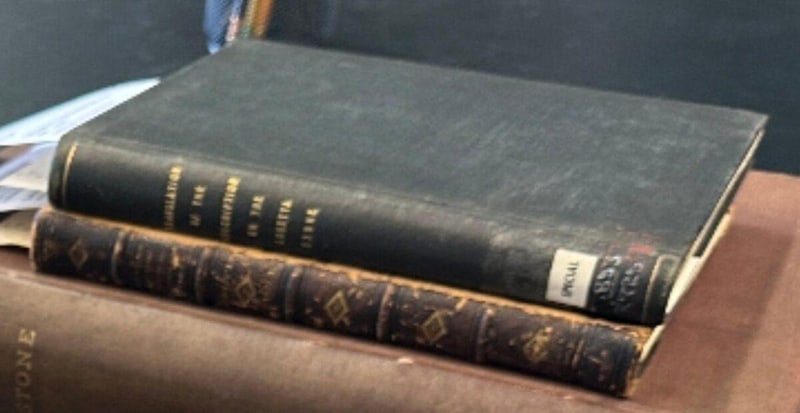
Kislak Center, University of Pennsylvania
Philadelphia, Pennsylvania
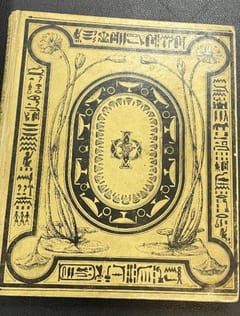
Later black institutional binding.
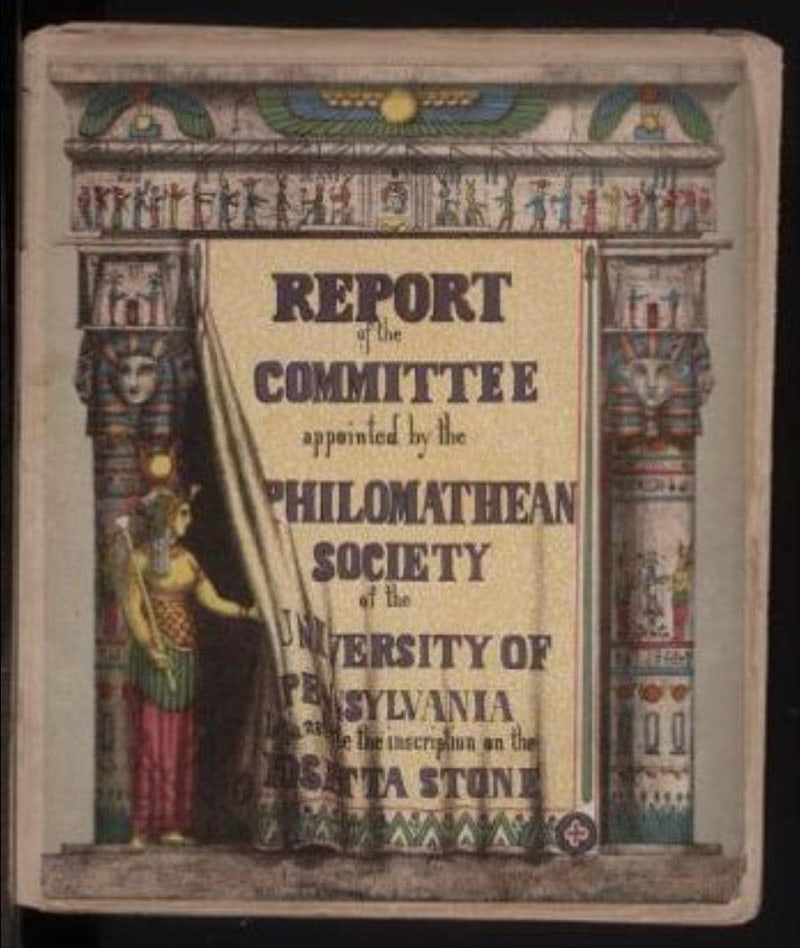
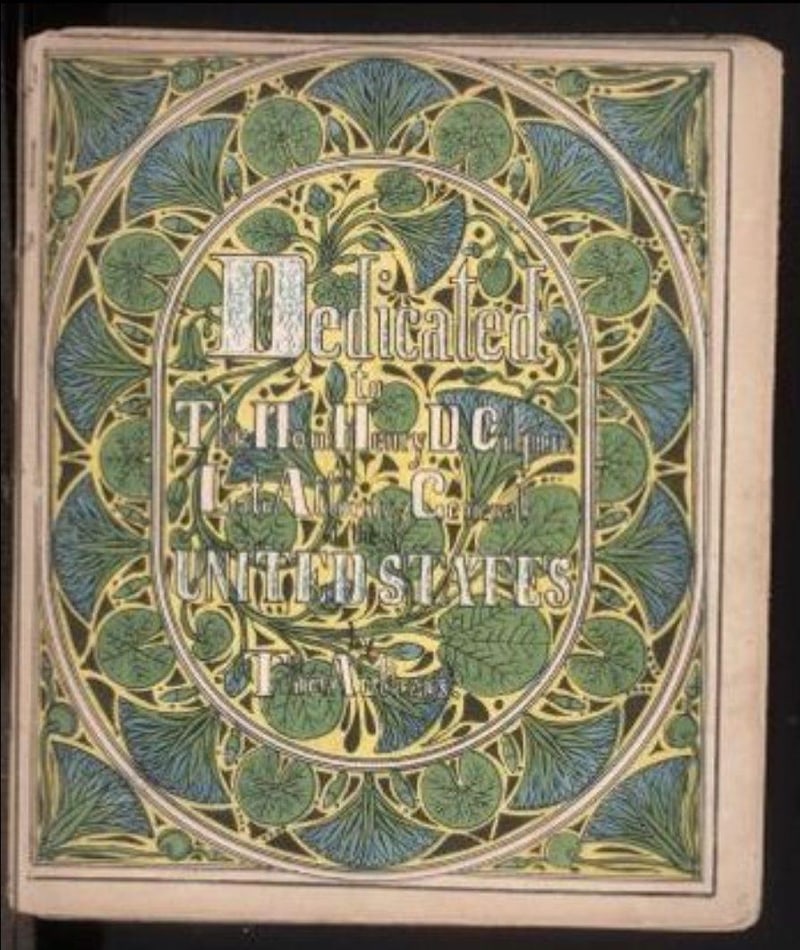
The title has no Second Edition statement; the botanical dedication and Colenda digitization identify the first edition, shelfmark PJ1531.R4 E54 1858 copy 4.
No early presentation inscription identified.
Gift of Edgar Fahs Smith → University of Pennsylvania → Kislak Center
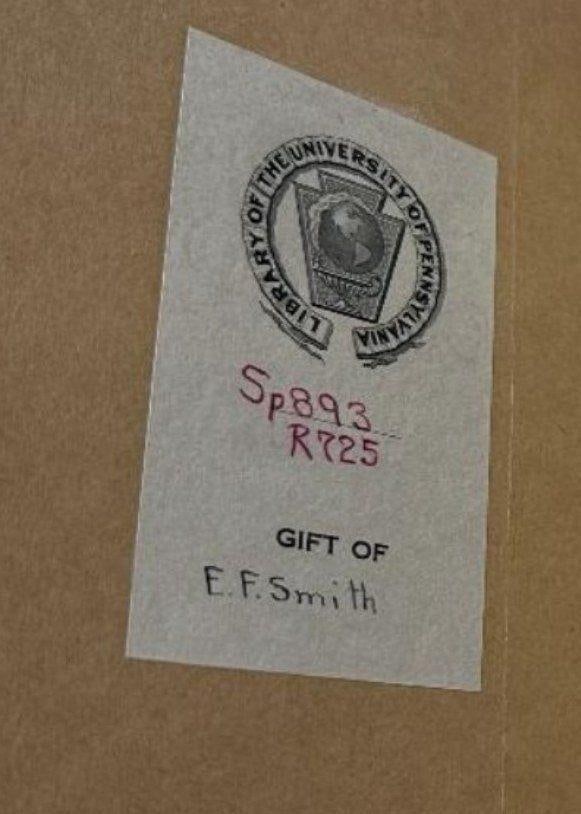
The “Gift of E. F. Smith” label documents Penn’s institutional collecting history and the role of the Edgar Fahs Smith gift fund.
Kislak Center catalog and holdings documentation; copy-specific photographs of the rebound volumes and Edgar Fahs Smith bookplate and interior markings; title page and dedication leaf confirmed via the University of Pennsylvania’s Colenda Digital Repository.
The shared photograph of the two rebound Kislak copies appears in C011.
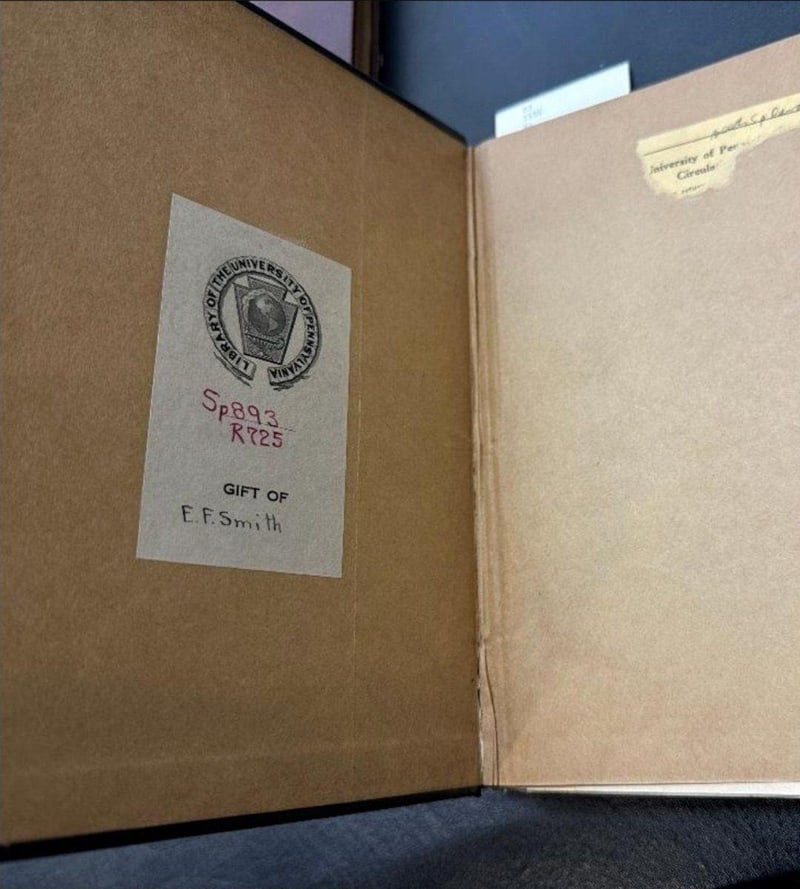
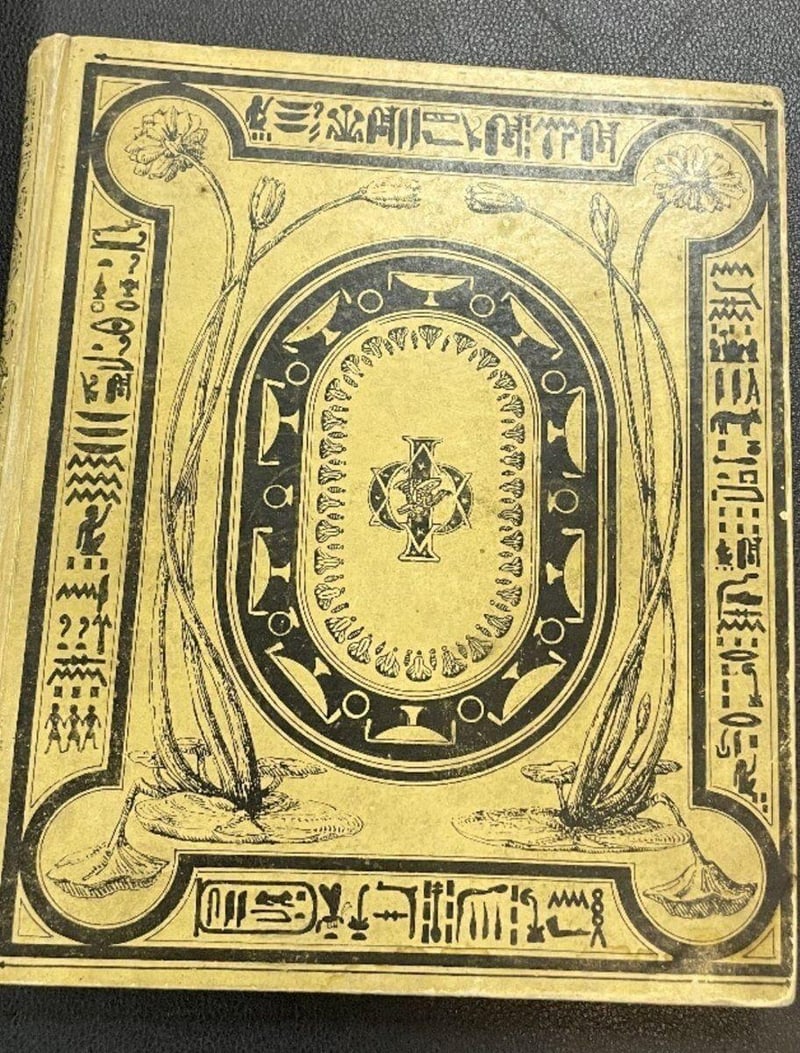
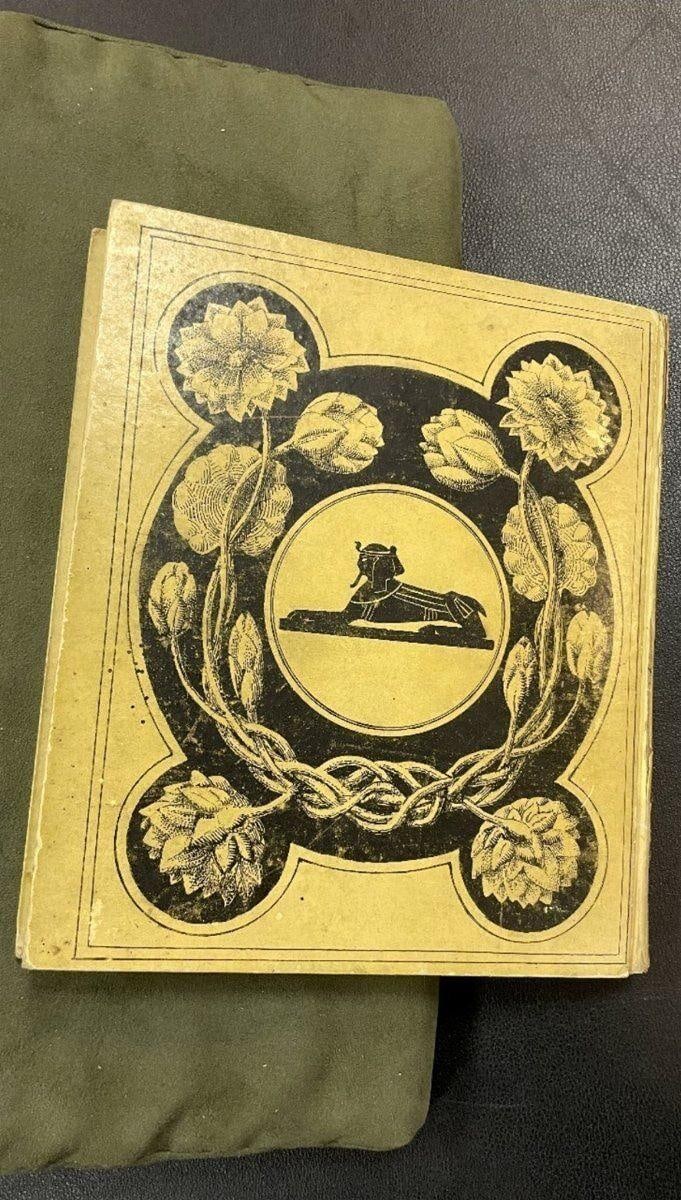
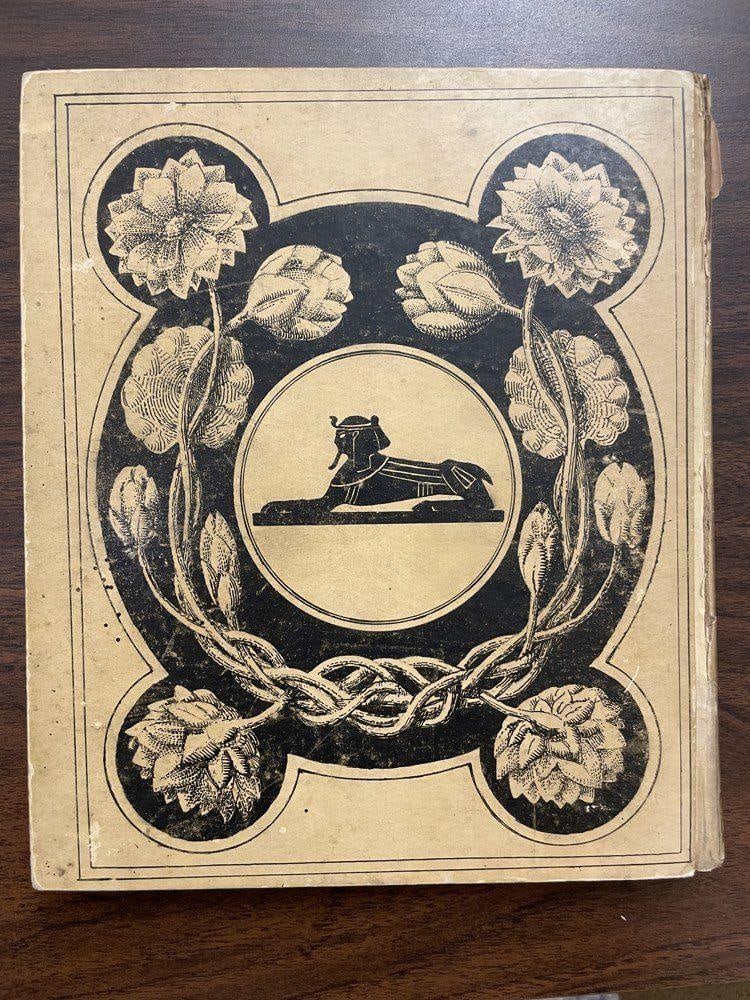
Library Company of Philadelphia
Philadelphia, Pennsylvania
Original cream publisher-issued boards with black decoration.
No presentation inscription identified.
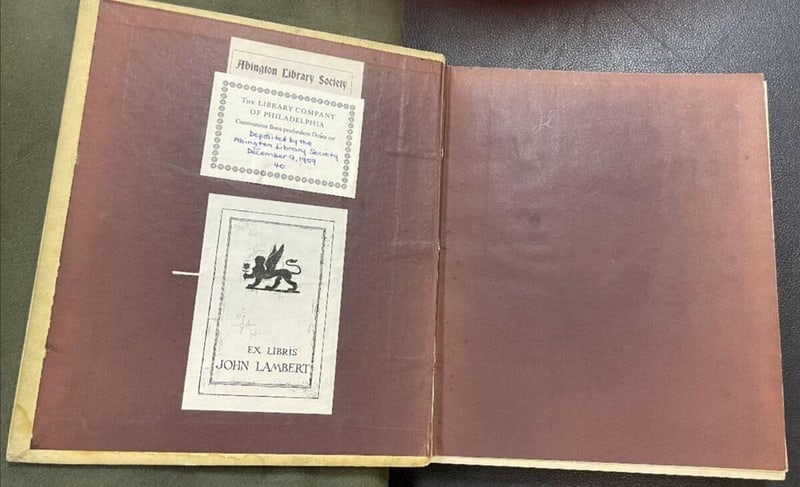
John Lambert → Abington Library Society → Library Company of Philadelphia (on deposit)
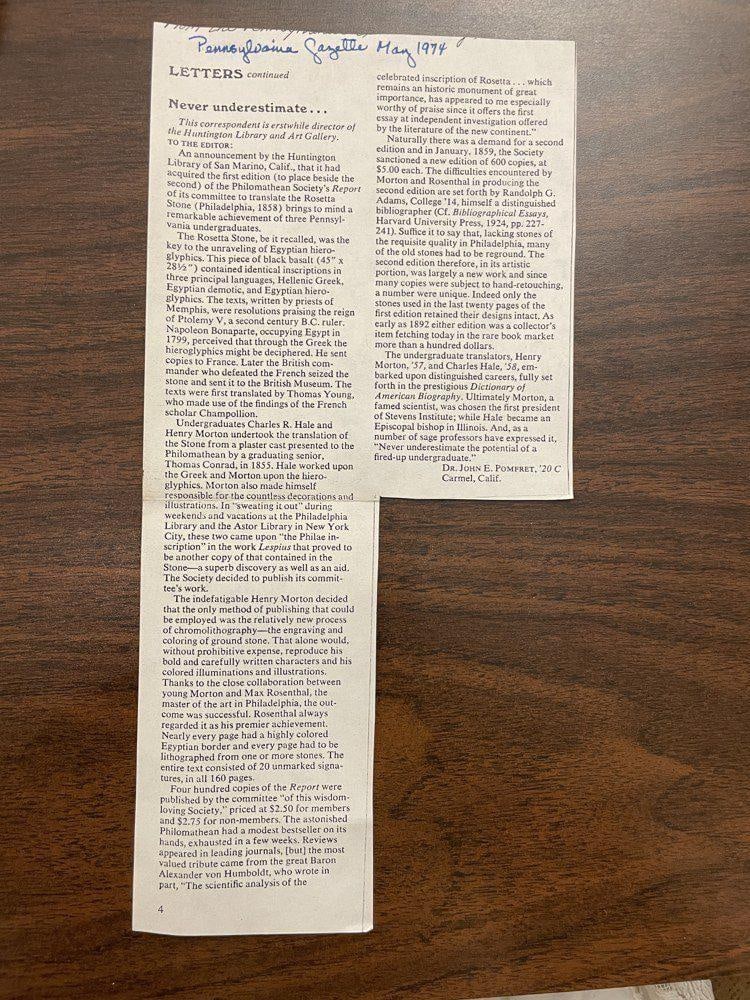
The Lambert ex-libris and Abington deposit labels document private and institutional ownership. John Lambert Jr. is the strongly supported owner identification. A May 1974 Pennsylvania Gazette clipping survives in the housing.
Library Company catalog, correspondence, and copy photographs; Pennsylvania Gazette, May 1974, ‘Never underestimate…’; Philomathean alumni roll; Penn General Alumni Catalogue. The clipping records 600 second-edition copies authorized in January 1859; it does not give the first-edition print run.
Library Company of Philadelphia
Philadelphia, Pennsylvania
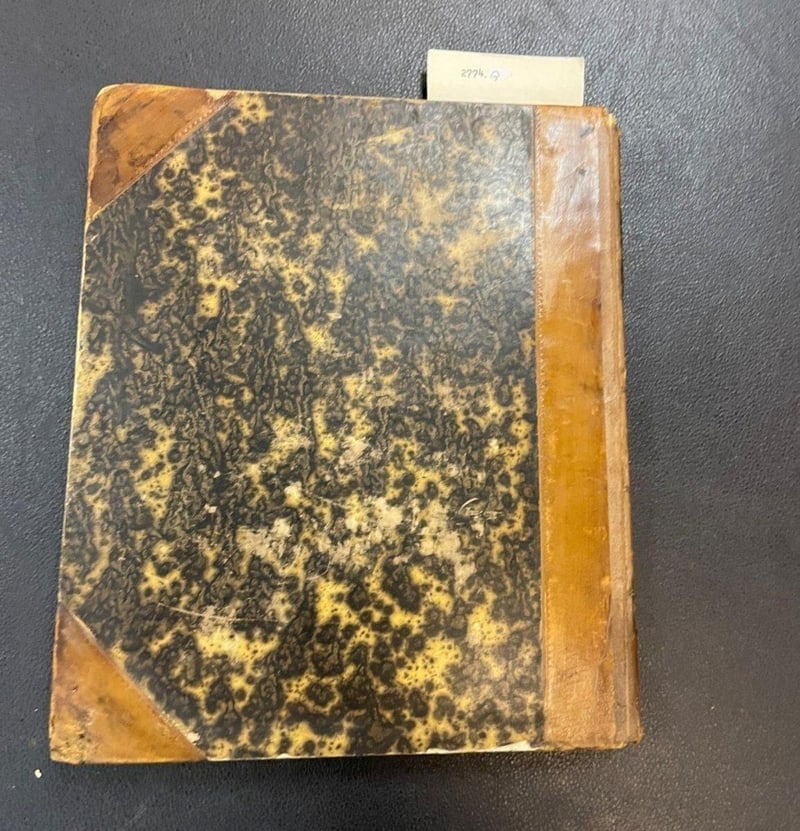
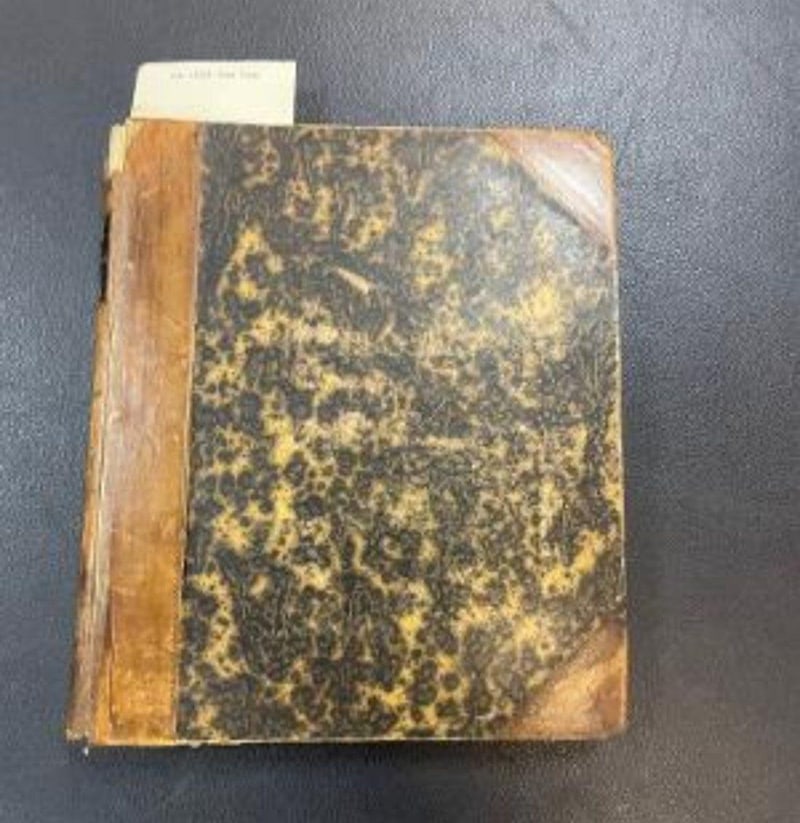
Later tan half-leather and marbled-paper rebinding.
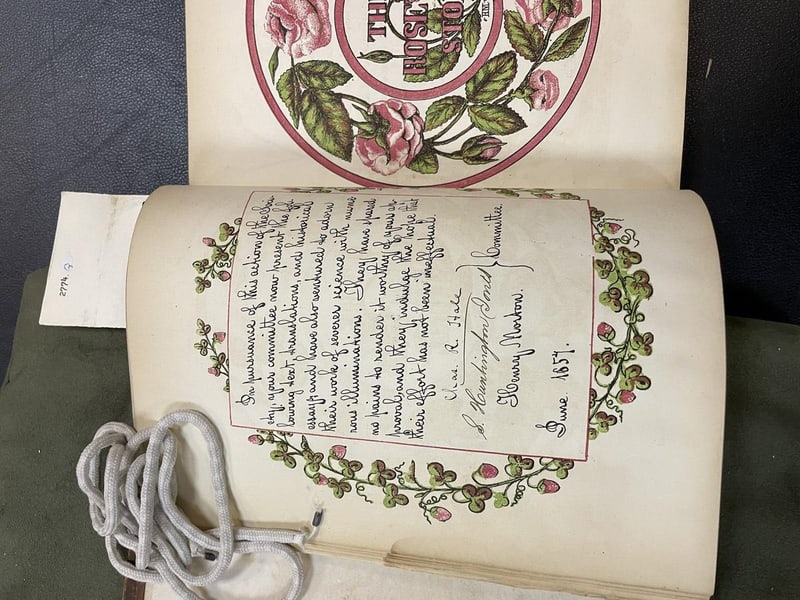
The illuminated committee page names Hale, Jones, and Morton and is dated June 1857. No Second Edition statement is visible on the facing leaf.
Handwritten “Gift of the Authors” inscription. The hand is suspected to be Charles Reuben Hale’s, but the attribution remains under review.
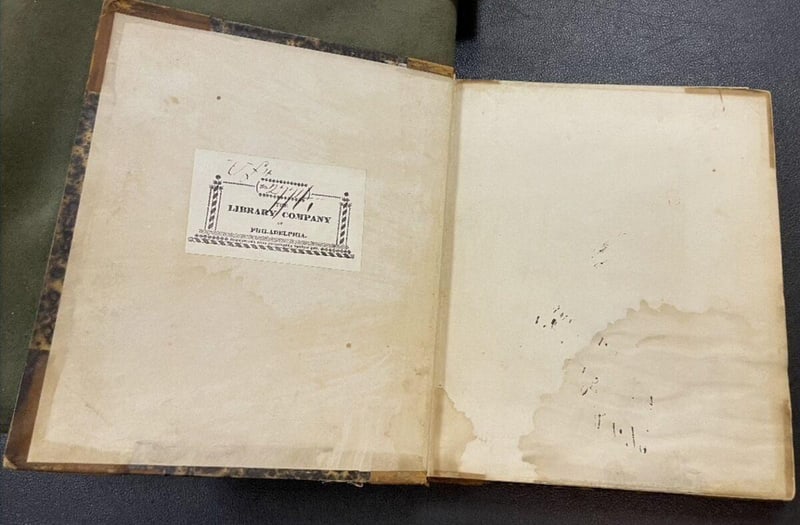
Unrecorded earlier ownership → Library Company of Philadelphia, accession 2774.Q
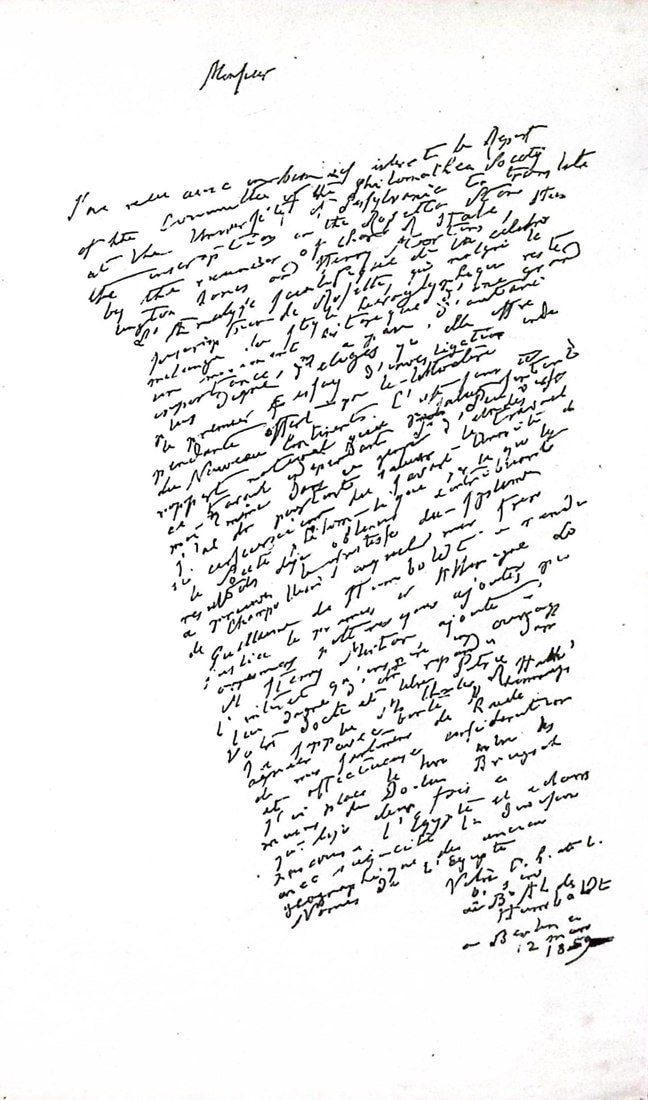
C014 handwriting comparison: the “Gift of the Authors” inscription was compared with confirmed Charles Reuben Hale inscriptions and Hale’s handwritten letter to Archibald Campbell Tait. The preface committee page was also examined for edition confirmation.
Haverford College, Quaker & Special Collections
Haverford, Pennsylvania
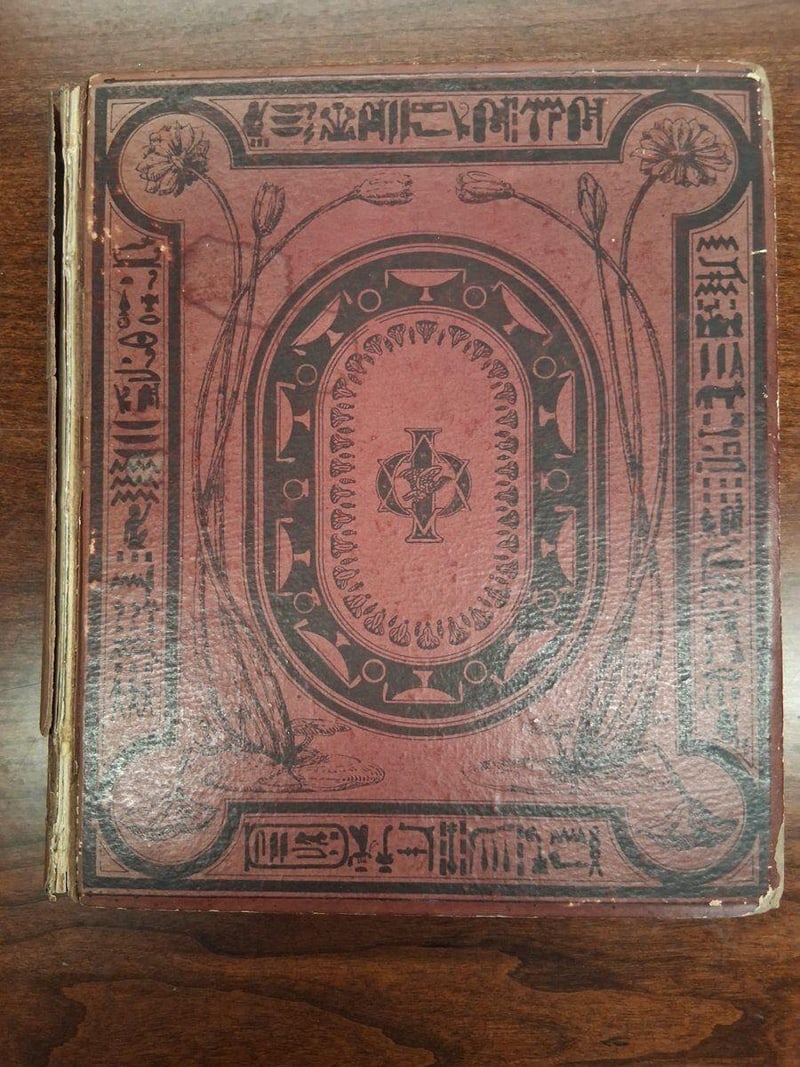
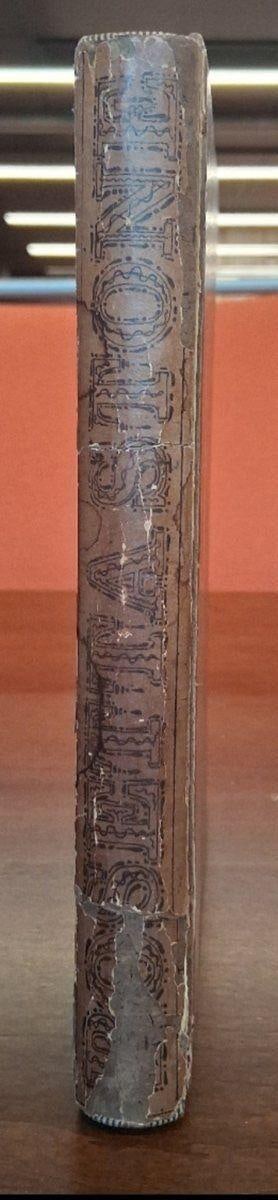
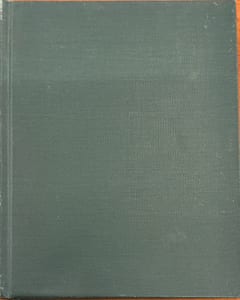
Original red publisher-issued boards with black decoration; later black cloth rebacking.
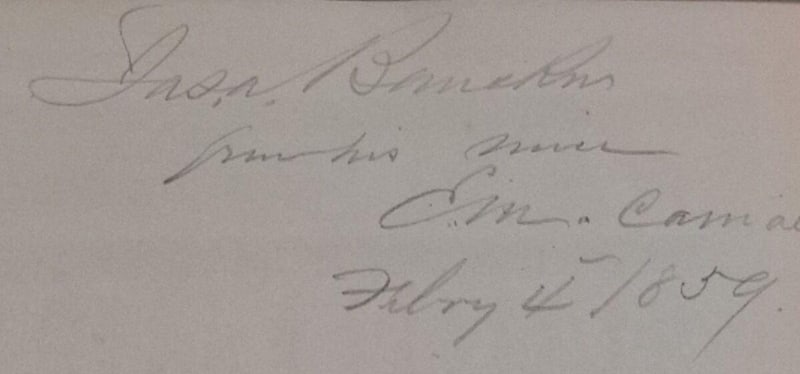
Birthday gift from Ellen Maria Camac to her uncle James Albert Bancker, February 4, 1859.
Ellen Maria Camac → James Albert Bancker → Richard Jenney → Haverford College
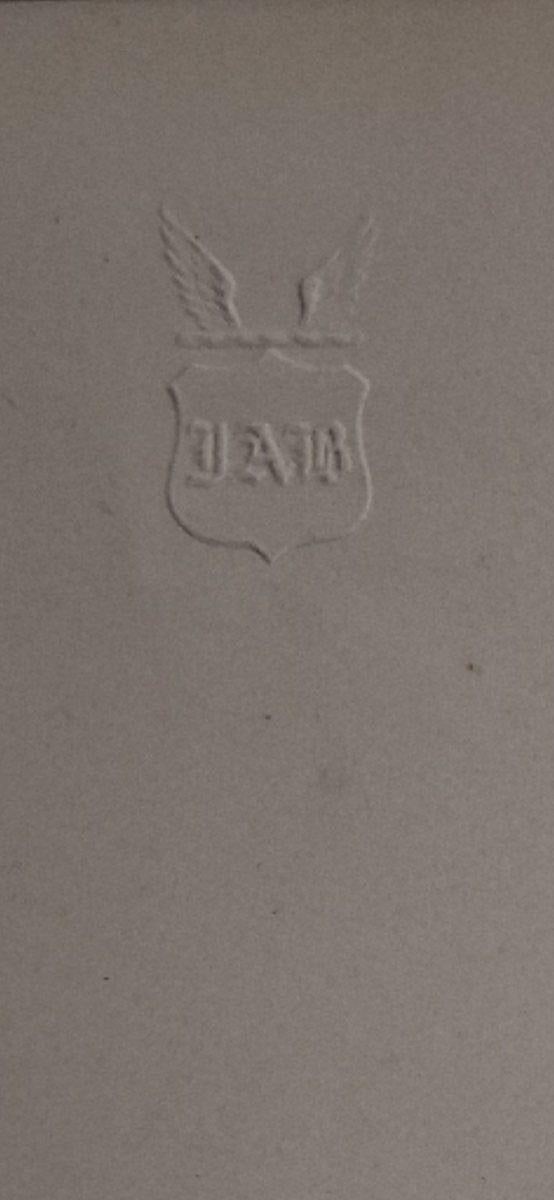
A documented niece-to-uncle birthday gift made only weeks after publication. The J.A.B. stamp and Richard Jenney ownership add two later points.
C015 Haverford provenance and local records used for the probable identification of Richard Jenney as the Haverford engineer (1901–1972).
The Huntington Library
San Marino, California
Later green institutional cloth binding with gilt spine lettering.
Authorial presentation by Charles R. Hale to his aunt Mary J. Welles, Christmas 1858.
Charles R. Hale → Mary J. Welles → Alma Freeman Welles → Huntington Library
A direct Hale-family presentation to the author’s aunt, later retained within the Welles family before entering the Huntington Library.
The Huntington Library catalog, acquisition, and provenance documentation; copy photographs of the green rebound binding, first-edition title, Charles R. Hale presentation inscription, Alma Freeman Welles signature, and bookseller note.
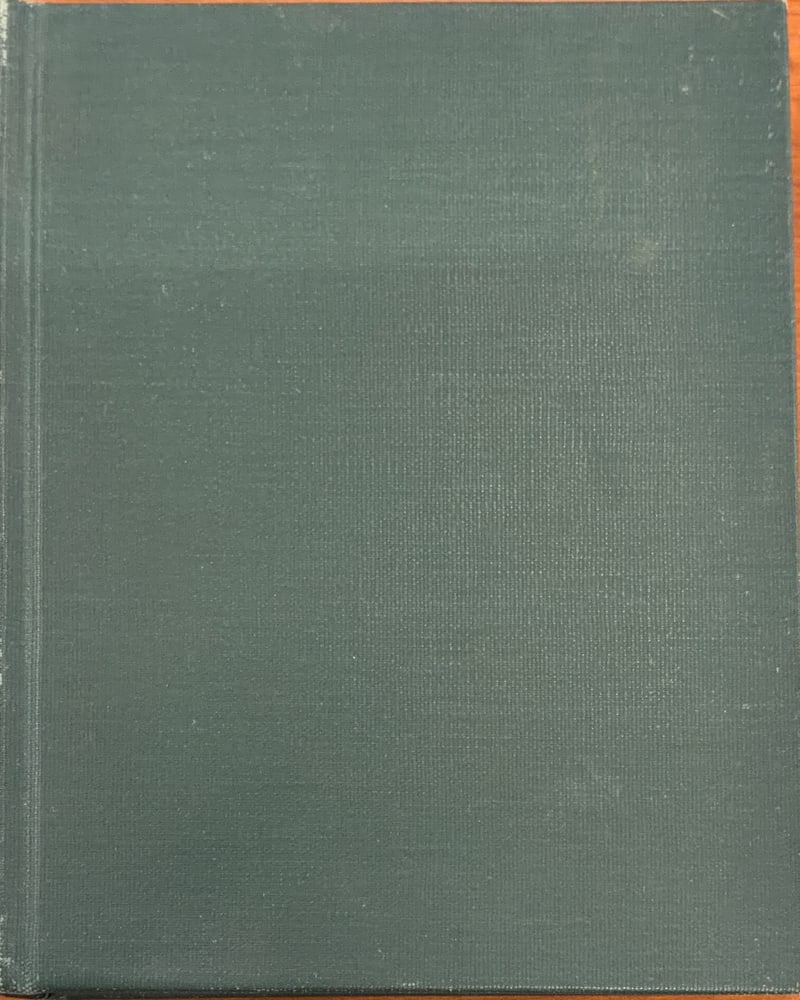
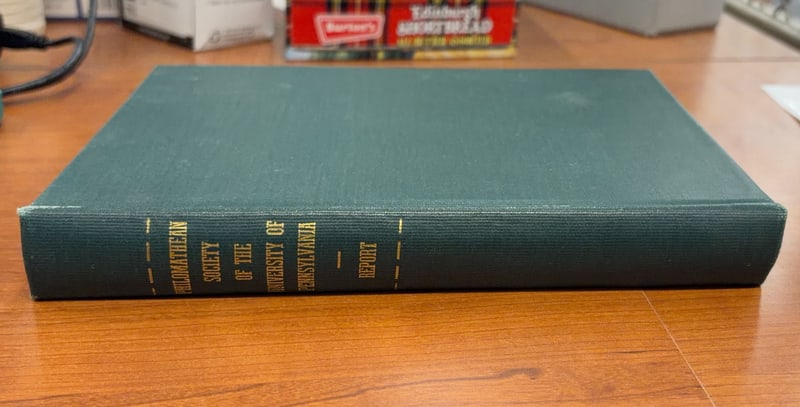
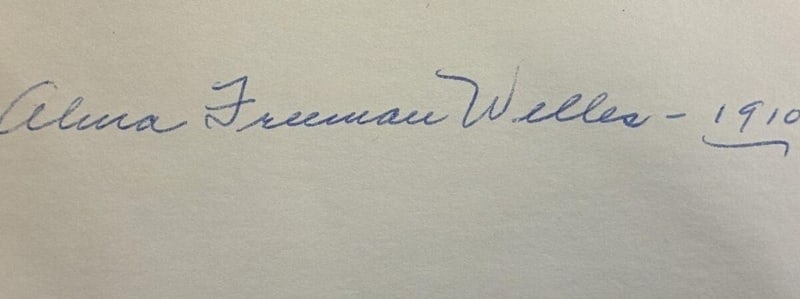
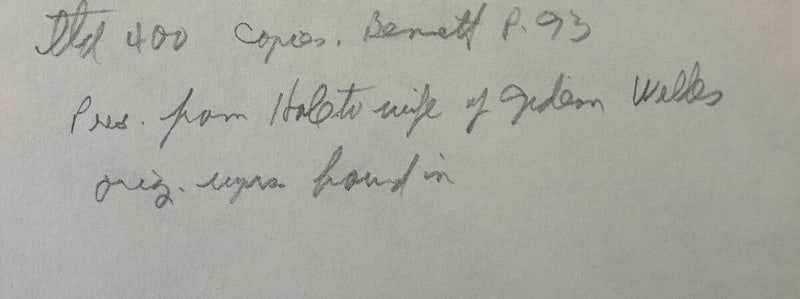
Images: The Huntington Library.
The Huntington Library
San Marino, California
Original brown publisher-issued boards with gold decoration; the spine is worn, with an exposed section at the foot.
No presentation inscription identified.
Unrecorded earlier ownership → The Huntington Library
The Huntington Library catalog and copy photographs of the binding, first-edition title, pasted bookseller clipping, and manuscript bibliographical note referring to Randolph G. Adams’s 1924 essay.
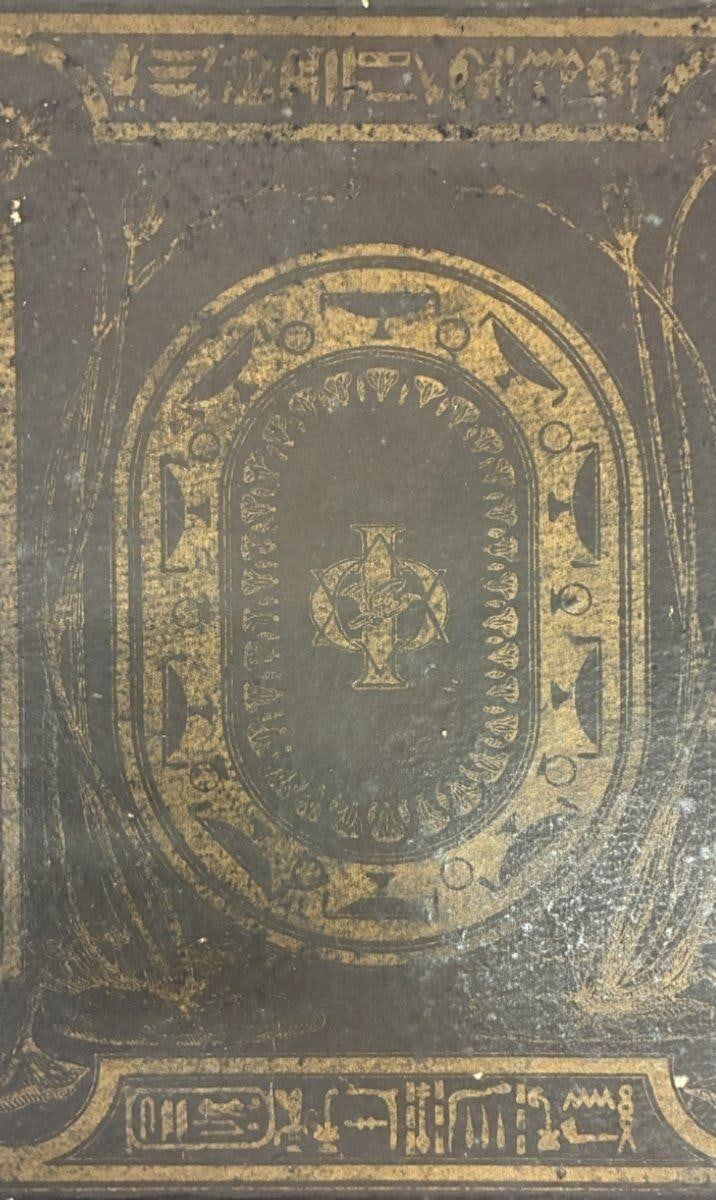
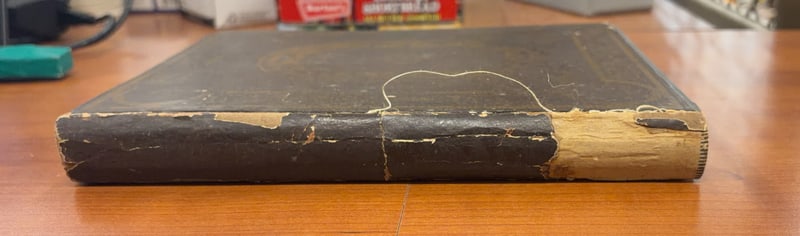
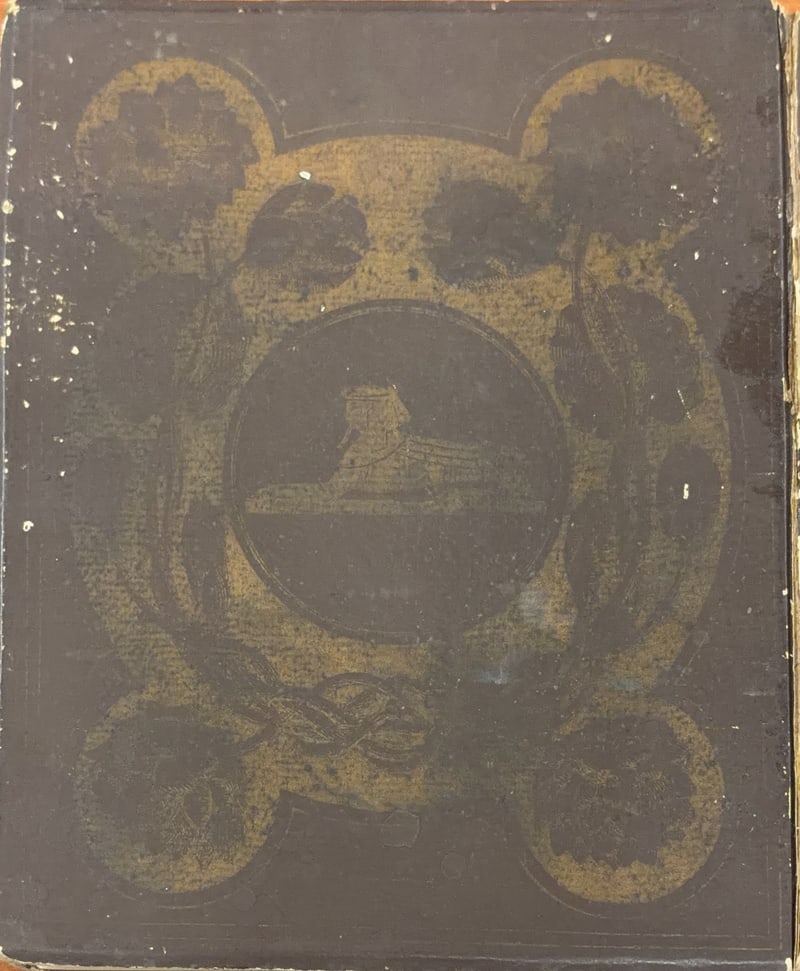
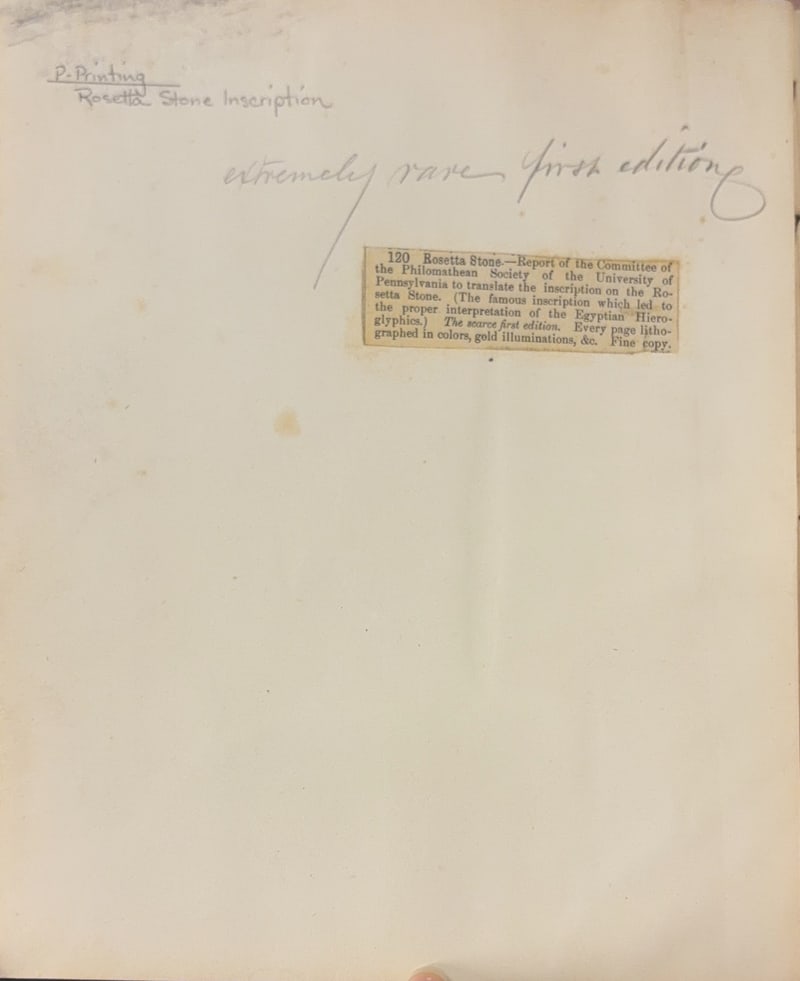
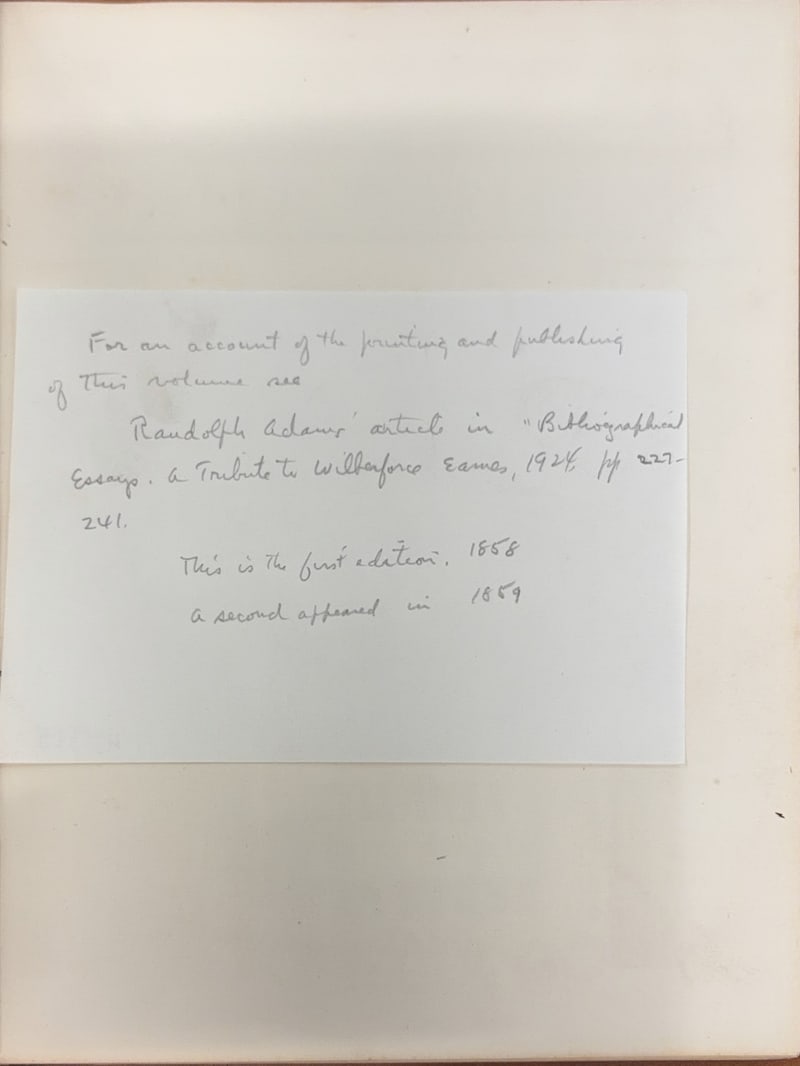
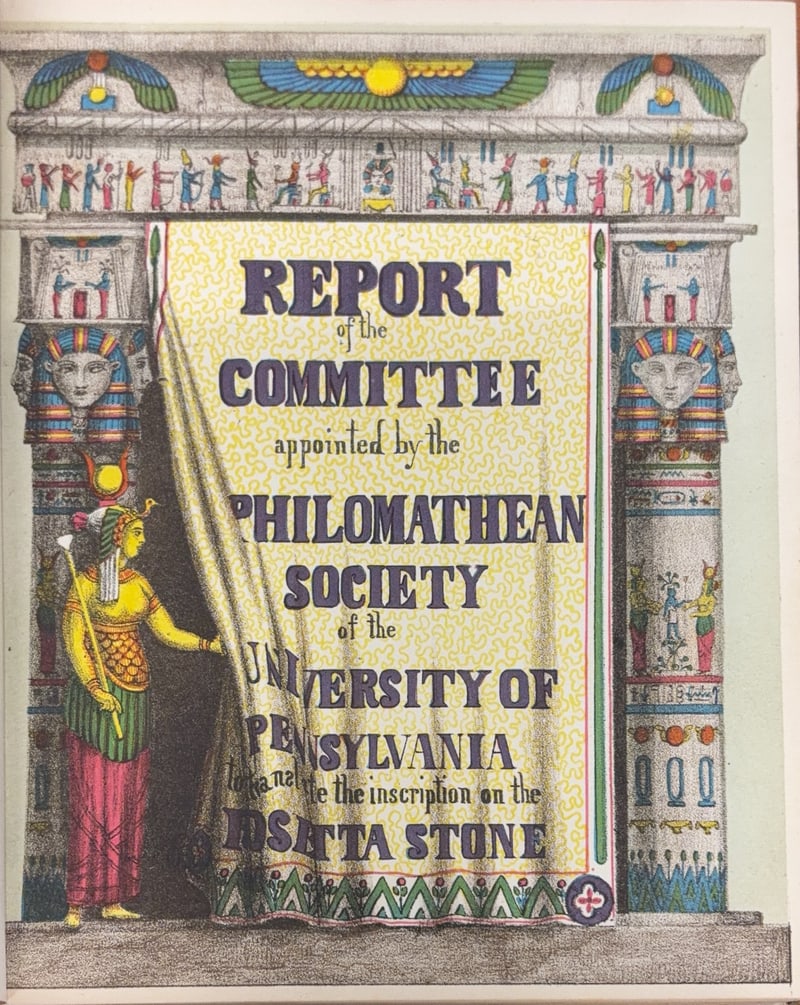
Images: The Huntington Library.
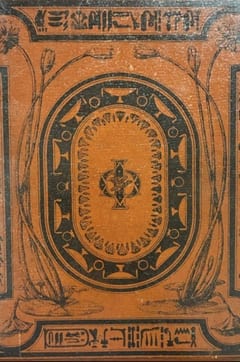
The Huntington Library
San Marino, California
Original orange publisher-issued boards with black decoration; wear and losses along the spine.
No presentation inscription identified.
Jay T. Last → Huntington Library, 2005
One of two documented Orange original-binding copies, alongside C064.
The Huntington Library catalog, Jay T. Last collection documentation, and copy photographs of the orange binding, first-edition title, and botanical dedication to Henry D. Gilpin.
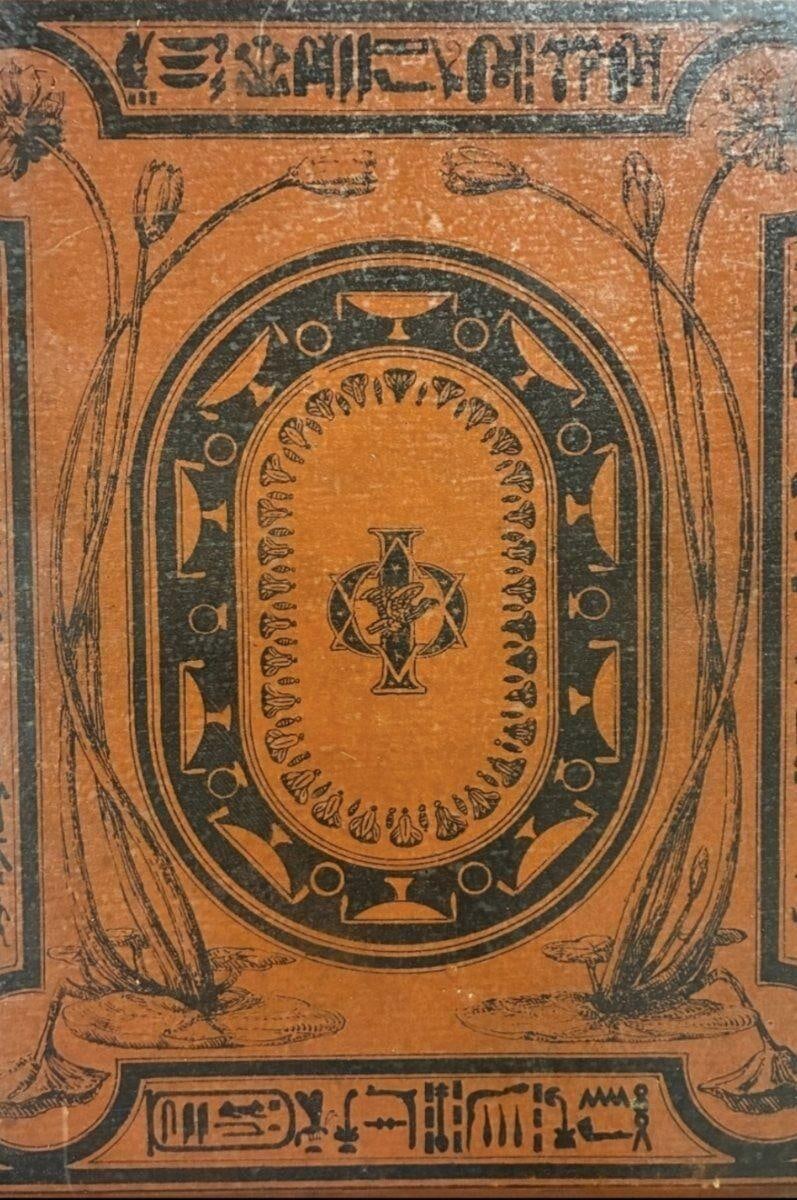
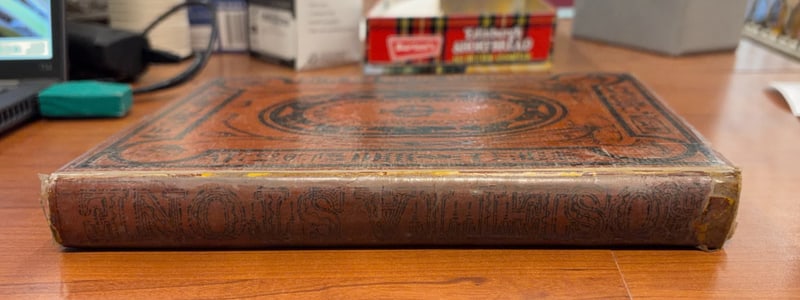
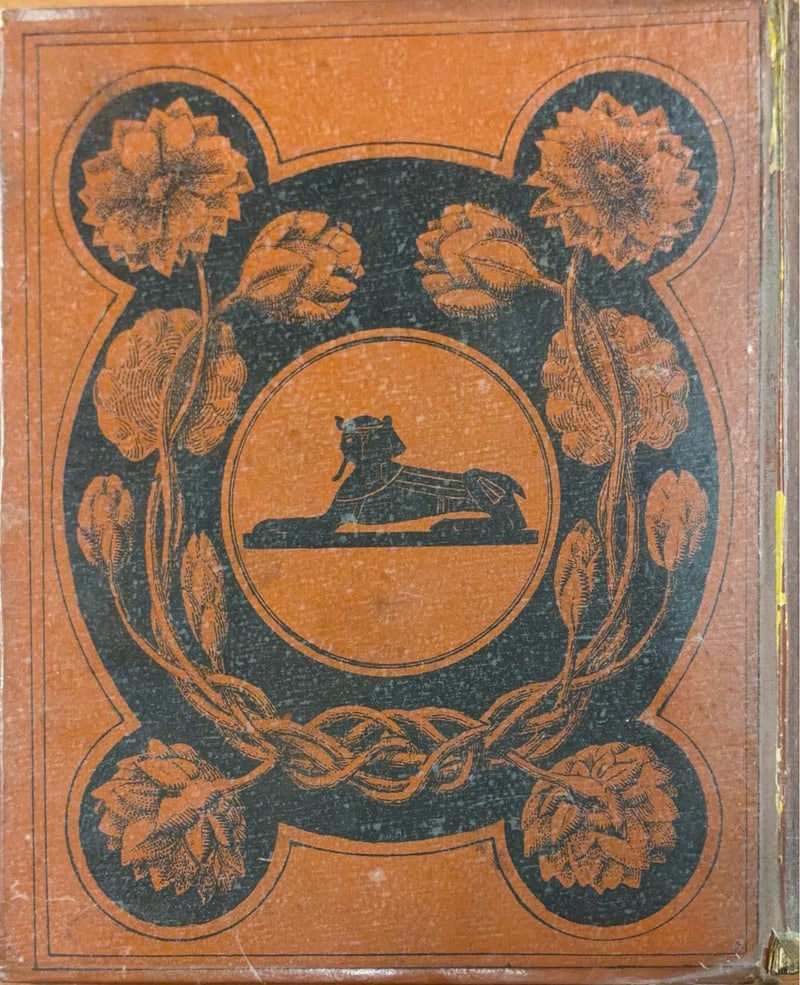
Images: The Huntington Library.
Duke University, Rubenstein Library
Durham, North Carolina
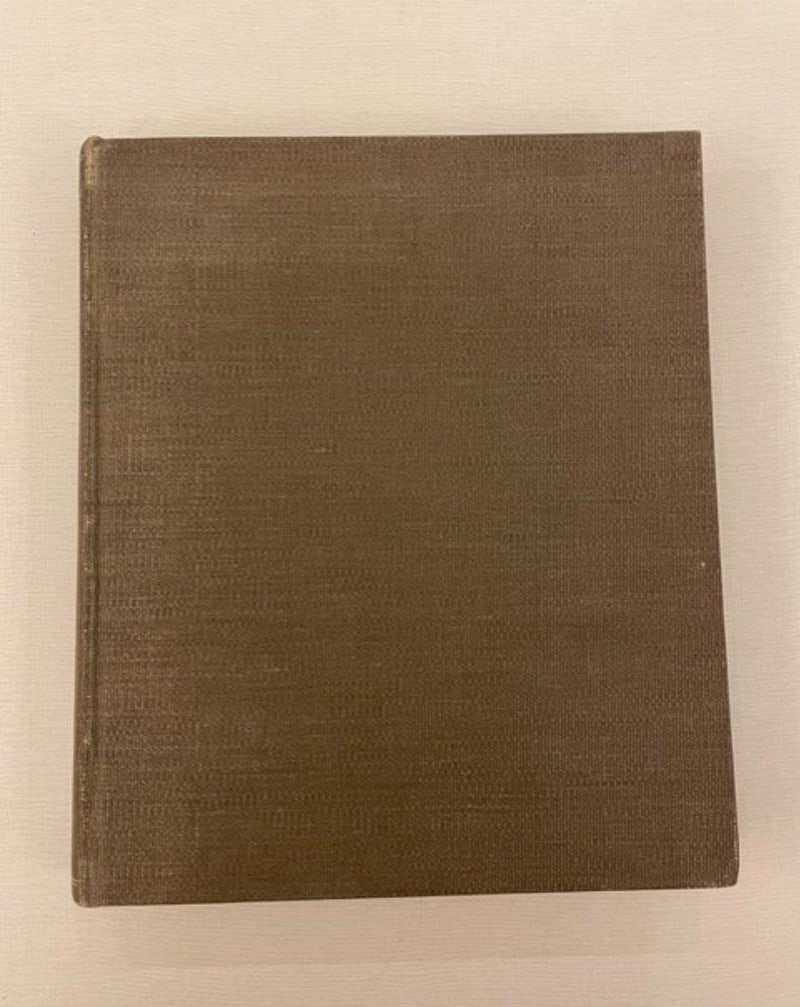
Later plain brown institutional binding.
No presentation inscription identified.
Unrecorded earlier ownership → Duke University, Rubenstein Library
Duke University, Rubenstein Library catalog and holdings documentation; copy-specific photographs of C019’s later binding, spine, and library titling.
University of Wisconsin–Madison, Special Collections
Madison, Wisconsin
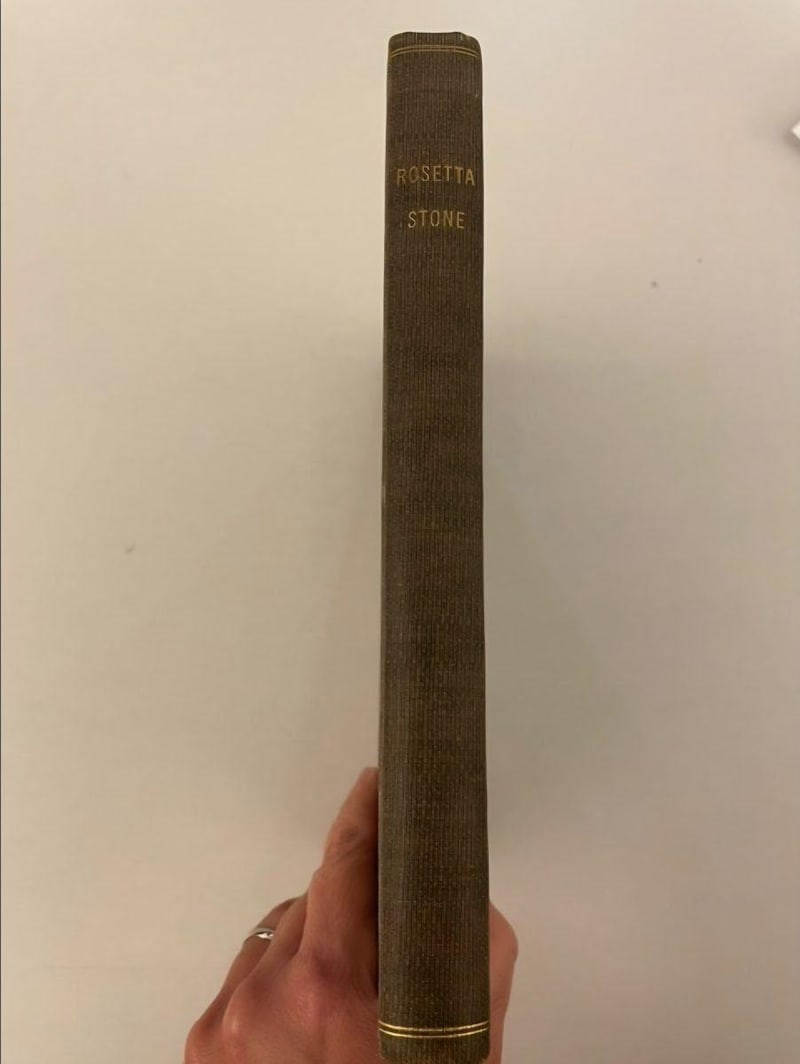
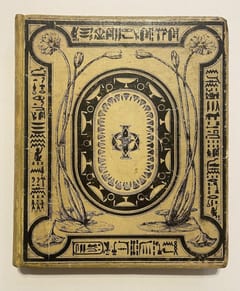
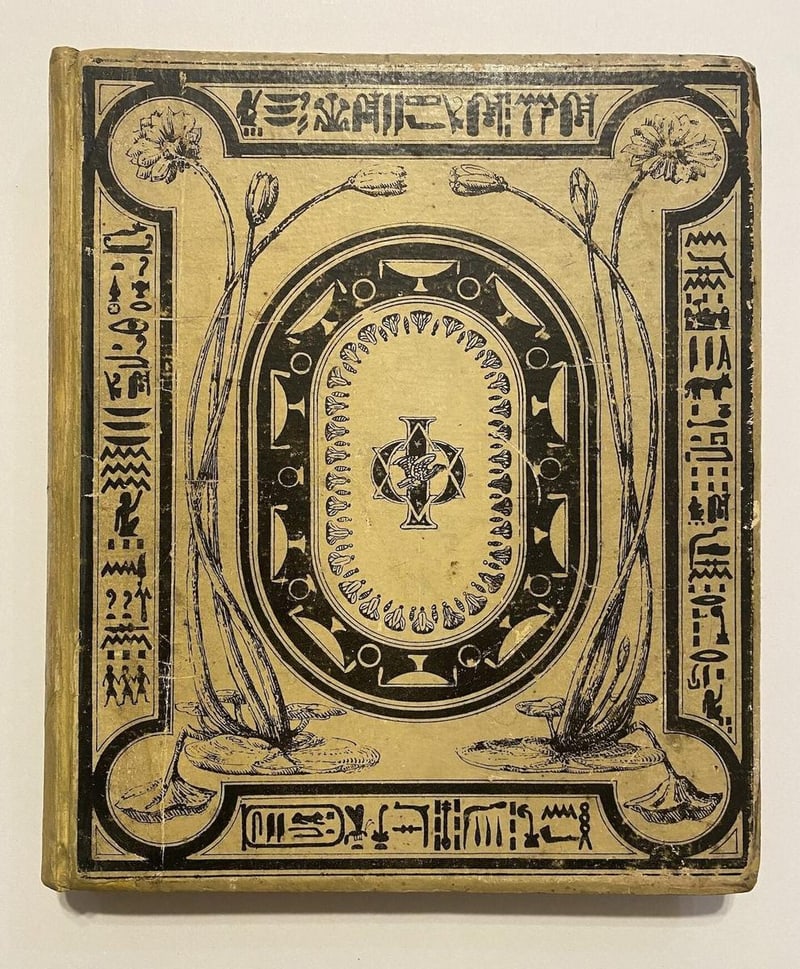
Original cream publisher-issued boards with black decoration; rebacked (color unrecorded), with most of the original spine laid down.
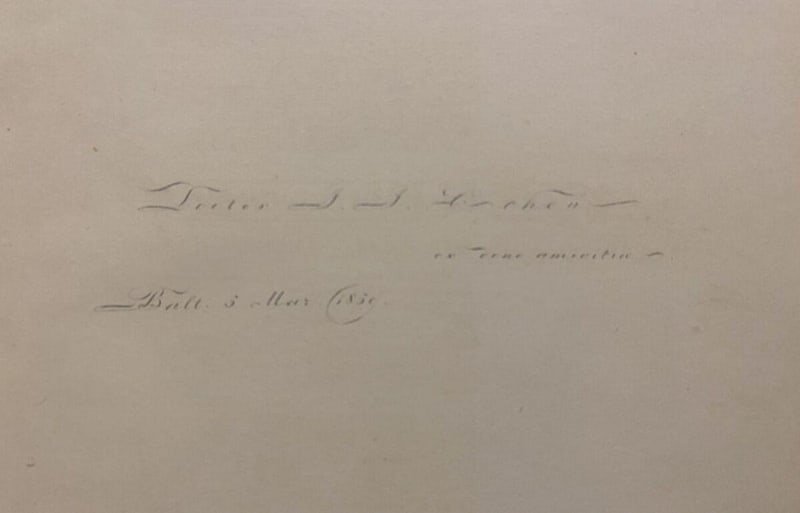
Presentation inscription to Joshua I. Cohen, Baltimore, March 5, 1859; inscription includes “ex dono amicitiae.” The presenter is unidentified.
Unidentified presenter → Joshua I. Cohen → unresolved gap → Michael Zinman → George S. MacManus Co. / Michael Laird → University of Wisconsin–Madison
A dated presentation inscription to scientist Joshua I. Cohen, followed by a well-documented modern dealer-and-collector chain.
University of Wisconsin–Madison catalog and provenance documentation; Michael Laird Rare Books description of the Joshua I. Cohen–Michael Zinman copy; copy-specific photographs supplied by University of Wisconsin–Madison.
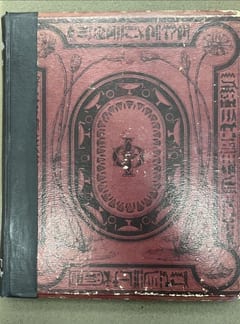
Case Western Reserve University, Kelvin Smith Library
Cleveland, Ohio
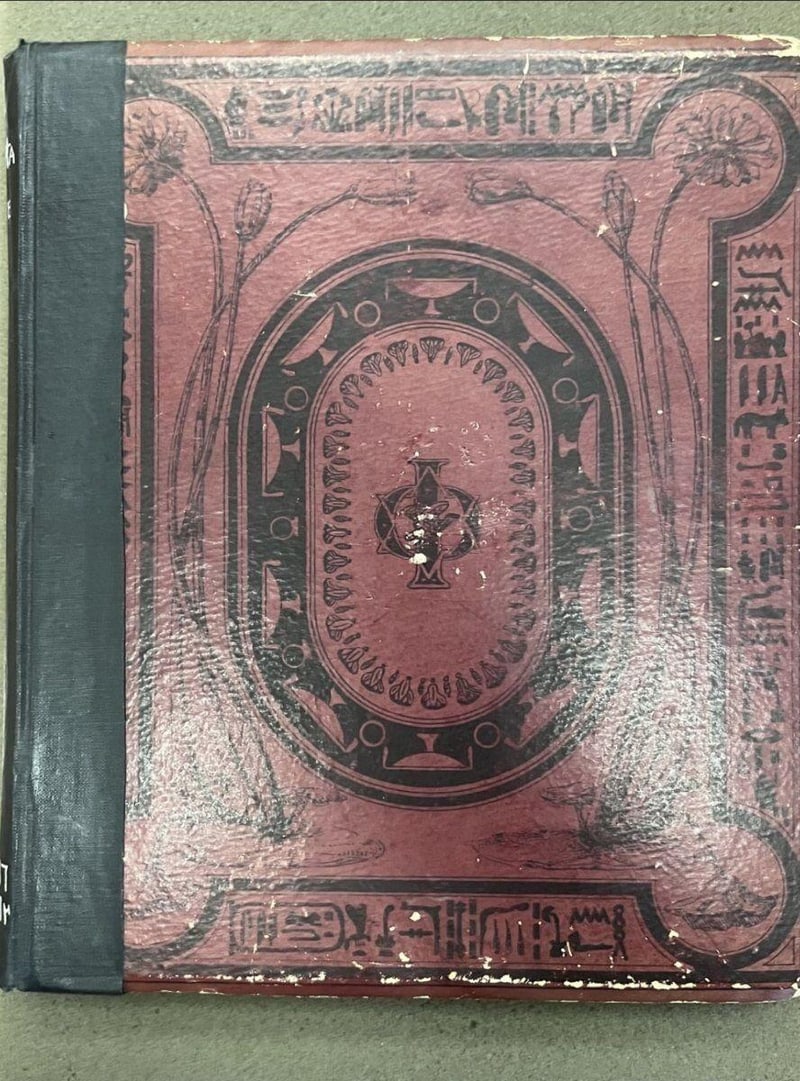
Original red publisher-issued boards with black decoration; later black cloth rebacking.
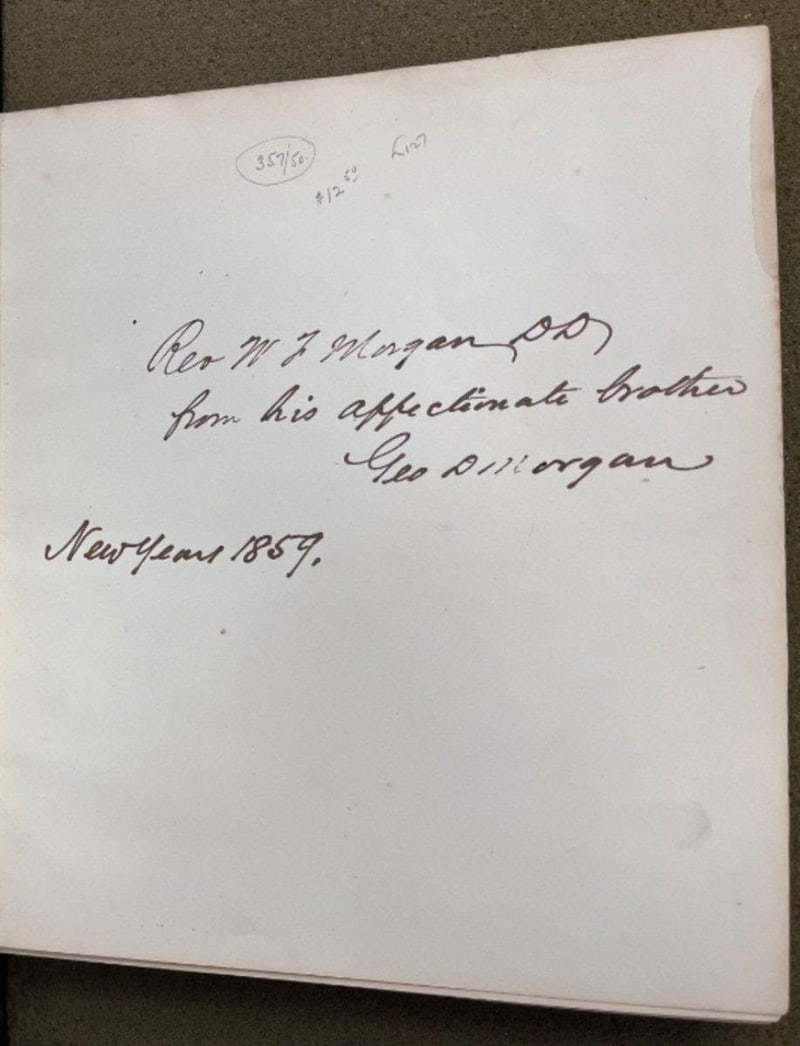
Gift from George D. Morgan to his brother Rev. W. F. Morgan, New Year’s 1859.
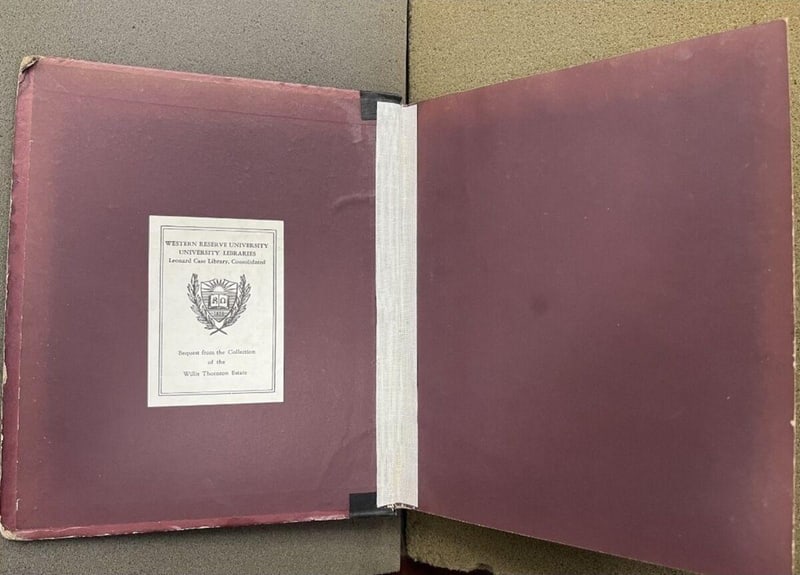
George D. Morgan → Rev. W. F. Morgan → Willis Thornton → Western Reserve University
George Denison Morgan’s marriage to Caroline Amelia Hale, the author’s aunt, supplies a probable family route for the book. No document records the initial handoff.
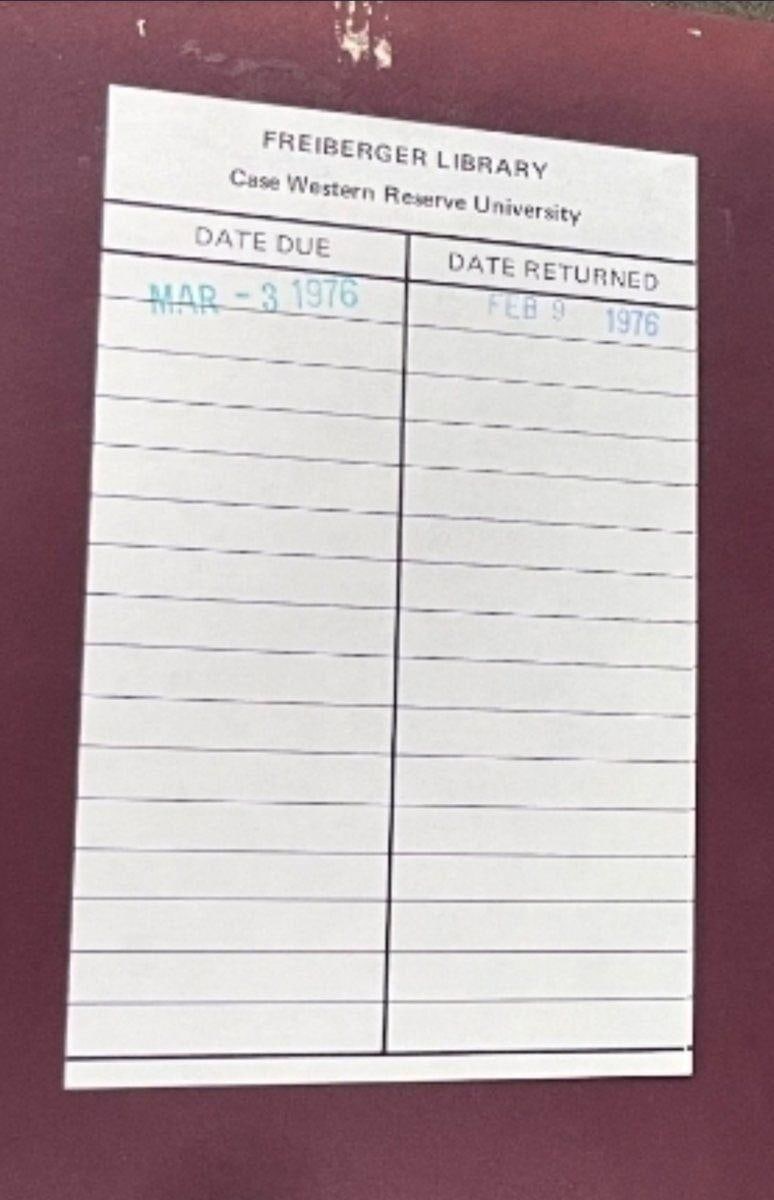
Case Western Reserve University, Kelvin Smith Library catalog and provenance documentation; copy-specific photographs of the binding, presentation inscription, estate bookplate, and circulation slip; Hale and Morgan family records; Irvington local histories and historical Westchester County Savings Bank accounts documenting George D. Morgan’s Irving associations. The proposed Hale-family route into C021 is explicitly identified as a strong inference, not a documented transfer.
New York Public Library, Stephen A. Schwarzman Building
New York, New York
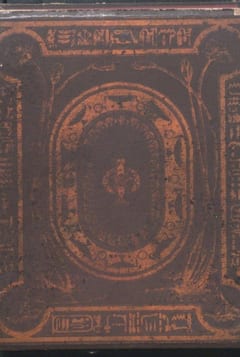
Original brown publisher-issued boards with gold decoration.
No presentation inscription identified.
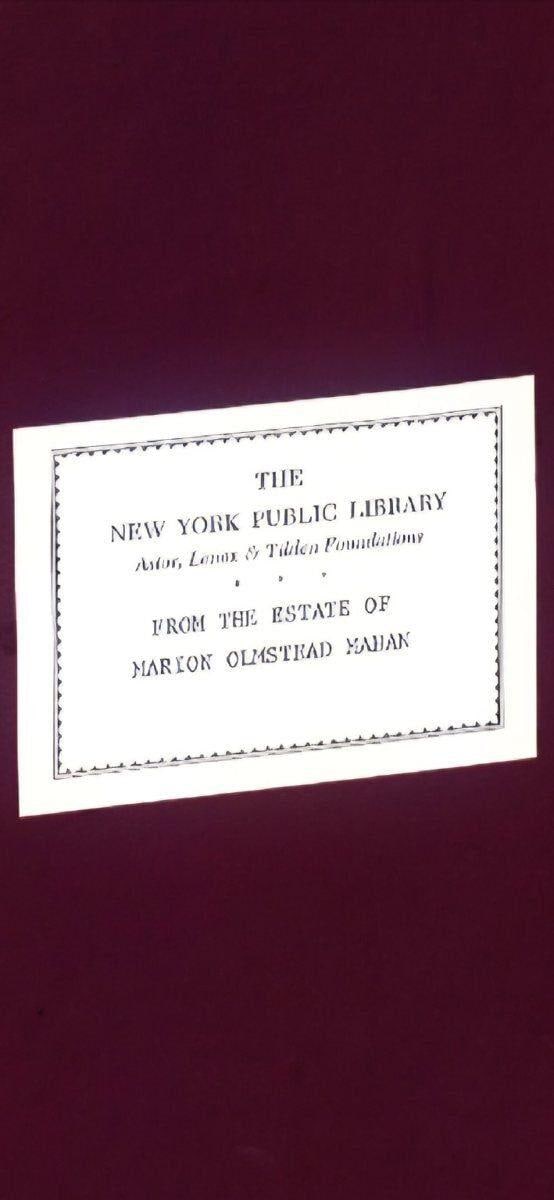
Estate of Marion Olmstead Mahan → New York Public Library
An estate bookplate records the gift of Marion Olmstead Mahan. Her fuller identity and earlier ownership remain unresolved.
New York Public Library catalog and provenance documentation; copy-specific photographs of C022’s original brown boards and estate bookplate.
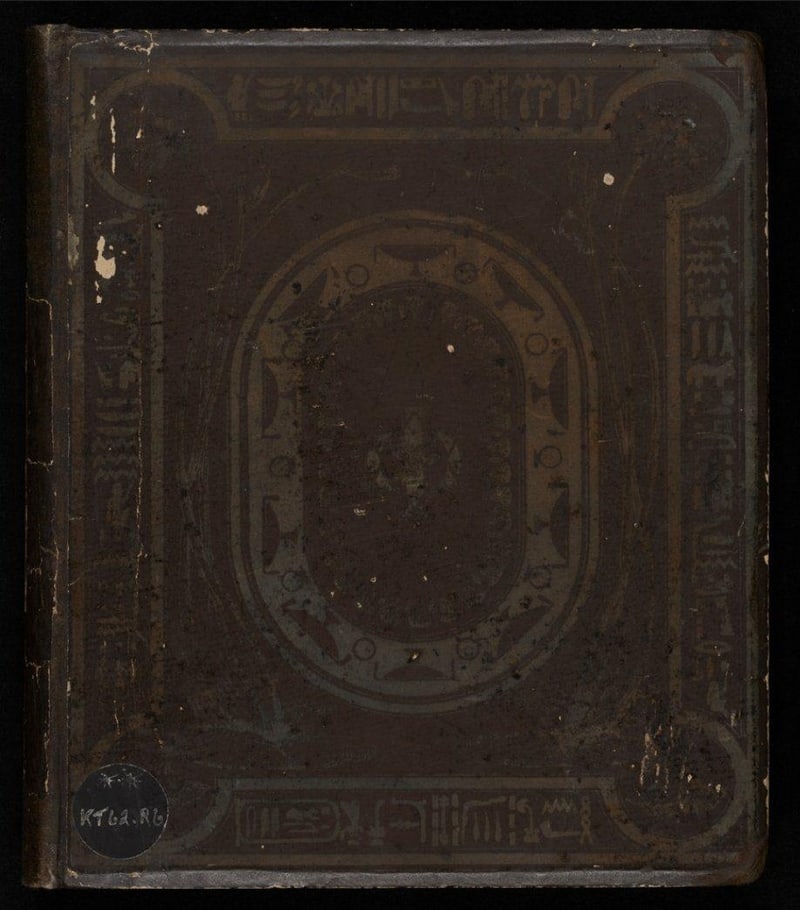
Lambeth Palace Library
London, United Kingdom
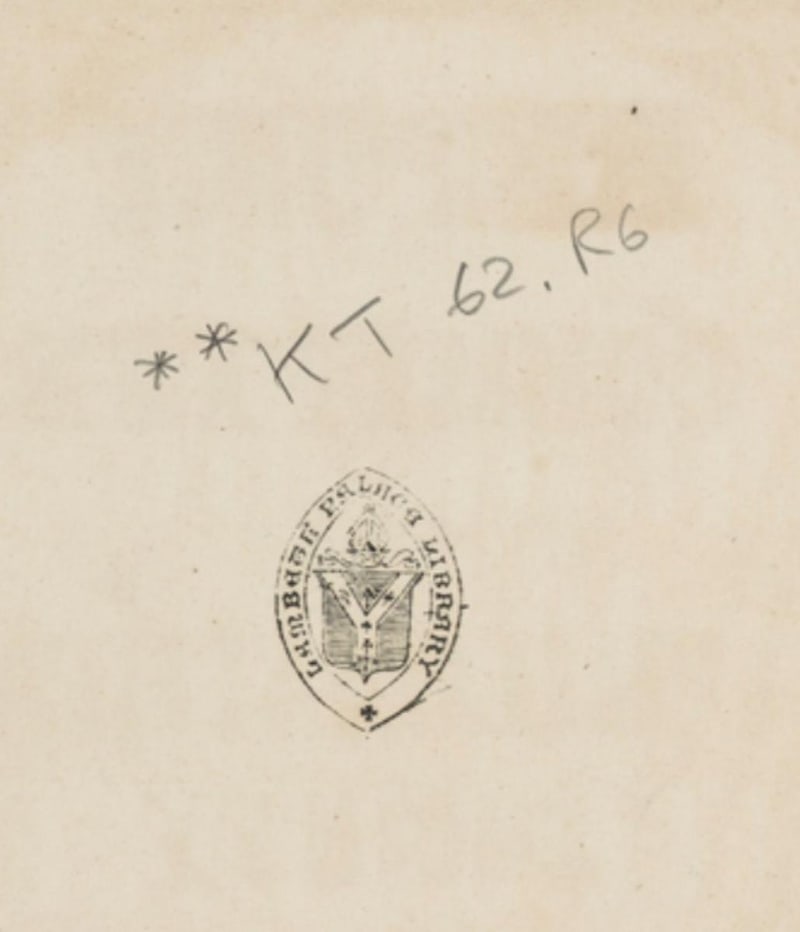
57.H.3
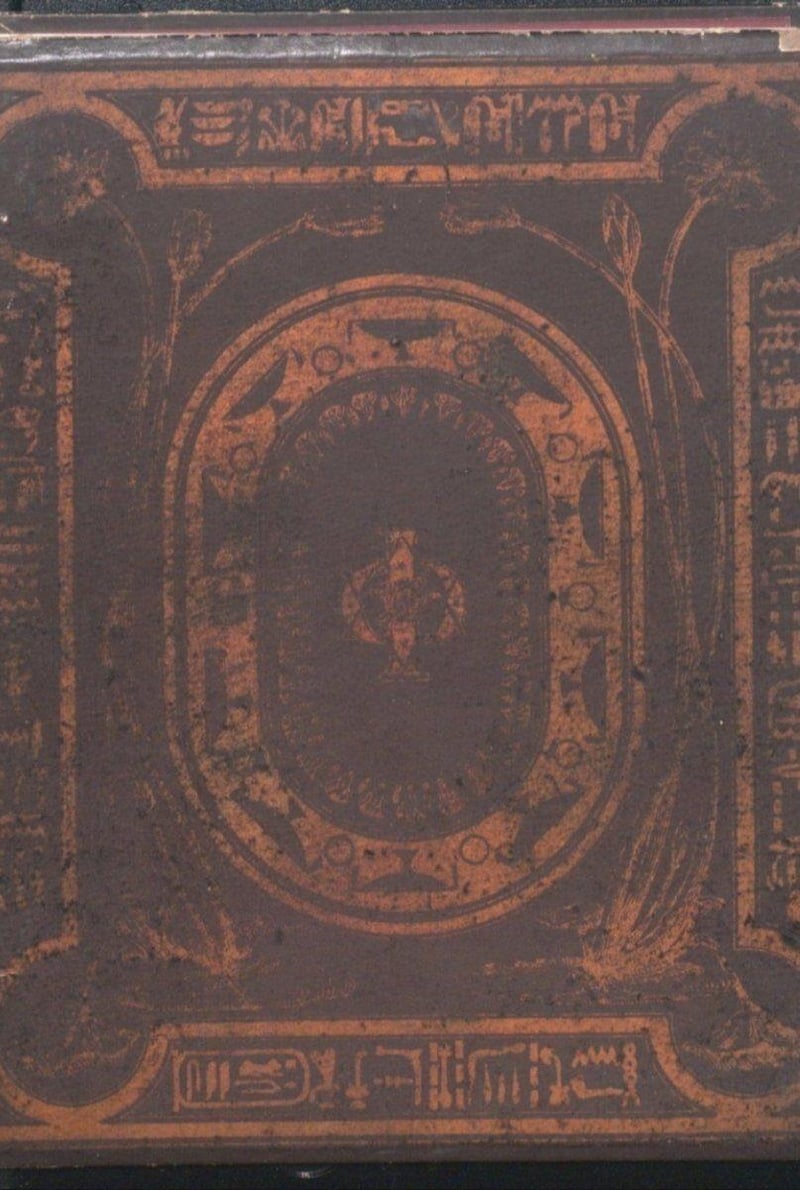
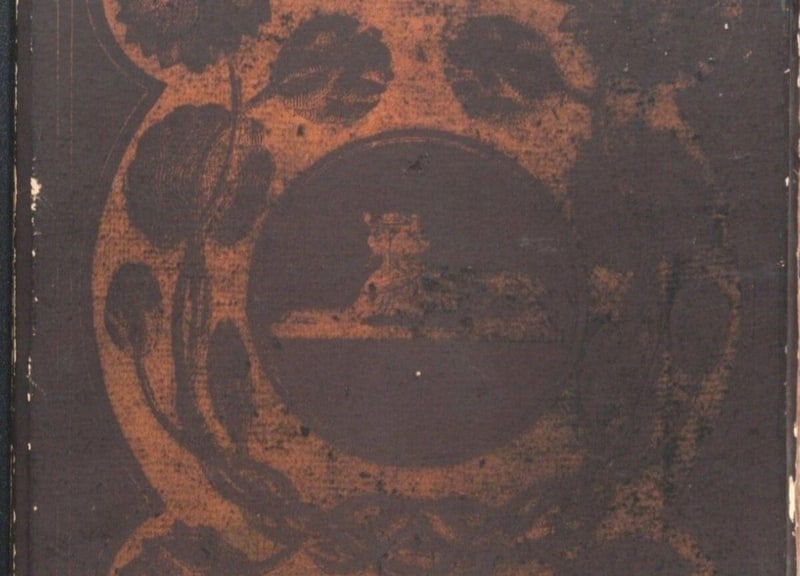
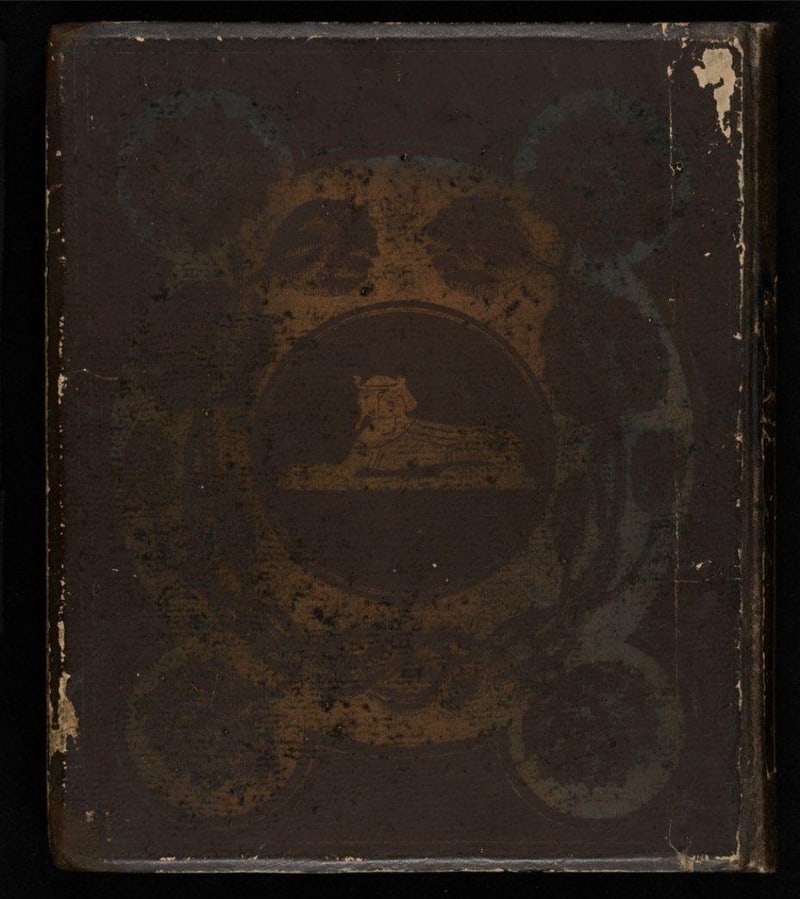
Original brown publisher-issued boards with gold decoration and Egyptianizing motifs.
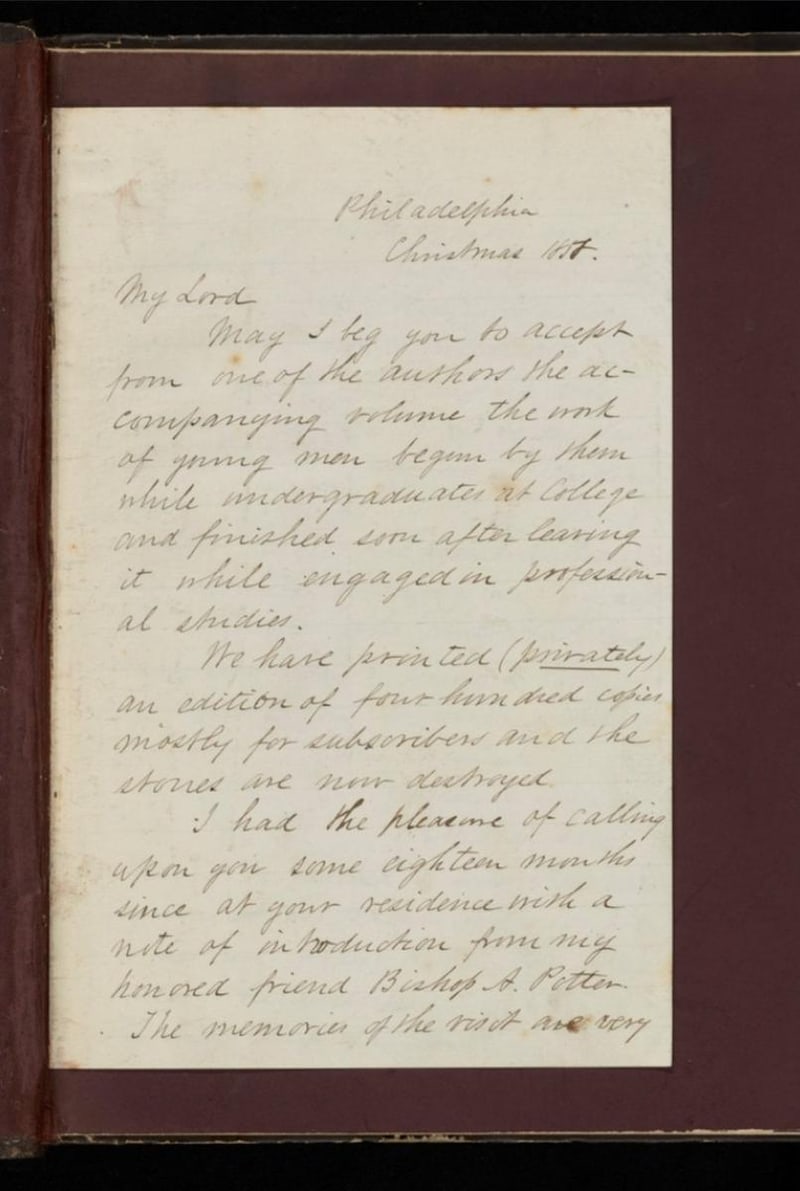
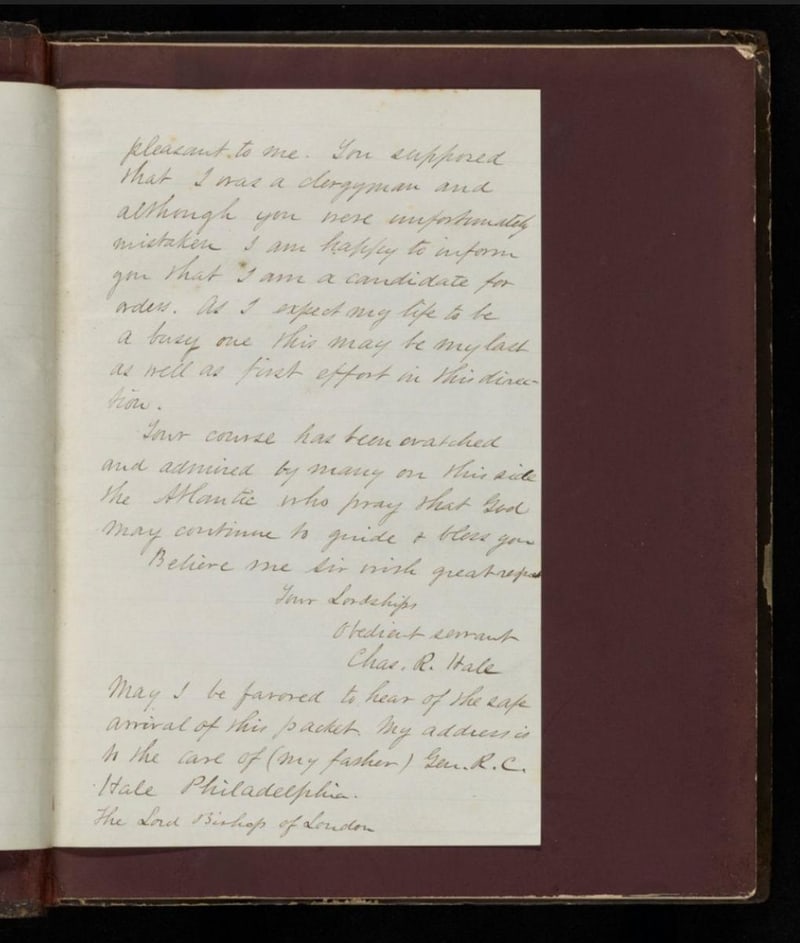
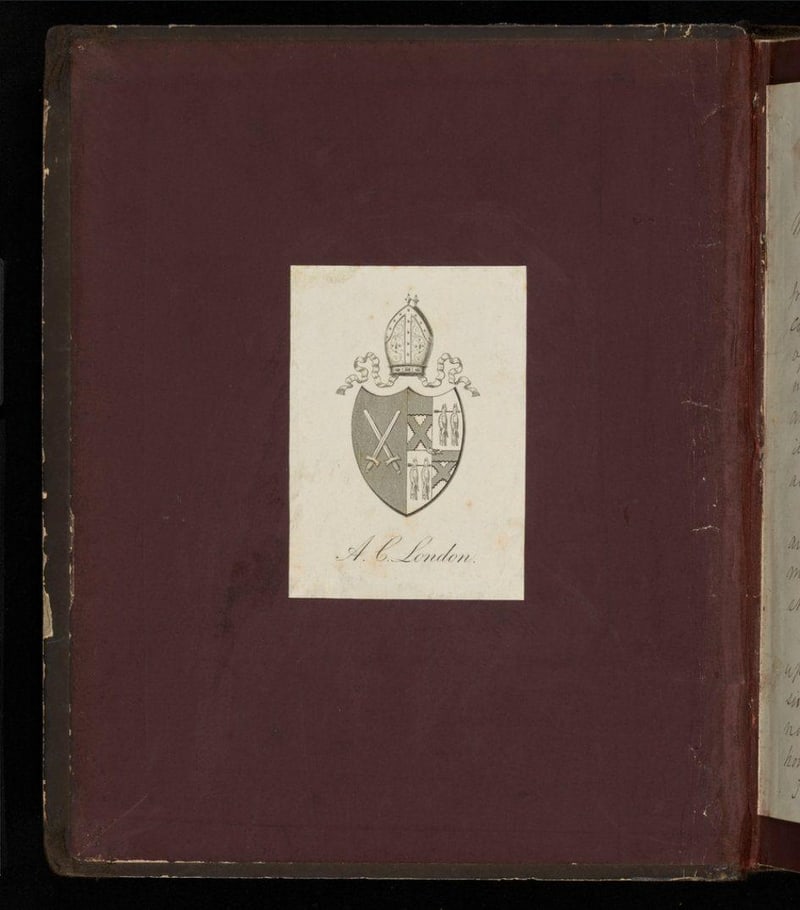
Hale’s Christmas 1858 presentation letter recalls an earlier visit following an introduction by ‘Bishop A. Potter,’ probably Alonzo Potter. Hale calls himself an author and candidate for orders, requests acknowledgement, and gives his father General R. C. Hale’s Philadelphia address.
Charles R. Hale → Archibald Campbell Tait → Lambeth Palace Library, received with Tait's books in 1883
Kershaw’s Catalogue of Modern Books lists the Report among Tait’s books received by Lambeth in 1883, under shelfmark 57.H.3. Tait’s armorial bookplate dates from his tenure as Bishop of London.
The presentation letter states that four hundred copies were privately printed, mostly for subscribers, and that the printing stones ‘are now destroyed.’
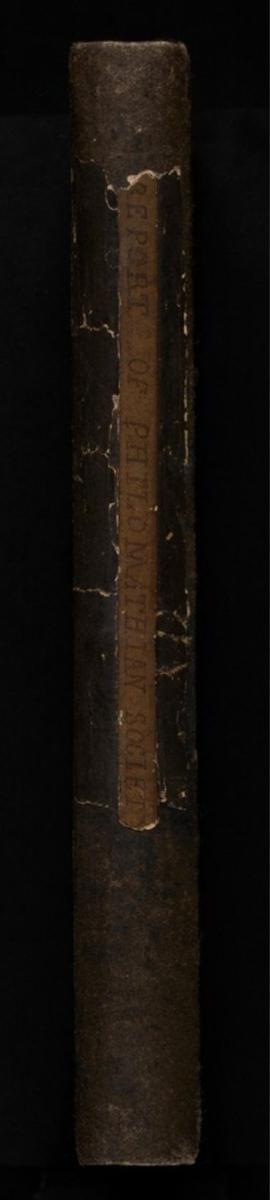
Lambeth Palace Library catalog and provenance documentation; Samuel Wayland Kershaw, Catalogue of Modern Books, ref. LR/F/31, p. 57; and seven copy-specific photographs documenting the original brown-and-gold Egyptianizing binding, spine, current shelfmark label, armorial bookplate, and Charles R. Hale’s presentation letter to Archibald Campbell Tait.
Private Collection
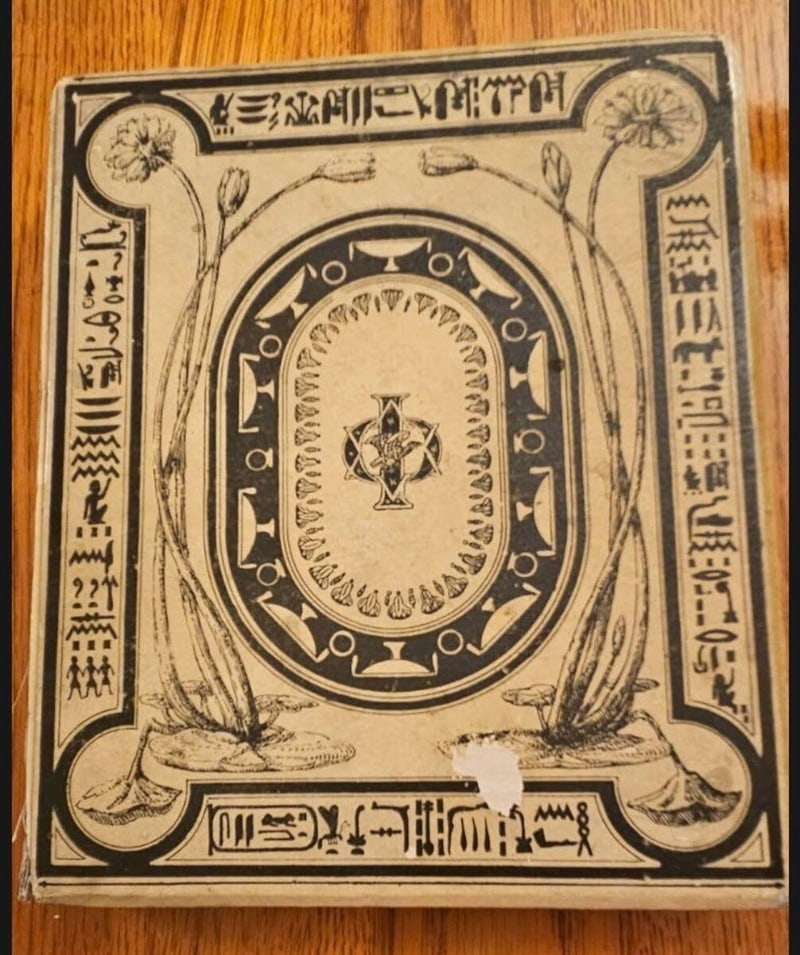
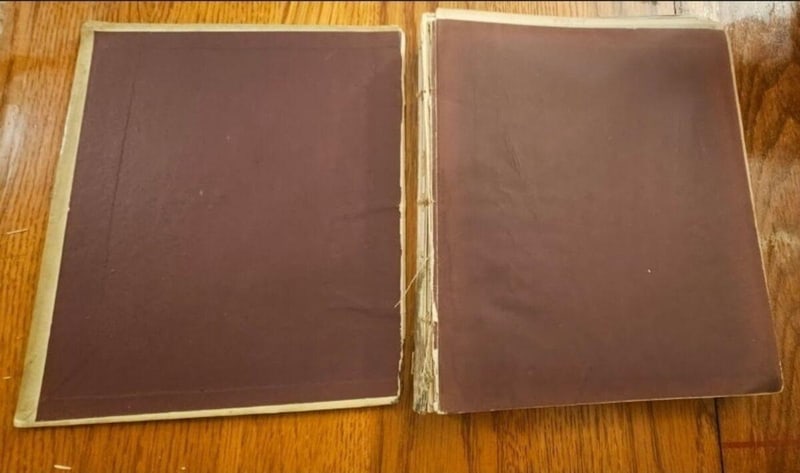
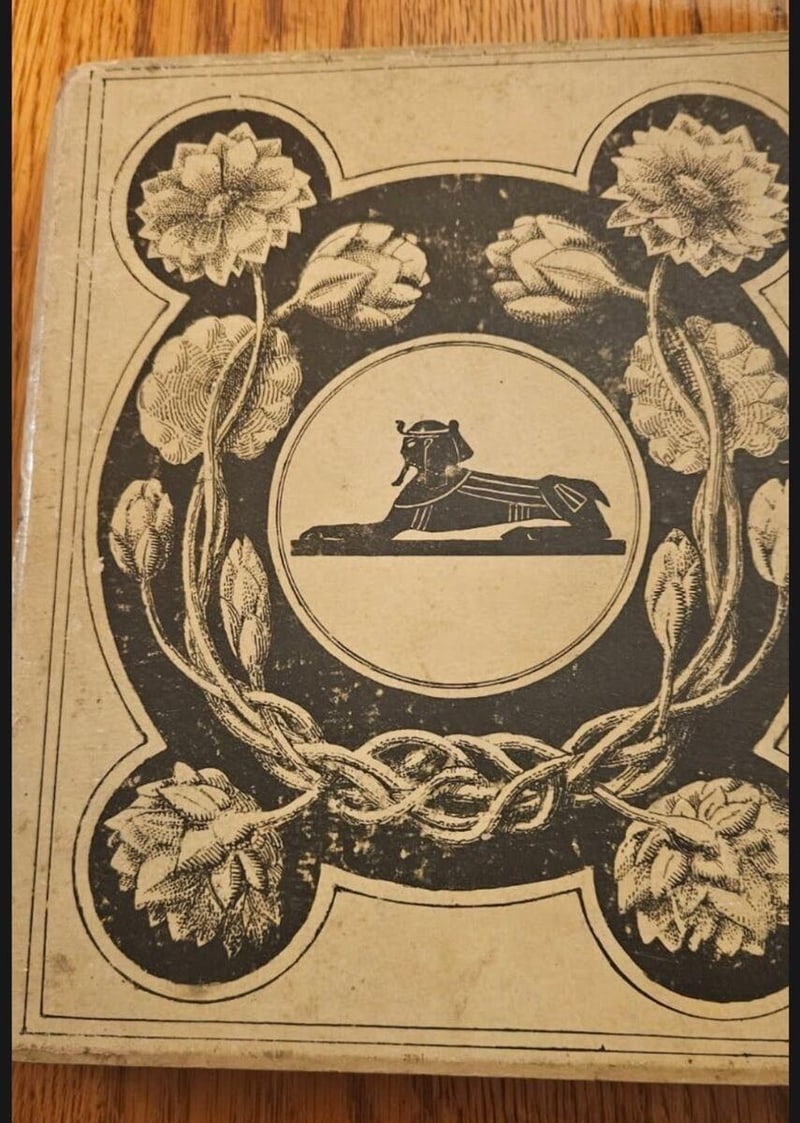
Original cream publisher-issued boards with black decoration.
No presentation inscription identified.
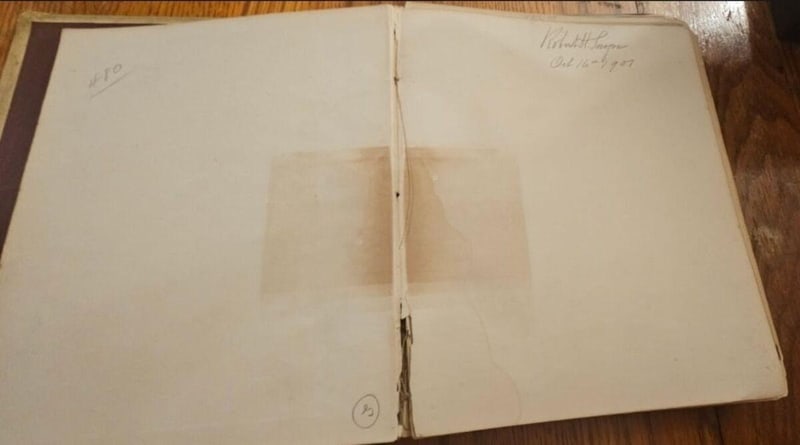
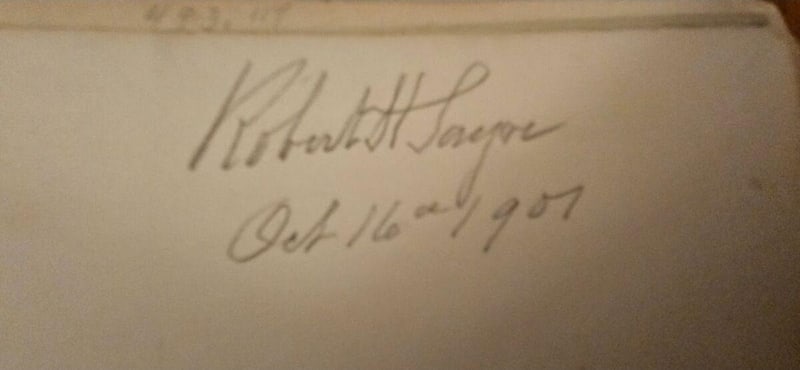
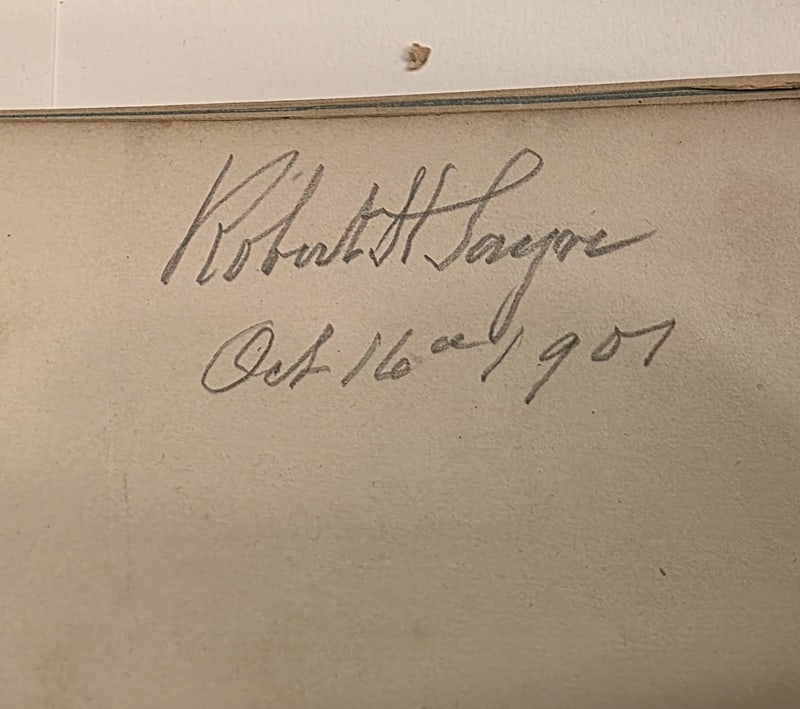
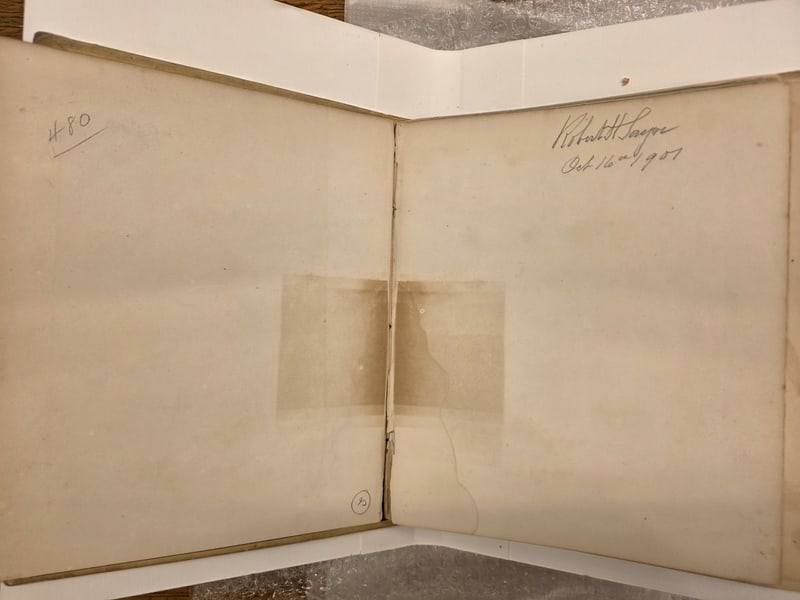
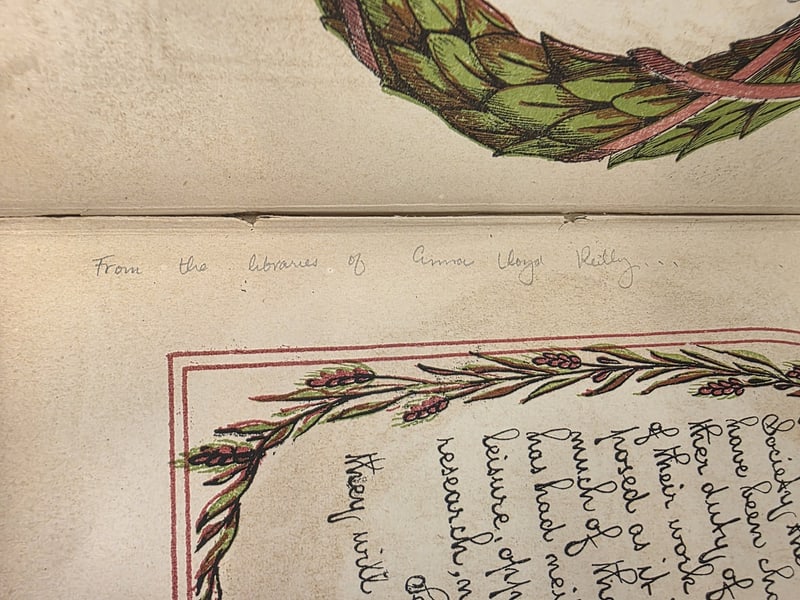
Robert H. Sayre, ownership inscription dated October 16, 1907 → Anna E. Lloyd Reilly (1849–1937), pencil note “From the libraries of Anna Lloyd Reilly” → unresolved gap → Private Collection
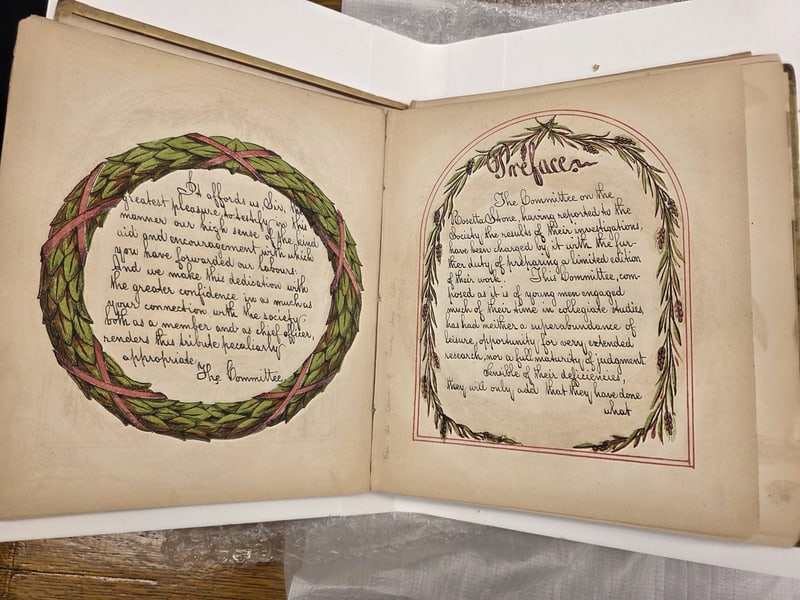
The front endpaper is signed ‘Robert H. Sayre,’ October 16, 1907. Robert Heysham Sayre III is the strongest candidate; the name, date, and comparison signature support a qualified attribution. A pencil note below the preface reads “From the libraries of Anna Lloyd Reilly,” identifying Anna E. Lloyd Reilly (1849–1937) of Altoona and Philadelphia. The endpaper also bears a penciled “480.” No Reilly–Sayre connection has been found, so the order of ownership is unestablished.
The later route to the present collection is unrecorded.
Copy photographs; Sayre family records and Robert Heysham Sayre III’s 1917 draft registration and signature. Anna E. Lloyd Reilly: Find a Grave memorial 91225902 (West Laurel Hill Cemetery); WikiTree Lloyd-15469; Wikipedia, “John Reilly (Pennsylvania politician)”.
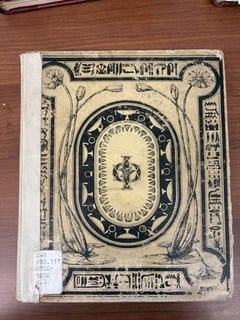
State Library of Pennsylvania, Rare Collections Library
Harrisburg, Pennsylvania
Original cream publisher-issued boards with black decoration.
No presentation inscription identified.
Unrecorded earlier ownership → State Library of Pennsylvania, Rare Collections Library
State Library of Pennsylvania, Rare Collections Library catalog and holdings documentation; copy-specific photographs of C025’s cream publisher binding, spine, and rear board.
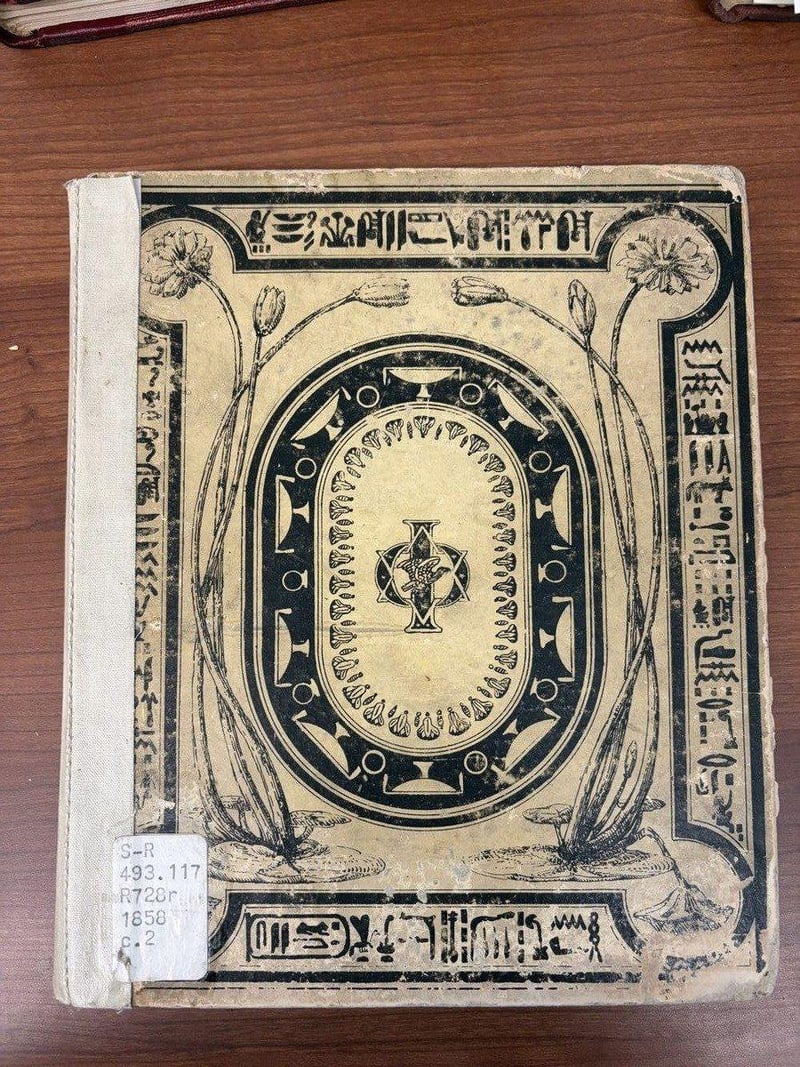
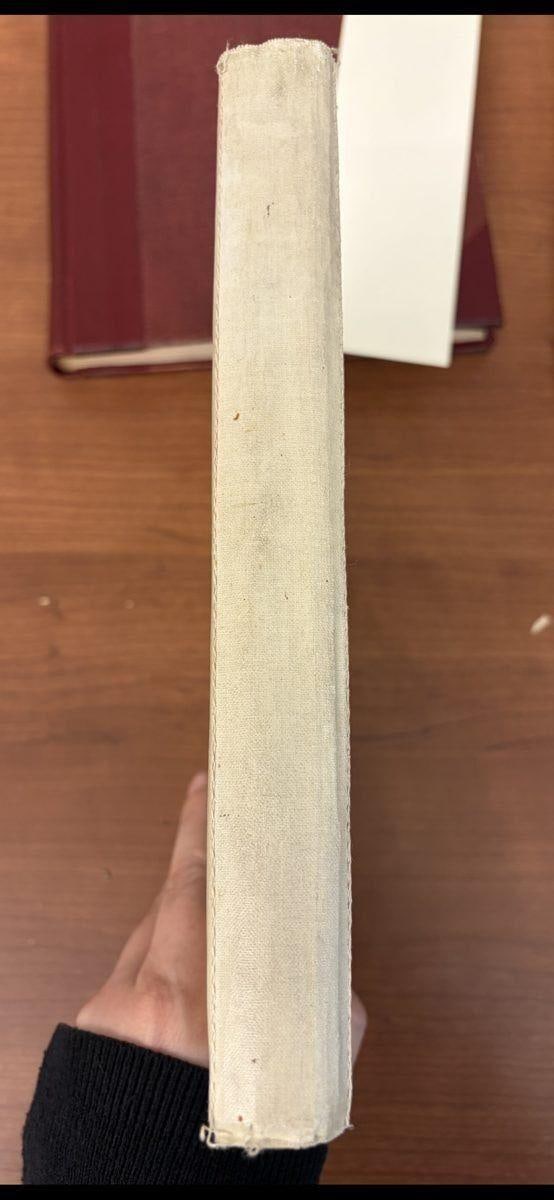
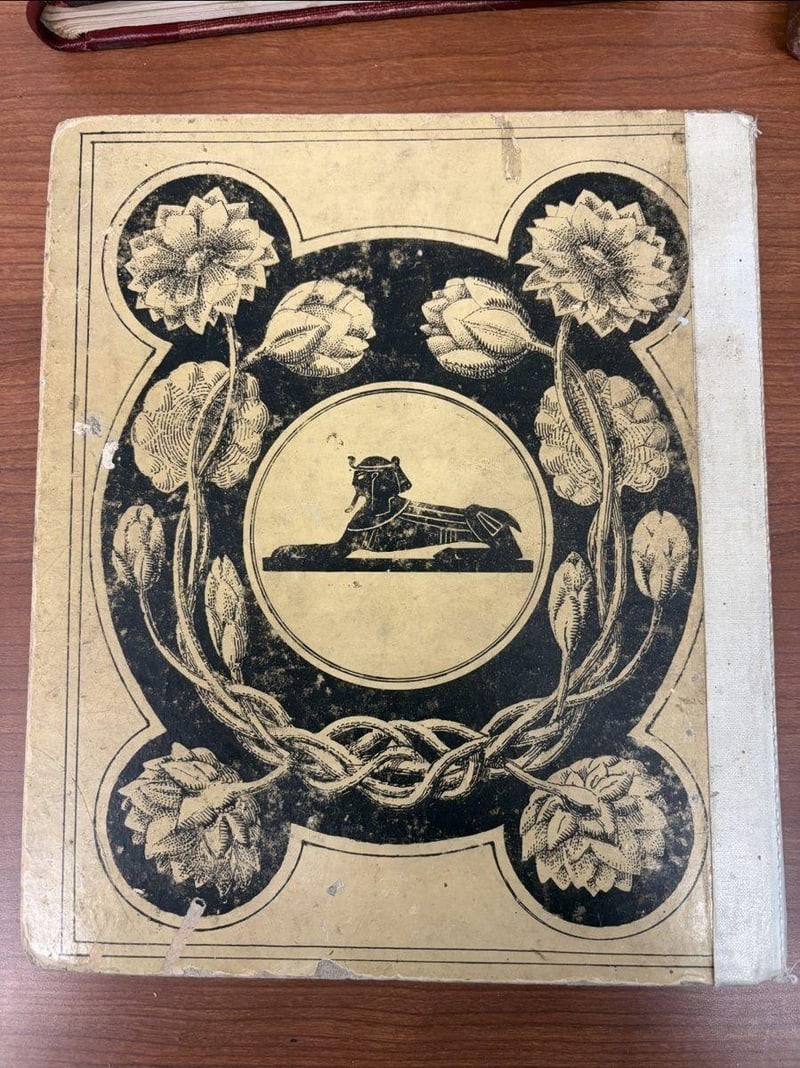
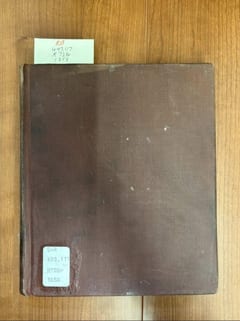
State Library of Pennsylvania, Rare Collections Library
Harrisburg, Pennsylvania
Later plain brown institutional binding.
No presentation inscription identified.
Unrecorded earlier ownership → State Library of Pennsylvania, Rare Collections Library
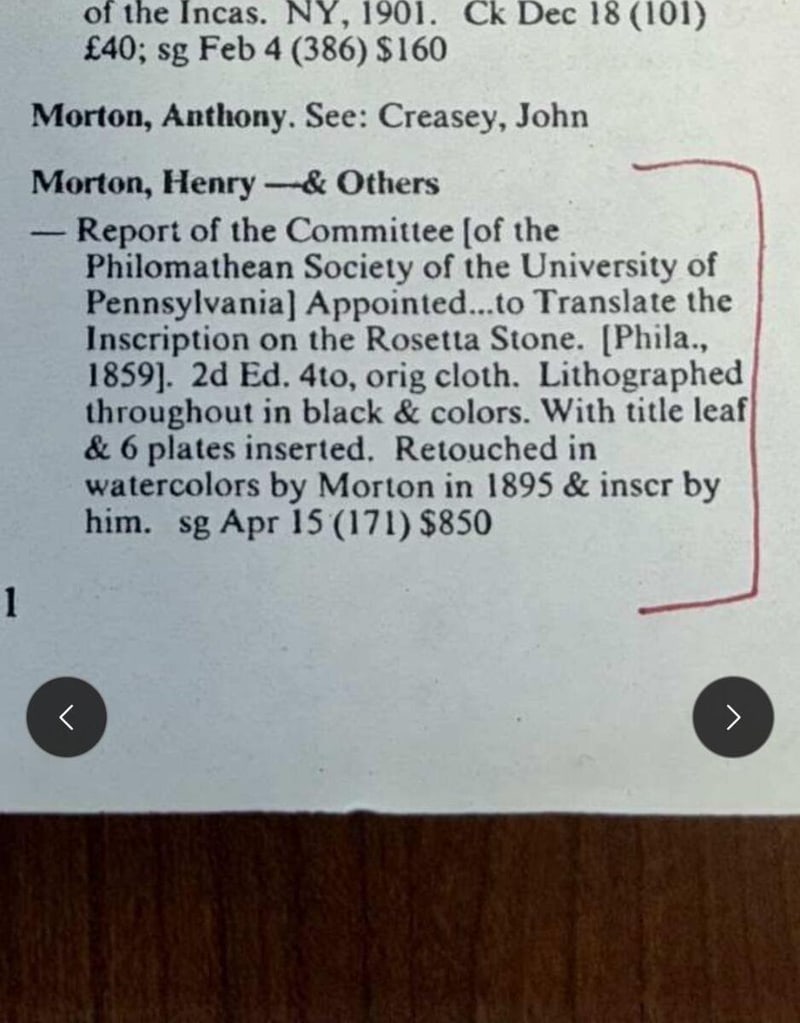
An American Book Prices Current clipping kept with C026 describes an entirely different copy: an 1859 second edition in original cloth, with a title leaf and six inserted plates, retouched in watercolors by Henry Morton in 1895 and inscribed by him. The clipping records Swann Galleries, April 15, 1982, lot 171. It does not describe C026 and is not evidence of this first-edition copy’s provenance.
State Library marker: RB 493.117 R728r 1858. The rear-board photograph also records the State Library barcode.
State Library of Pennsylvania photographs of C026 and C027 documenting their distinct institutional rebindings, shelfmarks, and associated reference material.
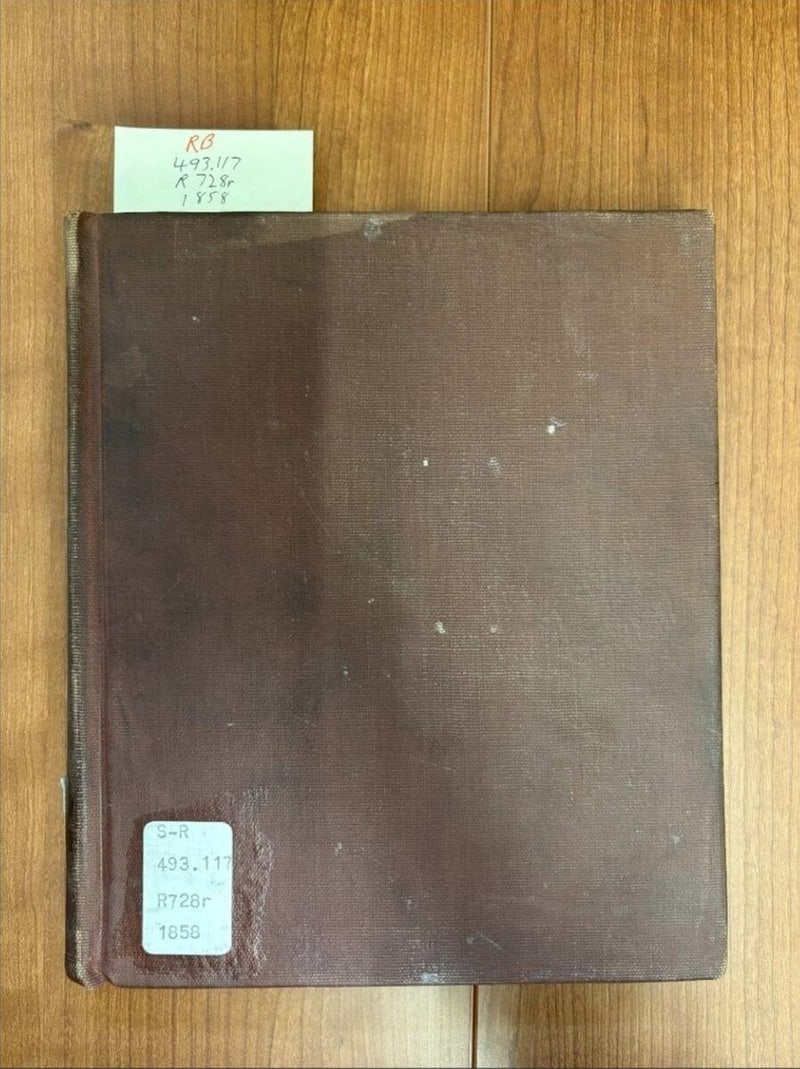
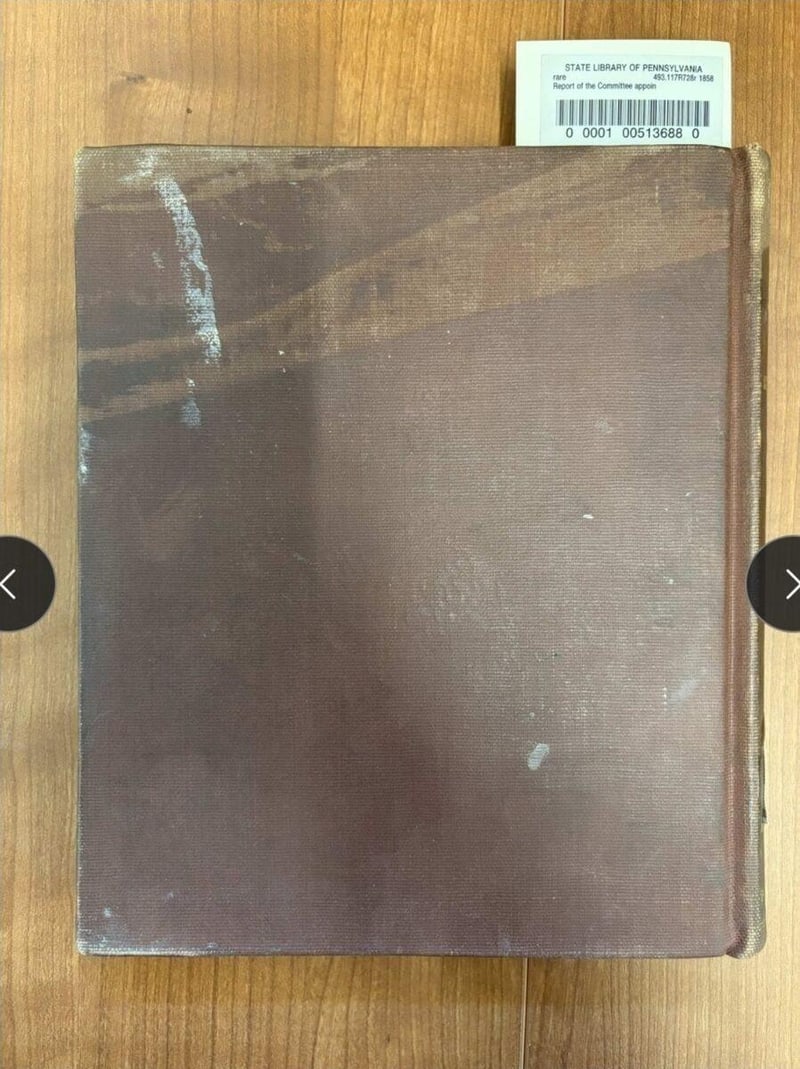

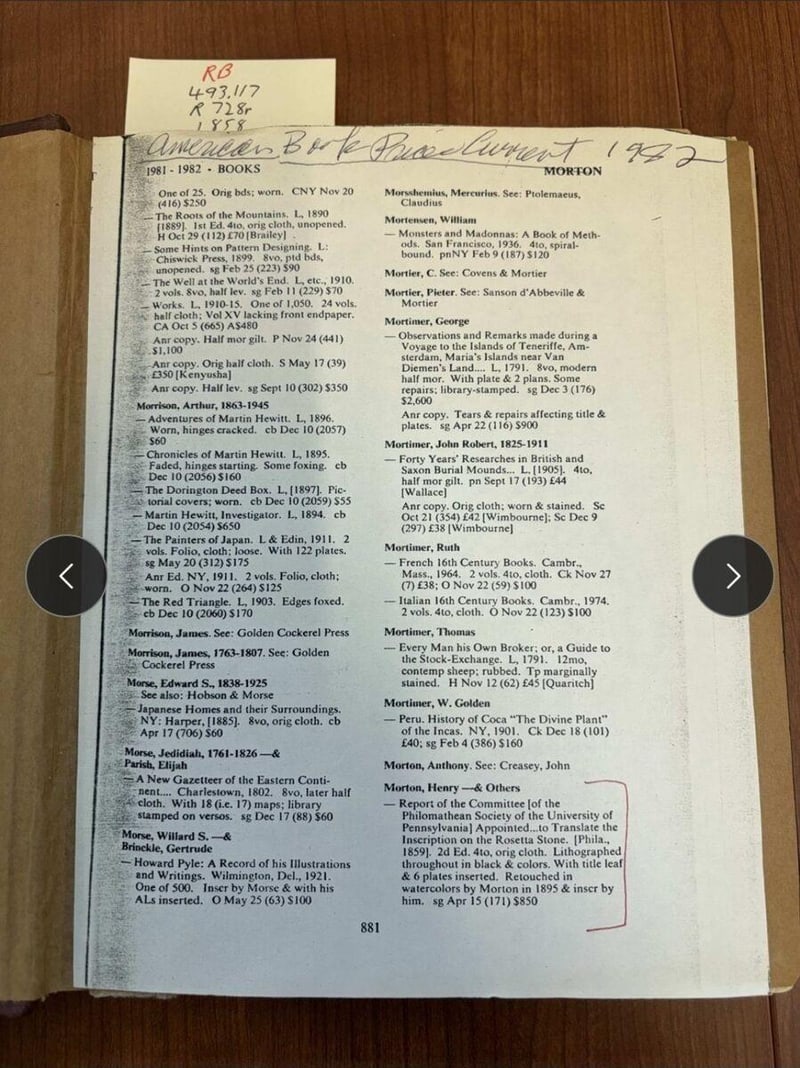
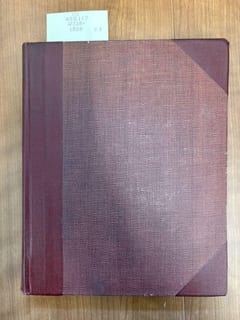
State Library of Pennsylvania, Rare Collections Library
Harrisburg, Pennsylvania
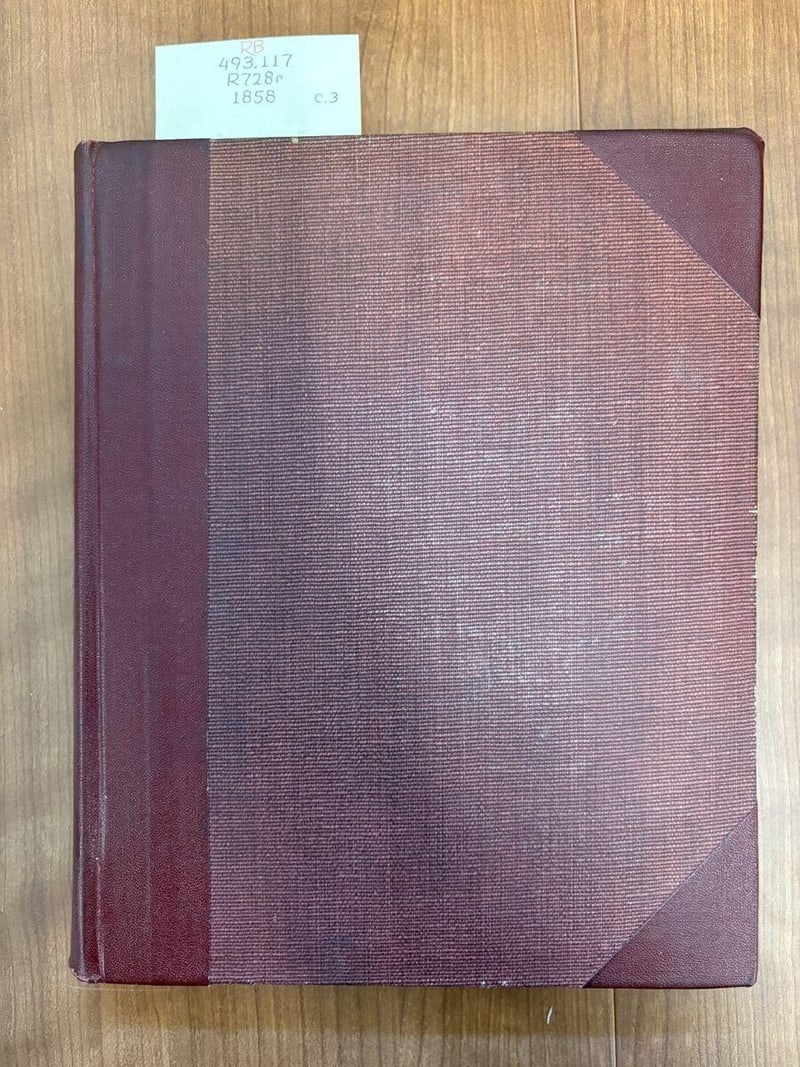
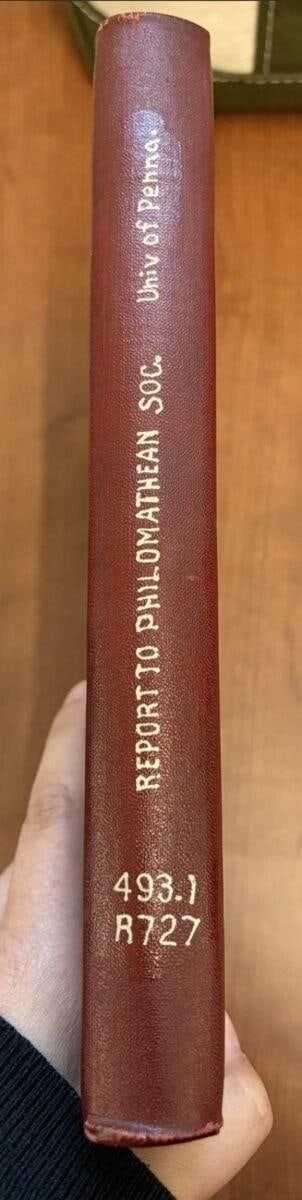
Later reddish-brown institutional binding.
No presentation inscription identified.
Unrecorded earlier ownership → State Library of Pennsylvania, Rare Collections Library
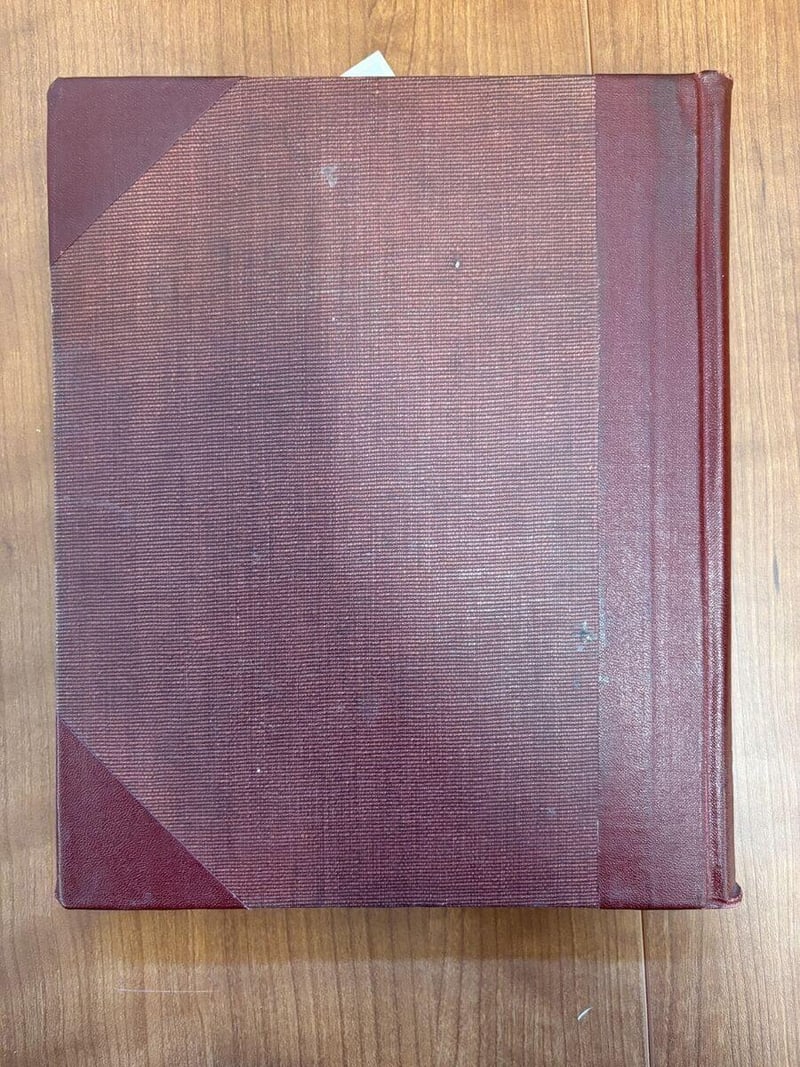
Paper marker: RB 493.117 R728r 1858, c.3. The spine itself bears the shorter painted or gilt shelfmark 493.1 R727.
State Library of Pennsylvania photographs of C026 and C027 documenting their distinct institutional rebindings, shelfmarks, and associated reference material.
Dartmouth College, Rauner Special Collections Library
Hanover, New Hampshire
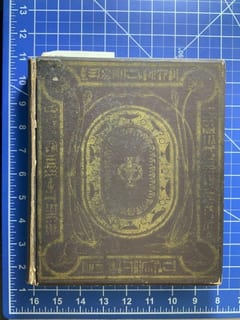
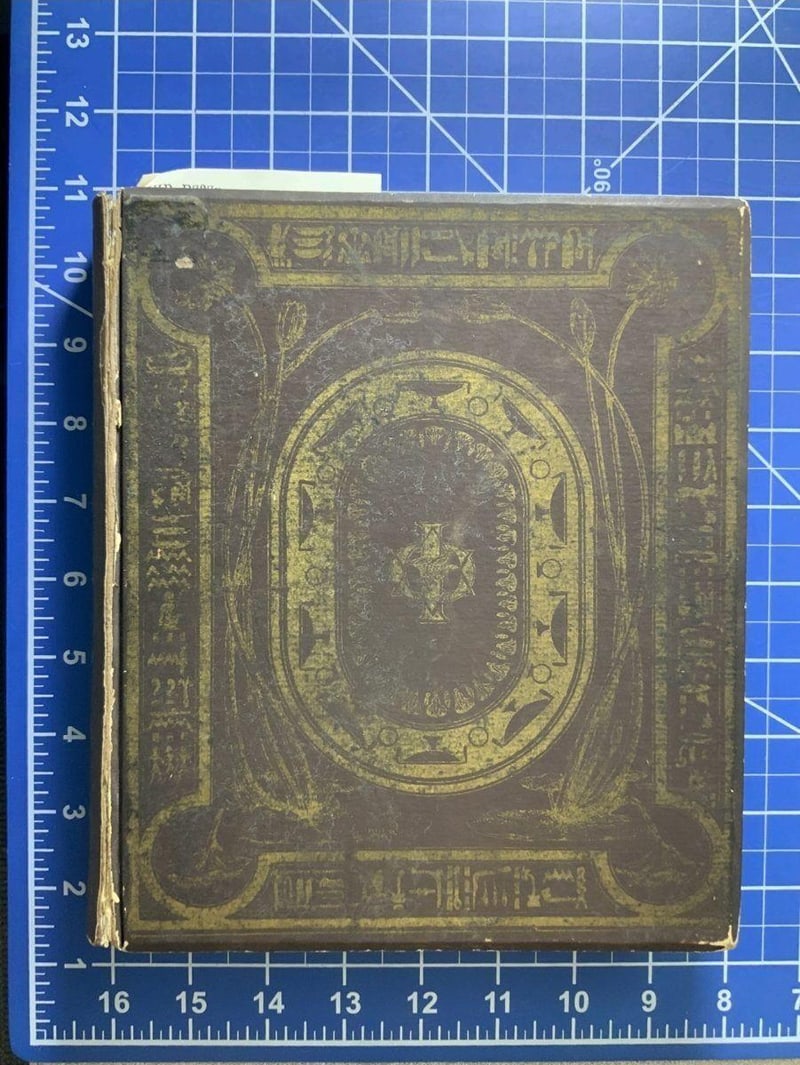
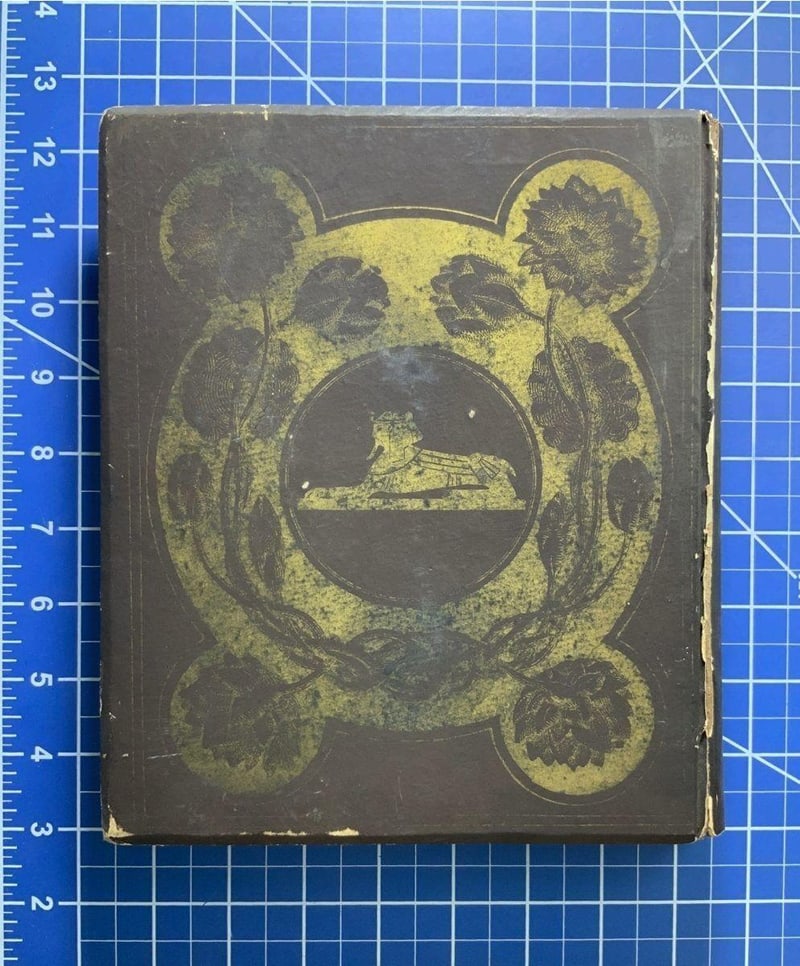
Original brown publisher-issued boards with gold decoration.
No authorial presentation inscription identified. The volume instead carries a layered institutional and private ownership history documented by bookplates and stamps.
Richard Ashhurst Bowie, private collector → Harvard College Library, gift of Mary Bryant Pratt Brandegee in memory of William Fletcher Weld, November 9, 1908, Bowie Collection → declared a Harvard Library duplicate, November 6, 1939, accession no. 438718 → Dartmouth College Library, processed via the Sanborn Library Fund
Bookplates and stamps document Richard Ashhurst Bowie’s ownership, Mary Bryant Pratt Brandegee’s 1908 memorial gift to Harvard, Harvard duplicate processing in 1939, and later Dartmouth custody. The transfer from Harvard to Dartmouth is an unresolved gap because no separate transfer document has been located.
Correspondence and reference photographs from Dartmouth College, Rauner Special Collections Library, July 2026, including images of the front board, front pastedown bookplates, and ownership stamps; Harvard collection history establishing the November 9, 1908 Bowie Collection gift date.
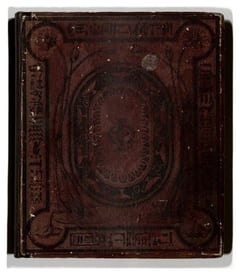
University of Oxford, Bodleian Library
Oxford, United Kingdom
Original red publisher-issued boards with black decoration; later black cloth rebacking.
No authorial presentation inscription identified.
Francis Llewellyn Griffith and Nora Griffith → Ashmolean Museum Library → Bodleian Libraries
A copy later owned by two major Egyptologists, with stamps and annotations that create one of the census’s richest scholarly provenance records.
Bodleian Library catalog and provenance documentation; copy-specific photographs of C029’s red publisher binding, annotations, and Griffith and Ashmolean ownership stamps.
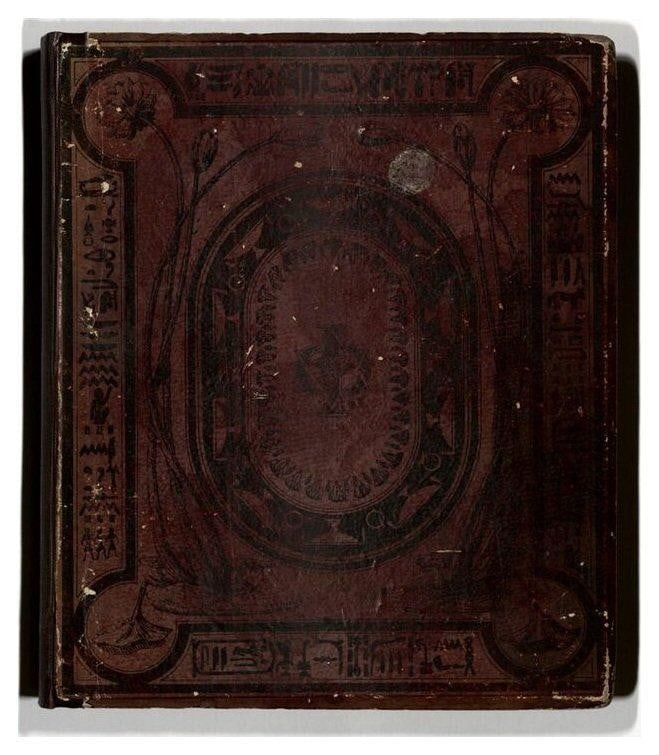
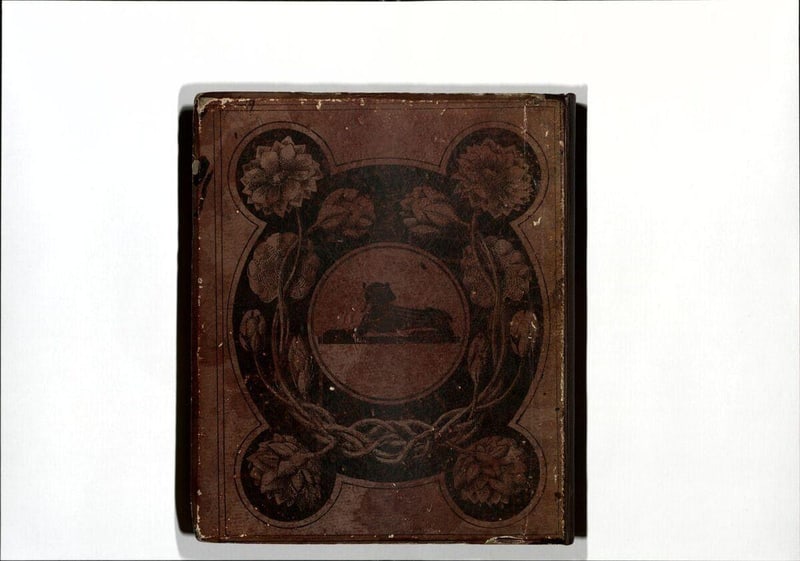
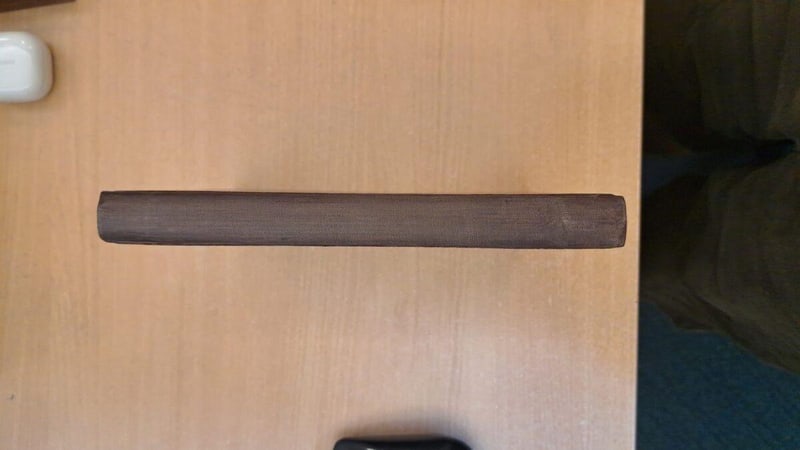
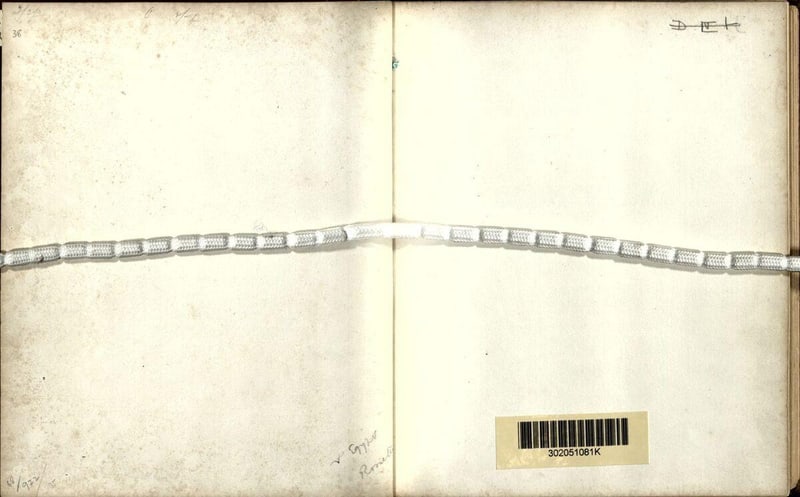
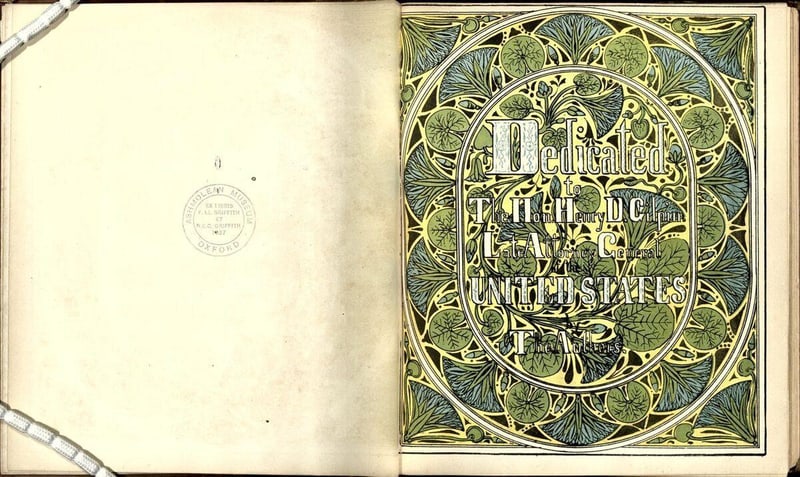
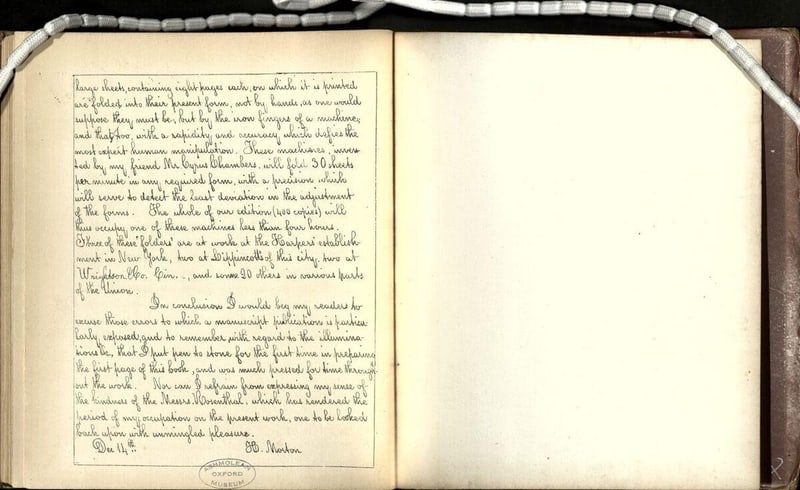
Brown University, John Hay Library
Providence, Rhode Island
Original brown publisher-issued boards with gold decoration.
No presentation inscription identified.
Unrecorded earlier ownership → Brown University, John Hay Library
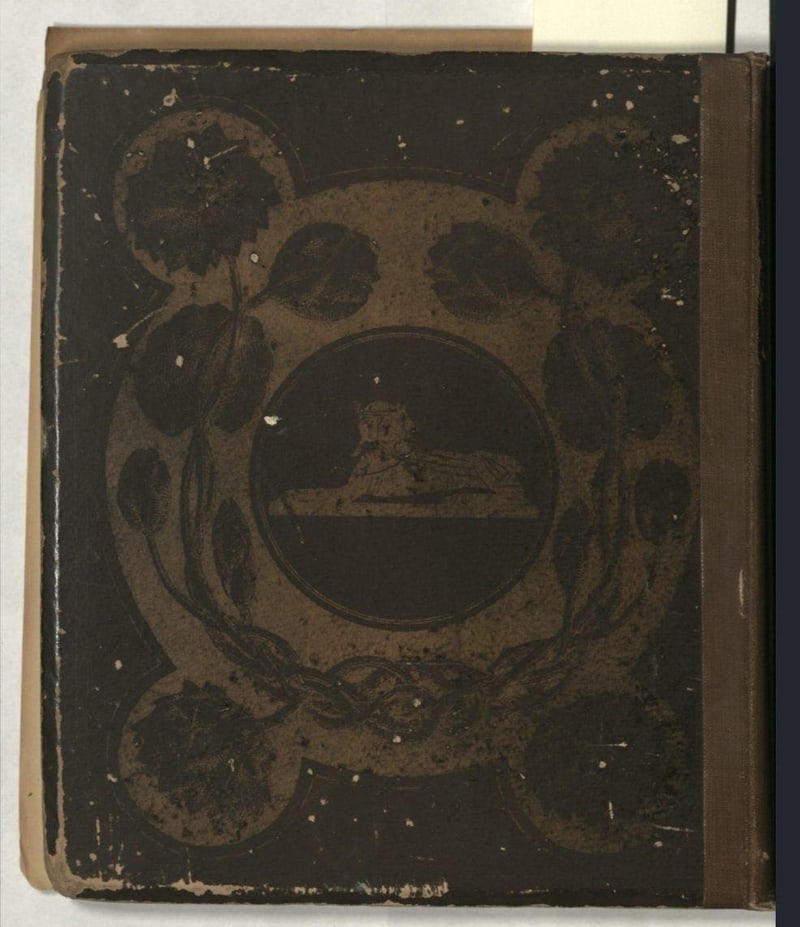
Brown University, John Hay Library catalog and holdings documentation; copy-specific photographs of C030’s brown publisher-issued front and rear boards.
Brown University, John Hay Library
Providence, Rhode Island
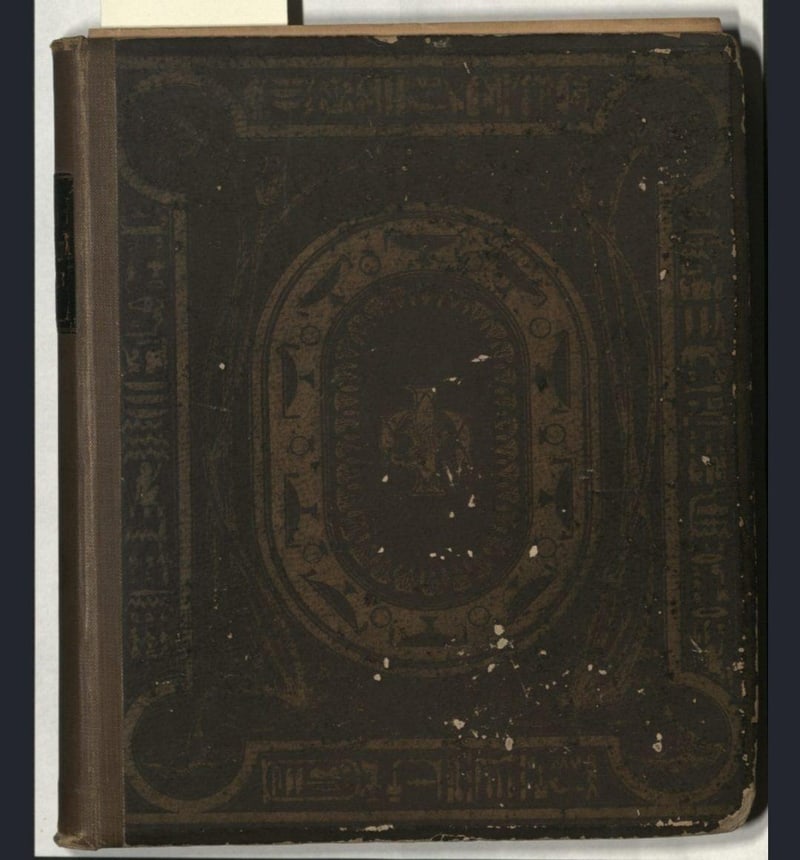
Original red publisher-issued boards with black decoration; later black cloth rebacking.
No presentation inscription identified.
Unrecorded earlier ownership → Brown University, John Hay Library
Brown University, John Hay Library catalog and holdings documentation; copy-specific photograph of C031’s red publisher-issued front board.
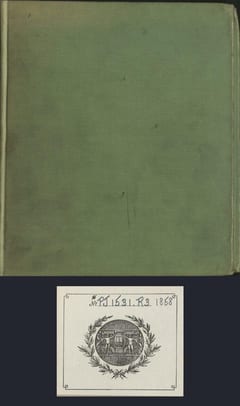
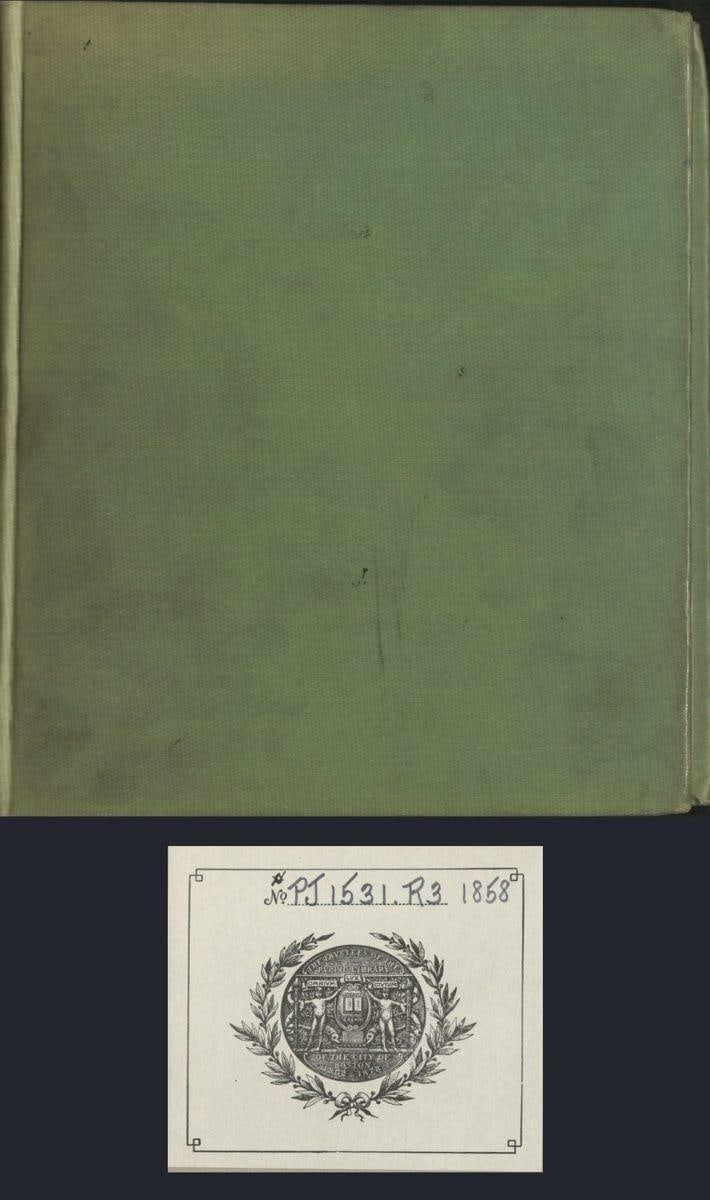
Boston Public Library, McKim Building
Boston, Massachusetts
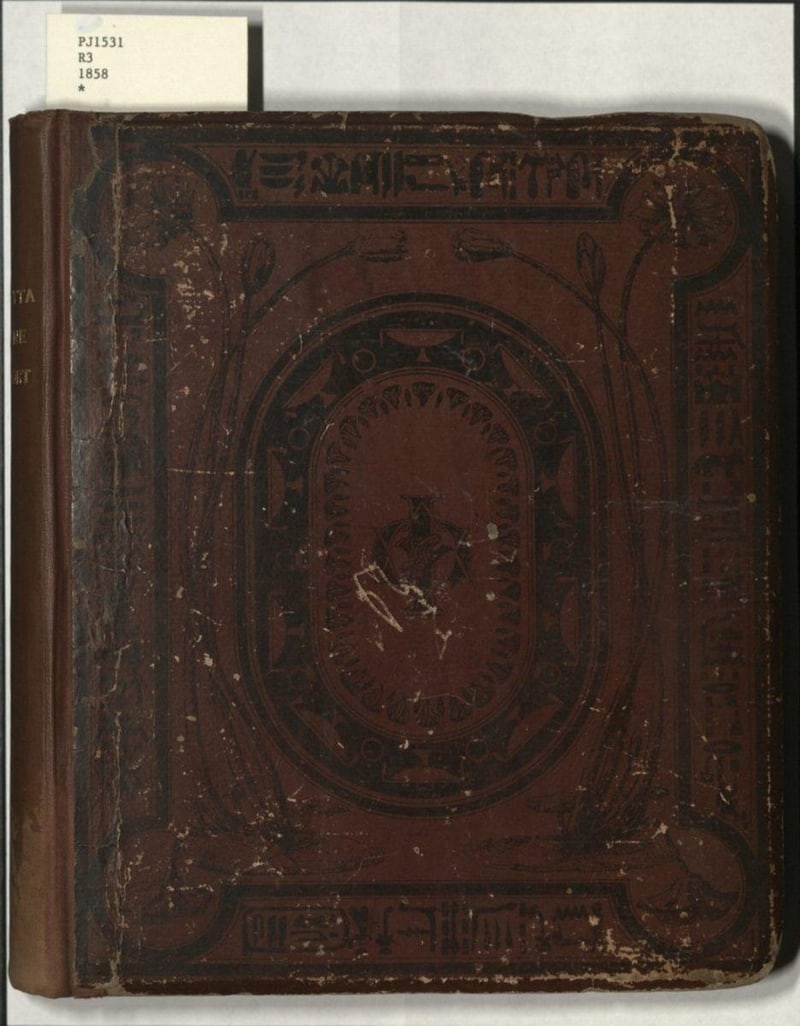
Later green institutional binding.
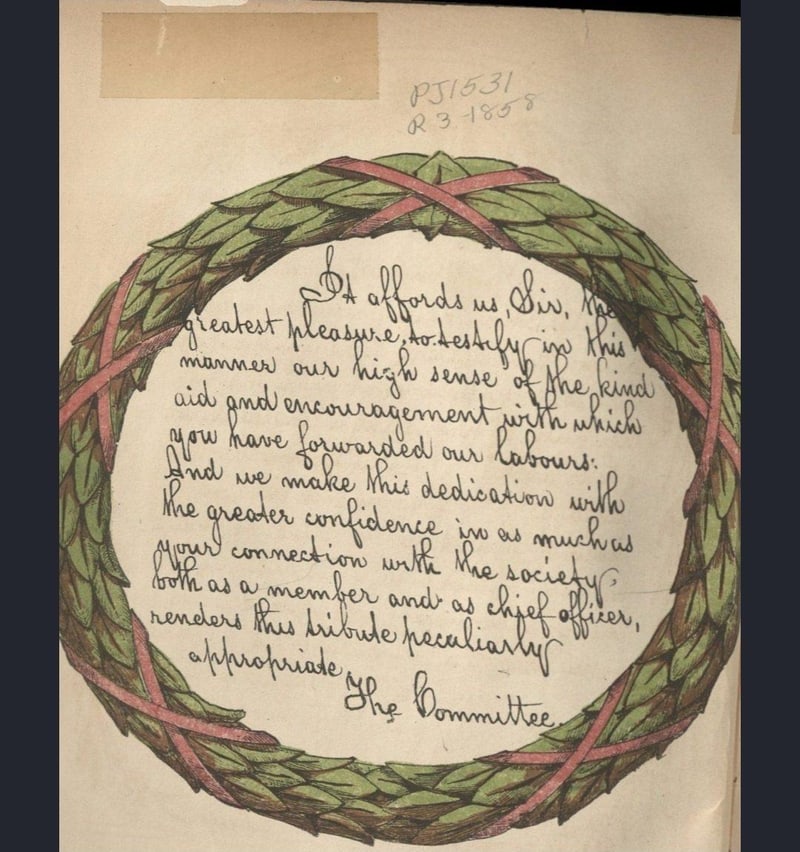
The botanical dedication identifies the first edition and bears the pencil shelfmark ‘PJ1531 / R3 1858.’
No presentation inscription identified.
Unrecorded earlier ownership → Boston Public Library, accessioned 1939
Boston Public Library catalog and holdings documentation; copy-specific photograph of C032’s later institutional binding, and the illuminated dedication leaf with pencil shelfmark.
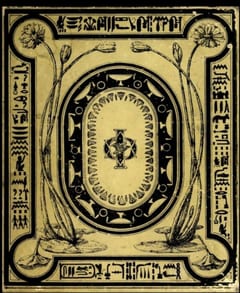
Getty Research Institute, Research Library
Los Angeles, California
1537-825
Original cream publisher-issued boards with black decoration.
The title lacks a Second Edition statement, and the botanical dedication identifies the first edition. The Getty copy is digitized through the Internet Archive.
No presentation inscription identified.
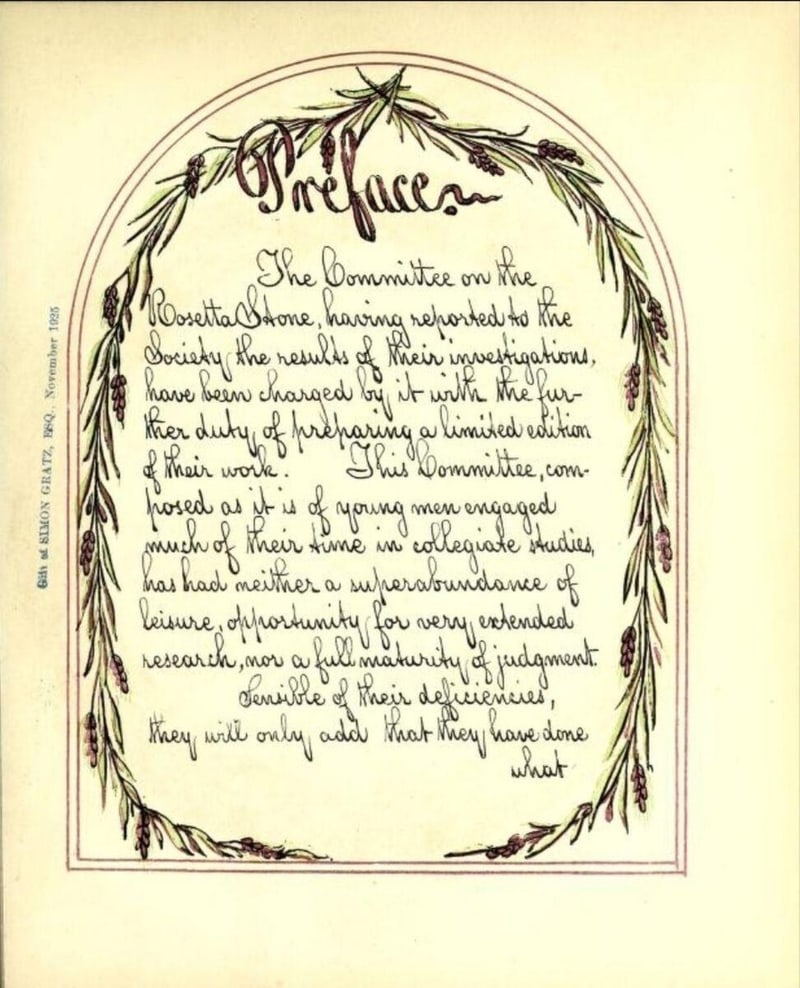
Simon Gratz gift recorded November 1925 → intervening institutional custody unresolved → Getty Research Institute
A blue stamp on the preface page reads: “Gift of SIMON GRATZ, ESQ., November 1925.” Because Gratz died in August 1925, the November processing date may reflect a previously arranged or posthumously completed transfer. The institution that first received the gift and the later route into Getty custody remain unresolved.
Getty accession 1537-825; LCCN 52058748; OCLC 4202211. The Getty catalog links to a digitized copy through the Internet Archive.
Getty Research Institute catalog record and copy photographs for C033, including the November 1925 Simon Gratz gift stamp; title page and dedication leaf confirmed via the Internet Archive digitization of the Getty copy. Pennsylvania House Archives biography and the Philomathean Society alumni roll support Gratz's 1837–1925 dates, Penn class of 1855, and Society membership.
Carnegie Library of Pittsburgh
Pittsburgh, Pennsylvania
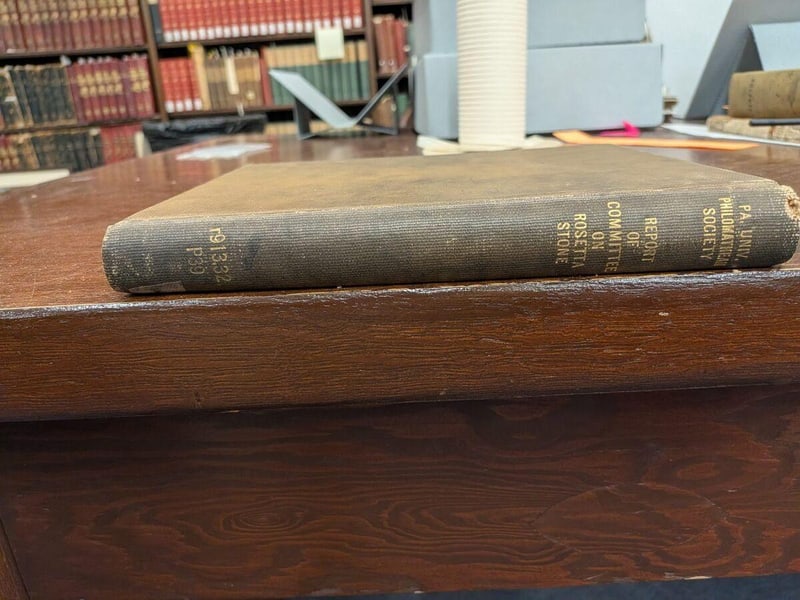
Later plain brown institutional binding.
No early authorial presentation inscription identified.
Charles C. Mellor (strong identification, not directly confirmed) → Carnegie Library of Pittsburgh
A rebound copy connected by surviving note to Pittsburgh music dealer and civic figure Charles C. Mellor.
Carnegie Library of Pittsburgh catalog and Charles C. Mellor Collection documentation; copy-specific photographs of C034’s spine, title page, Mellor note, and back cover.
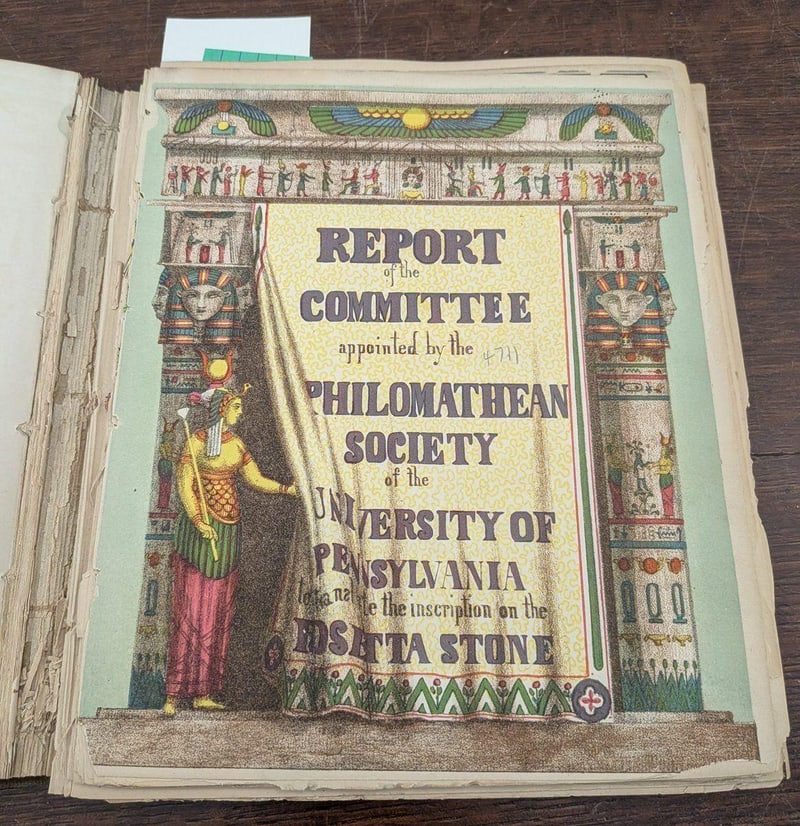
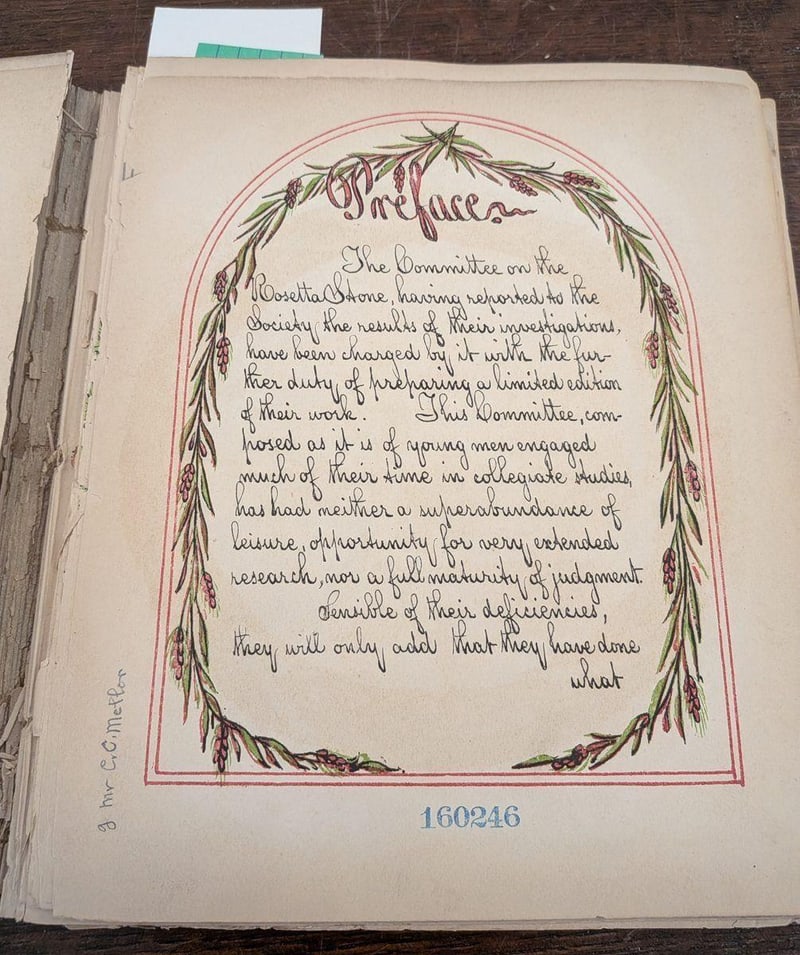
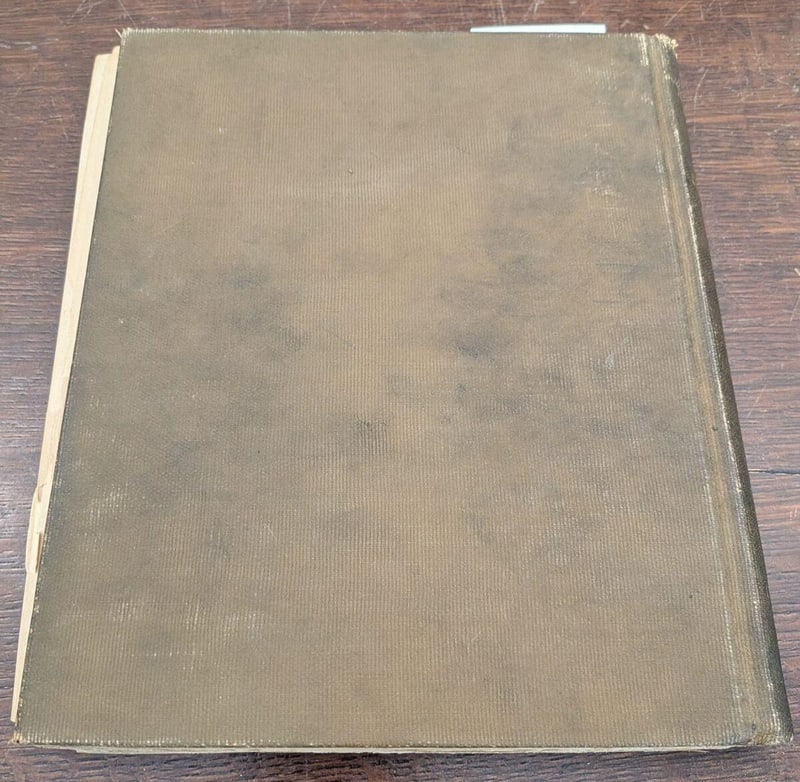
University of Georgia, Hargrett Rare Book and Manuscript Library
Athens, Georgia
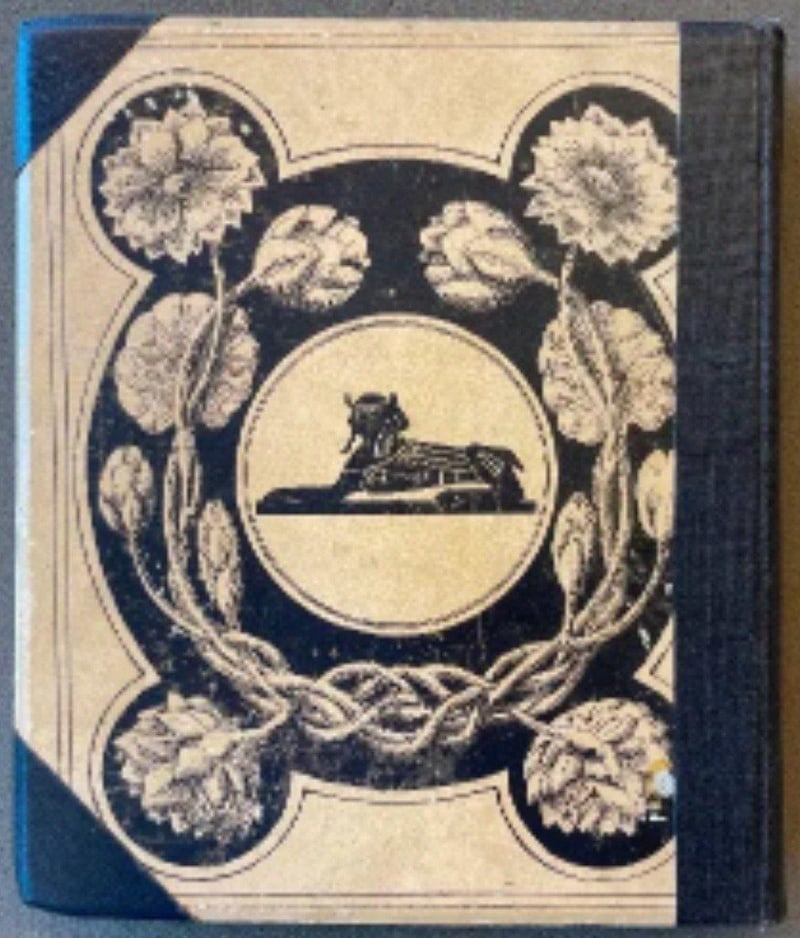
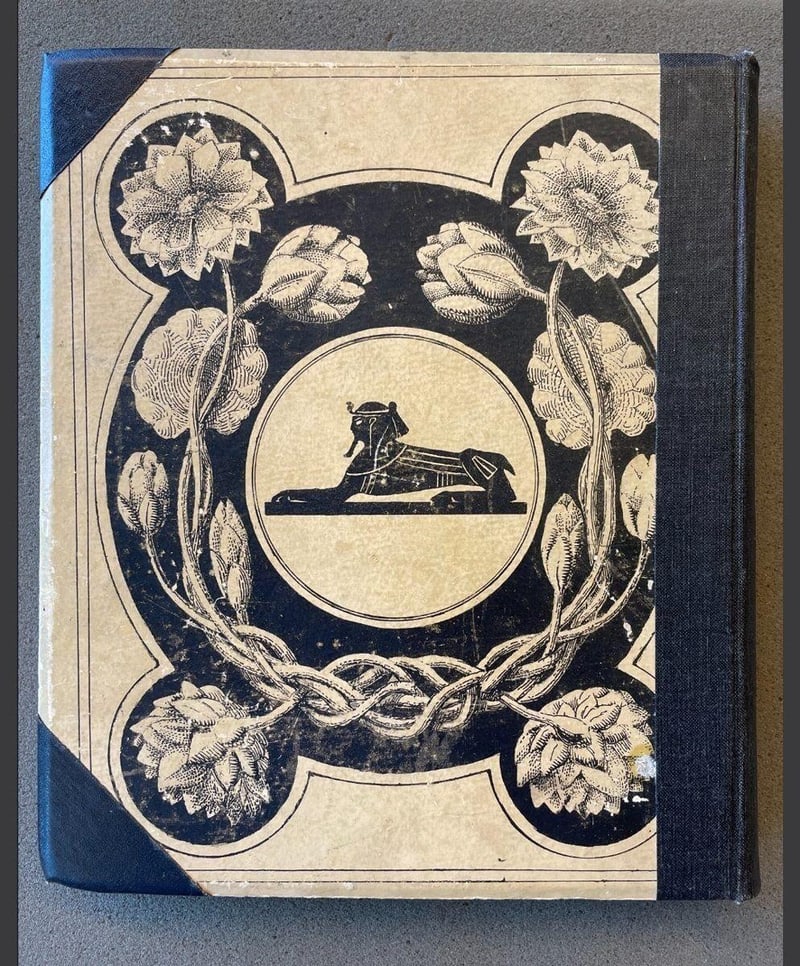
Original cream-and-black decorated boards, front and rear, both retained.
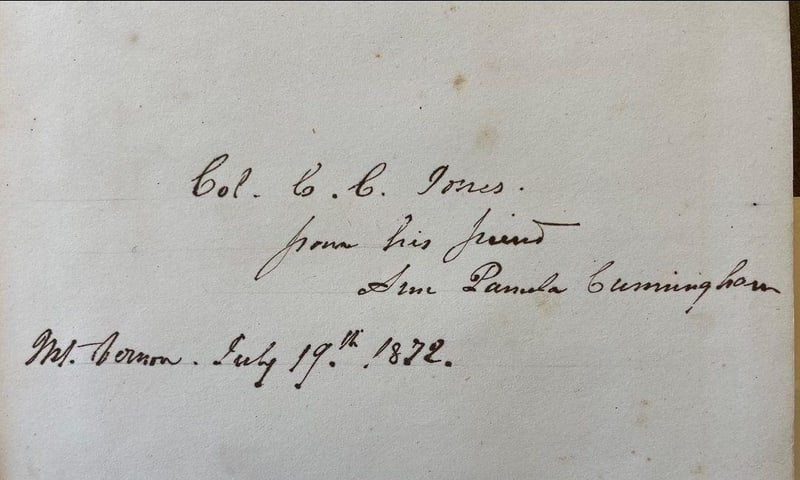
Later association gift from Ann Pamela Cunningham to Charles C. Jones, Mount Vernon, July 19, 1872.
Ann Pamela Cunningham → Col. Charles C. Jones → University of Georgia
A later association gift between two nationally important preservation-minded antiquarians: Ann Pamela Cunningham and Charles C. Jones Jr.
University of Georgia, Hargrett Rare Book and Manuscript Library catalog and provenance documentation; four copy-specific photographs confirming the retained front and rear boards, the library bookplate and shelfmark, and the Ann Pamela Cunningham inscription.
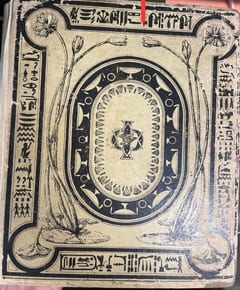
American Antiquarian Society, Research Library
Worcester, Massachusetts
Original cream publisher-issued boards with black decoration.
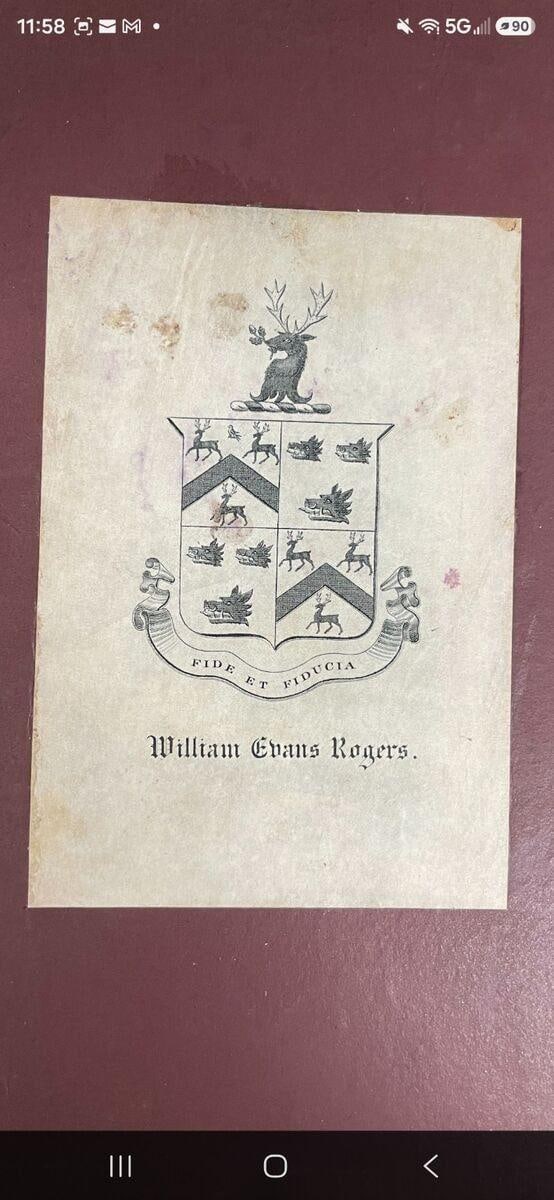
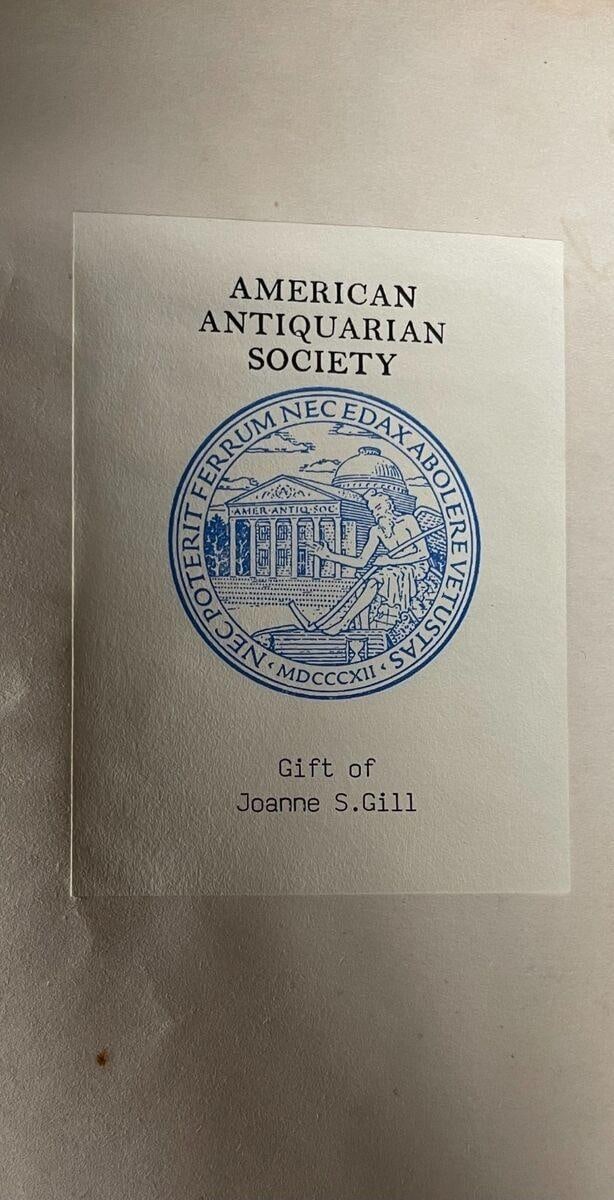
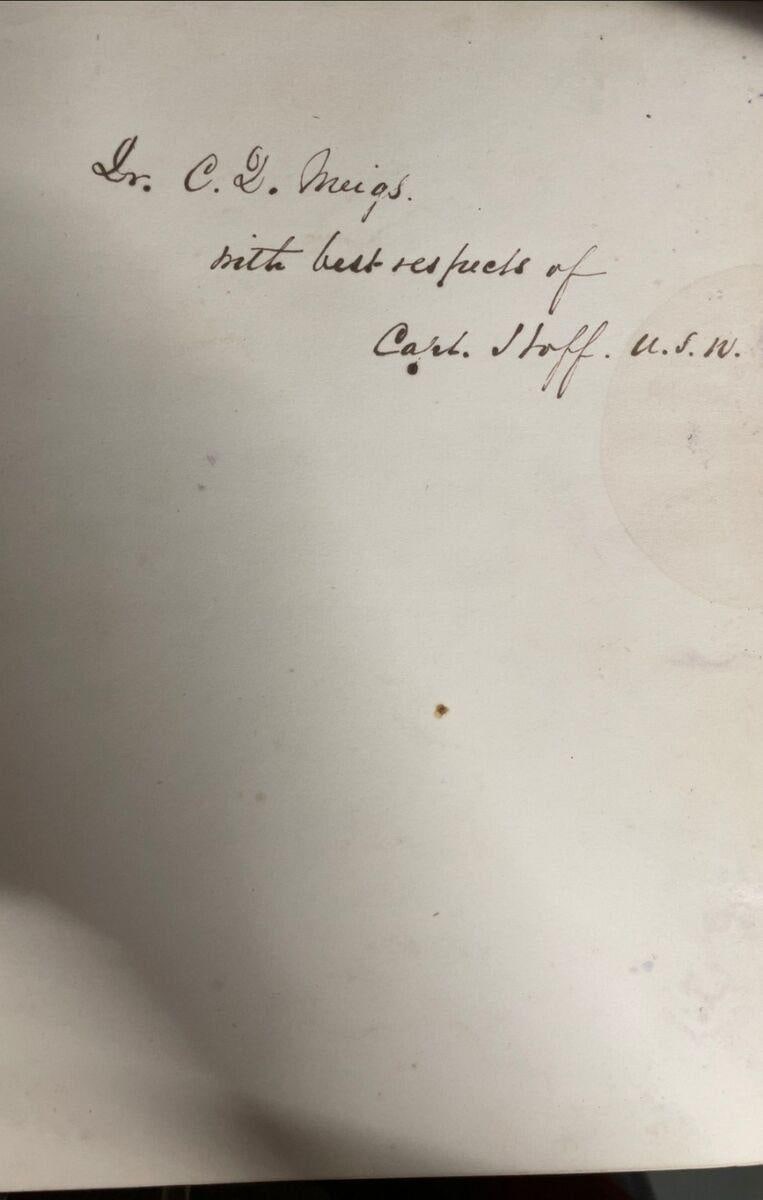
Inscribed to ‘Dr. C. D. Meigs’ ‘with best respects of Comd. Hoff. U.S.N.’ The recipient is Charles Delucena Meigs; the presenter is strongly identified as Henry Kuhn Hoff. William Evans Rogers’s armorial bookplate and Joanne S. Gill’s gift plate survive.
Philomathean Society / probably Henry Bainbridge Hoff → his father, Commander Henry K. Hoff → Dr. Charles D. Meigs → unresolved gap → William Evans Rogers → Joanne S. Gill → American Antiquarian Society
A route through Hoff’s Philomathean son and a later Meigs–Rogers family transfer are supported by family relationships, but neither handoff is documented.
American Antiquarian Society catalog and copy photographs; Jefferson University Meigs materials; U.S. Navy officer registers; Penn catalog, 1858–59; Philomathean membership history; Library of Congress Meigs chronology; AAS donation account.
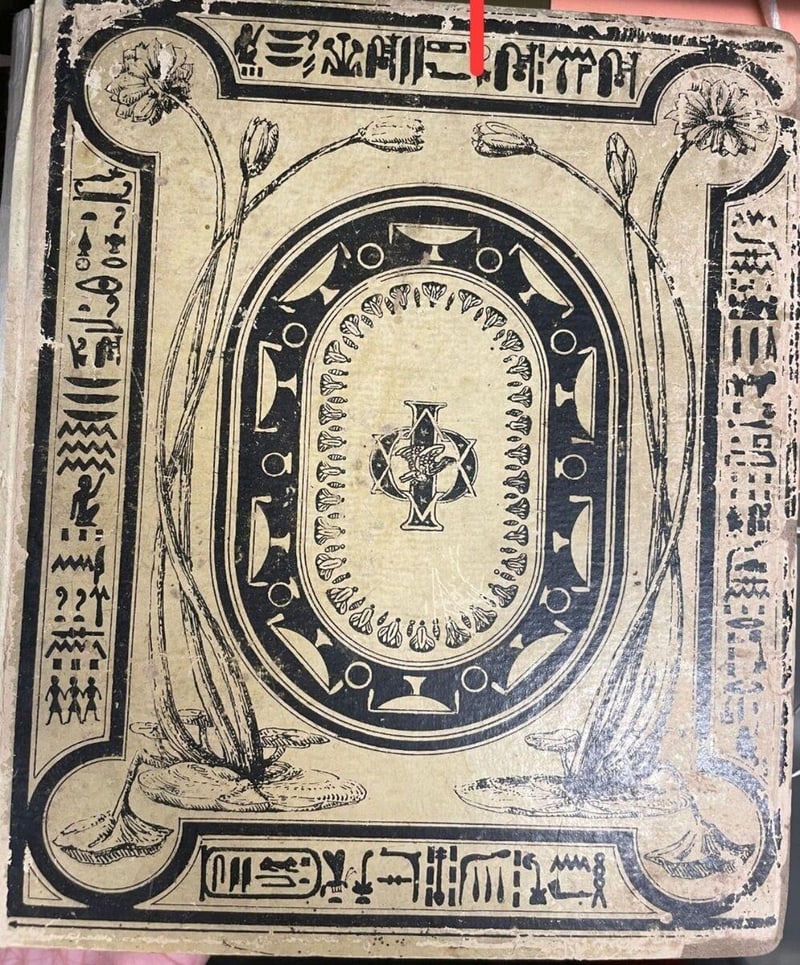
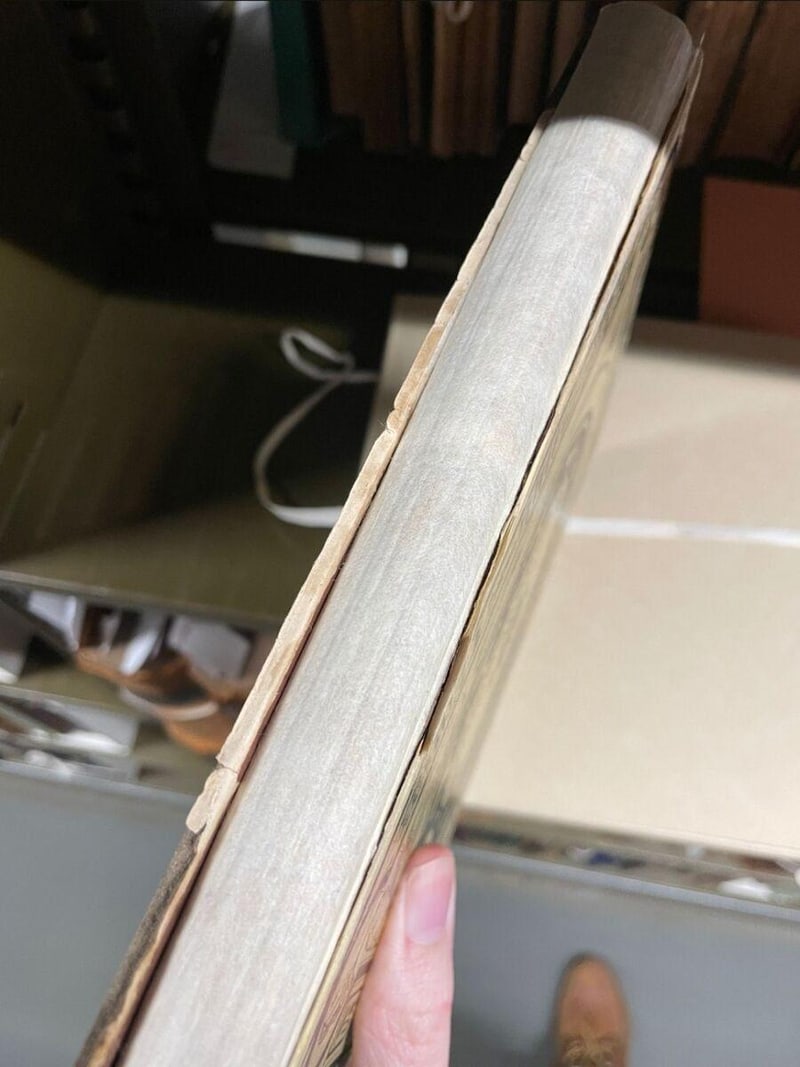
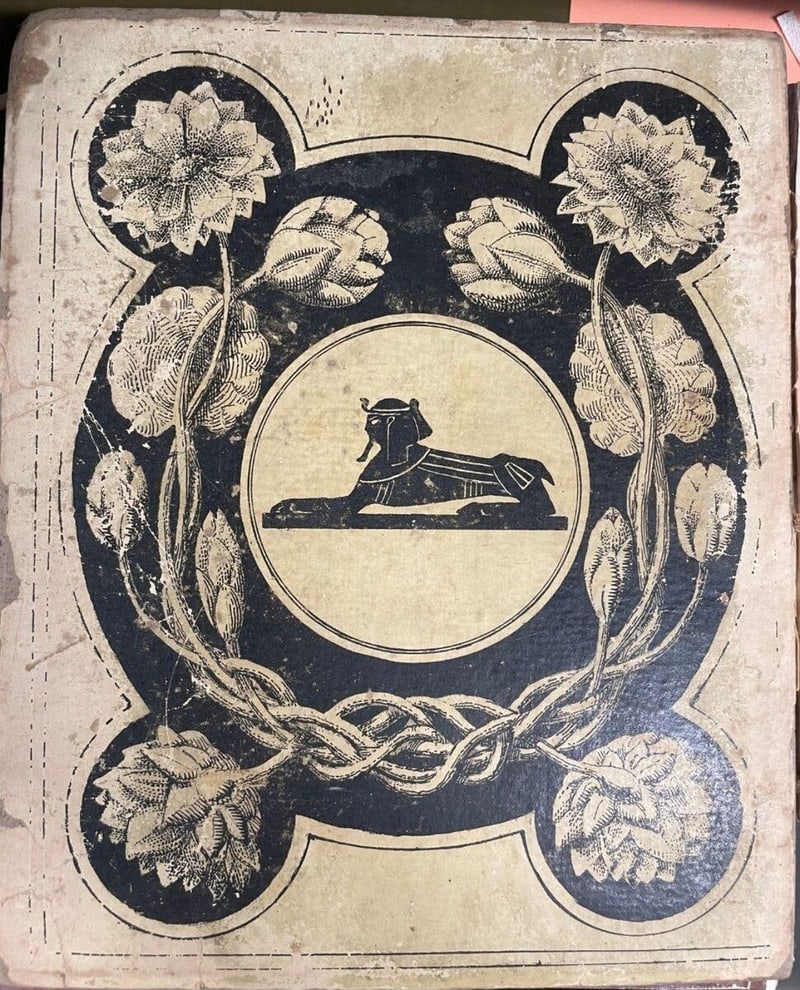
American Antiquarian Society, Research Library
Worcester, Massachusetts
Original brown publisher-issued boards with gold decoration.
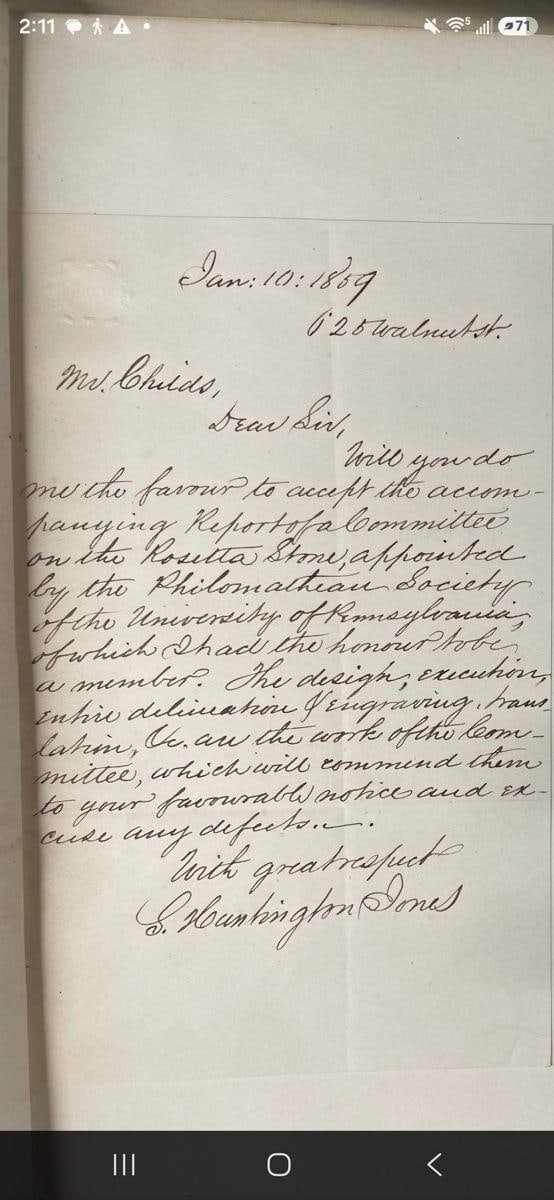
Authorial presentation by Samuel Huntington Jones, one of the three report authors, January 10, 1859.
Samuel Huntington Jones → George William Childs → American Antiquarian Society
A documented authorial presentation from Samuel Huntington Jones to Philadelphia publisher George William Childs.
American Antiquarian Society catalog and provenance documentation; copy-specific photographs of C037’s brown publisher binding and the January 10, 1859 presentation letter.
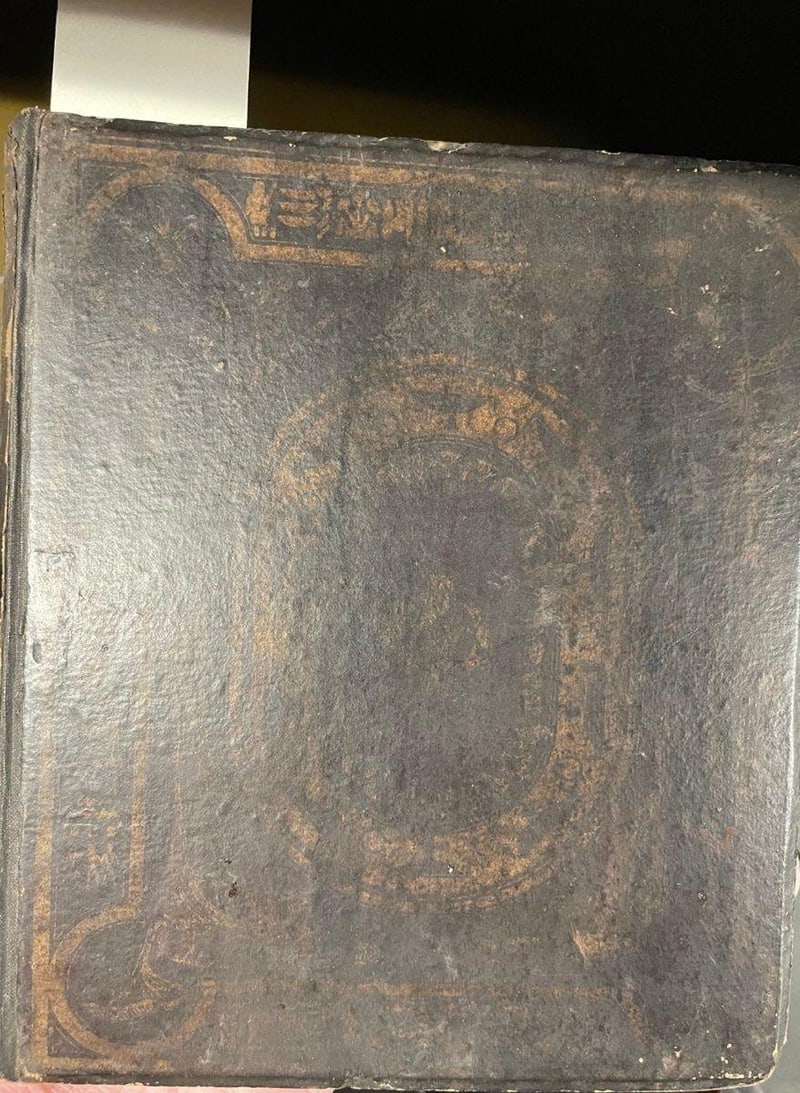
Princeton University, Rare Books and Special Collections
Princeton, New Jersey
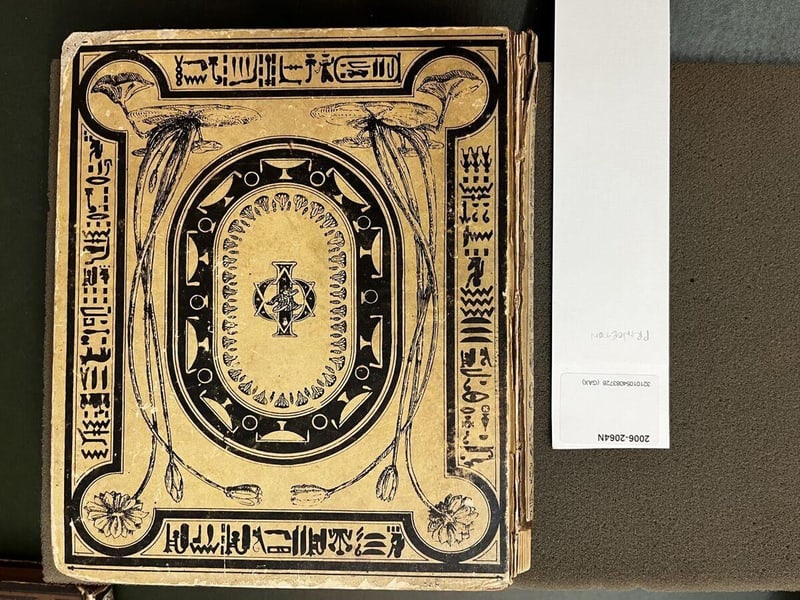
Original cream publisher-issued boards with black decoration.
No authorial presentation inscription identified.
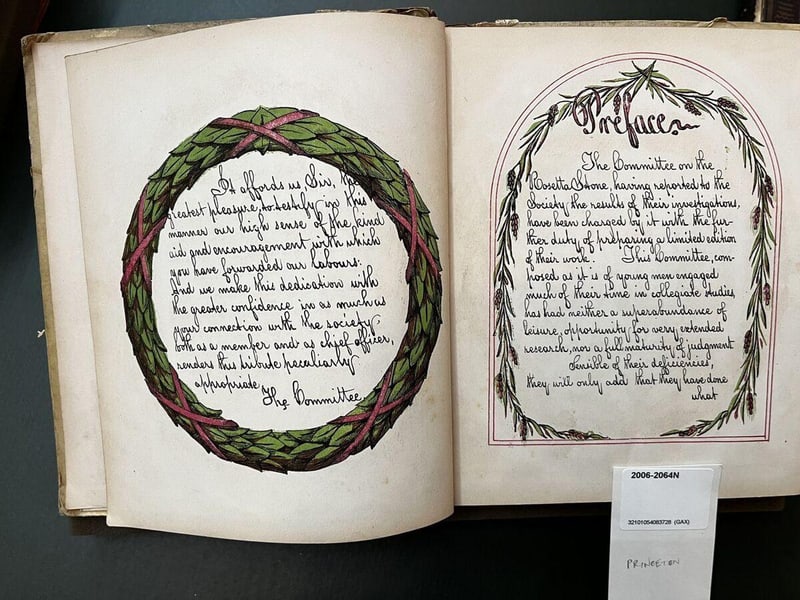
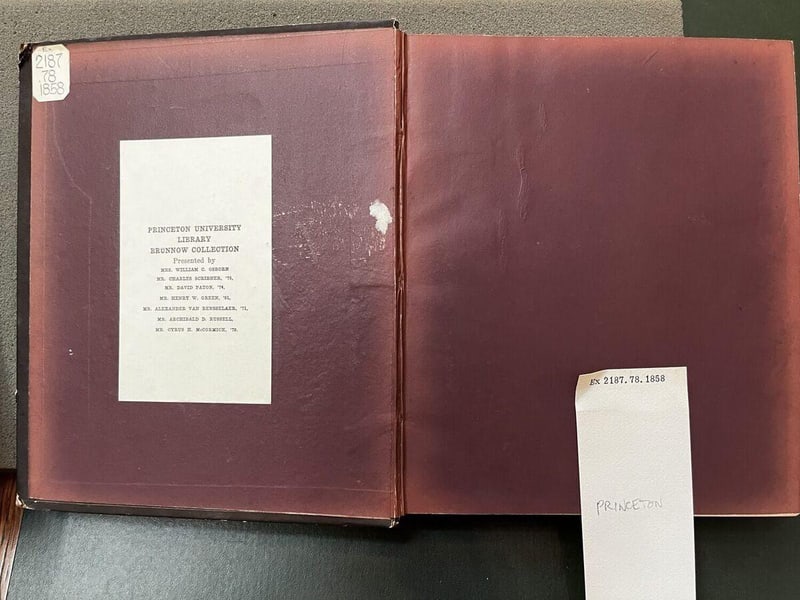
Nethercliffe, Ochre Point, Newport, Rhode Island → Princeton Graphic Arts Collection → Princeton Rare Books and Special Collections
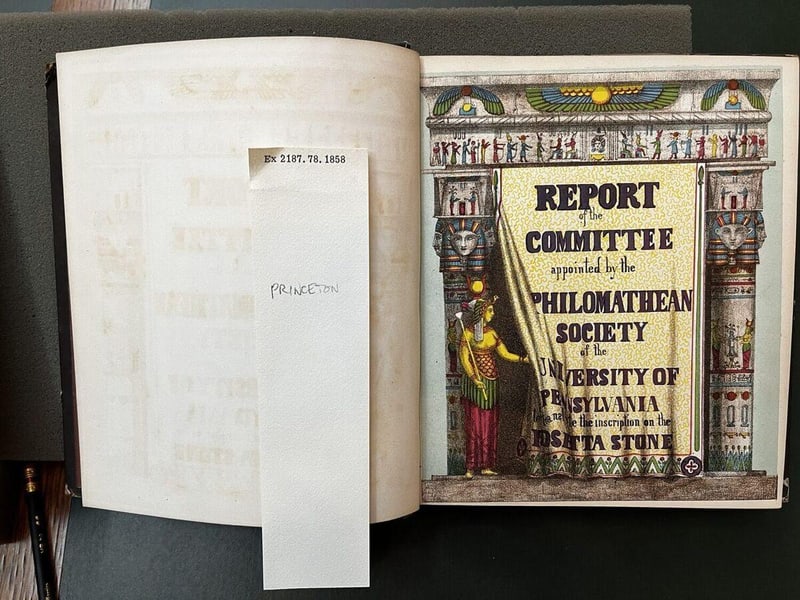
A cream-board Princeton copy with place labels and extensive interior documentation, preserving both physical and custodial evidence.
Princeton University, Rare Books and Special Collections catalog and provenance documentation; copy-specific photographs of C038’s cream publisher binding, shelf labels, title page, and preliminary leaves.
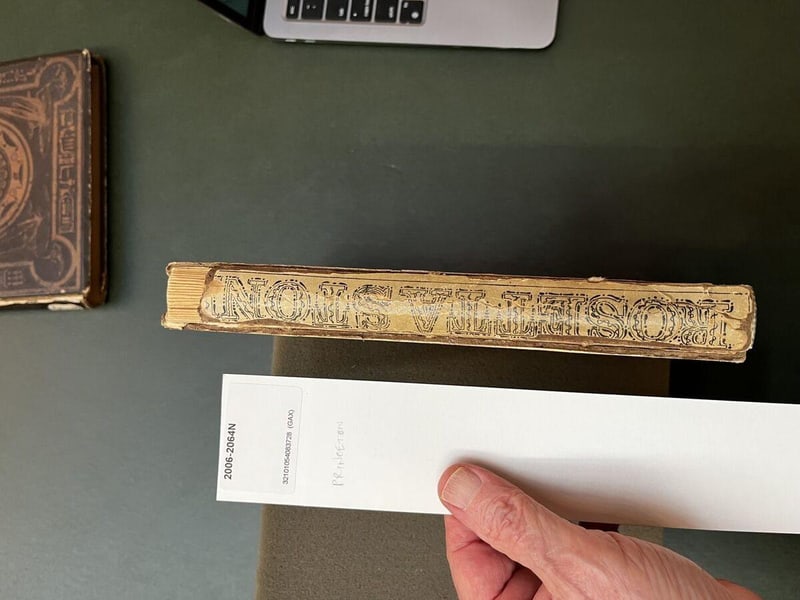
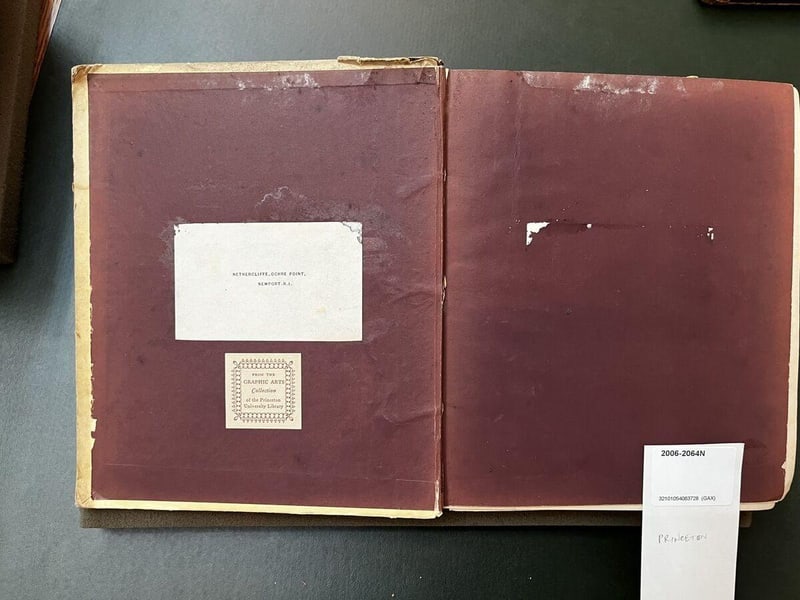
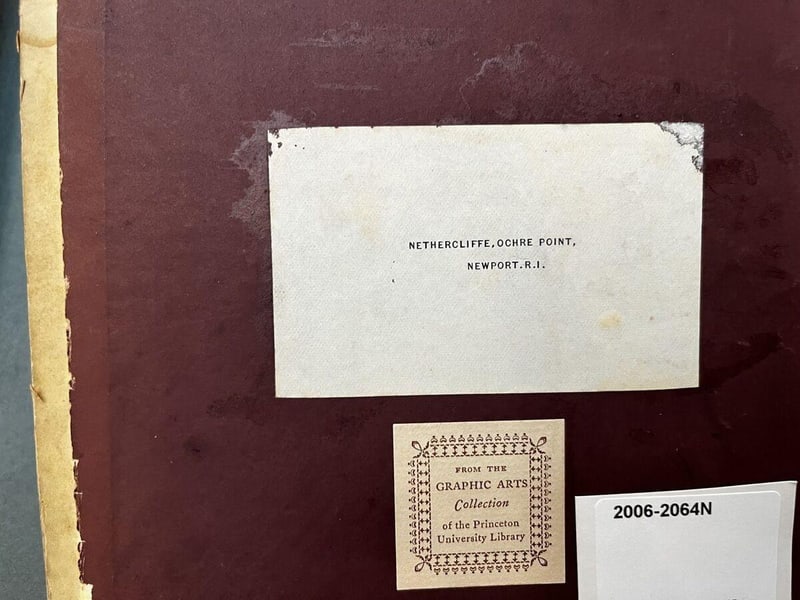
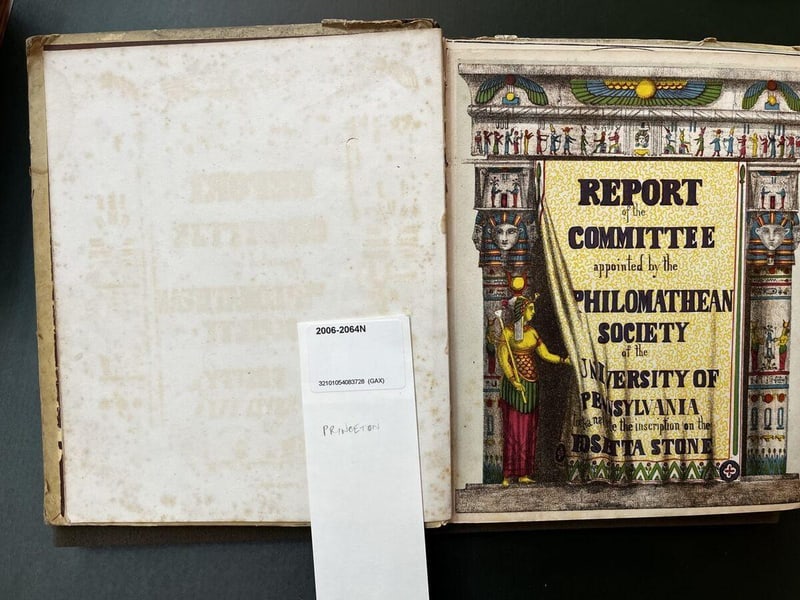
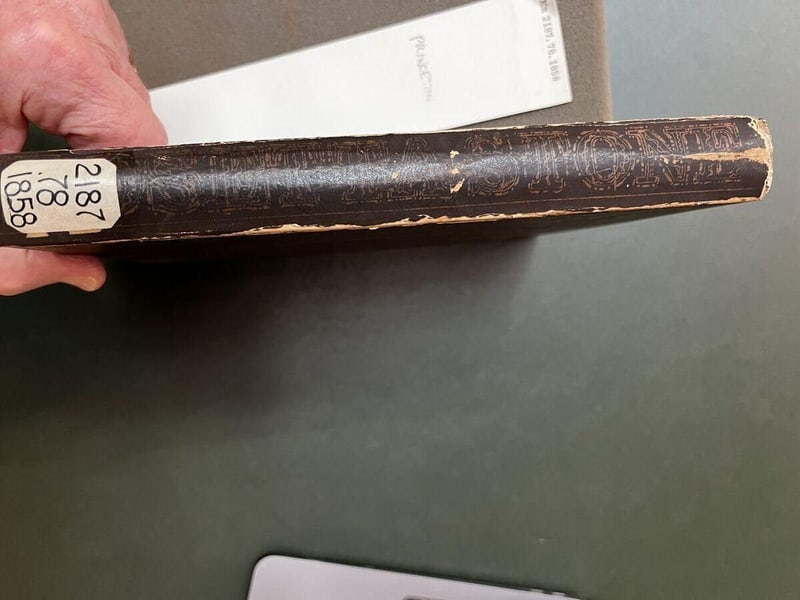
Princeton University, Rare Books and Special Collections
Princeton, New Jersey
Original brown publisher-issued boards with gold decoration.
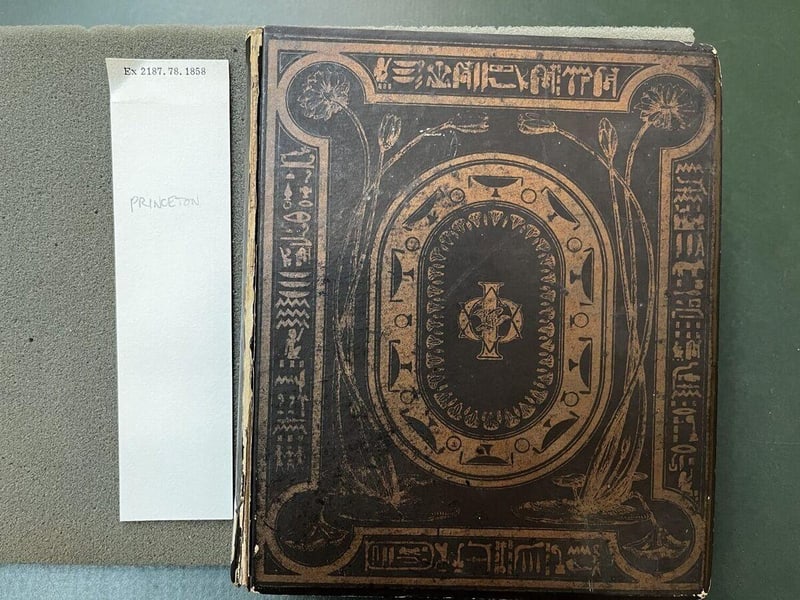
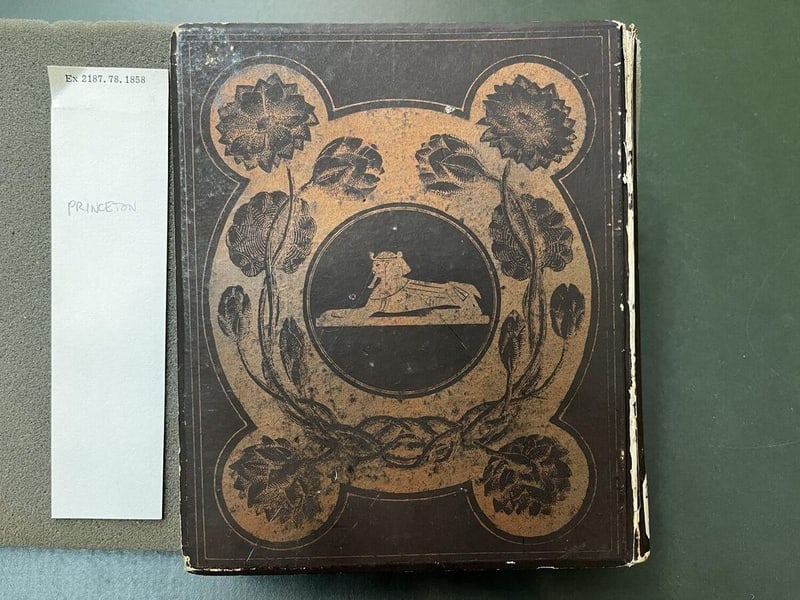
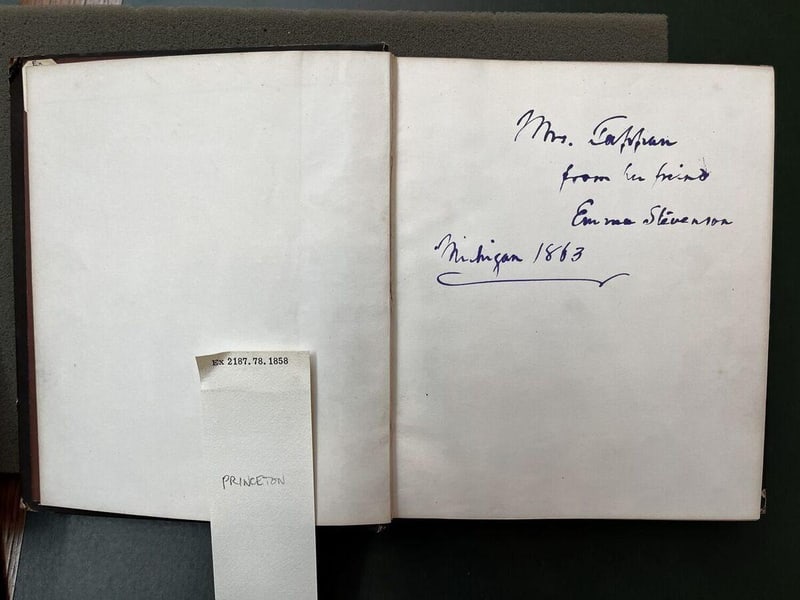
Emma Stevenson to ‘Mrs. Tappan,’ Michigan, 1863. Emily Eliza Stevenson and Julia Livingston Tappan are the strongly supported identifications.
Probable Morton–Ludlow family route → Emma Stevenson → “Mrs. Tappan,” Michigan, 1863 → unresolved gap → Princeton University Library
Stevenson’s documented kinship with Henry Morton provides a possible source for the copy; no transfer from him is established. The route from the 1863 gift to Princeton is unrecorded.
C039 identification memorandum: Emma Stevenson's 1863 Michigan gift to Mrs. Tappan, with Julia Livingston Tappan identified as the strongest recipient candidate. Emma Stevenson's identity and Ludlow-family relationship to Henry Morton draw on published Ludlow genealogy records and documented Oldstone estate (Westchester County, NY) ownership history.
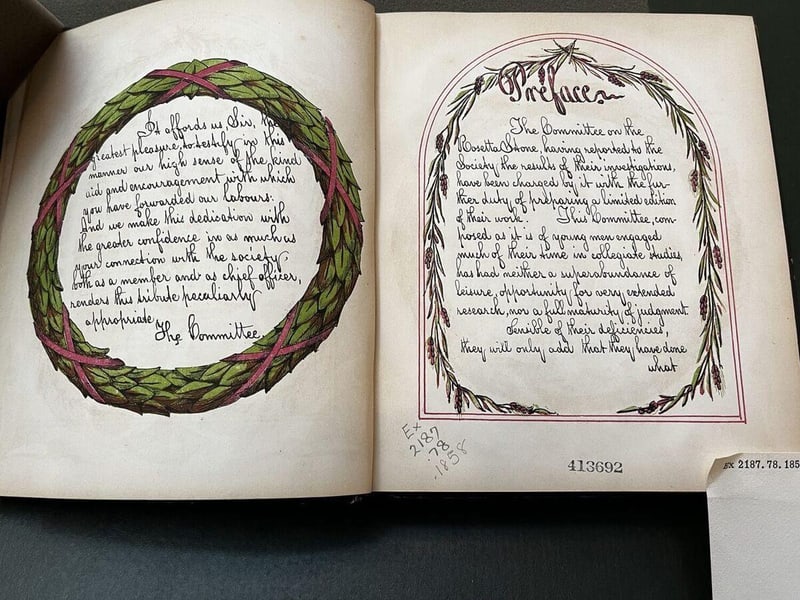
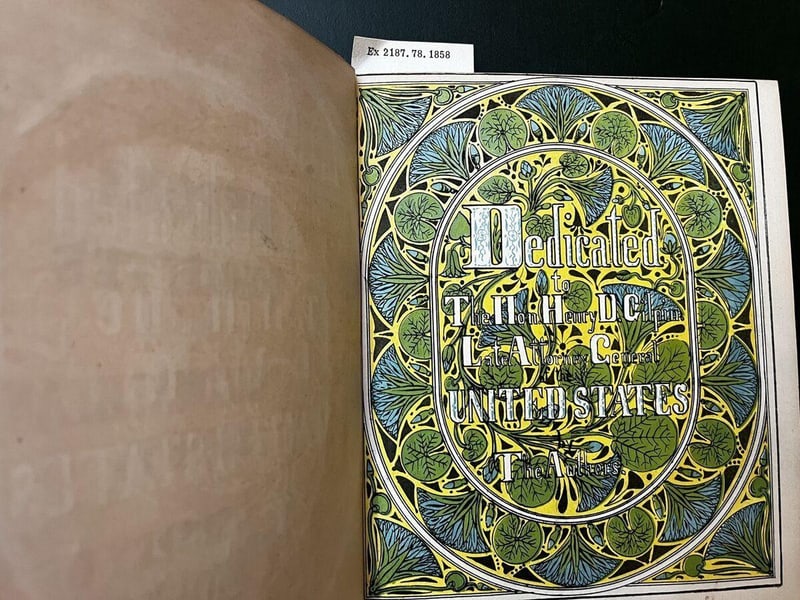
Villanova University, Falvey Library, Special Collections
Radnor Township, Pennsylvania
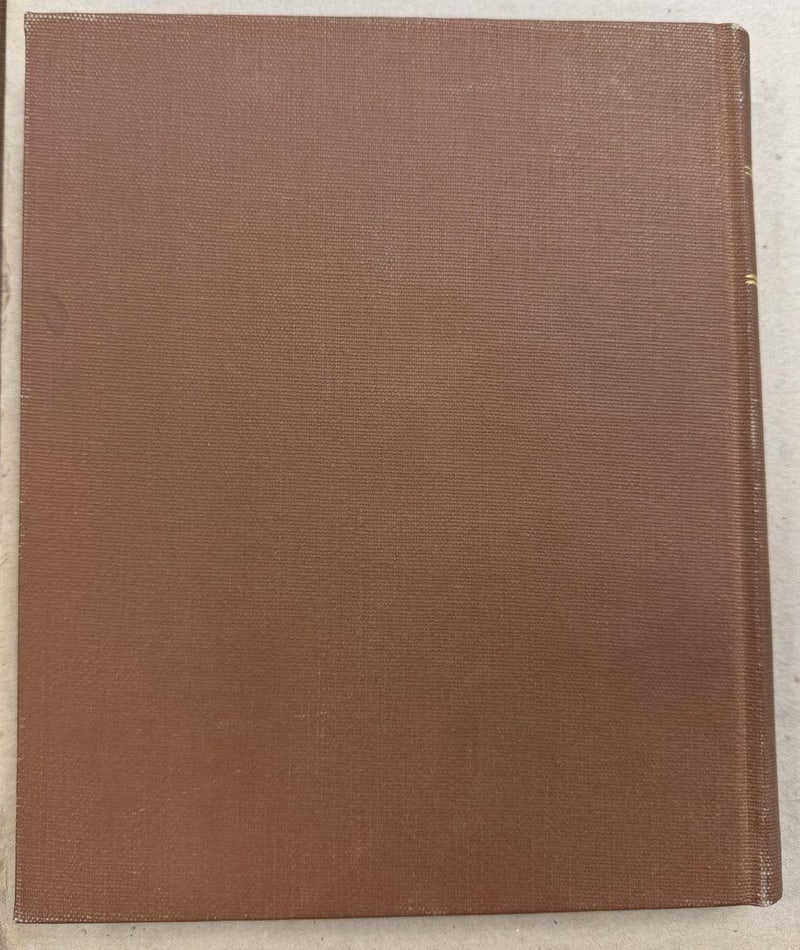
Later plain brown institutional binding.
The botanical dedication identifies the 1858 first edition.
No presentation inscription identified.
Unrecorded earlier ownership → Villanova University, Falvey Library, Special Collections
Villanova University, Falvey Library Special Collections catalog and holdings documentation; copy-specific photographs of C040’s later plain-cloth front and rear boards and the illuminated dedication leaf.
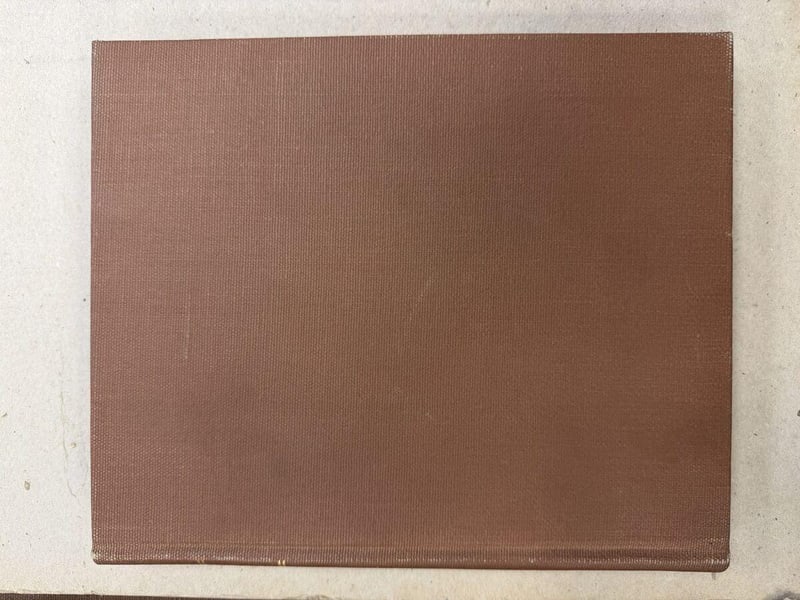
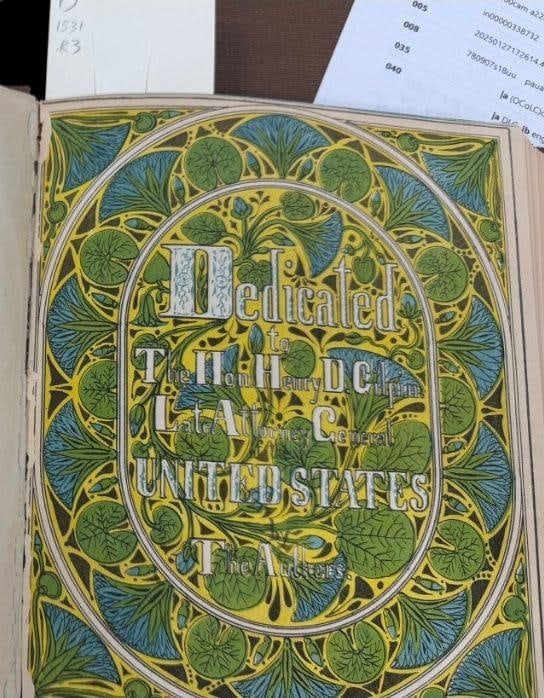
University of Cambridge, Waddleton Collection
Cambridge, United Kingdom
Original publisher-issued boards, heavily rubbed; dark-puce with silver-gray decoration. Rebacked (color unrecorded), probably in the late twentieth century.
Contemporary inscription: “Mrs B. G. Godfrey from her friend and pastor Rev. T. K. Conrad.” Project research identifies the recipient as Emeline M. Field Godfrey.
Rev. Thomas K. Conrad → Emeline M. Field Godfrey → Waddleton Collection, Cambridge University Library
The finished book was given by the same Philomathean member whose plaster cast helped inspire the entire translation project.
Cambridge University Library catalog, correspondence, and front- and rear-board photographs.
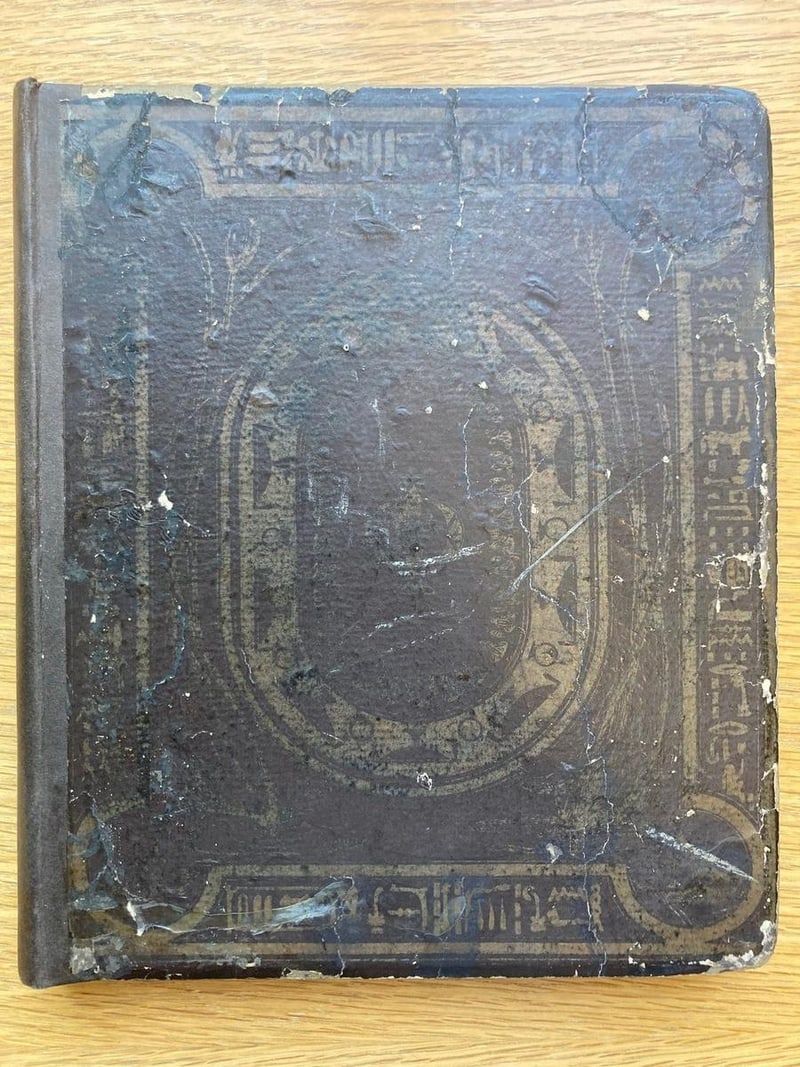
New York Public Library, Stephen A. Schwarzman Building
New York, New York
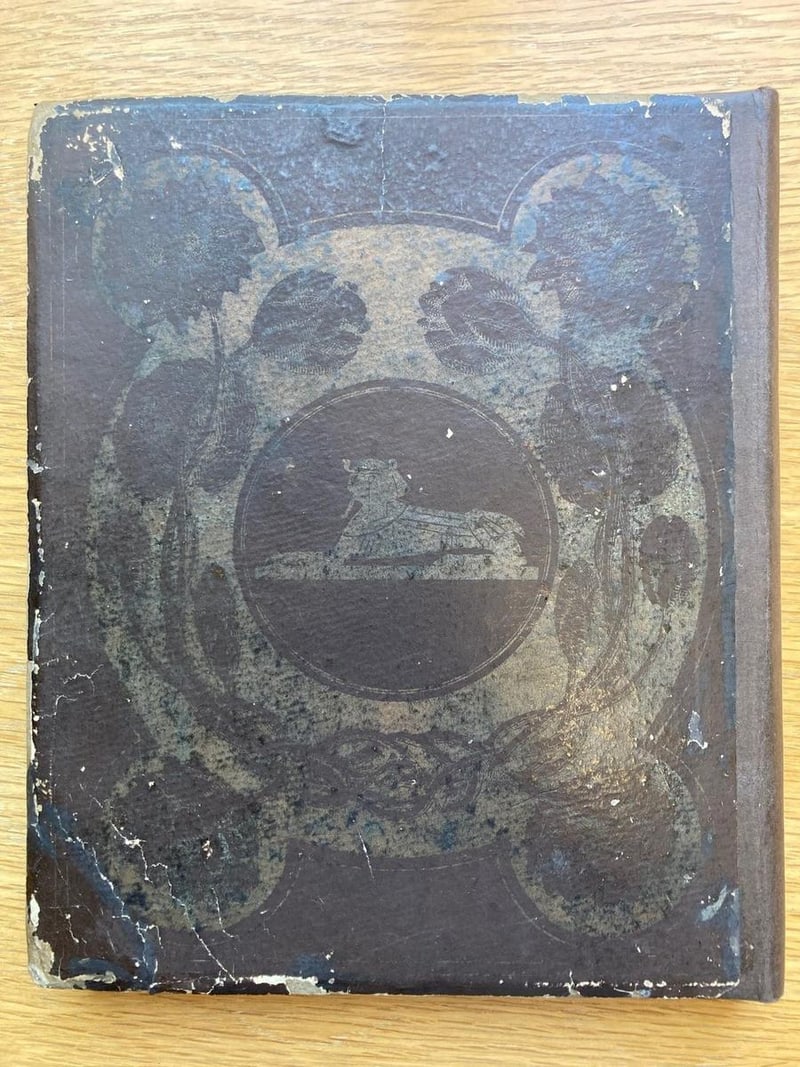
NYPL Bindery rebinding, 1944: acrylic-coated brown buckram cloth. The previous binding was removed; no evidence of its material or color survives. Shelfmark: Stuart 10981.
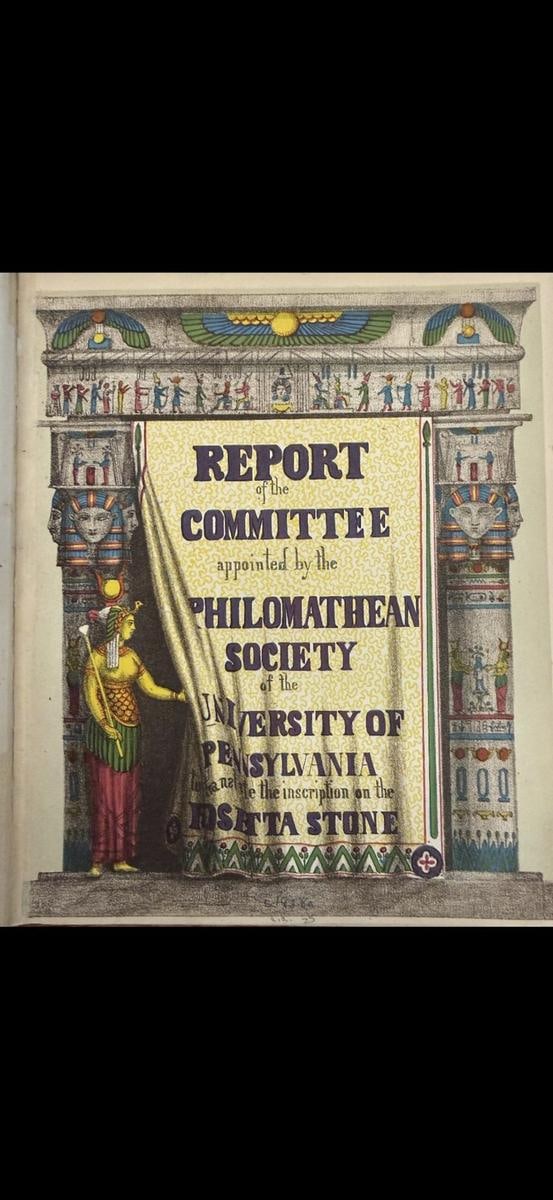
The title page carries no "Second Edition" statement, confirming the 1858 first edition.
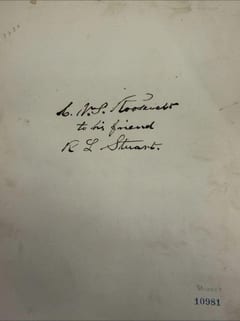
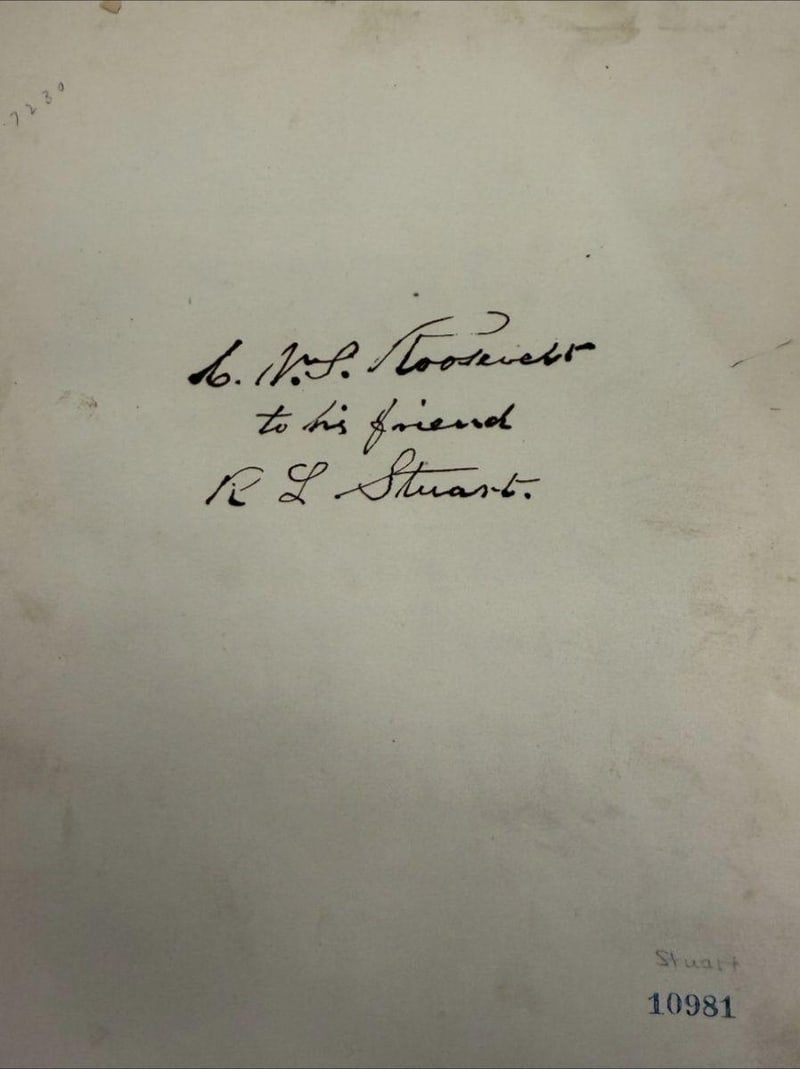
‘C. V. S. Roosevelt / to his friend / R. L. Stuart.’ Cornelius Van Schaack Roosevelt Sr. is the more likely presenter, although his son of the same name remains possible. Stuart’s 1884 catalog lists the Report as ‘12mo.’
C. V. S. Roosevelt → Robert Leighton Stuart → R. L. Stuart Collection → Lenox Library, 1892 → New York Public Library, 1895
New York Public Library catalog and provenance documentation; copy-specific photograph of the Cornelius Van Schaack Roosevelt inscription to Robert Leighton Stuart, and the illuminated title page; Catalogue of the Library of Robert L. Stuart (1884), p. 409.
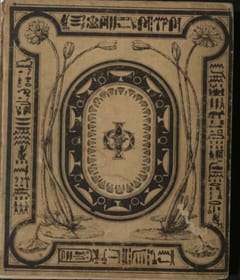
University of Virginia, Albert and Shirley Small Special Collections Library, Tracy W. McGregor Library of American History
Charlottesville, Virginia
Original cream publisher-issued boards with black decoration.
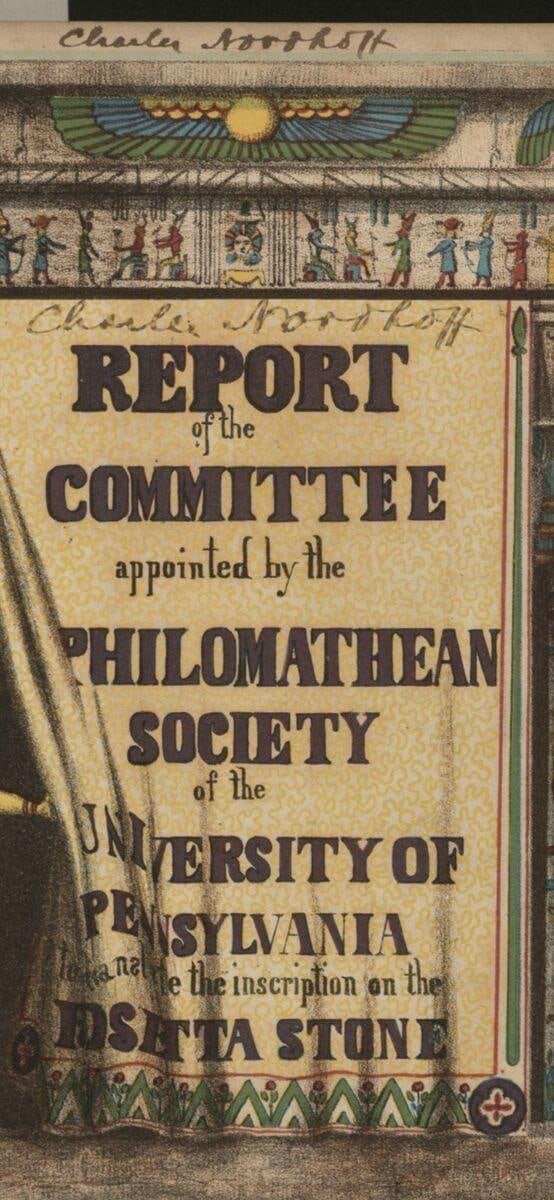
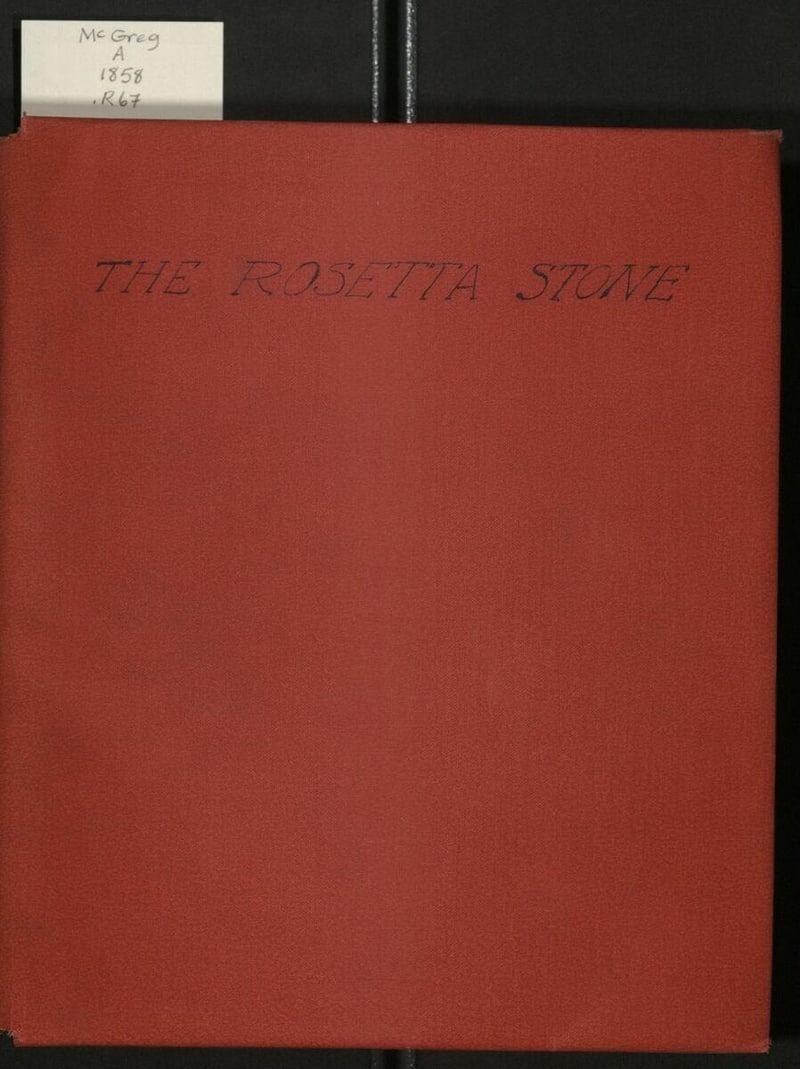
Two undated title-page signatures are provisionally read ‘Charles Nordhoff.’ The identification remains strongly supported by handwriting comparison, without independent authentication.
The dates of ownership and inscription are unrecorded.
Title-page owner recorded as “Charles Nordhoff,” identification unconfirmed → unresolved gap → Tracy W. McGregor, acquisition date and source unresolved → McGregor Fund → University of Virginia, 1938
McGregor Library provenance and Virginia custody are documented. McGregor’s accession book, 1933–1936 (MSS 11263-f), is a potential source for the unresolved acquisition.
University of Virginia catalog, correspondence, and copy photographs; McGregor acquisition records; authenticated Nordhoff signatures dated 1858 and 1881. The photographs document poor condition and later protective housing.
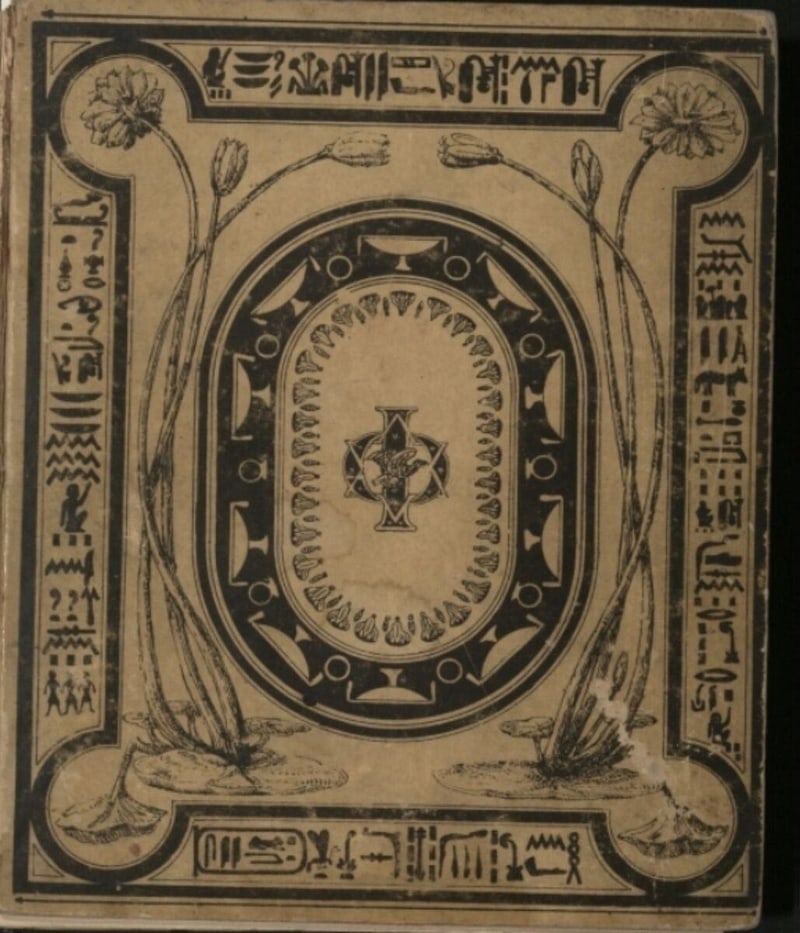
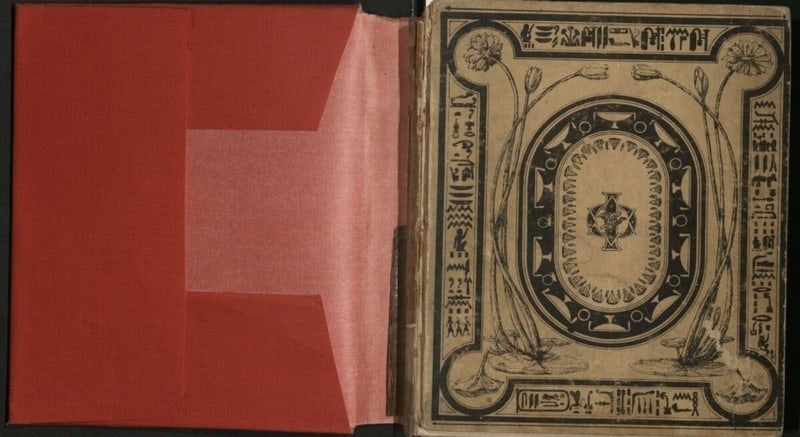
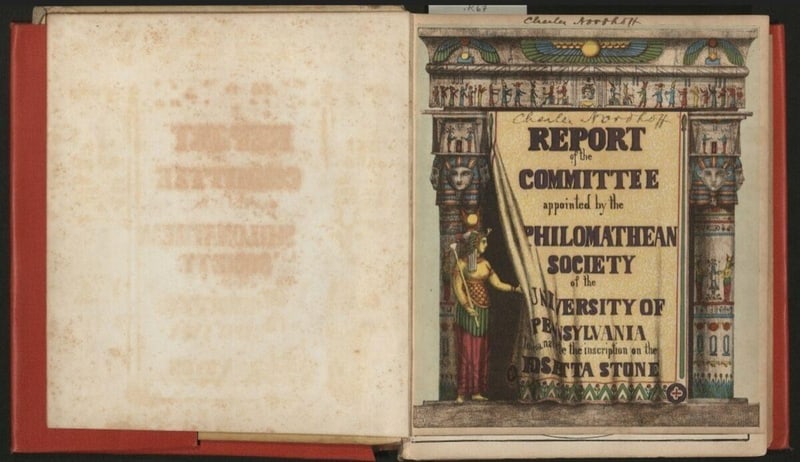
Private Collection
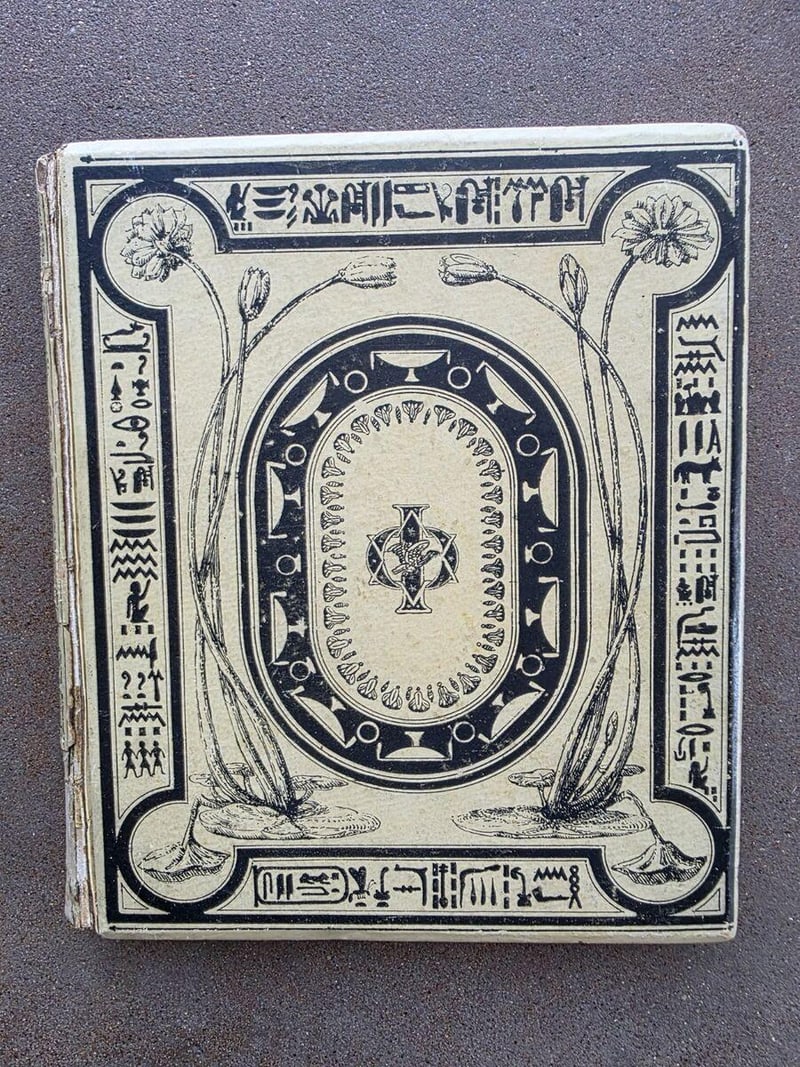
Original cream publisher-issued boards with black decoration.
No presentation inscription or ownership mark has been identified in the photographs or initial physical examination.
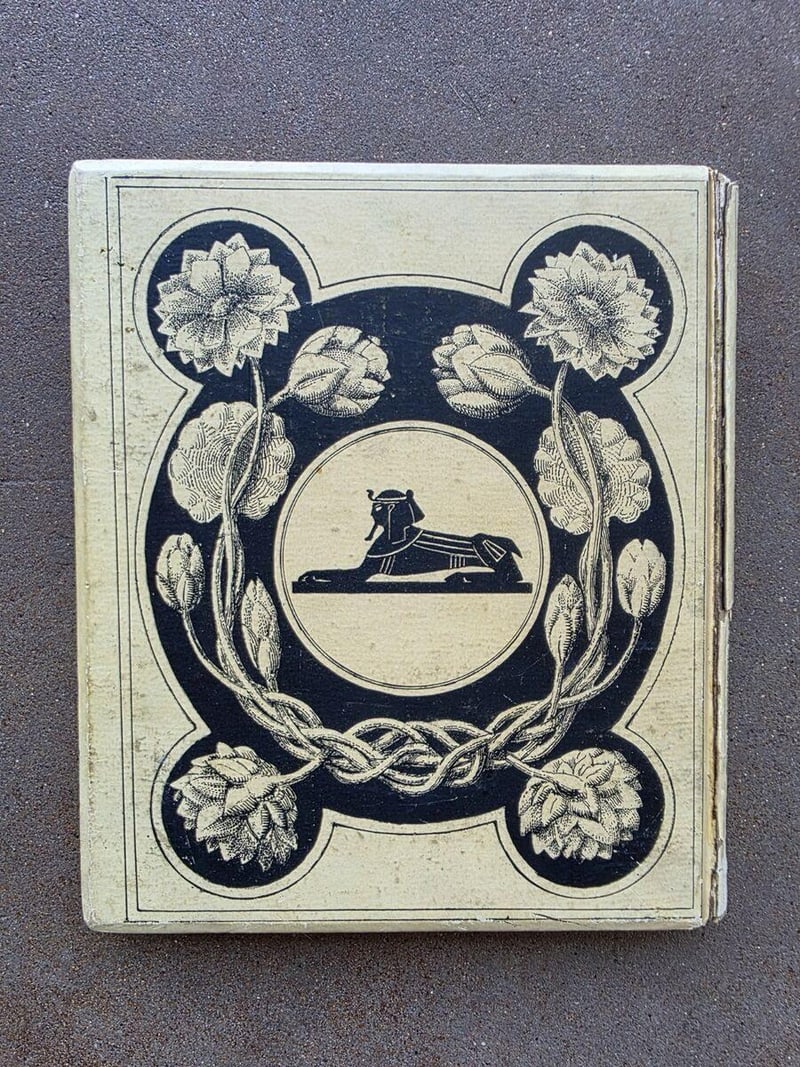
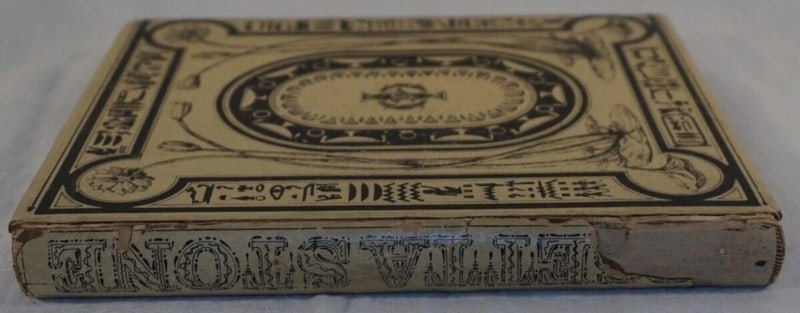
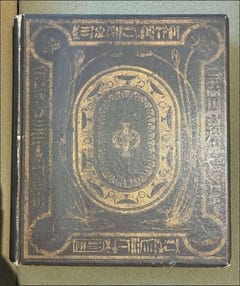
Unrecorded earlier ownership → estate sale, Sun City, Arizona, 1985 → family descent → Private Collection
The volume was acquired at a Sun City, Arizona, estate sale in 1985 and later passed by family descent to the present private collection. The estate’s identity and all ownership before 1985 remain unresolved.
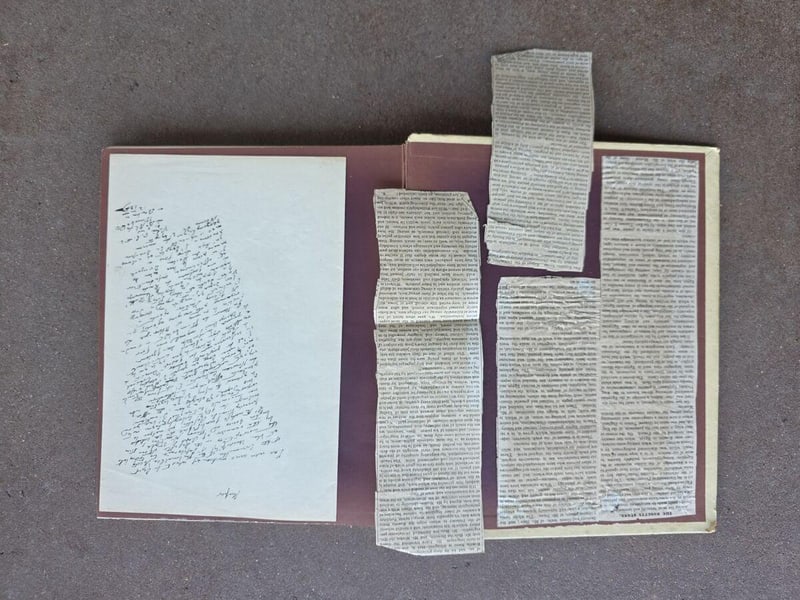
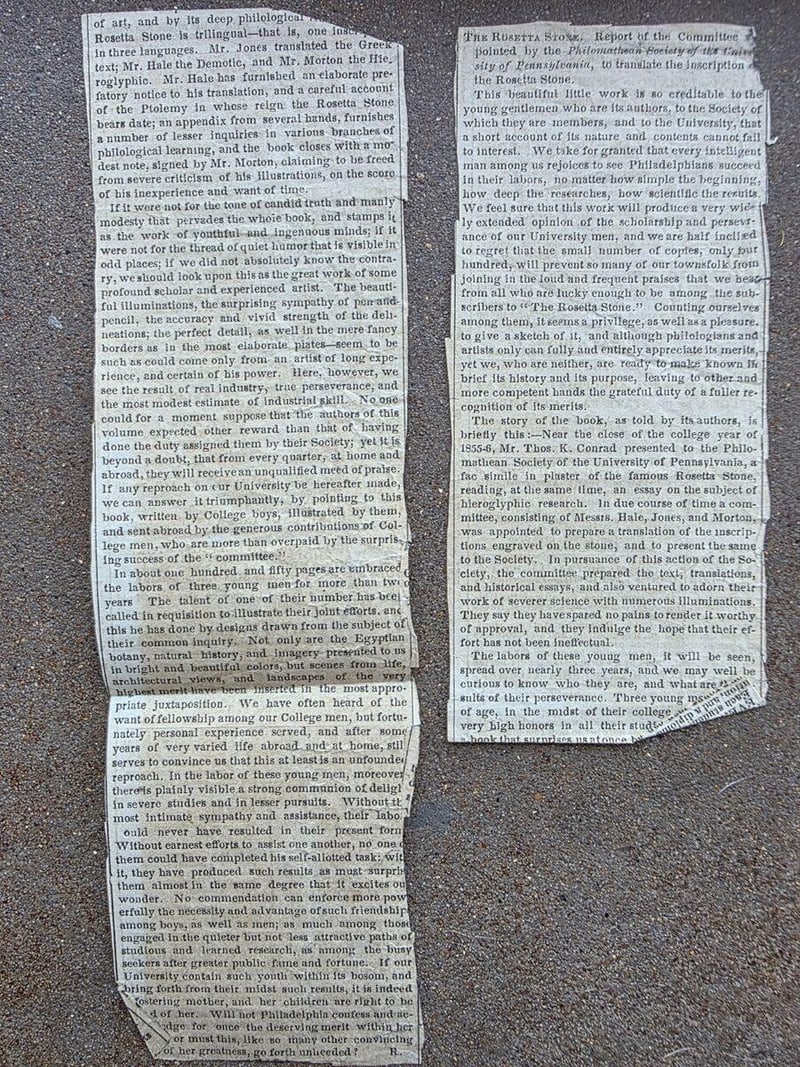
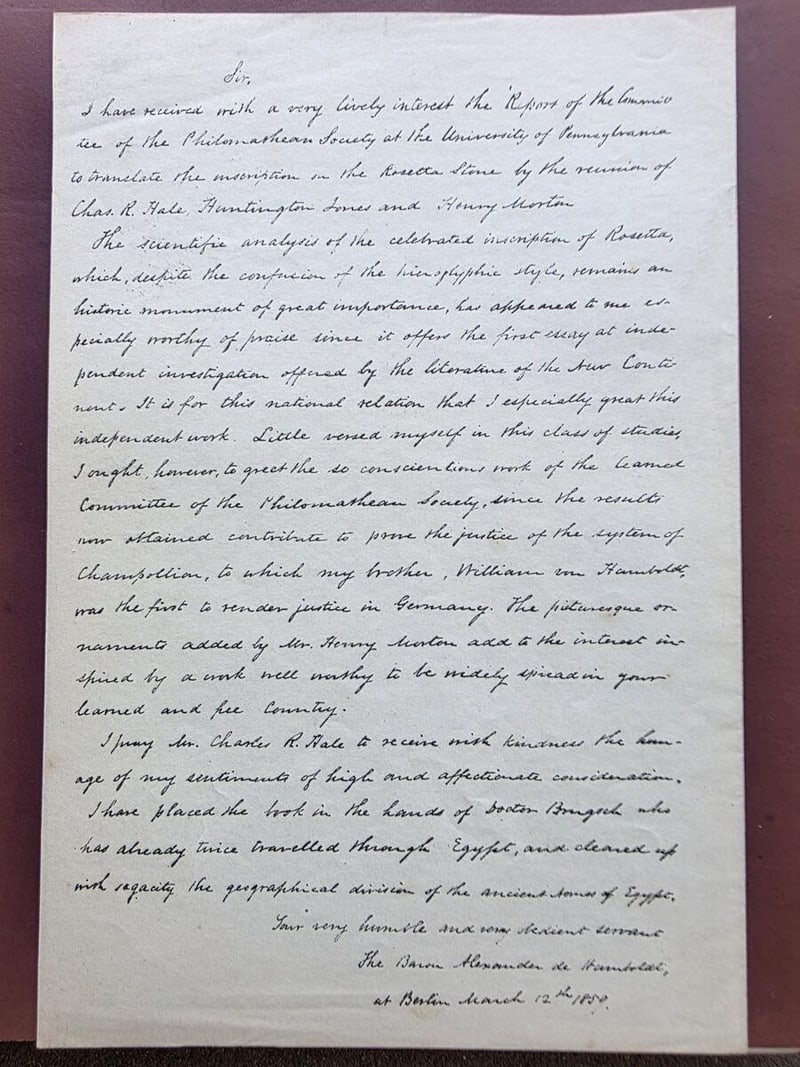
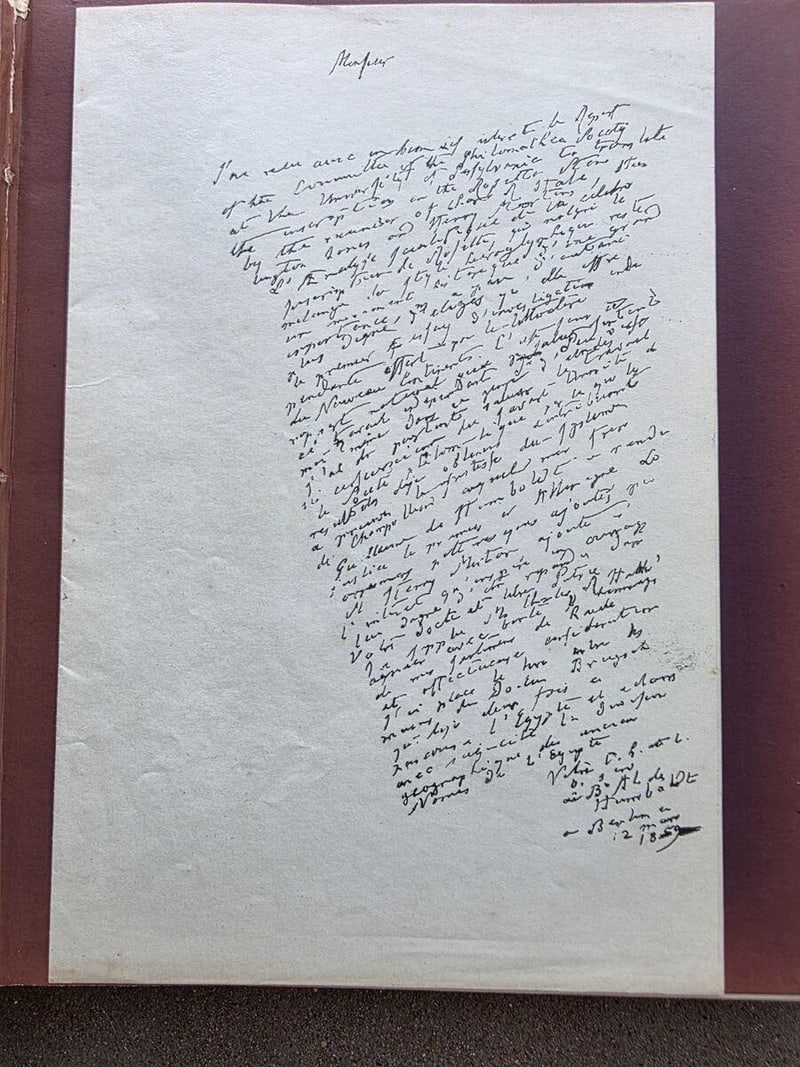
Mounted contemporary newspaper reviews and the Humboldt letter facsimile survive on maroon endpapers. One review states a four-hundred-copy edition. Its text matches the Philadelphia Gazette review reprinted in the Daily National Intelligencer, April 29, 1859, p. 2. The physical clipping probably comes from the Philadelphia printing; its missing masthead prevents confirmation.
The original spine substantially survives; ownership before the family’s 1985 acquisition is unrecorded.
Current-owner acquisition, physical examination, and copy-specific photographs.
Massachusetts Historical Society, Waterston Library
Boston, Massachusetts
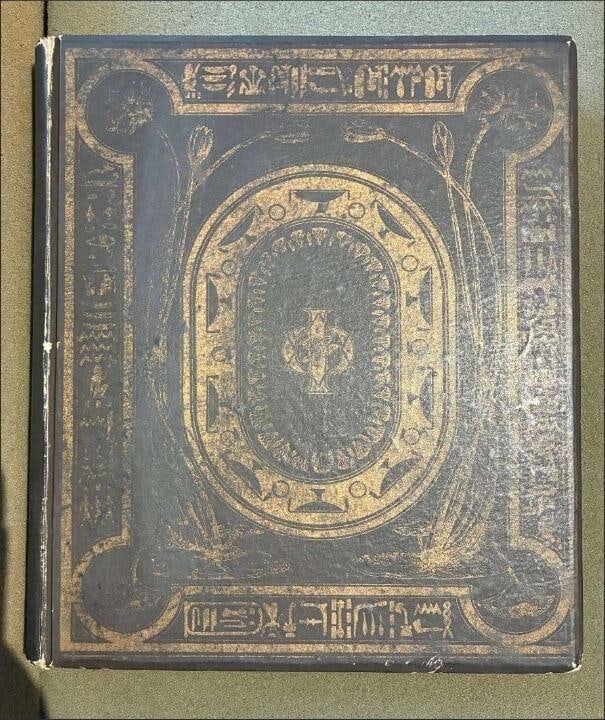
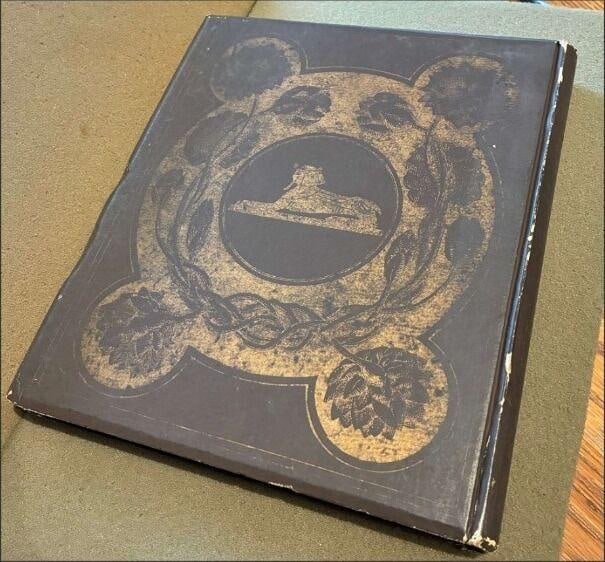
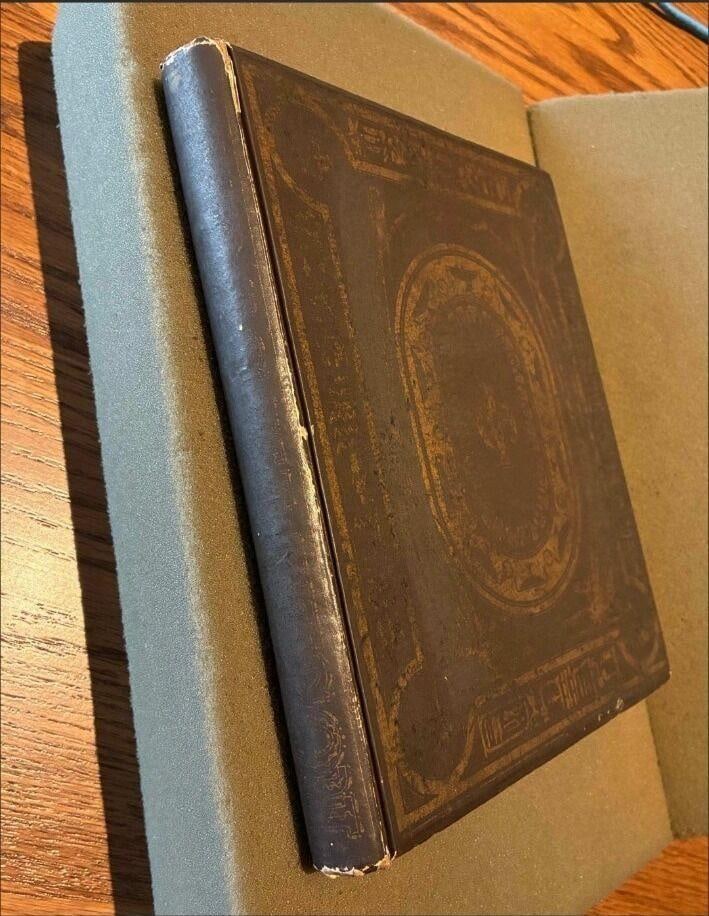
Original brown publisher-issued boards with gold decoration.
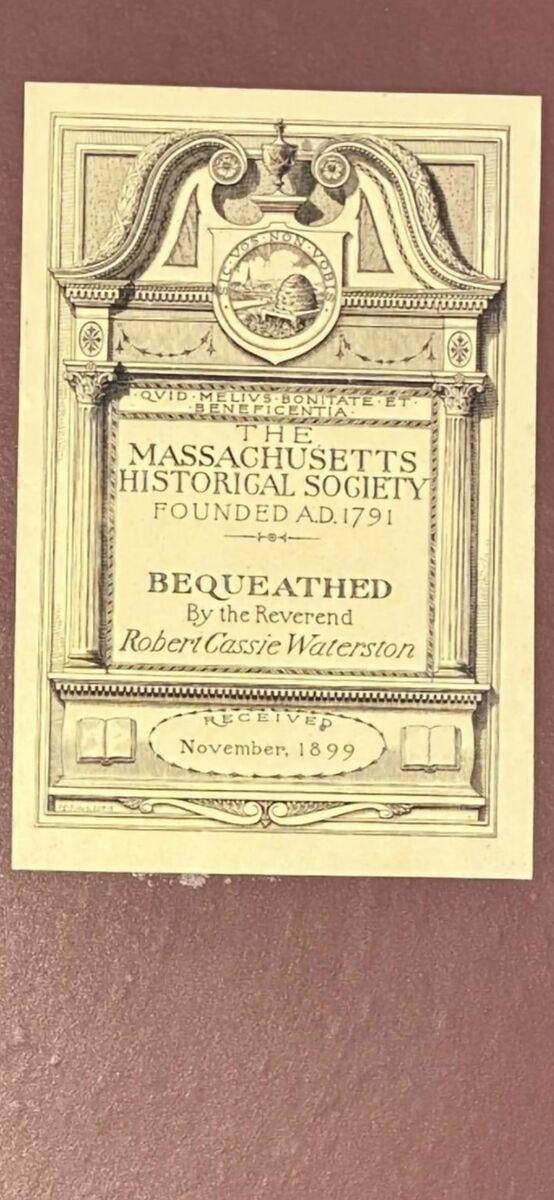
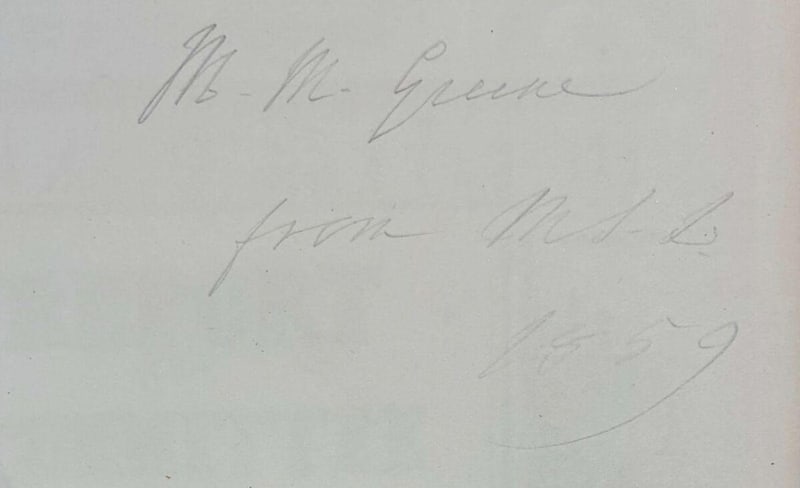
Pencil inscription apparently reading ‘Mrs. M. Greene / from M. S. Q. / 1859.’ Margaret Morton Quincy Greene and her sister Maria Sophia Quincy are the strongly supported recipient and presenter identifications.
Maria Sophia Quincy → Margaret Morton Quincy Greene, 1859 → probably their sister Anna Cabot Lowell Quincy Waterston and the Waterston household → Massachusetts Historical Society, November 1899
A Waterston Library bookplate records later ownership. The library reached the Massachusetts Historical Society in November 1899, one month after Anna Waterston’s death. Her family connection supplies a probable route; the exact transfer is undocumented.
Massachusetts Historical Society staff photographs and correspondence; Waterston Library bookplate and Quincy family collection guides; Massachusetts Historical Society account of Anna and Robert Waterston as bibliophiles; Historic New England and National Register documentation for the Quincy House and Quincy family.
Thomas J. Watson Library, The Metropolitan Museum of Art
New York, New York
533.54 P54 ↗ (barcode 30620004749460)
Later black institutional binding.
The photographed title page lacks the “SECOND EDITION” statement found on the 1859 issue, confirming this volume as an 1858 first-edition copy.
Metropolitan Museum of Art Library presentation label naming the Rev. Harold Baxter Liebler and bearing number 117379; Metropolitan Museum library stamp and current barcode.
The 1895 gift inscription reads ‘Revd. H. C. Swentzel / With kind regards of / John Cooper, M.D.; M.R.C.S. Eng. / 1895.’ Henry C. Swentzel is identified; Brooklyn physician John Cooper is the strongly supported presenter.
John Cooper, M.D., M.R.C.S. Eng., presenter, 1895 → Rev. Henry C. Swentzel, recipient → unresolved gap → Rev. Harold Baxter Liebler → Metropolitan Museum of Art Library / Thomas J. Watson Library
The transfer from Swentzel to Harold Baxter Liebler and the date of Liebler’s gift to the Met are unrecorded.
Thomas J. Watson Library staff correspondence and copy-specific photographs; clergy record for Rev. Henry C. Swentzel (Lycoming College/United Methodist Archives clergy index); period Brooklyn medical directory entry for Dr. John Cooper, 79 St. James Place, M.R.C.S.L. 1837.
Department of Egyptian Art, The Metropolitan Museum of Art
New York, New York
Original brown publisher-issued boards with gold decoration; later cloth spine replacement (color unrecorded).
The photographed title page lacks the “SECOND EDITION” statement, confirming the 1858 first edition.
“To Albert M. Lythgoe Esqr / With kindest regards of / John Henry Haynes. / 1908.”
Unrecorded earlier ownership → John Henry Haynes → Albert Morton Lythgoe, 1908 → Metropolitan Museum Department of Egyptian Art
The transfer from Albert Morton Lythgoe to the Metropolitan Museum is unrecorded.
Metropolitan Museum of Art correspondence and eight reference scans supplied by Thomas J. Watson Library; Penn Museum Archives John Henry Haynes finding aid; and Metropolitan Museum Department of Egyptian Art history.
Bryn Mawr College Special Collections
Bryn Mawr, Pennsylvania
PJ1531 .R3 1858 ↗
Former shelfmark Uncat 8416. Repository staff are enriching the catalog record and assigning PJ1531 .R3 1859; that cataloging date does not alter the copy’s photographed first-edition evidence.
Original cream publisher-issued boards with black decoration.
The photographed chromolithographed title page lacks the “SECOND EDITION” statement found on the 1859 issue, confirming this volume as an 1858 first-edition copy.
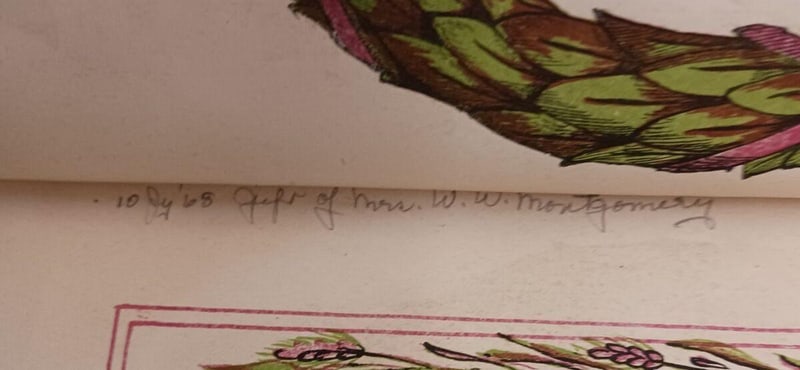
A pencil annotation in the gutter of the Preface records “10 Jy ’65 Gift of Mrs. W. W. Montgomery.” No earlier ownership inscription or bookplate has been identified.
Unrecorded earlier ownership → Mrs. W. W. Montgomery → Bryn Mawr College, July 10, 1965
The gift of ‘Mrs. W. W. Montgomery’ is dated July 10, 1965. Fannie Brock Montgomery is the strongest candidate; the initials do not confirm her identity. Earlier ownership is unrecorded.
Bryn Mawr College Libraries, institutional correspondence and copy-specific photographs; St. David’s Episcopal Church cemetery register; and University of Pennsylvania Archives biography of William Woodrow Montgomery.
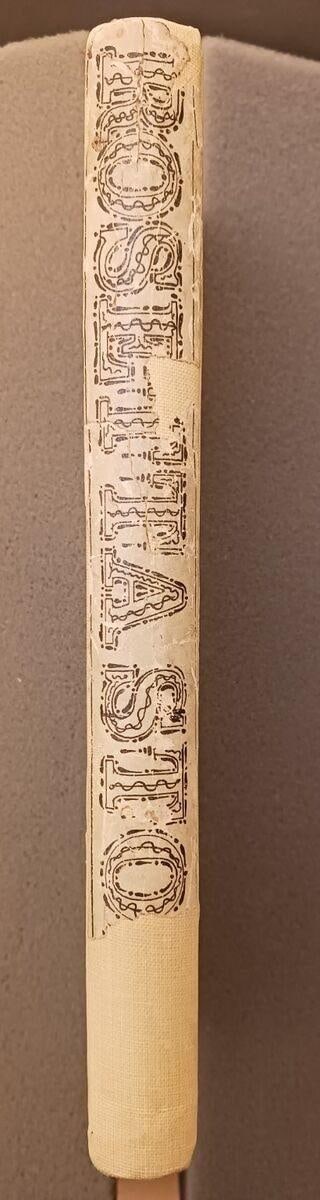
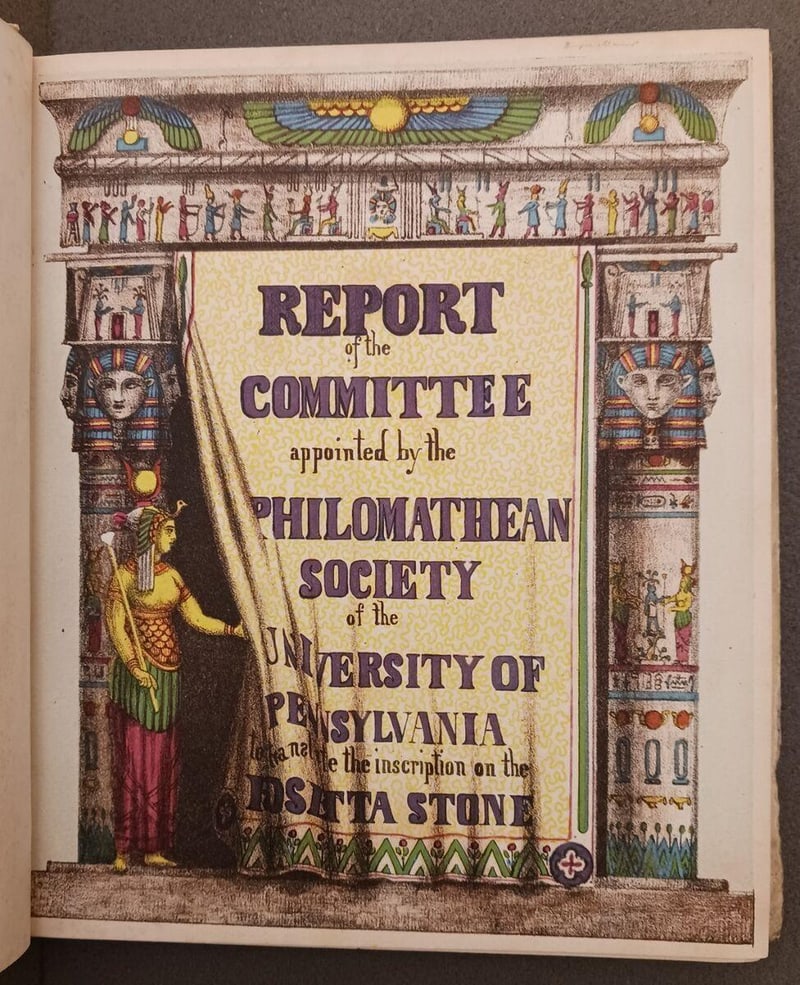
Newark Public Library
Newark, New Jersey
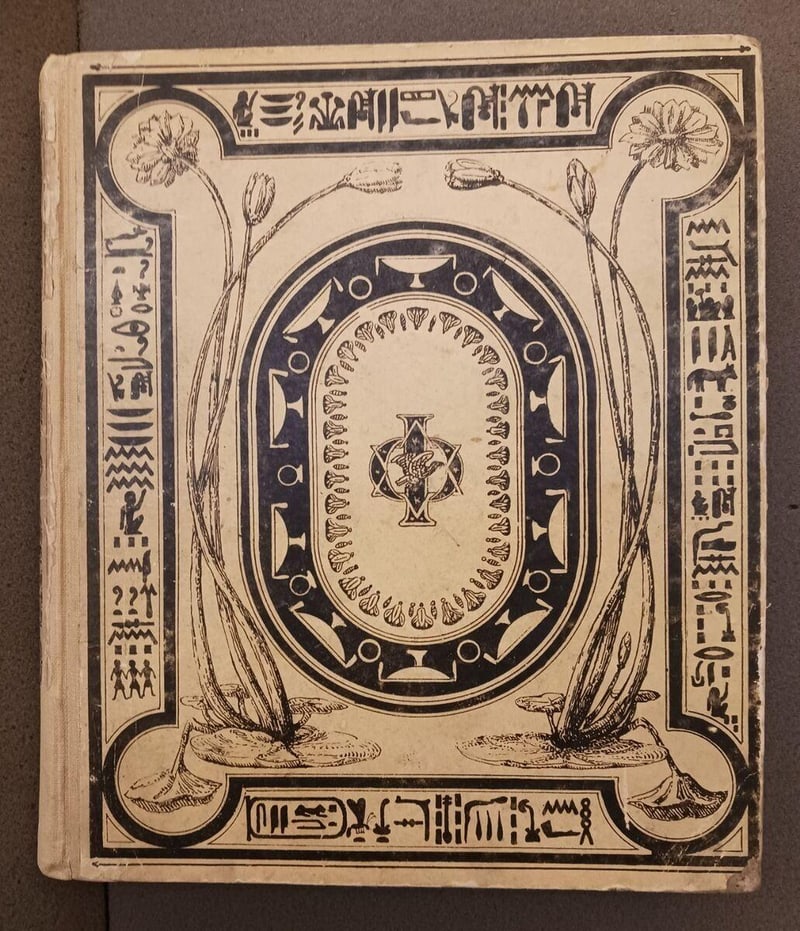
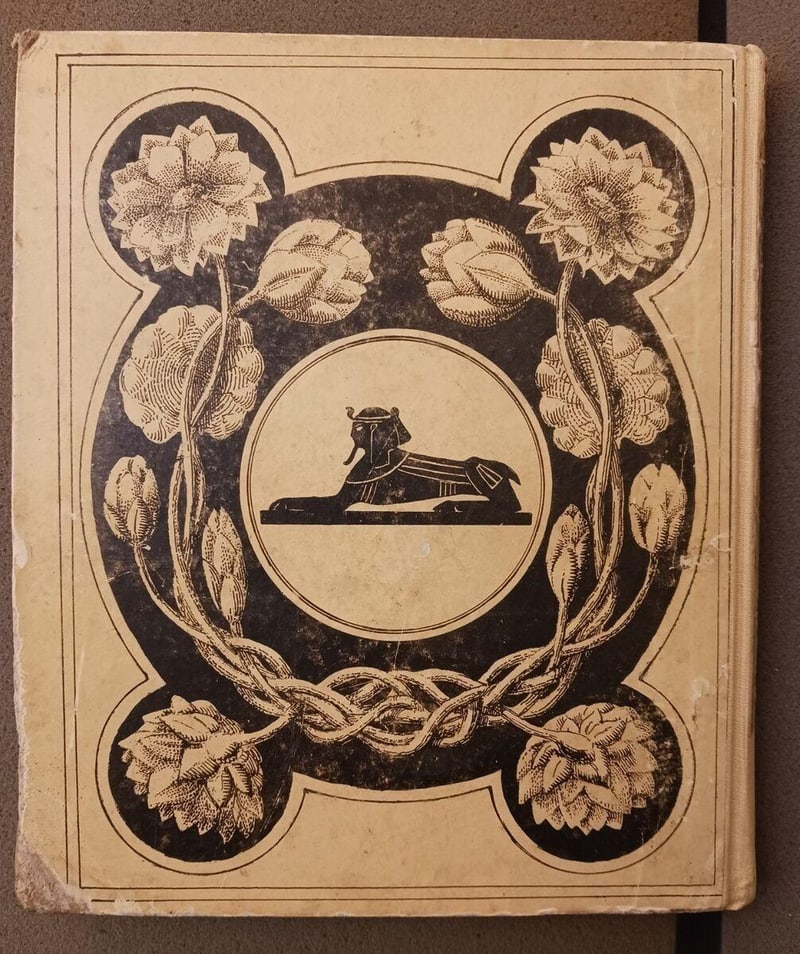
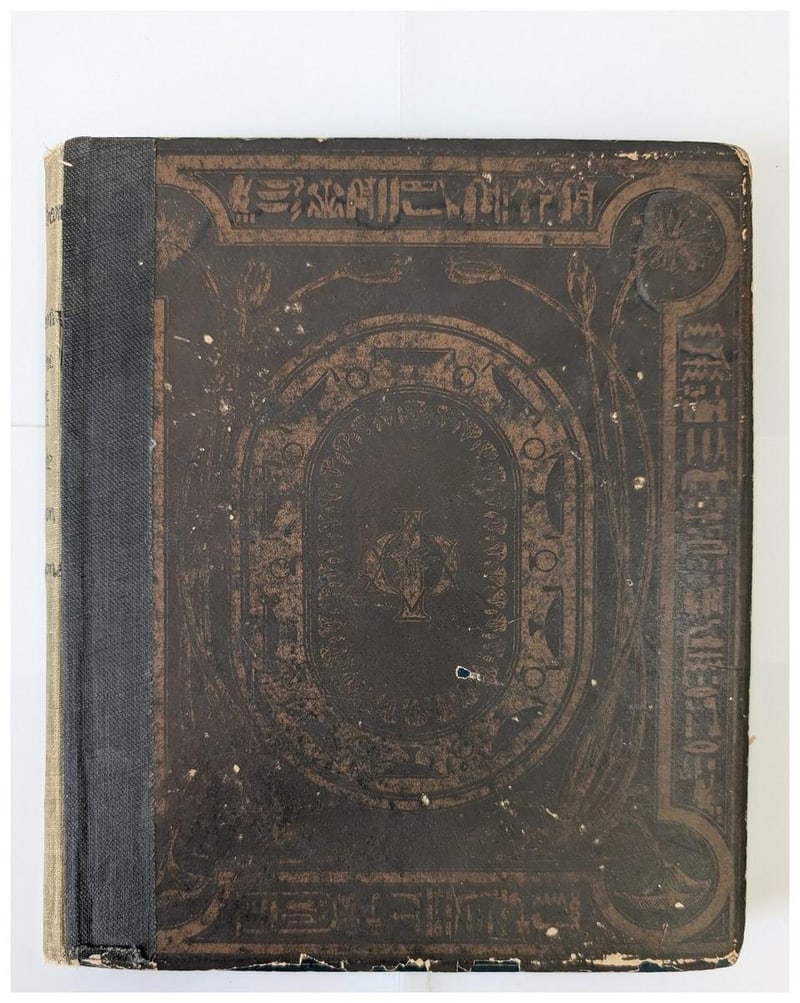
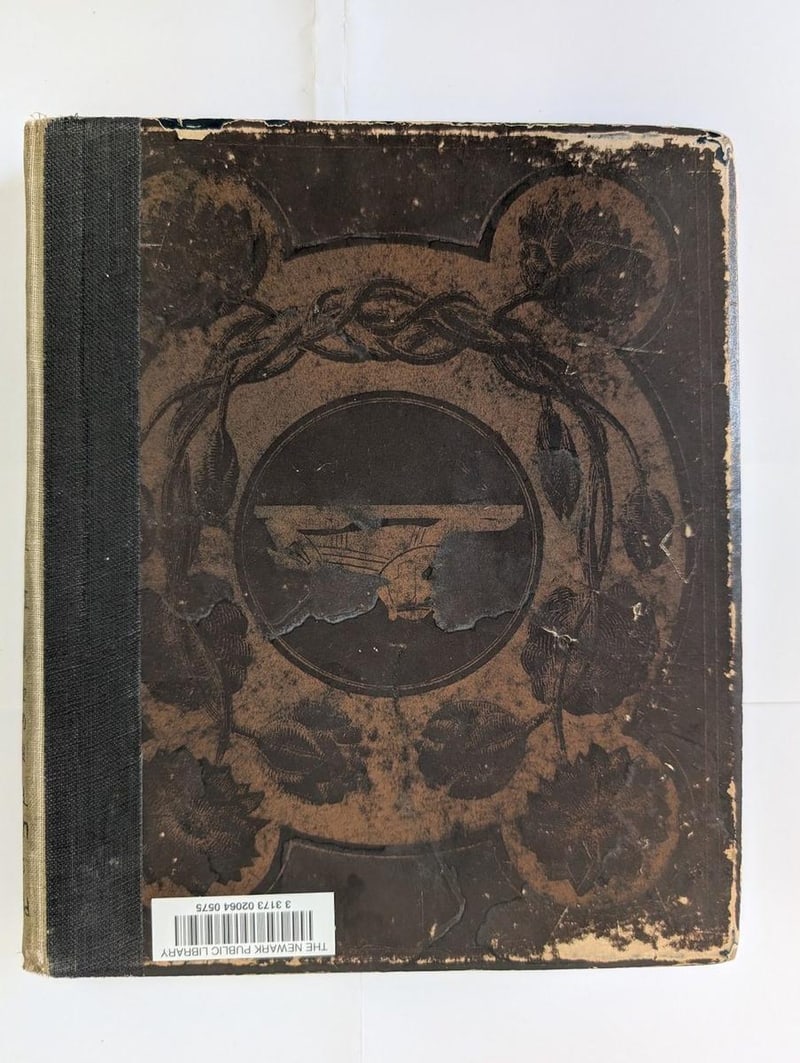
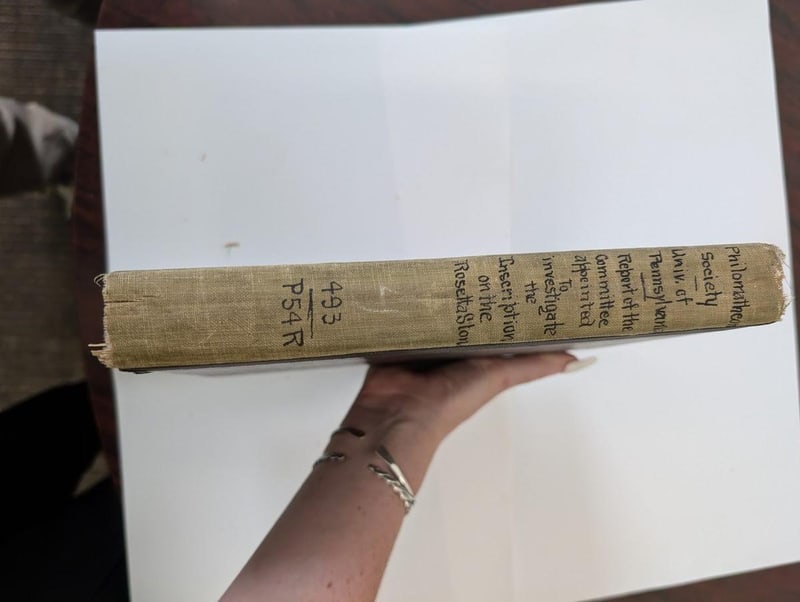
Original brown publisher-issued boards with gold decoration; later buff cloth-tape spine replacement.
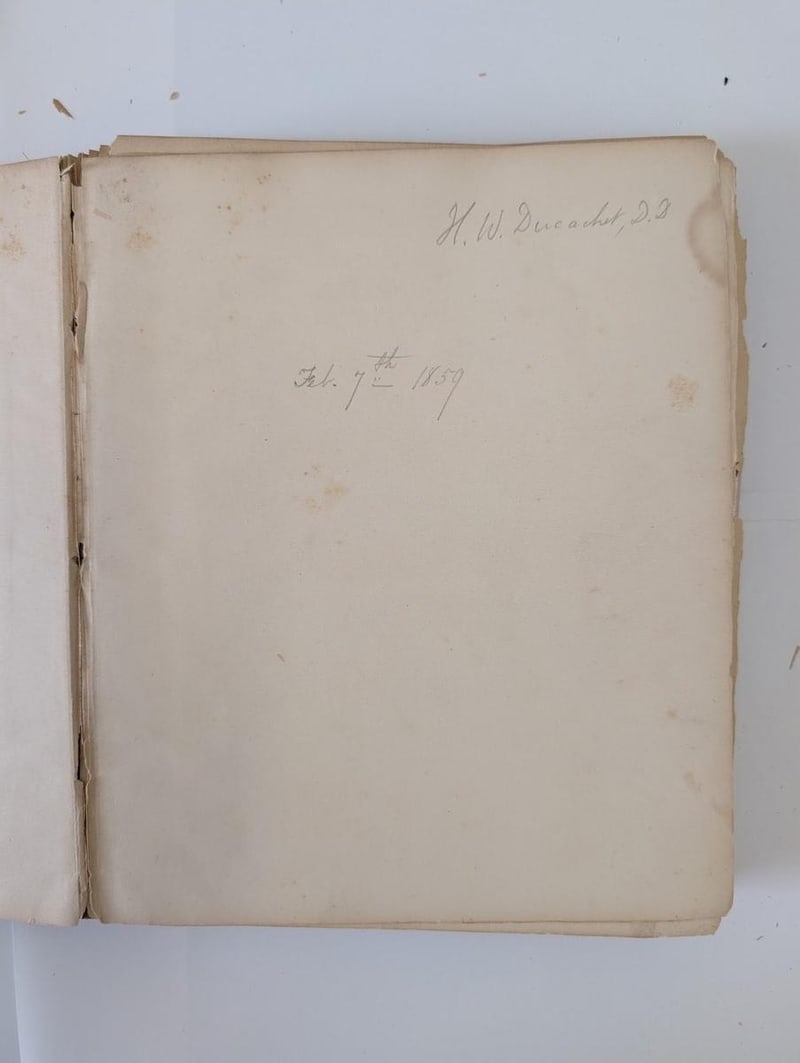
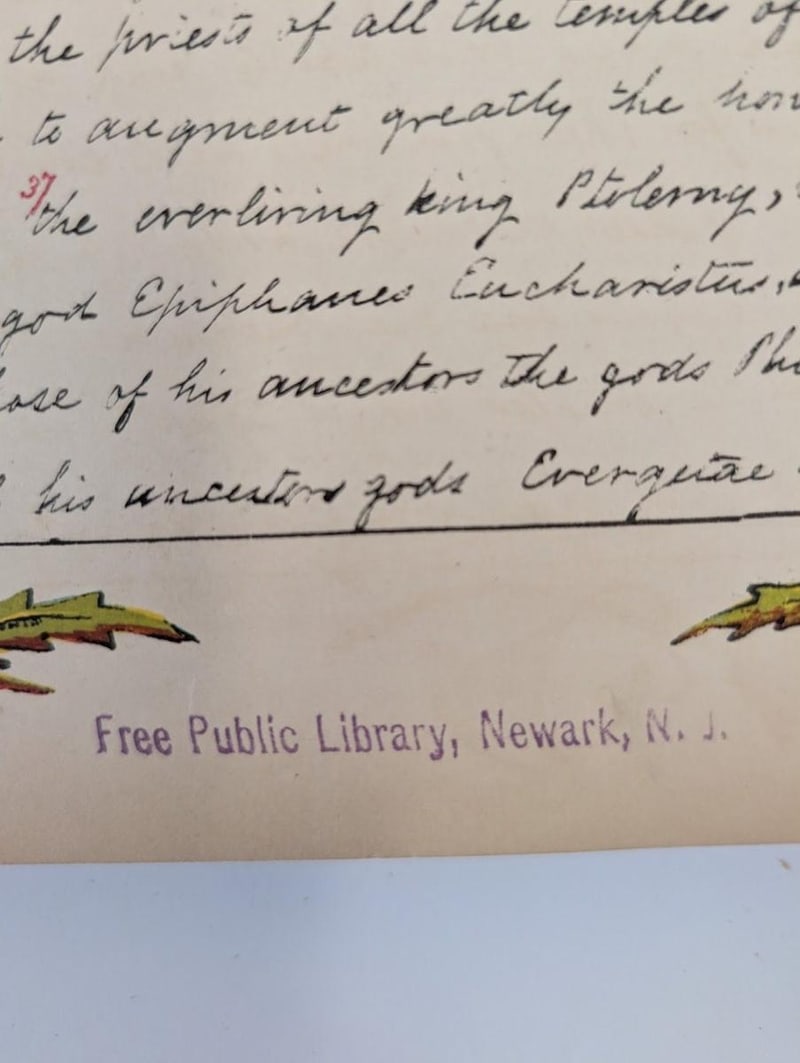
Front-endpaper inscription: “H. W. Ducachet D.D.” with the date February 7, 1859. Newark accession numbers and Free Public Library stamps occur on the preliminary leaves, page 23, and the final unnumbered page. The title appears in Newark’s second supplemental finding list of books added between March 1893 and March 1896.
Rev. Henry William Ducachet → unresolved gap → Newark Public Library, by 1896
The inscription identifies Rev. Henry William Ducachet; its date falls on his sixty-second birthday. The occasion and the transfer to Newark are unrecorded. Newark’s finding list establishes custody by March 1896.
Newark Public Library correspondence and twenty-eight copy-specific photographs; Newark finding list, second supplement; and St. Stephen’s Episcopal Church historical records; 1859 Catalogue of Members of the Philomathean Society, distinguishing the honorary member Rev. Henry William Ducachet from Henry William Ducachet Jr.
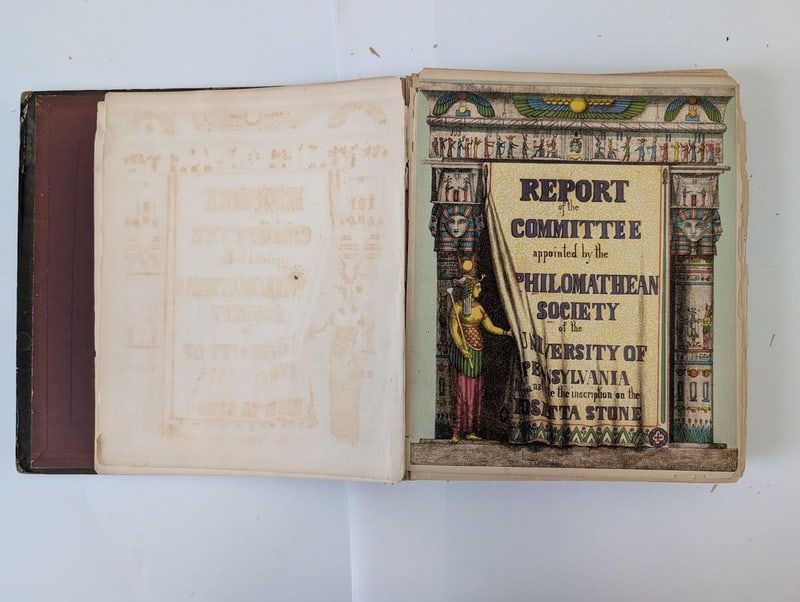
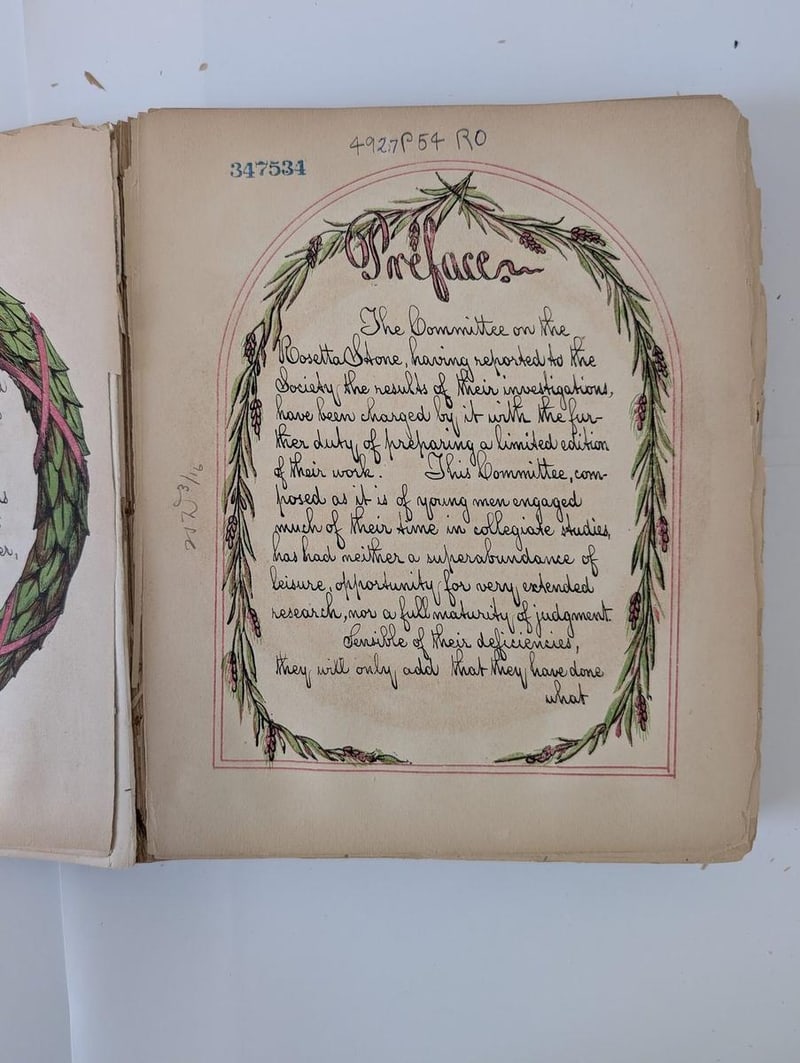
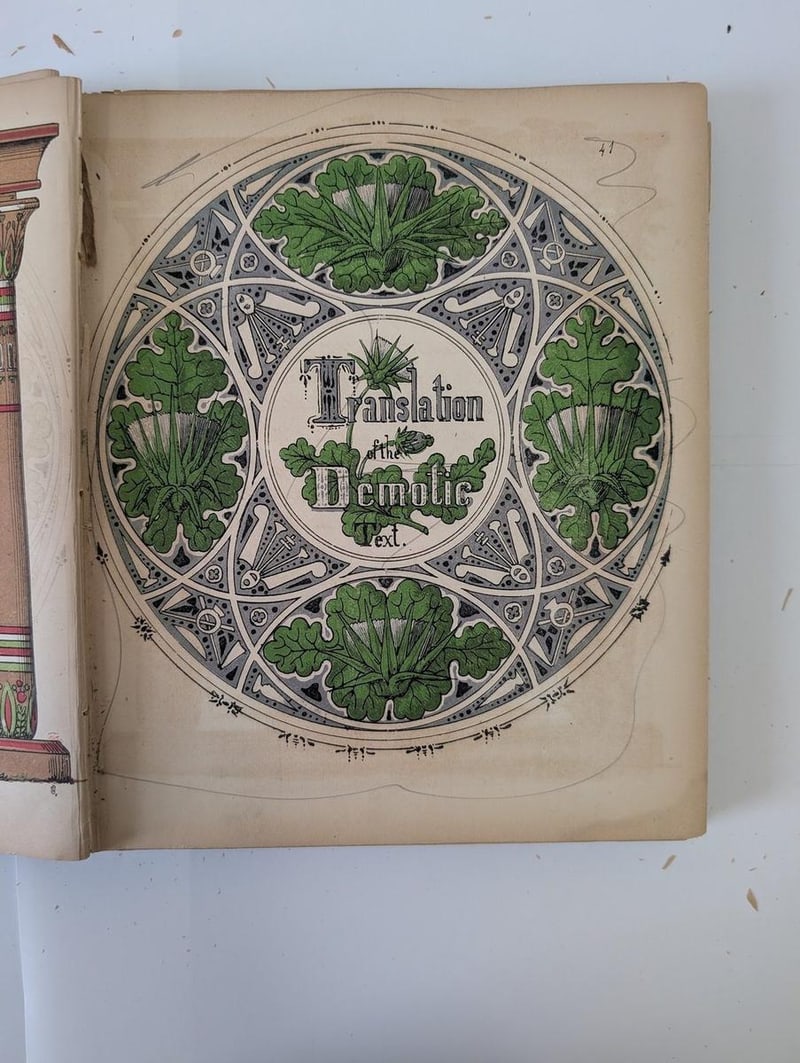
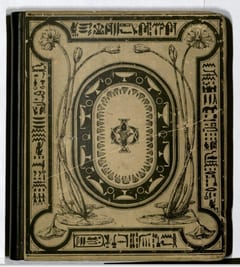
Brooklyn Museum Libraries & Archives
Brooklyn, New York
Original cream publisher-issued boards with black decoration; later plain black cloth rebacking. The original publisher spine is no longer visible. Maroon endpapers.
A preliminary leaf bears the clearly legible mark “B-1405.” Its function has not been established; it may represent an earlier inventory or shelf mark, but it is not treated as ownership evidence. The mark is underlined; a smaller faint penciled numeral beside it is unread. Erased pencil writing in the upper corner of the facing leaf remains illegible.
Unrecorded earlier ownership → Deirdre E. Lawrence → Brooklyn Museum Libraries & Archives, 2024
Deirdre E. Lawrence donated the copy to the Brooklyn Museum Libraries & Archives in 2024 in loving memory of her friend and fellow scholar Mary McKercher. McKercher is the person honored by the donation, not a documented former owner. Earlier ownership remains unresolved.
Brooklyn Museum Libraries & Archives catalog, correspondence, copy photographs, and 2024 memorial-donation record. Images reproduced by permission of the Brooklyn Museum.
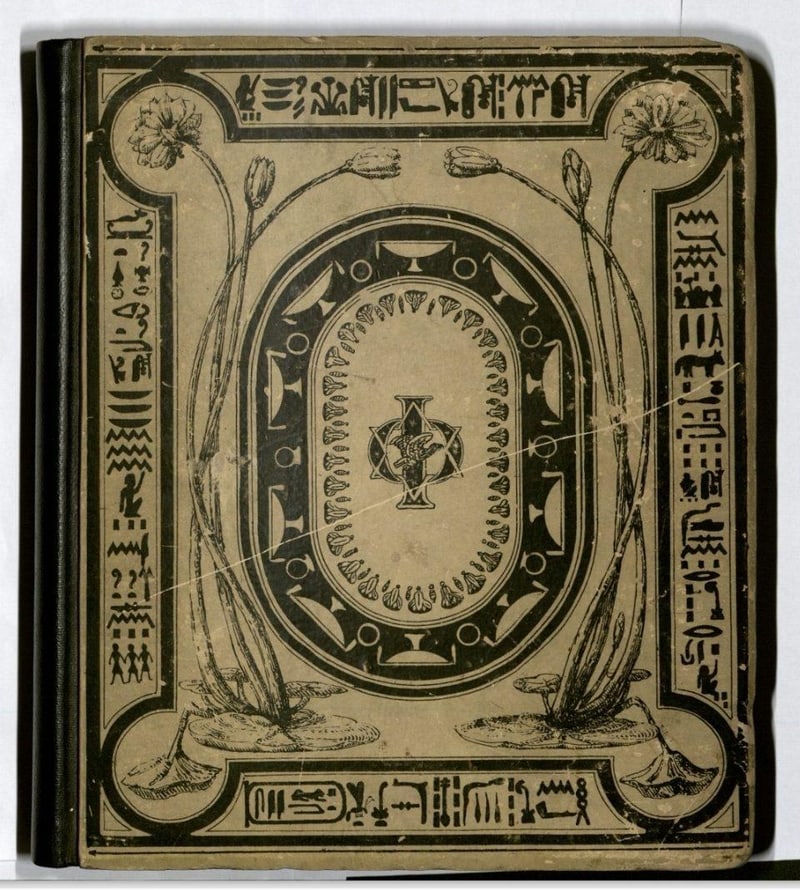
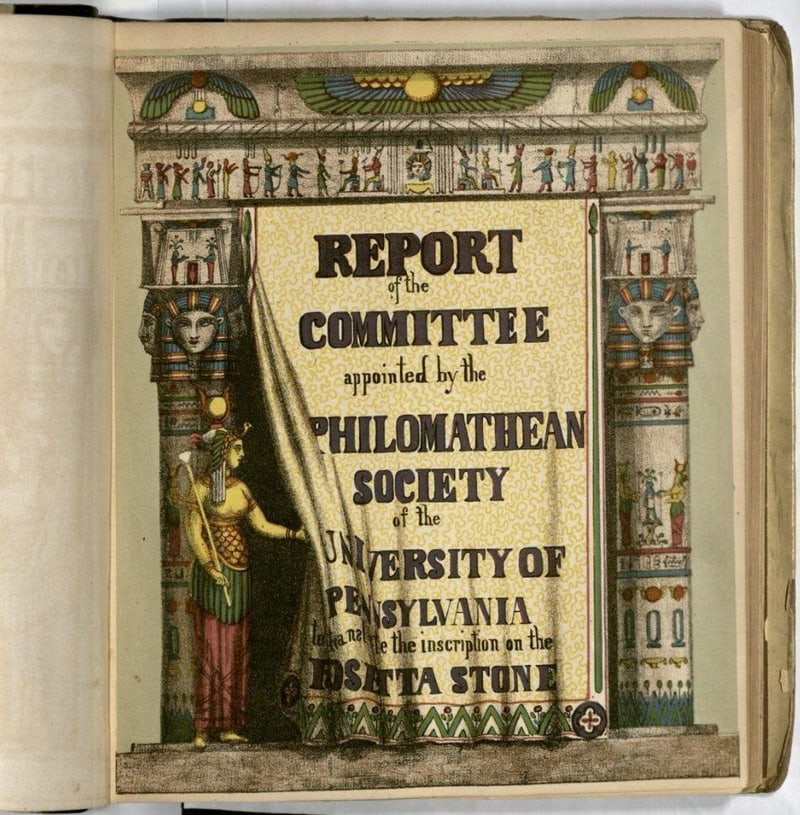
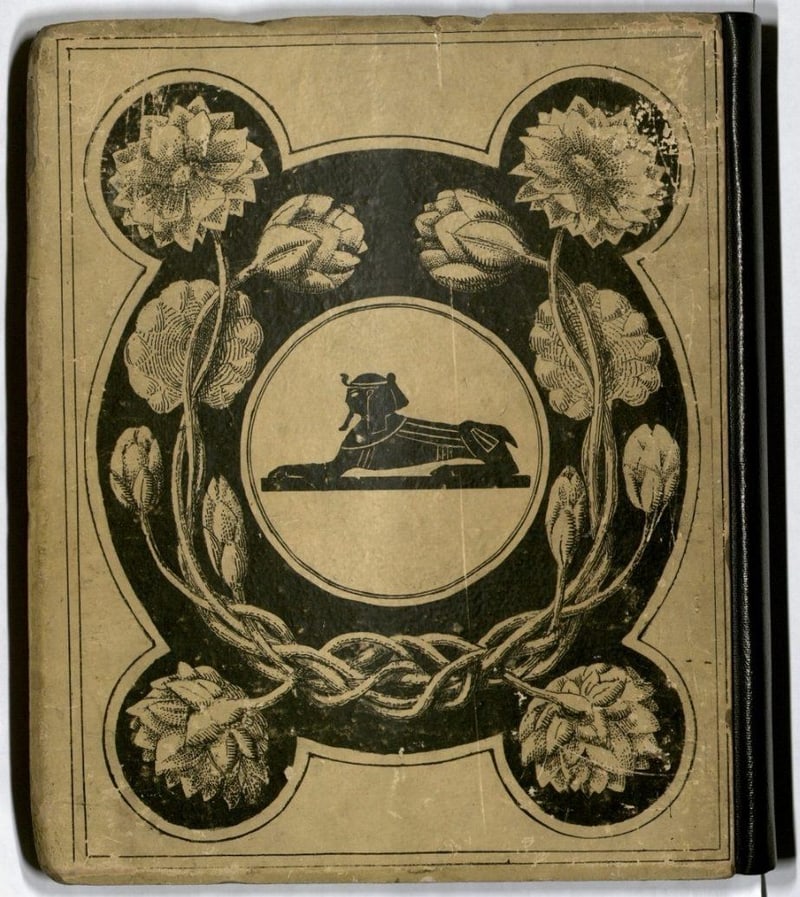
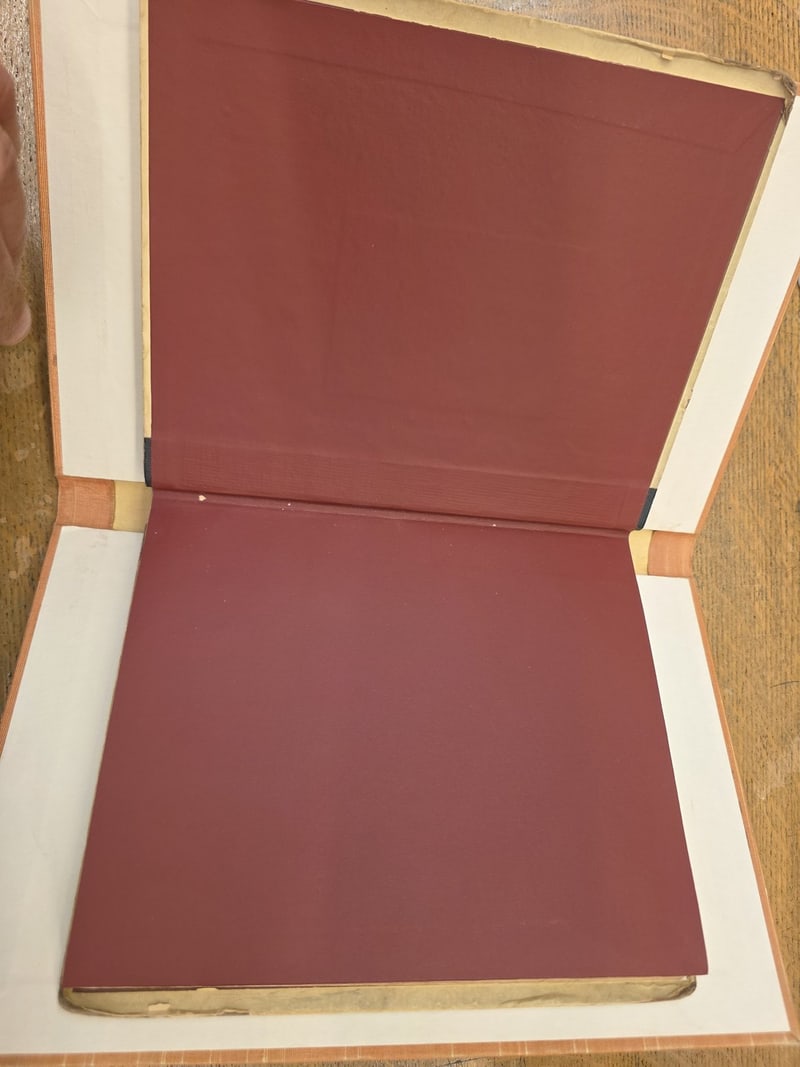
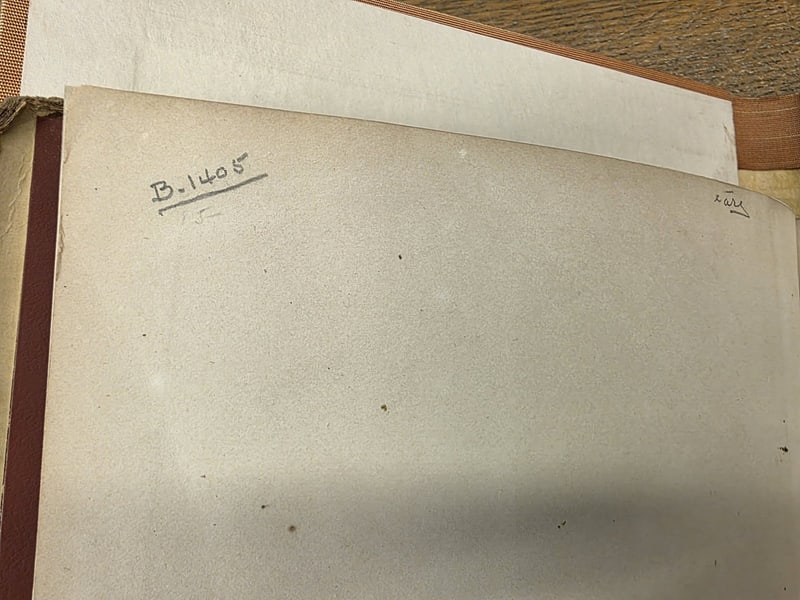
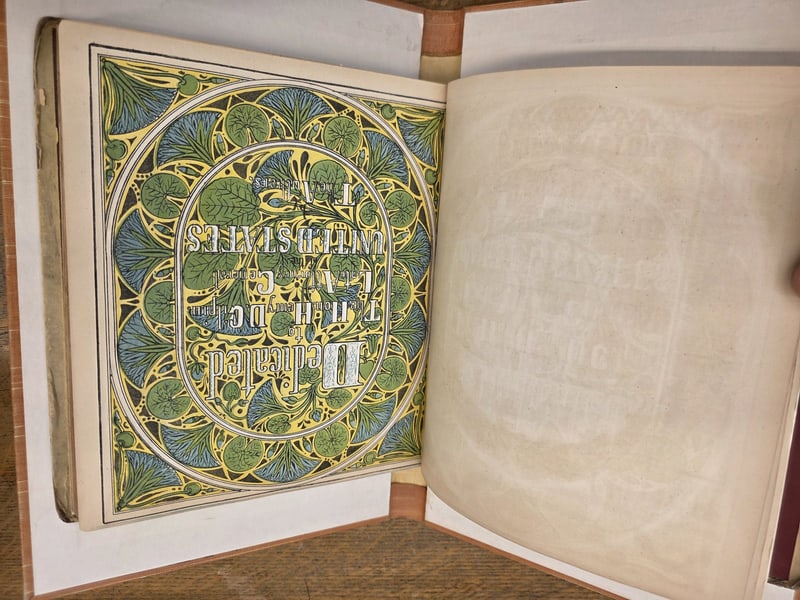
Morton, H., & University of Pennsylvania. Philomathean Society. (1858). Report of the committee appointed by the Philomathean Society of the University of Pennsylvania to translate the inscription on the Rosetta Stone. SCR PE201 R72 R20 1858, Brooklyn Museum Libraries & Archives. Donated by Deirdre E. Lawrence in loving memory of Mary McKercher, a friend and scholar, 2024. Used with permission of the Brooklyn Museum.
University of Delaware Library, Museums and Press
Newark, Delaware
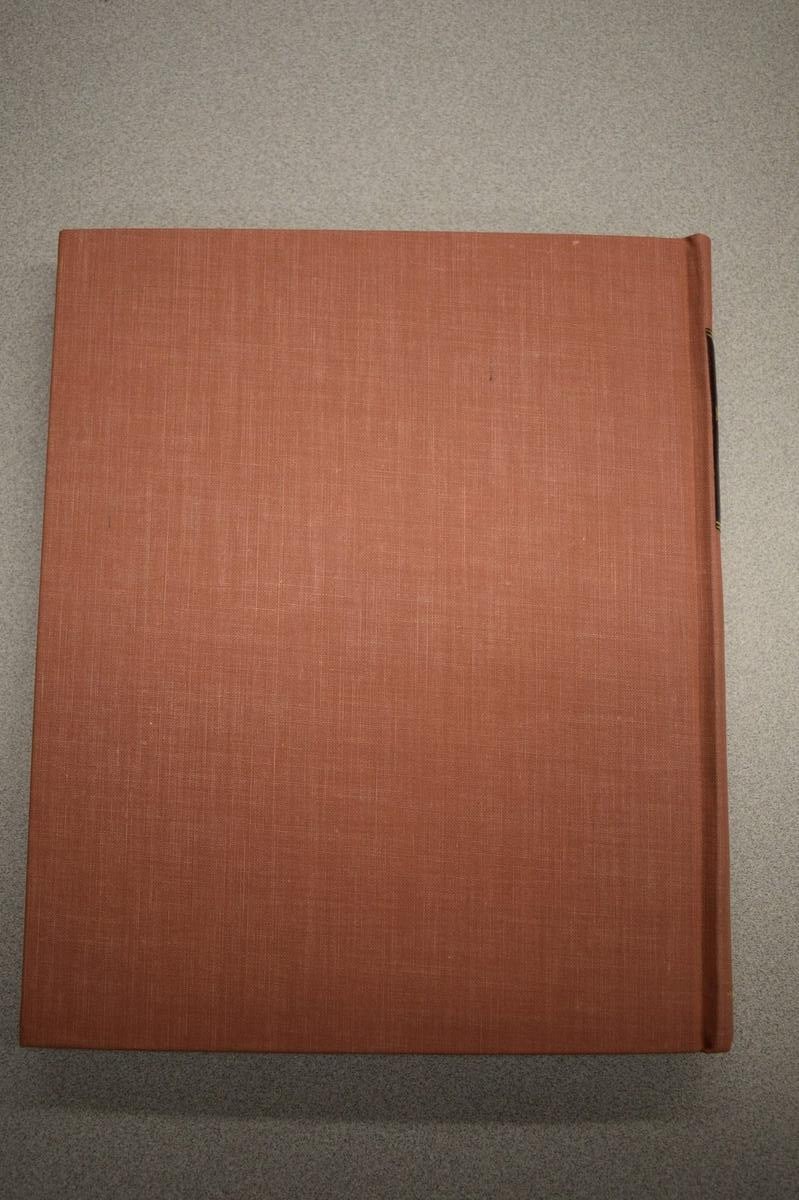
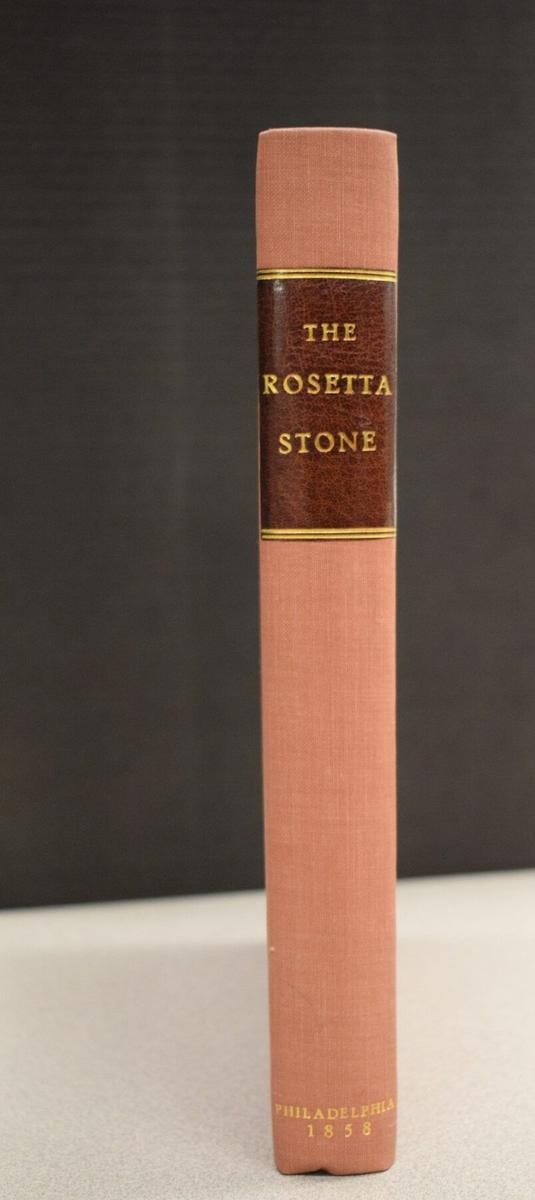
Later reddish-brown institutional binding. Rebound for the University of Delaware in 1981.
Authorial presentation from Charles R. Hale to his aunt Caroline Amelia Hale Morgan, Christmas 1858. Inscription: “Mrs Caroline A. Morgan / from her affectionate nephew / Chas. R. Hale / Christmas 1858—”
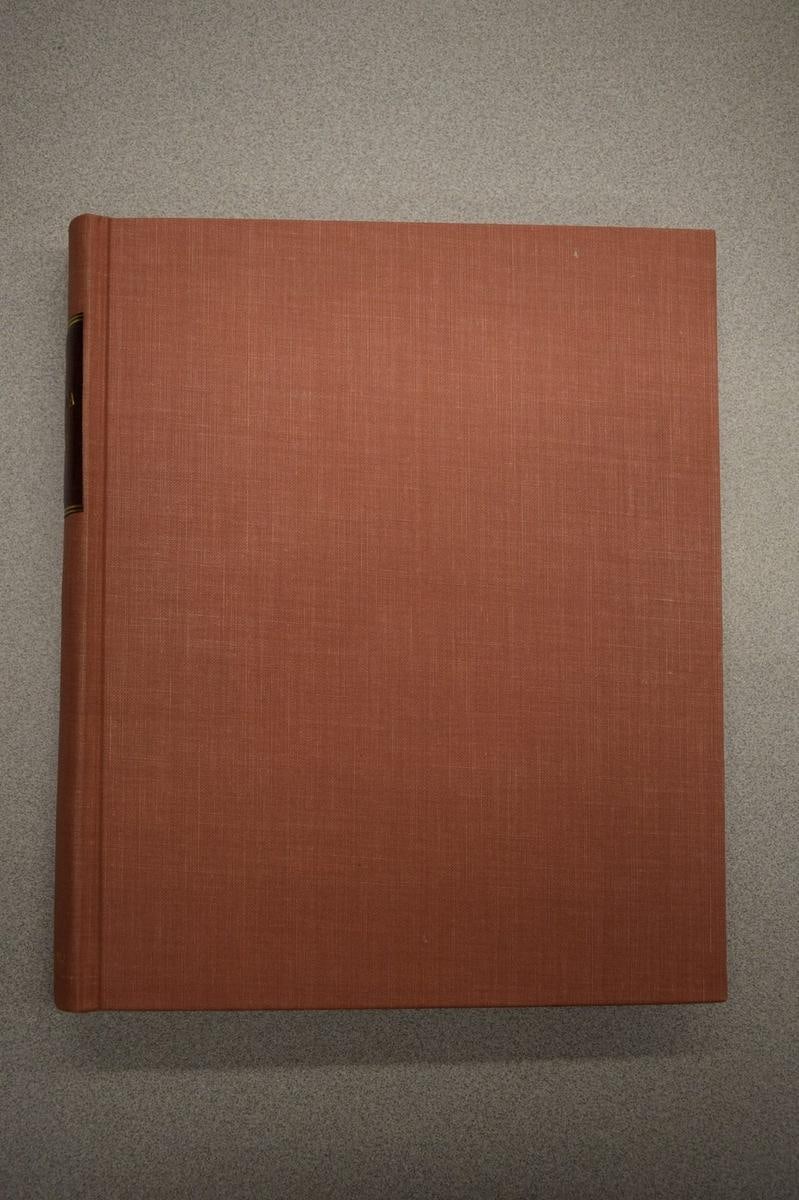
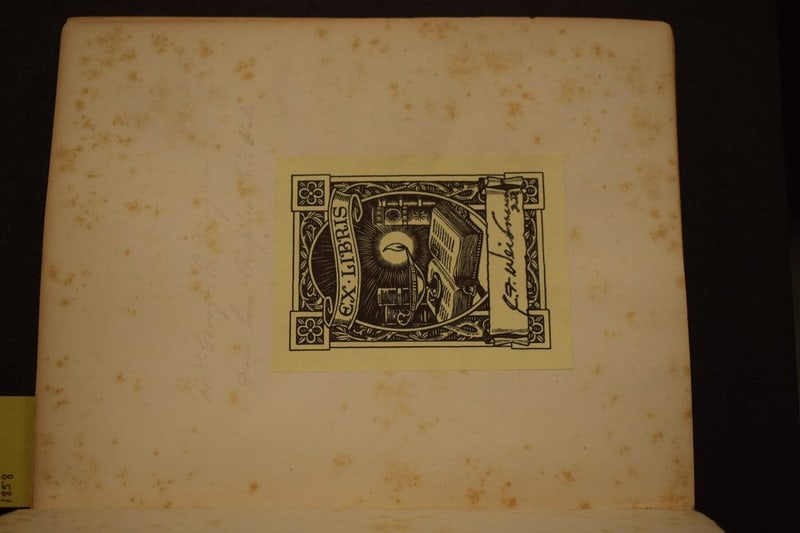
George F. Wiedman’s undated bookplate survives. Delaware acquired the volume through Swann catalog 1108, item 333, with Woolmer as purchasing proxy. The record is dated July 25, 1978; it does not distinguish the sale from the handoff date.
Charles R. Hale → Caroline Amelia Hale Morgan → unresolved gap → George F. Wiedman → unresolved gap → Swann catalog 1108, item 333 → Woolmer → University of Delaware, 1978
The transfers from Caroline Morgan to Wiedman and from Wiedman to the Swann sale are unrecorded.
University of Delaware Special Collections correspondence, acquisition and binding information, and six copy-specific photographs.
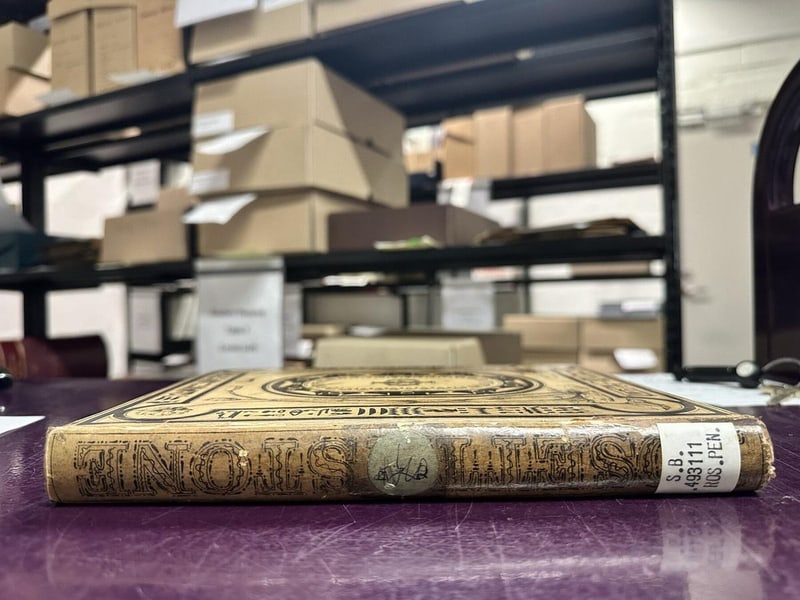
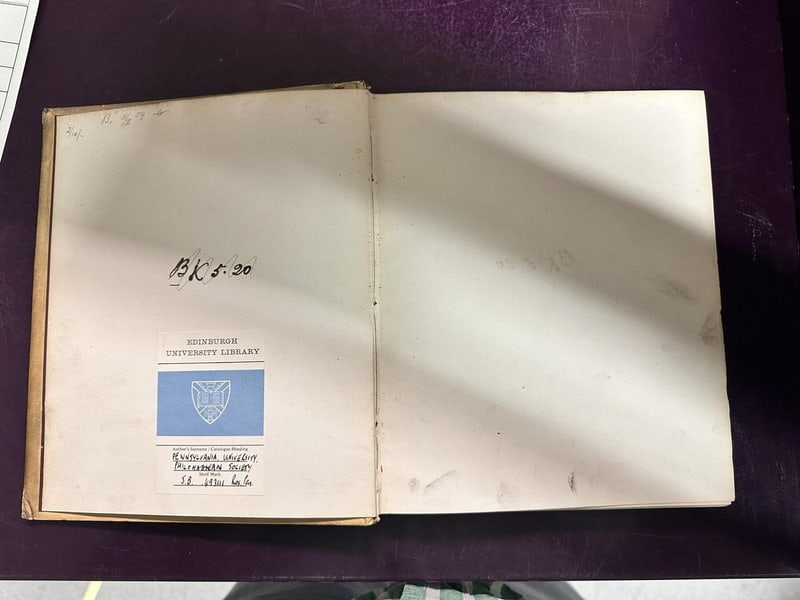
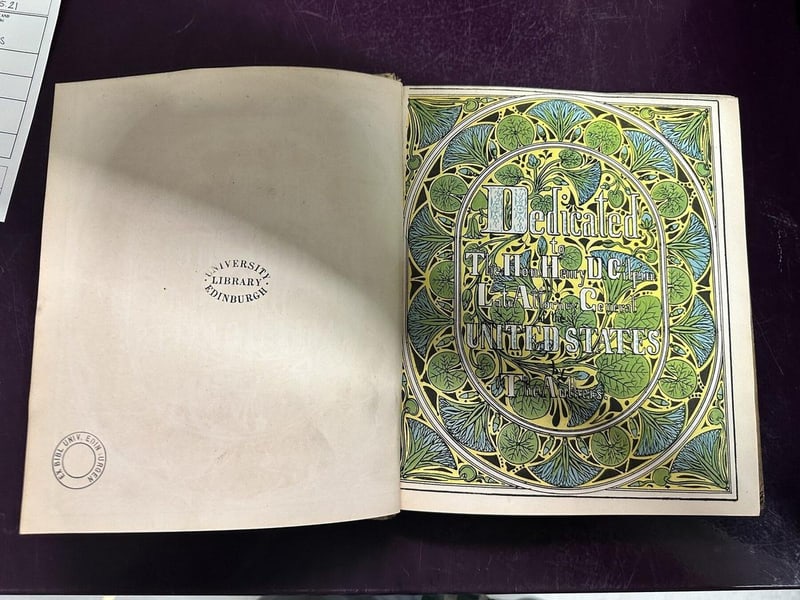
University of Edinburgh Library
Edinburgh, Scotland
Original cream publisher-issued boards with black decoration.
The binding and title identify the first edition; the online catalog’s 1892 date conflicts with the volume.
Edinburgh University Library bookplate, circular library stamps, and manuscript shelfmarks.
Unrecorded earlier ownership → University of Edinburgh Library, acquisition date unresolved
Edinburgh’s historical printed catalog records the 1858 volume under shelfmark Bk. 5. 20. A handwritten shelflist records its later reclassification as S.B. .493111 Ros. Pen. The acquisition date and ownership before Edinburgh remain unresolved. The present online catalog date of 1892 conflicts with the physical volume and is not used by the census.
University of Edinburgh Heritage Collections correspondence, historical printed catalog, handwritten shelflist, and fourteen copy-specific photographs.
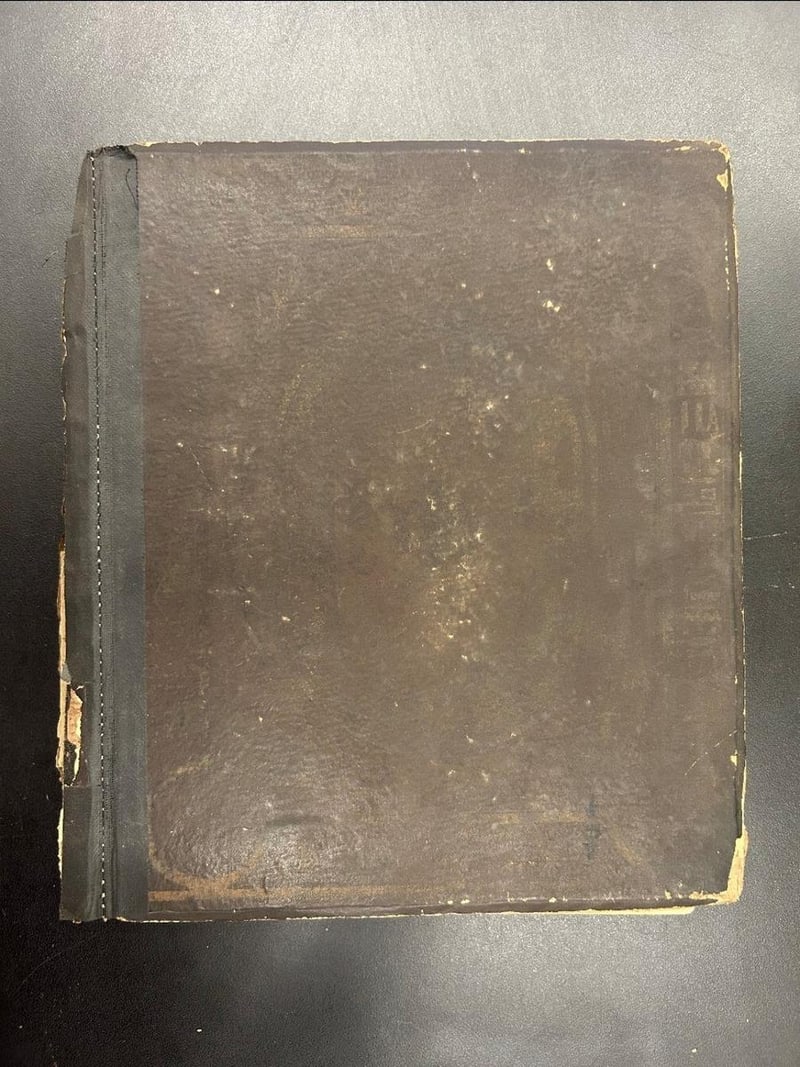
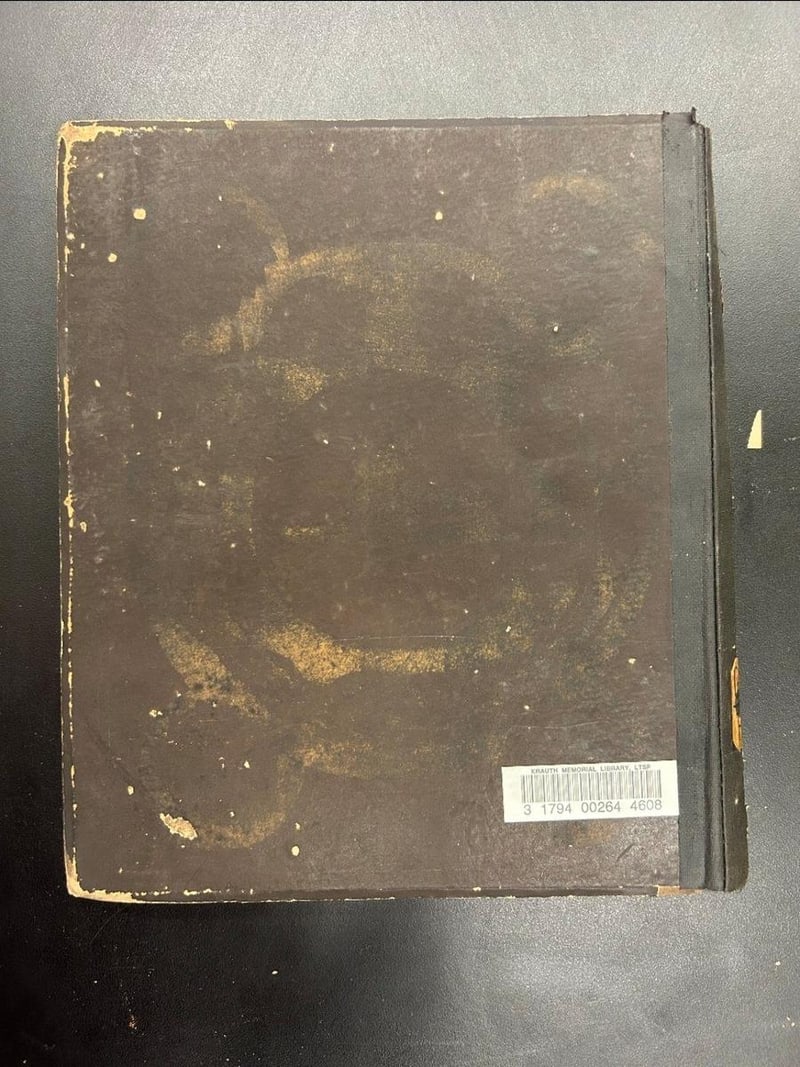
United Lutheran Seminary
Philadelphia, Pennsylvania
Original brown publisher-issued boards with gold decoration; the gold is severely rubbed.
The photographed title page lacks the “SECOND EDITION” statement, confirming the 1858 first edition.
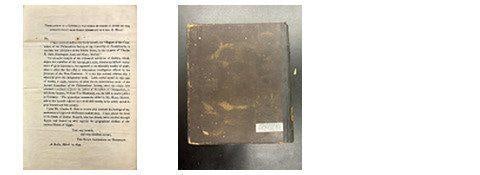
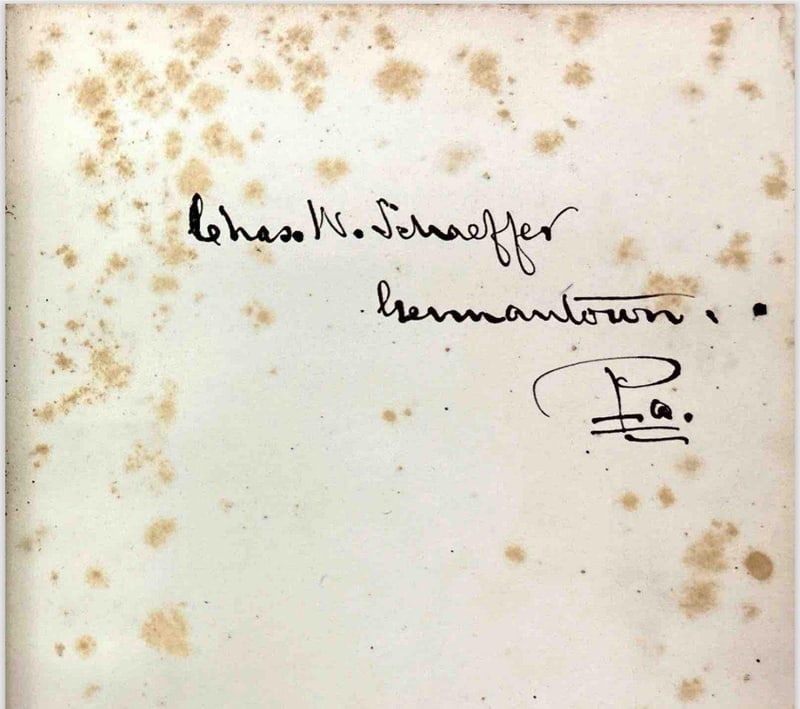
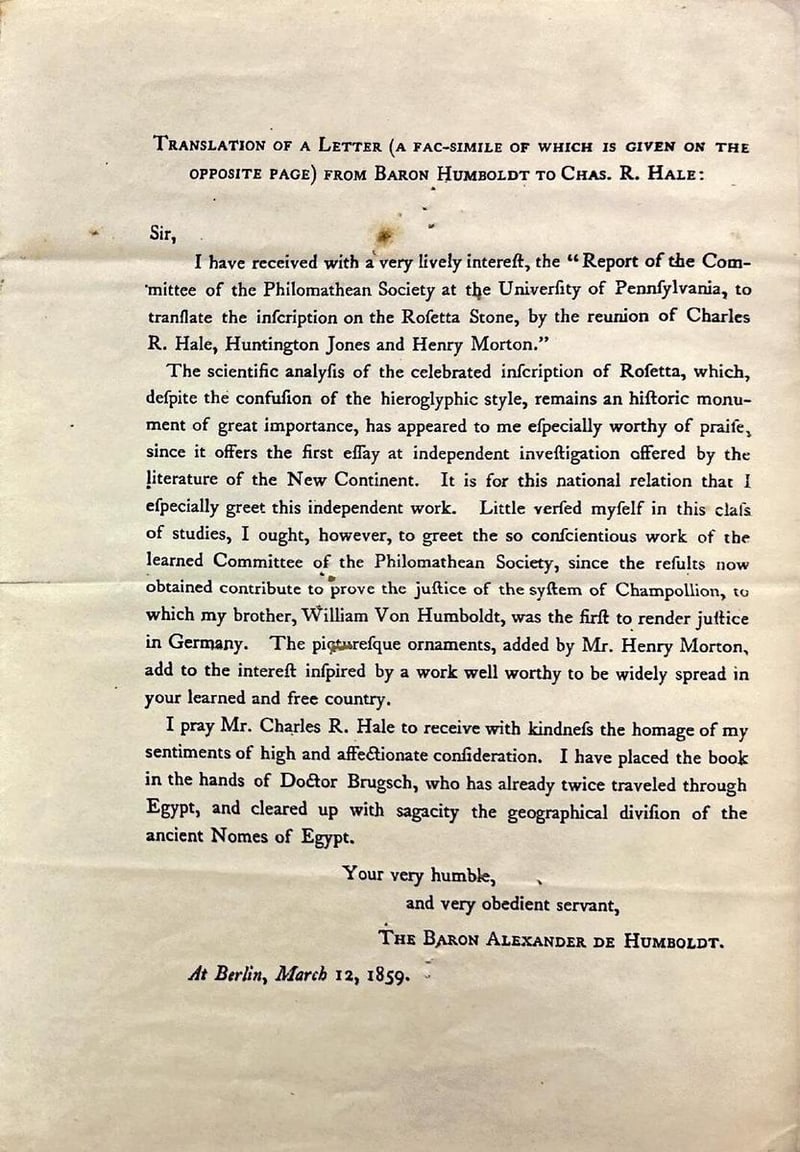
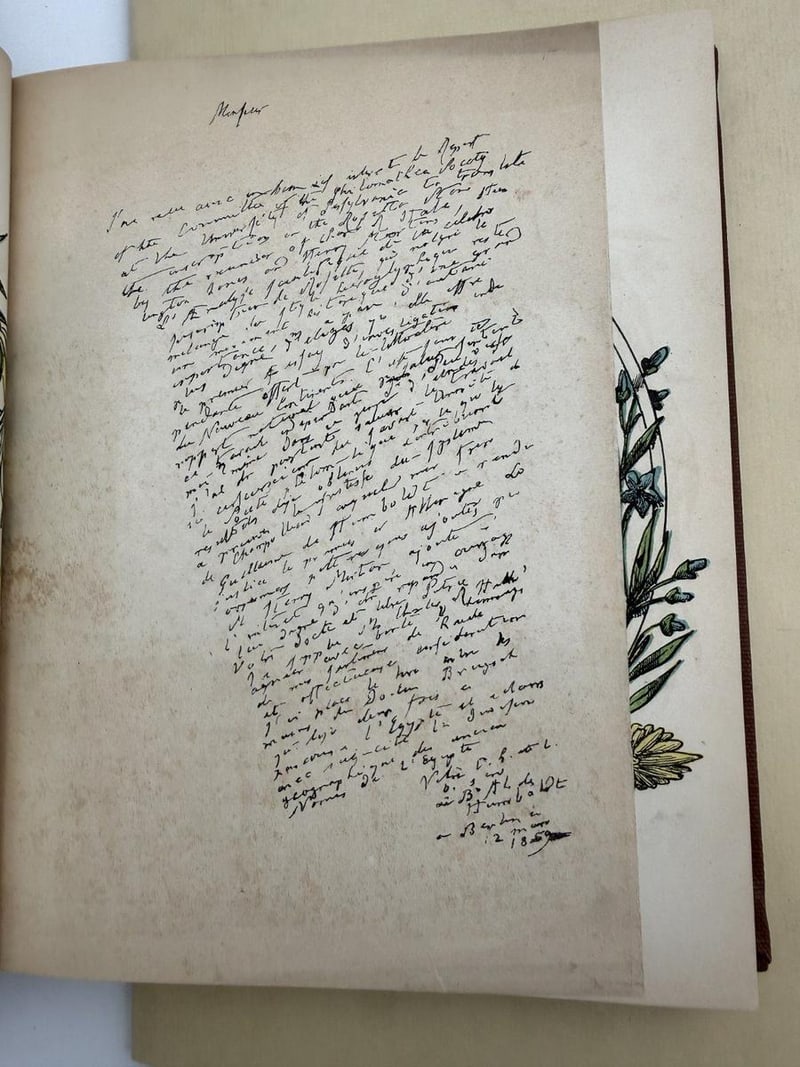
Manuscript signature: “Chas. W. Schaeffer / Germantown / Pa.” A manuscript letter and printed facsimile of Alexander von Humboldt’s letter to Charles R. Hale are preserved with the volume.
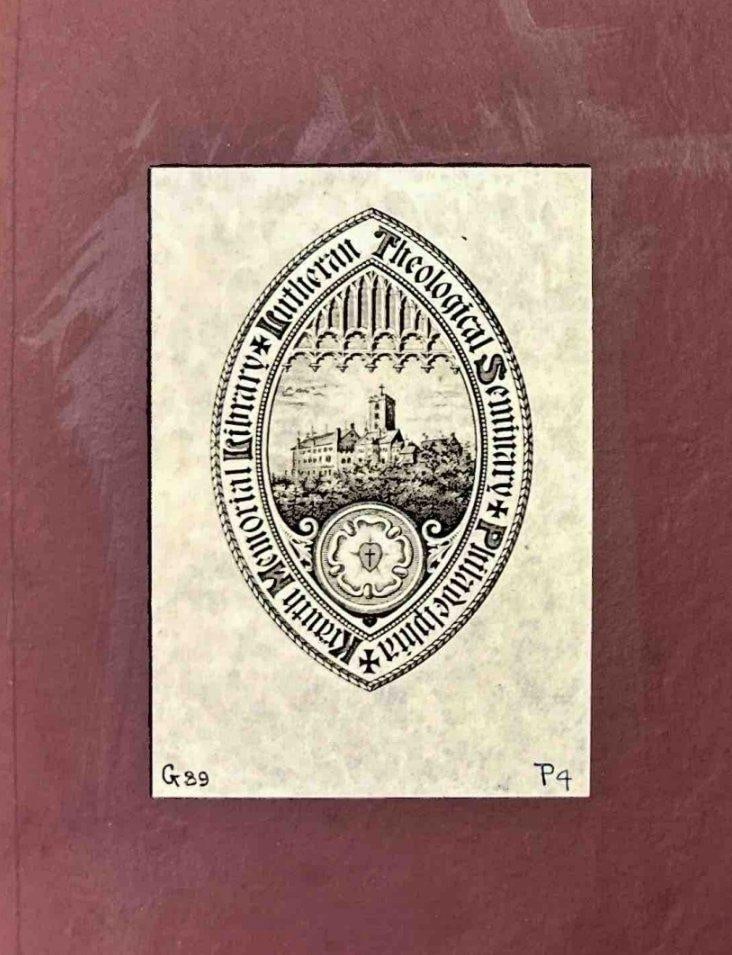
Charles William Schaeffer (documented owner; likely but unconfirmed donor) → unresolved gap → Lutheran Theological Seminary at Philadelphia → United Lutheran Seminary
Charles William Schaeffer’s signature establishes ownership. His gift to the seminary is probable; similarly named relatives remain possible donors. No donor entry appears in the 1935–1940 accession books. Shelfmark G39 T4 belongs to Luther D. Reed’s classification system and predates Library of Congress classification.
United Lutheran Seminary correspondence, nine scans, and three exterior photographs; University of Pennsylvania catalogs and trustee records; and Philomathean Society membership history.

Library of Congress
Washington, D.C.
Later reddish-brown library buckram; the original cover was removed and Library of Congress endpapers installed. Deacidified in June 2007; the fragile original is not served, and a complete digital facsimile is publicly available.
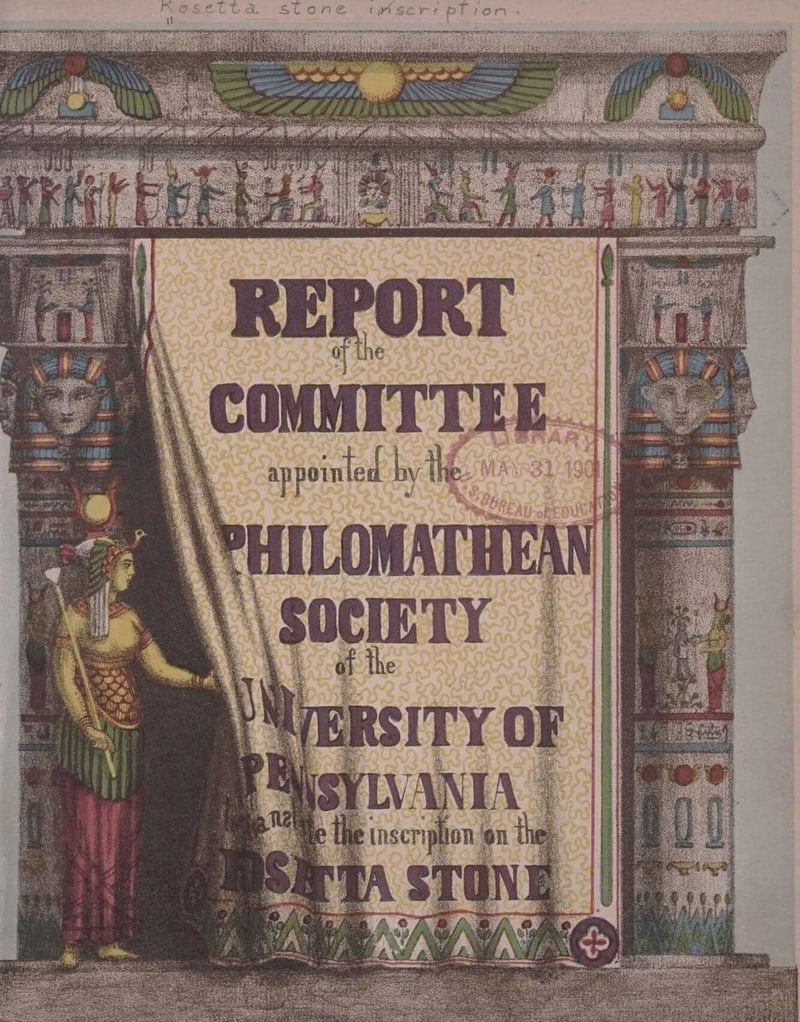
The physical title page confirms the 1858 first edition.
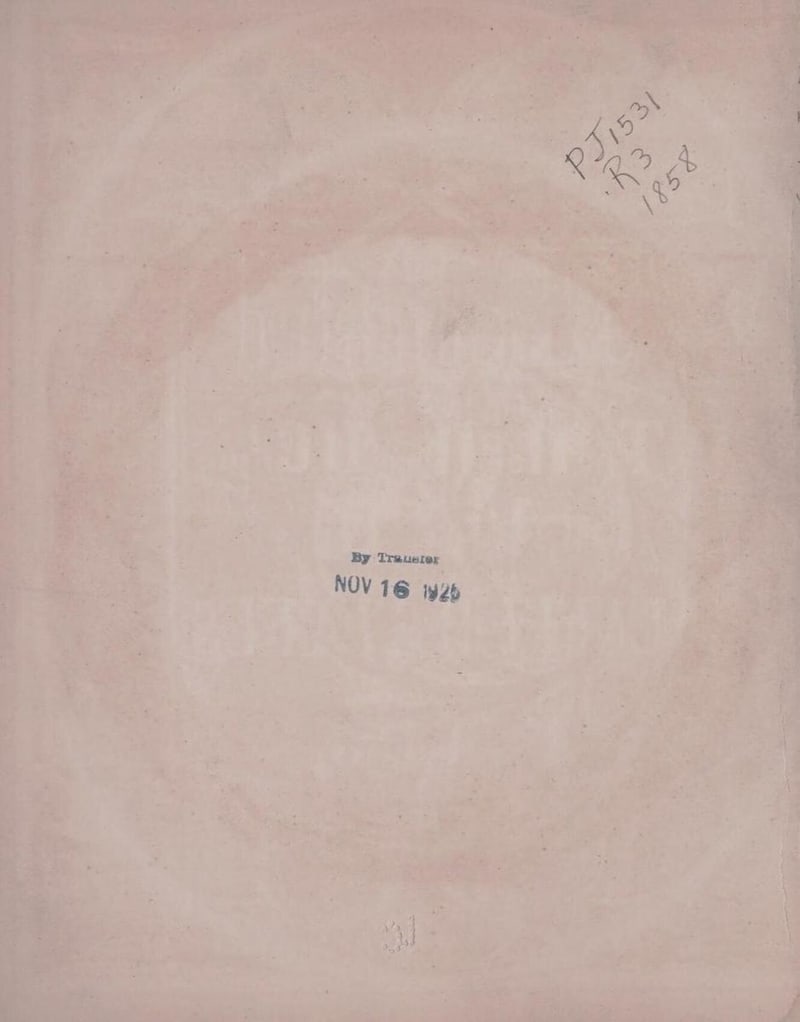
Acquired by the United States Bureau of Education library on May 31, 1901; transferred to the Library of Congress on November 16, 1925.
Unrecorded earlier ownership → United States Bureau of Education Library, May 31, 1901 → Library of Congress, November 16, 1925
The binding and patterned endpapers are later Library of Congress work. Ownership before the Bureau of Education’s 1901 acquisition is unrecorded.
Library of Congress Rare Book and Special Collections correspondence, catalog and digitized volume; acquisition, transfer, rebinding, and preservation records.
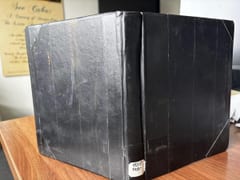
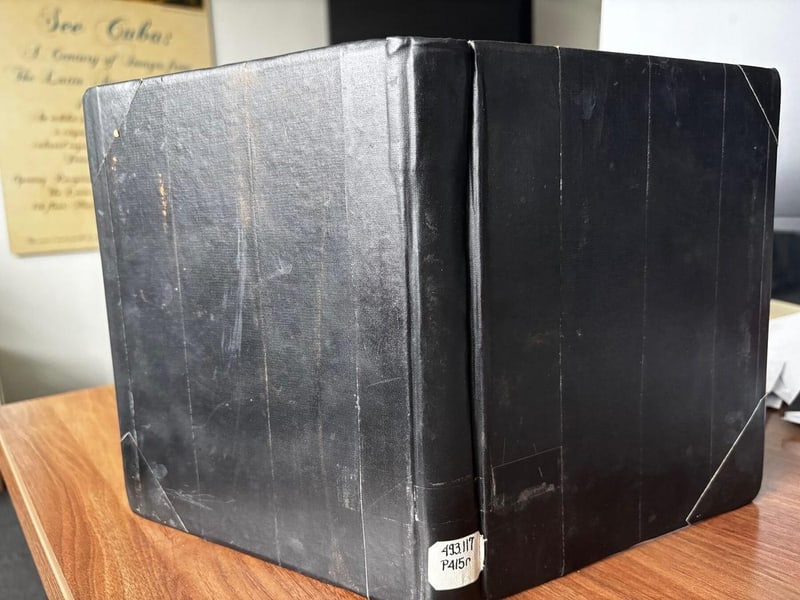
Howard-Tilton Memorial Library, Tulane University
New Orleans, Louisiana
PJ1531.R4 E54 1858 ↗
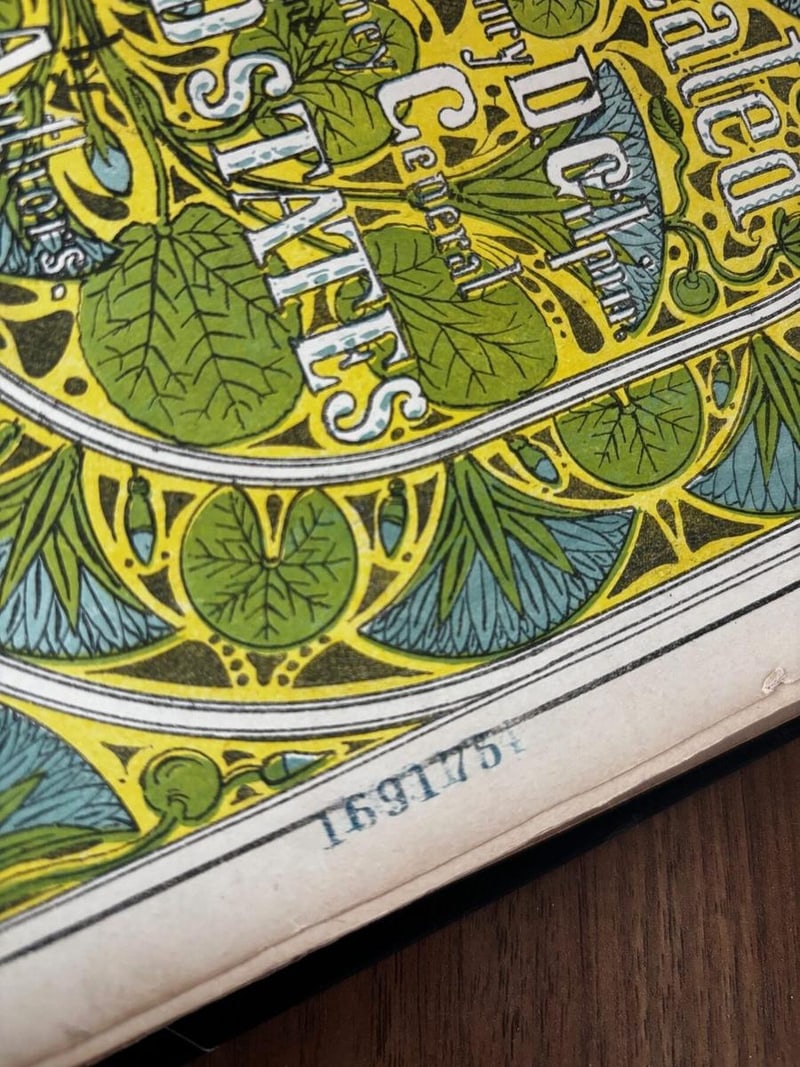
Accession no. 169175
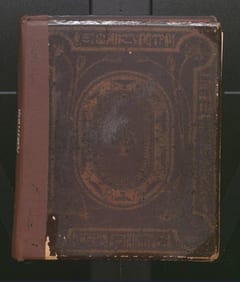
Later black buckram-tape library binding; the status of any original boards beneath it has not been established.
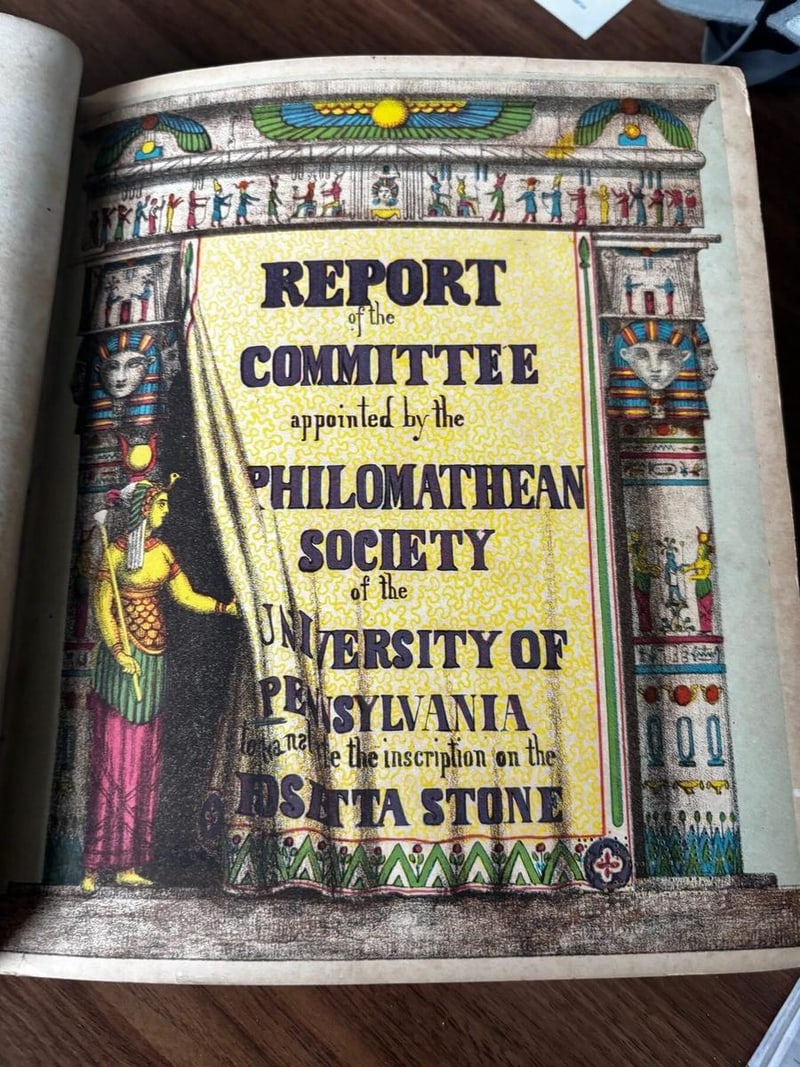
The photographed title page lacks the “SECOND EDITION” statement, confirming the 1858 first edition.
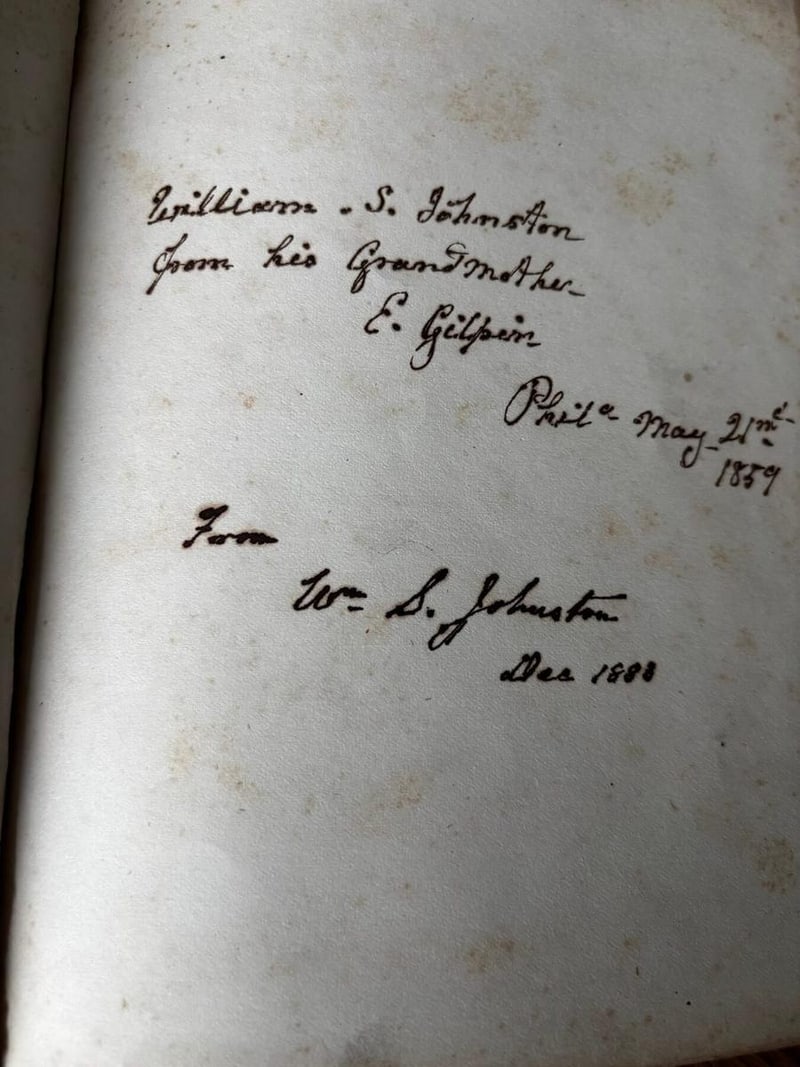
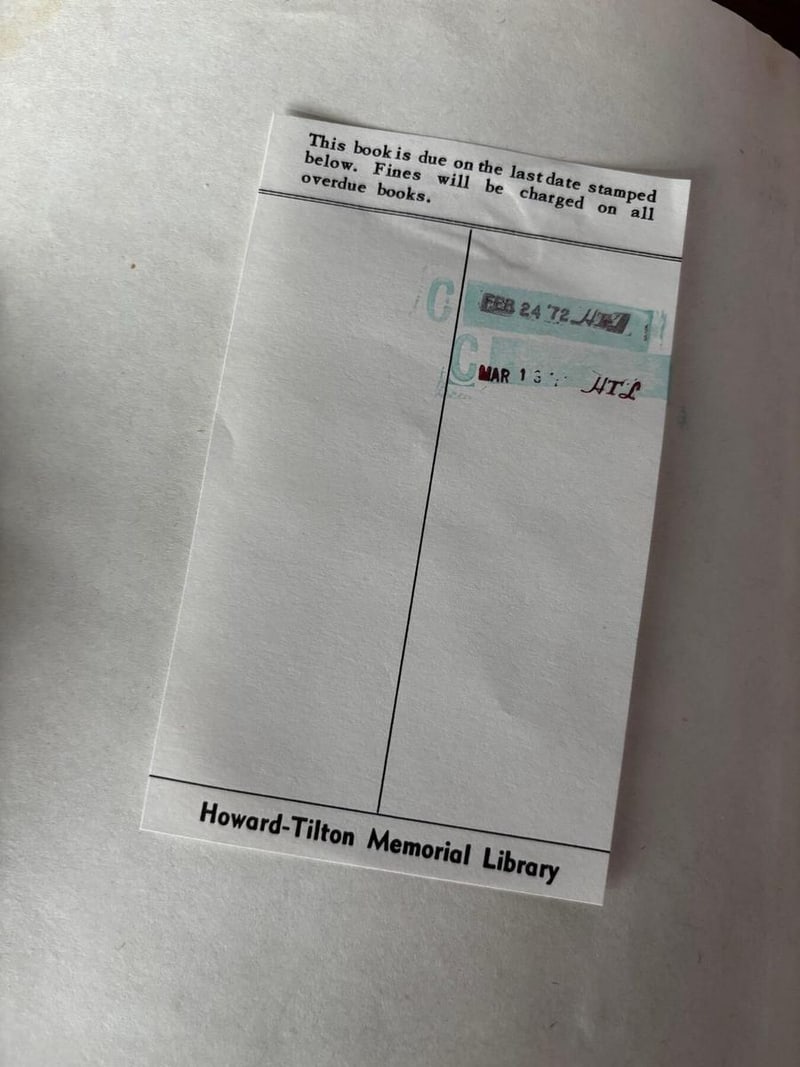
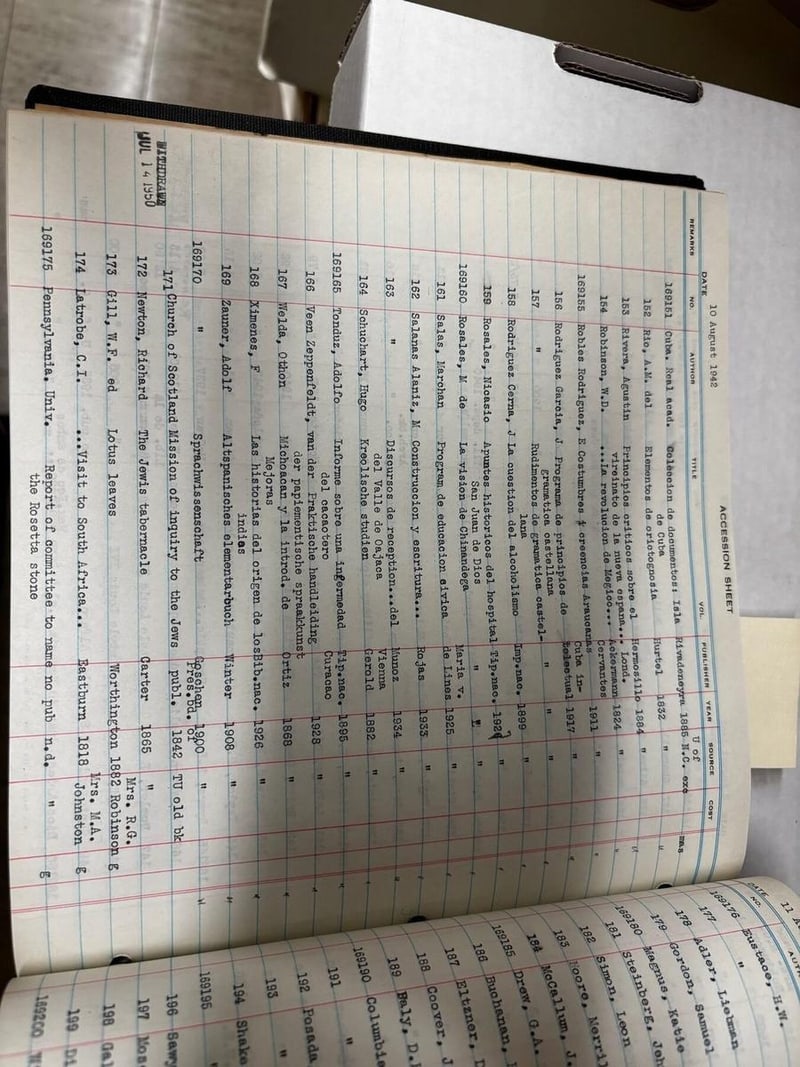
Ann Eliza Sibley Johnston Gilpin gave the volume to her grandson William Stoddard Johnston II on May 21, 1859. Inscription: “William S. Johnston / from his Grandmother / E. Gilpin / Phila May 21st / 1859.” A second notation reads “From Wm S Johnston / Dec 1883.” Tulane’s accession ledger, dated August 10, 1942, explicitly records the source as Mrs. M. A. Johnston (entry no. 169175); her identity beyond that ledger record remains unresolved, and the unnamed recipient of William S. Johnston’s 1883 gift is not assumed to be the same person.
Ann Eliza Sibley Johnston Gilpin → William Stoddard Johnston II, May 21, 1859 → unnamed recipient of William S. Johnston's December 1883 gift → unresolved gap → Mrs. M. A. Johnston → Tulane University, accession 169175, August 10, 1942
The last checkout stamp is dated 1972. The repository places transfer from circulating or Legacy holdings into Rare Books between 2002 and 2016; the exact date is unrecorded.
Tulane University Special Collections correspondence; accession ledger; circulation slip; six copy-specific photographs; Tulane Library Senate and collection-move documentation summarized by the curator; Historical Society of Pennsylvania Johnston and Gilpin papers; and Johnston family and Philomathean records.
Eberly Family Special Collections Library, Pennsylvania State University
University Park, Pennsylvania
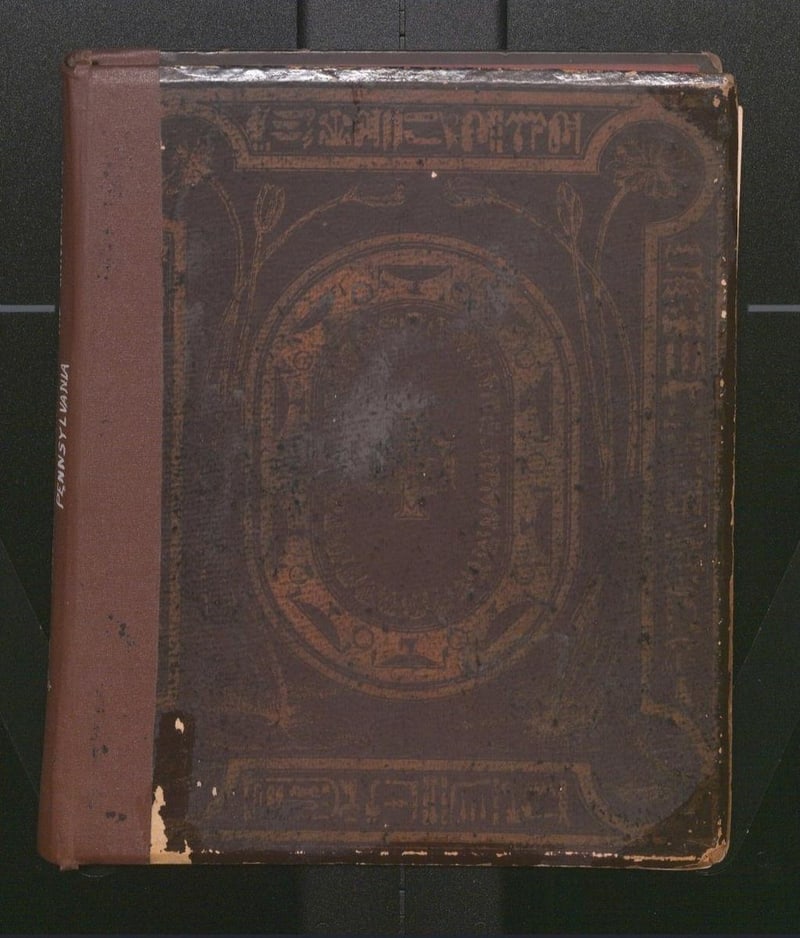
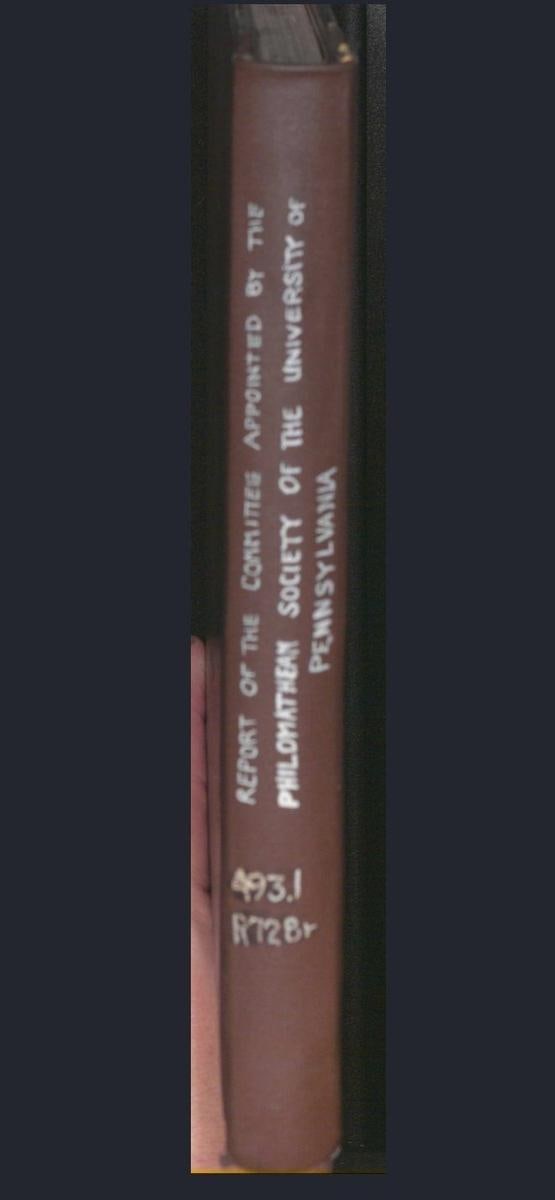
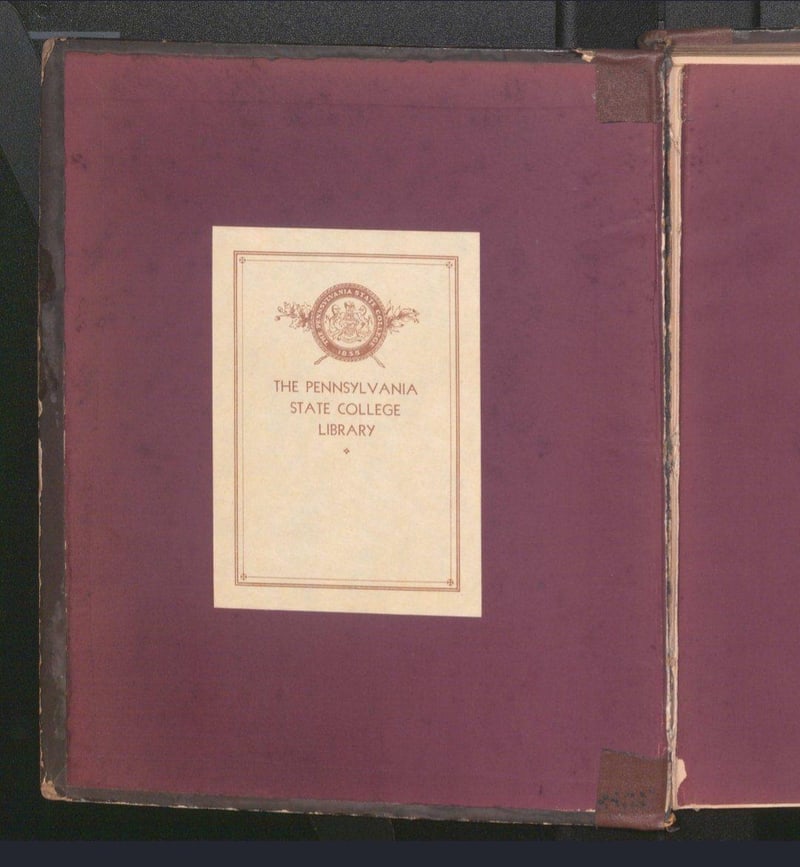
Original brown publisher-issued decorated boards (embossed sphinx medallion) survive beneath a later full rebind in brown cloth, stamped "PENNSYLVANIA" and with the full title on the spine. A "The Pennsylvania State College Library" bookplate dates the rebind to before the university's 1953 renaming.
The surviving decorated boards identify the first edition. The shelfmark note ‘1859’ conflicts with the physical evidence.
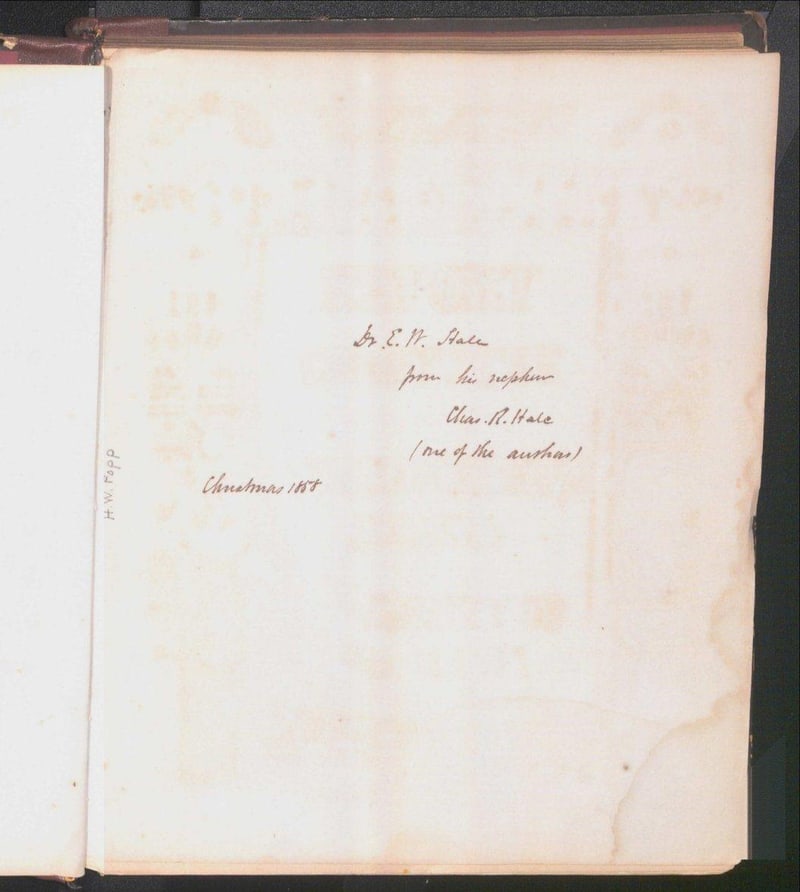
Authorial presentation inscription: "Dr. E.W. Hale, from his nephew, Chas. R. Hale (one of the authors), Christmas 1858." A second transcription of the same inscription, in a different and later hand, is kept loose in the volume.
Charles R. Hale → Dr. Elias White Hale, Christmas 1858 → unresolved gap → Henry W. Popp → Mary Jean (Popp) Smeal, gift to Pennsylvania State University, 1991
The presentation is to the author’s uncle, Dr. Elias White Hale. A later gutter mark reads ‘H.W. Popp,’ identified as Henry W. Popp.
Popp’s papers at Penn State contain Elias White Hale’s diary, medical-school notes, and daybooks in ‘Hale, Elias & Mary, bulk: 1795–1898.’ The route from the Hale family to Popp is unrecorded.
Penn State catalog, correspondence, copy photographs, and Henry W. Popp finding aid; Penn Archives, Elias White Hale papers (UPT 50 H161); Hale family records.
Lipscomb Library, Randolph College
Lynchburg, Virginia
RBR 481.7 R79 ↗
Rare Book Room; accession 46177.
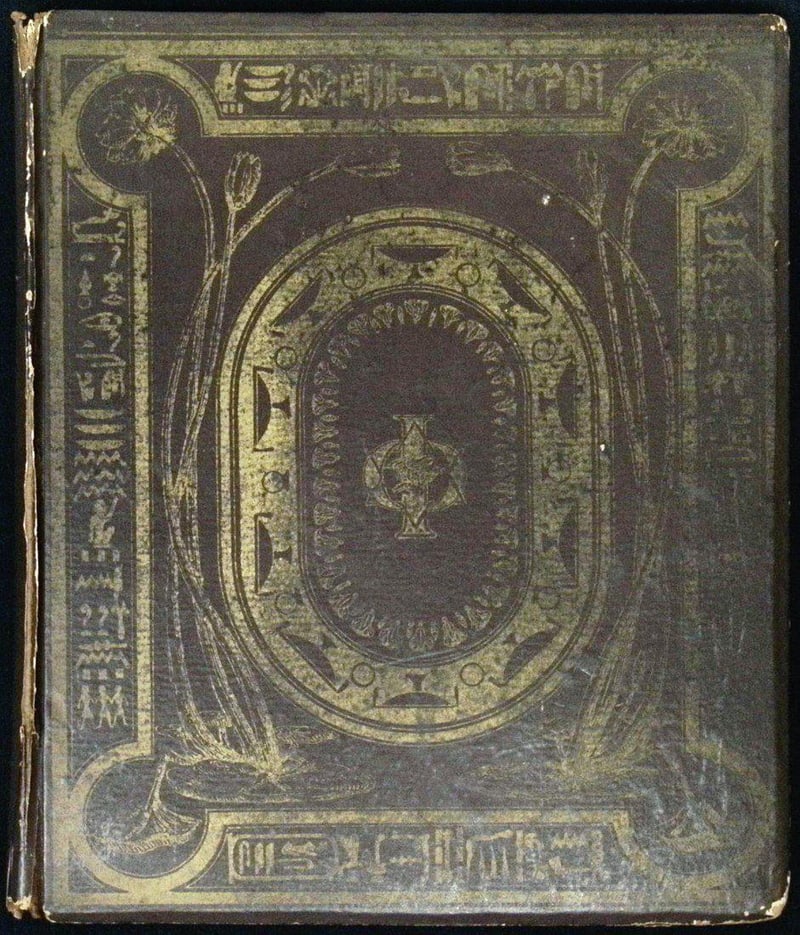
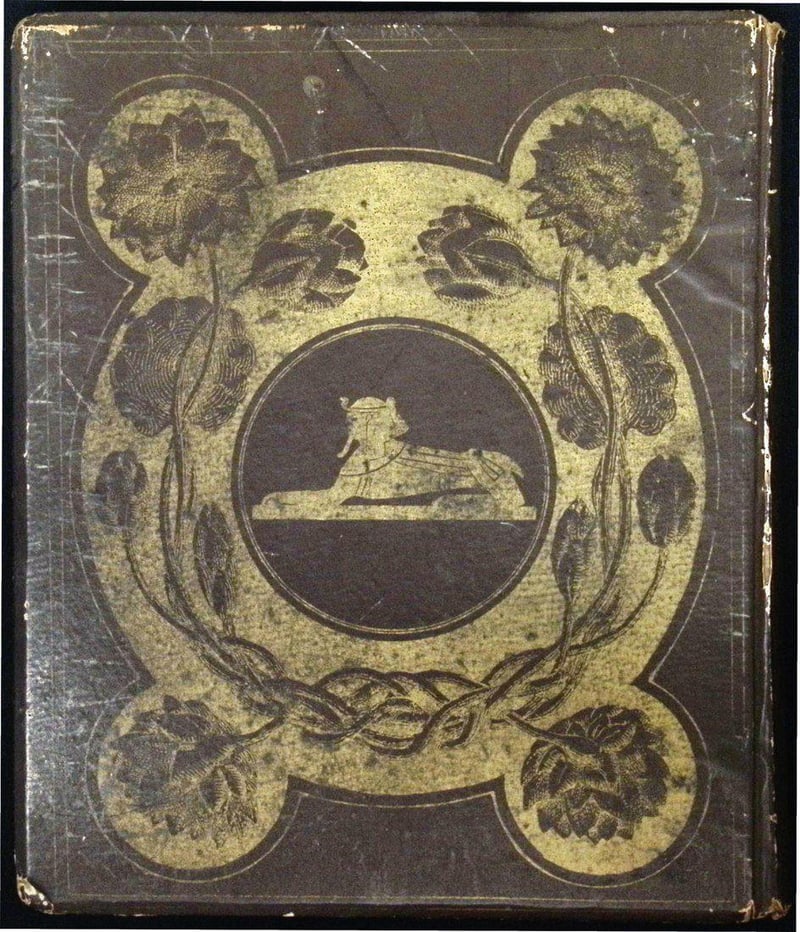
Original brown publisher-issued boards with gold decoration.
Original decorated publisher's boards are diagnostic of the 1858 first edition.
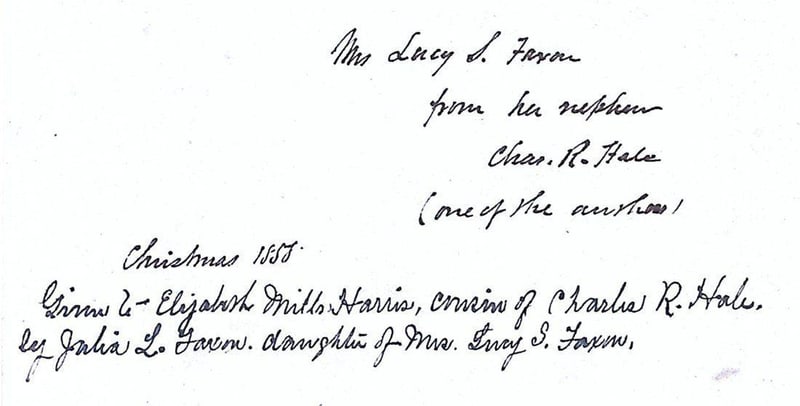
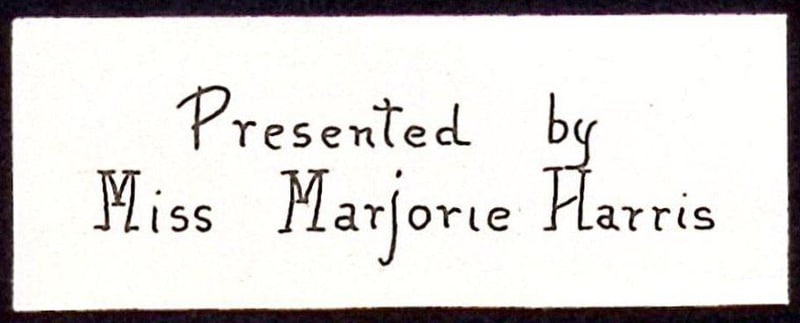
Authorial presentation inscription: "Mrs. Lucy S. Faxon, from her nephew, Chas. R. Hale (one of the authors), Christmas 1858." A second inscription records a later gift: "Given to Elizabeth Mills Harris, cousin of Charles R. Hale, by Julia L. Faxon, daughter of Mrs. Lucy S. Faxon." A bookplate reads "Presented by Miss Marjorie Harris."
Charles R. Hale → Lucy Seymour Mills Faxon, Christmas 1858 (Hale's maternal aunt) → gift via Julia Lucy Faxon → Elizabeth “Lillie” Mills Harris (Hale's first cousin) → Marjorie Silliman Harris → gift to Randolph College, Lipscomb Library
The inscriptions trace a gift from Hale to his aunt Lucy, then from Lucy’s daughter Julia to Hale’s cousin Elizabeth Mills Harris. Marjorie Silliman Harris’s bookplate records her later gift to the college.
Randolph College correspondence and copy photographs; Faxon and Daughters of the American Revolution lineage records; institutional biography of Marjorie Silliman Harris.

Dr. Martin Luther King, Jr. Library, San José State University
San José, California
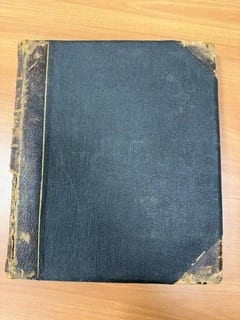
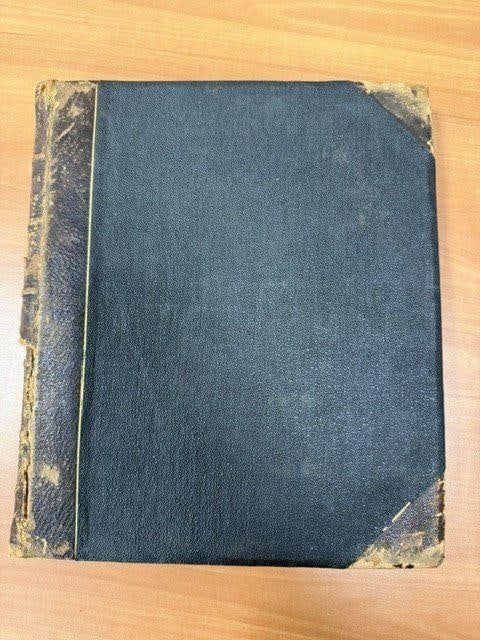
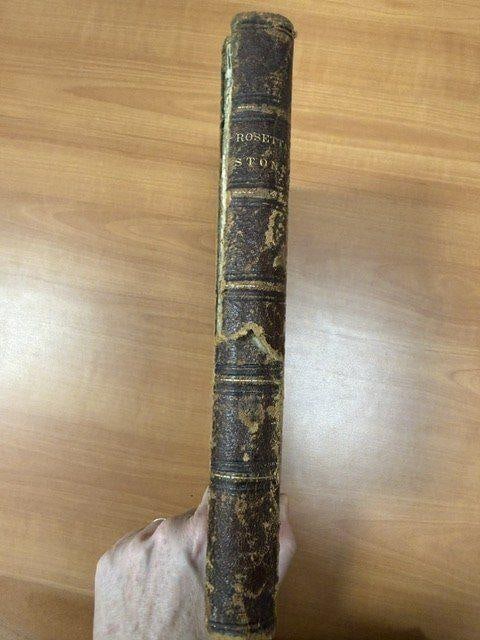
Later rebind in black cloth with morocco-grained leather spine and corners, spine gilt-stamped "ROSETTA STONE"; green marbled boards and endpapers. Original publisher's boards do not survive.
The title page is illustrated and undated, with no "Second Edition" statement, consistent with the 1858 first edition rather than the 1859 second edition.
A catalog card affixed to the rear board is stamped "JAN 26 1978."
No presentation inscription, bookplate, or ownership marking identified.
Unrecorded earlier ownership → Dr. Martin Luther King, Jr. Library, San José State University
San José State University catalog, correspondence, and copy photographs. The January 26, 1978 catalog-card stamp is not a confirmed acquisition date.
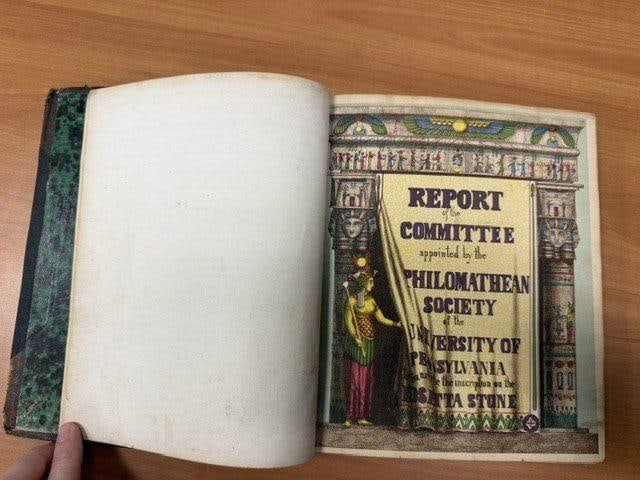
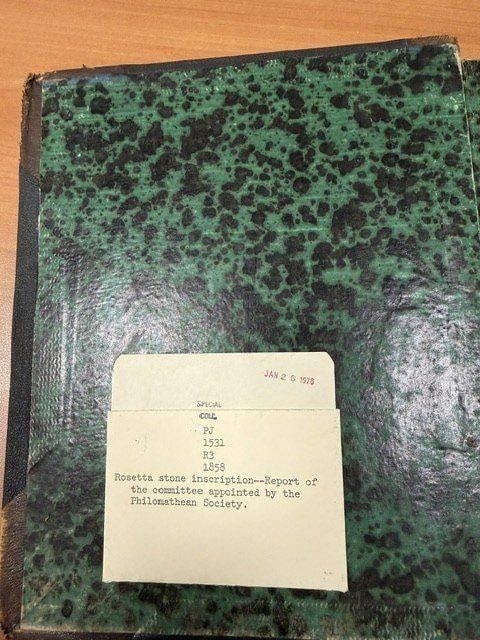
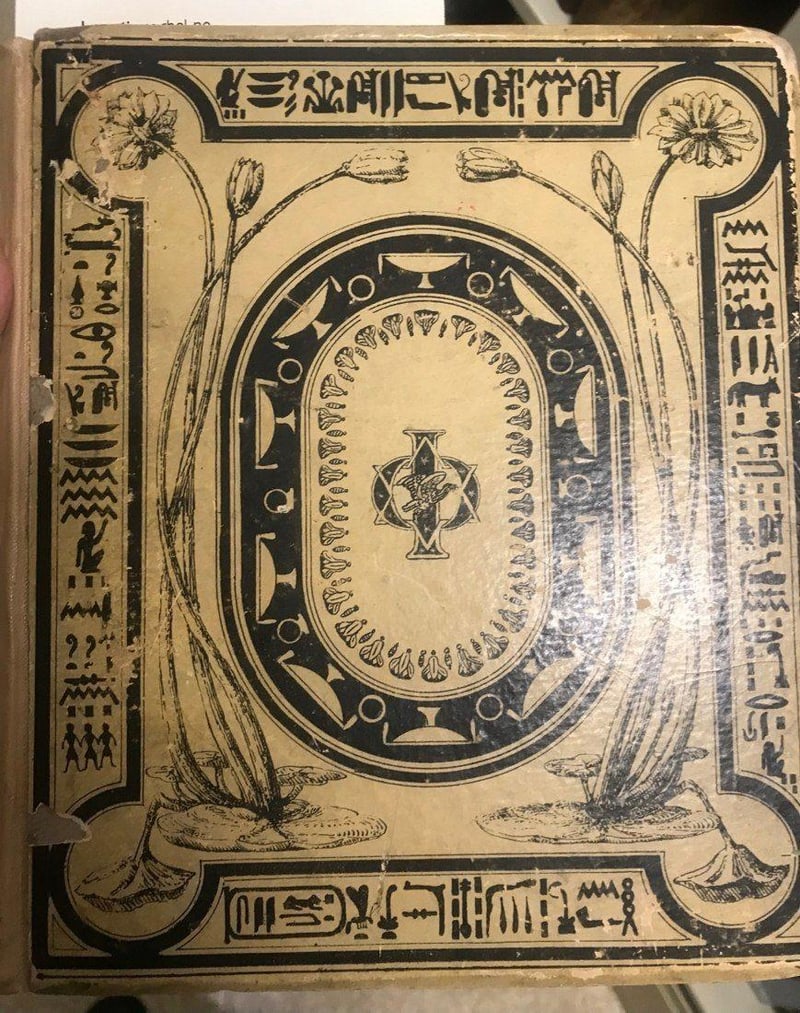
Rare Book & Manuscript Library, University of Illinois Urbana-Champaign
Urbana, Illinois
493.1 R7281858 ↗
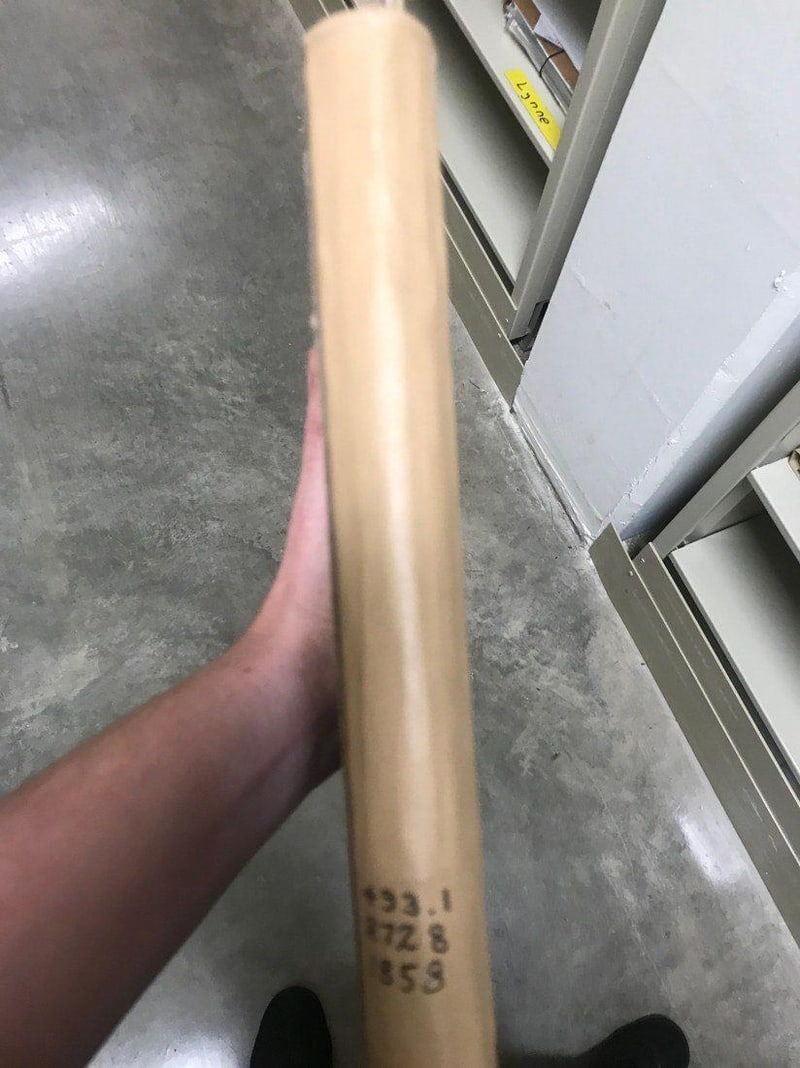
Storage tube marking: “493.1 / P728 / 1858” (partly obscured; transcription uncertain).
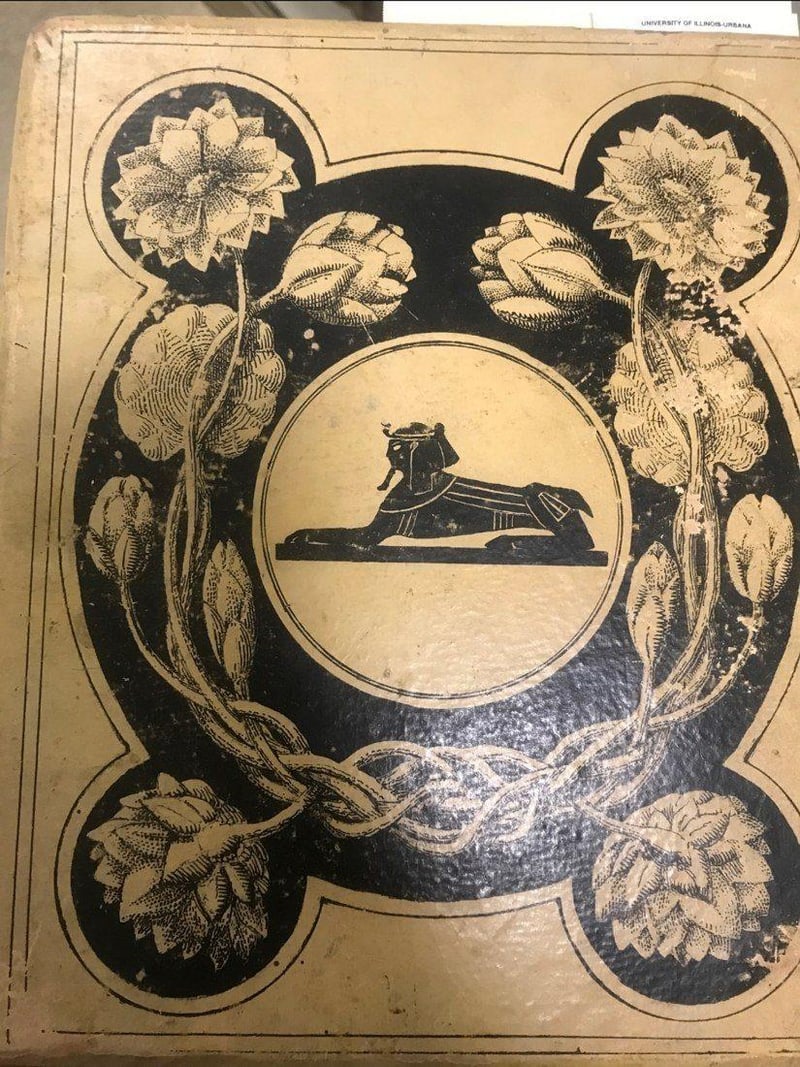
Original cream-and-black publisher-issued decorated boards survive. The front board has a torn corner and chipped edges; the rear board shows scattered foxing.
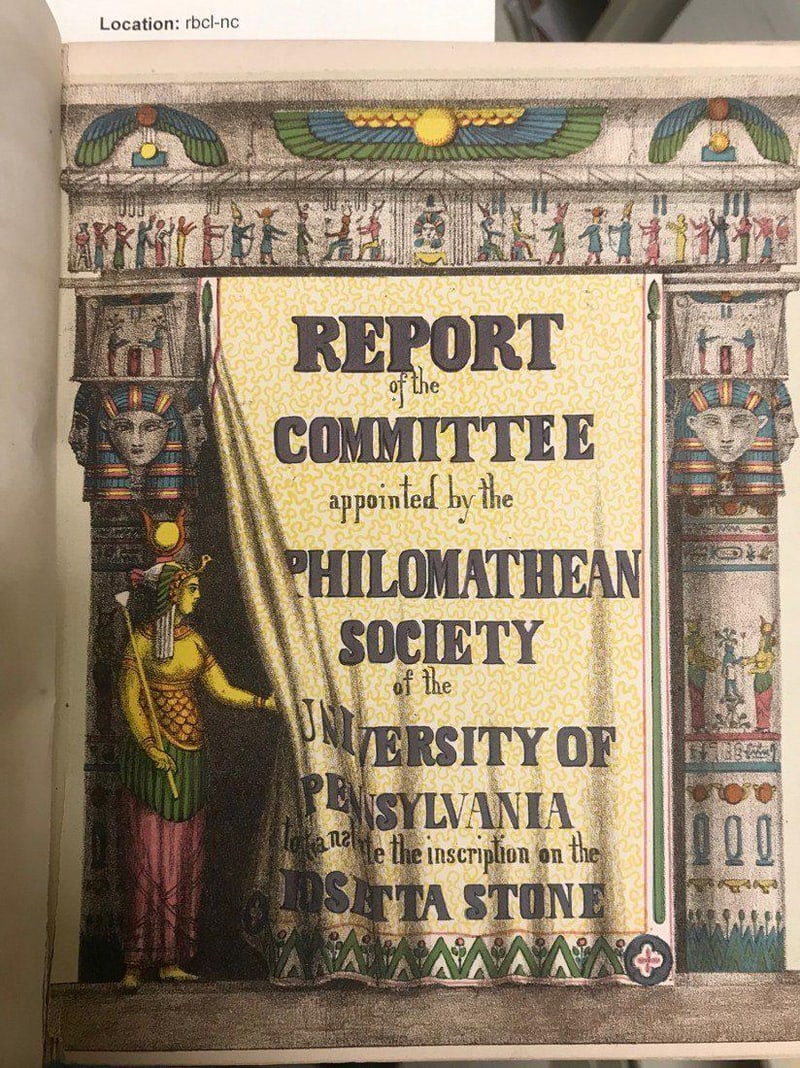
The surviving cream decorated boards, and the illustrated undated title page, are diagnostic of the 1858 first edition.
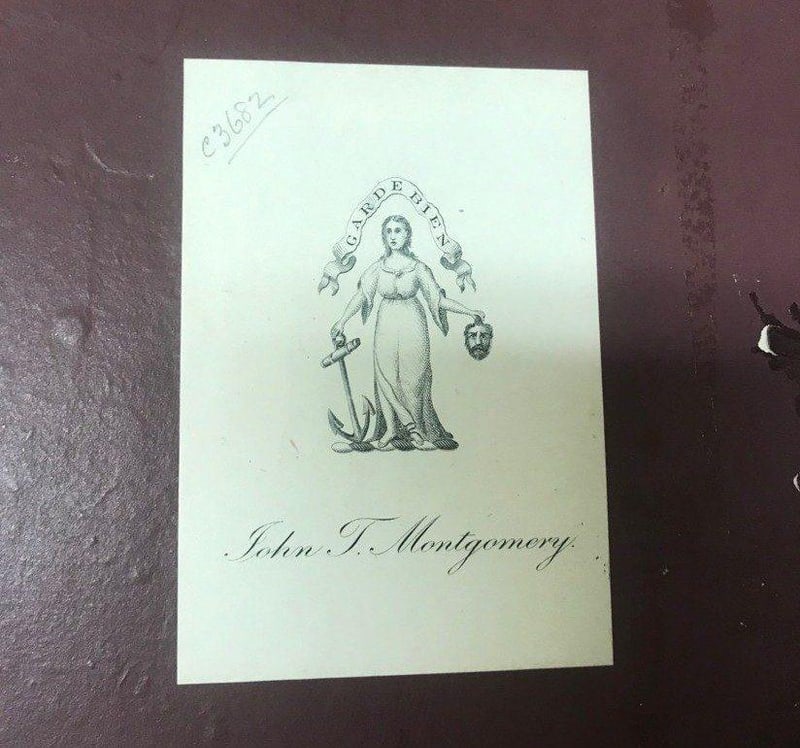
Armorial bookplate: ‘John T. Montgomery,’ with a later pencil C3682. Its female figure, anchor, severed head, and ‘GARDE BIEN’ motto are Montgomery arms. John Teackle Montgomery is the strongly supported owner identification. A faint pastedown notation reported as possibly a name, ‘24 Jan 1950,’ and 19649 remains unconfirmed.
John Teackle Montgomery (strongly identified) → unresolved gap → University of Illinois Urbana-Champaign
Transferred from general circulation to the Rare Book & Manuscript Library. Earlier acquisition history is unrecorded.
University of Illinois catalog, correspondence, and copy photographs; Philomathean alumni list; American Philosophical Society authority data; Montgomery and Wharton genealogies.
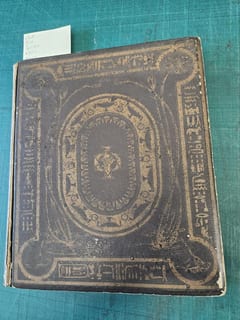
Archives and Special Collections, University of Melbourne
Melbourne, Victoria, Australia
Original brown-and-gold publisher-issued decorated boards. The supplied photographs most closely match the census's brown-and-gold binding variant; repository confirmation of the color under neutral light remains desirable.
The original decorated boards and illustrated undated title page identify the 1858 first edition. Melbourne separately holds an 1859 second edition acquired from the same bookseller.
Purchased in 2007 from the Colophon Book Shop, Exeter, New Hampshire, together with Melbourne's 1859 second-edition copy.
Two separate 1858 inscriptions make this a direct authorial presentation to both of Charles R. Hale's parents. The front-pastedown inscription reads:
“Reuben C. Hale / from his son / Charles R. Hale / 1858.”
A second inscription reads:
“Sarah Jane Hale. / from her son / Charles— / Christmas 1858.”
Both inscriptions use ‘Charles’ in full, unlike the abbreviated ‘Chas.’ in other documented Hale presentations.
Charles R. Hale → Reuben Charles Hale and Sarah Jane Mills Hale → unresolved gap → Colophon Book Shop → University of Melbourne, 2007
University of Melbourne catalog, correspondence, acquisition documentation, and copy photographs. Images: Archives and Special Collections, University of Melbourne.
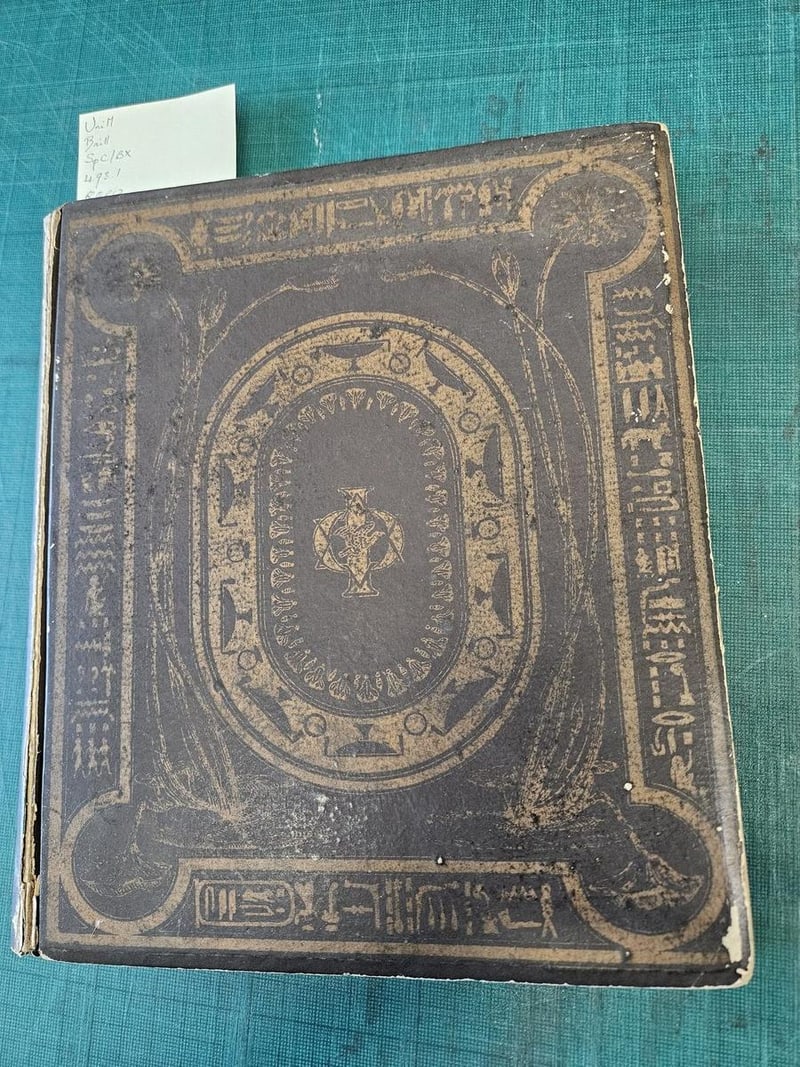
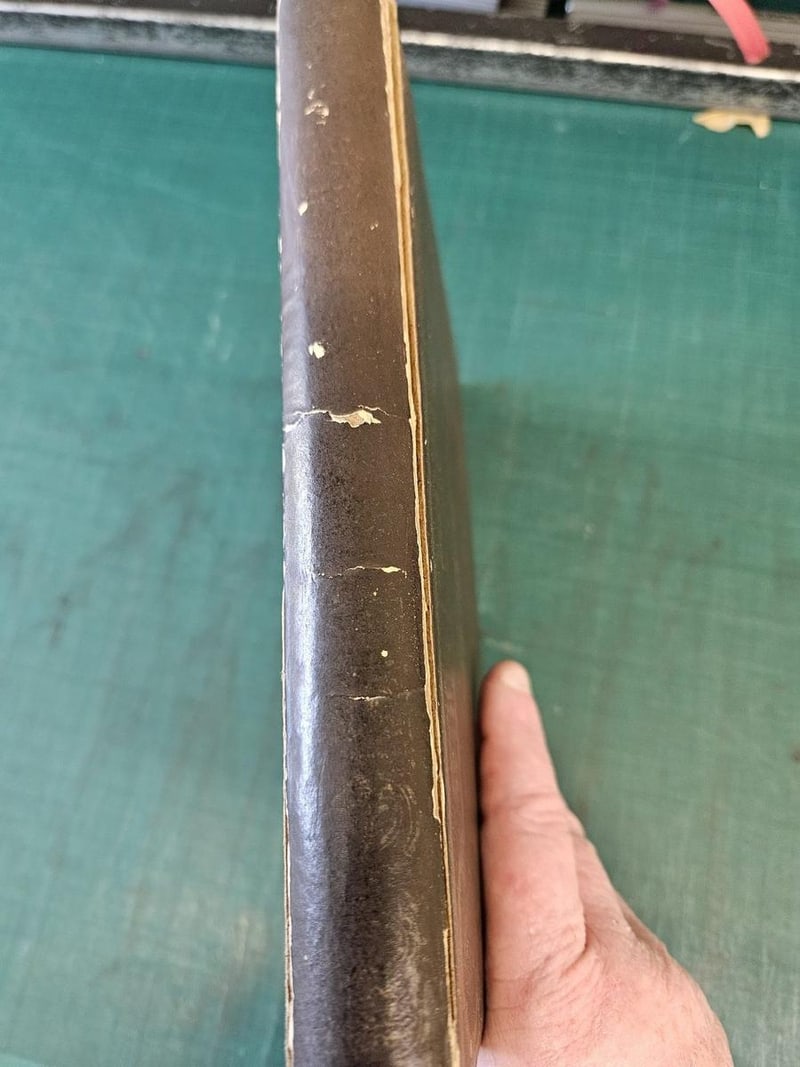
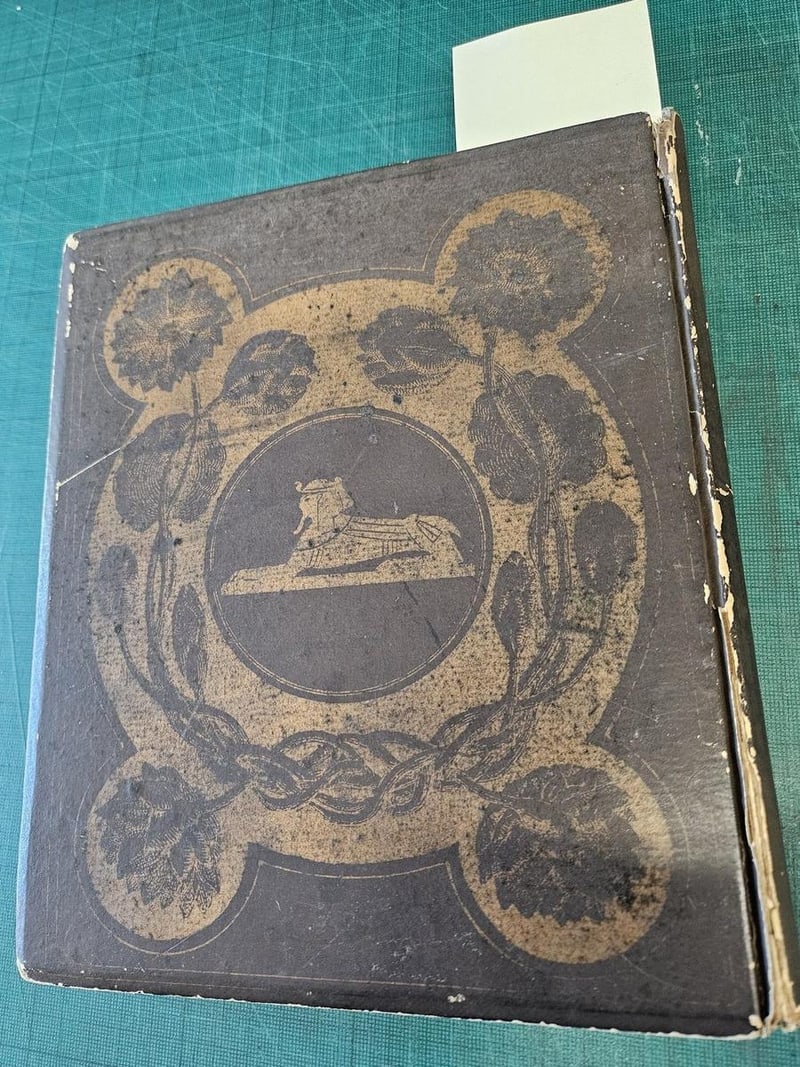
Temple University Libraries, Special Collections Research Center
Philadelphia, Pennsylvania
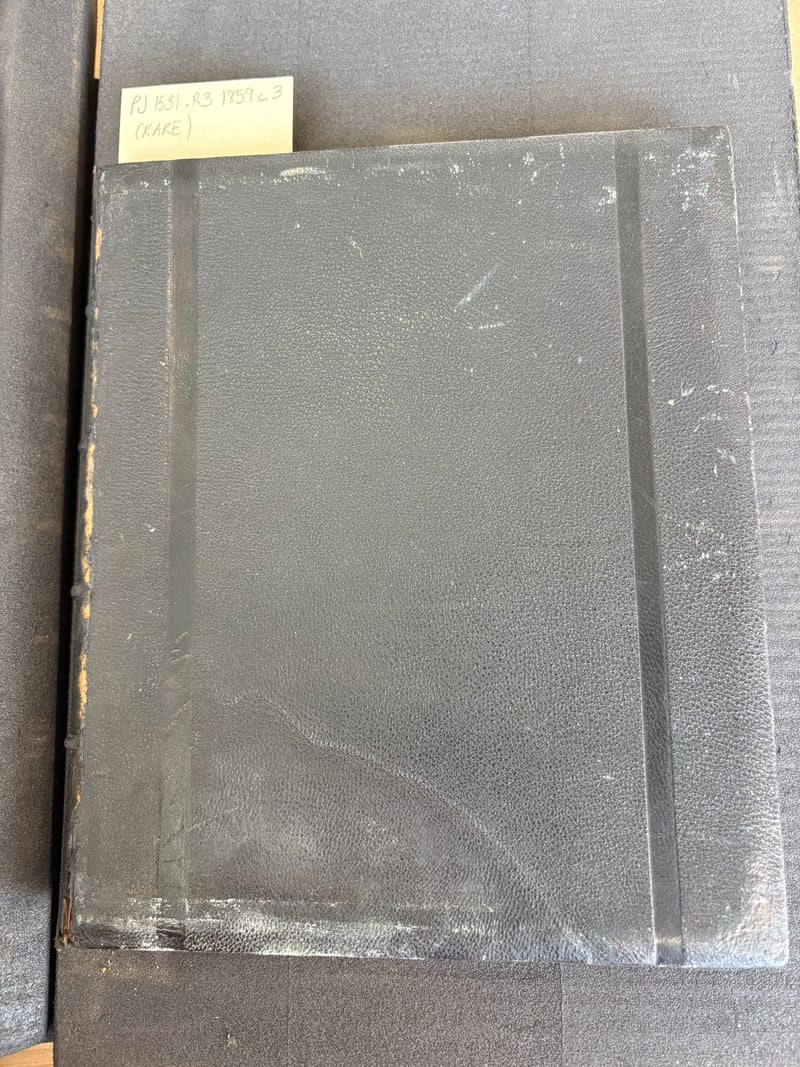
Temple Copy 1
Original cream publisher-issued boards with black decoration. This is the only one of Temple's three first-edition copies reported by the repository as retaining its original binding.
The decorated publisher binding and illustrated title page without an edition statement identify the 1858 first edition.
Pencil inscription: ‘G. B. Allinson / Phila. Jan. 7/59.’ George B. Allinson, a Philadelphia civil engineer, is the leading candidate; the identification remains provisional.
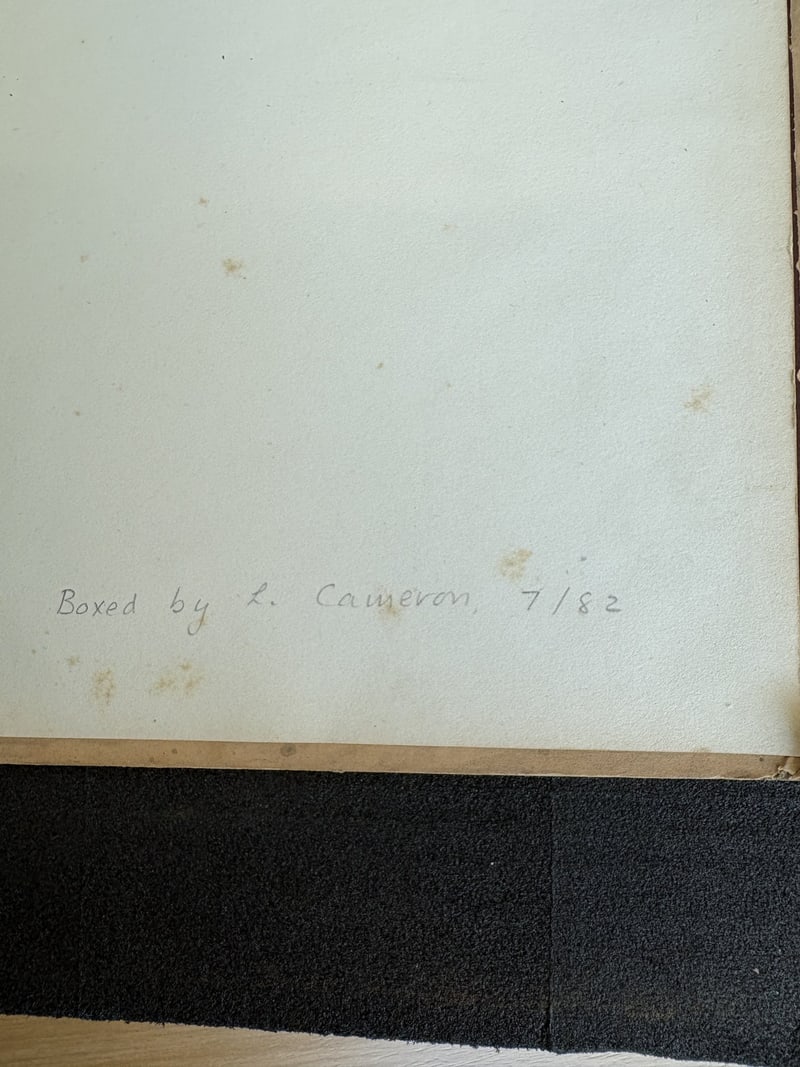
‘Boxed by L. Cameron 7/82’ records protective housing made in July 1982. Cameron’s identity is unestablished.
G. B. Allinson, Philadelphia, January 7, 1859 → unresolved gap → Temple University Libraries (protective box dated July 1982)
Temple University Libraries correspondence and copy photographs; McElroy’s Philadelphia City Directory (1847, 1856); Haverford Allinson Family Papers finding aid.
Courtesy of the Special Collections Research Center. Temple University Libraries. Philadelphia, PA.
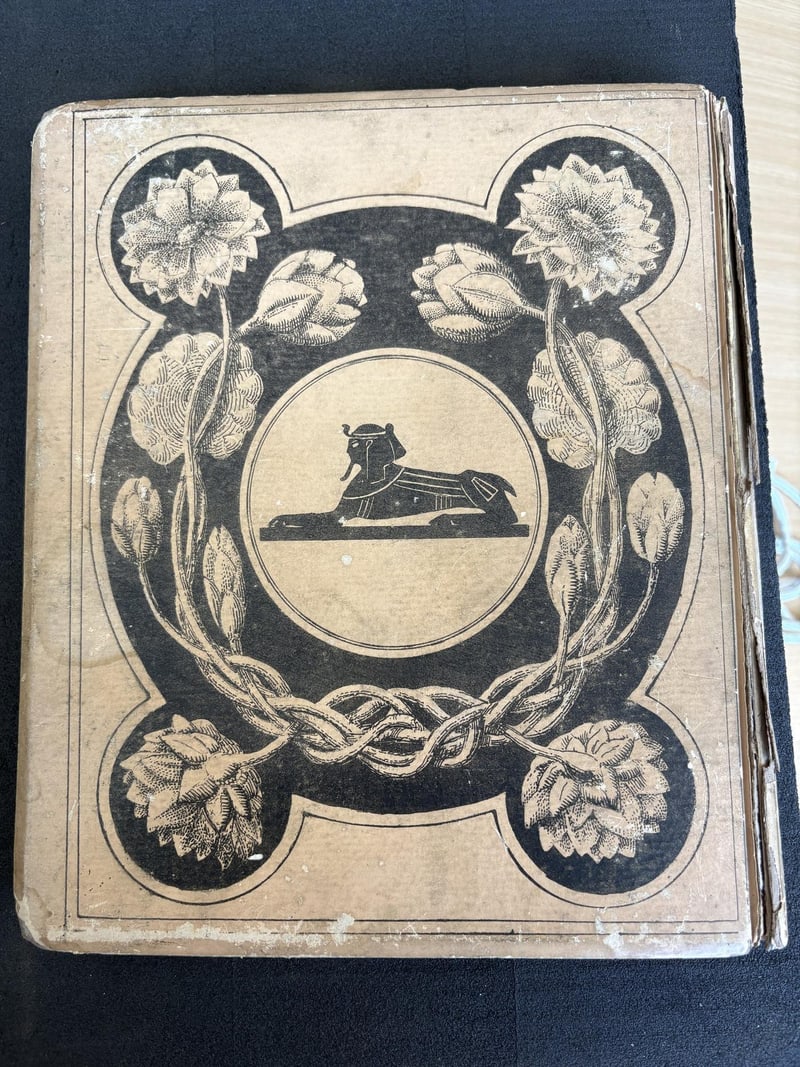
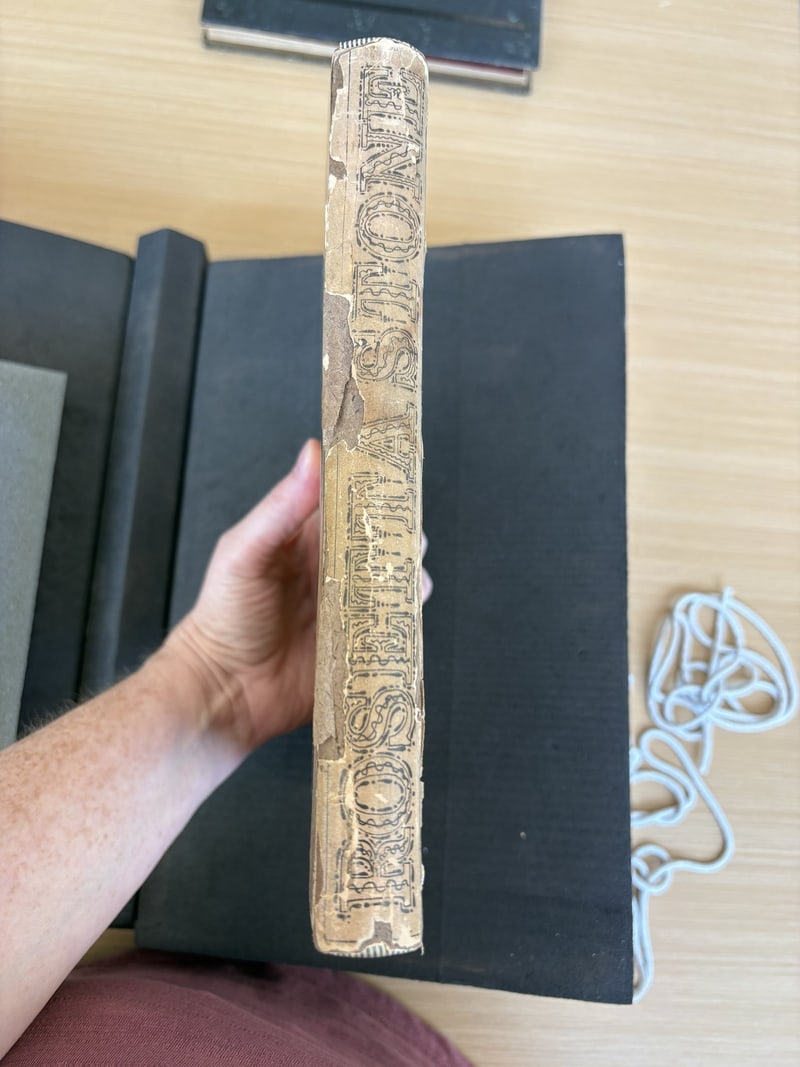
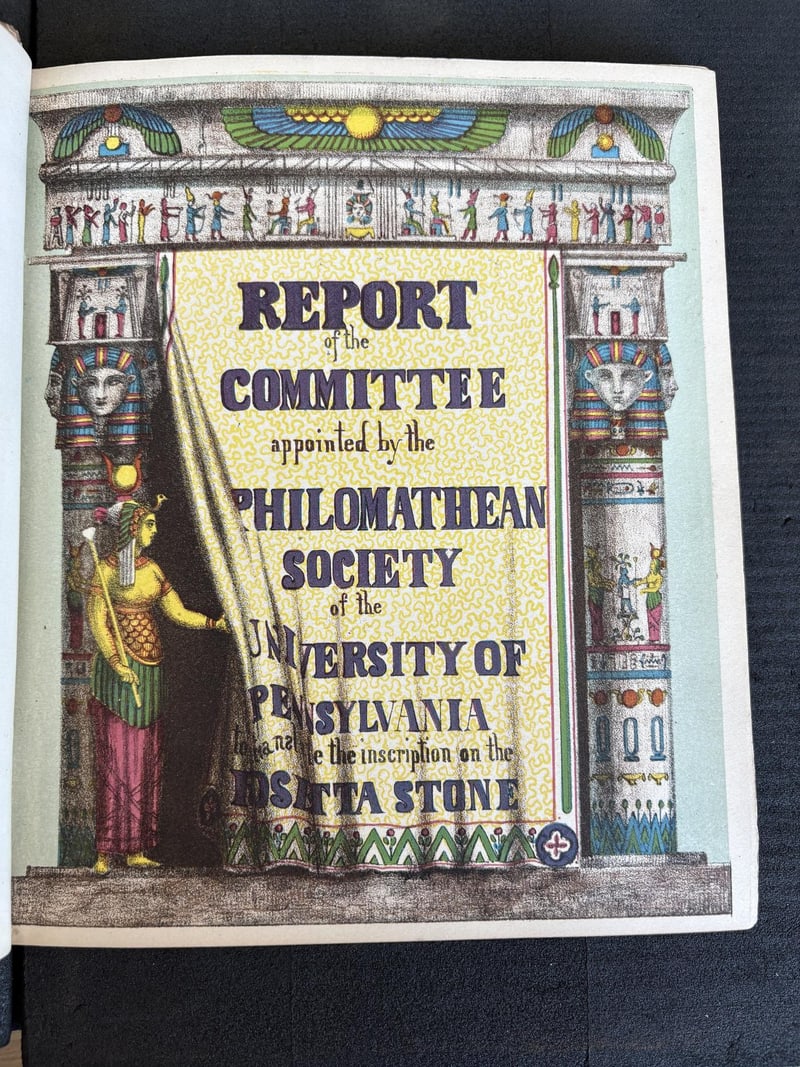
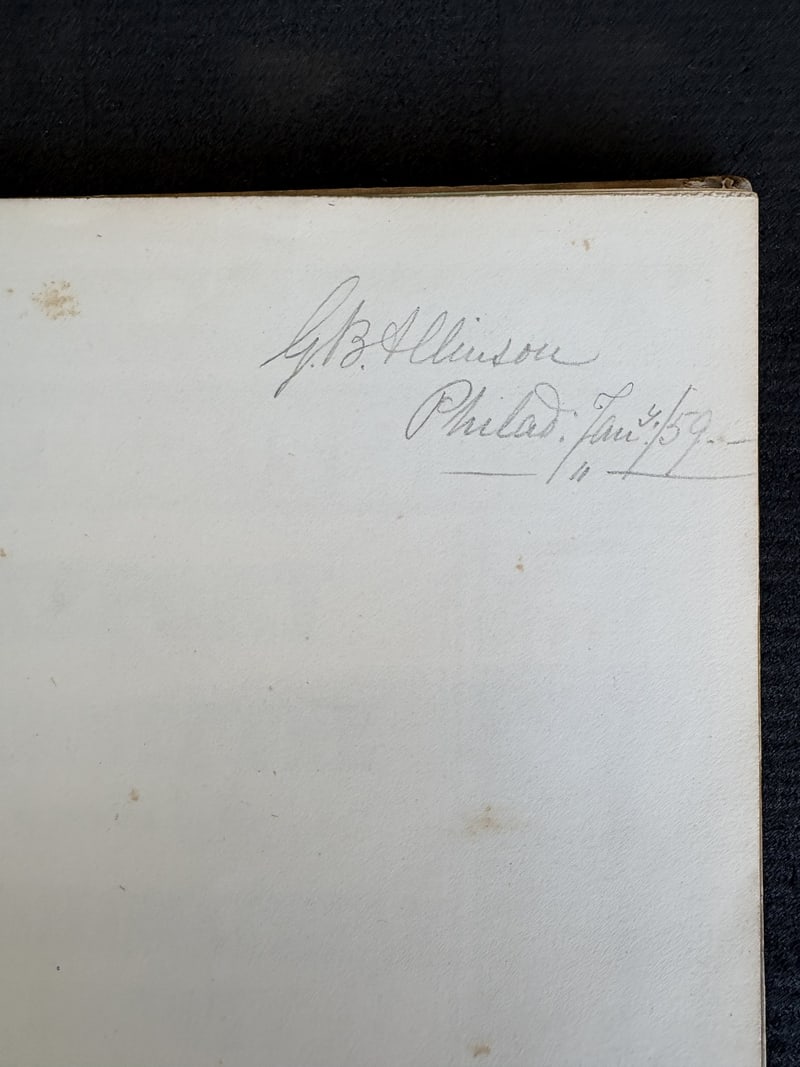
Temple University Libraries, Special Collections Research Center
Philadelphia, Pennsylvania
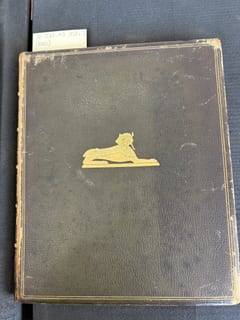
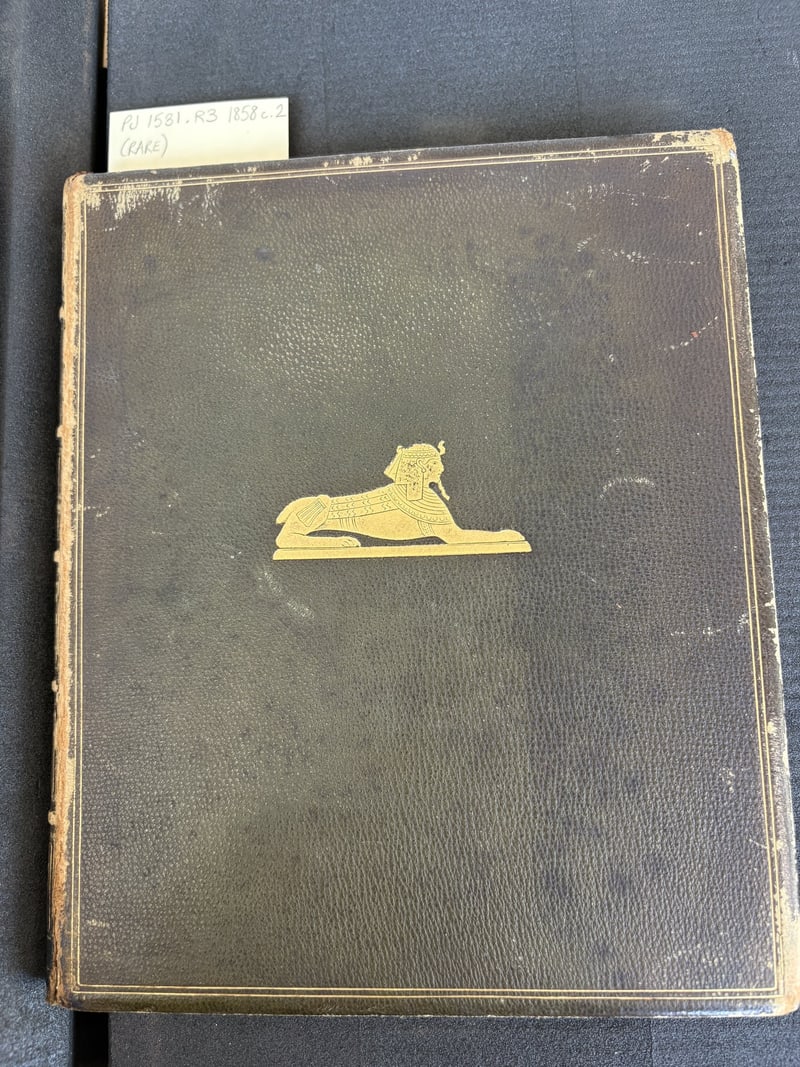
Later dark full-leather binding (color unrecorded) with gilt sphinx on the front board, gilt spine compartments, decorated turn-ins, and an impressed PAWSON & NICHOLSON / BINDERS stamp.
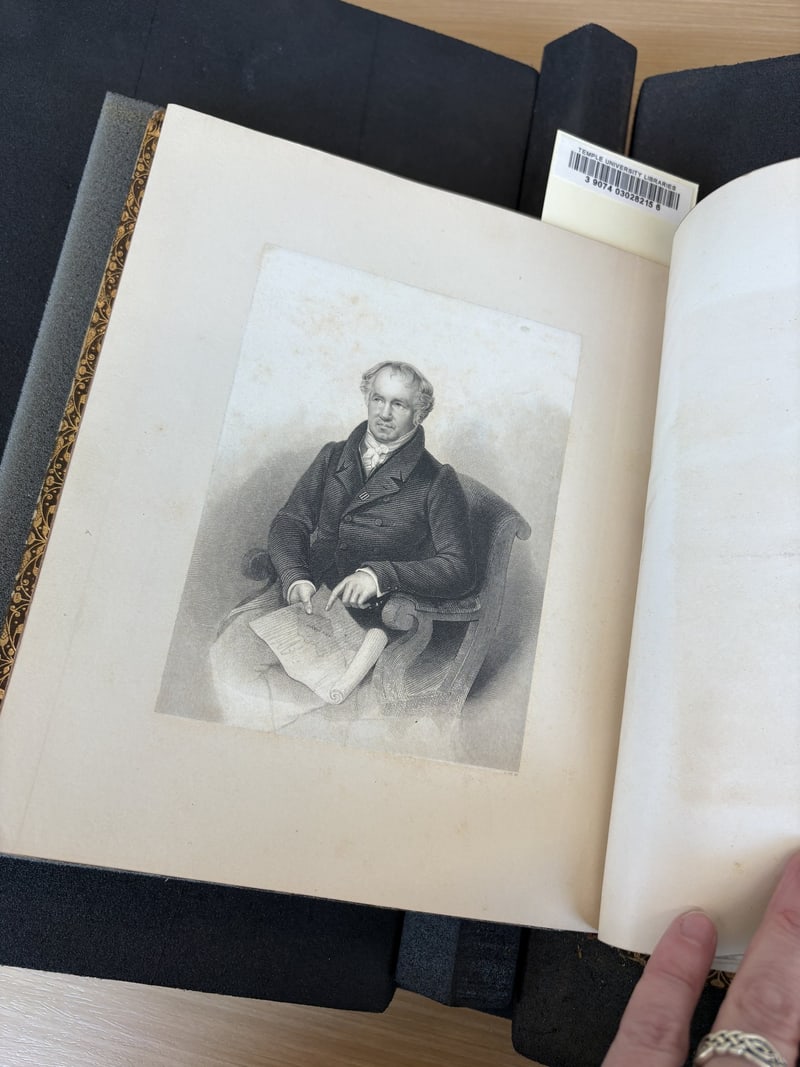
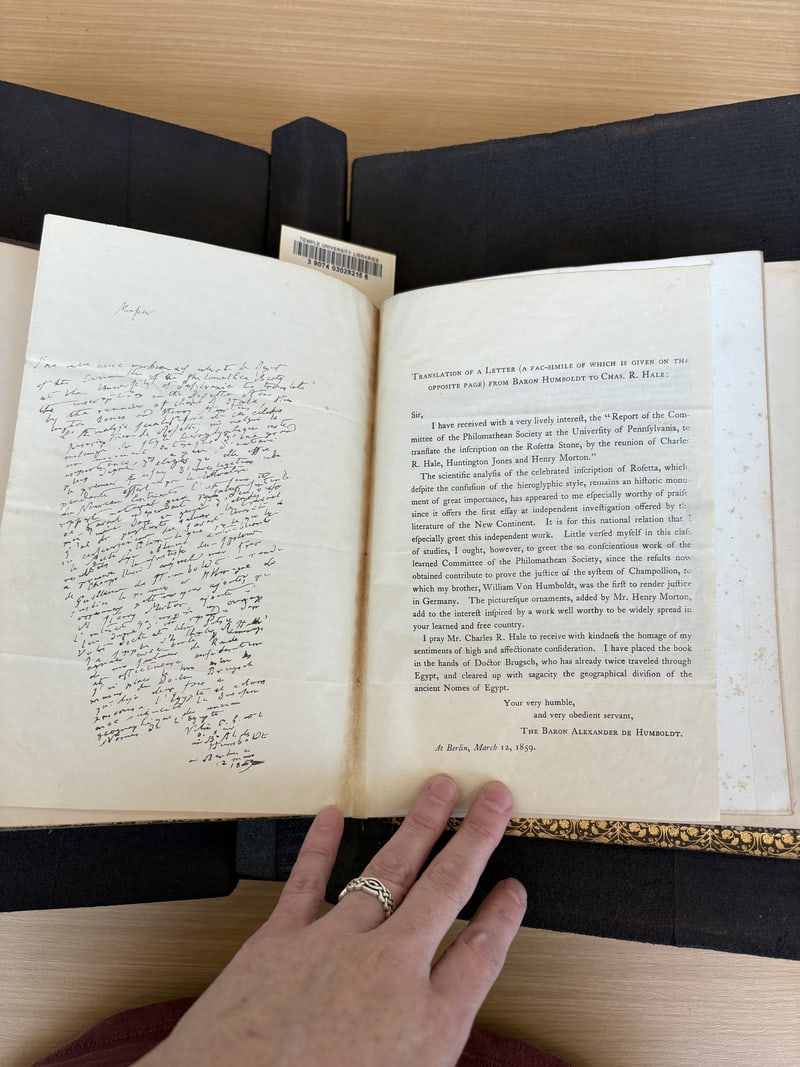
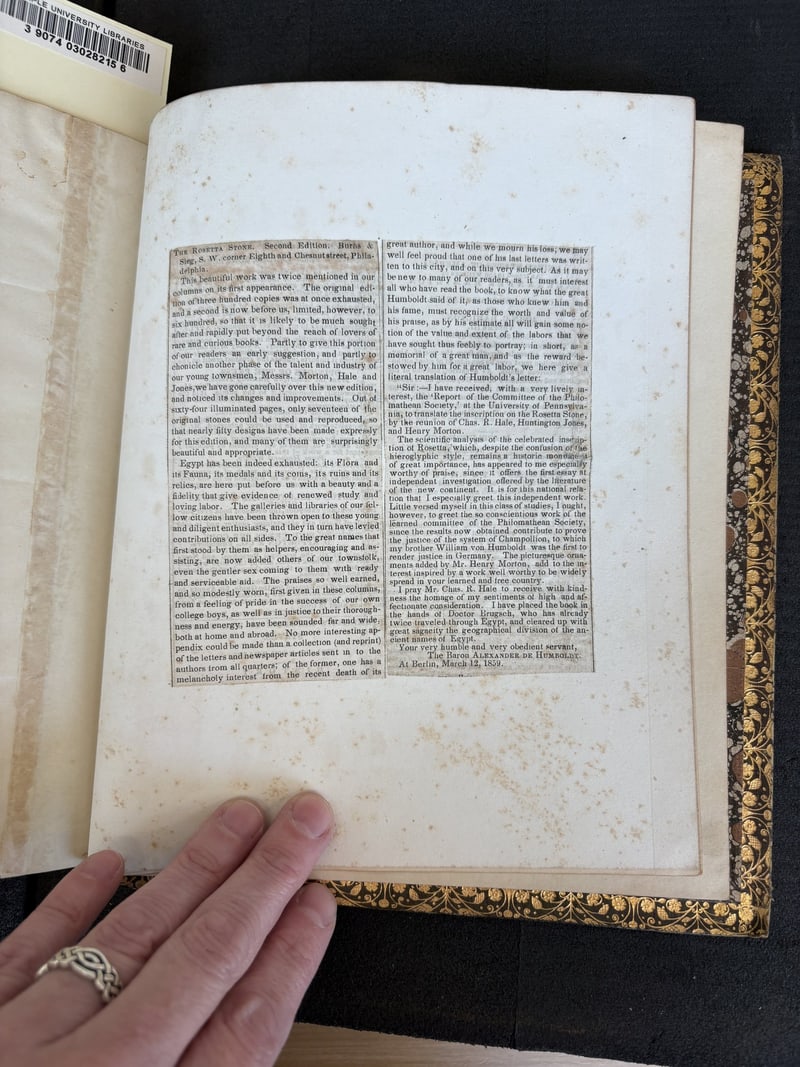
The illustrated undated title page and first-edition collation identify the 1858 issue. The inserted portrait, letter, and newspaper clipping are later reception material added to this particular copy.
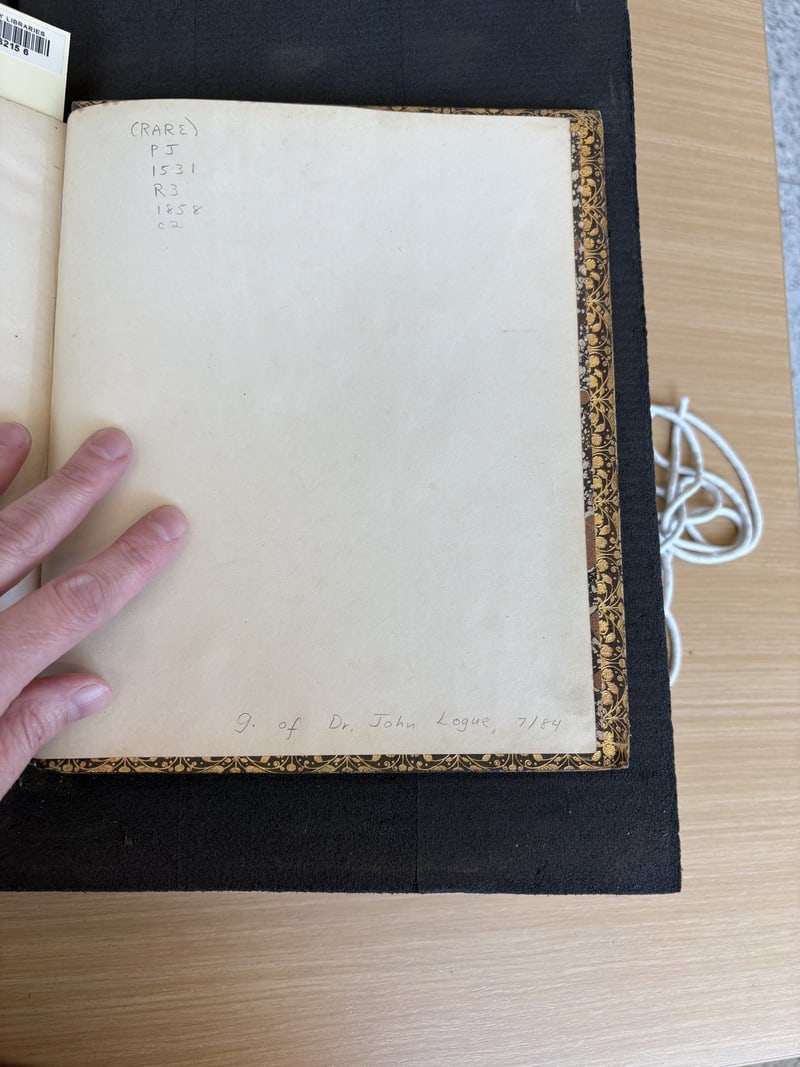
‘g. of Dr. John Logue, 7/84’ records a July 1984 gift. Villanova professor John J. Logue is the probable donor; the identification lacks a direct accession record.
The Pawson & Nicholson binder’s stamp survives. The binding postdates the 1859 material within the volume; its exact date is unrecorded.
An engraved Humboldt portrait, facsimile of his March 12, 1859 letter with English translation, and contemporary newspaper notice are inserted. The letter names the three authors, Wilhelm von Humboldt, and ‘Doctor Brugsch,’ and credits Morton’s pictures.
Original 1858 issue → later Pawson & Nicholson binding and extra-illustration, after March 1859 → unresolved gap → Dr. John Logue [probable: John J. Logue, 1923–2004] → Temple University Libraries, July 1984
Temple University Libraries correspondence and copy photographs; Library Company Pawson & Nicholson album; Met catalog of Nicholson’s Manual of the Art of Bookbinding (1856); Deutsche Biographie.
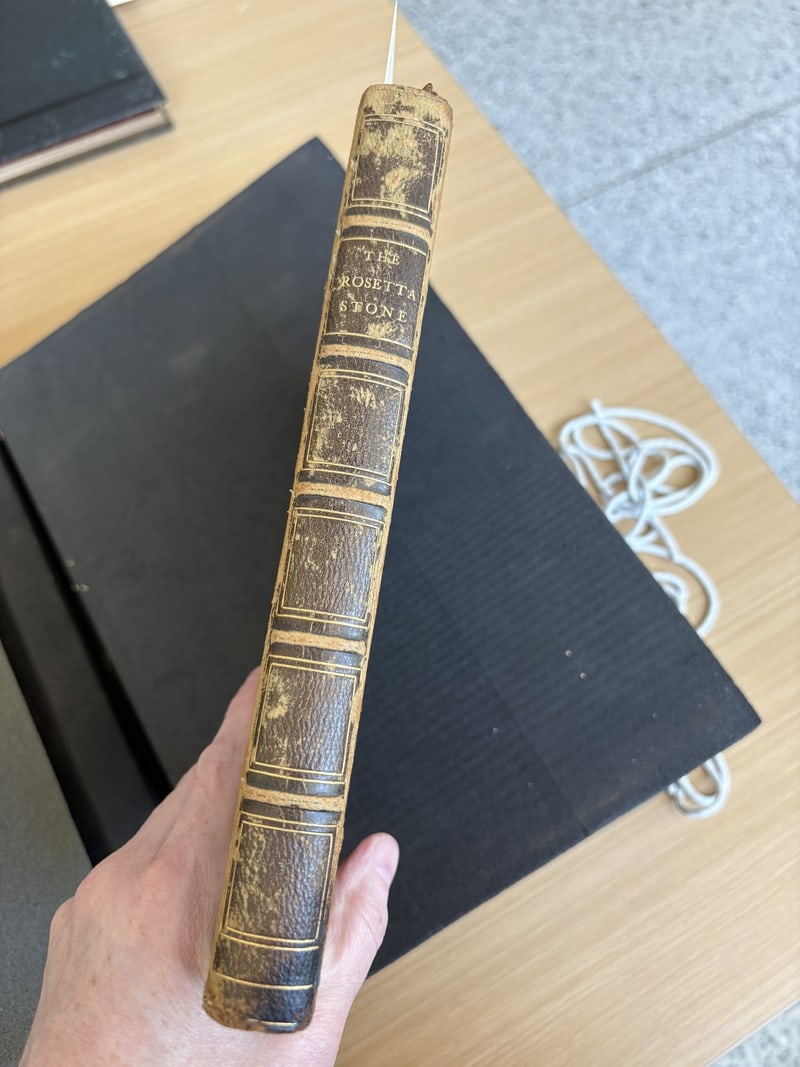
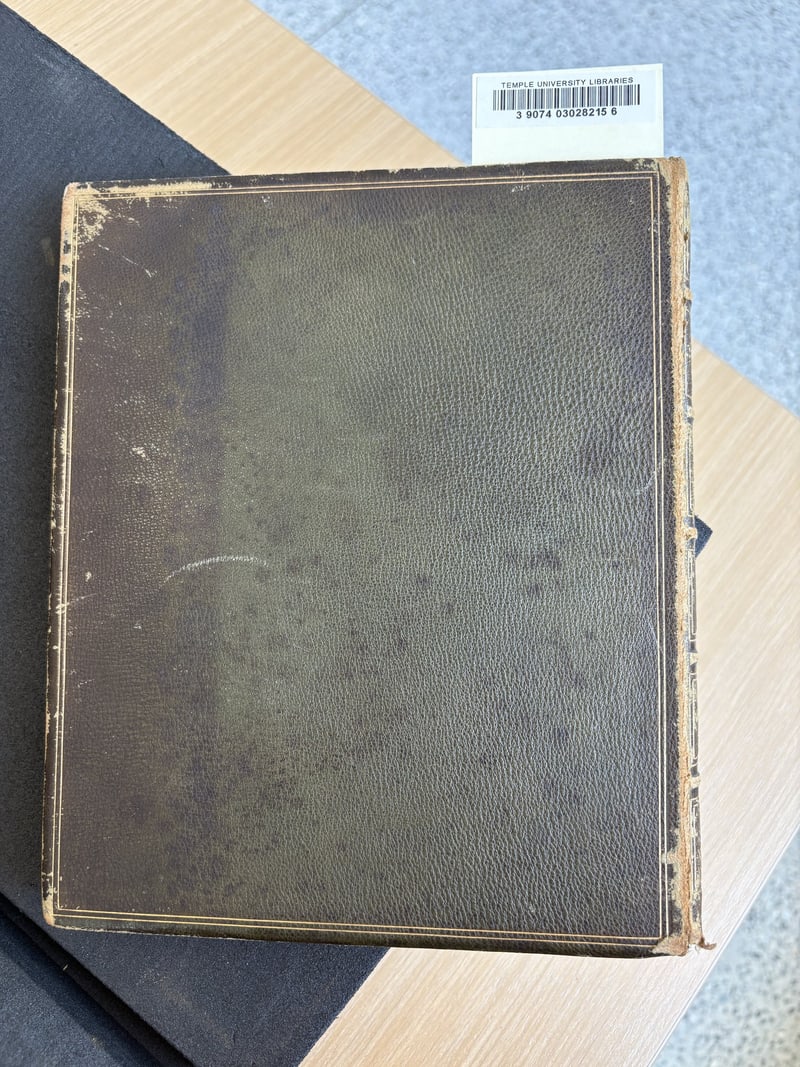
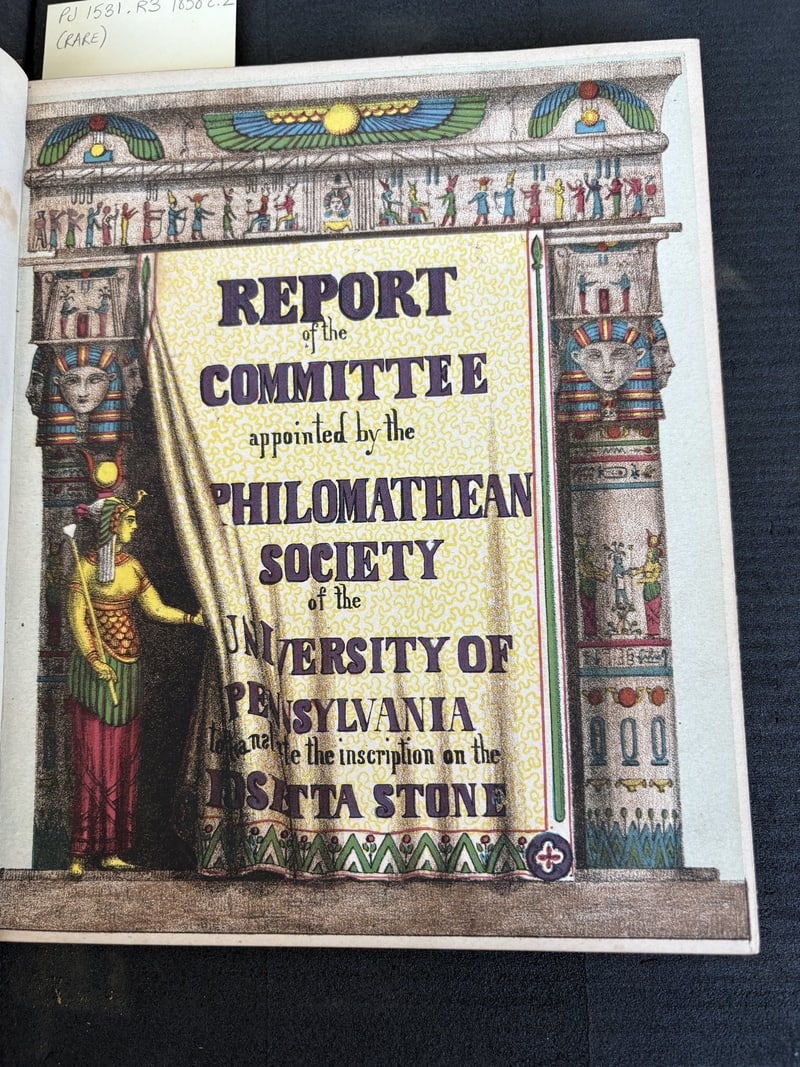
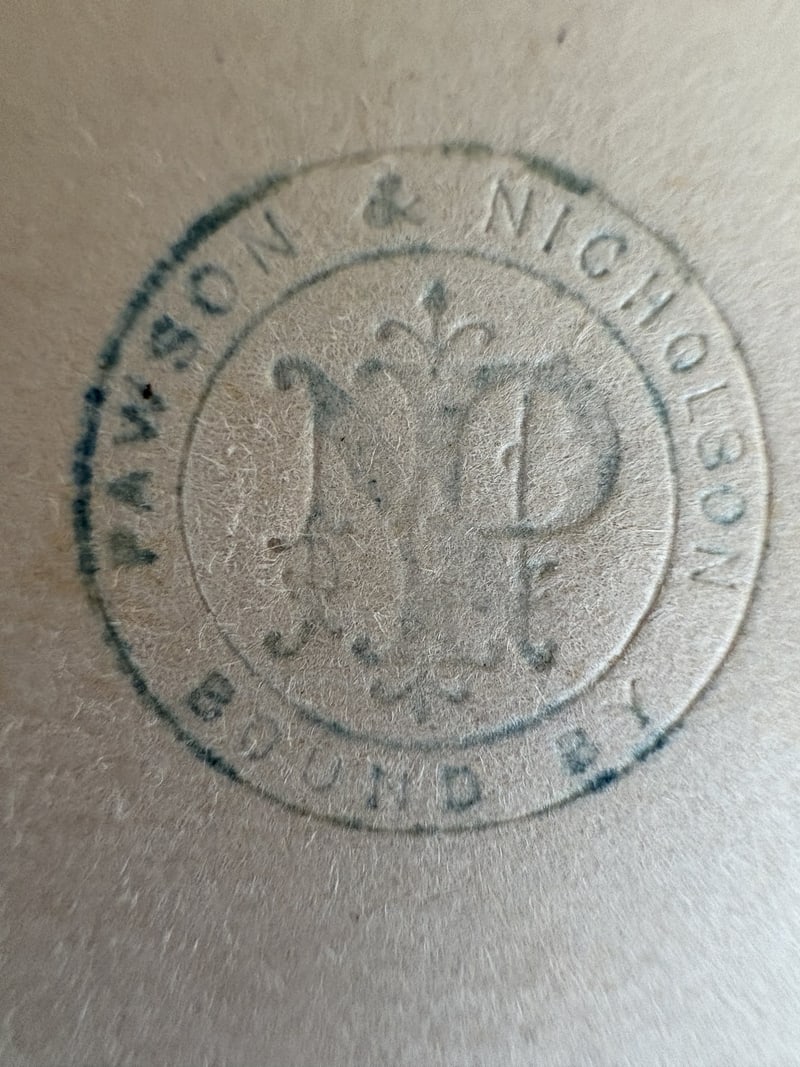
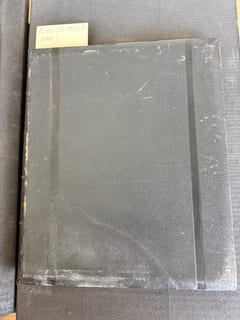
Temple University Libraries, Special Collections Research Center
Philadelphia, Pennsylvania
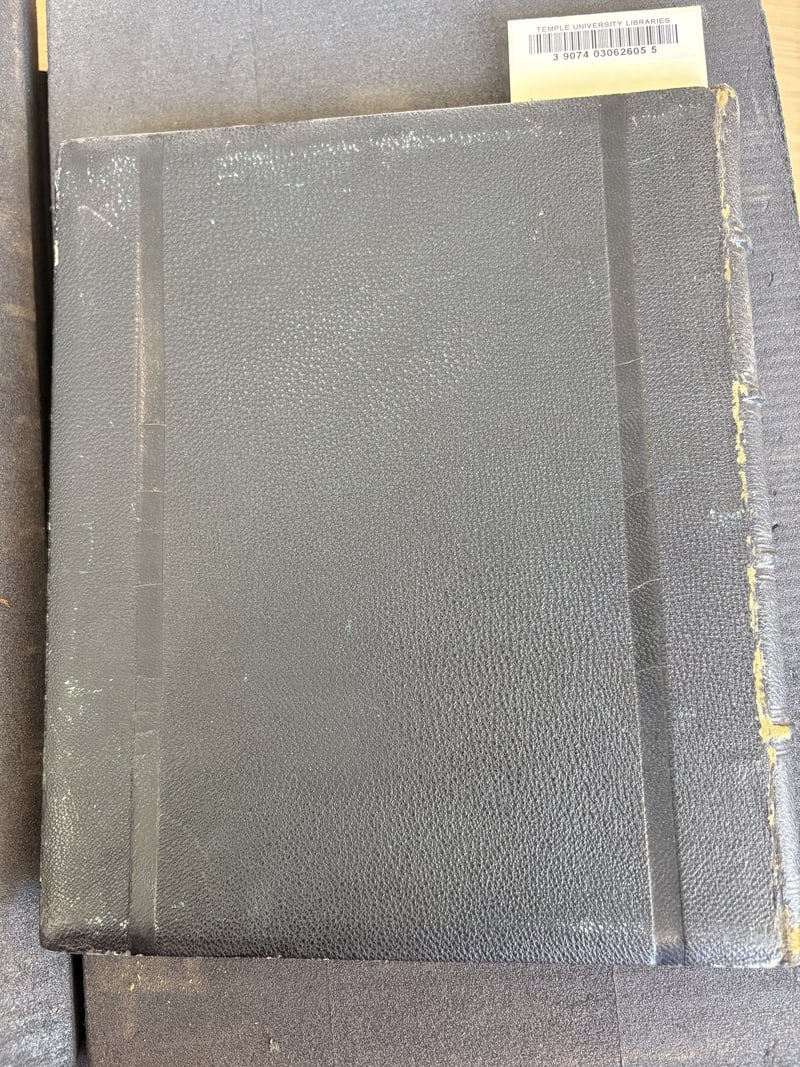
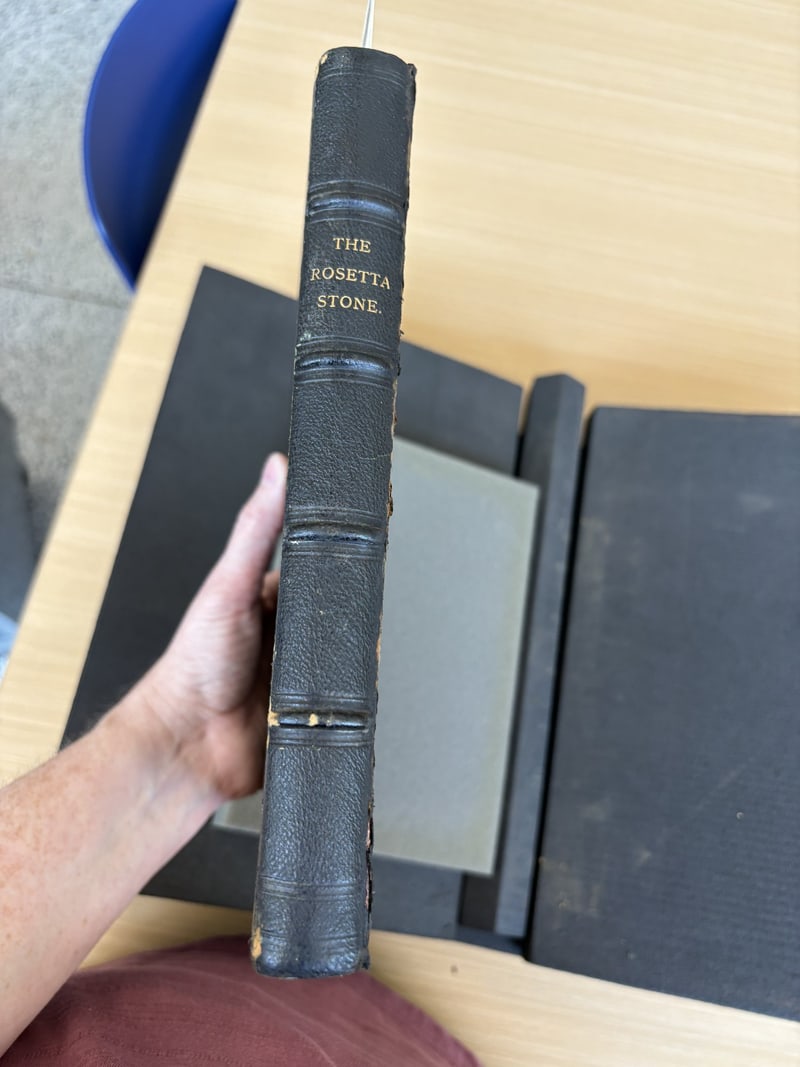
Later plain black cloth or case binding with the spine lettered THE ROSETTA STONE. No original publisher board is visible in the supplied photographs.
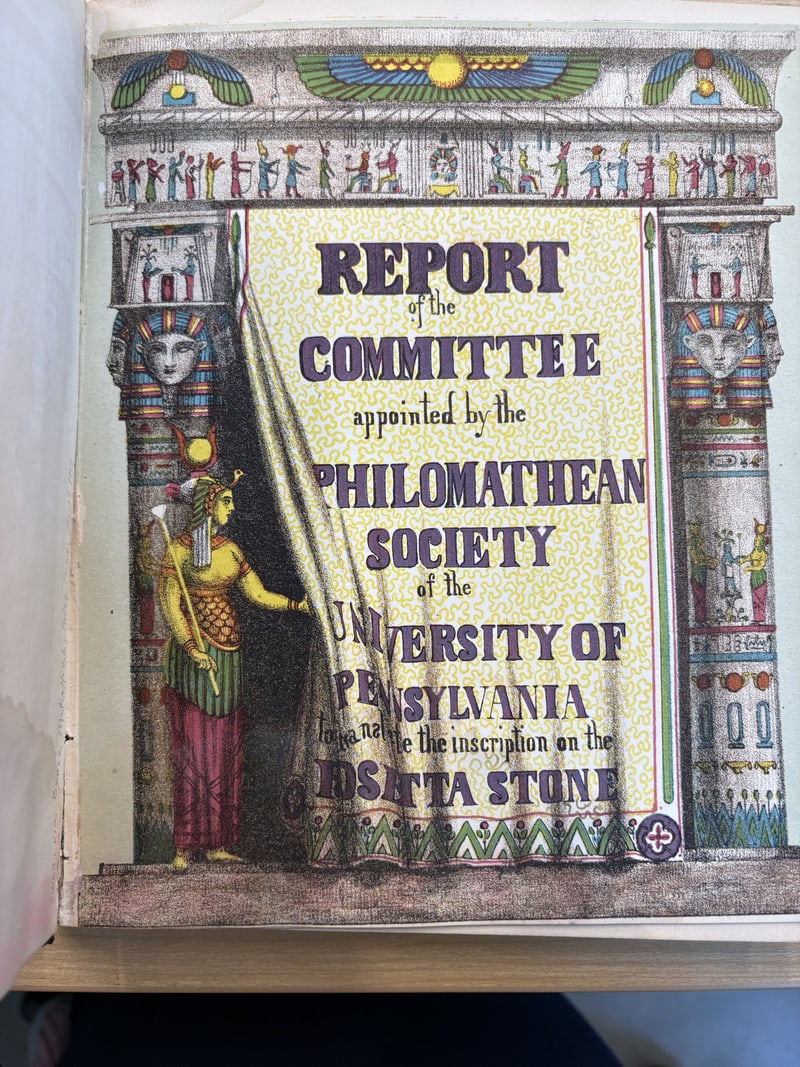
The illustrated undated title and physical features identify the first edition.
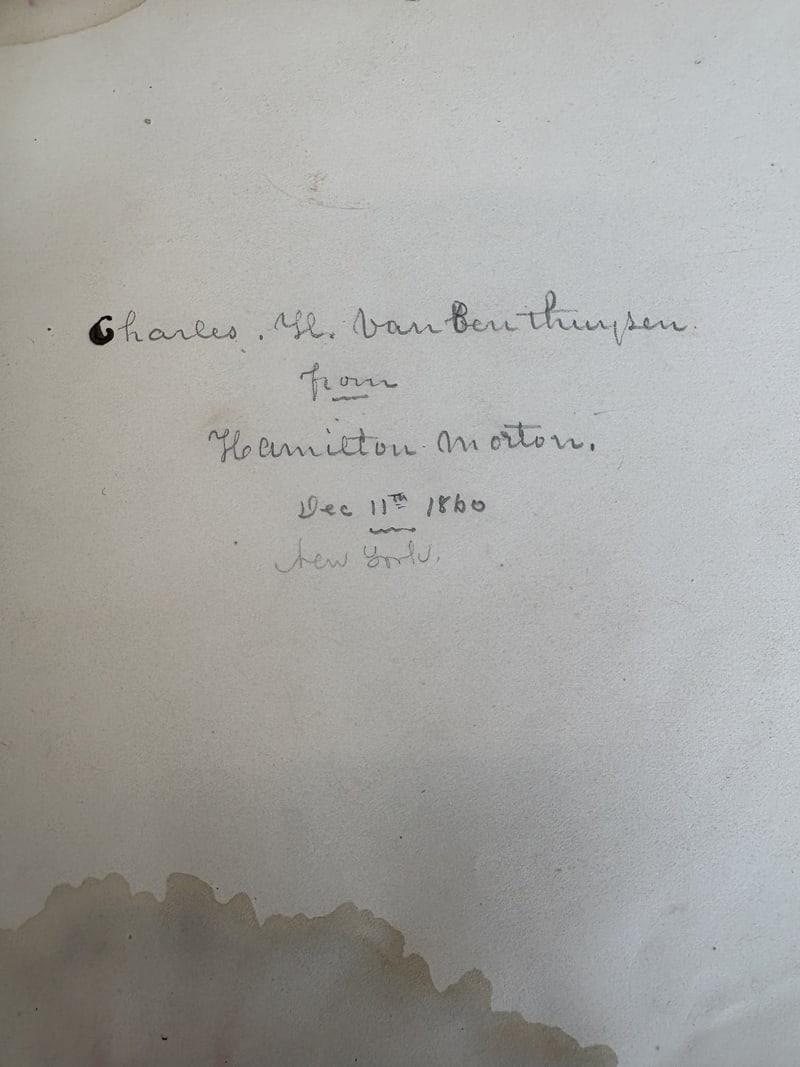
The front matter is inscribed:
“Charles Wm. Van Benthuysen.
from
Hamilton Morton.
Dec. 11th 1860
New York.”
The presenter is Alexander Hamilton Morton, the author’s paternal uncle. The recipient’s full identity remains unresolved.
Alexander Hamilton “Hamilton” Morton → Charles Wm. Van Benthuysen, December 11, 1860, New York → unresolved gap → Temple University Libraries
Temple University Libraries correspondence and copy photographs; National Academy of Sciences memoir of Henry Morton; Morton family records; contemporary account of the 1854 Grand Excursion.
Newberry Library
Chicago, Illinois
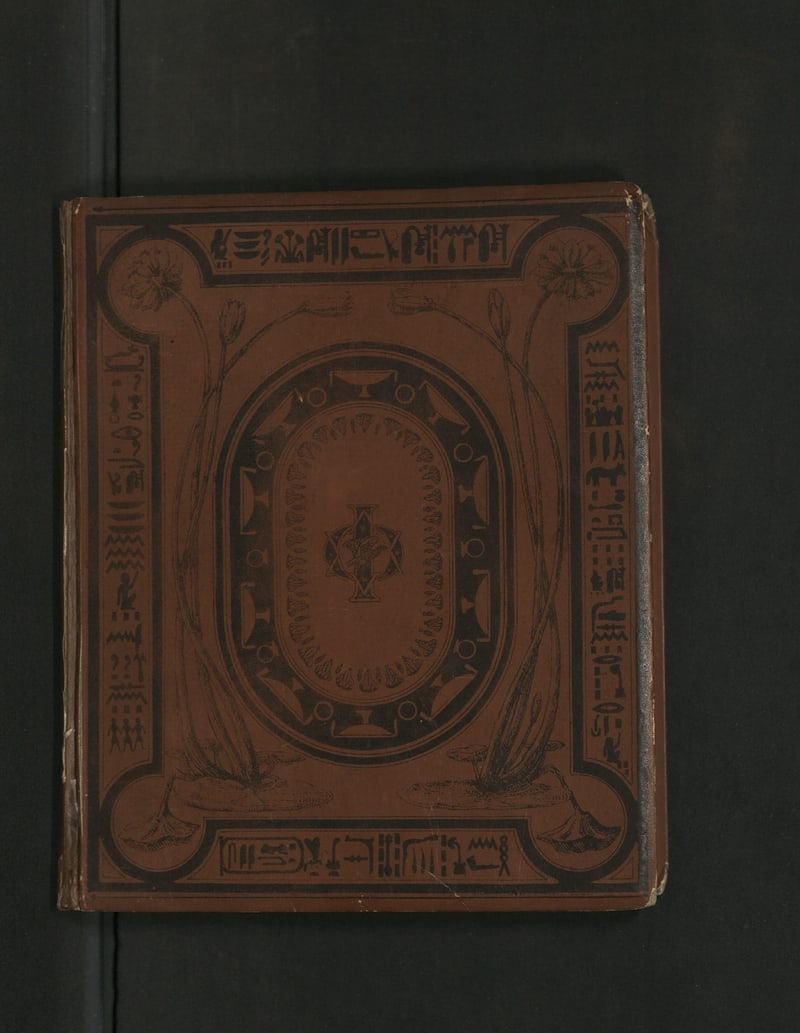
Original orange paper-covered boards printed in black; the dark scan limits assessment of the shade.
The chromolithographic title has no “SECOND EDITION” statement, confirming the 1858 first edition.
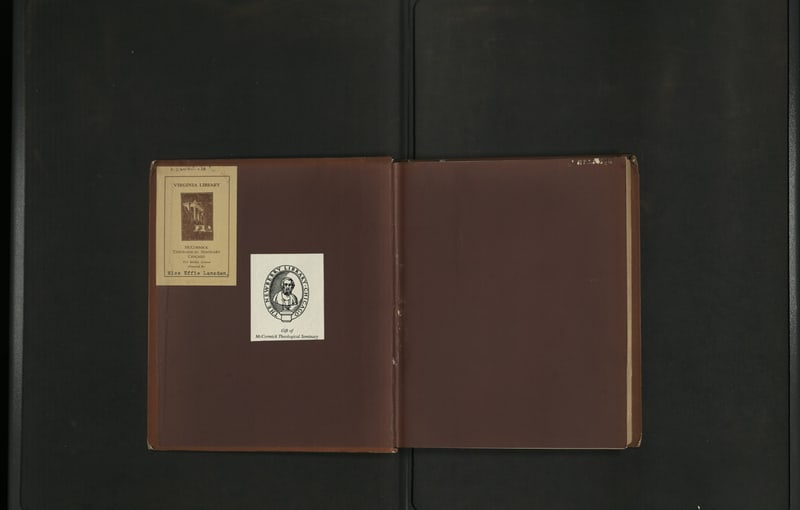
Bookplates record “Virginia Library / Donated By Miss Effie Lansden” and the Newberry Library's “Gift of McCormick Theological Seminary.” A 2008 Newberry gift note appears on the dedication leaf.
Newberry staff examined every page and reported no marginalia, annotations, personal inscriptions, stamps, or other ownership marks beyond the documented bookplates and gift notation.
Miss Effie Lansden → McCormick Theological Seminary, Virginia Library → Newberry Library, gift of 2008
Newberry Library catalog 999668848805867, correspondence, page-by-page examination, and copy photographs; Cairo Public Library history and contemporary library records for Effie A. Lansden.
Newberry’s catalog cites “Rosetta Stone Census, C064” and notes: “Newberry copy is the first edition. Consult The Rosetta Stone Census.”
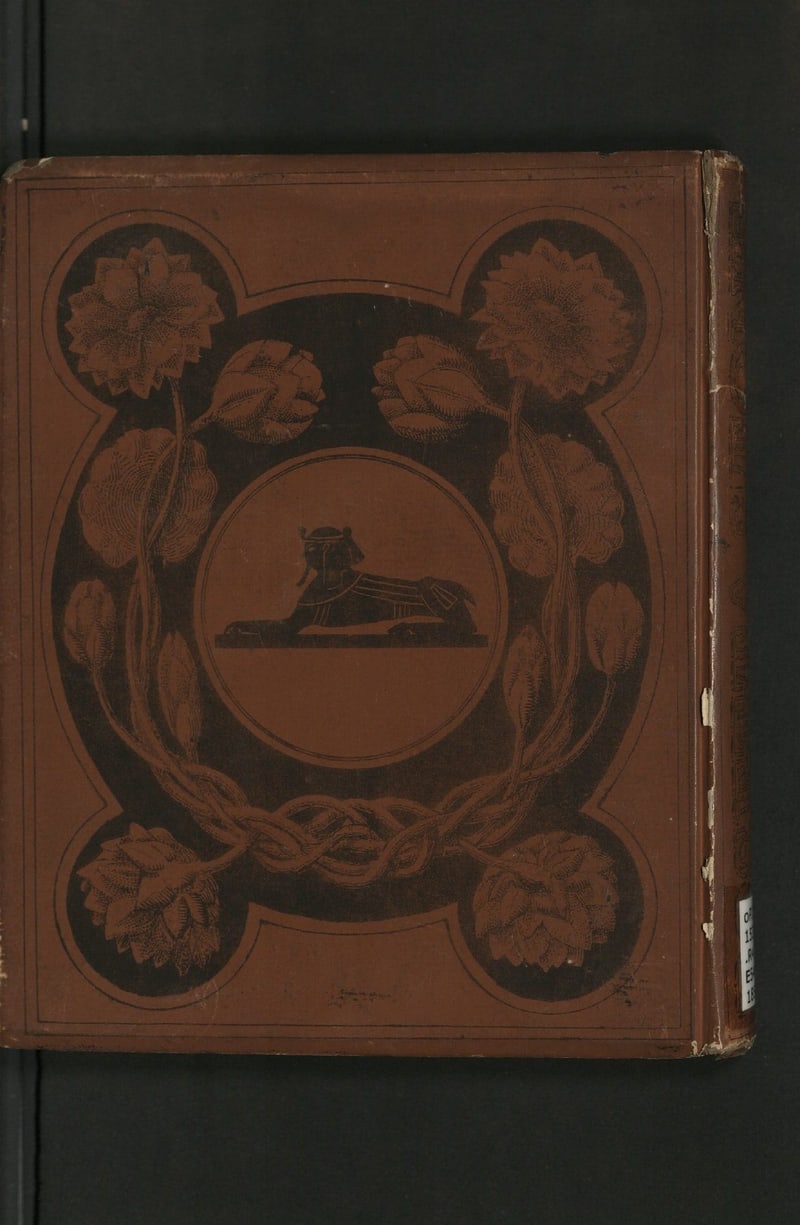
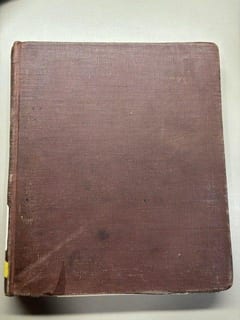
Enoch Pratt Free Library, Special Collections Department
Baltimore, Maryland
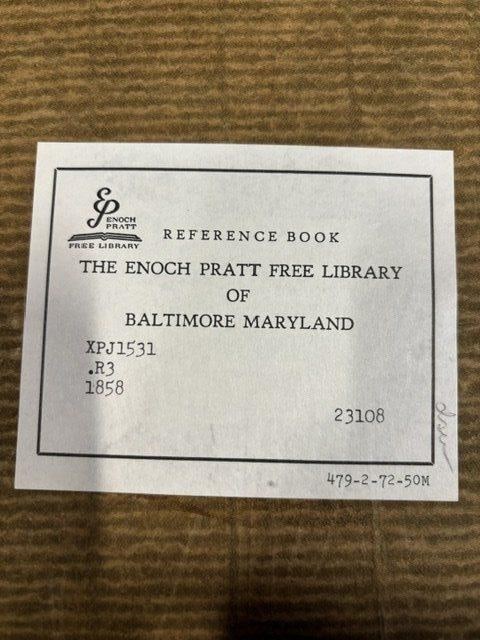
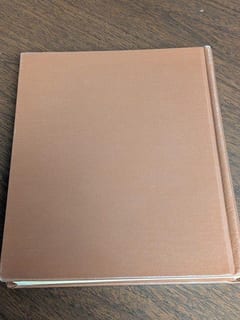
Later plain brown cloth institutional binding with gilt spine lettering and library labels. Enoch Pratt staff identified it as the library's standard or “stock” rare-book rebinding rather than an original publisher binding.
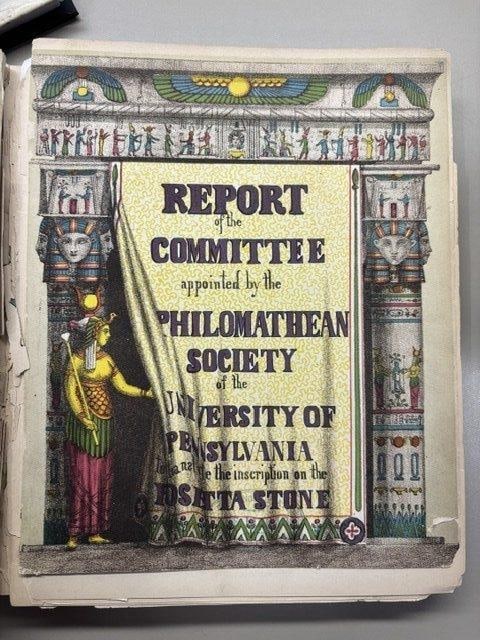
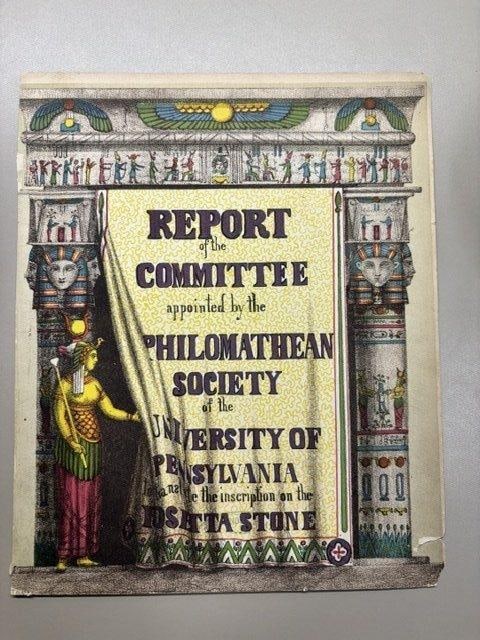
The illuminated title page carries no “Second Edition” statement, confirming the 1858 first edition. The library catalog presently dates the record 1859.
Repository staff report brittle, deteriorating paper; several leaves detached from the spine; cut pages; and the possibility that some leaves may be missing. The photographs show the title leaf fully detached. The condition and collation await fuller examination.
The catalog reports a second copy that has not been physically located.
The library plate records institutional ownership, shelfmark, and accession number. Earlier ownership and other internal marks are unrecorded.
Unrecorded earlier ownership → Enoch Pratt Free Library, accession 23108 → later Enoch Pratt institutional rebinding
Enoch Pratt Free Library catalog record 511206; shelf check, correspondence with Enoch Pratt Free Library staff, and six copy-specific photographs. The photographs document the later institutional binding, spine label, reference-book plate, shelfmark, accession number, and illuminated first-edition title page.
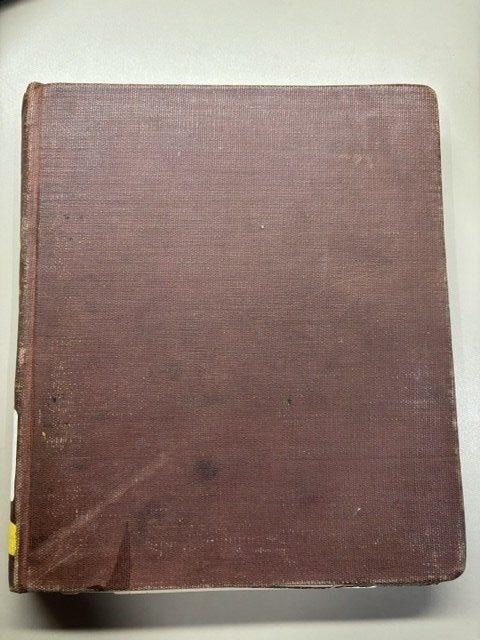
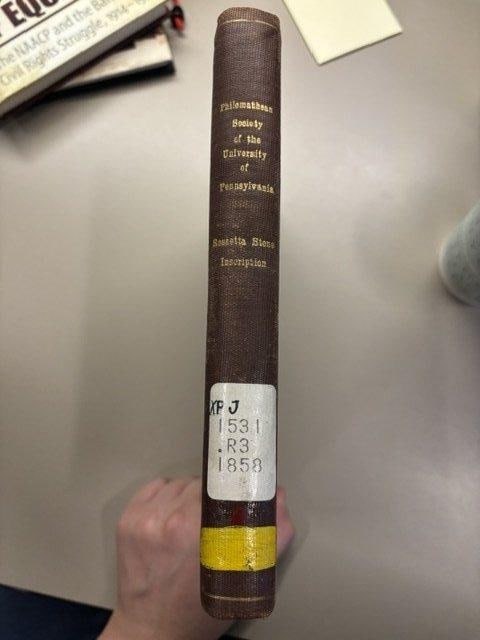
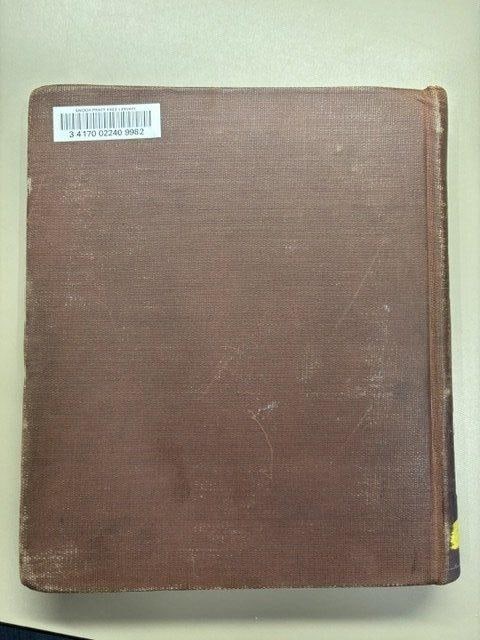
Shippensburg University, Ezra Lehman Memorial Library
Shippensburg, Pennsylvania
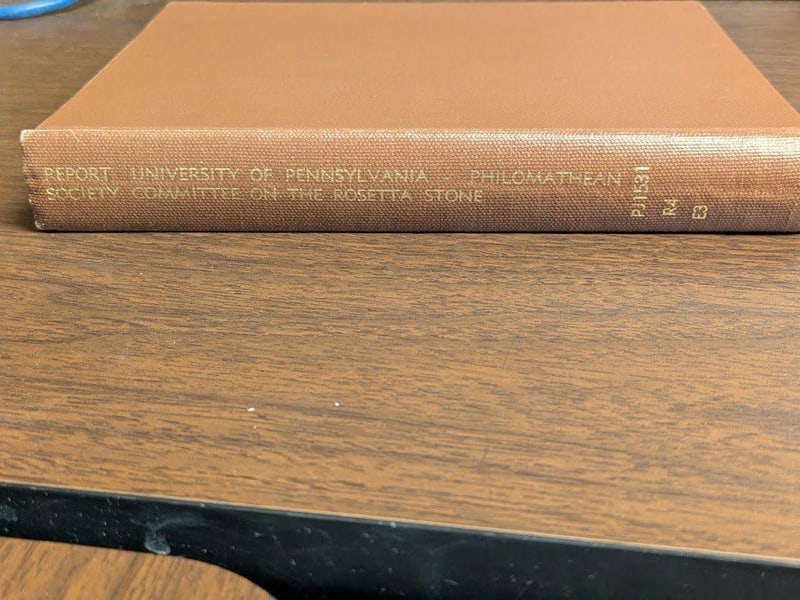
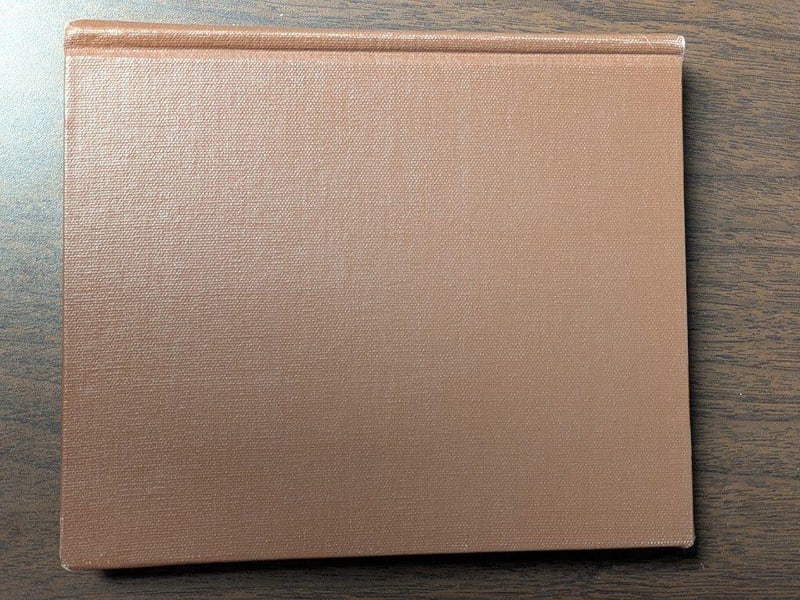
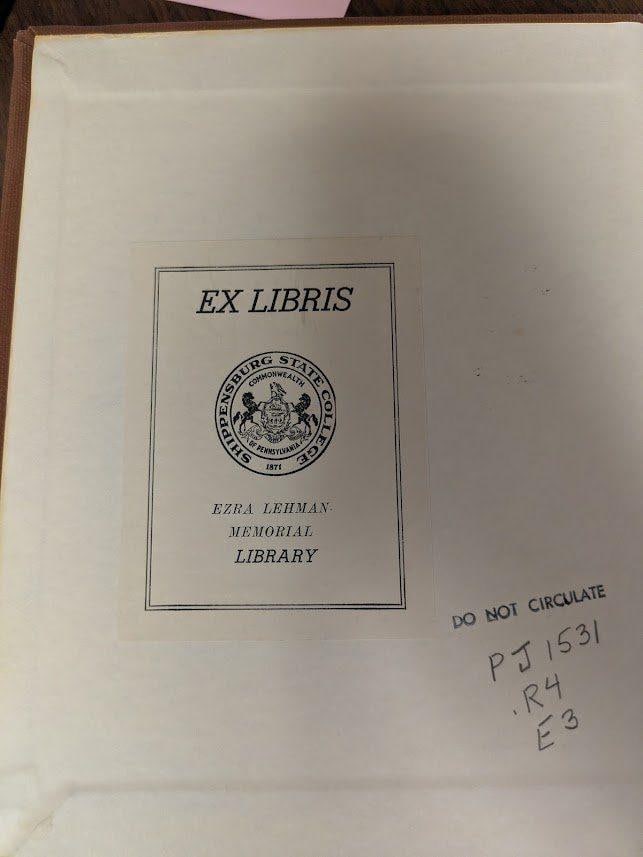
PJ1531 .R4 E3 ↗, visible on the front pastedown and spine.
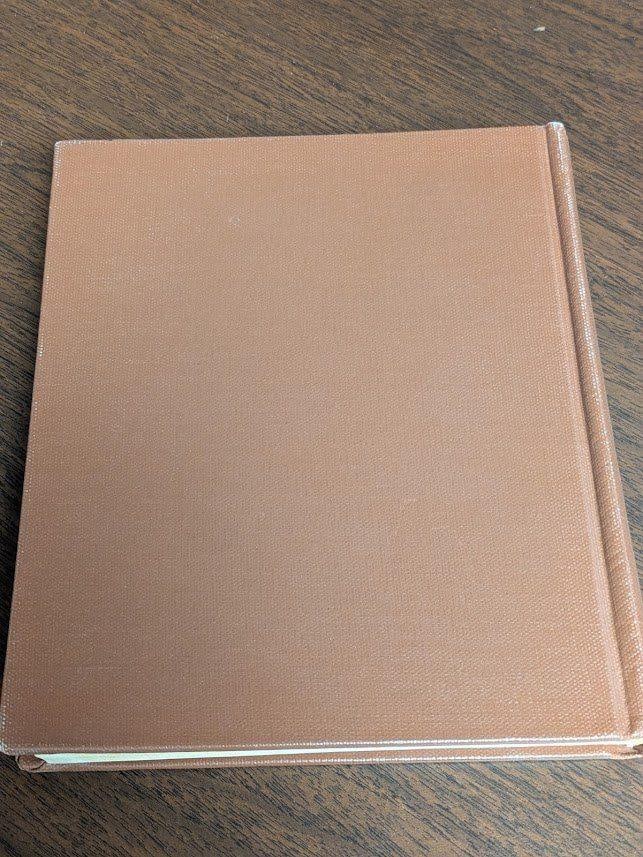
Later tan cloth institutional library binding with gilt spine lettering. Shippensburg staff identified it as a twentieth-century library binding rather than the original publisher binding.
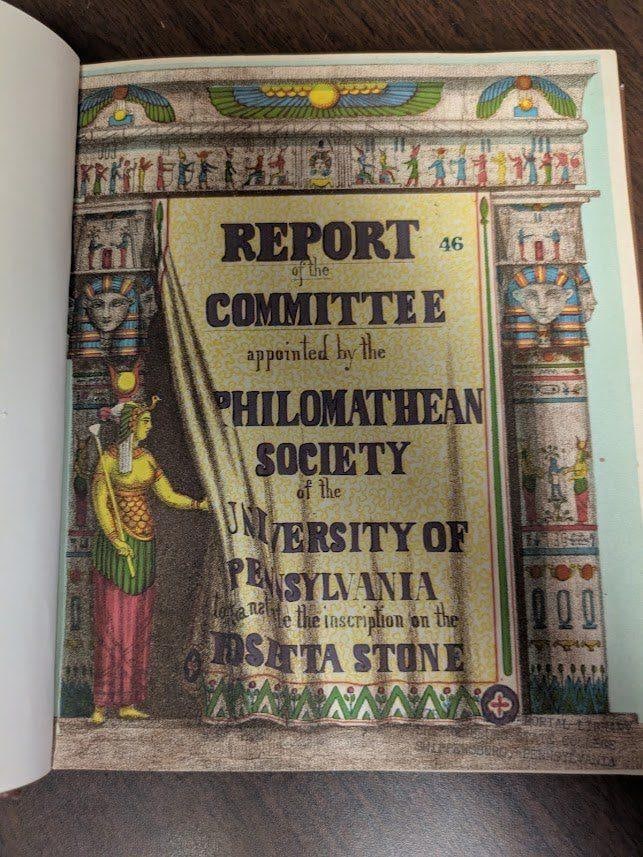
The illuminated title page has no “Second Edition” statement. Repository examination and the physical evidence confirm the 1858 first edition.
An Ezra Lehman Memorial Library bookplate bears the former name “Shippensburg State College,” used before university status was attained in 1983.
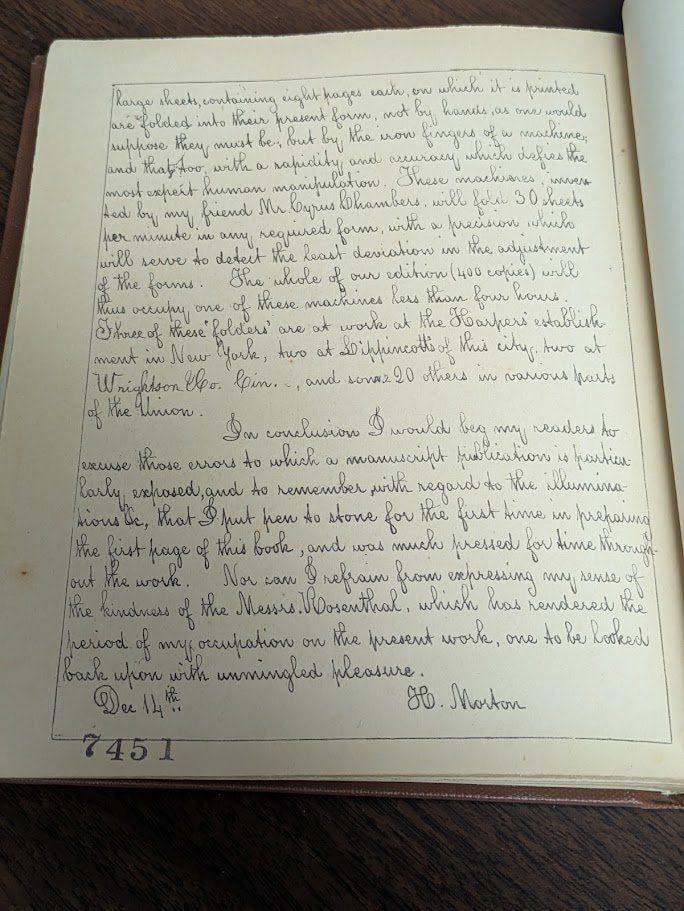
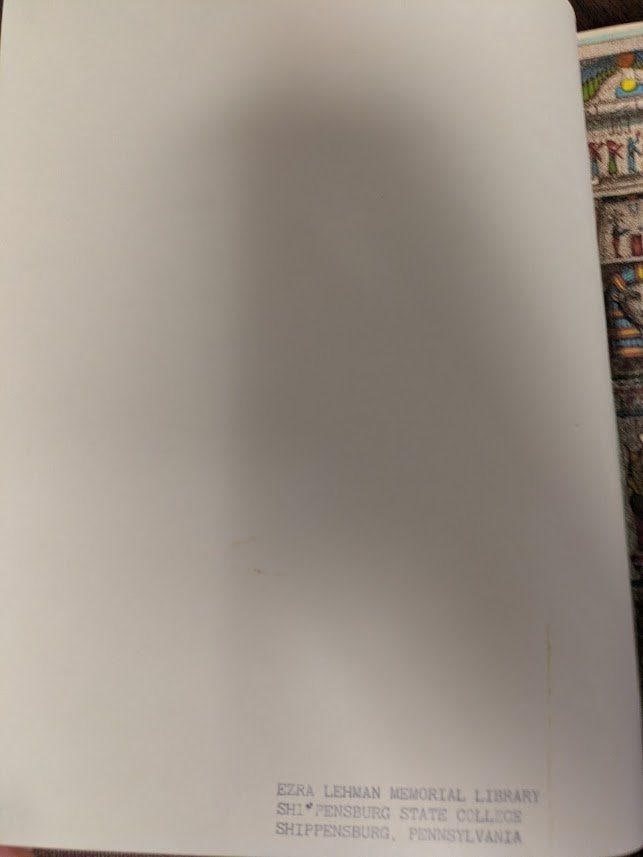
The illuminated title page bears the number “46” in blue, either stamped or written. The final printed page bears the stamped number “7451.” Their original functions have not yet been established.
The electronic system records a receiving date of December 19, 1997, but repository staff believe that date probably reflects migration into the electronic catalog. A date of September 25, 1970 appears in the MARC 049 field where an accession number would ordinarily be entered. That date is consistent with the Shippensburg State College bookplate, but the original acquisition source is not documented.
Unrecorded earlier ownership → Ezra Lehman Memorial Library, Shippensburg State College, documented by the institutional bookplate and 1970 catalog-field date → Shippensburg University
The library’s RG-013 archives may clarify the unresolved numbers and acquisition; those records have not been examined for this copy.
Shippensburg University repository correspondence, and seven copy-specific photographs. The correspondence and photographs document the first-edition title page, later library binding, shelfmark, institutional bookplate, copy-specific numbers, and catalog dates.
East Stroudsburg University, Kemp Library, Archives and Special Collections
East Stroudsburg, Pennsylvania
Original brown publisher-issued boards with gold decoration. The boards are heavily worn, the spine has been repaired with tape, and a number of leaves are loose or detached.
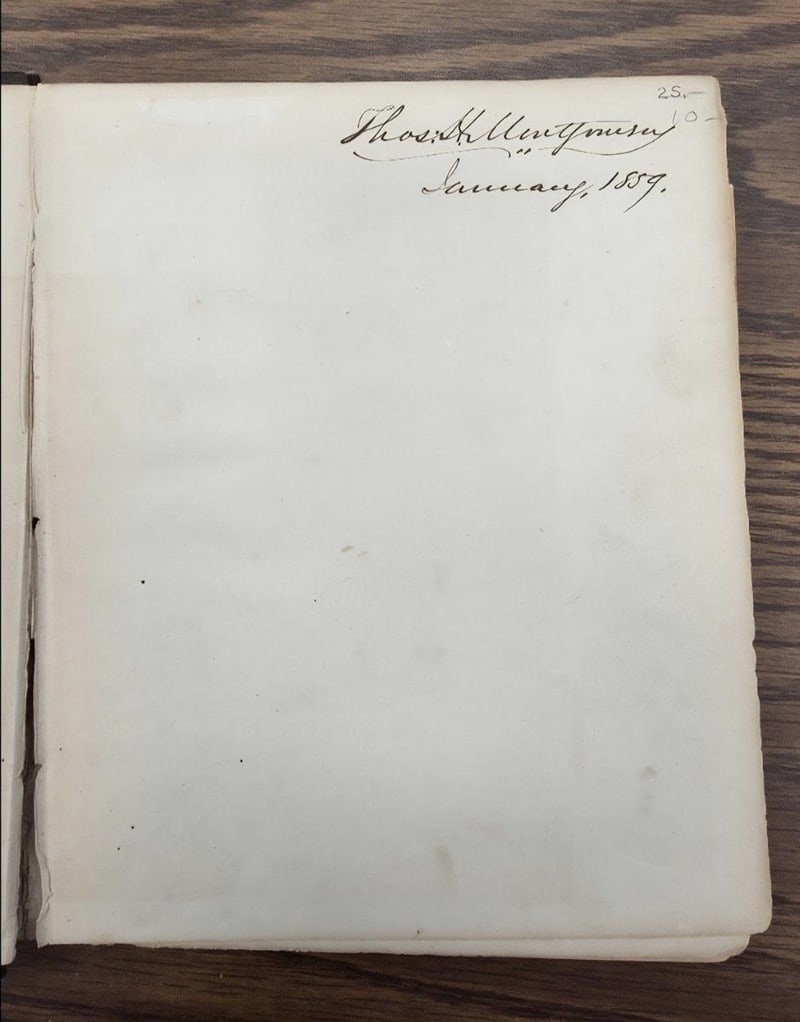
The undated illuminated title page, absence of any “Second Edition” statement, and original brown-and-gold publisher binding identify the volume as the 1858 first edition. The January 1859 ownership date does not conflict with that identification.
“Thos. H. Montgomery / January 1859.”
The inscription identifies Thomas Harrison Montgomery. His source for the volume and its later route to East Stroudsburg are unrecorded.
Thomas H. Montgomery, January 1859 → unresolved gap → East Stroudsburg University
Correspondence with East Stroudsburg University staff, and five copy-specific photographs.
Texas Tech University Libraries, Rare Books
Lubbock, Texas
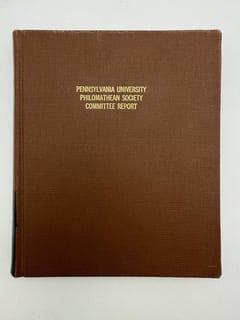
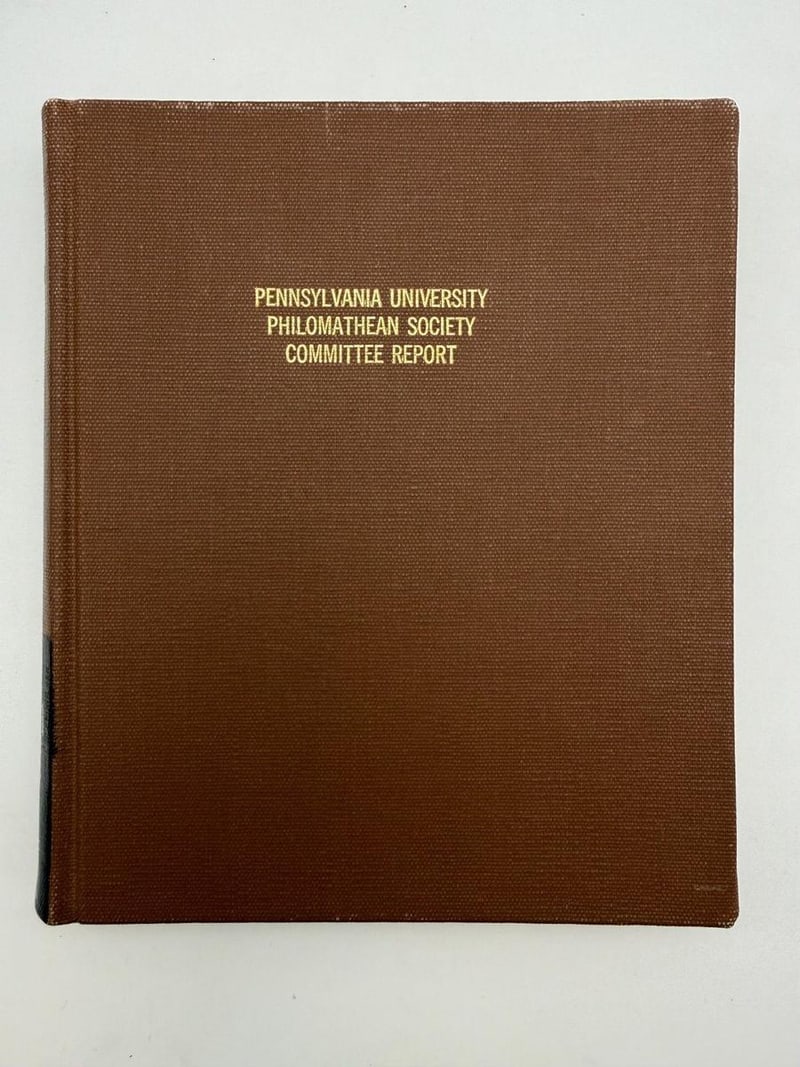
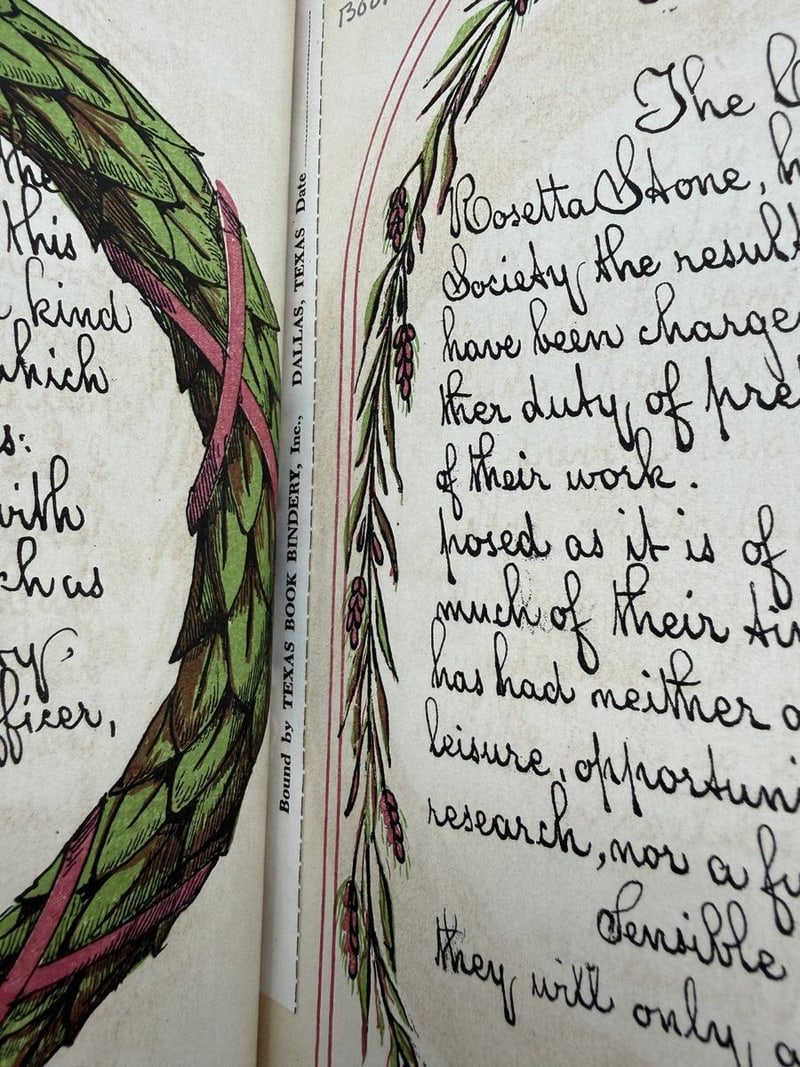
Later full brown buckram institutional binding with gilt title. A ticket identifies Texas Book Bindery, Inc., Dallas, as the binder. This is not an original brown-and-gold publisher binding.
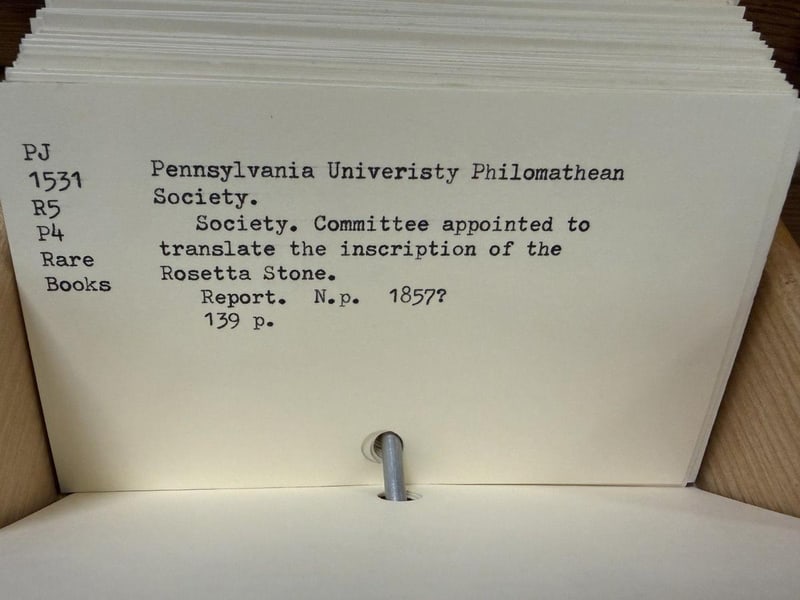
The illustrated contents and repository examination identify the first edition; the card catalog’s ‘1857?’ date conflicts with the book.
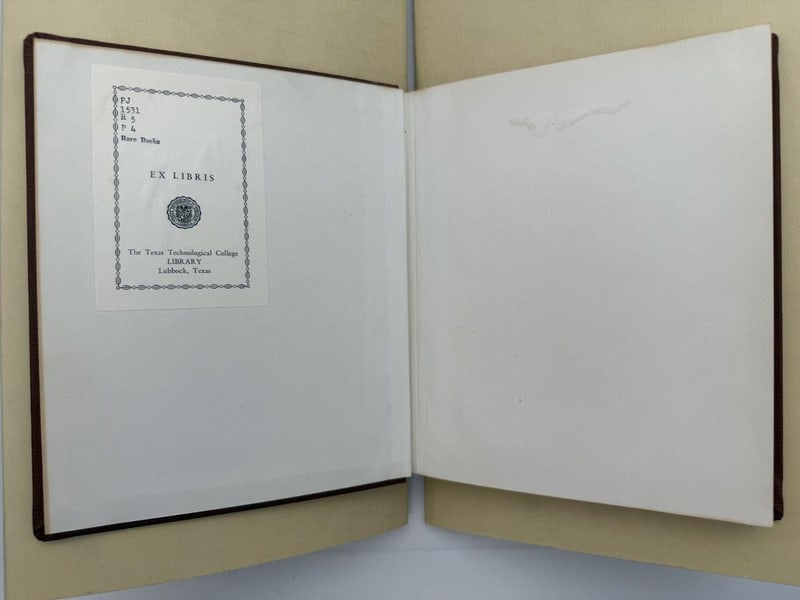
The front pastedown bears the bookplate of the Texas Technological College Library, the institution’s name before it became Texas Tech University in 1969. The card catalog repeats the same shelfmark and records 139 pages.
No personal presentation inscription, bookplate, or earlier private owner identified in the supplied photographs.
Unrecorded earlier ownership → Texas Technological College Library → later rebinding by Texas Book Bindery, Dallas → Texas Tech University Libraries
The donor and acquisition date are unrecorded.
Texas Tech University Libraries repository correspondence and ten copy-specific photographs. Six photographs are reproduced here, documenting the later binding, Texas Technological College bookplate and shelfmark, illustrated contents, Texas Book Bindery ticket, and legacy card-catalog entry.
Smith College Special Collections, Mortimer Rare Book Collection
Northampton, Massachusetts
Original cream paper-covered publisher-issued boards with black decoration. The original spine covering is substantially lost, although a small decorated fragment survives. The volume is housed in a custom cloth enclosure.
The undated illuminated title page has no “Second Edition” statement, and the original cream-and-black decorated boards identify the volume as the 1858 first edition.
“Professor Wm. S. Tyler / with the best / Regards of / his friend & servt / Horace Binney, Jr / New-Year’s Day / 1859.” The presenter has been independently authenticated as Horace Binney Jr. through comparison with contemporary manuscript material at Amherst College.
The presenter is independently identified as Horace Binney Jr. by comparison with contemporary Amherst manuscripts.
The Smith bookplate names Professor Henry Tyler, identified by accession records as Henry Mather Tyler, the recipient’s son. Acquired November 5, 1928, accession 158,218; former call number 493.117-P384. The father-to-son transfer is unrecorded.
An English-and-French transcript of Humboldt’s March 12, 1859 letter survives with a separate German manuscript dated February 4, 1841, signed ‘A V Humboldt.’ The latter is a probable autograph, without formal authentication. Its Berlin wrapper addresses Professor von der Hagen at Louisenstrasse No. 23, matching Friedrich Heinrich von der Hagen in the 1841 directory. Pressed botanical specimens survive.
Alexander von Humboldt [probable manuscript note, February 4, 1841] → Friedrich Heinrich von der Hagen [wrapper recipient, confirmed by exact 1841 Berlin address] → later insertion into this volume → Presenter signed "Horace Binney Jr.", New Year's Day 1859 → William Seymour Tyler → unresolved family transfer → Henry Mather Tyler → Smith College Library, November 5, 1928 → Smith College Special Collections
Smith College catalog, accession records, and copy photographs; Amherst William Seymour Tyler Papers; Smith Tyler House history; Clements Horace Binney Jr. Papers; Deutsche Biographie; Berlin address directory (1841).
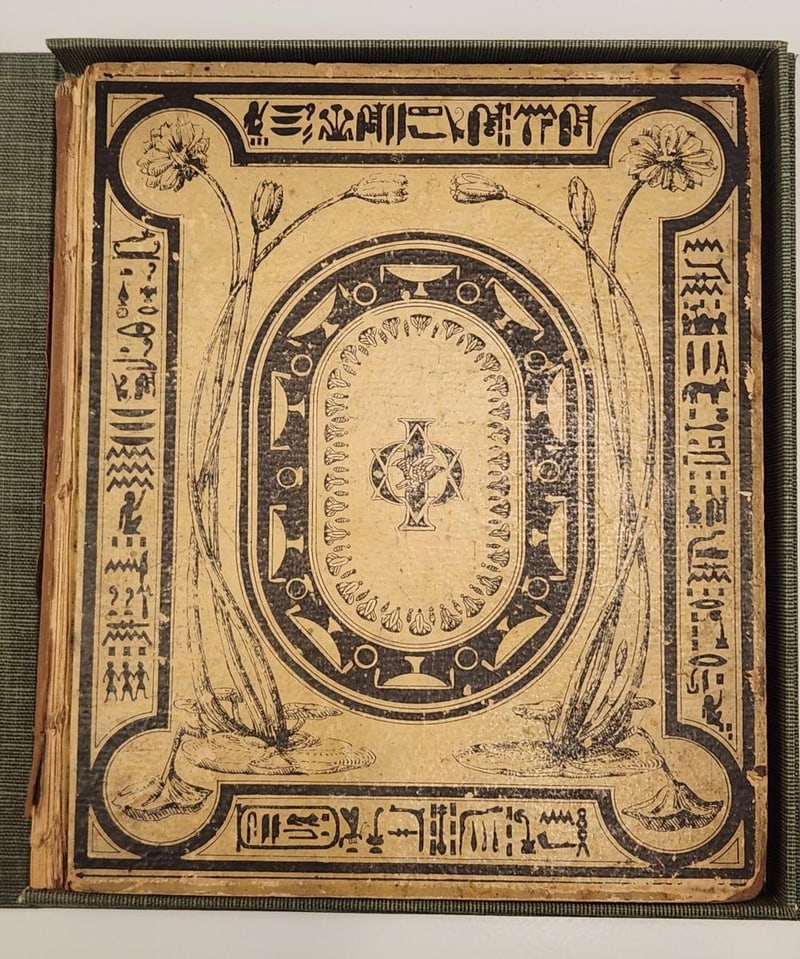
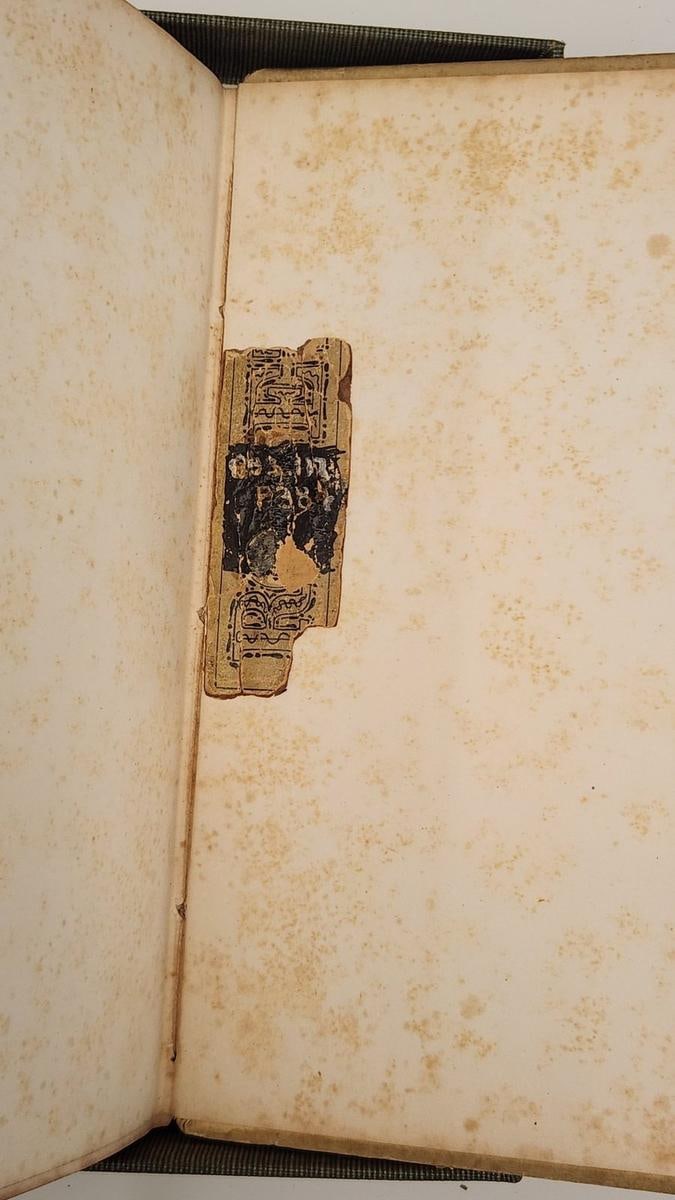
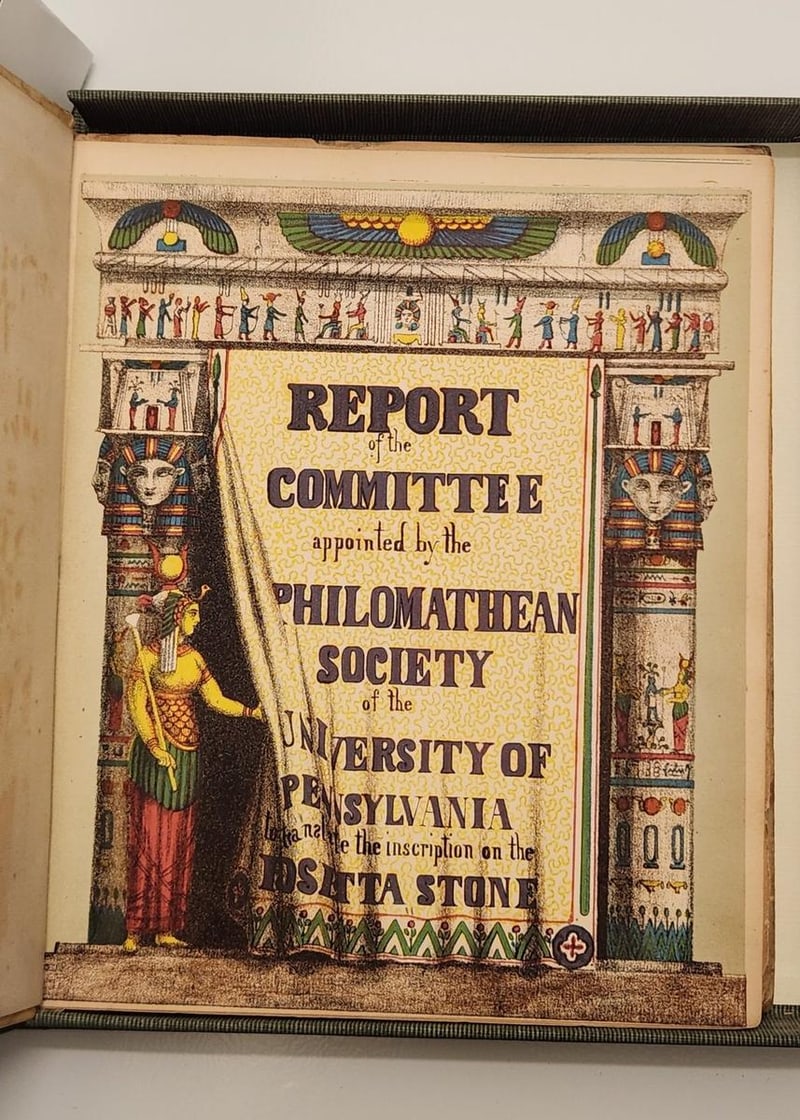
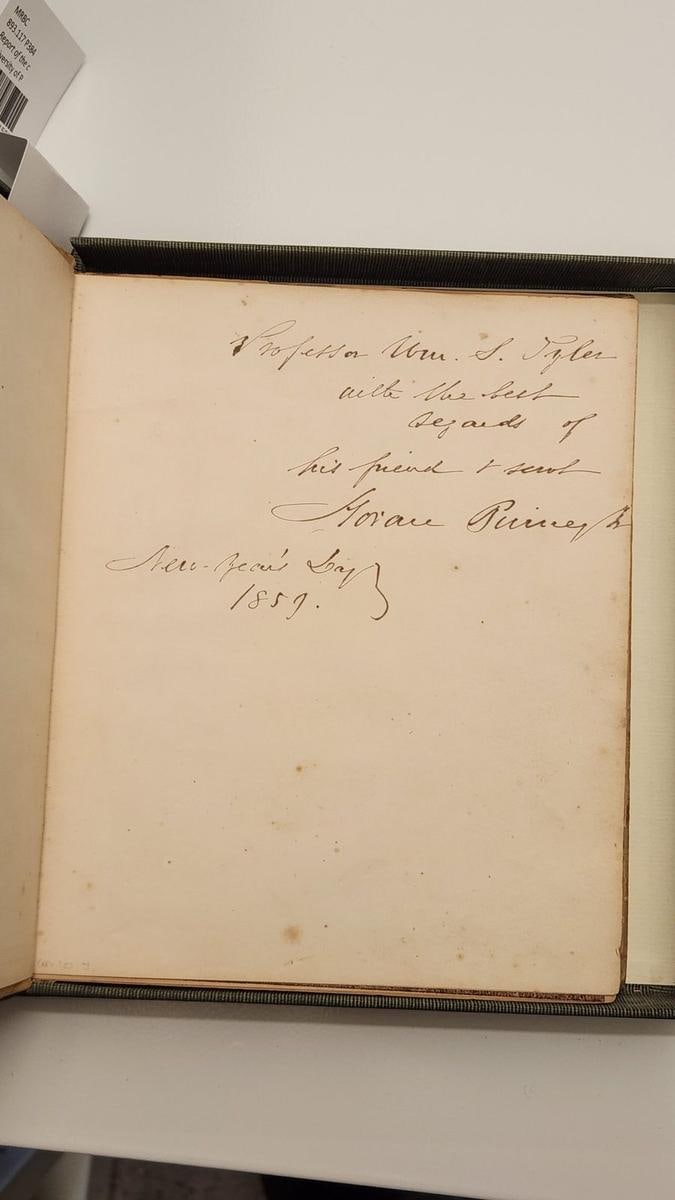
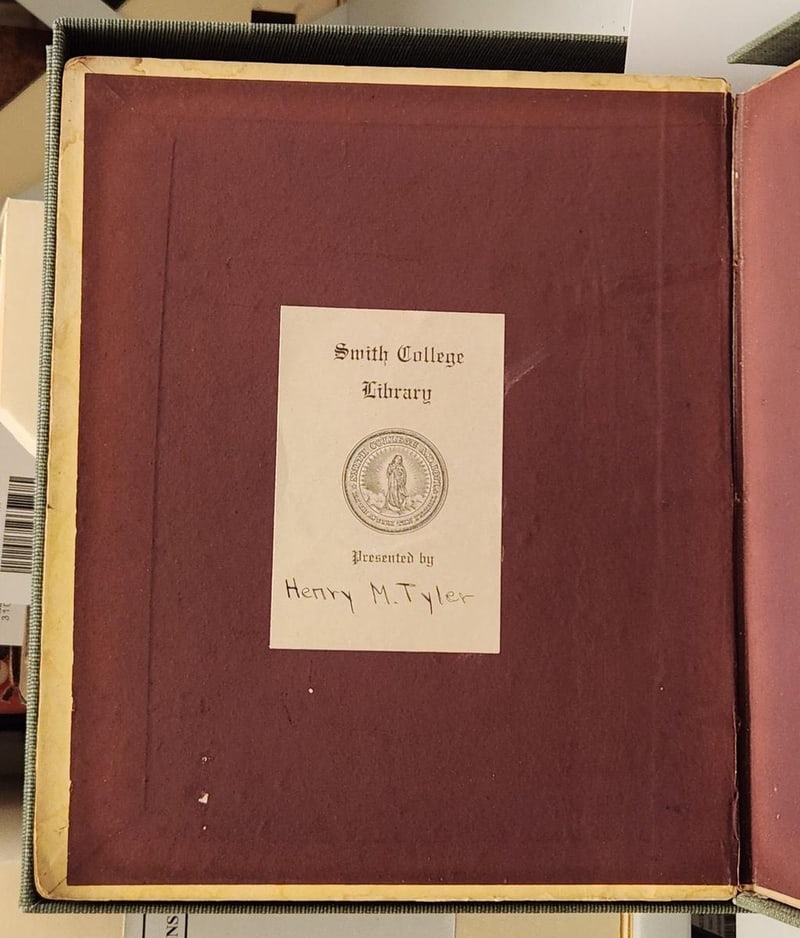
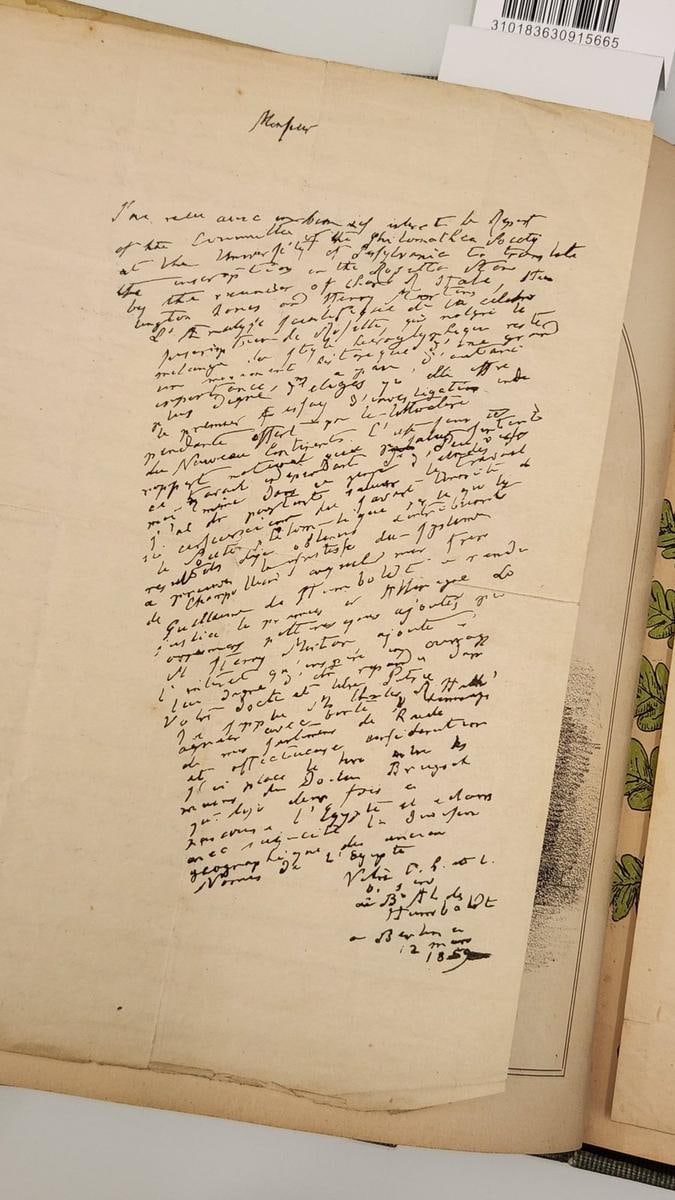
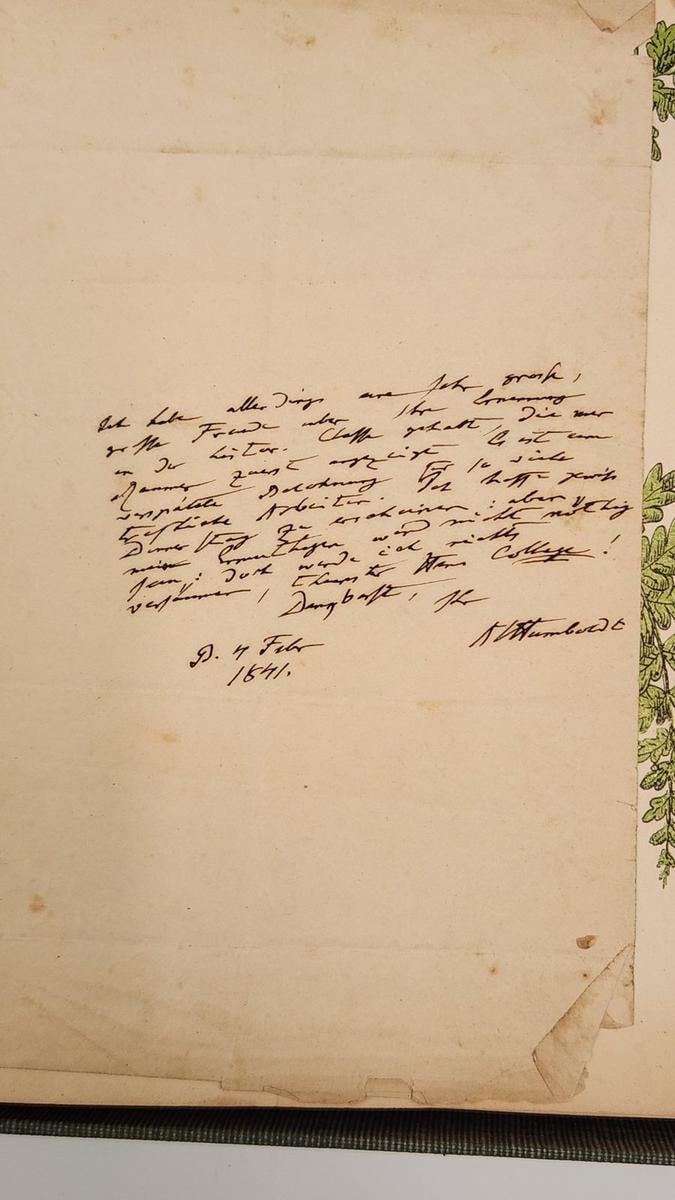
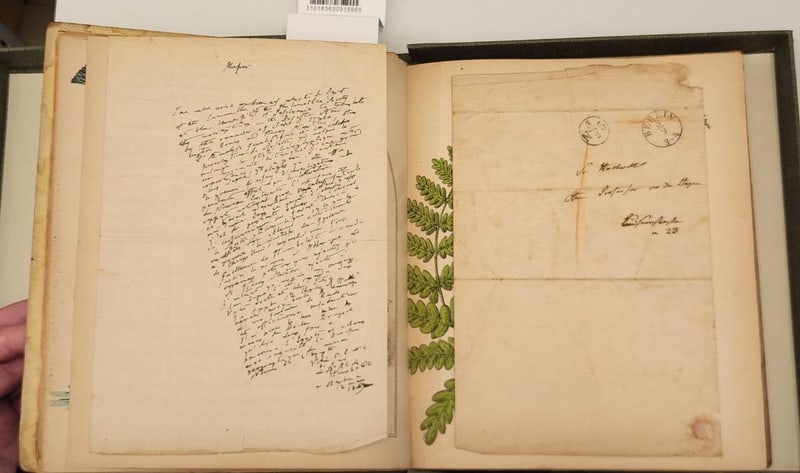
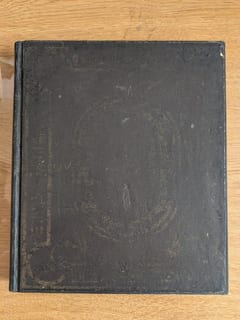
The Athenaeum of Philadelphia
Philadelphia, Pennsylvania
Original brown paper-covered publisher-issued boards with gold decoration, heavily rubbed and darkened, with the gold stamping now substantially faded. Rebacked in plain black cloth with new endpapers; the original boards were retained and laid back on.
The undated illuminated title page has no “Second Edition” statement. The retained brown-and-gold decorated publisher boards and 1859 family inscription confirm an 1858 first-edition copy.
“For my son Alexander / January 18th / ’59 / Germantown.”
An unidentified parent presented the volume “For my son Alexander” in Germantown on January 18, 1859. No surname appears. In October 1925, George Wharton Pepper wrote beneath the inscription that the copy had belonged to his stepfather, Ernest Zantzinger, and added: “I do not know who the ‘Alexander’ is whose name appears above.” The census preserves Pepper’s uncertainty. No documentary evidence yet identifies either Alexander or the presenting parent.
Charles J. Robertson acquired the volume from Joslin Hall Rare Books, 1998. The dealer’s description notes the worn original covers, faded gold, and later spine and endpapers. Robertson donated the volume to the Athenaeum in 2026.
Unidentified parent → “Alexander,” January 18, 1859 → unresolved gap → Ernest Zantzinger → George Wharton Pepper, documented October 1925 → unresolved gap → Joslin Hall Rare Books → Charles J. Robertson, March 10, 1998 → The Athenaeum of Philadelphia, 2026
Correspondence with The Athenaeum of Philadelphia staff, and six copy-specific photographs; acquired from Joslin Hall Rare Books, 1998; The Athenaeum of Philadelphia, Presidents of the Athenaeum; University of Pennsylvania Archives, George Wharton Pepper; University of Pennsylvania, General Alumni Catalogue (1922), Ernest Zantzinger; and Smithsonian American Art Museum, Charles J. Robertson curatorial biography.
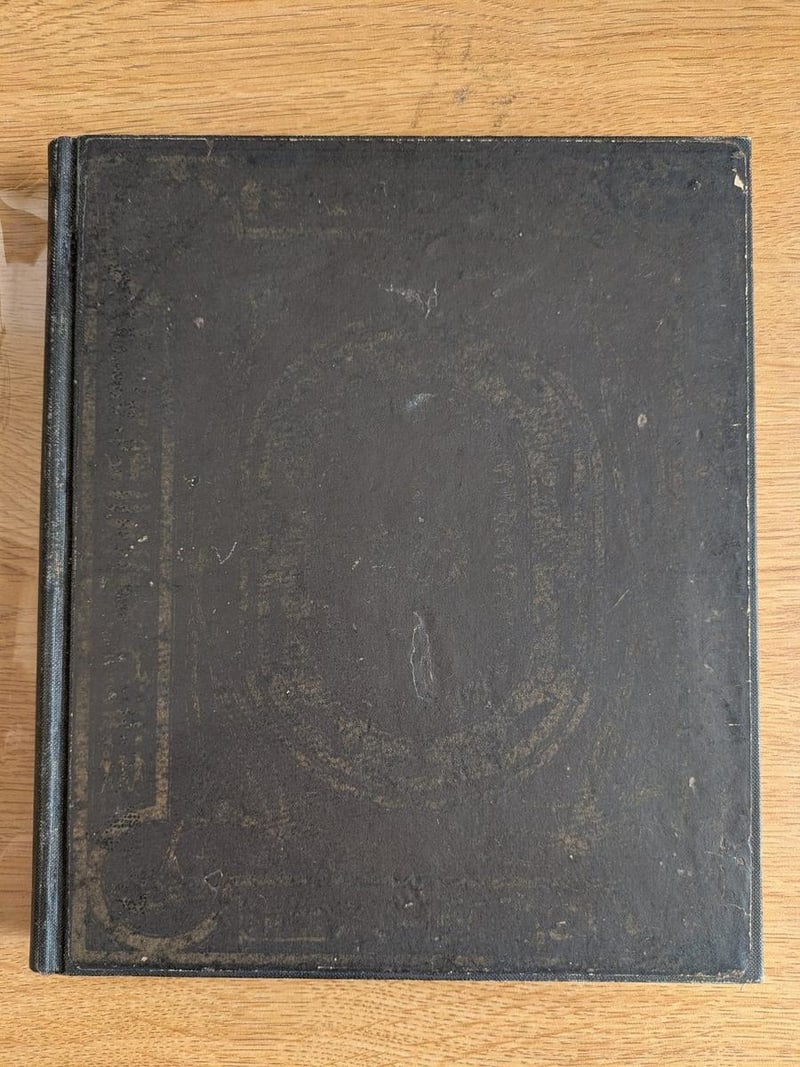
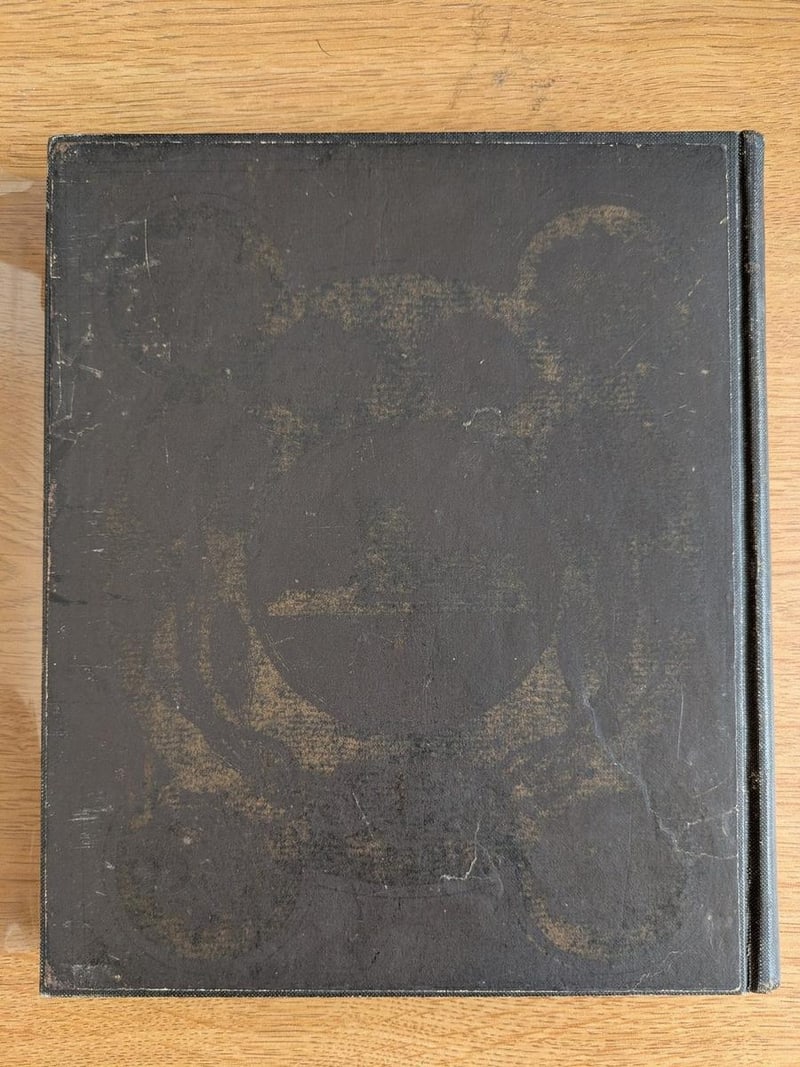
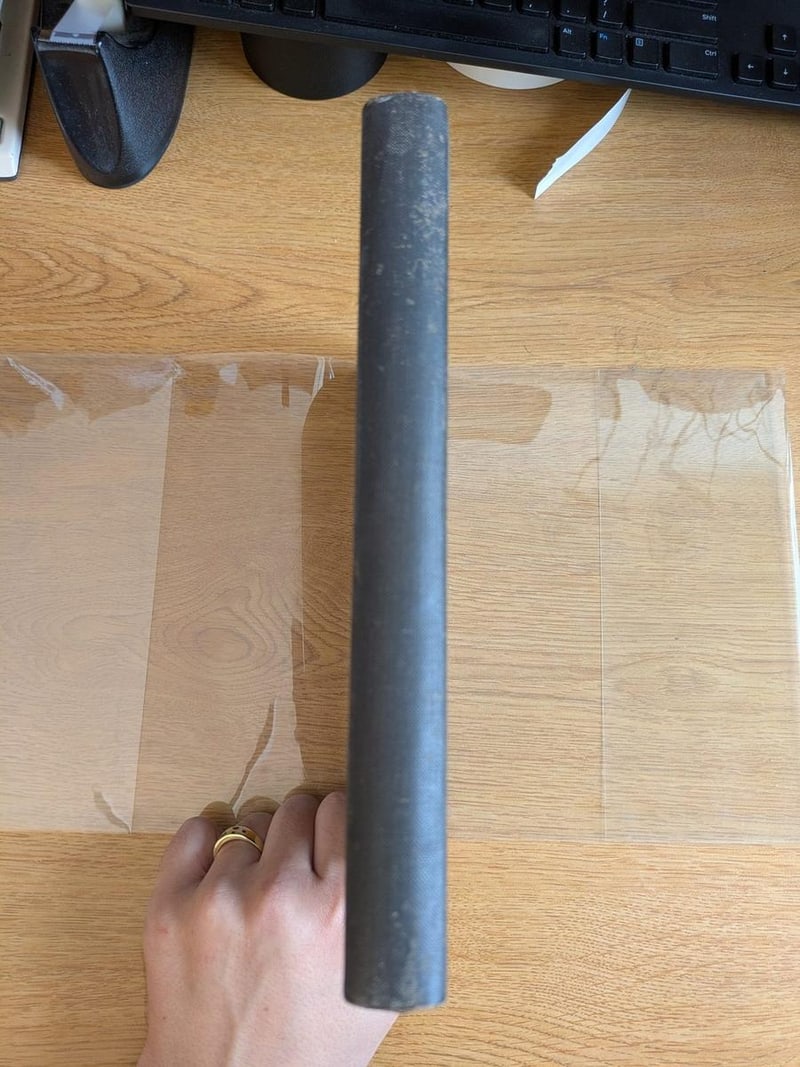
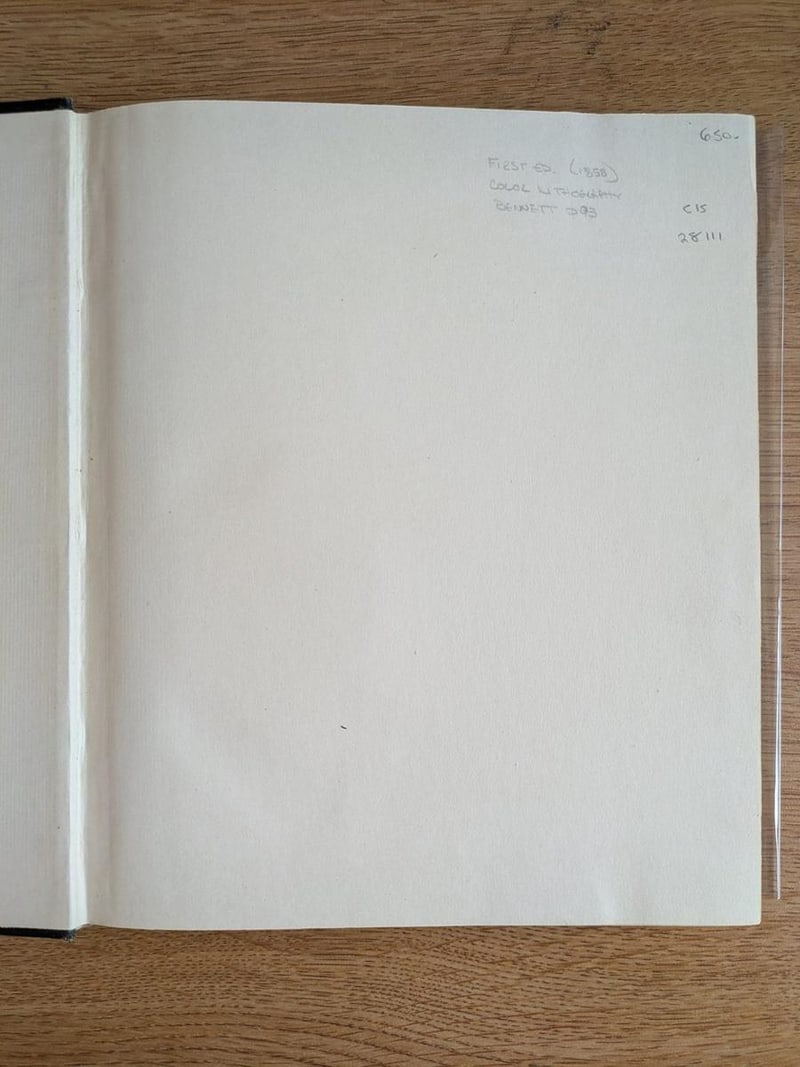
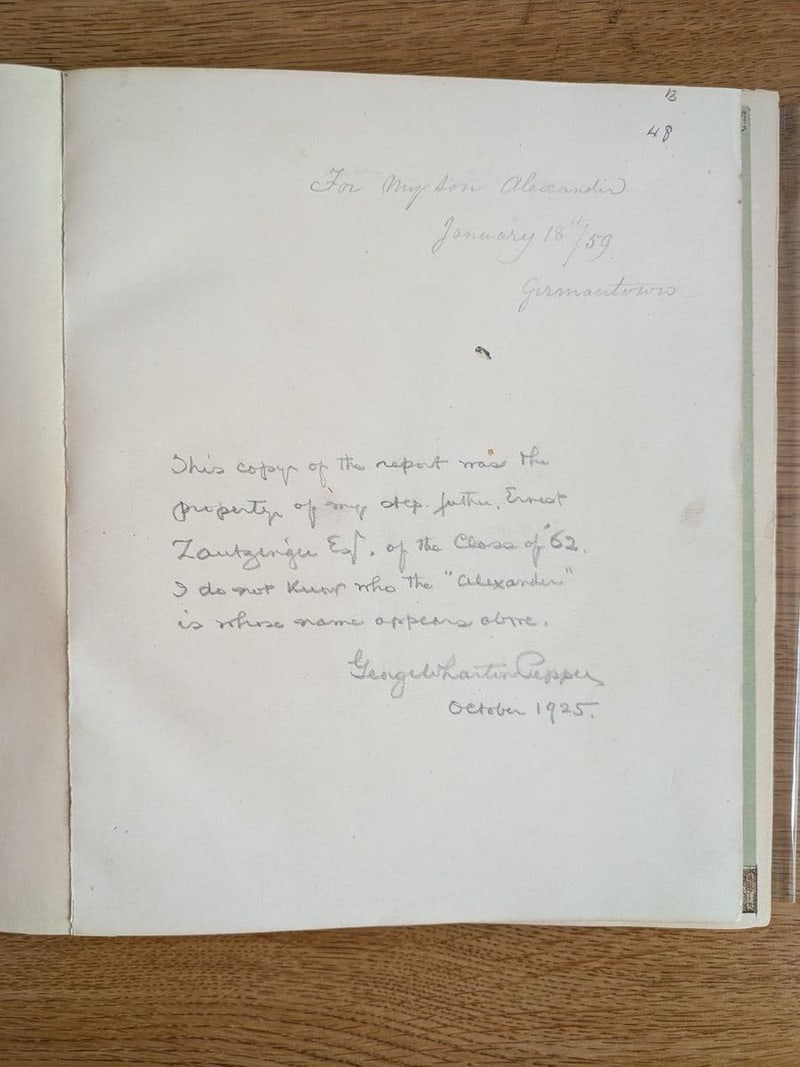
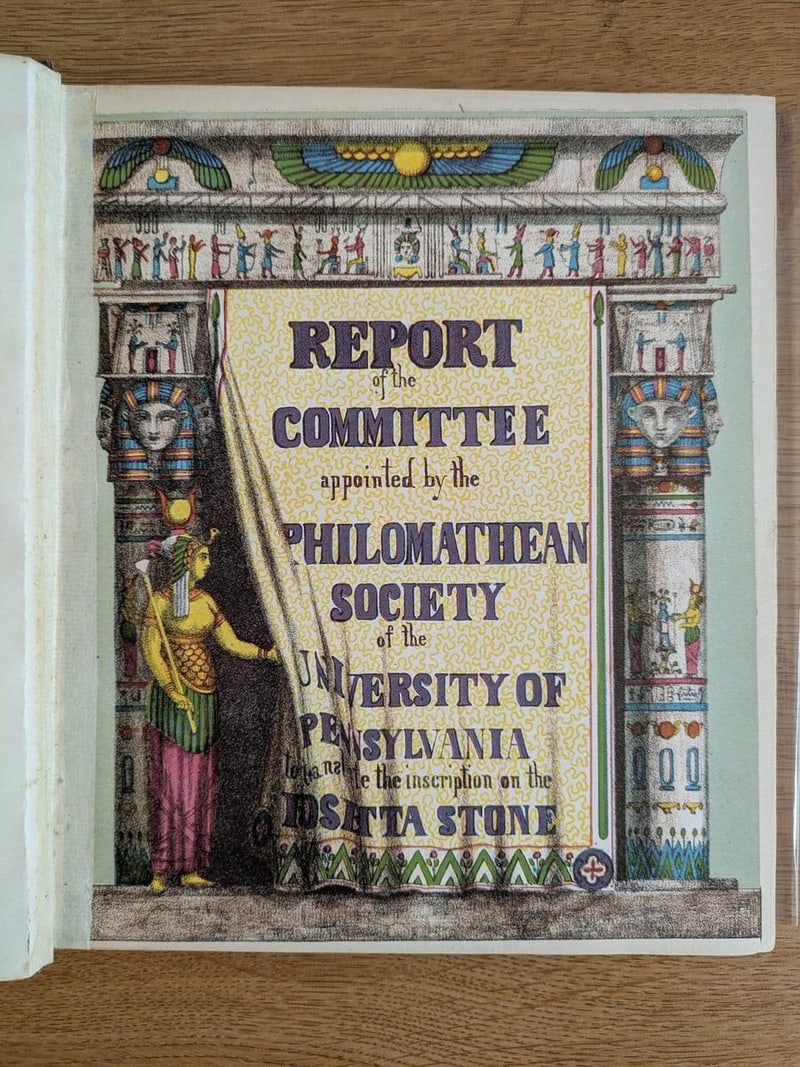
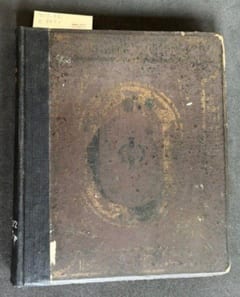
University of Florida Libraries, George A. Smathers Libraries, Harold and Mary Jean Hanson Rare Book Collection (Rare Books, Non-Circulating)
Gainesville, Florida
Original cardboard boards, brown with gold decoration, with the spine reinforced in black bookcloth and the call number handwritten on it in white paint. Not rebound. The covers are heavily worn, with the decorative design on both boards now largely illegible; the surviving color reads closer to puce, though the decoration itself is confirmed gold.
The illuminated title page carries no “Second Edition” statement, confirming the 1858 first edition.
No presentation inscription is recorded.
The volume carries a University of Florida bookplate recording it as the gift of the Florida State Museum. A pencil inscription on the title page dates its entry into the UF Libraries Rare Book Collection to July 8, 1955, and the title page bears two blind-embossed UF Libraries stamps. One front endpaper carries an inscription that has since been scratched out; the surviving traces appear to be nineteenth-century brown ink, but the content cannot be recovered. The front pastedown bears the inscription “80964,” of uncertain origin. No other ownership marks are present.
Unrecorded earlier ownership → Florida State Museum → University of Florida Libraries, July 8, 1955
Correspondence with University of Florida Libraries staff, and six copy-specific photographs. Next sources for the "80964" number and fuller institutional history: University of Florida Archives and its published finding aids; Florida Museum (formerly Florida State Museum) institutional history.
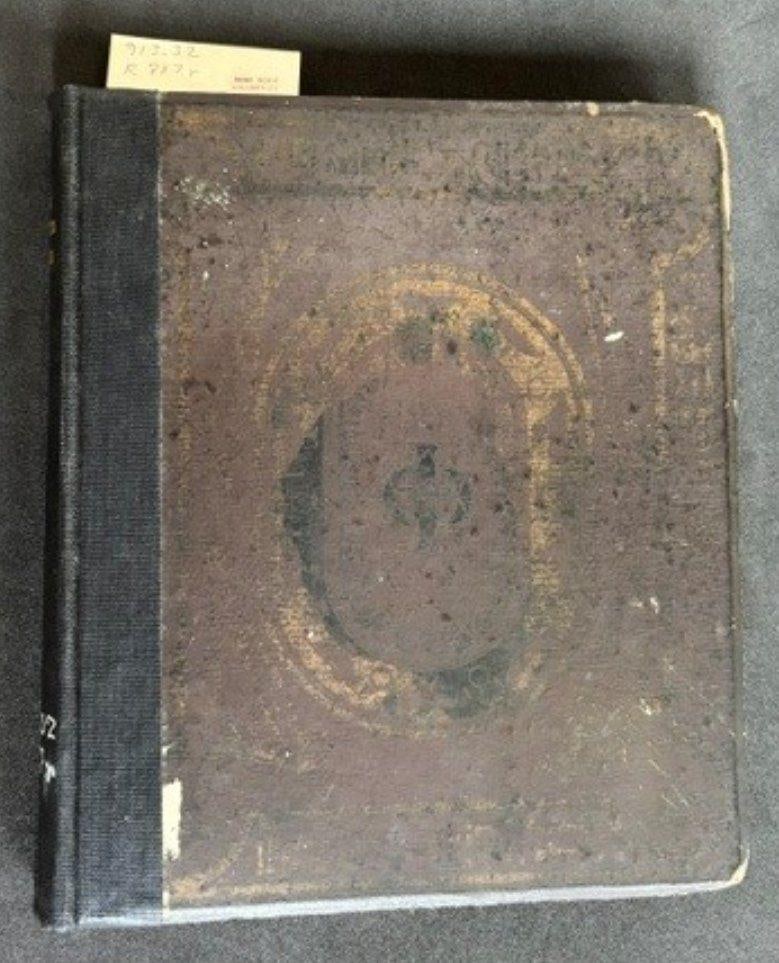
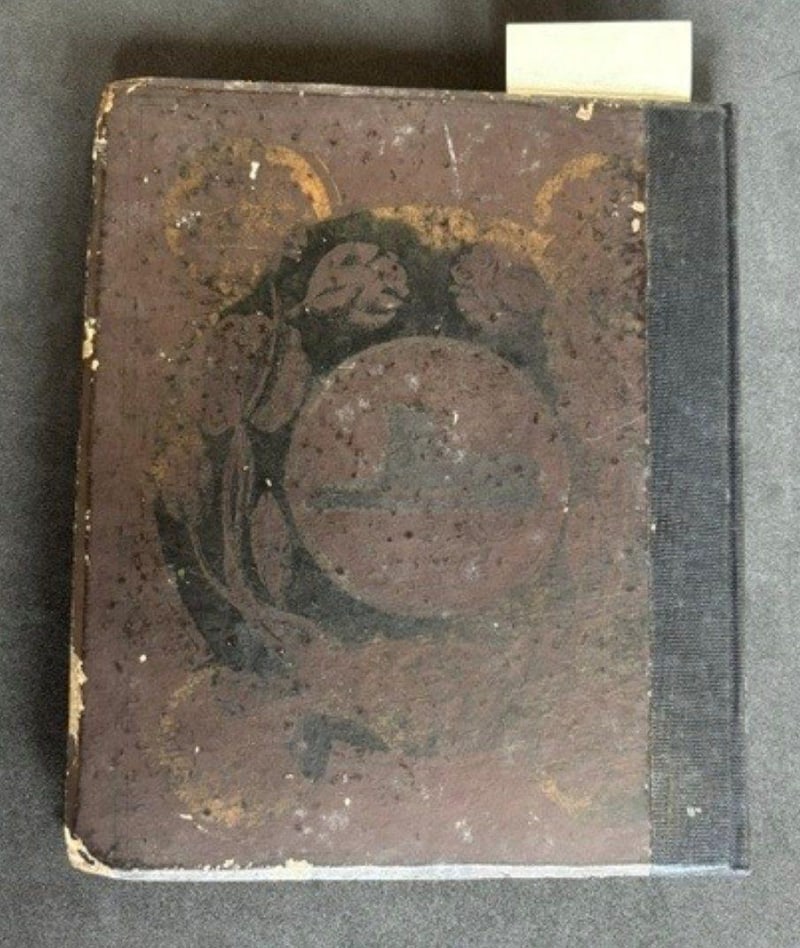
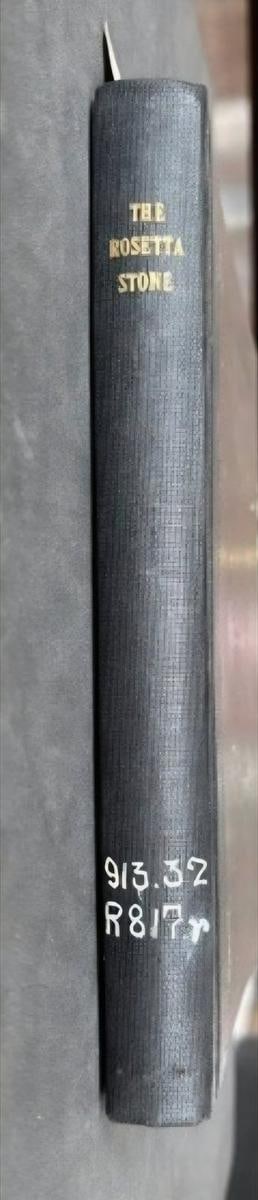
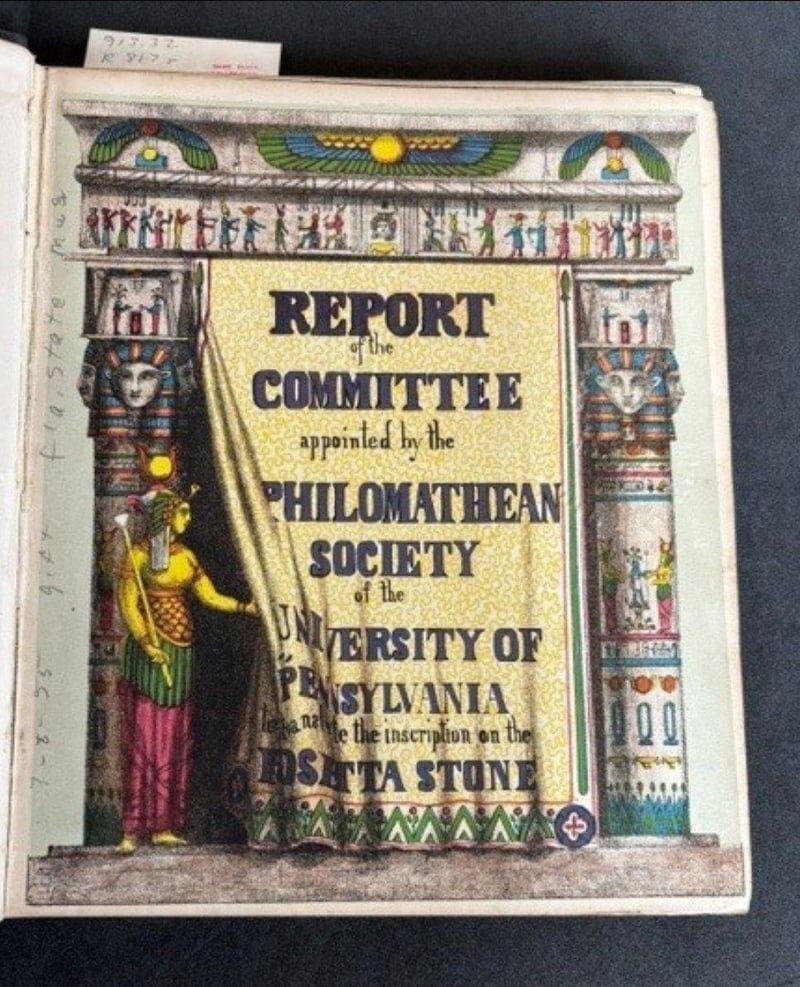
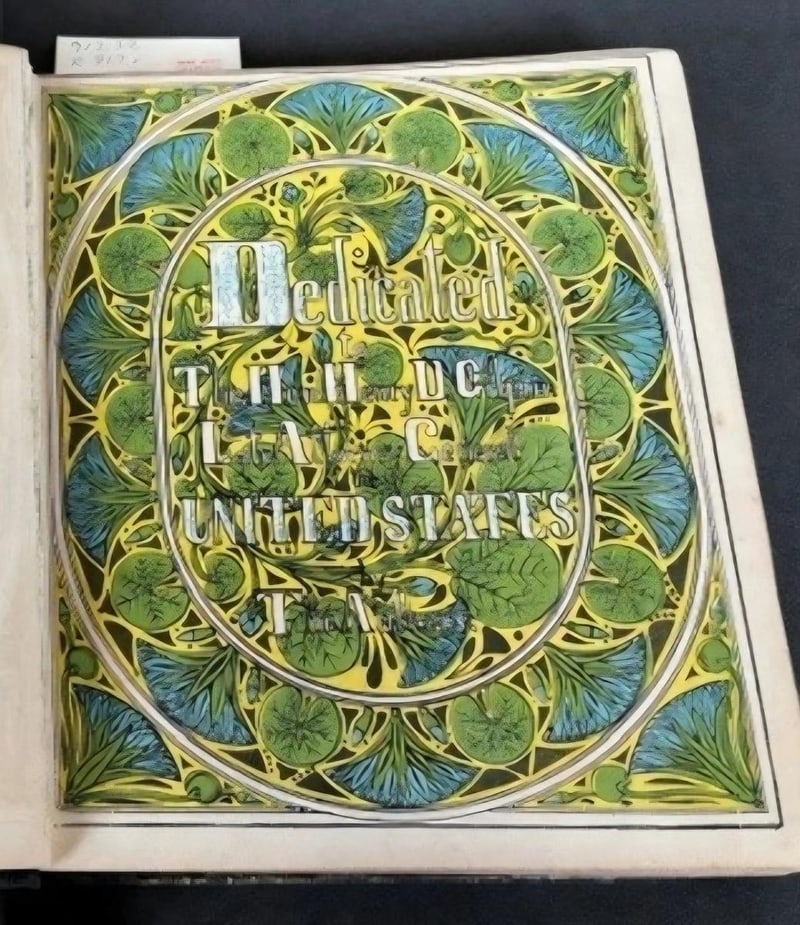
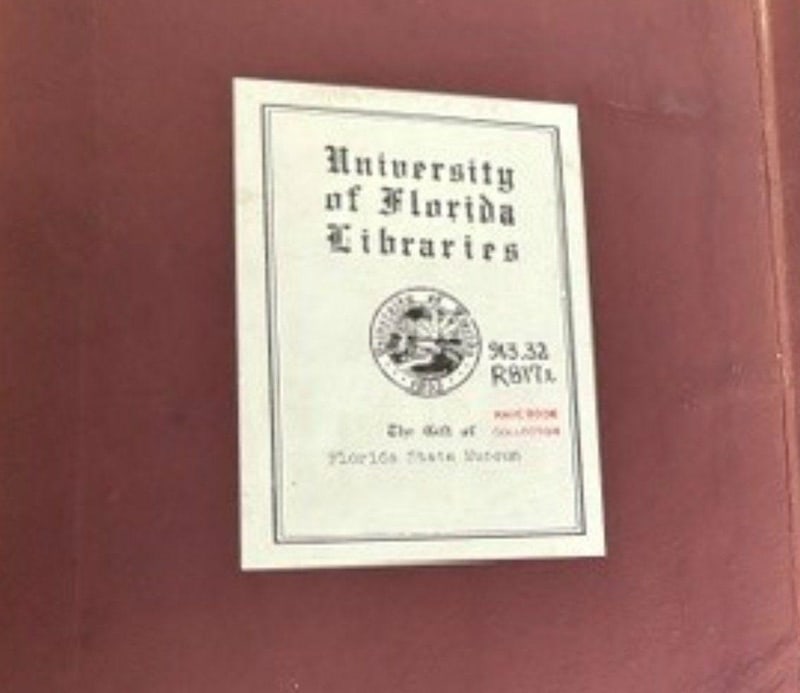
Lehigh University Libraries, Special Collections, Linderman Library
Bethlehem, Pennsylvania
Original cream publisher-issued boards with black decoration.
The illuminated title page carries no “Second Edition” statement, confirming the 1858 first edition.
No presentation inscription is recorded.
A front-pastedown pencil signature is reported as ‘Joseph Wharton (?)’. A related preliminary leaf bears ‘Mary Lovering Wharton, 1918.’
Signature comparison and Mary Lovering Wharton’s inscription support a probable father-to-daughter provenance. The Joseph Wharton signature has not been authenticated from the original.
Joseph Wharton [probable; signature comparison] → Mary Lovering Wharton, documented by inscription, 1918 → unresolved gap → Lehigh University Libraries
Correspondence with Lehigh University Libraries staff, and five copy-specific photographs.
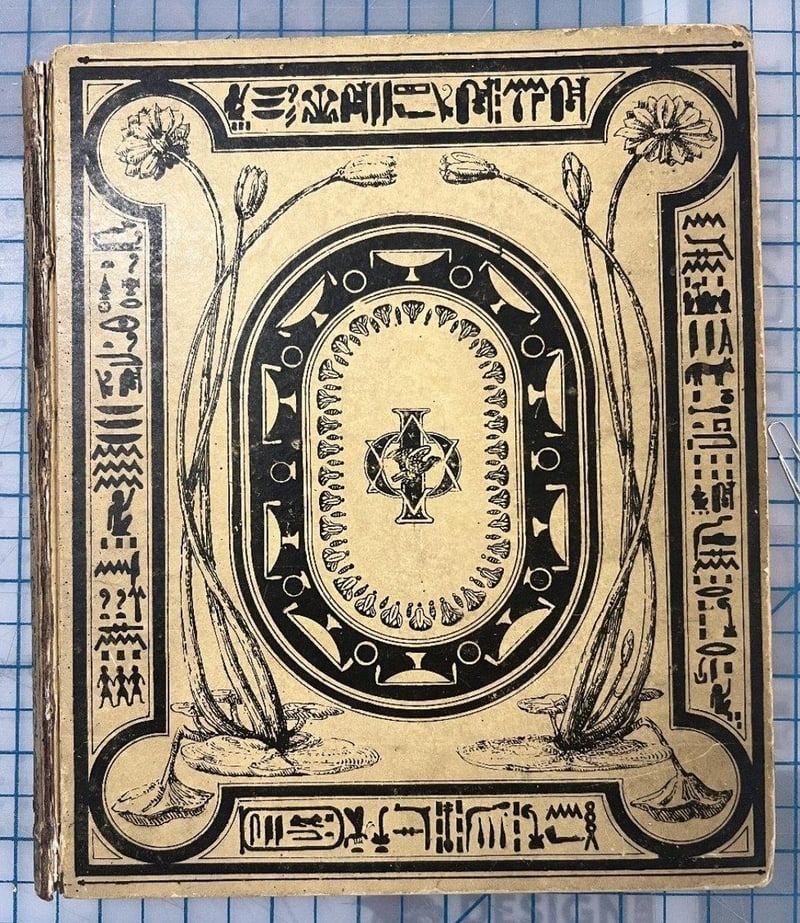
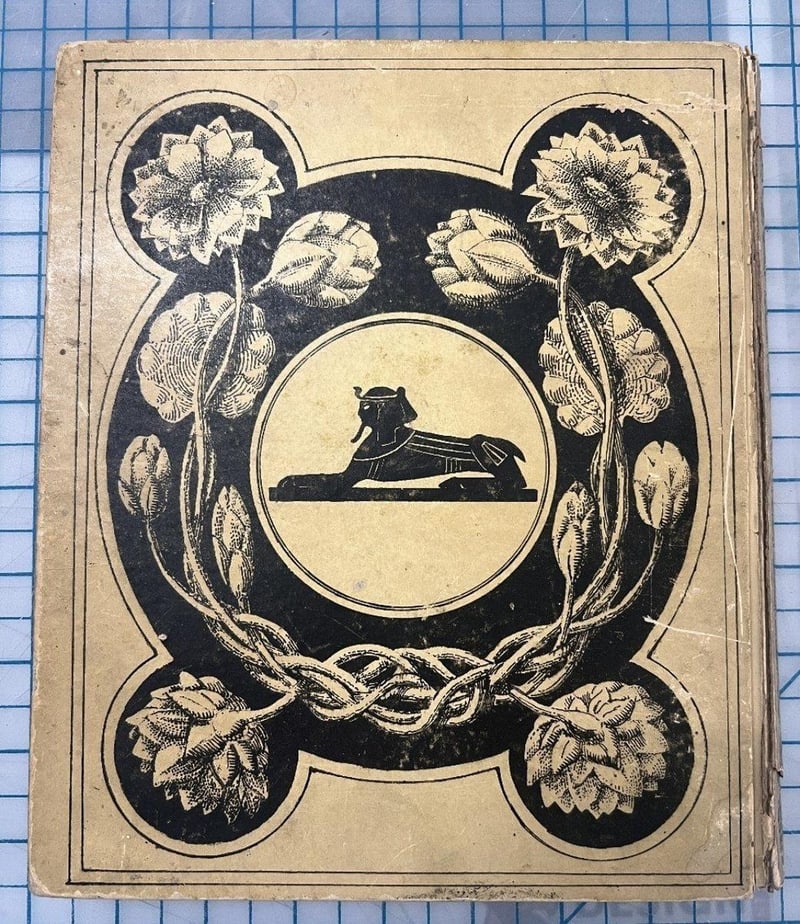
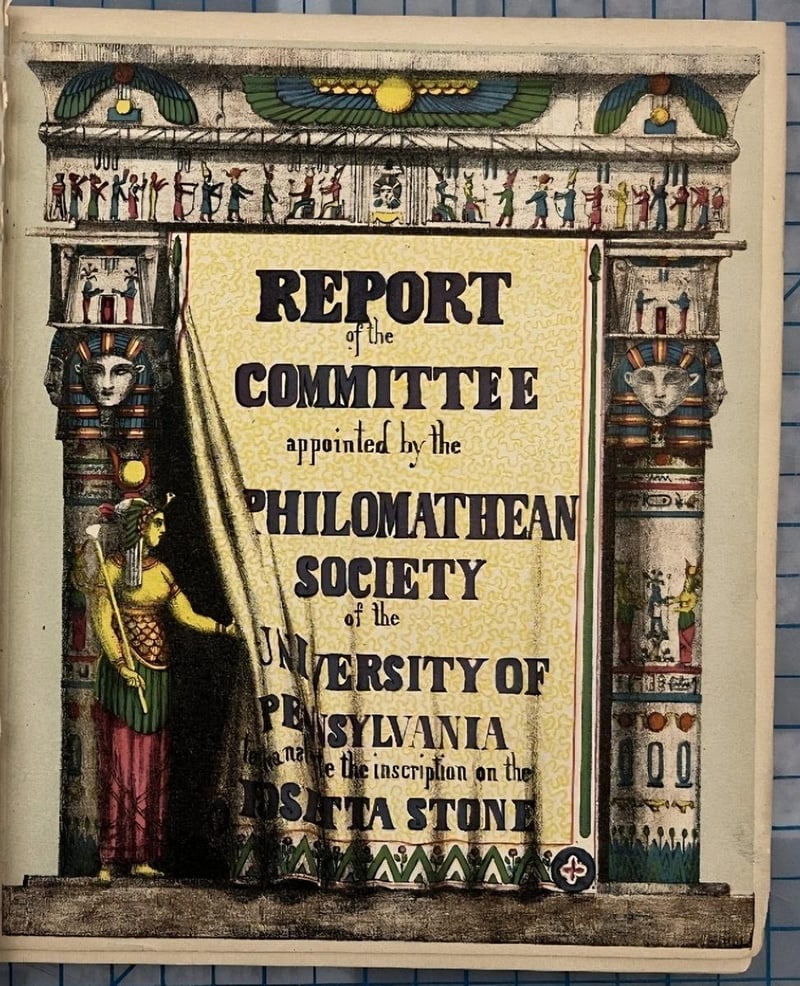
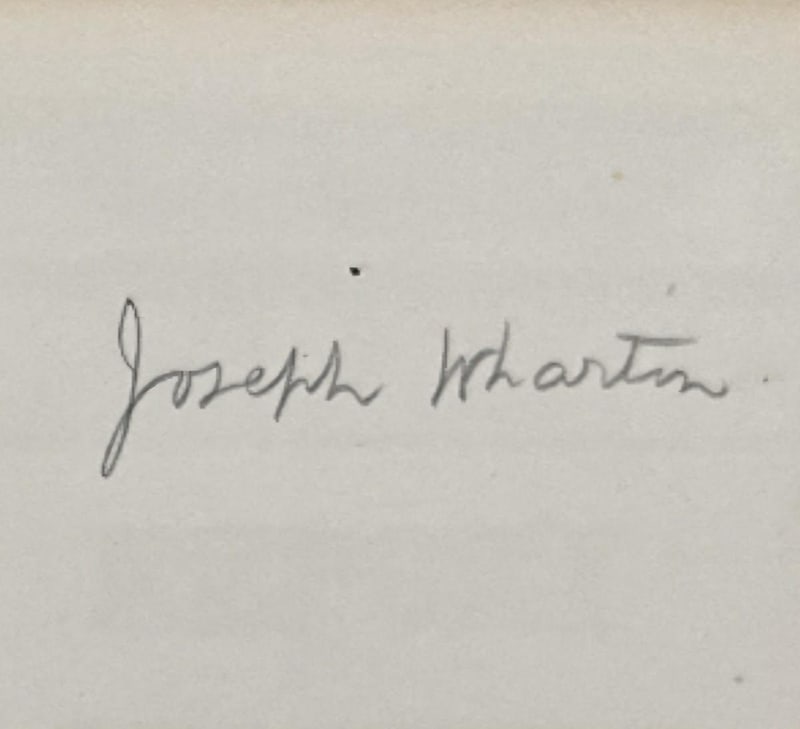
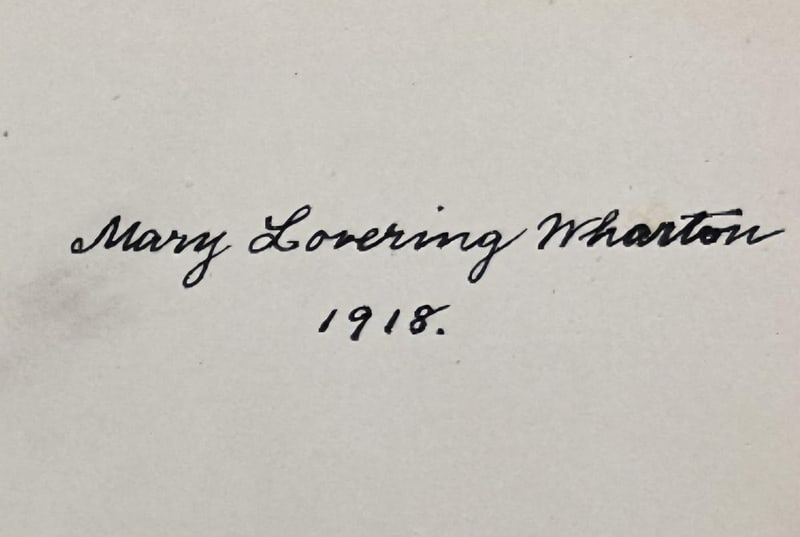
University of Pennsylvania, Penn Museum Library
Philadelphia, Pennsylvania
Original brown decorated boards, retained but heavily worn and abraded on both covers. The volume was rebacked or rebound (color unrecorded) after 1863, evidenced by a fragment of period newspaper used as lining material between the text block and the case.
The original brown decorated boards match a documented first-edition binding variant; boards of this kind are diagnostic of the 1858 first edition, distinct from the cloth-covered 1859 second edition.
No presentation inscription is recorded.
All bookplates and stamps present are the University of Pennsylvania's own; no evidence of an earlier private owner has been identified. A pencil note on the Preface page records that the volume was purchased in 1966 through the Eckley Brinton Coxe Fund. Loose inside the volume is a typescript excerpting Randolph G. Adams' 1924 essay on the Report's printing history, closing with a handwritten notation reading "R.P., 10/13/51." This copy does not contain the Alexander von Humboldt letter facsimile found in other copies.
The typescript’s ‘R.P.’ may refer to Raymond Pitcairn. The identity and whether the notation records ownership are unestablished.
Unrecorded earlier ownership → University of Pennsylvania, Penn Museum Library, acquired 1966 (Eckley Brinton Coxe Fund)
Correspondence with Penn Museum Library staff; University of Pennsylvania Libraries catalog record; and six copy-specific photographs.
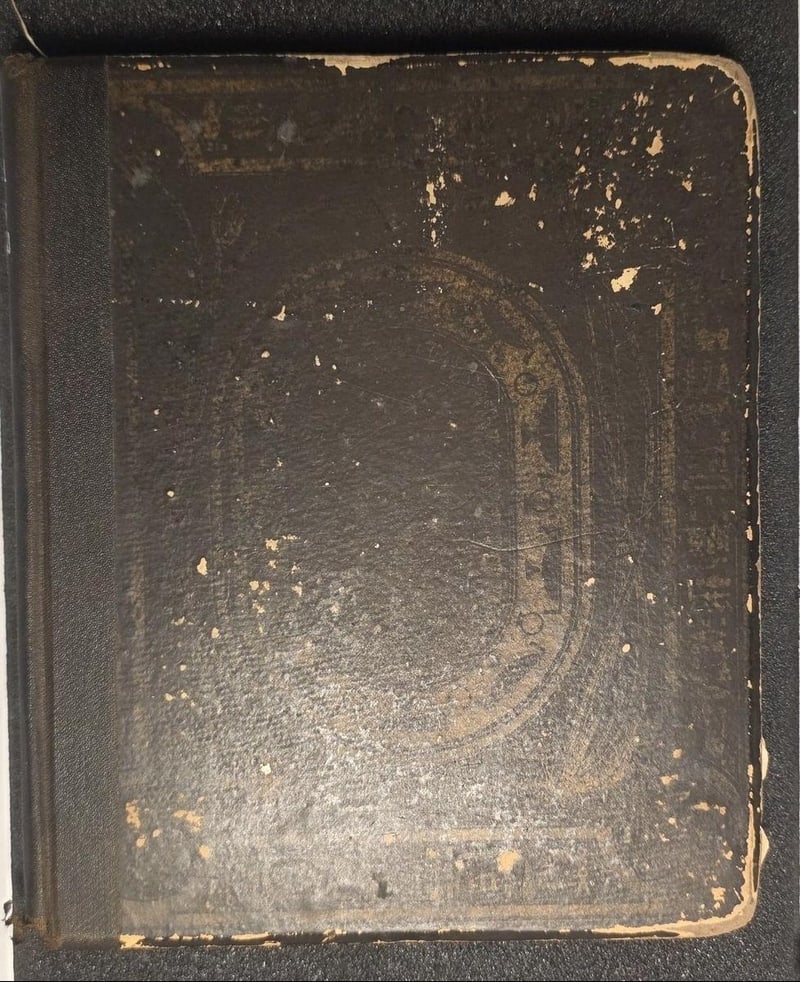
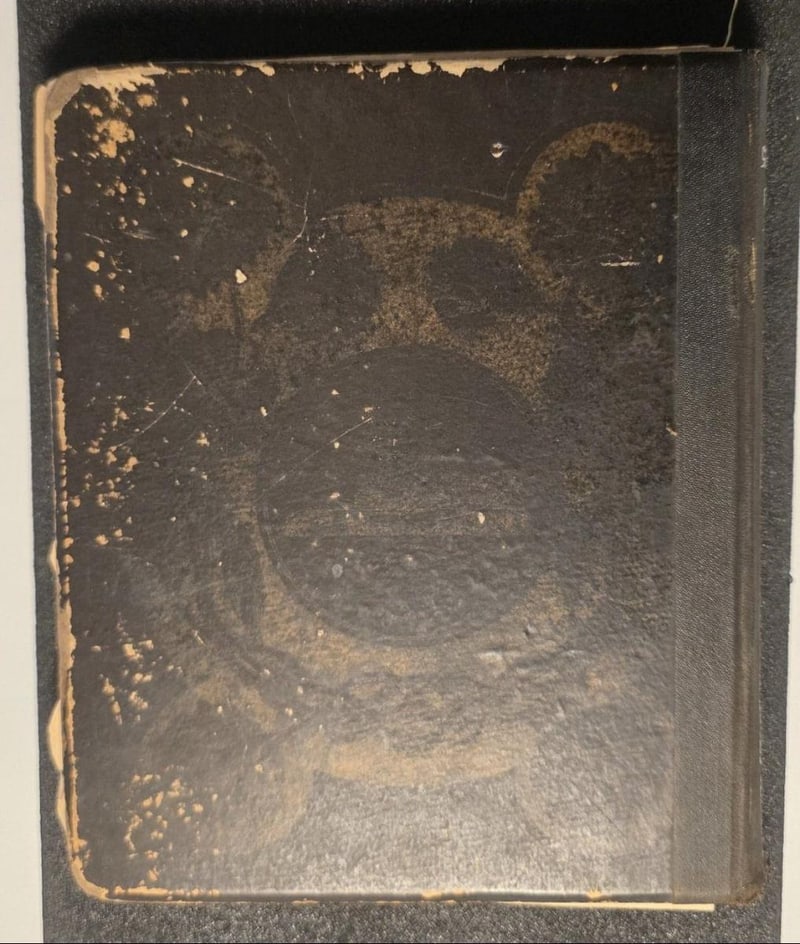
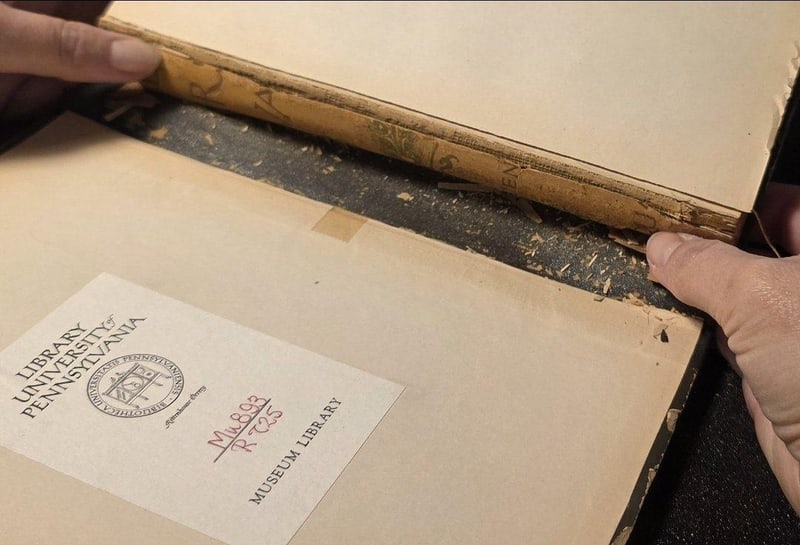
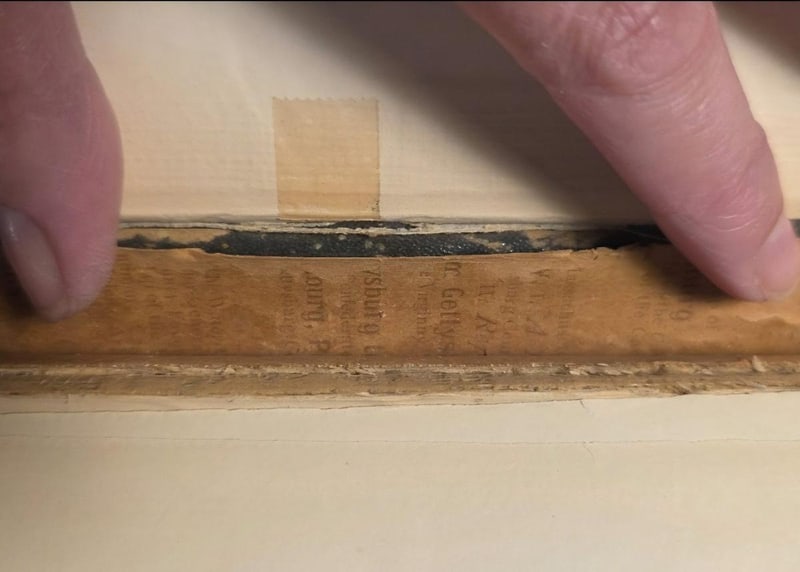
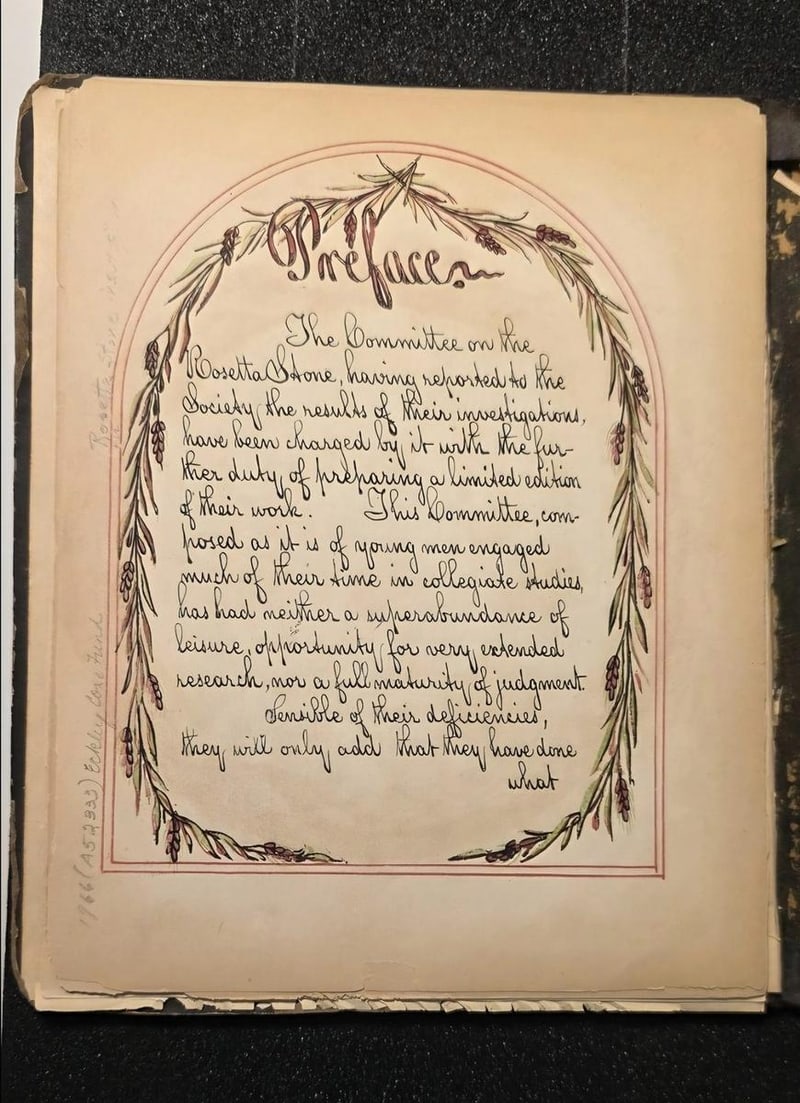
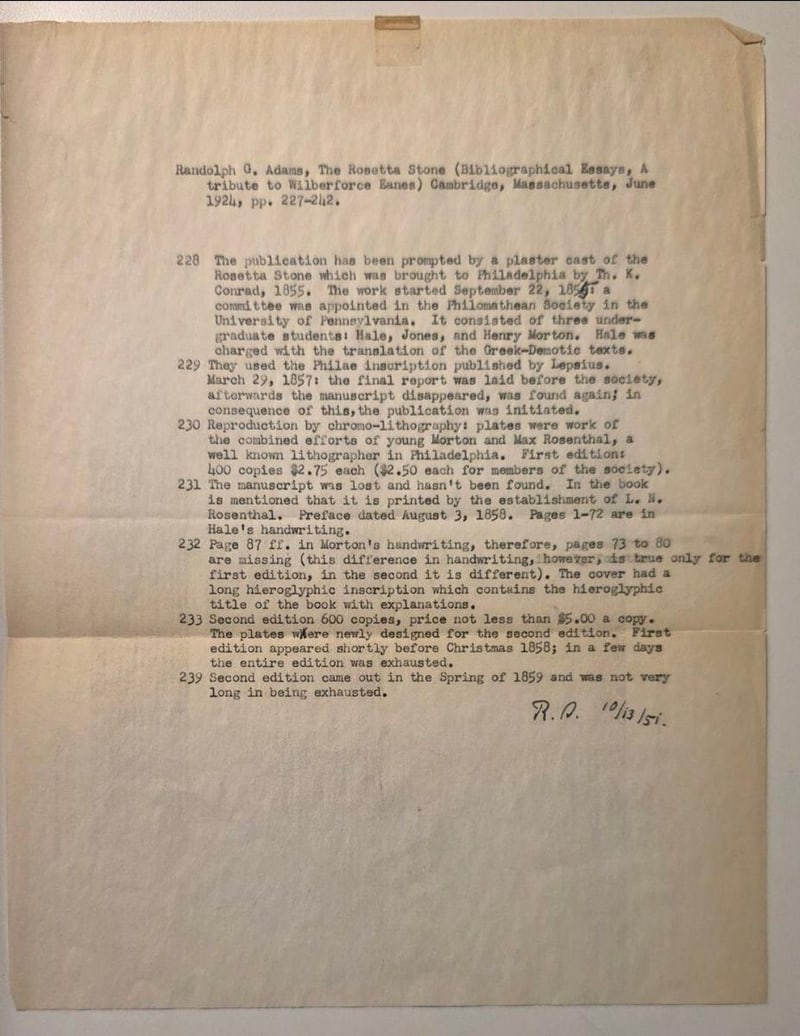
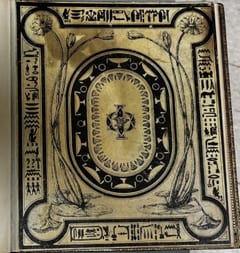
Garrett-Evangelical Theological Seminary, Styberg Library
Evanston, Illinois
PJ1531 .R3 1858 ↗
Physical shelf slip: “T.R. PJ1531 .R3 1859 SWTS.” Its year is incorrect for this 1858 copy; the catalog has been corrected. “SWTS” likely denotes Seabury-Western Theological Seminary, whose collections merged with Garrett’s in 1981. The reason this particular volume was received in May 2012 is undocumented.
Later dark leather binding (color unrecorded) retaining both original cream-and-black decorated covers. Gilt spine panels and marbled endpapers. Both original boards reportedly survive within the later binding; only the front board is illustrated in the present census.
The title lacks a Second Edition statement and the preface is dated 1858.
No presentation inscription is recorded.
A pastedown bears an unidentified "Ex Libris" bookplate reading "Veritas Liberabit Vos"; no owner is named on the bookplate itself, and Styberg Library staff report no other signatures, marginalia, stamps, or marks in the volume. The library's own accession records show the item received May 29, 2012, and processed July 8, 2015; these dates establish library custody only and do not indicate earlier provenance.
Unrecorded earlier ownership → Garrett-Evangelical Theological Seminary, Styberg Library, received May 29, 2012
Garrett-Evangelical Theological Seminary, Styberg Library catalog, accession records, correspondence, and copy photographs.
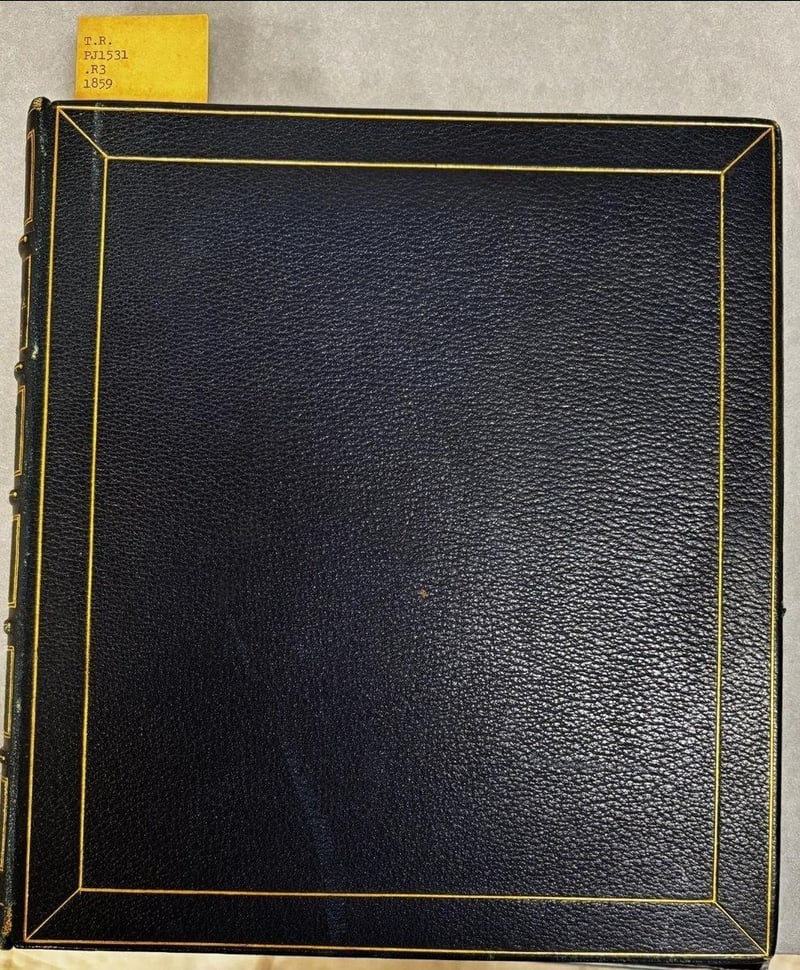
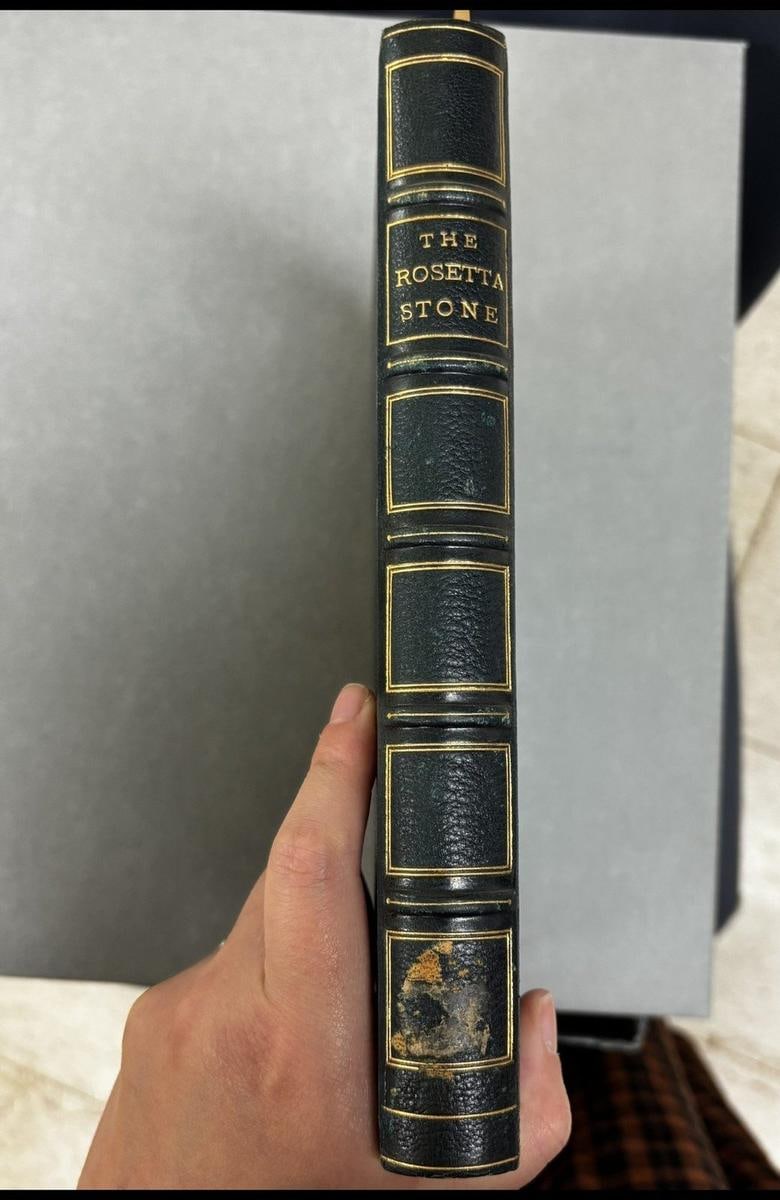
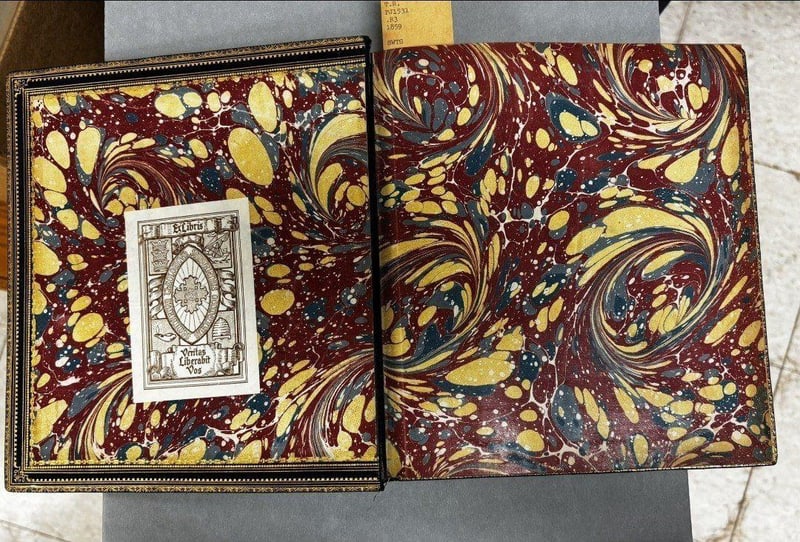
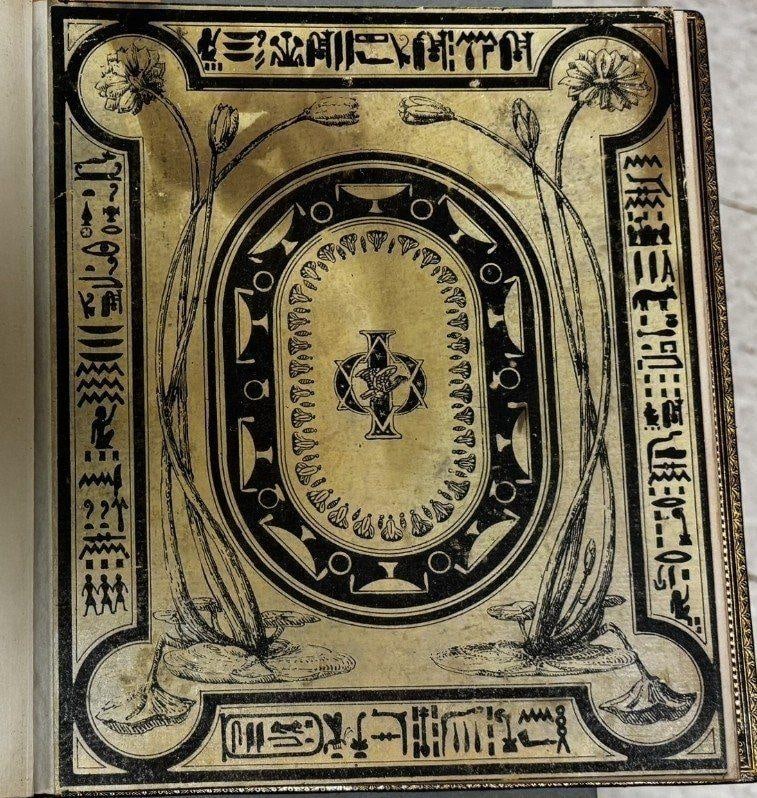
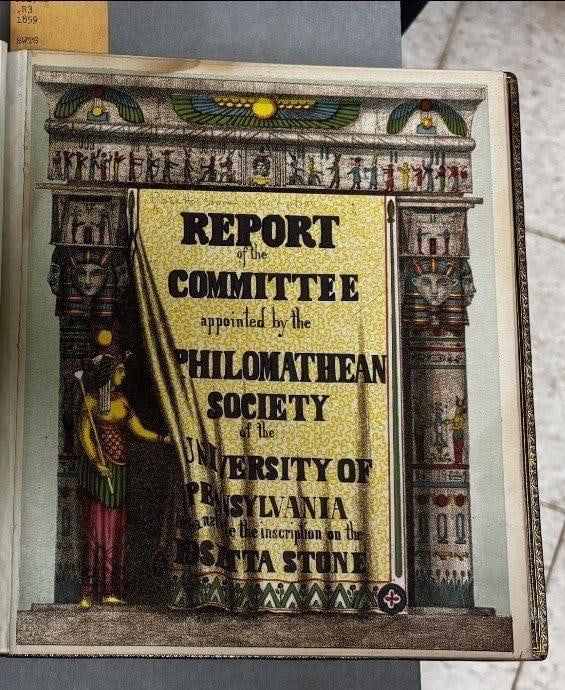
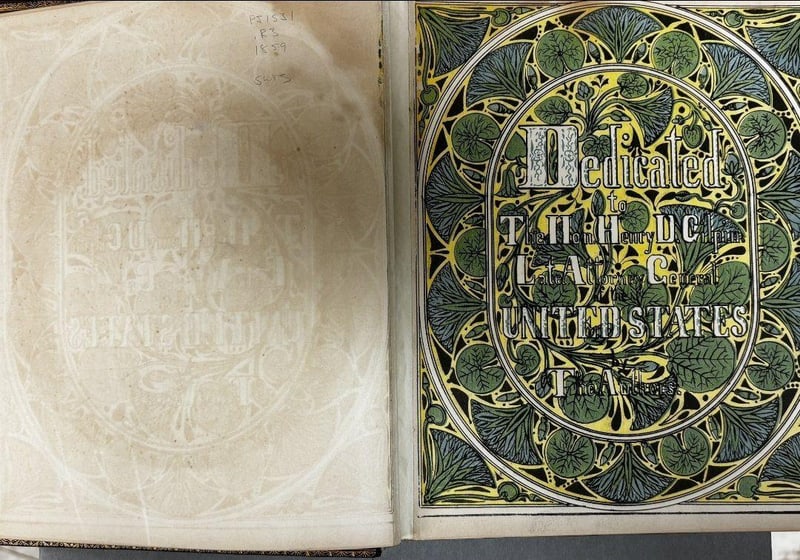
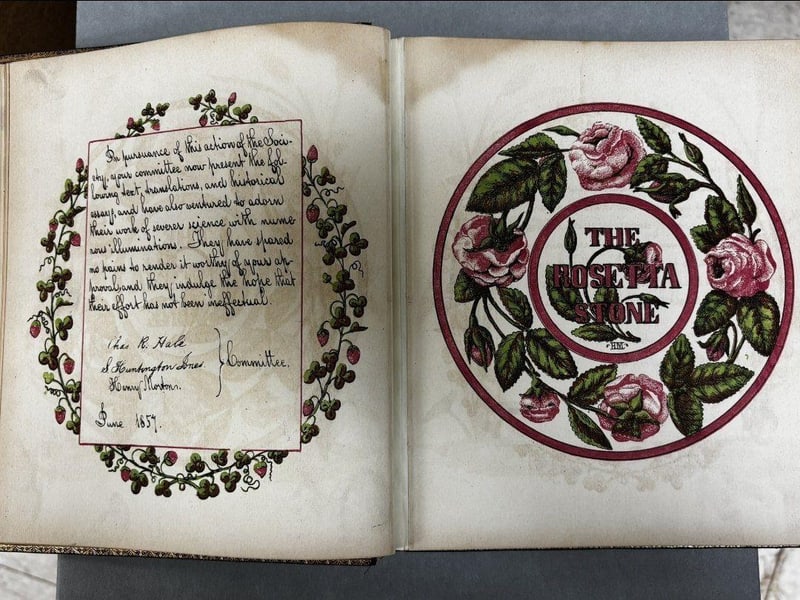
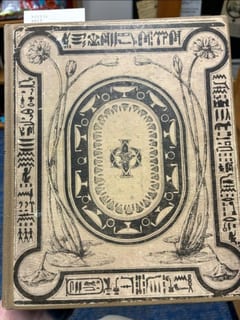
Saint Mary’s College, Cushwa-Leighton Library
Notre Dame, Indiana
PJ1531 .R817 1858 ↗ (Rare Book)
Original cream-and-black decorated cover panels affixed to later tan buckram. The spine is entirely of the later buckram and does not preserve any part of the original binding. Staff report no significant staining or tears; approximately ten leaves are detached but believed present, and all pages are solidly bound after page 11. The photographed final page appears complete, with no subsequent advertisement leaves present.
The original cream-and-black decorated cover panels are diagnostic of the 1858 first edition. The title page carries no date or "Second Edition" statement, and Cushwa-Leighton Library's own rare-book identification tag records the date as 1858.
‘Peter Force Esq / from his friend / Jno. Jay Smith.’ The three-line presentation is undated; Smith was not a Report author.
The inside front cover bears the ownership stamp of Dunbarton College of the Holy Cross, a women's college in Washington, D.C. that closed in 1973, along with its printed address label. A pasted bookseller clipping describes the volume as "Second edition... Very scarce..."; this description does not match the physical copy, which is the 1858 first edition, and the clipping's source, date, and relationship to this exact copy are unknown. It is not used here to establish an intermediate binding or provenance stage.
John Jay Smith, presenter → Peter Force → unresolved gap → Dunbarton College of the Holy Cross → Saint Mary’s College
The route from Force to Dunbarton is unrecorded. A Library of Congress stage is not established.
A transfer from Dunbarton after its 1973 closure to Saint Mary’s is plausible but undocumented. The Smith Family Papers at the Historical Society of Pennsylvania list a Force letter dated February 22, 1859 (Box 7, Folder 59), and Gilpin letters (Box 7, Folder 63); their relevance to this copy is untested.
Saint Mary’s College correspondence and copy photographs; Historical Society of Pennsylvania Smith Family Papers finding aid; Library of Congress acquisition catalog, 1866–67.
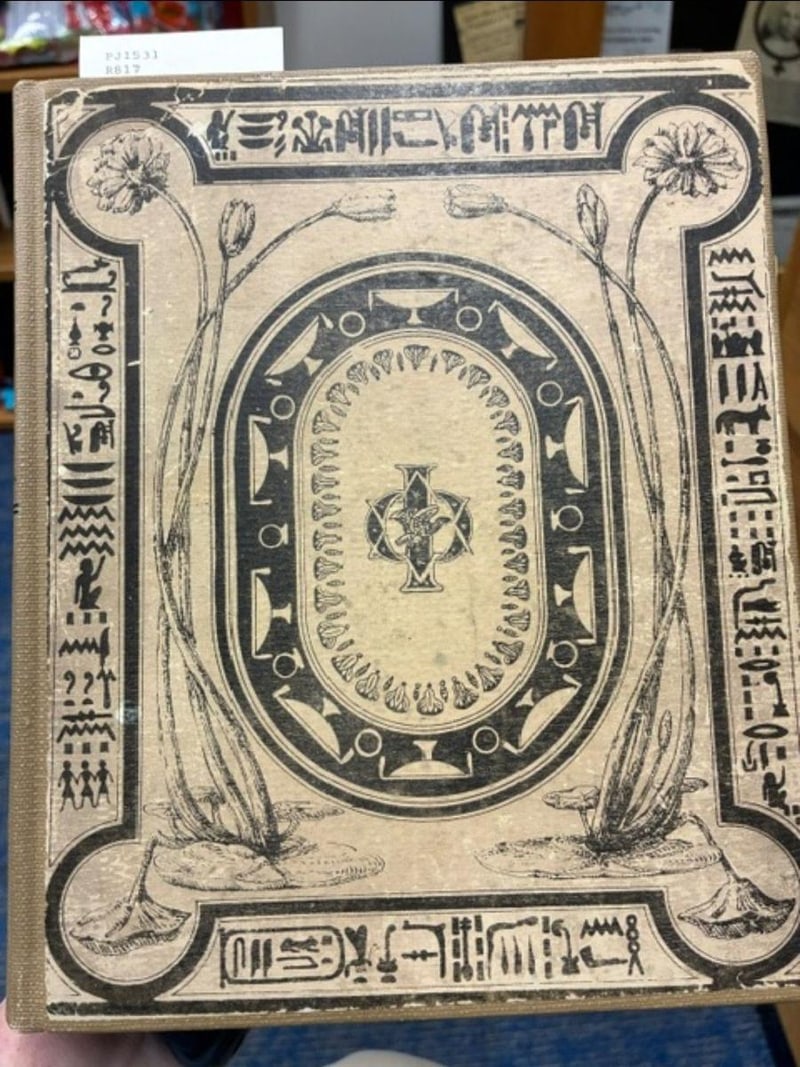
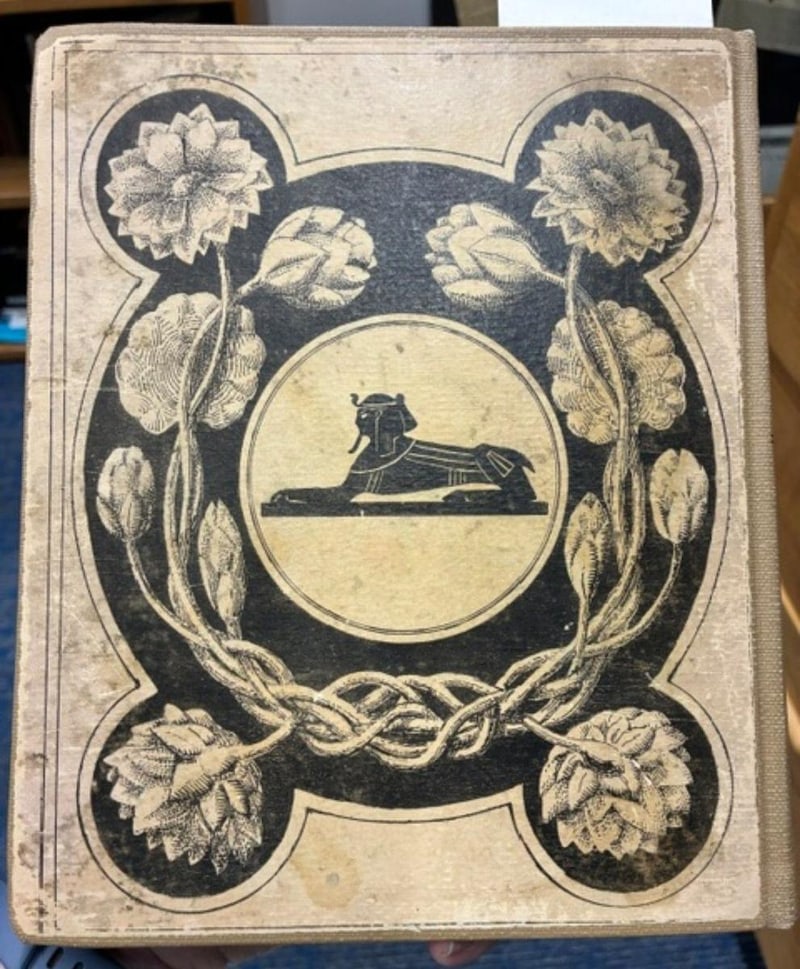
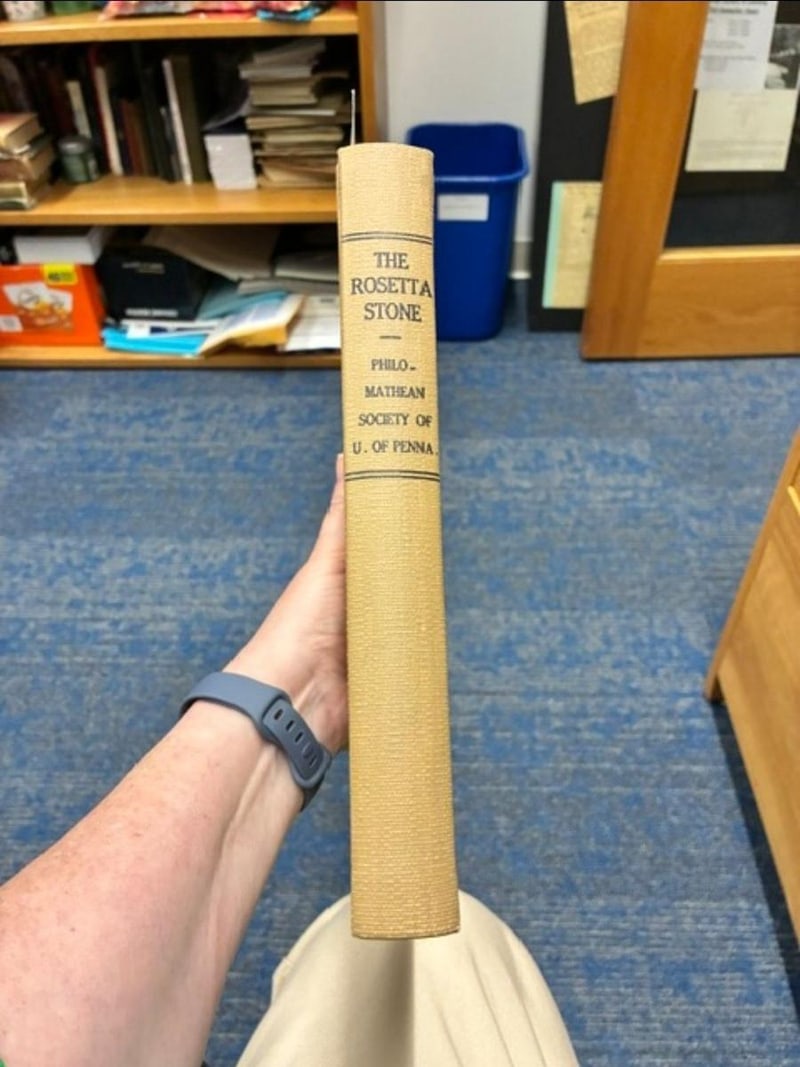
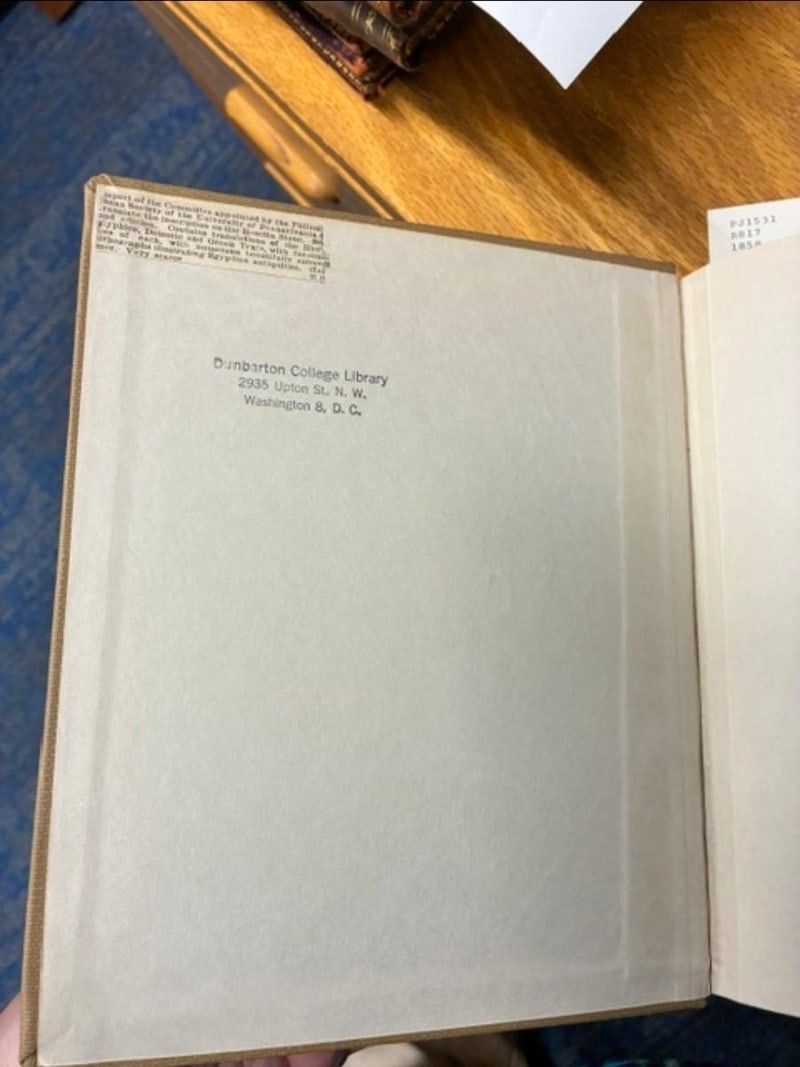
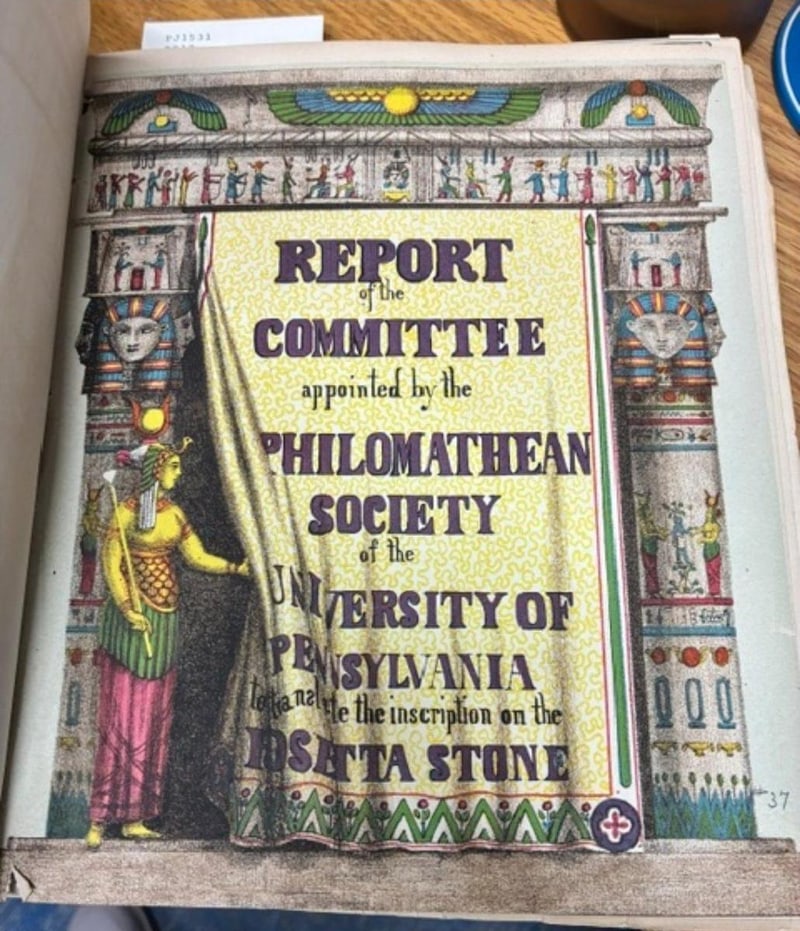
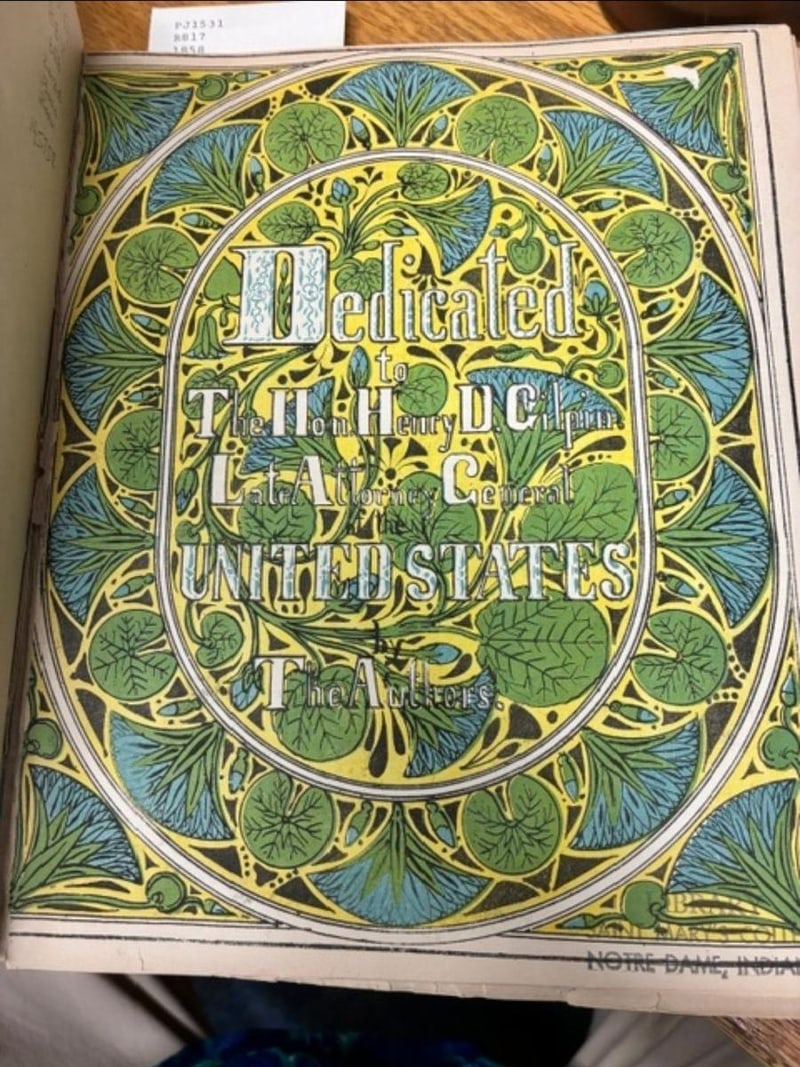
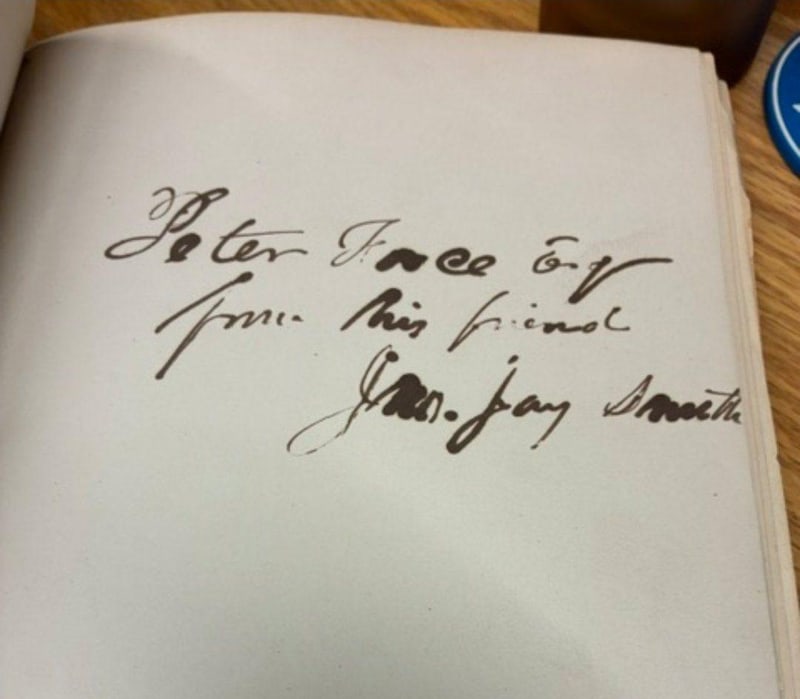
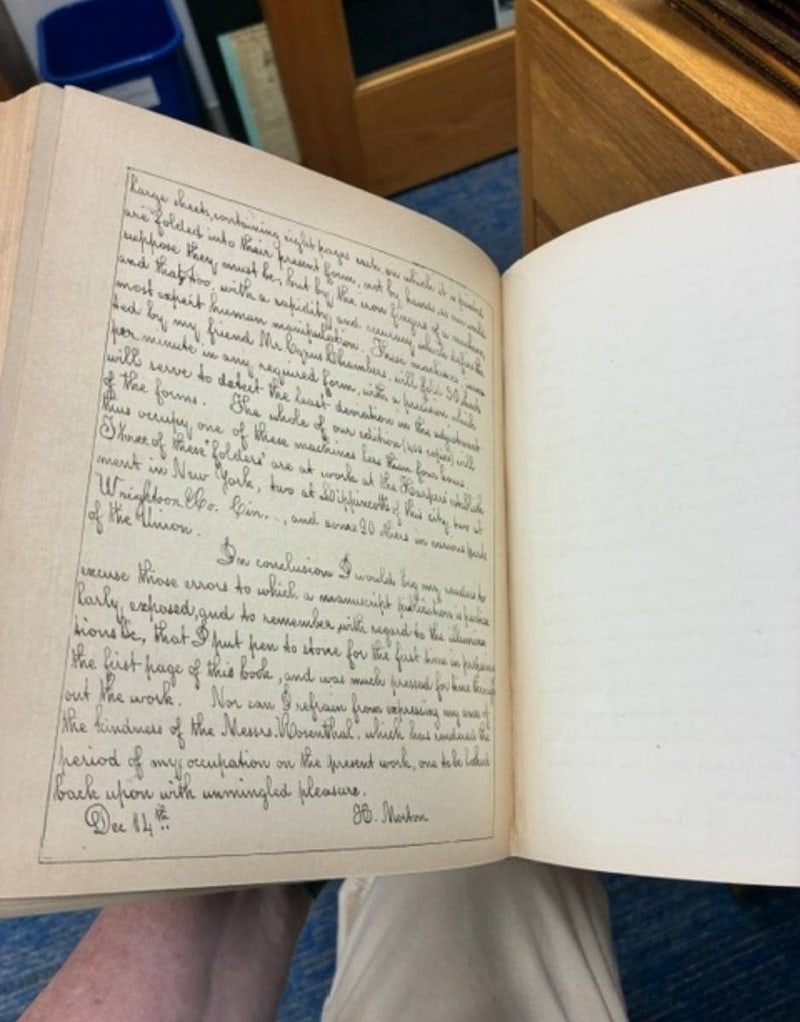
Lilly Library, Indiana University Bloomington
Bloomington, Indiana
IUCAT 16808452
Original cream pictorial boards, retained. The front board carries the standard gilt-and-black sphinx medallion within a lotus-and-hieroglyph border; the rear board carries a matching hieroglyphic and lotus-and-ankh design. The volume is now housed in a later quarter morocco protective case.
The title page carries no date or "Second Edition" statement, consistent with the 1858 first edition. Lilly Library staff independently identify the volume as a first edition in their own catalog record.
‘To Louis Stein, Esq., with compliments & regards of Albert Rosenthal, 4/10/28.’ The recipient is probably Philadelphia attorney and collector Louis Stein; the identification remains unconfirmed.
No bookplates are present. The Lilly accession note records ‘Darlington,’ June 1964. That source’s identity and the intervening ownership are unresolved.
Albert Rosenthal, presenter (1928) → Louis Stein, Esq. [probable: Louis Stein, 1906–1996, Philadelphia attorney and collector] → unresolved gap → Lilly Library (acquired from "Darlington," June 1964)
Lilly Library catalog, correspondence, acquisition note, and copy photographs; Fordham Stein Center biography; Penn Louis Stein Papers finding aid.
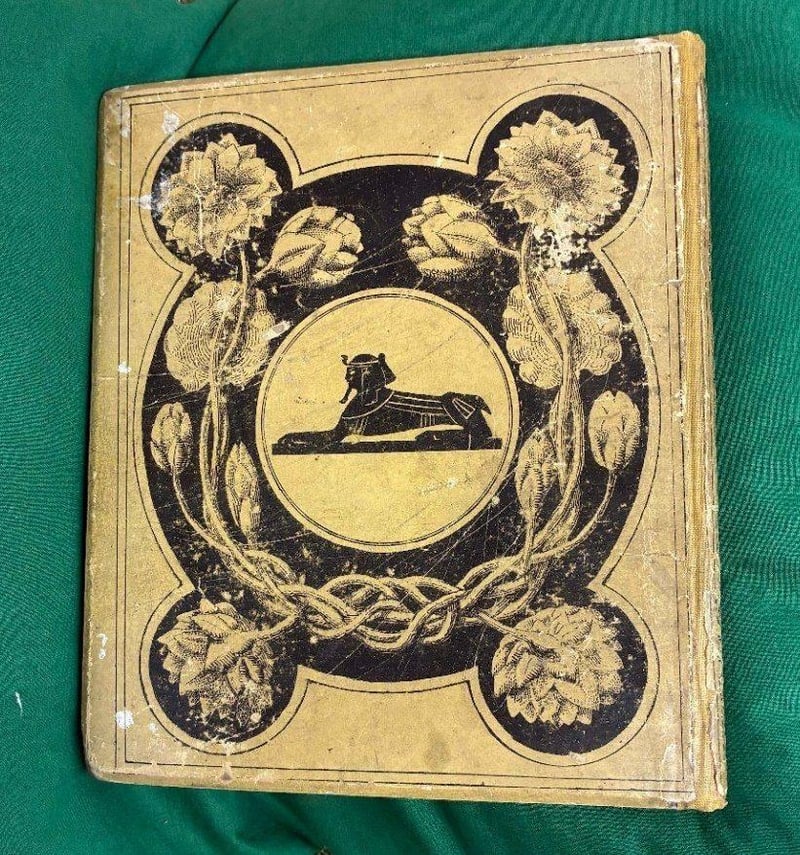
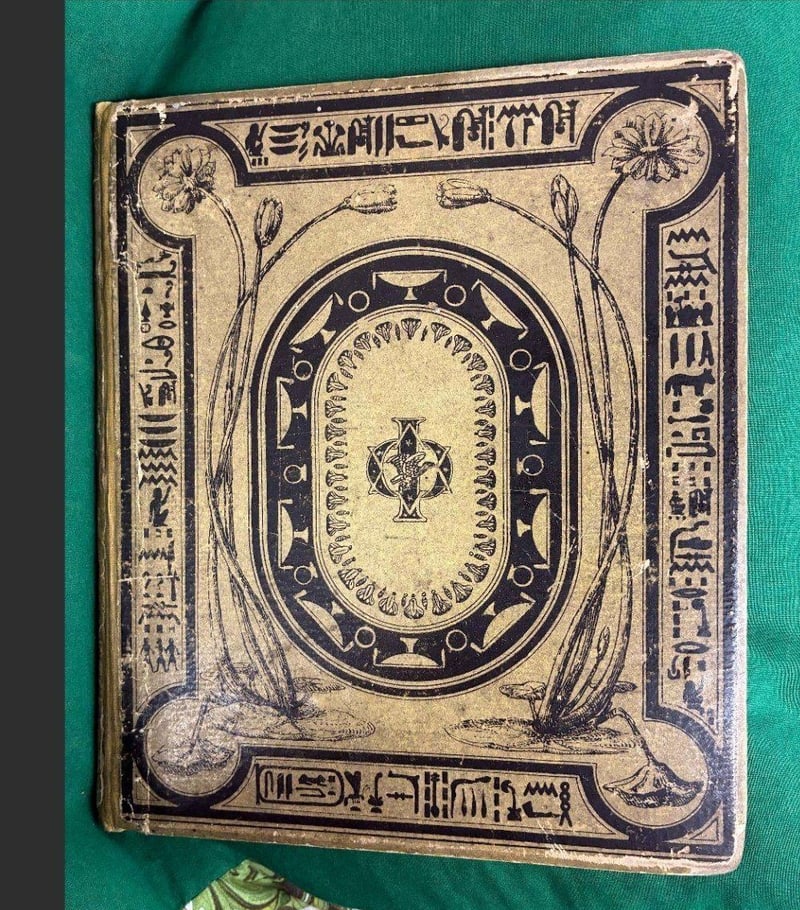
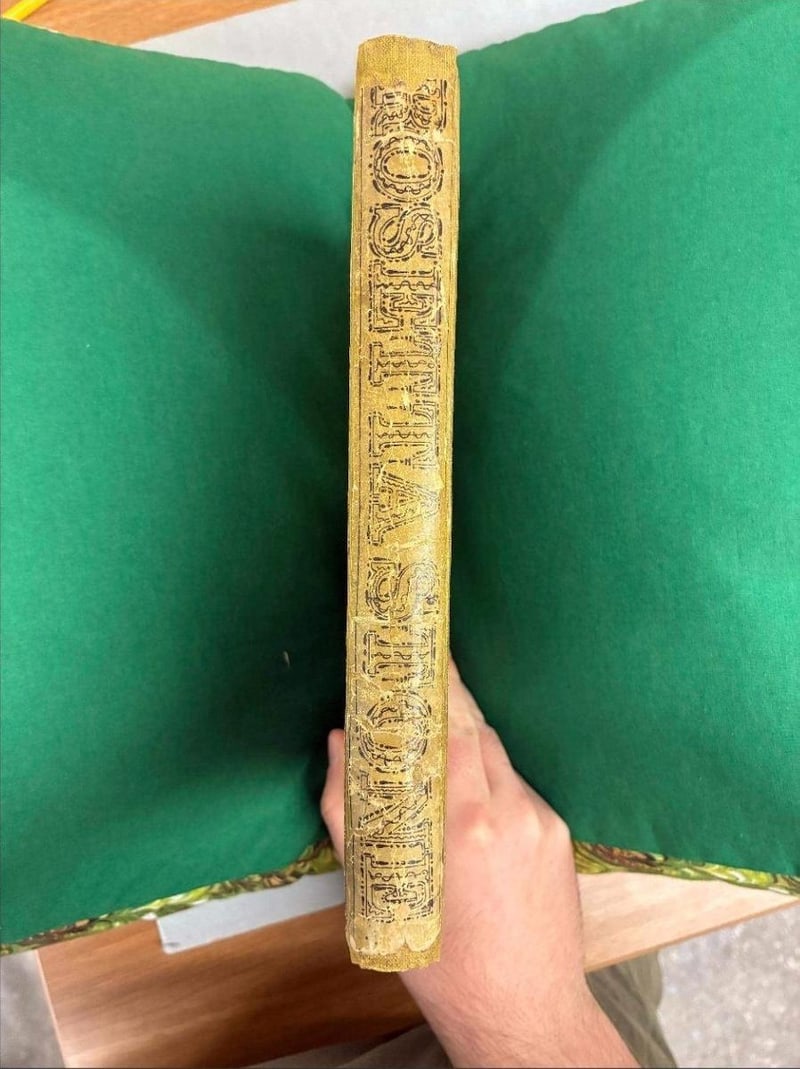
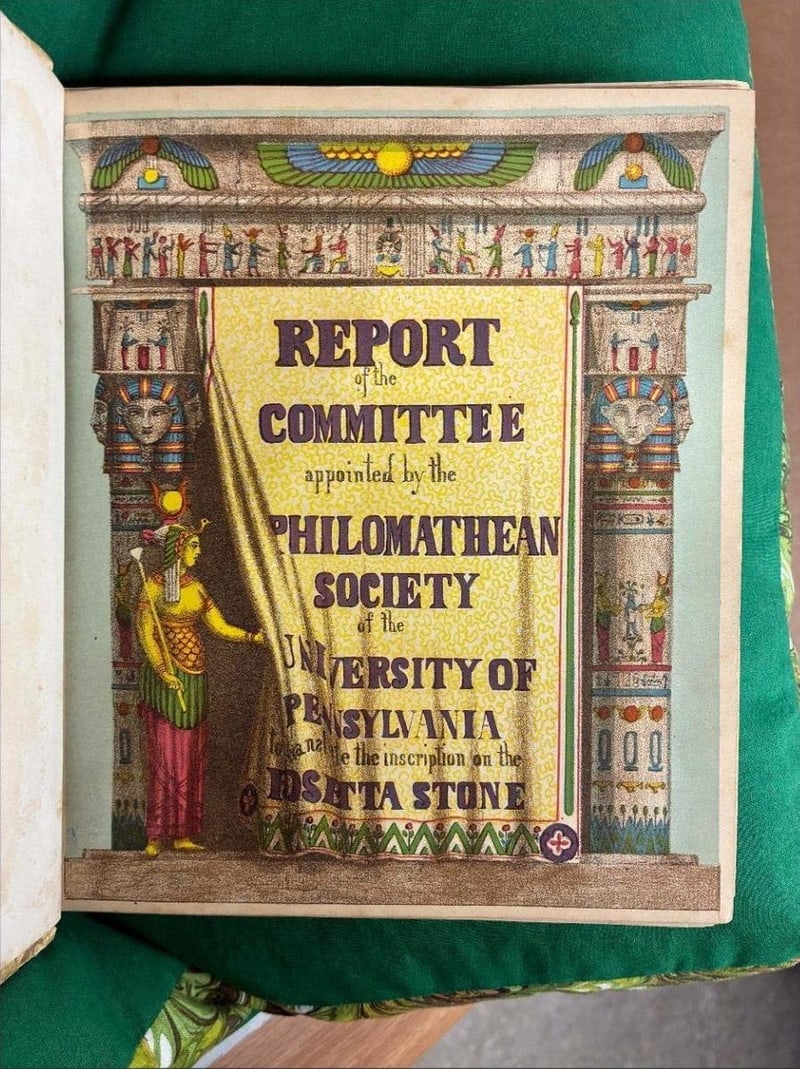
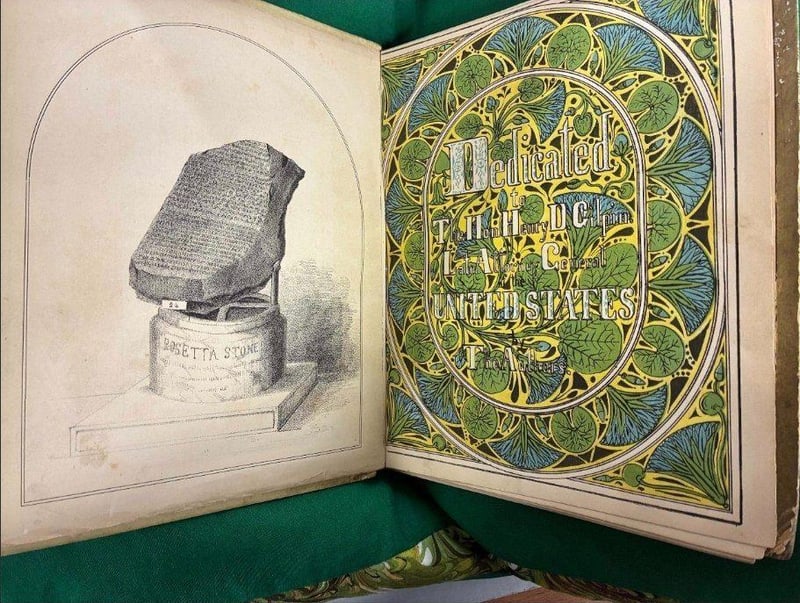
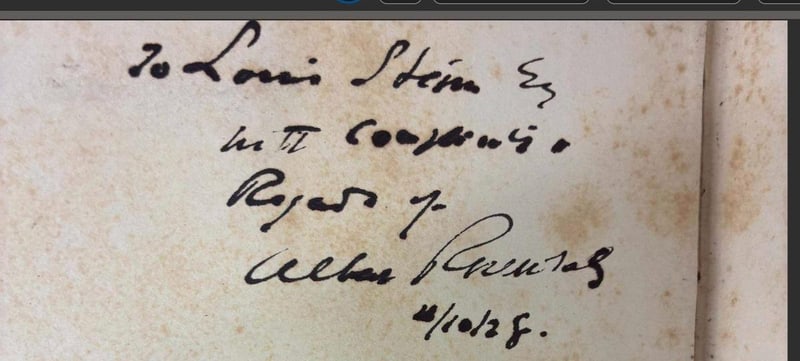
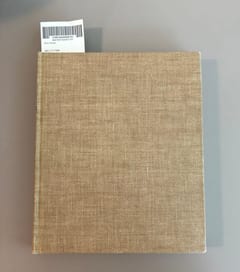
University of Minnesota, Special Collections and Rare Books
Minneapolis, Minnesota
Rebound in plain buff cloth by the University of Minnesota bindery, November 1954. The original 1858 binding was not preserved; no pictorial boards survive.
The title has no Second Edition statement; the botanical dedication identifies the first edition.
No presentation inscription identified.
Unrecorded earlier ownership → purchased from a bookseller named Harper, May 21, 1954 → rebound by the University of Minnesota bindery, November 1954 → University of Minnesota, Special Collections and Rare Books
A bindery slip on the front pastedown, next to the dedication leaf, reads "May 21 '54 Harper/1000" and "Nov 23 '54 U. of M. Bindery." The exact meaning of "1000" — a price, an accession number, or something else — is not confirmed and is not presented here as a dollar figure. A Regents of the University of Minnesota library bookplate is present on the front pastedown, recording the shelfmark 493.117 P384. No prior-owner inscriptions, bookplates, or other ownership marks were found elsewhere in the volume.
University of Minnesota catalog, bindery records, correspondence, and copy photographs.
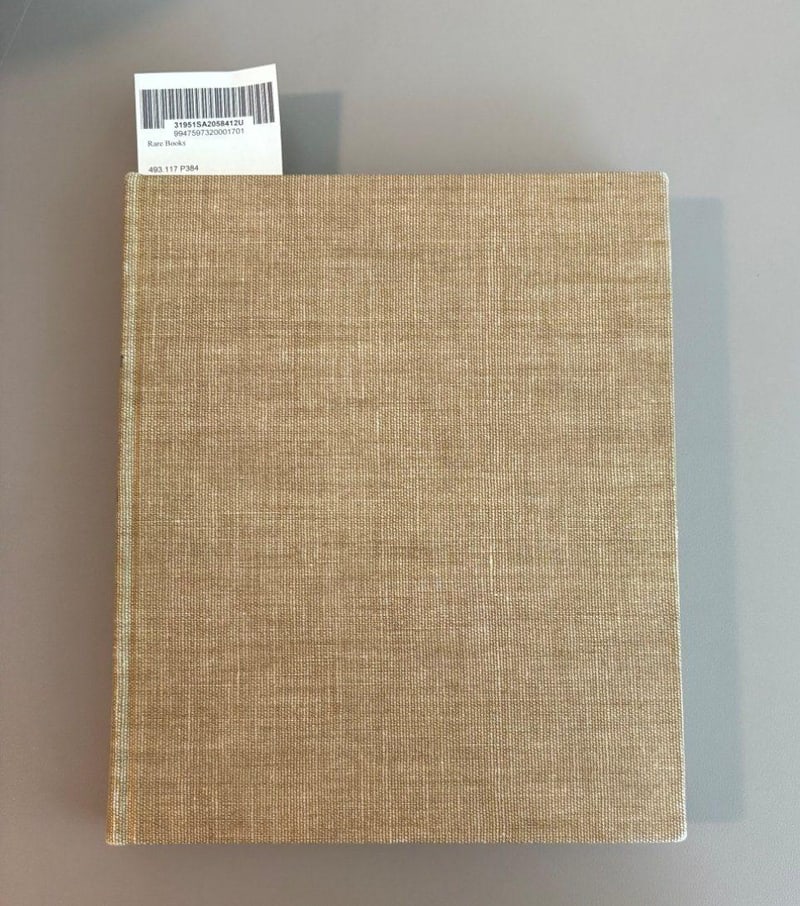
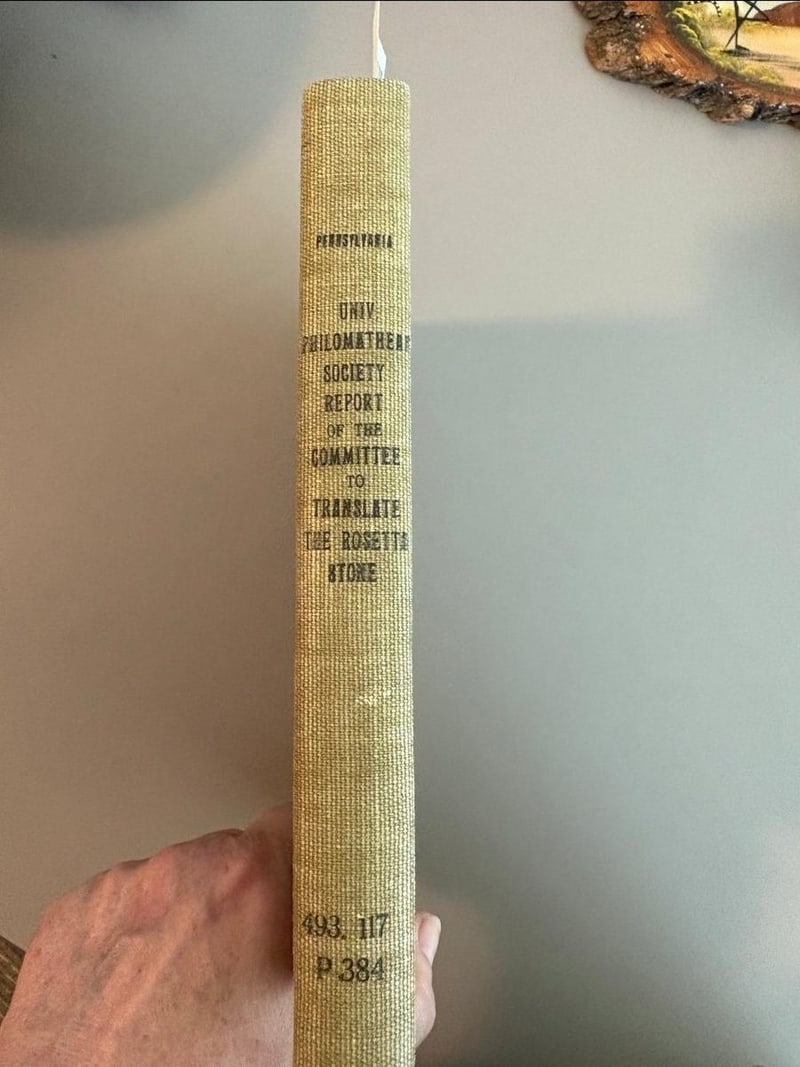
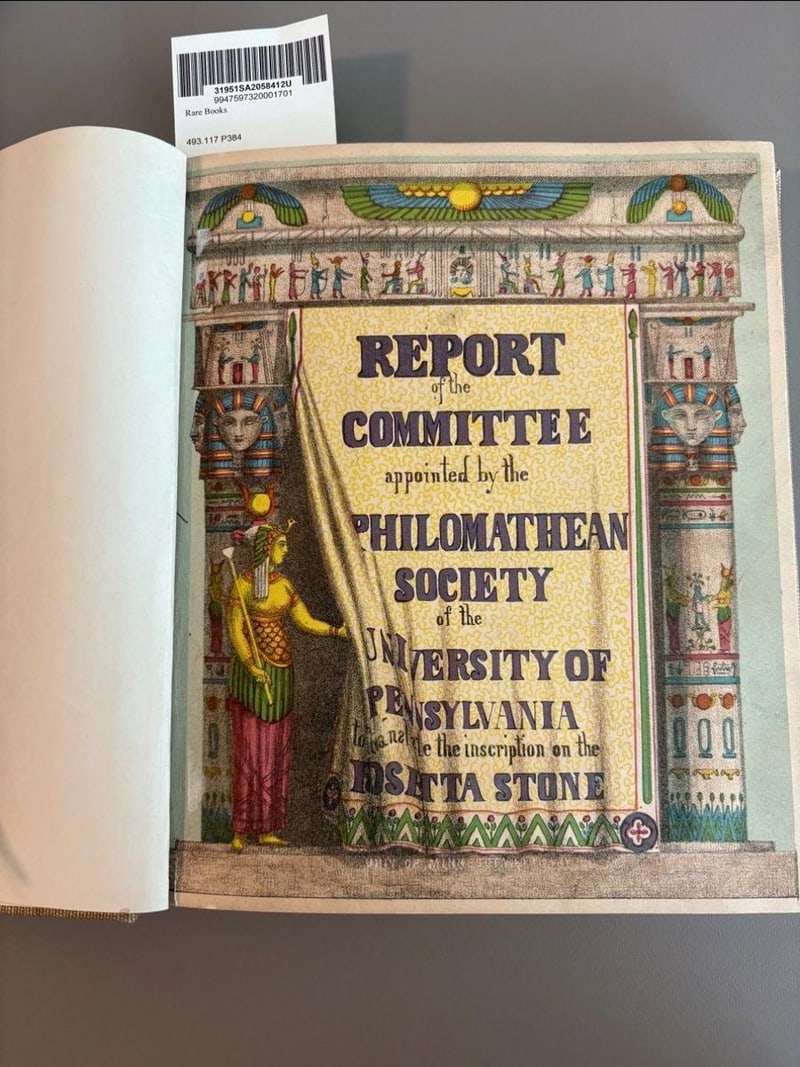
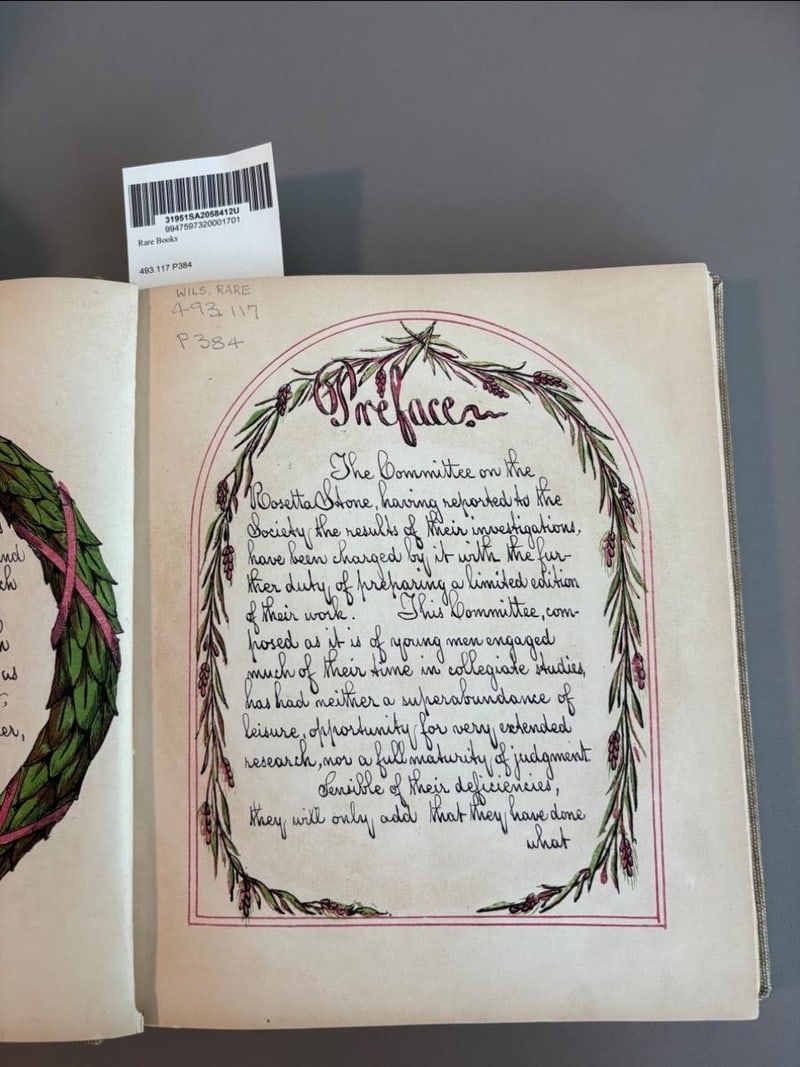
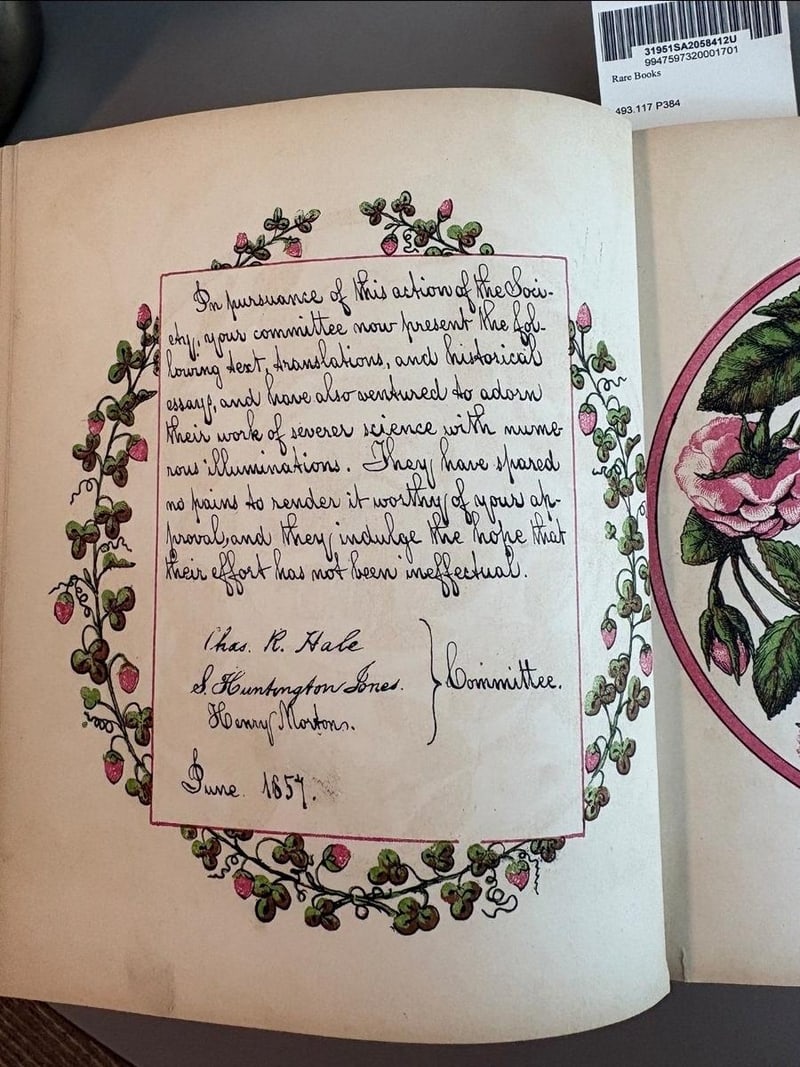
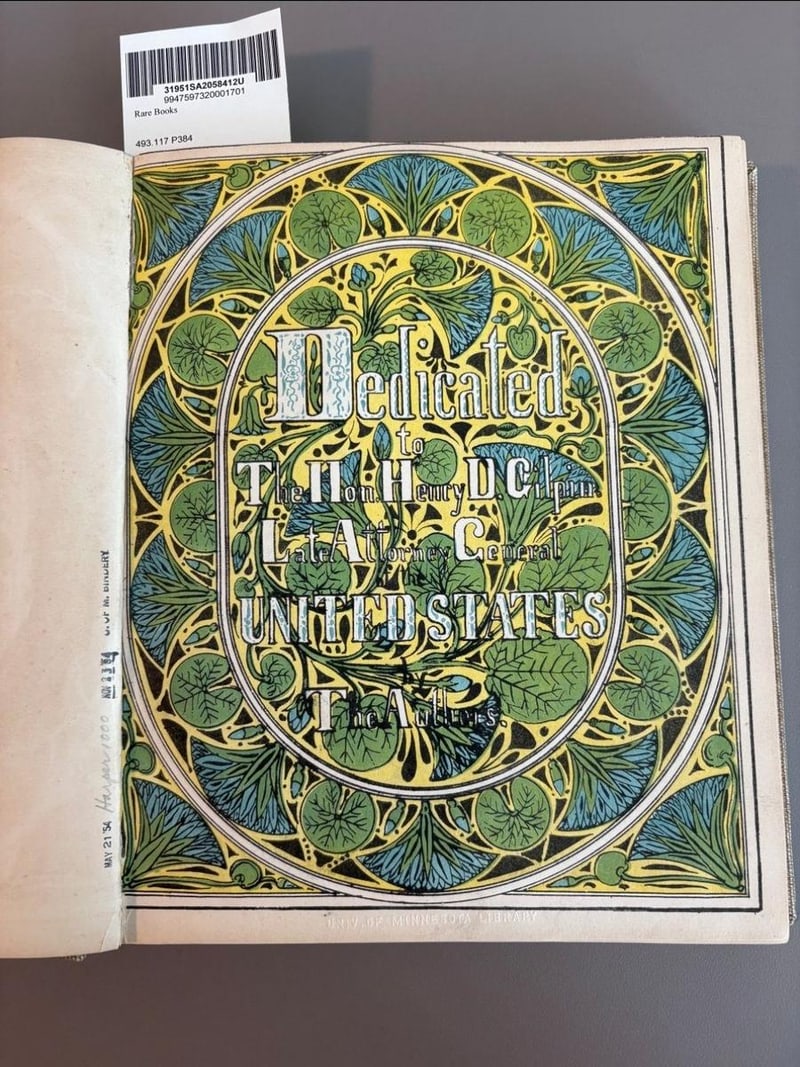
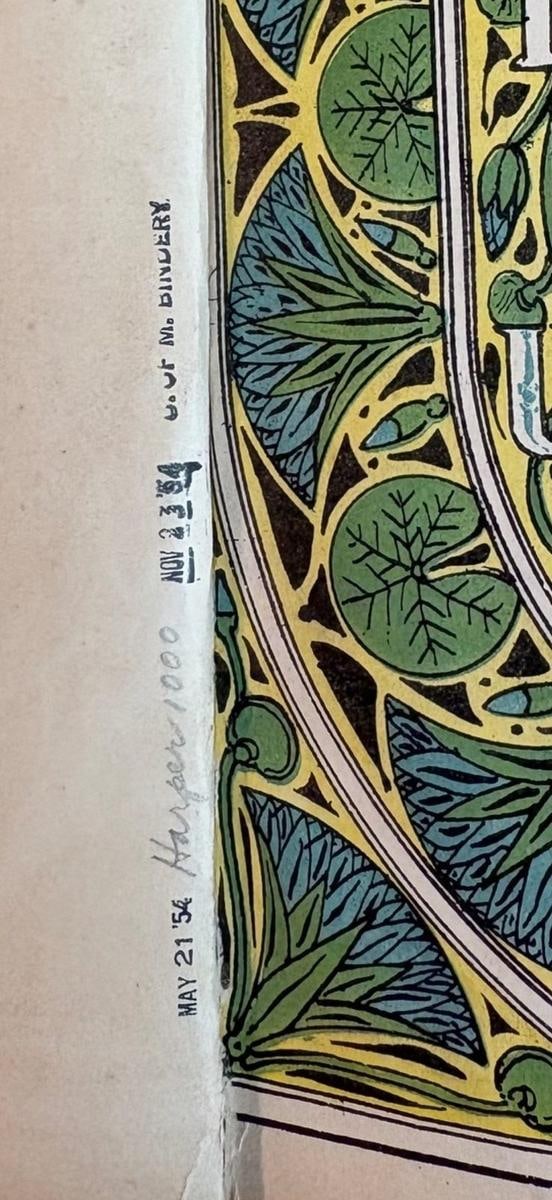
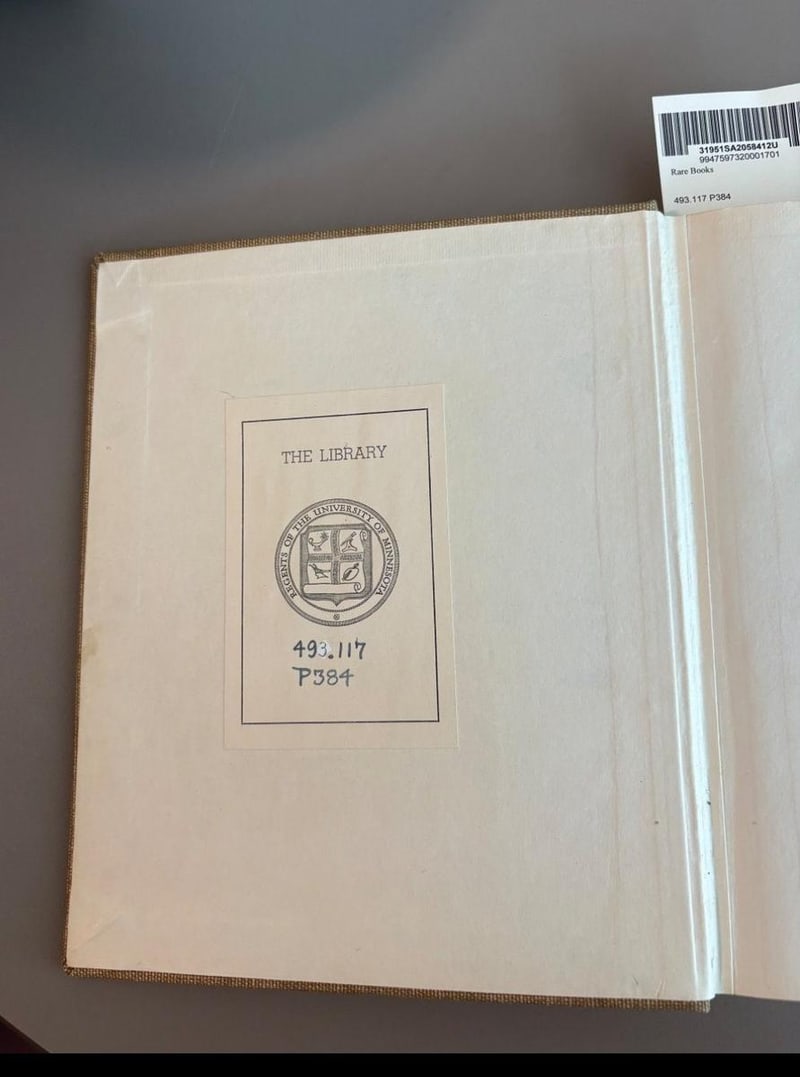
Yale University, Beinecke Rare Book & Manuscript Library
New Haven, Connecticut
Original brown boards, retained, with the standard gilt-and-black Egyptian-motif design.
The title page carries no date or "Second Edition" statement, consistent with the 1858 first edition.
No authorial presentation is established. The volume qualifies as an association copy on the strength of the early owner's inscription described below.
Inscribed ‘Maria A. Hemphill.’ Faint graphite beneath may read ‘West Chester, Pa. / from John H…’; neither reading is secure. A Paul Mellon bequest bookplate and pencil note ‘Beinecke Library 2003 +16’ document Yale custody. ‘Yale 1929’ is Mellon’s class year.
Maria A. Hemphill (early owner, unresolved) → unresolved gap → Paul Mellon (collector) → Yale University, Beinecke Rare Book & Manuscript Library, by bequest
Hemphill’s identity and the route into Mellon’s collection are unrecorded.
Yale University Library catalog, correspondence, and copy photographs.
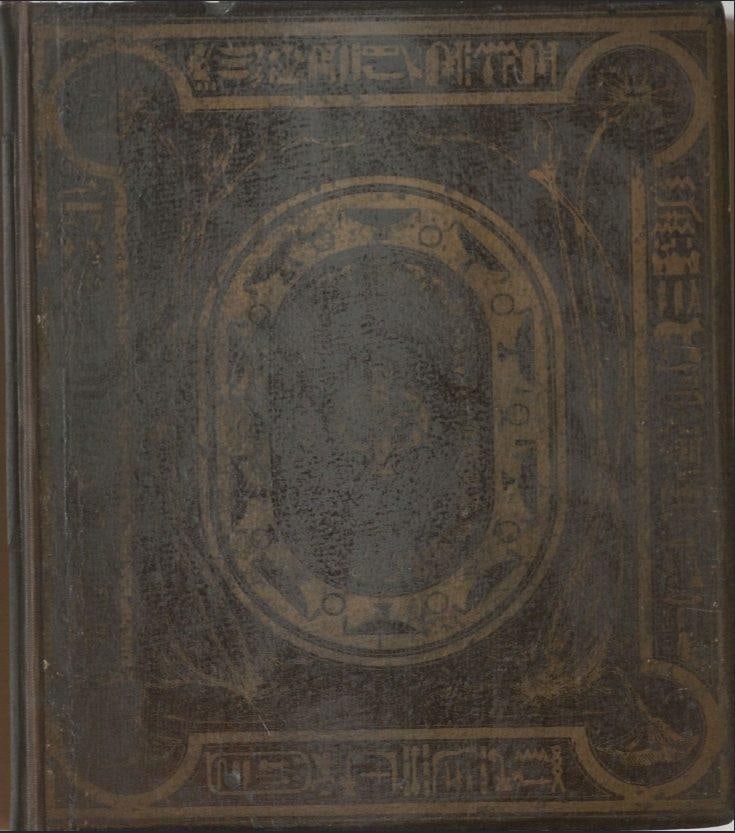
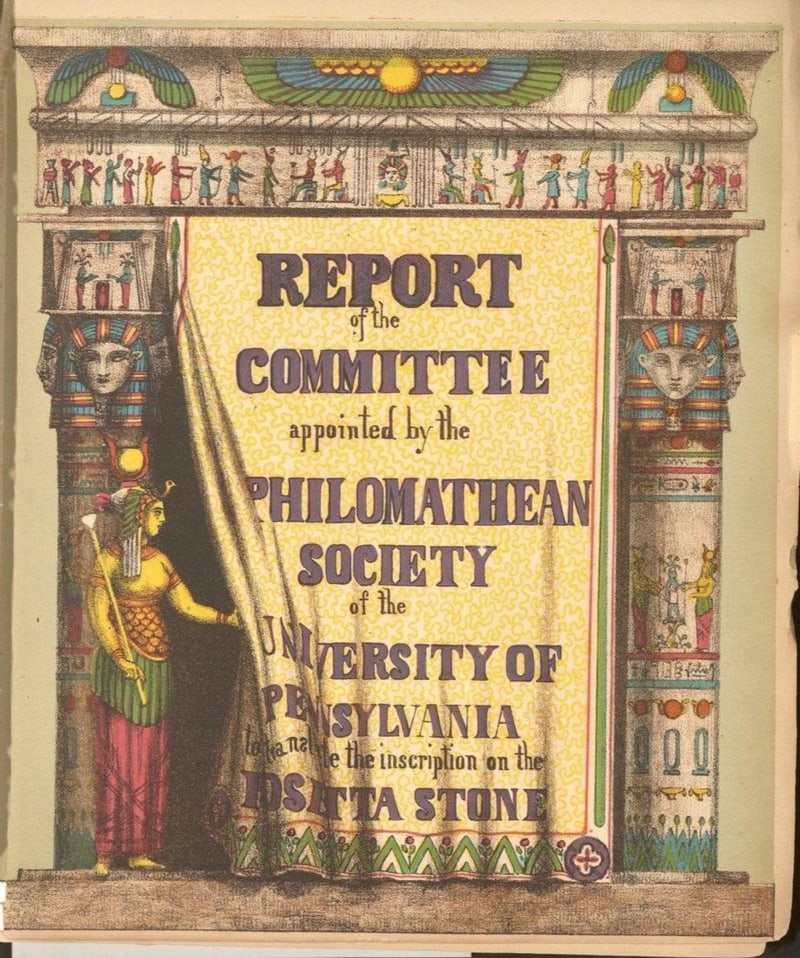
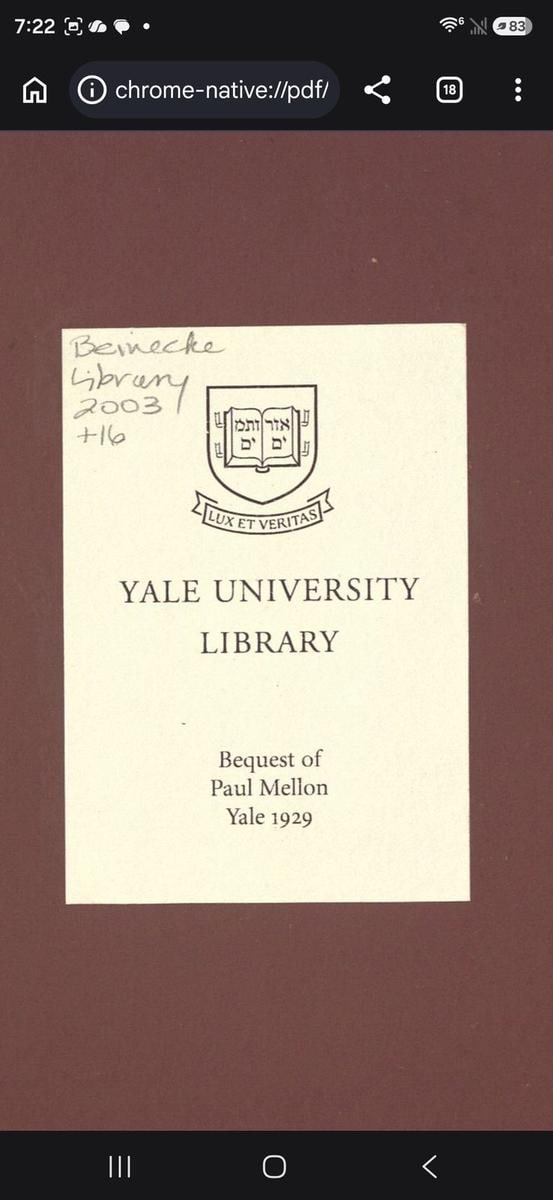
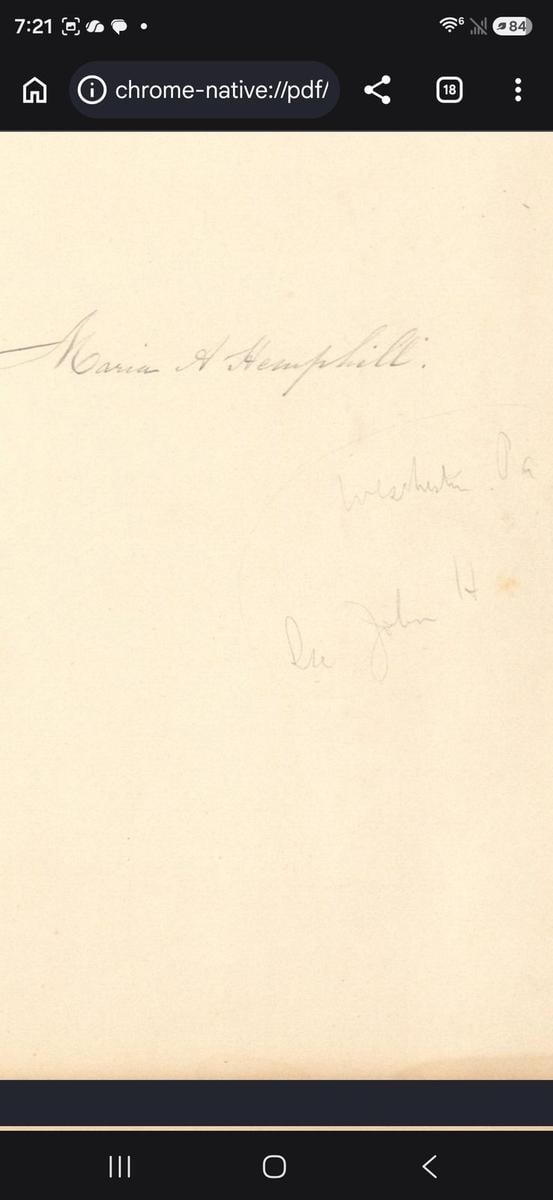
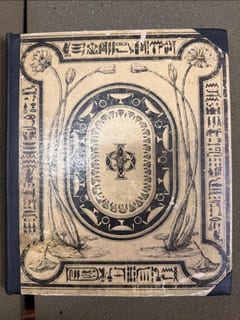
The University Club
New York, New York
Original cream-and-black decorated publisher's boards, retained in a later black-cloth reback with reinforced corners.
The title page is missing, apparently lost to the same undocumented repair that rebacked the spine, carried out before 1980; no record of the work survives. The volume's surviving original cream paper boards are themselves diagnostic of the 1858 first edition, since the 1859 second edition was issued only in cloth-covered bindings. The surviving preliminary leaves — including the committee's facsimile signature leaf dated June 1857 — carry no "Second Edition" statement.
No presentation inscription, bookplate, or ownership marking identified.
Unrecorded earlier ownership → The University Club
University Club correspondence and photographs of both boards and two illuminated preliminary leaves.
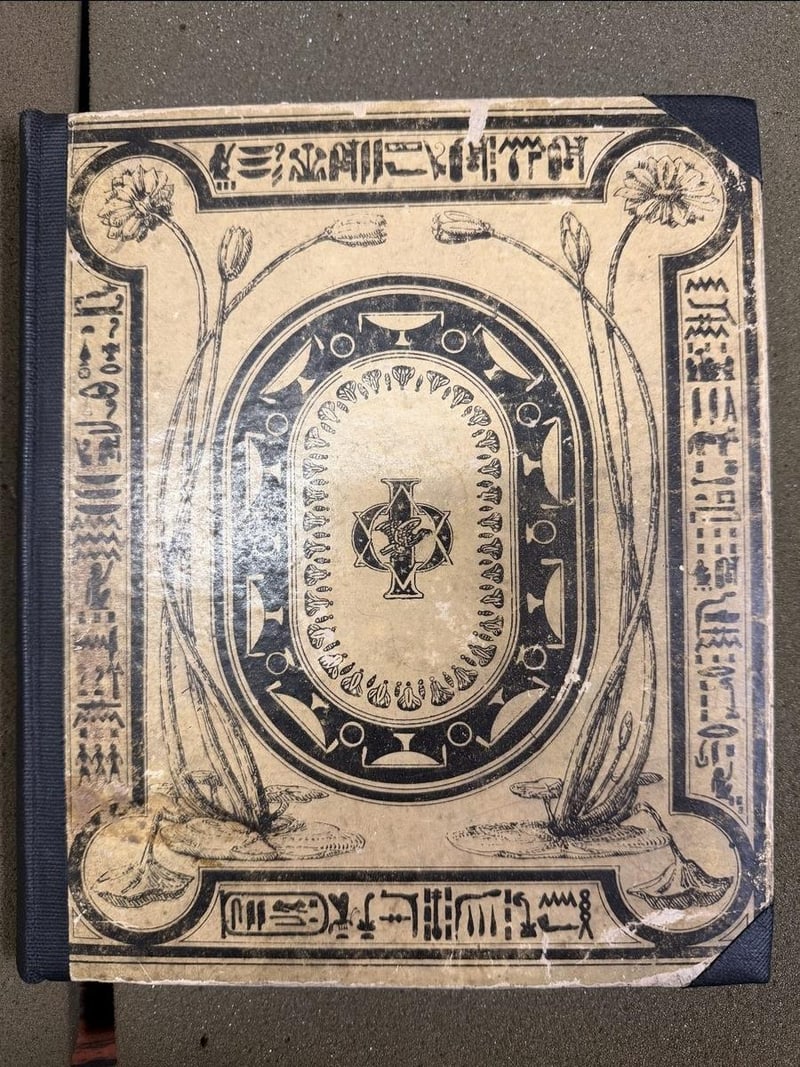
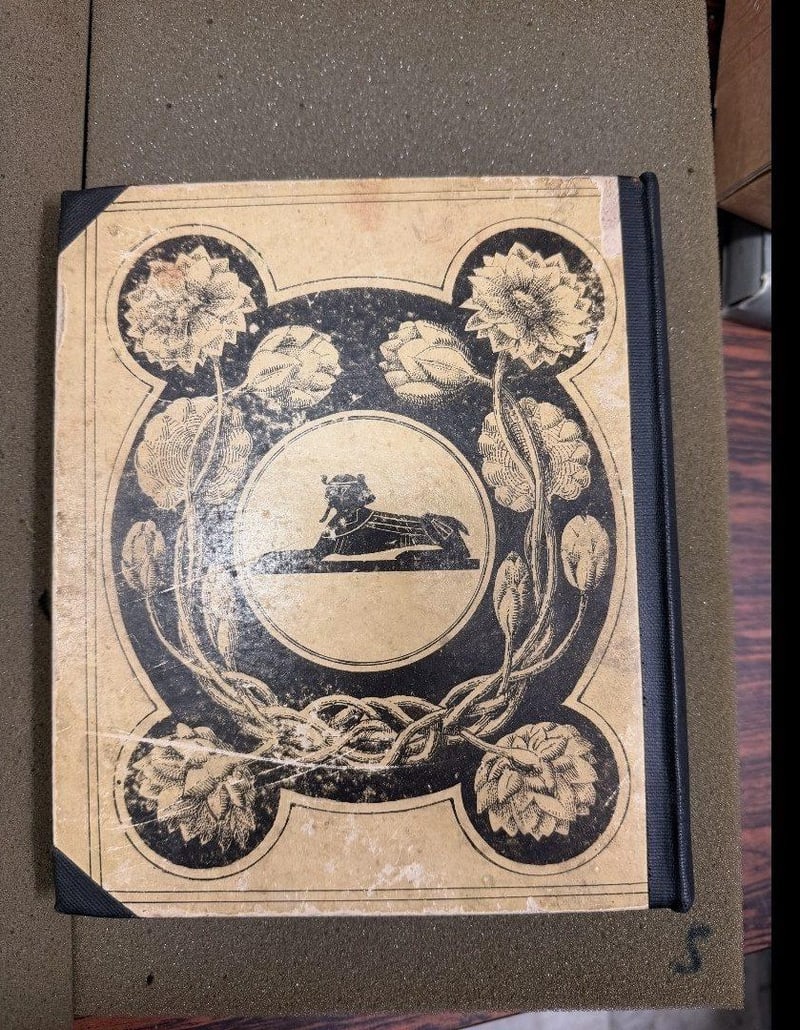
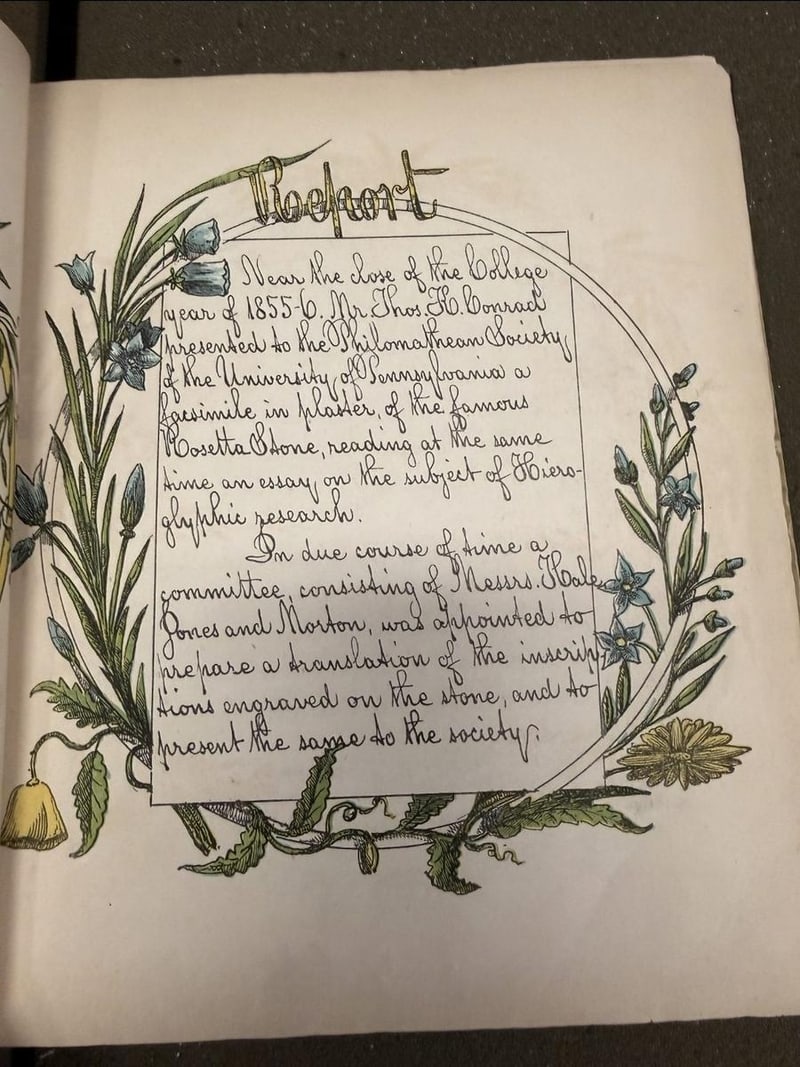
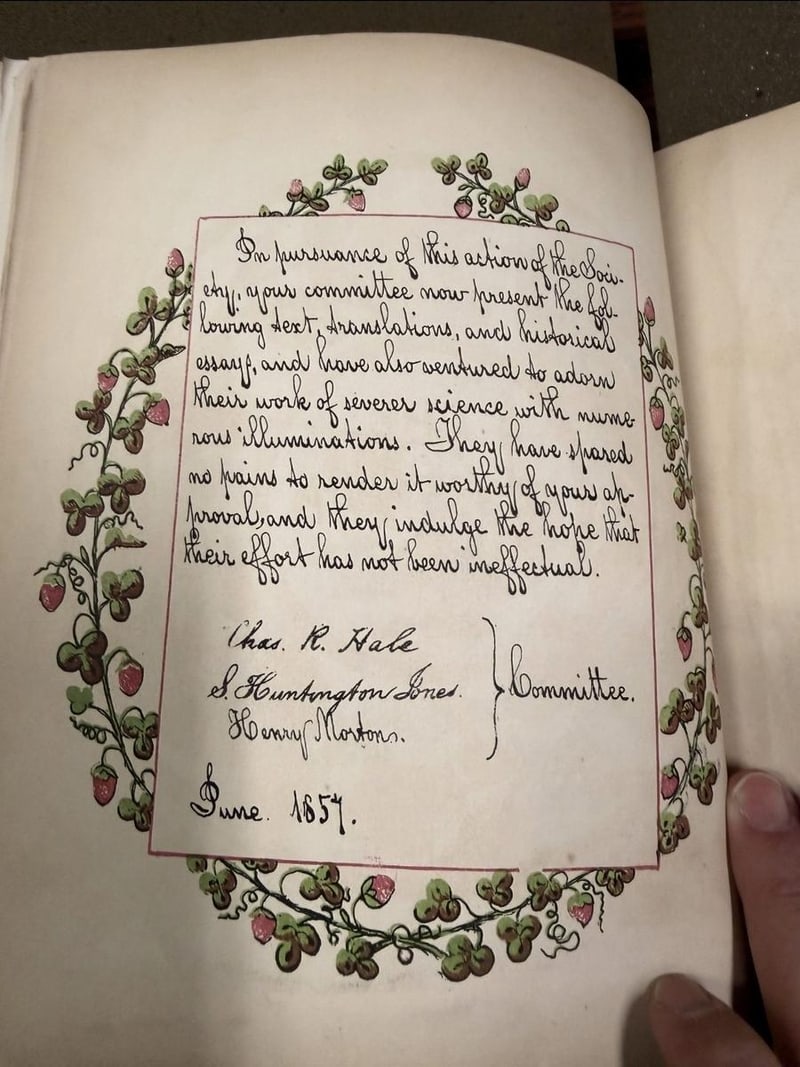
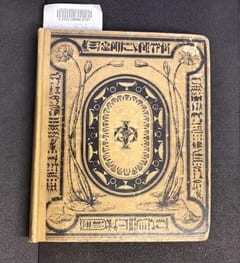
Free Library of Philadelphia, Parkway Central Library, Art and Literature Department
Philadelphia, Pennsylvania
Original cream publisher-issued boards with black decoration, retained.
The undated title has no Second Edition statement. The printed committee signature leaf survives.
The volume bears Henry Wharton and Katharine Johnstone Brinley Wharton’s inscriptions, apparently dated 1858, and their granddaughter Katharine Johnstone Muñoz Nell’s name. Her gift bookplate and the library’s donor notation record her gift on August 4, 1949. Family succession is supported; the exact transfers, including any ownership by their daughter Emily, are undocumented.
Henry Wharton and Katharine Johnstone (Brinley) Wharton, 1858 → their daughter Emily Wharton Muñoz → their granddaughter Katharine Johnstone Muñoz Nell → Free Library of Philadelphia, per donor notation dated August 4, 1949
No presentation inscription or documentary record establishes a wedding gift.
Free Library catalog, donor records, and copy photographs; Samuel Carpenter and His Descendants (1912); Wharton memorial and Philomathean alumni records; 1870 census; Emily Wharton Muñoz’s death certificate; 1920 Nell marriage notice and county record.
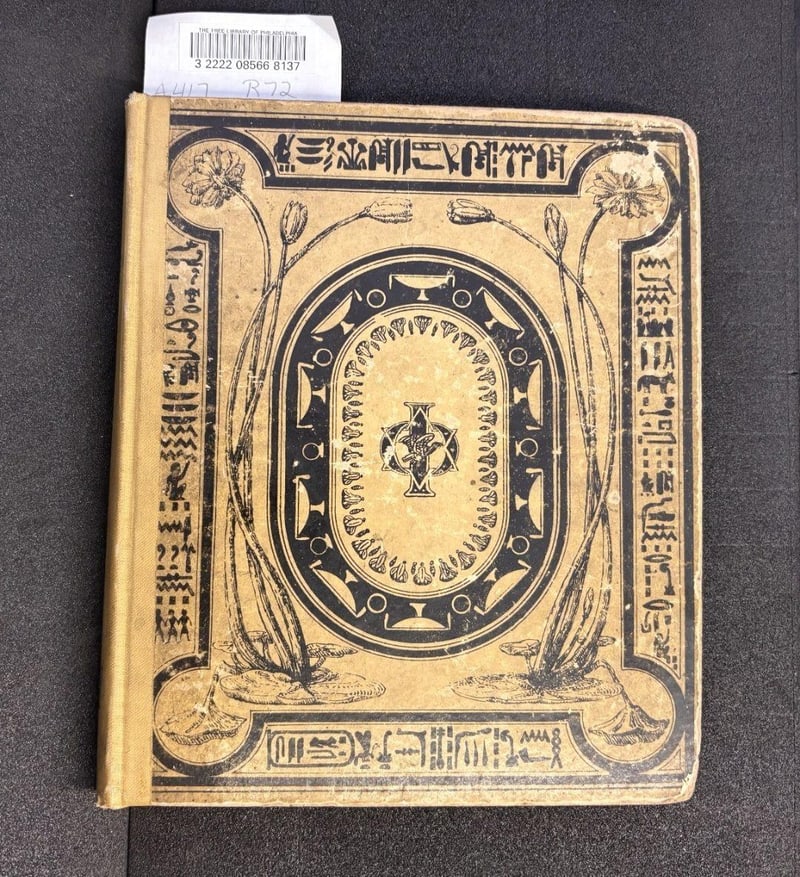
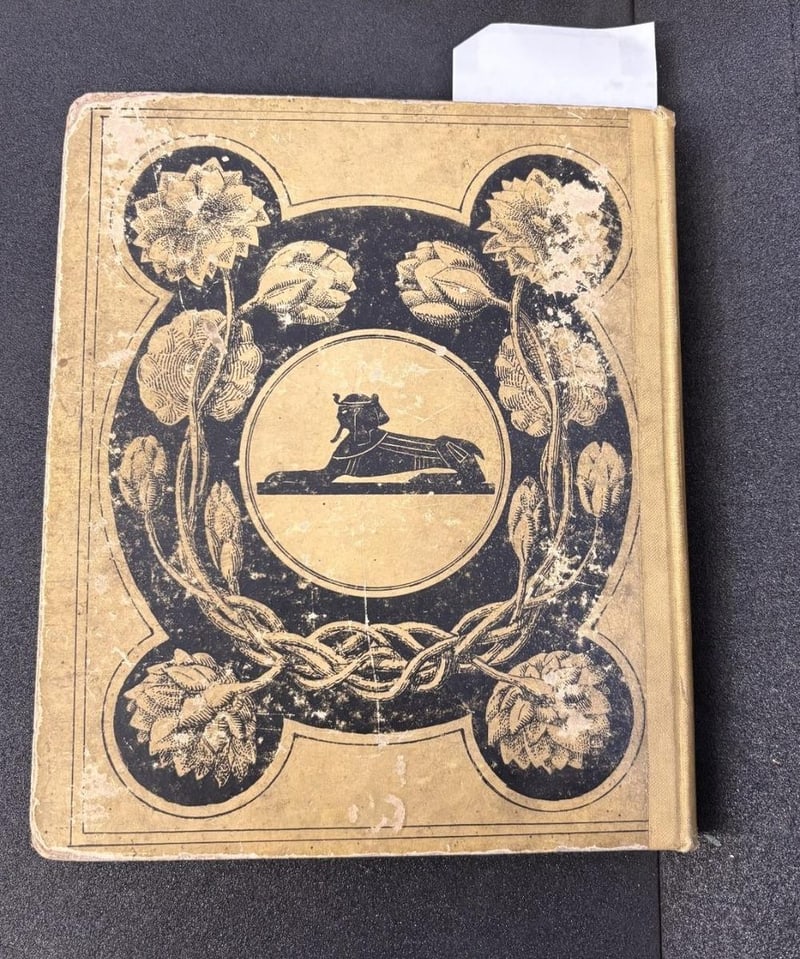
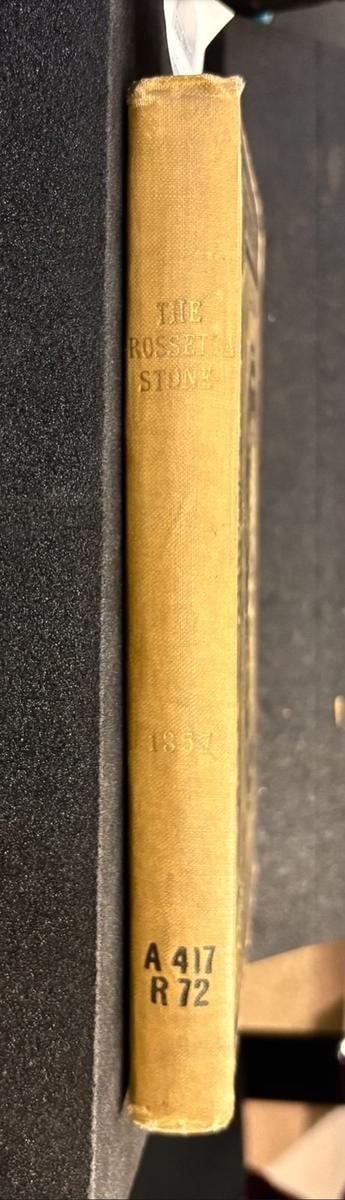
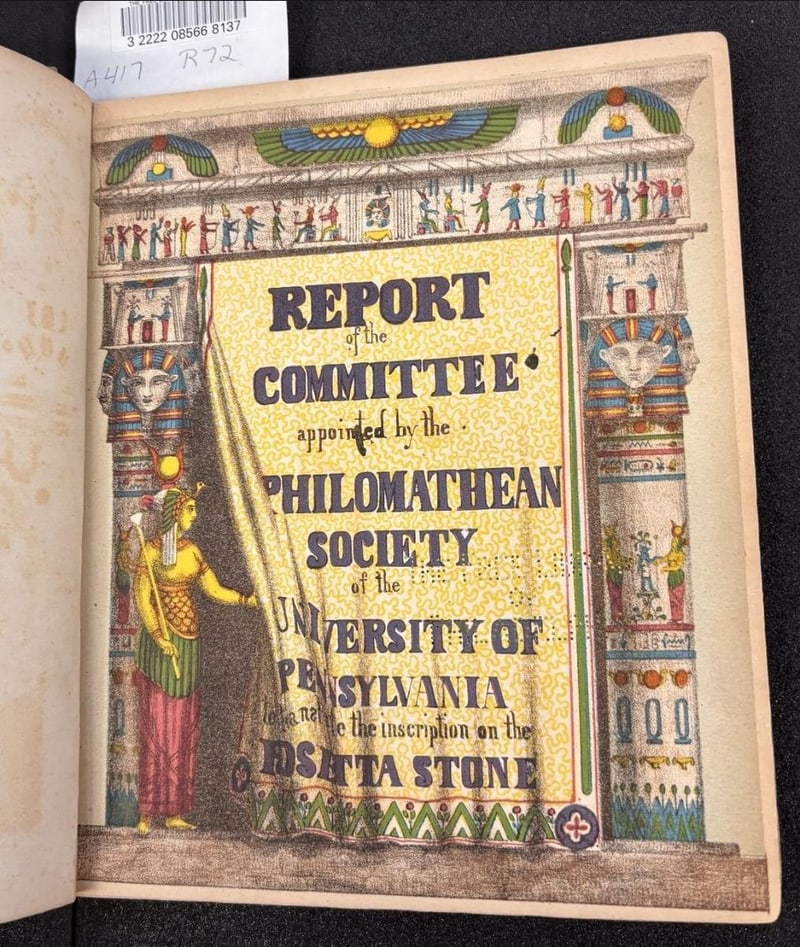
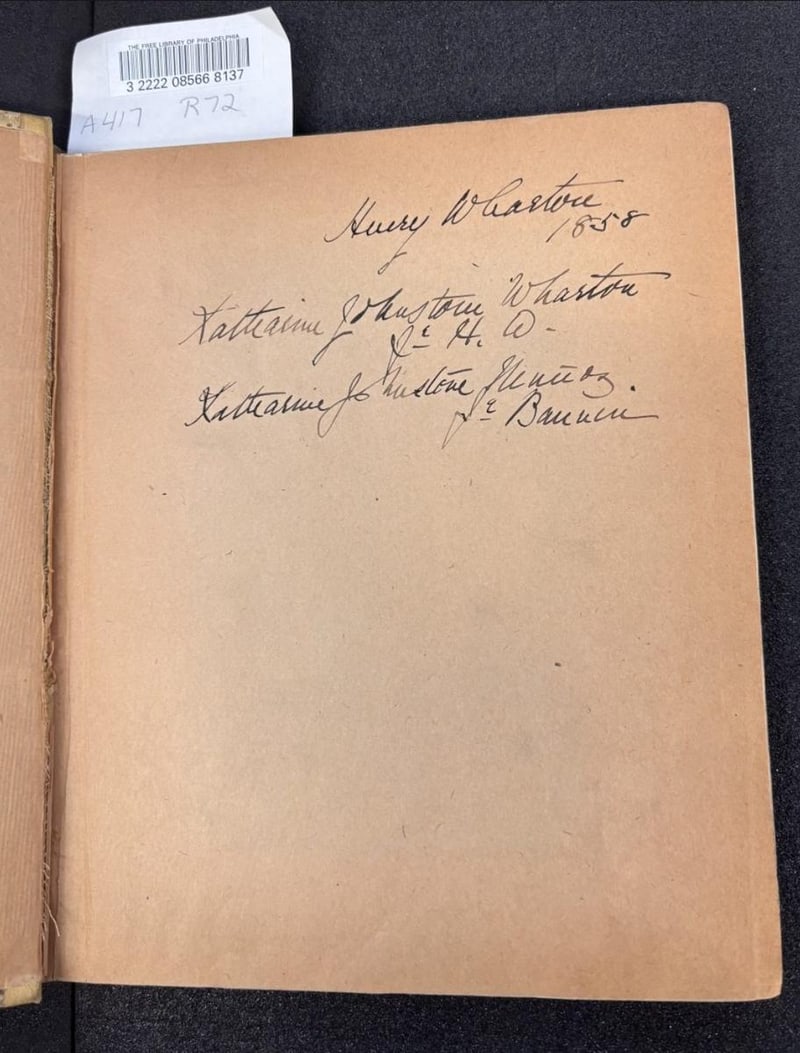
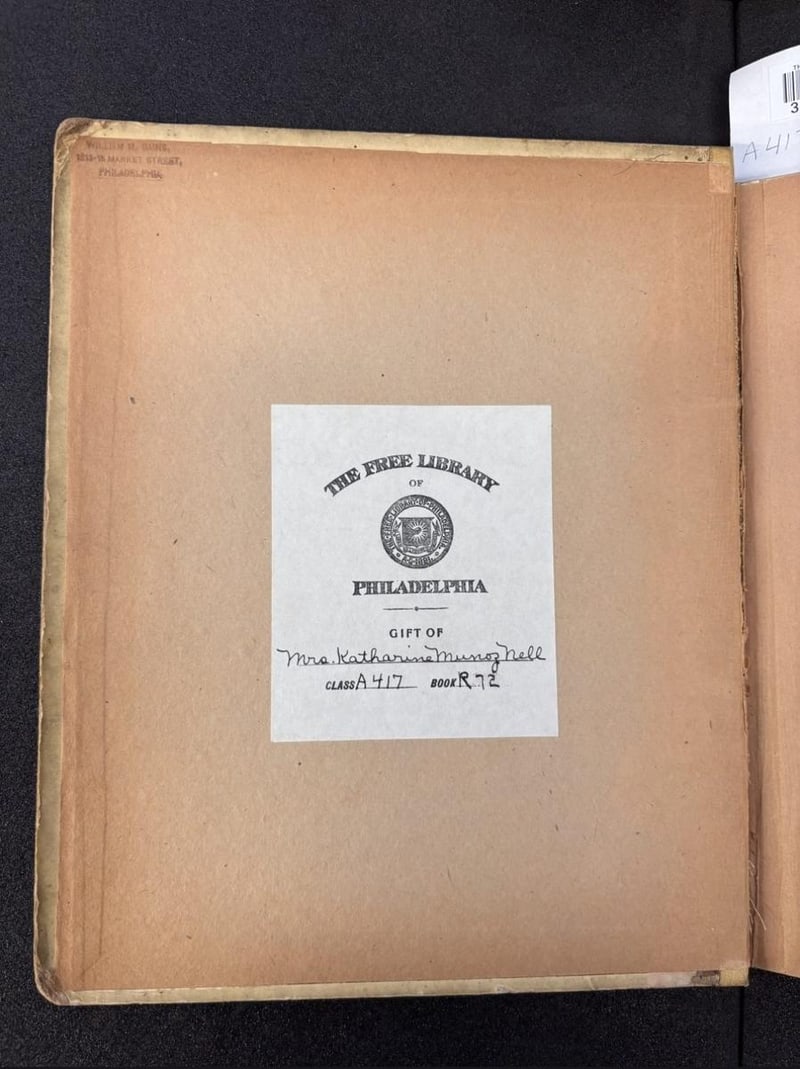
Free Library of Philadelphia, Parkway Central Library, Art and Literature Department
Philadelphia, Pennsylvania
Later green cloth-and-leather institutional rebinding; original cream boards not retained or not visible beneath the rebind.
The undated title has no Second Edition statement. A pencil note reads ‘Scarce 1st Edition, 1857’; the annotated date conflicts with the first-edition identification.
‘William Bowdoin Robins,’ dated 1860. No authorial presentation is established. The printed acknowledgement leaf is dated August 3, 1858.
A George S. Pepper Fund bookplate records library acquisition and shelfmark ‘Class P417, Book R72.’ ‘Mr. B’s office’ appears to be a location note. The fund plate does not establish Pepper’s private ownership; the transfer from Robins is unrecorded.
William Bowdoin Robins, documented by inscription in 1860 → unresolved gap → Free Library of Philadelphia, acquired through the George S. Pepper Fund
Free Library catalog, correspondence, and copy photographs; Bowdoin Robins family archive; Colonial Families of Philadelphia, vol. 2 (1911); Philadelphia biographical directory (1902); Pepper family records.
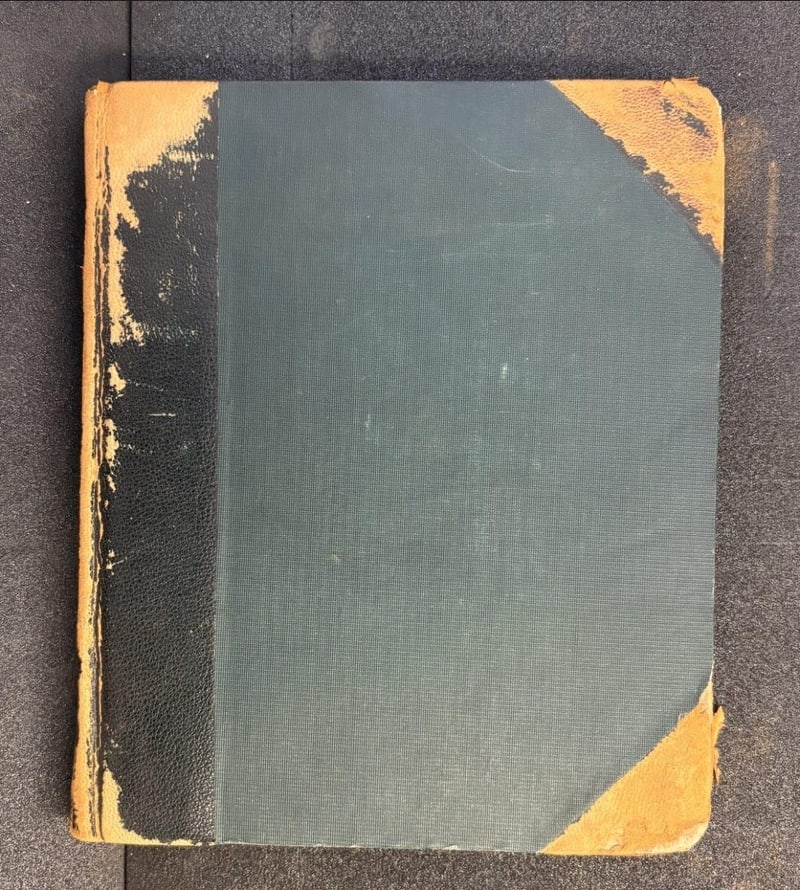
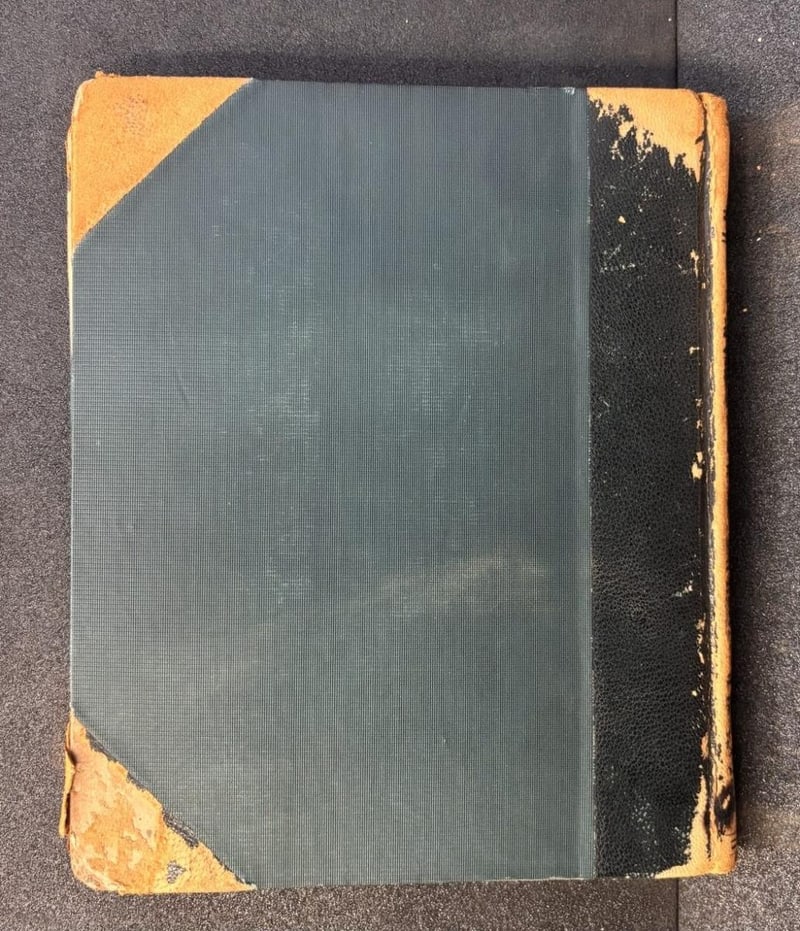
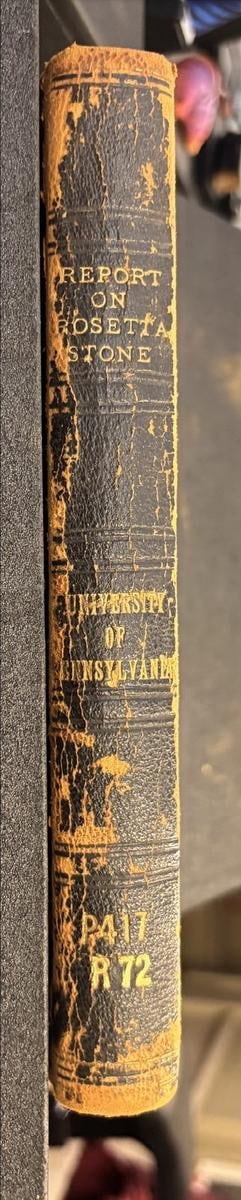
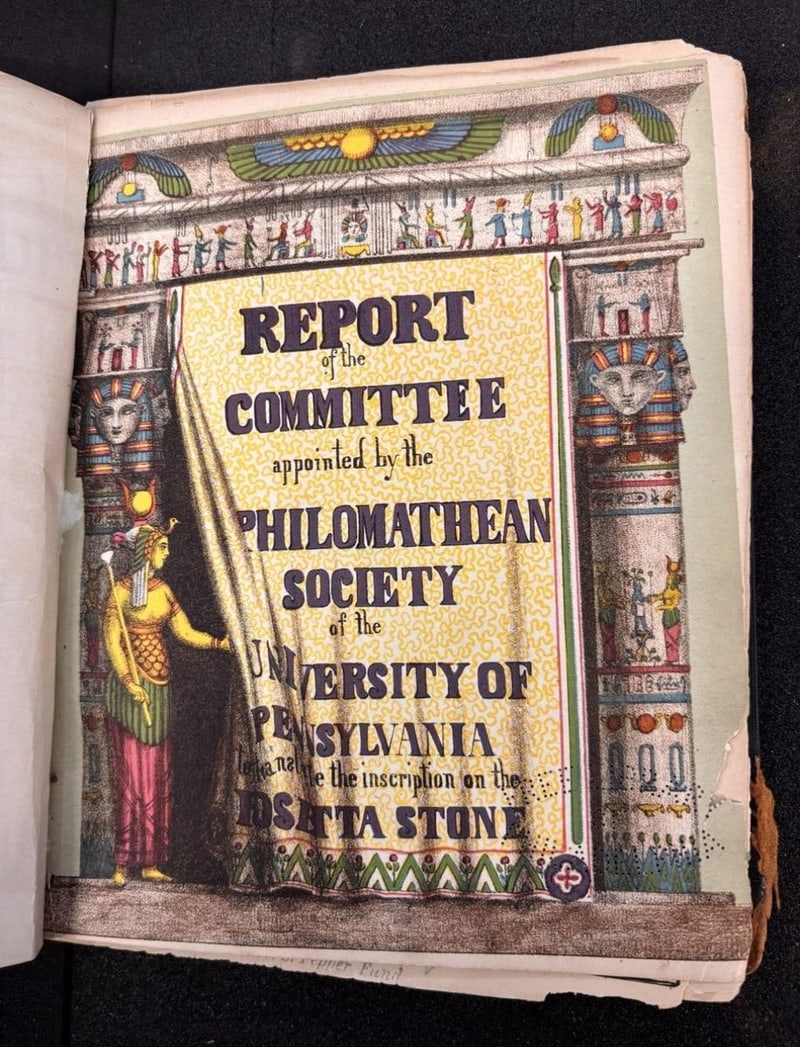
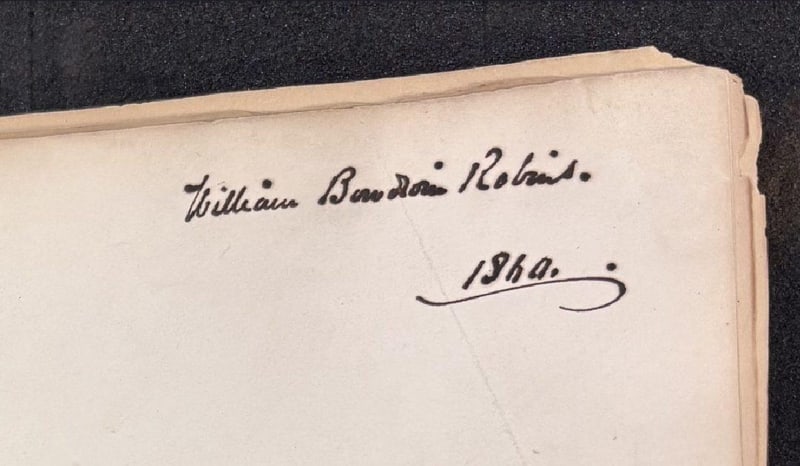
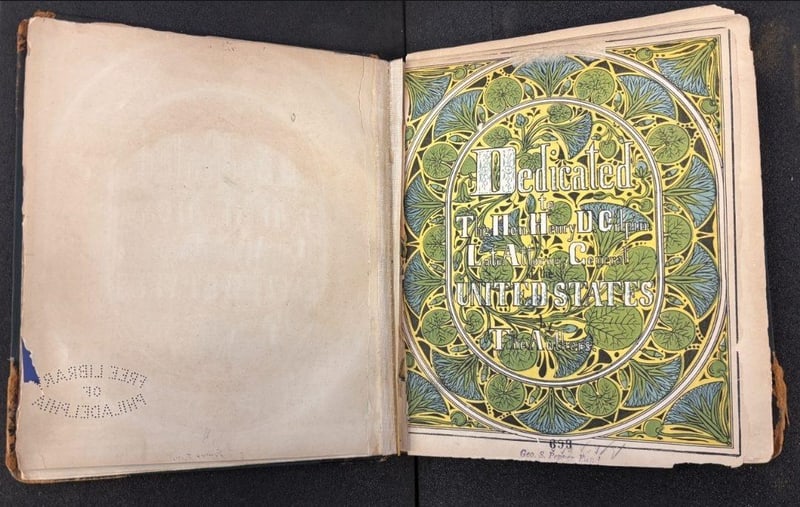
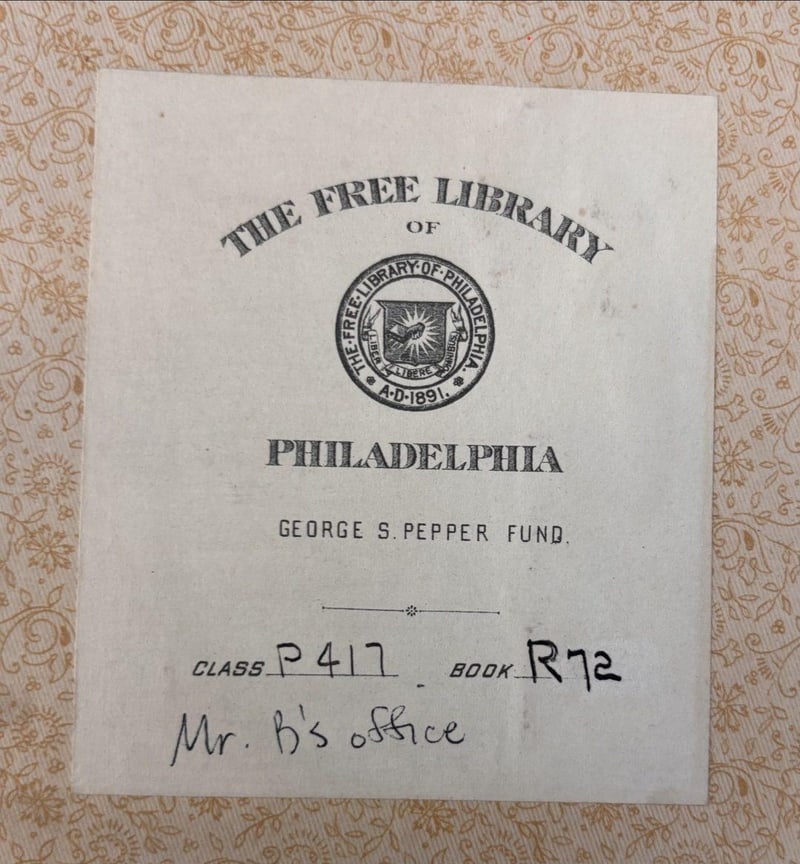
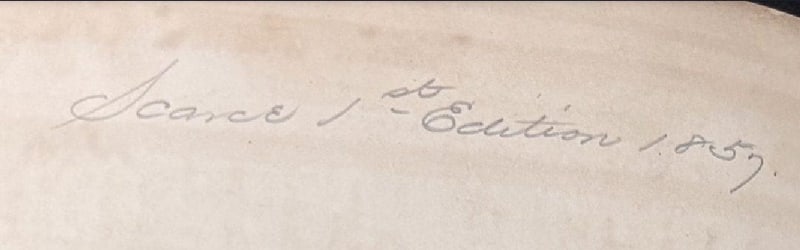
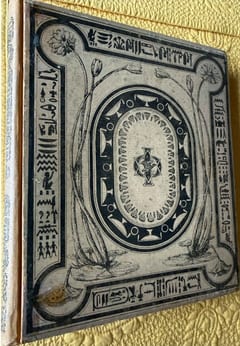
Private Collection
Original cream-and-black decorated publisher-issued boards, retained.
The original cream paper boards are diagnostic of the 1858 first edition, since the 1859 second edition was issued only in cloth-covered bindings.
The dedication bears ‘Effingham B. Morris,’ ‘U. of Pa,’ ‘1875.’ This is an ownership inscription.
Effingham B. Morris, 1875 → unresolved gap → Private Collection
Photographs and correspondence supplied by the present owner; University of Pennsylvania 1875 Record of the Class of '75, confirming Effingham B. Morris's membership; University of Pennsylvania Archives biography of Effingham Buckley Morris.
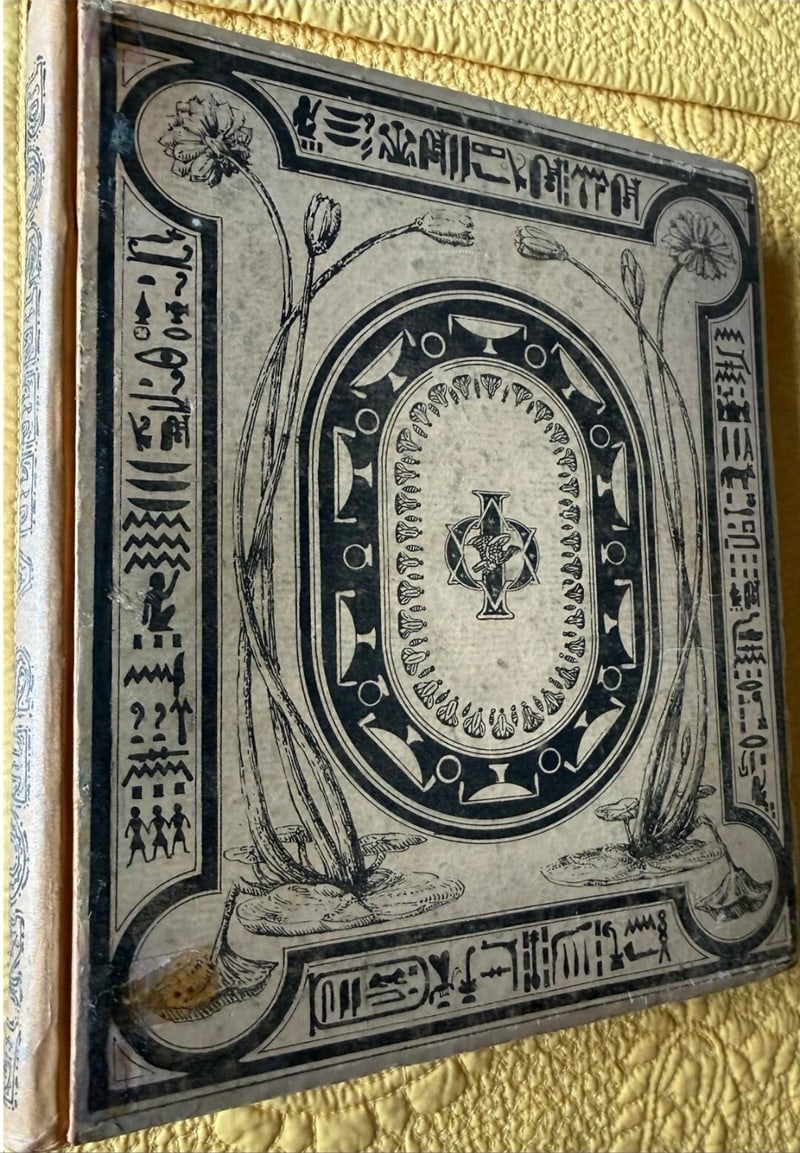
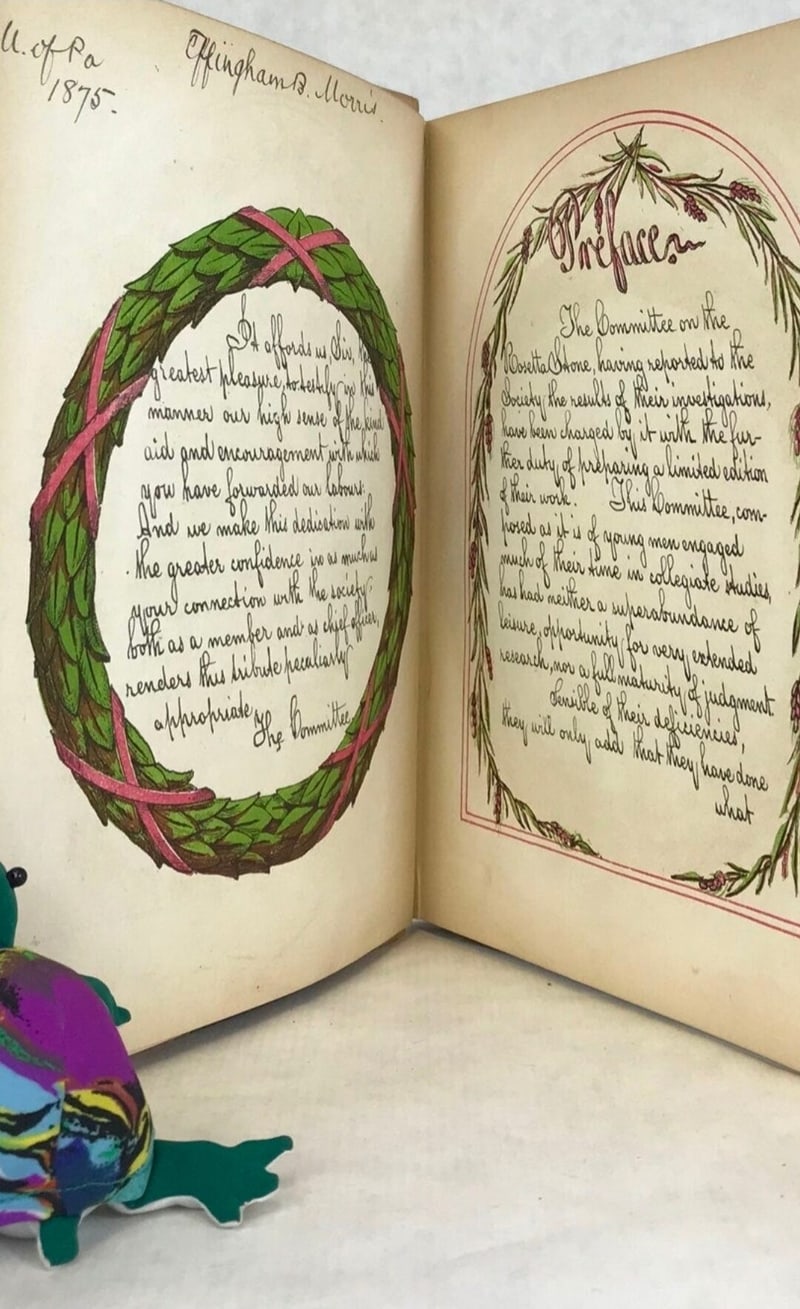
The British Museum
London, England
RBC.8°.HAL
Later plain brown cloth library binding with gilt spine lettering. A modern Walter Newbury binder's label is present. The photographed exterior board is plain and matches the spine; the supplied photographs do not establish that an original decorated publisher board survives beneath or within the later binding.
The title page is absent; a catalog note records pages 73–80 missing. The spine date ‘1857’ conflicts with the Museum’s first-edition identification.
No presentation inscription or ownership mark identified.
Unrecorded earlier ownership → Department of Egyptian Antiquities, The British Museum, by 1892
The volume was found with an Adams-associated group, but lacks the identifying marks of William Y. Adams’s books. His ownership is unestablished; the acquisition route is unrecorded.
A Department of Egyptian Antiquities stamp establishes British Museum custody by 1892.
Correspondence with British Museum staff; British Museum Collections Online bibliographic record; five copy-specific photographs.
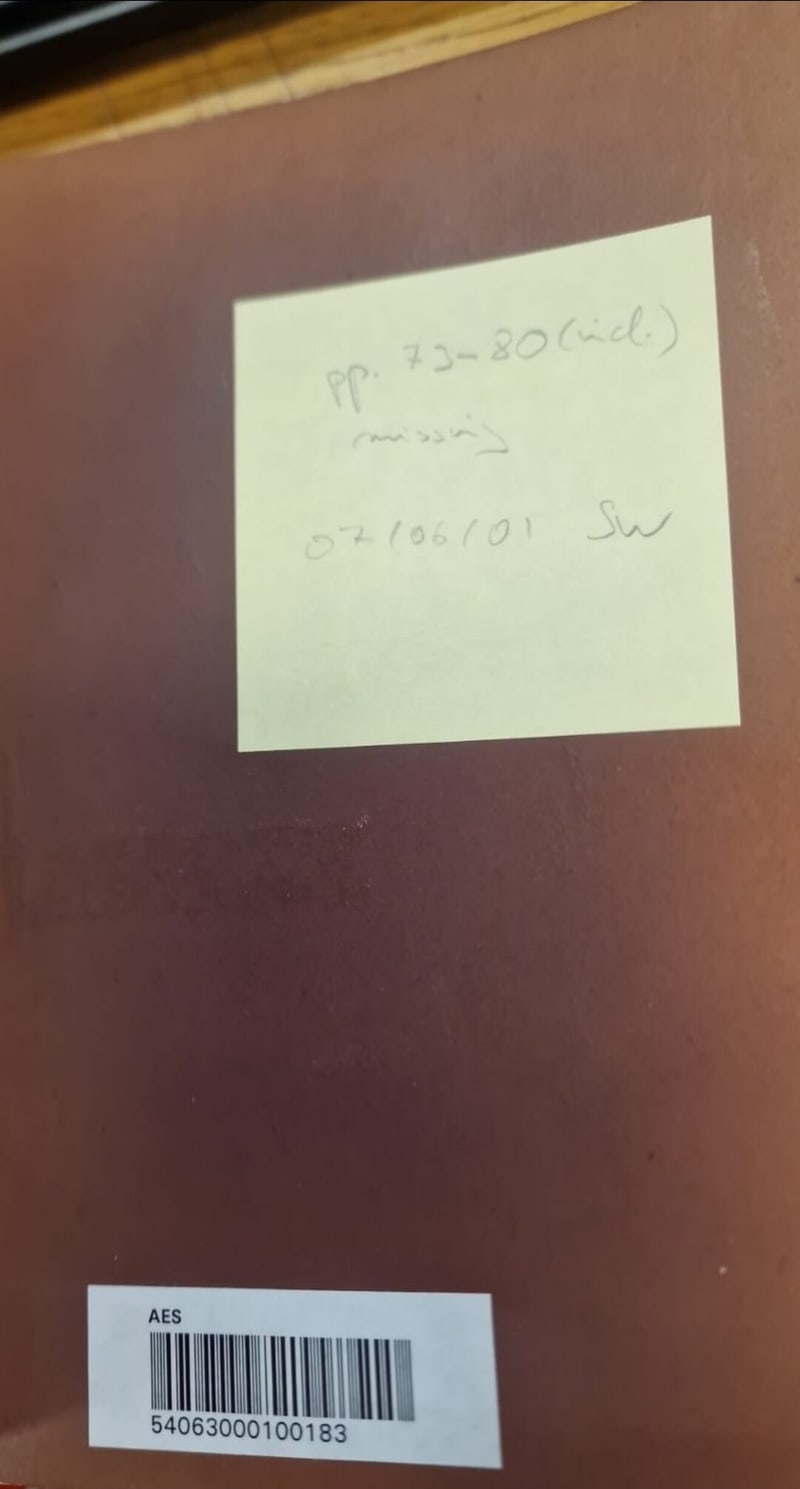
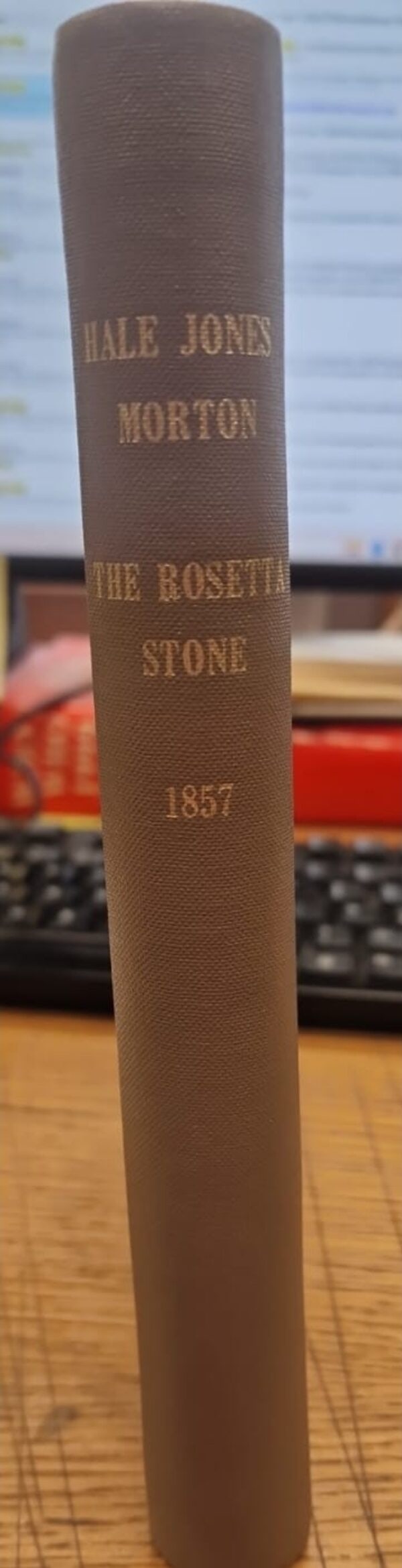
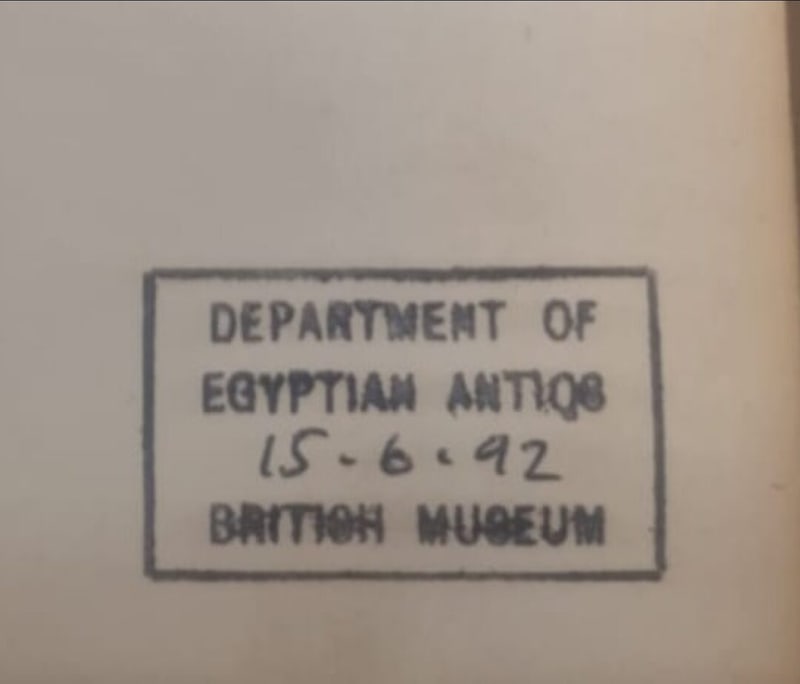
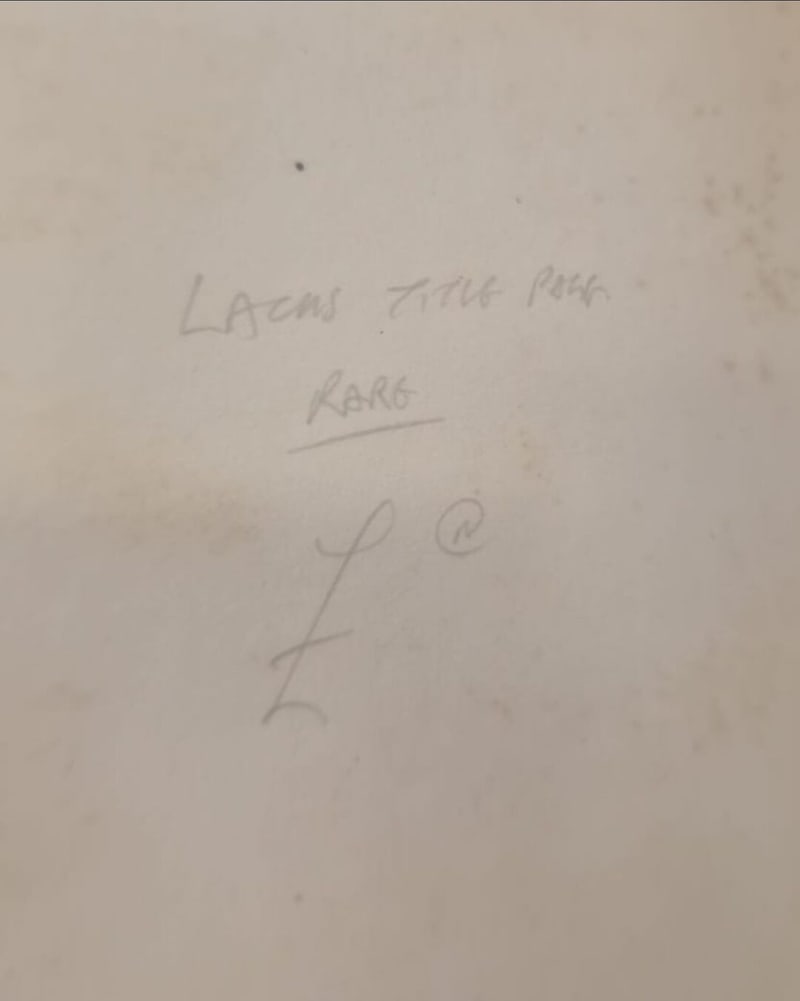
Smithsonian Institution
Washington, D.C.
Later plain black buckram library rebinding with undecorated boards, gilt-stamped spine title, and shelf label.
Present dimensions reported as approximately 8½ × 7¼ inches. Staff believes the height was reduced during rebinding; the width may remain original.
The photographed illuminated title page has no "SECOND EDITION" statement and matches the 1858 first-edition design, conclusively distinguishing this volume from the 1859 second edition.
No personal inscription, bookplate, or marginalia has been found. The title page bears an 1883 Library of the Bureau of Ethnology property stamp and a separate numeral "26" in different ink. The number "17760" is stamped on one maroon interior leaf. Smithsonian staff identified the numeral 26 as an inventory or accession number; the meaning of 17760 remains unresolved. A penciled “1858X” appears in the photographed margin.
Unrecorded earlier ownership → Library of the Bureau of Ethnology, by 1883 → Smithsonian Institution
Smithsonian catalog, physical examination, correspondence, three interior photographs, and three binding photographs.
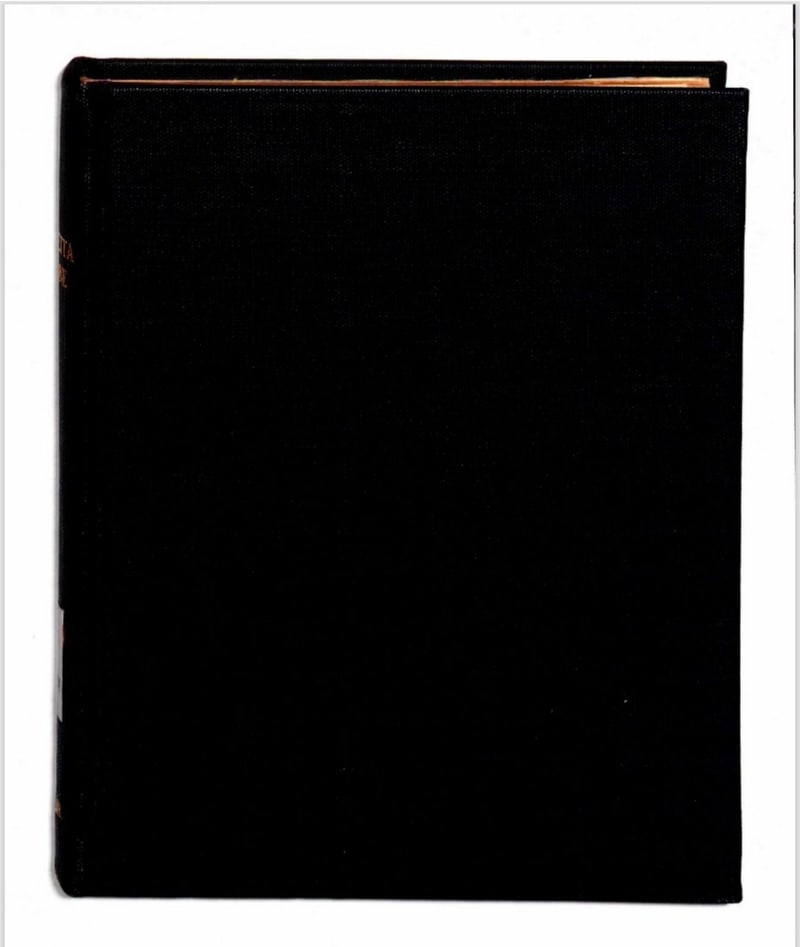
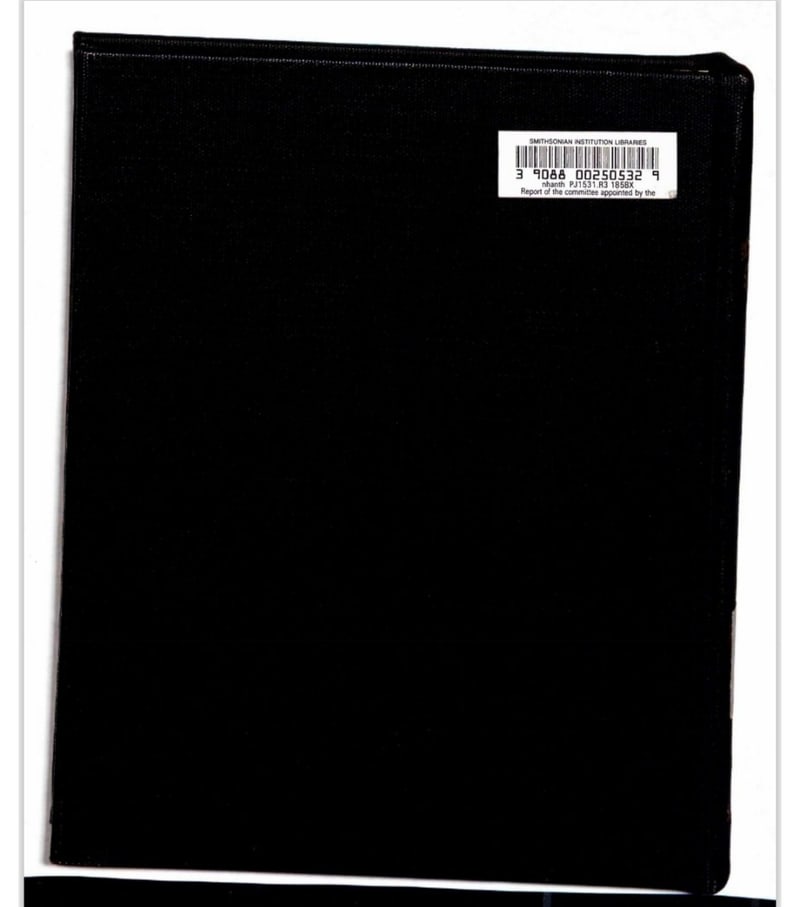
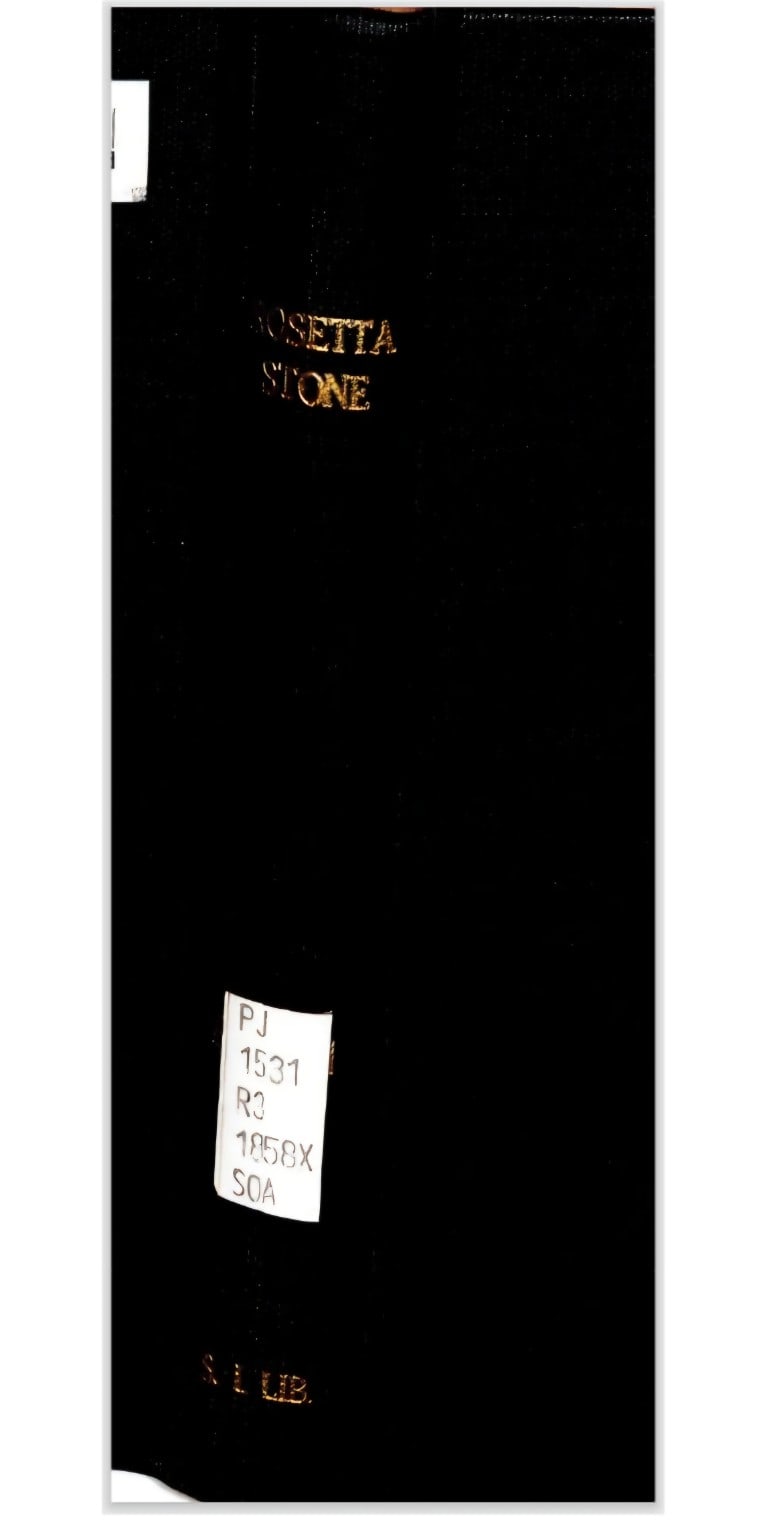
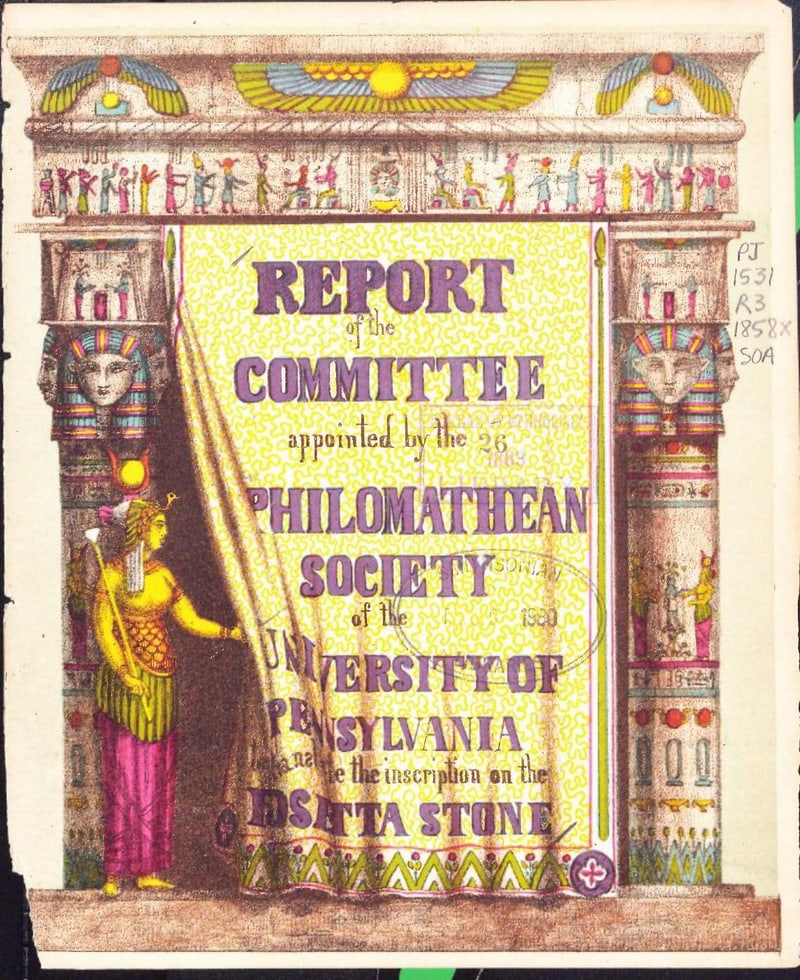
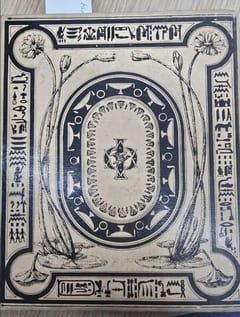
Rochester Institute of Technology, Cary Graphic Arts Collection
Rochester, New York
Original cream paper-covered publisher's boards printed in black with Egyptian and floral designs; the original cream spine, titled “ROSETTA STONE” in outlined capitals, is retained.
The title has no Second Edition statement; the original printed boards and acknowledgement dated August 3, 1858 identify the first edition.
No presentation inscription, ownership inscription, or bookplate identified in the supplied photographs.
Unrecorded earlier ownership → Rochester Institute of Technology, Cary Graphic Arts Collection
RIT Libraries catalog record; correspondence with the Cary Graphic Arts Collection; and six copy-specific photographs documenting the original binding, title, dedication, and dated acknowledgment leaf.
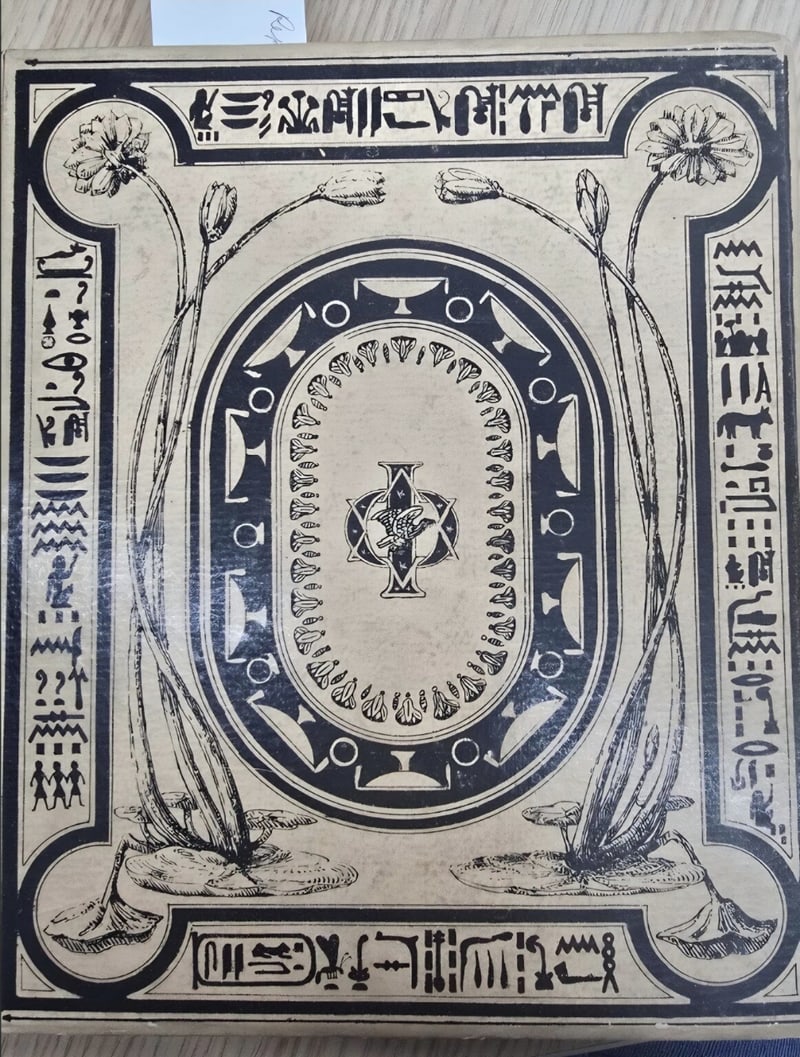
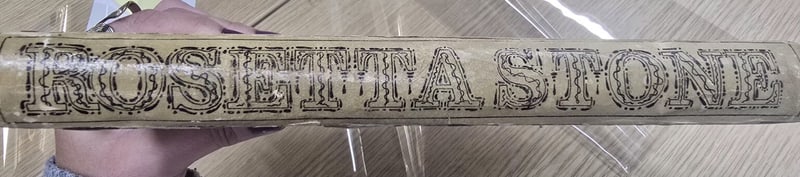
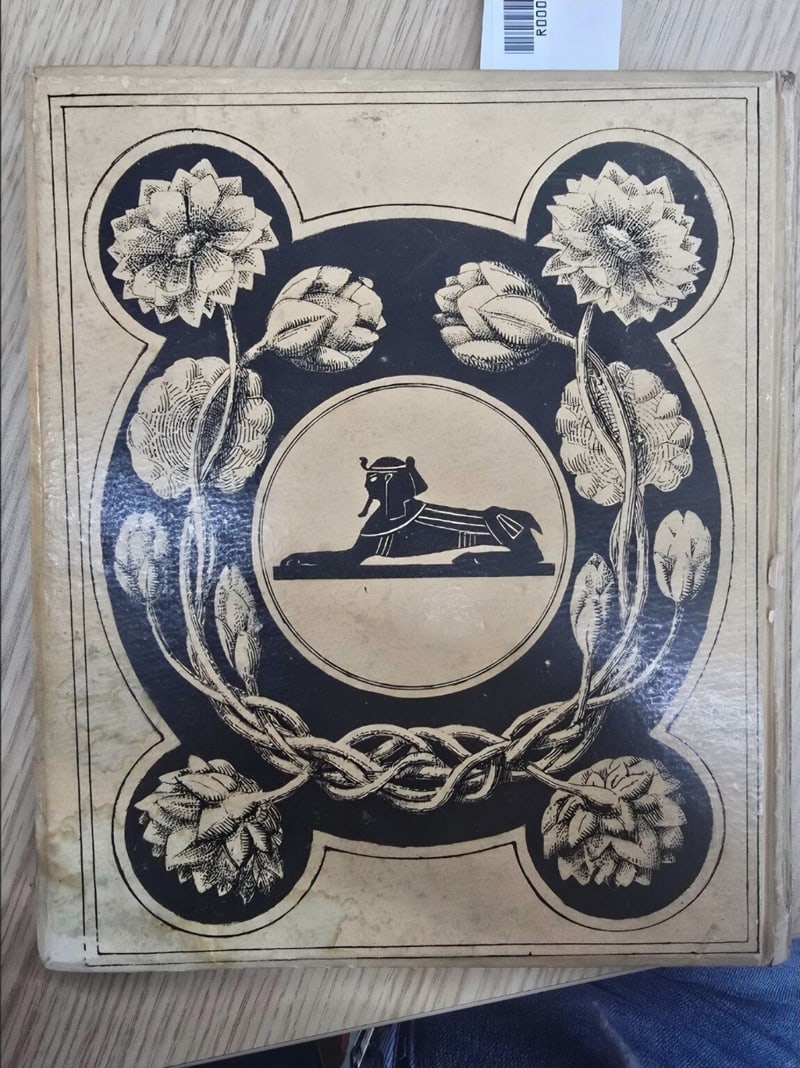
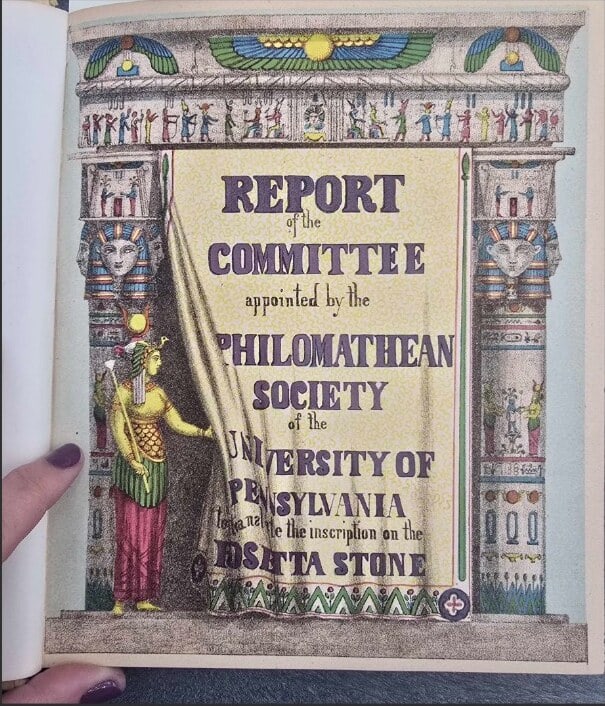
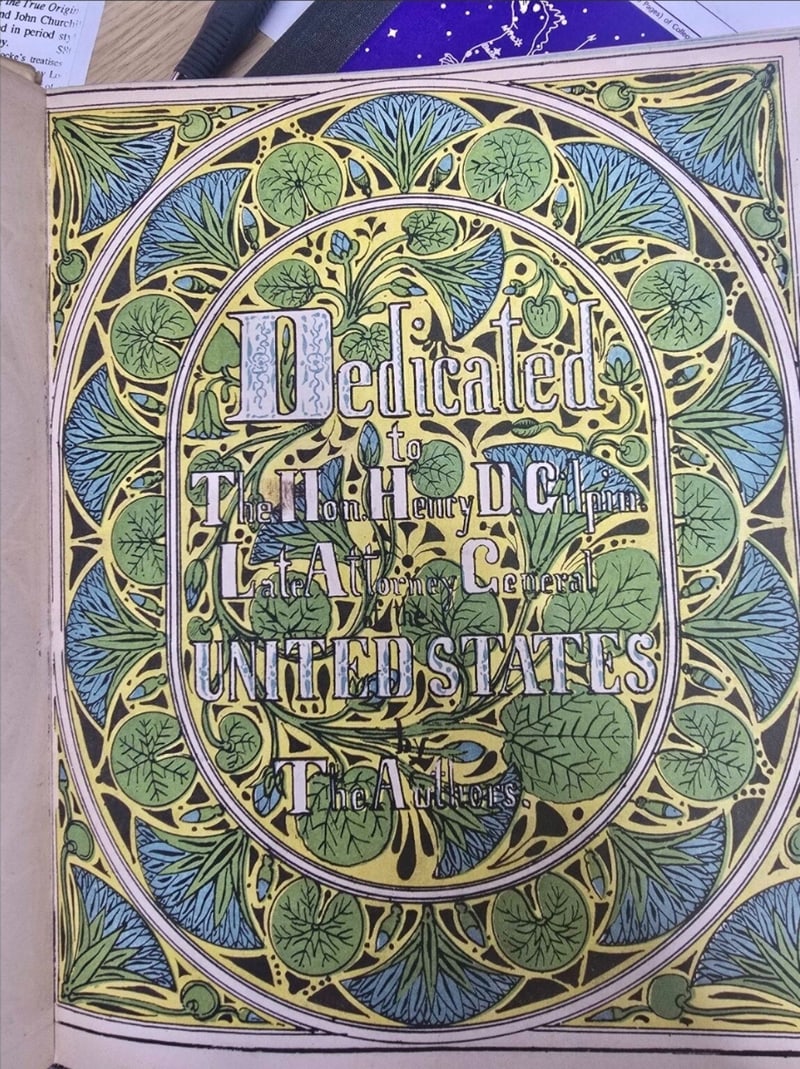
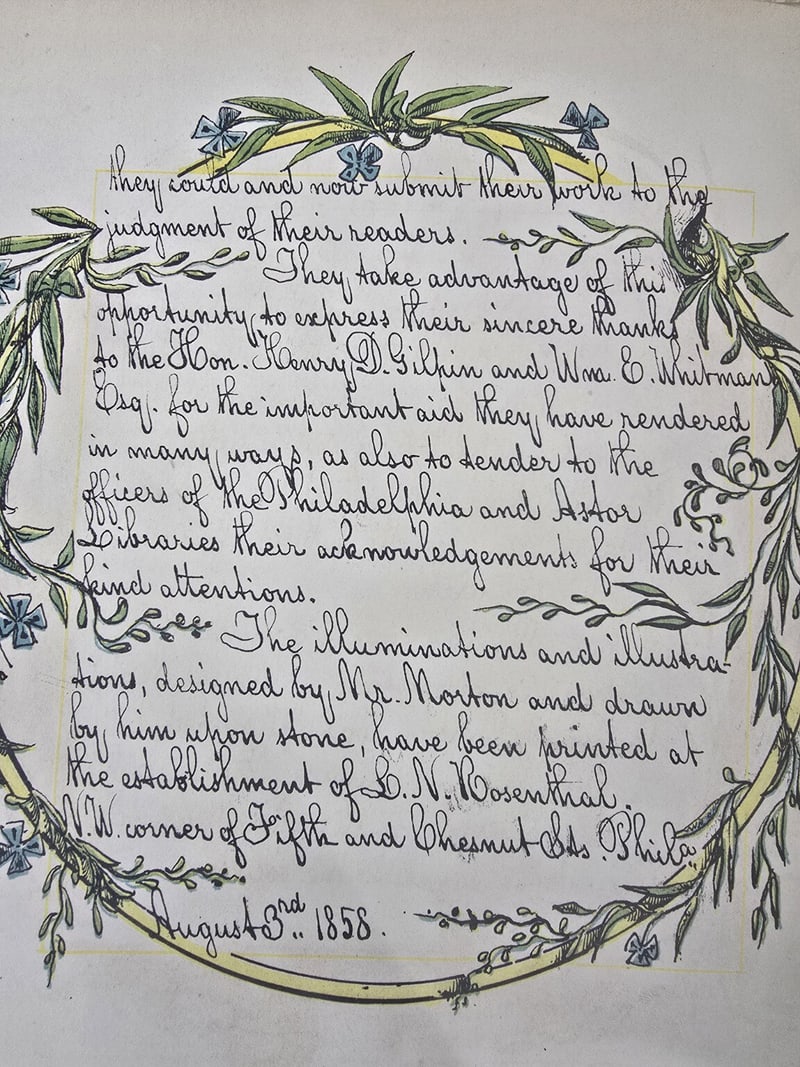
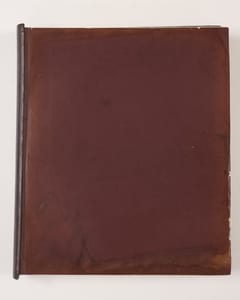
Longfellow House–Washington’s Headquarters National Historic Site, National Park Service
Cambridge, Massachusetts
LONG 2768
Original brown paper-covered rear board with gold decoration. The original front board was already missing by 1977. The volume was resewn and rebacked in 1978 with a plain brown spine, reusing the earlier endpapers.
The chromolithographic title lacks a “SECOND EDITION” statement; the illuminated dedication and facsimile leaves match the 1858 first edition.
No inscription, bookplate, stamp, annotation, or other mark names an individual owner within the extended Longfellow family.
The volume appears on page 180 of the 1912 Inventory of Books in the Longfellow House Trust Records (LONG 16174), recorded as “Report of the Committee on the Rosetta Stone” and located on a table in the house library.
The inventory establishes a Longfellow family / house-library association. No individual family member’s ownership or reading is documented.
Longfellow family / Longfellow House library, documented by 1912 → Longfellow House Trust, 1913 → National Park Service, 1973
National Park Service catalog, correspondence, copy photographs, ownership chronology, and 1977–1978 conservation records; Longfellow House Trust Records LONG 16174, Inventory of Books (1912), p. 180.
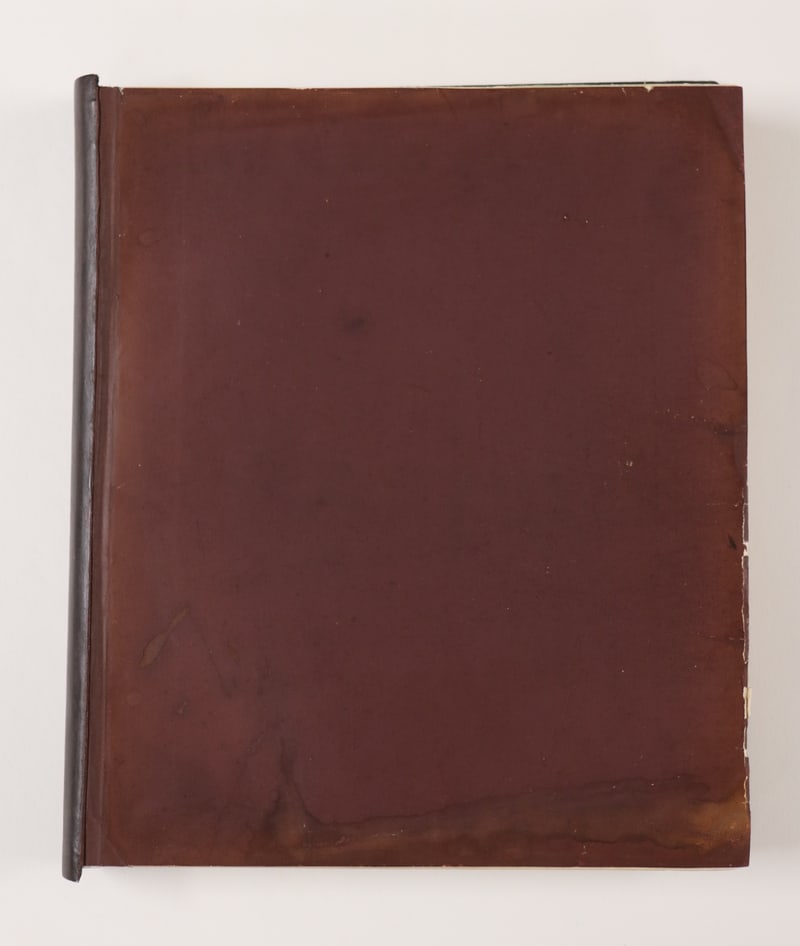
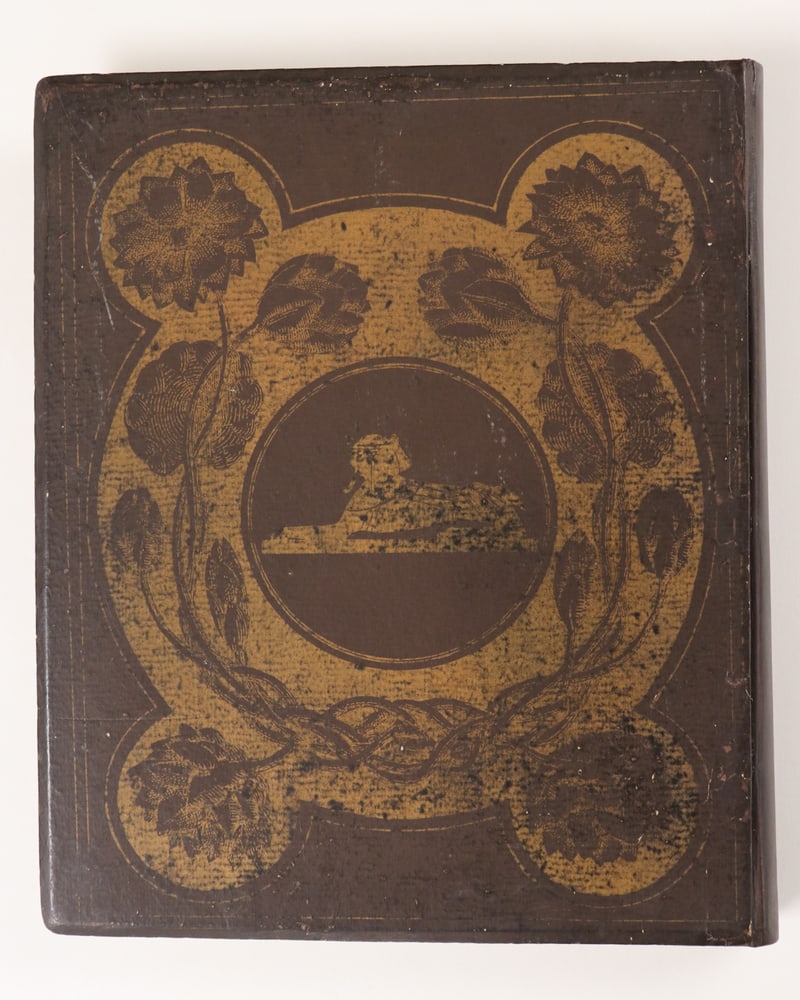
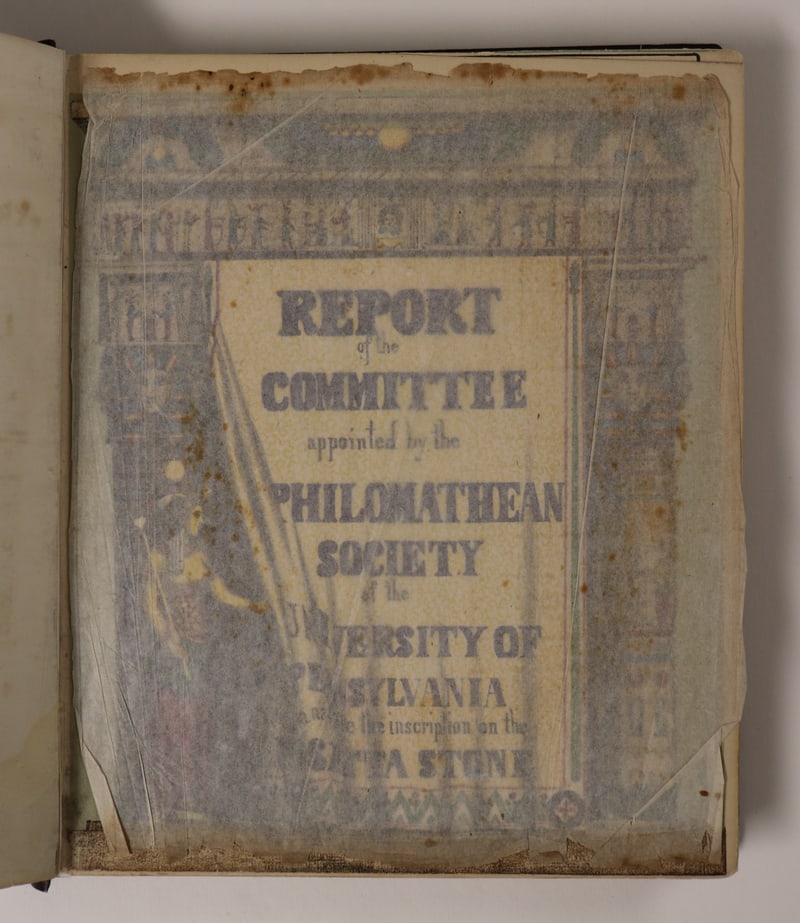
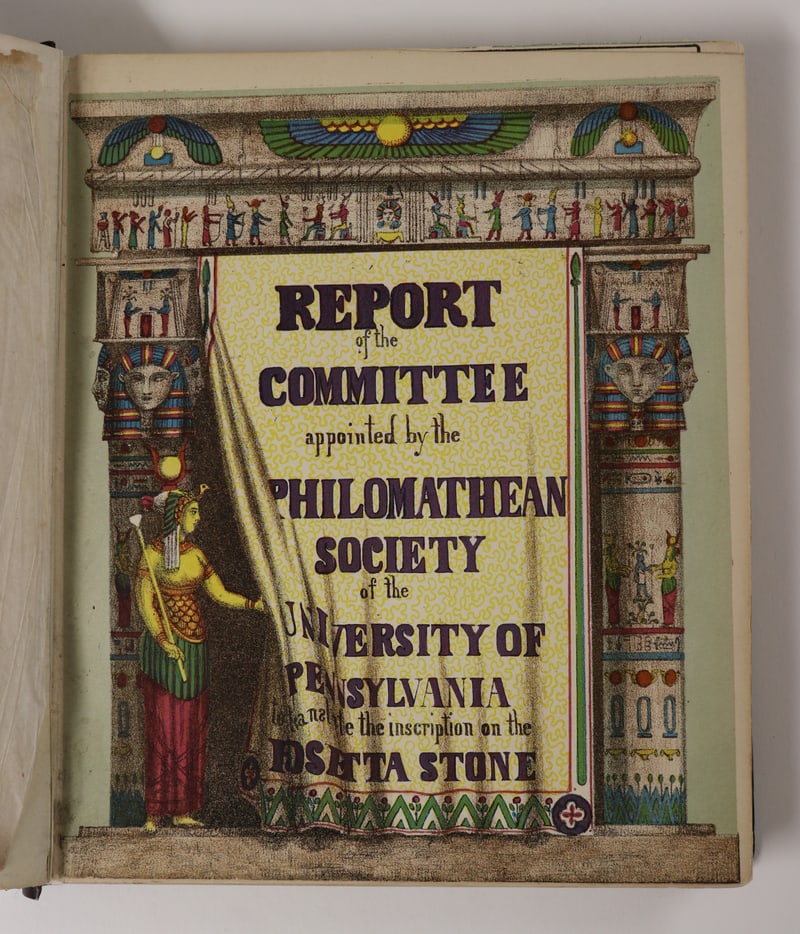
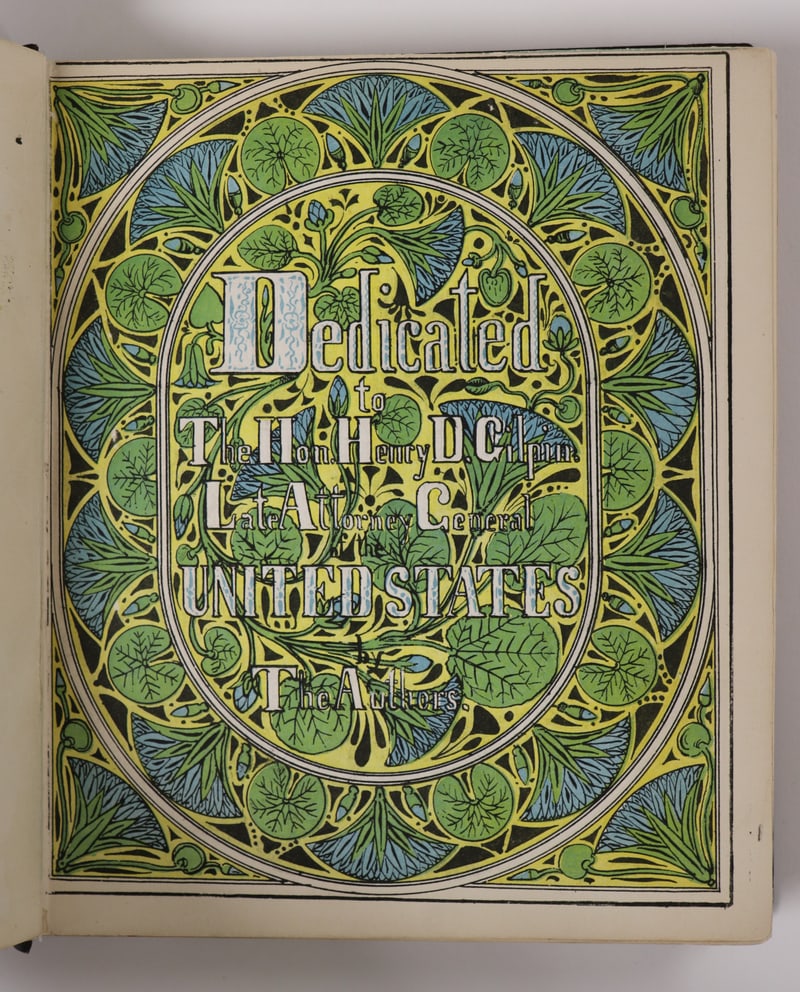
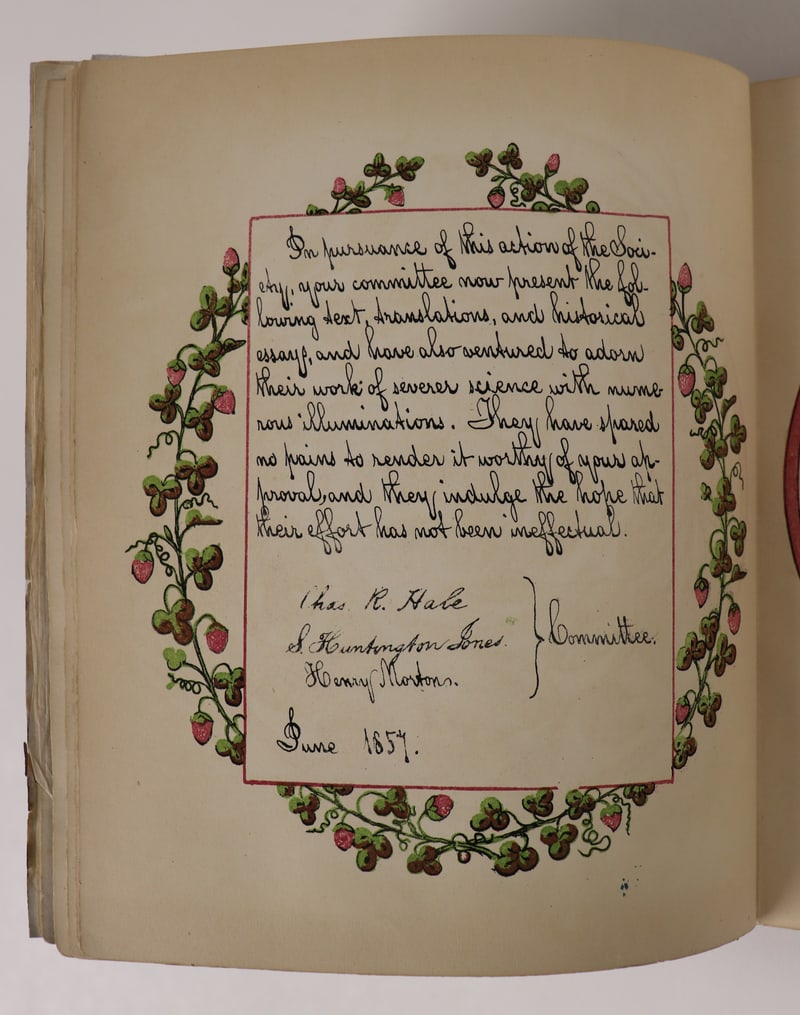
Images: National Park Service, Longfellow House–Washington’s Headquarters National Historic Site.
Kansas City Public Library, Missouri Valley Special Collections
Later marbled paper-covered boards with black textured spine and corners. The board edges are worn; a white H mark and a small paper label appear on the spine.
The chromolithographic title has no “SECOND EDITION” statement. The Ptolemy V plate shows a cup in each hand, a first-edition state.
“KANSAS CITY, (MO.) PUBLIC LIBRARY” is stamped across the fore-edge.
Unrecorded earlier ownership → Kansas City Public Library
Kansas City Public Library examination and copy-specific photographs of the binding, title page, Ptolemy V plate, and fore-edge stamp.
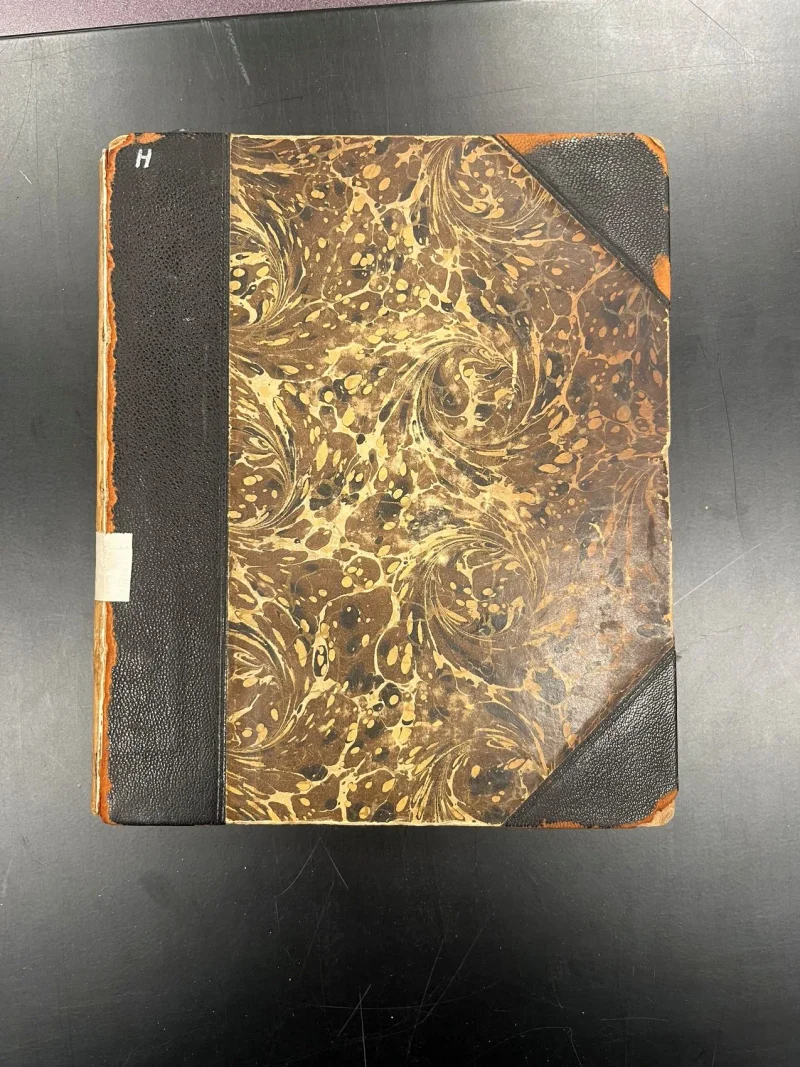
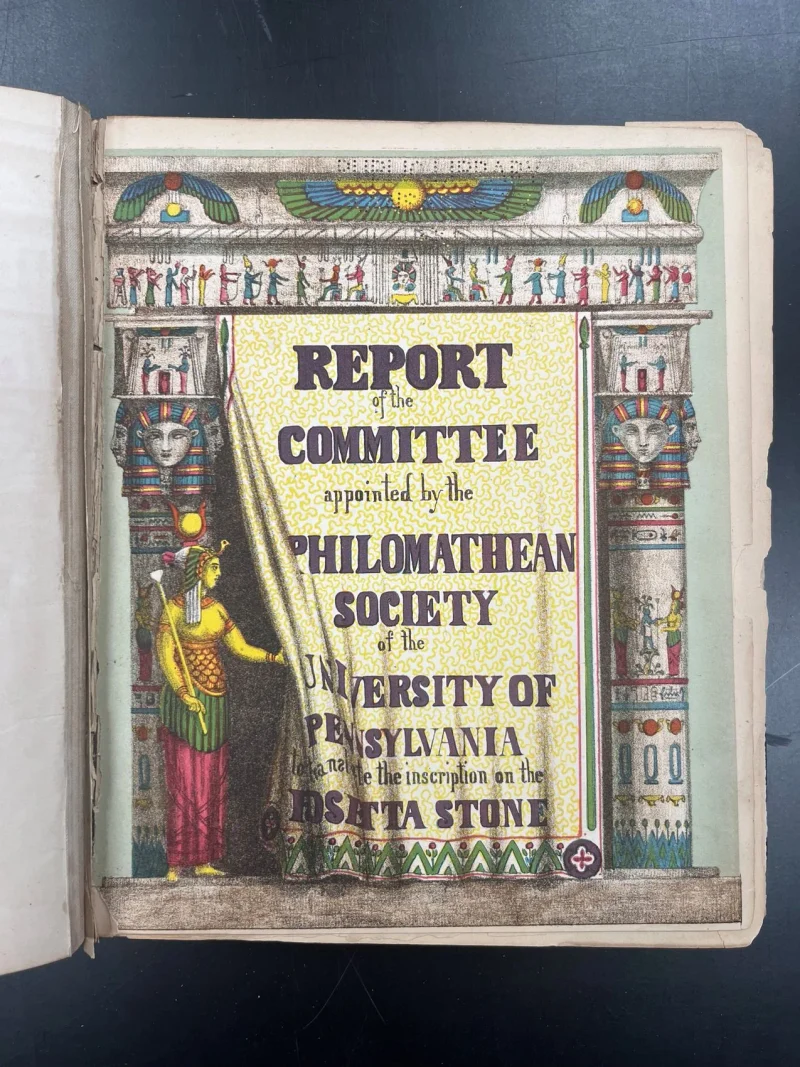
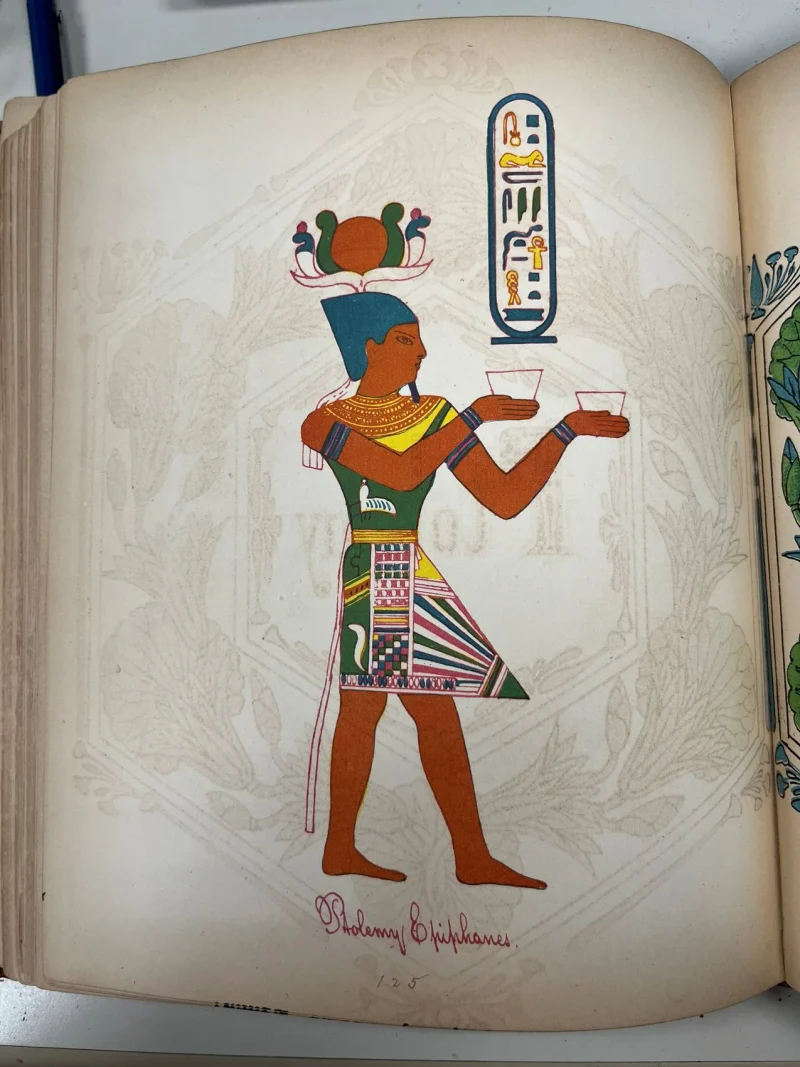
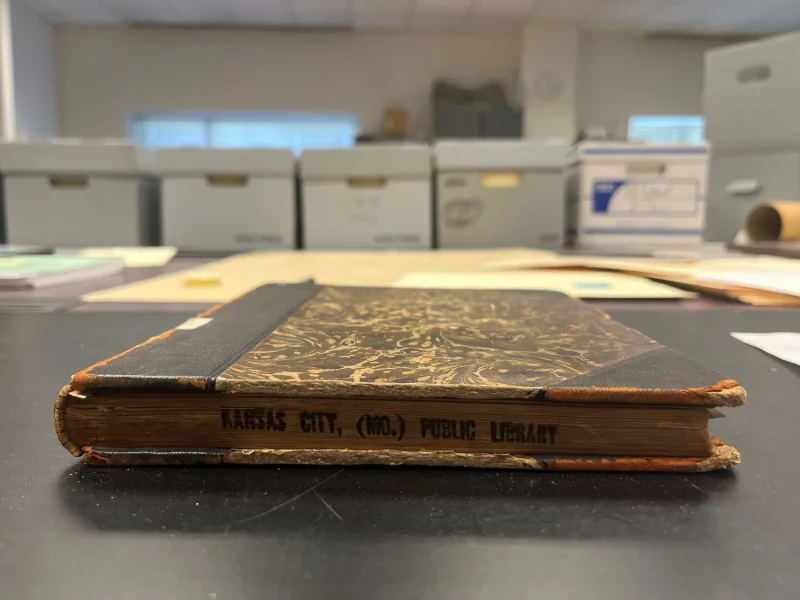
Images: Kansas City Public Library.
Private Collection
Original cream paper-covered publisher's boards printed in black with Egyptian designs. The boards are beveled; the covers and first few leaves are detached.
The chromolithographic title lacks a “SECOND EDITION” statement and matches the 1858 first edition.
The owner reports the collation as 1–72, 81–128, 113–121, 130–136, [24] pages, with three of five plates present. The Memphis and Bastion plates are lacking. Tears affect the fore-edges of pages 28, 86, and 127; one further fore-edge chip and staining to the lower free endpaper are reported. Condition is described as fair.
The illuminated concluding acknowledgments and production colophon is present and dated August 3, 1858. It is part of the published volume and does not supply ownership evidence.
Unrecorded earlier ownership → Private Collection
Owner correspondence, detailed copy description, and three copy-specific photographs supplied in September 2026.
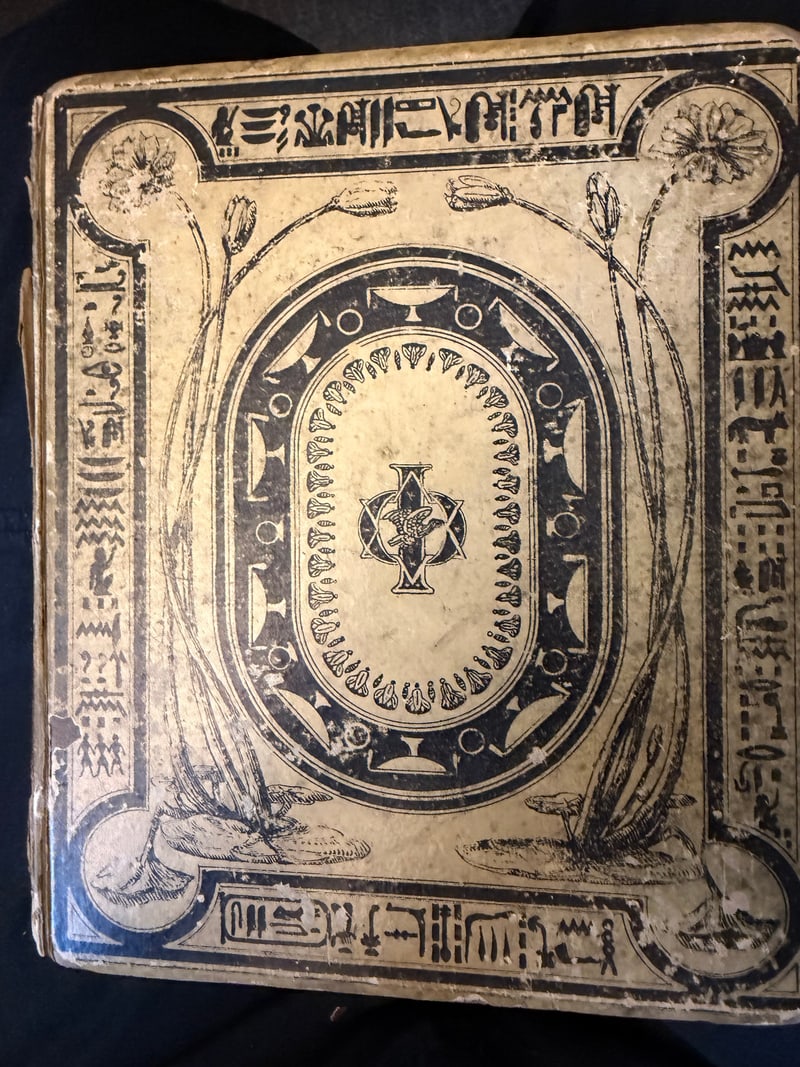
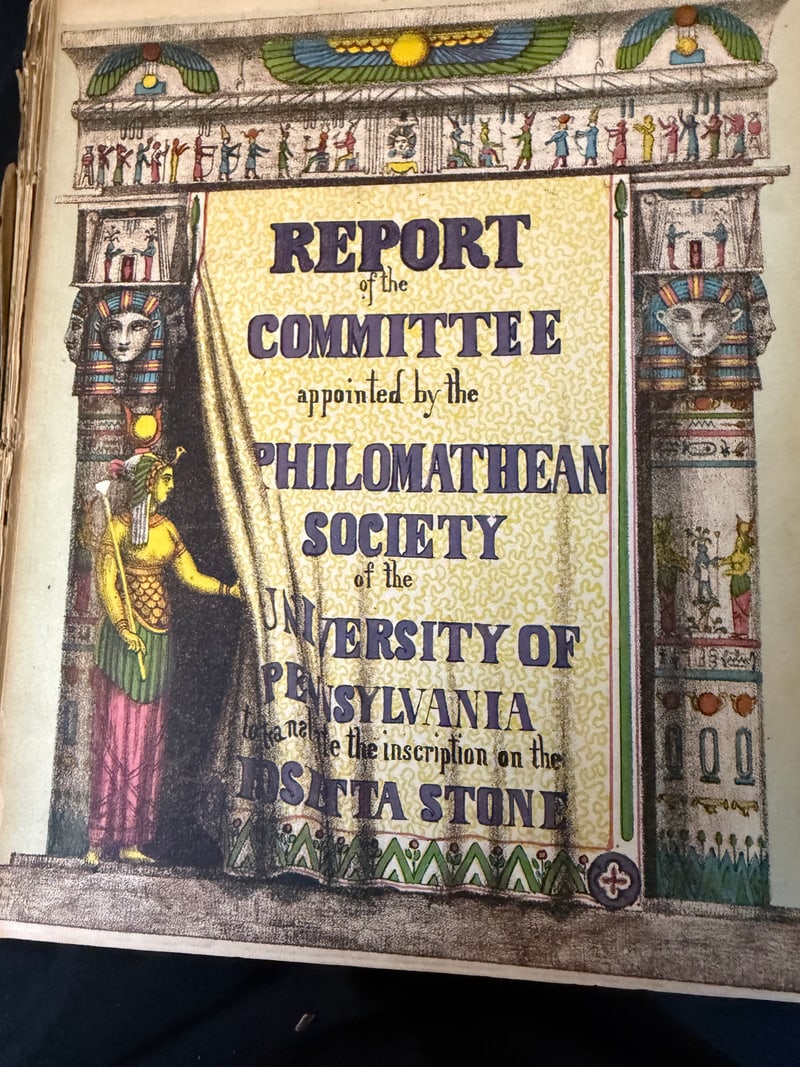
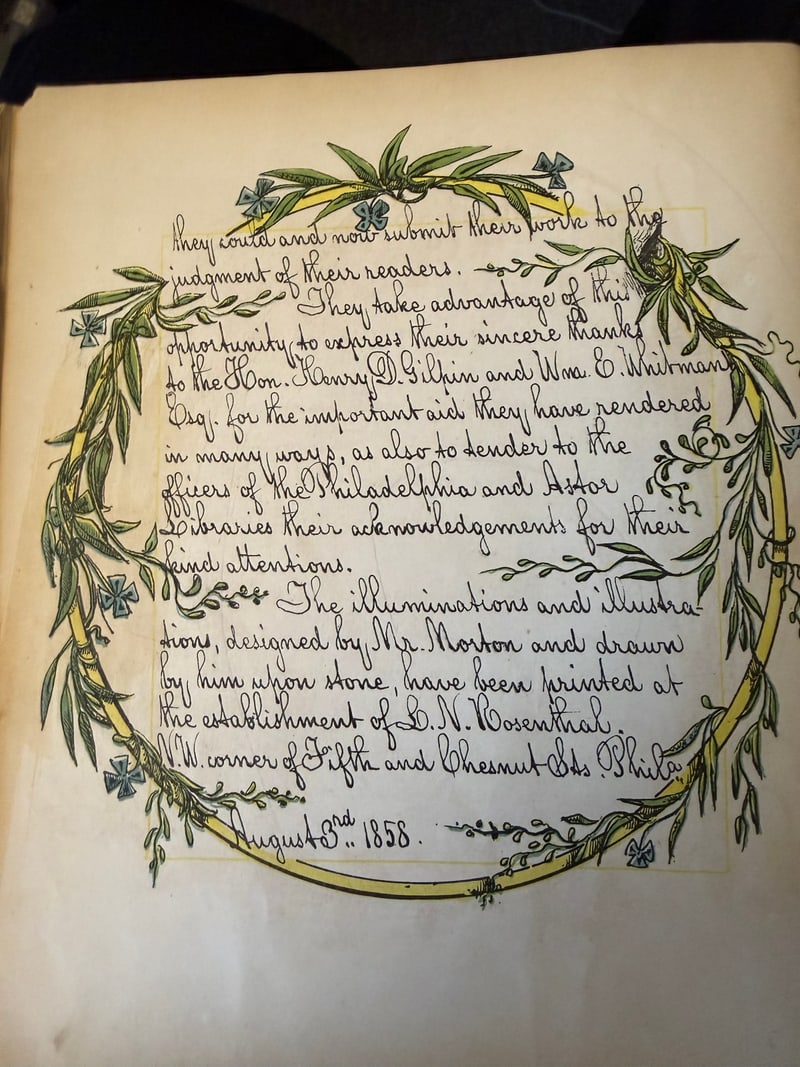
Images: Private Collection.
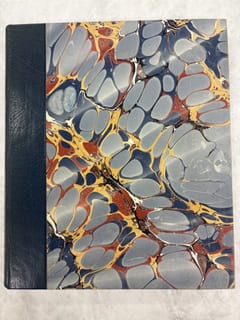
Crystal Bridges Museum of American Art, Library
Later marbled paper-covered boards with a textured leather spine (color unrecorded). The spine is gilt-lettered “ROSETTA STONE” and “1858,” with gilt rules.
The chromolithographic title has no “SECOND EDITION” statement, confirming the 1858 first edition.
Undated authorial presentation from Henry Morton to Max Rosenthal: “Max Rosenthal / with the sincere regards of / Henry Morton.”
Pencil bibliographical notes on a separate leaf describe the first edition, cite Blackmer 775, and note a small hole in the third leaf from the end; the annotator is unidentified.
Henry Morton, presenter (undated) → Max Rosenthal → unresolved gap → Acquired by Crystal Bridges as part of a bulk purchase from William S. Reese, William Reese Company → Crystal Bridges Museum of American Art, Library
Crystal Bridges Museum of American Art Library examination and five copy-specific photographs, October 2026.
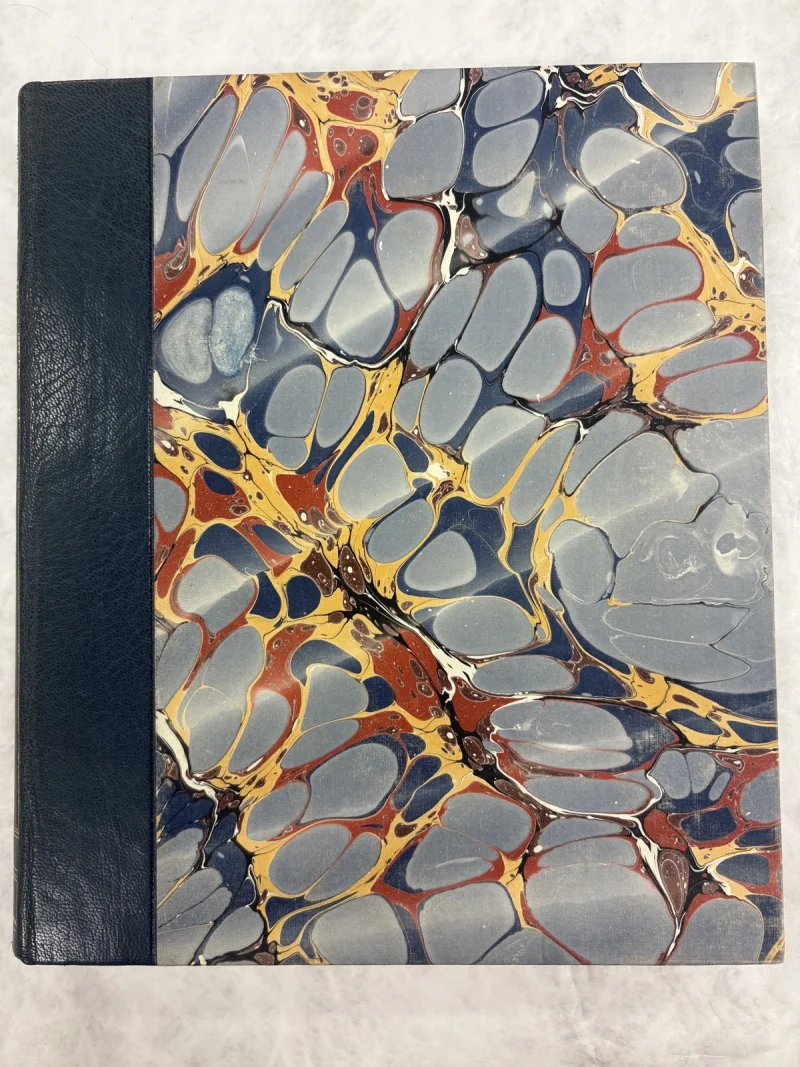
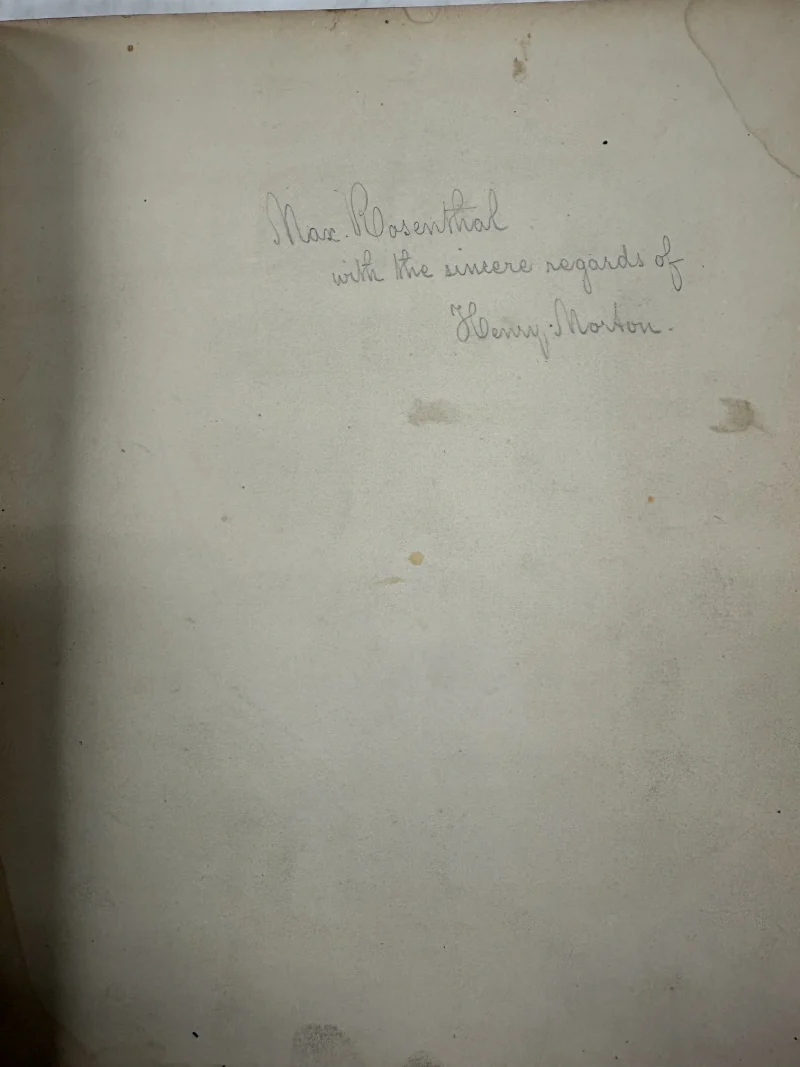
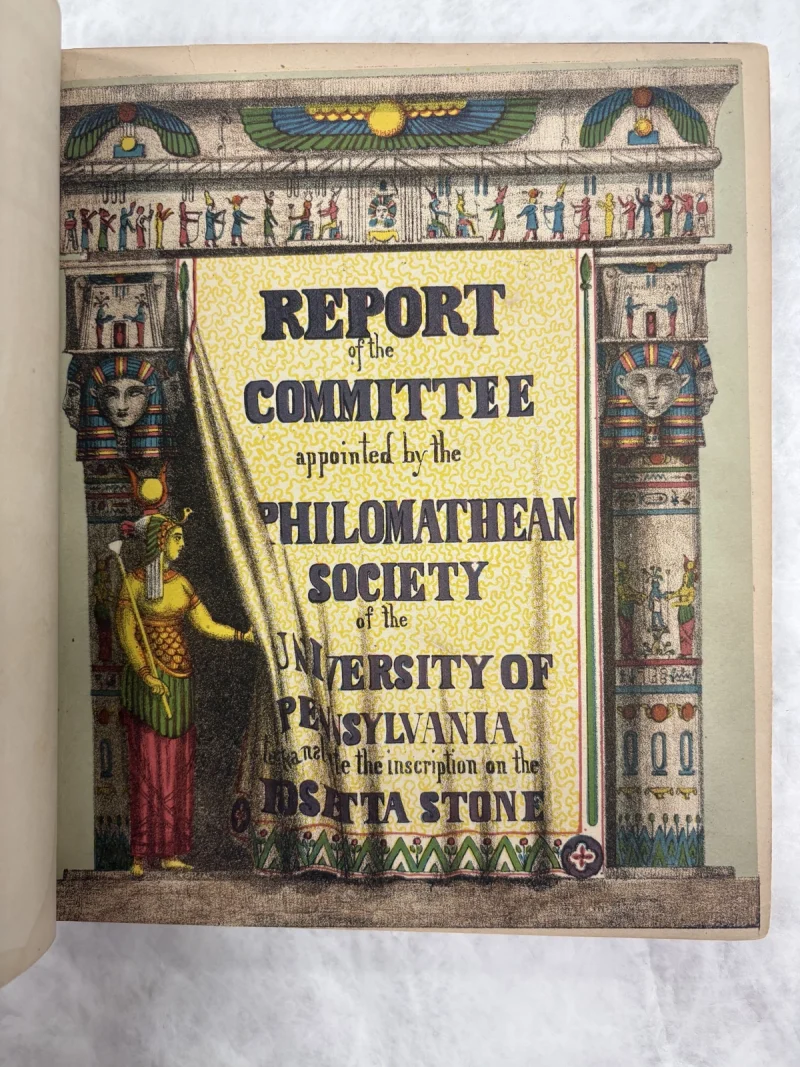
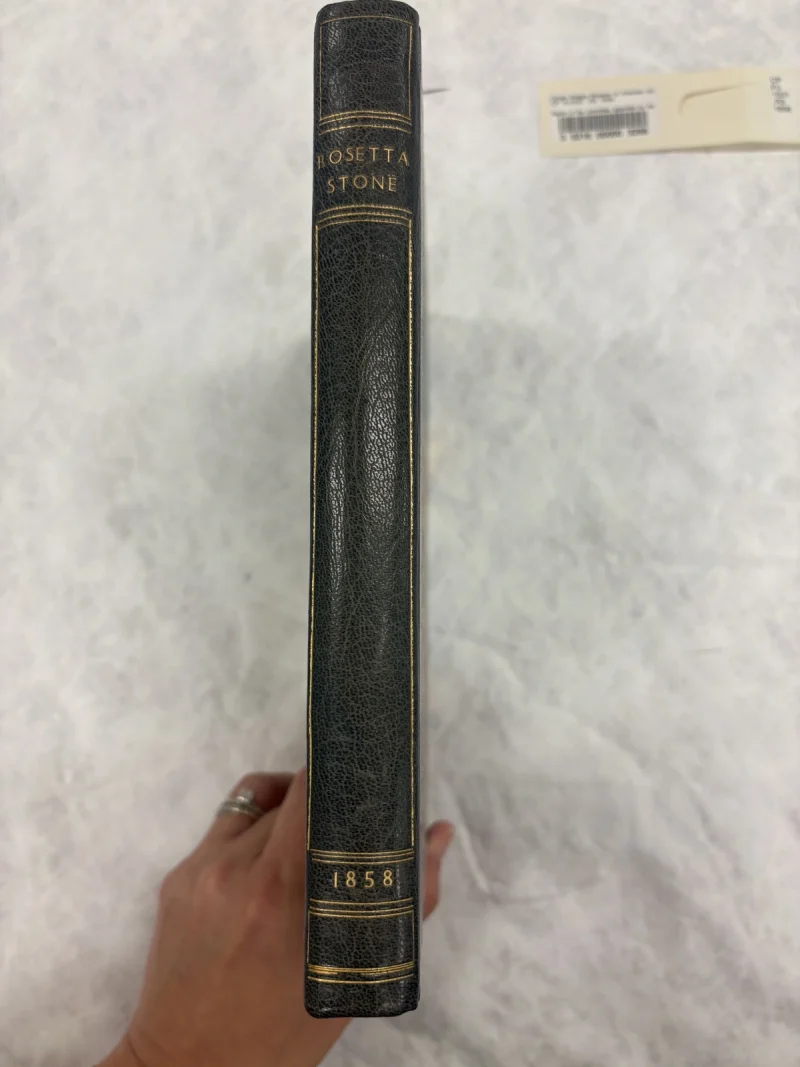
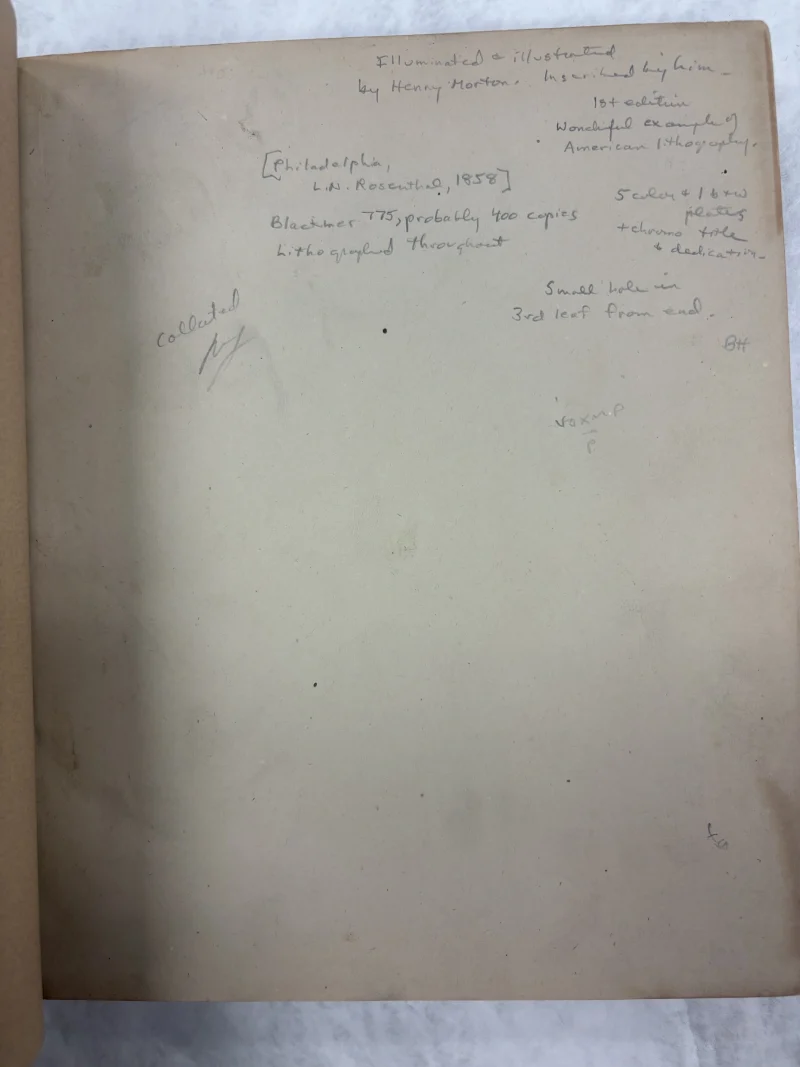
Images: Crystal Bridges Museum of American Art, Library.
University at Buffalo, Rare Books Collection
Buffalo, New York
Later blue cloth over boards, probably a library rebinding made before transfer to Rare Books. The original publisher’s binding is unrecorded.
The surviving botanical dedication to Henry D. Gilpin identifies the 1858 first edition. The half-title is present; the full chromolithographic title page appears to be missing.
The first few leaves are loose and brittle. No copyright slip or appended members’ catalog is present.
University at Buffalo, Lockwood Memorial Library bookplate and library stamp; former “Closed Stacks” shelfmark, borrowing pocket, and circulation record extending into the 1980s.
No presentation inscription or earlier private ownership mark identified.
Unrecorded earlier ownership → University at Buffalo, main research library → University at Buffalo, Rare Books Collection
University at Buffalo Rare Books Collection examination, repository correspondence, eight reference scans of the physical copy, and the University at Buffalo catalog.
A quick visual survey of copies for which reliable photographs or documentary evidence are presently available. The complete image sets and captions remain inside each expanded Census record.
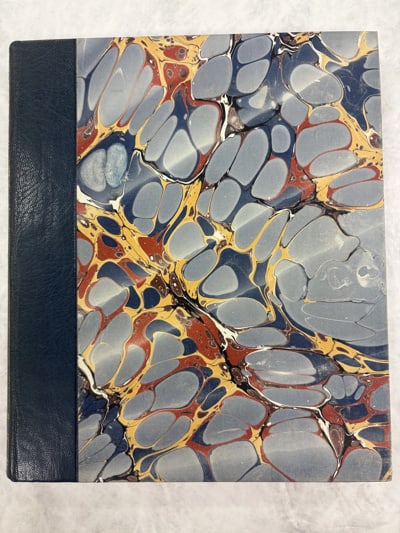
Henry Morton’s authorial presentation to Max Rosenthal
5 curated visuals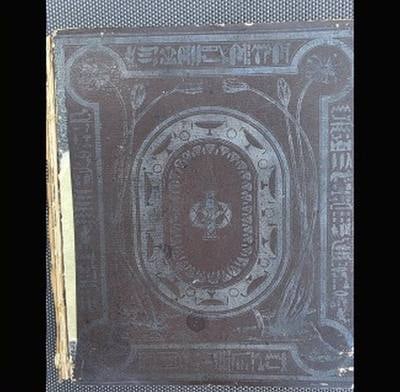
Dark-puce publisher-issued front board
5 curated visuals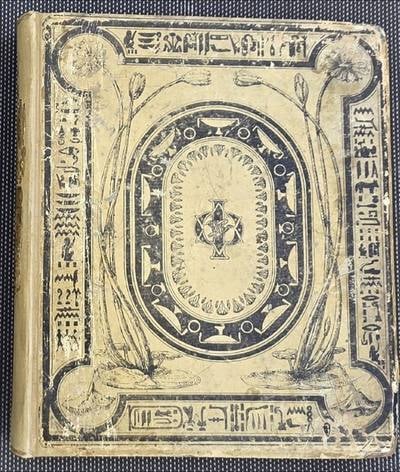
Cream publisher-issued front board
3 curated visuals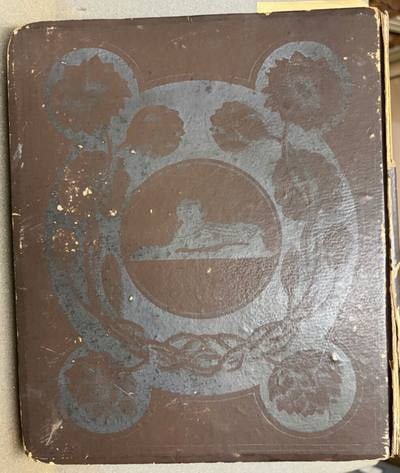
Dark-puce publisher-issued front board
7 curated visuals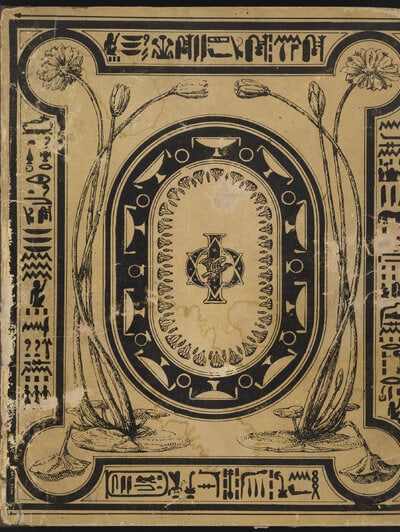
Cream publisher-issued front board
6 curated visuals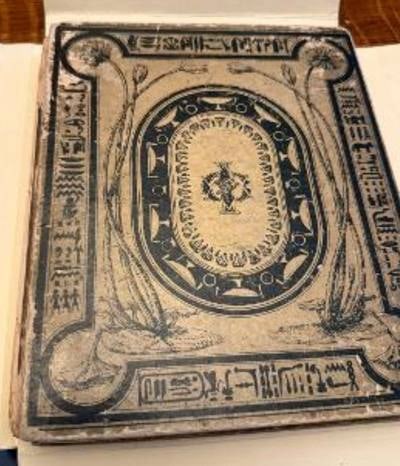
Cream publisher-issued front board
1 curated visual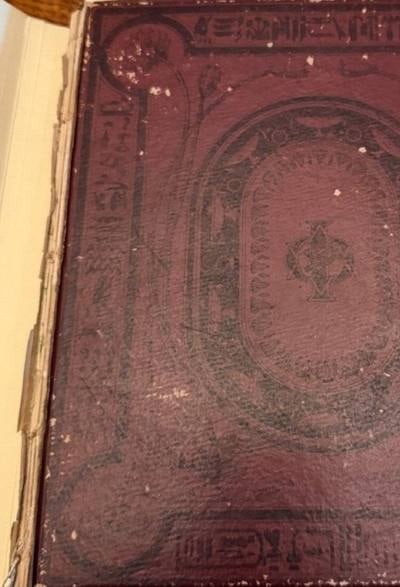
Red publisher-issued front board
1 curated visual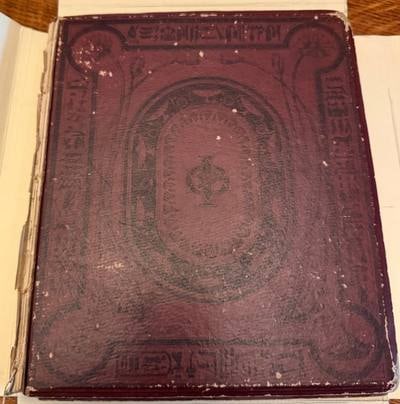
Representative red front board supplied for the Society’s two red copies
1 curated visual
Surviving brown rear board; original front board missing
1 curated visual
Kislak Center first-edition holdings photograph
1 curated visual
Cream publisher-issued front board
3 curated visuals
Julia Biddle bequest bookplate
2 curated visuals
The two rebound Kislak copies
5 curated visuals
Cream publisher-issued front board
5 curated visuals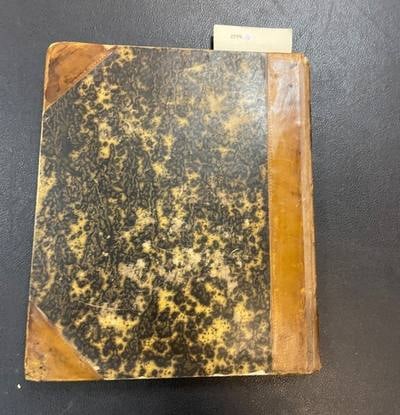
Half-leather marbled front board
4 curated visuals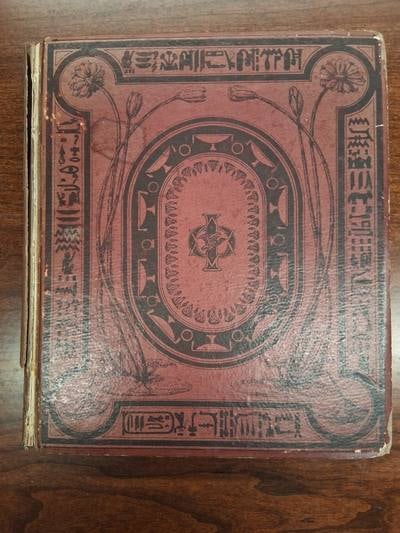
Red publisher-issued front board
4 curated visuals
Rebound front board
4 curated visuals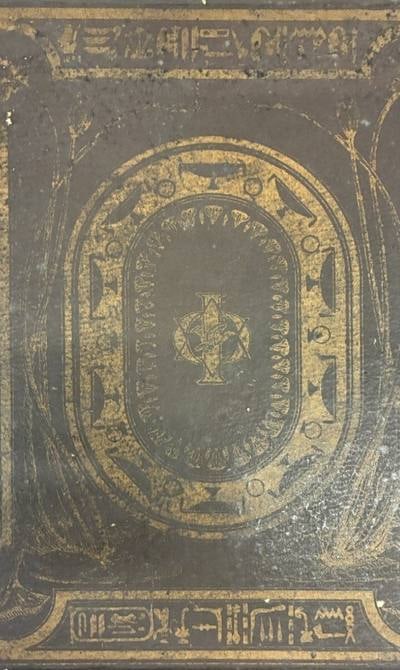
Brown publisher-issued front board
1 curated visual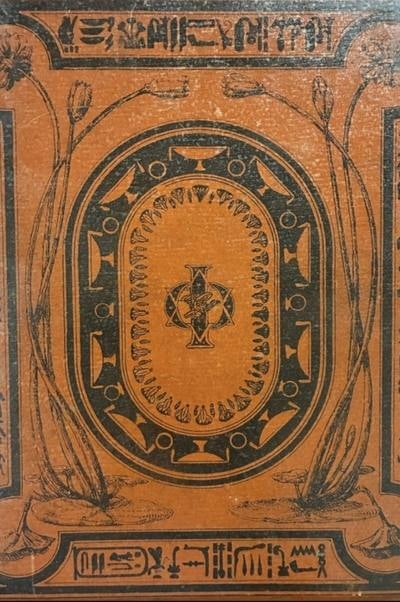
Orange publisher-issued front board
1 curated visual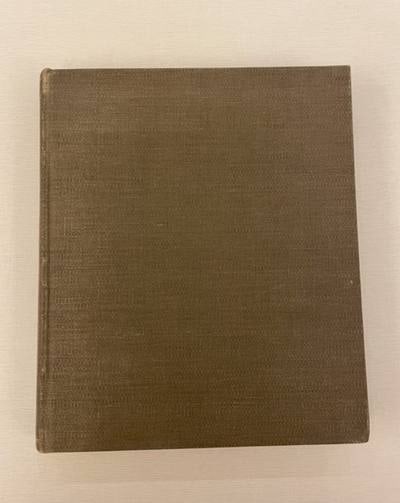
Later rebound front board
2 curated visuals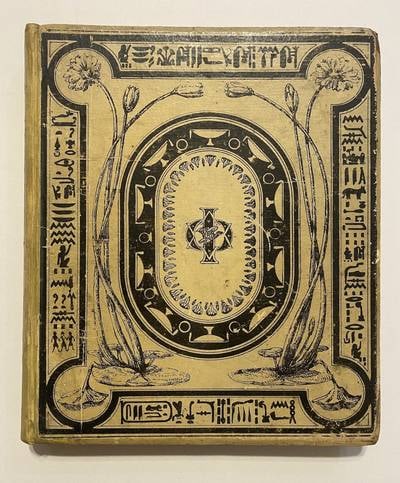
Original cream publisher-issued front board
2 curated visuals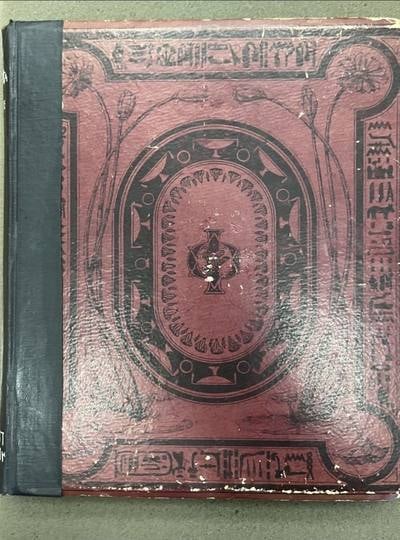
Red front board and black-cloth rebacking
4 curated visuals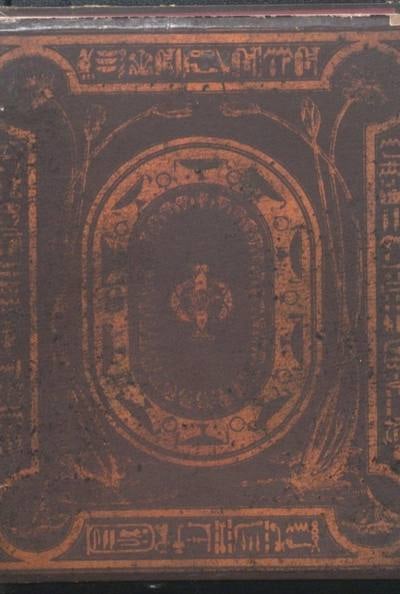
Brown publisher-issued front board
3 curated visuals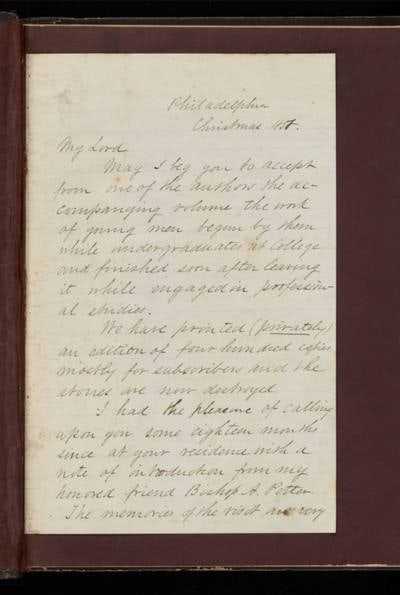
Charles R. Hale presentation letter to Archibald Campbell Tait — first page
7 curated visuals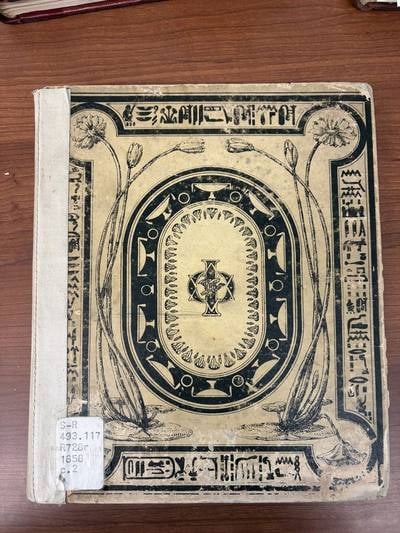
Cream publisher-issued front board
3 curated visuals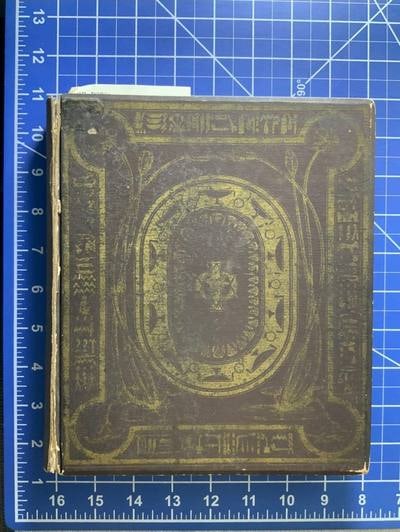
Brown publisher-issued front board
2 curated visuals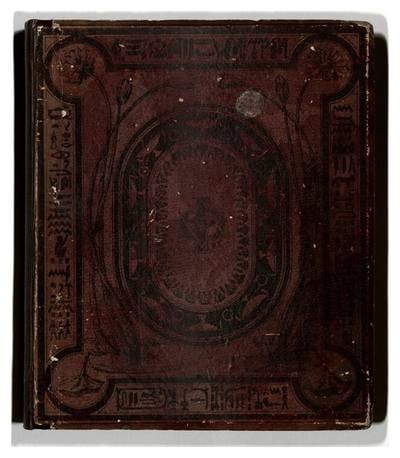
Red publisher-issued front board
6 curated visuals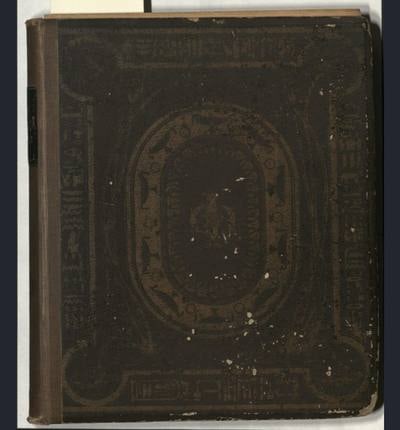
Brown publisher-issued front board
2 curated visuals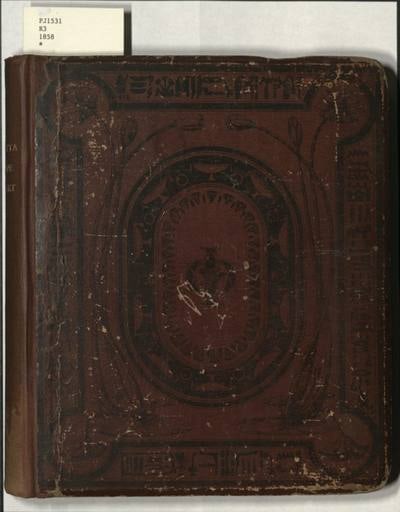
Red publisher-issued front board
1 curated visual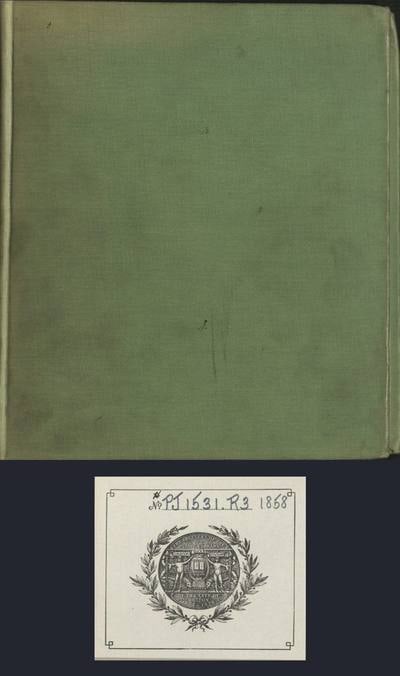
Boston Public Library institutional rebound
2 curated visuals
Spine
4 curated visuals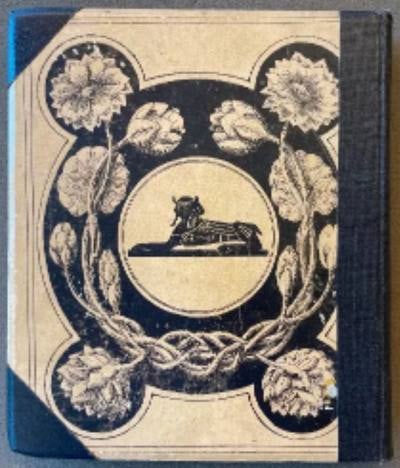
Original cream-and-black decorated boards, front and rear, both retained
4 curated visuals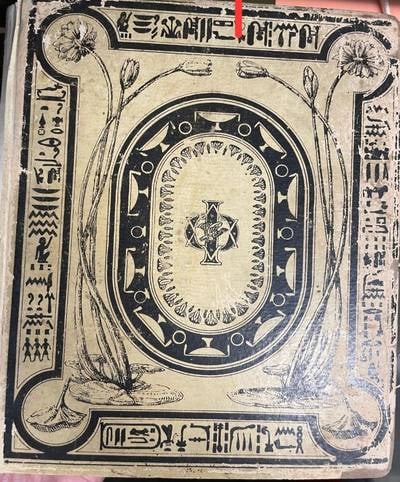
Cream publisher-issued front board with black decoration
6 curated visuals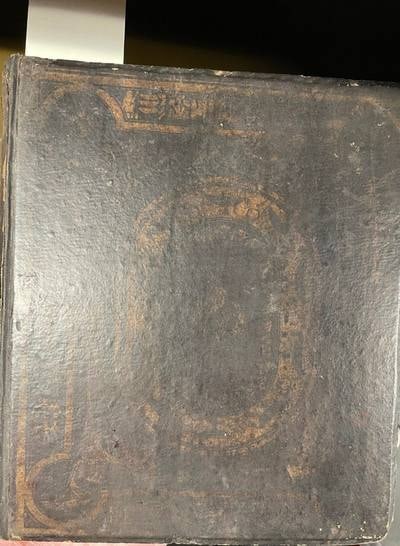
Brown publisher-issued front board
2 curated visuals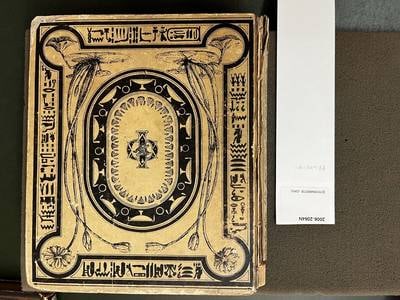
Cream publisher-issued front board
6 curated visuals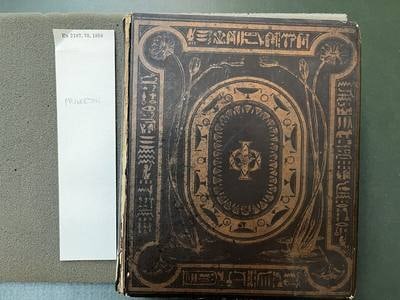
Brown publisher-issued front board
8 curated visuals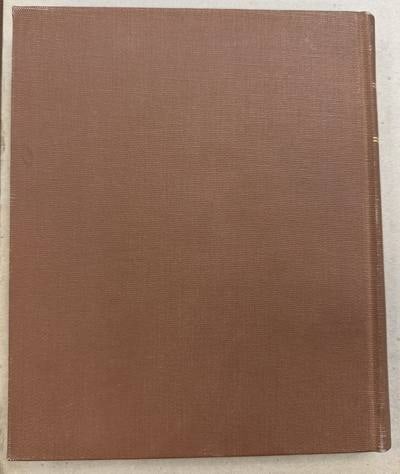
Later plain-cloth front board
3 curated visuals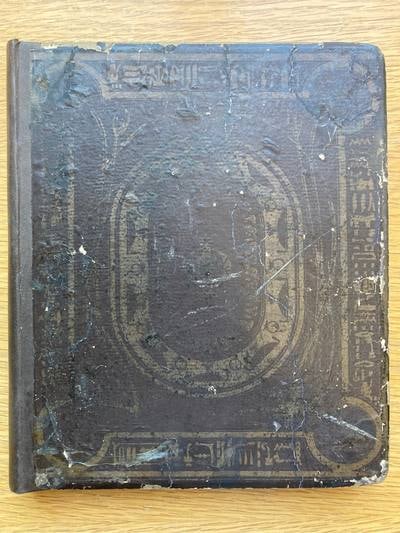
Original dark-puce publisher-issued front board
2 curated visuals
C. V. S. Roosevelt inscription to Robert Leighton Stuart
2 curated visuals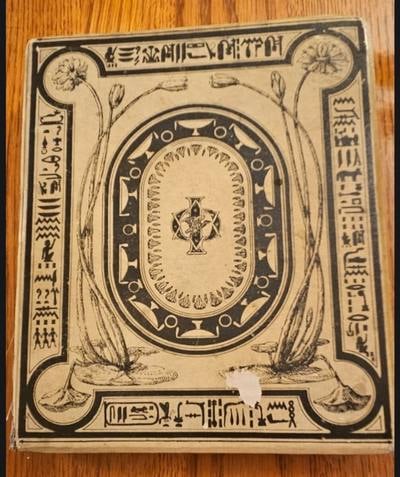
Original cream publisher-issued front board
5 curated visuals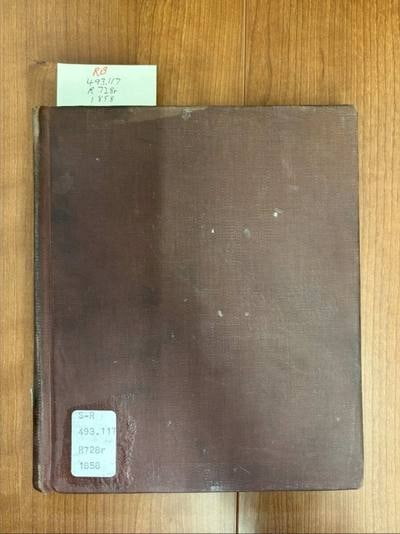
Plain brown institutional-cloth front board
5 curated visuals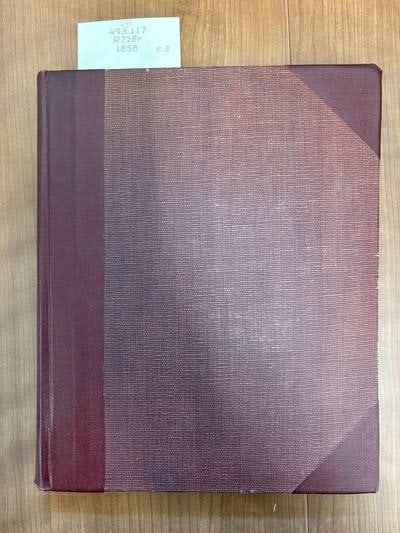
Reddish-brown institutional binding — front board
3 curated visuals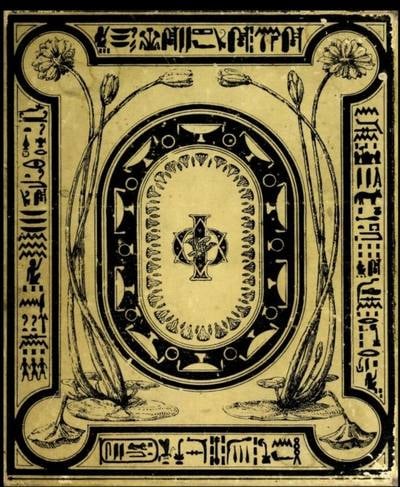
Original cream publisher-issued front board
6 curated visuals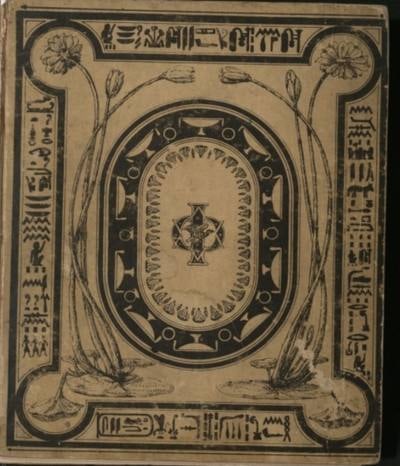
Original cream publisher-issued front board
5 curated visuals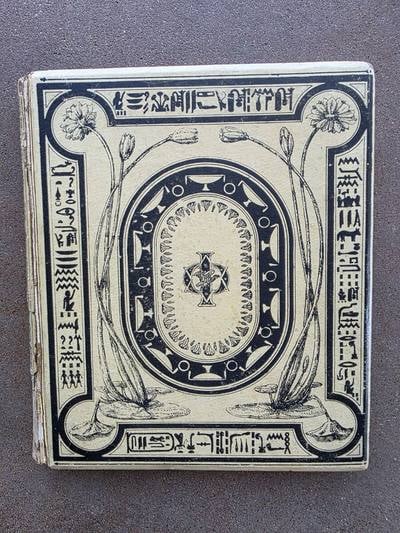
Original cream binding with substantially intact decorated spine
8 curated visuals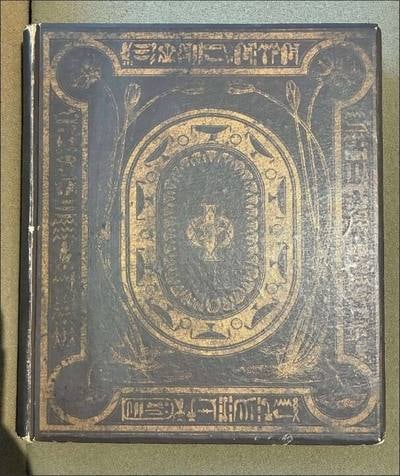
Original brown publisher-issued front board
5 curated visuals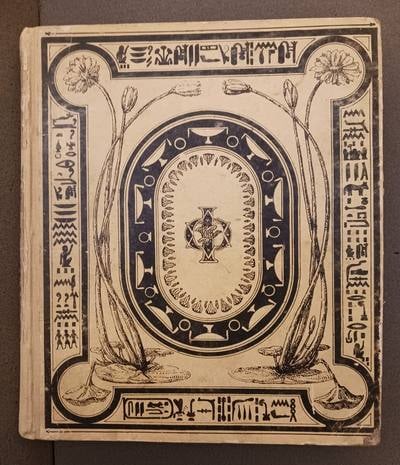
Original cream binding with surviving decorated spine
5 curated visuals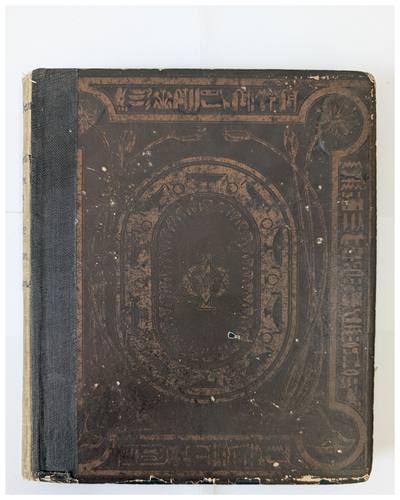
Original decorated boards with a cloth-tape replacement spine
8 curated visuals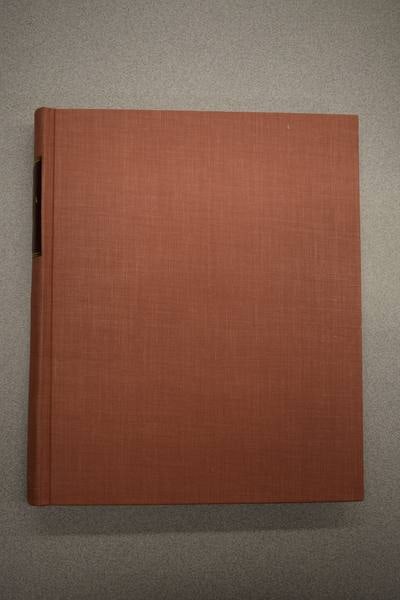
Later reddish-brown institutional binding
6 curated visuals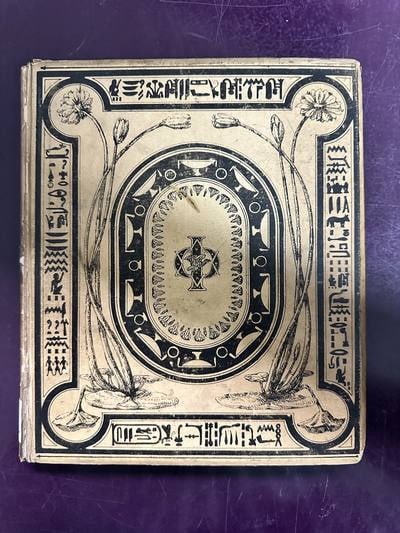
Original cream publisher-issued binding
5 curated visuals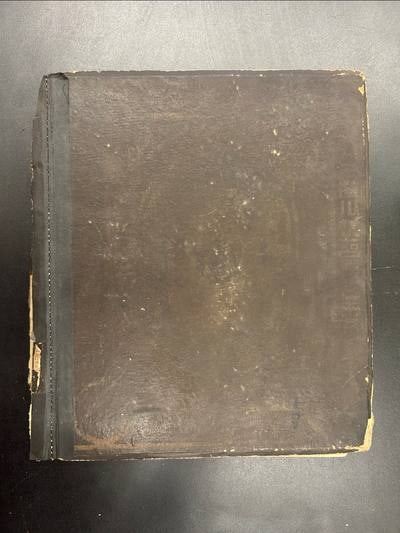
Original brown-and-gold binding, heavily rubbed
7 curated visuals
Later Library of Congress binding
6 curated visuals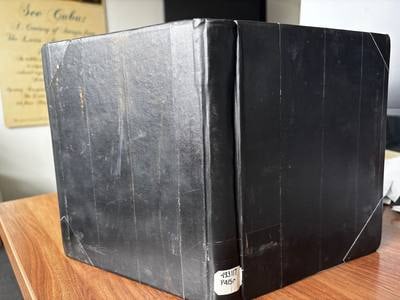
Dedicatee-family copy in later library binding
6 curated visuals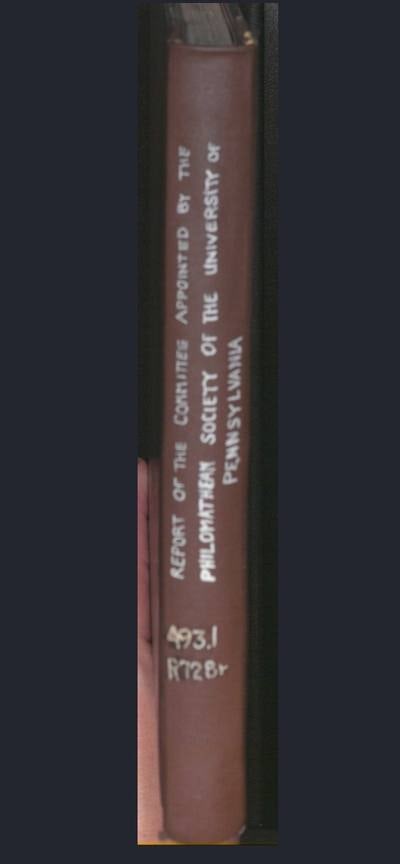
Hale–Popp family presentation copy
6 curated visuals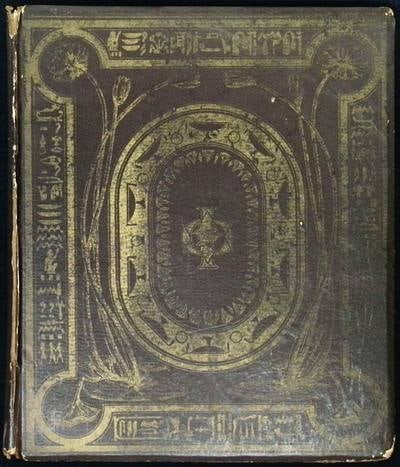
Faxon–Harris family presentation copy
8 curated visuals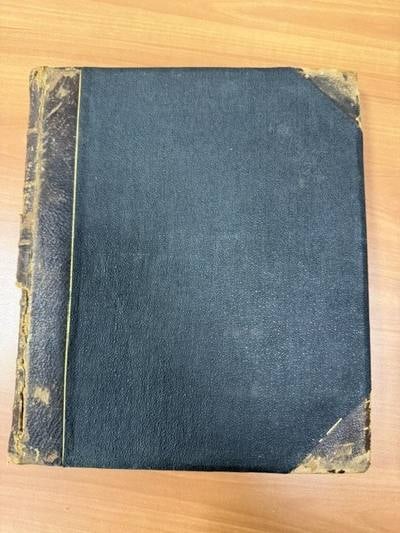
Later black half-leather and cloth binding
4 curated visuals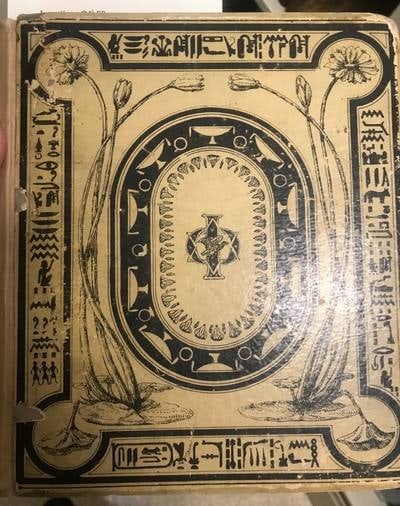
John Teackle Montgomery association copy
5 curated visuals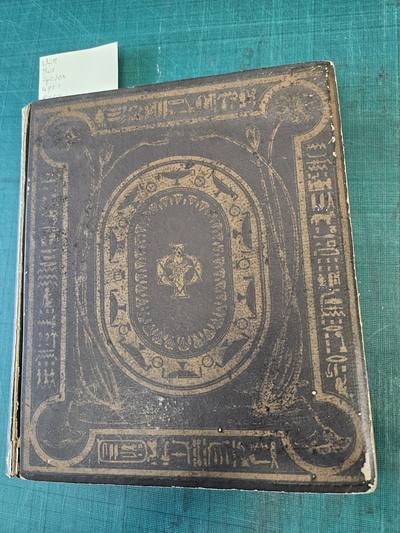
Hale parents authorial presentation copy
7 curated visuals
G. B. Allinson copy
6 curated visuals
Pawson & Nicholson / Humboldt copy
10 curated visuals
Hamilton Morton presentation copy
5 curated visuals
Original orange binding
5 curated visuals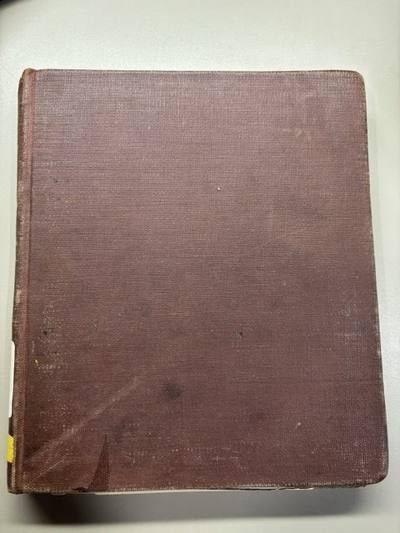
Newly documented 1858 first edition
6 curated visuals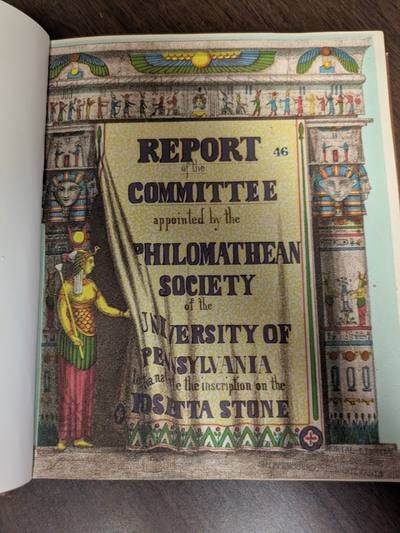
Newly documented 1858 first edition
7 curated visuals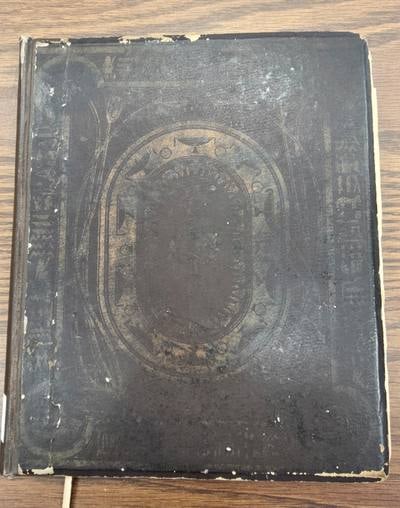
Thomas H. Montgomery contemporary ownership copy
5 curated visuals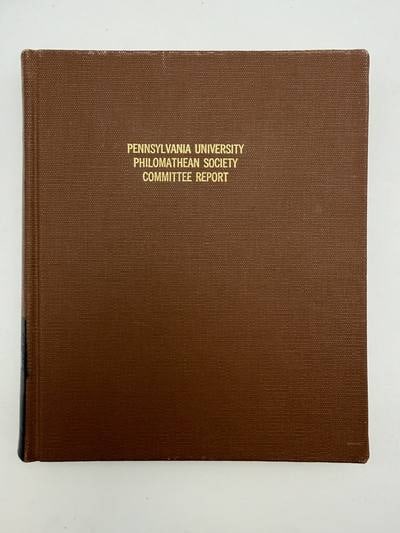
Later institutional binding and Texas Technological College provenance
6 curated visuals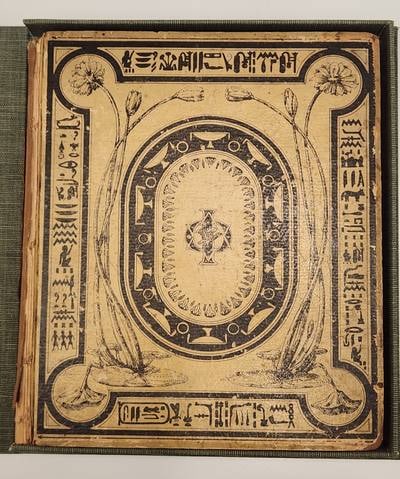
New Year’s presentation signed “Horace Binney Jr.” with Humboldt-related manuscript material
8 curated visuals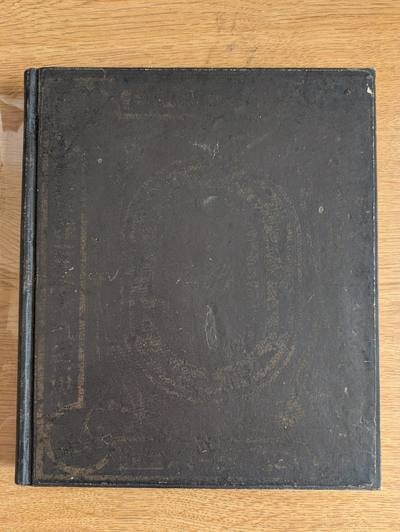
Pepper–Zantzinger–Robertson association and 1859 family presentation
7 curated visuals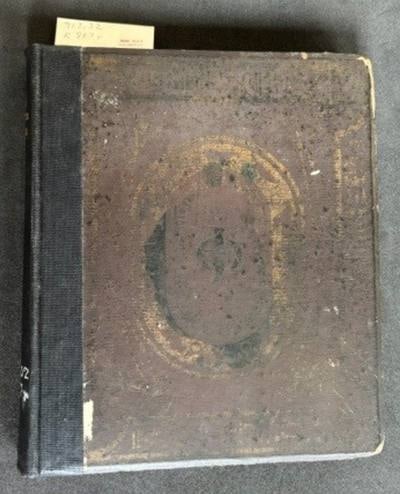
Gift of the Florida State Museum; entered UF's Rare Book Collection July 8, 1955
6 curated visuals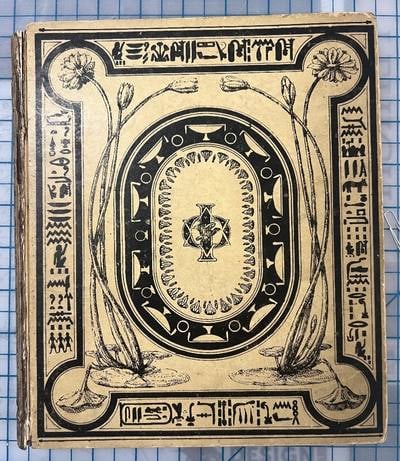
Ownership marks probably belonging to Joseph and Mary Lovering Wharton
5 curated visuals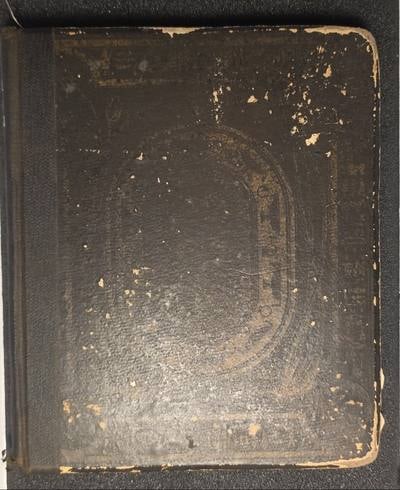
Original brown decorated boards; rebacked or rebound after 1863; acquired by the University of Pennsylvania Penn Museum Library in 1966 through the Eckley Brinton Coxe Fund.
6 curated visuals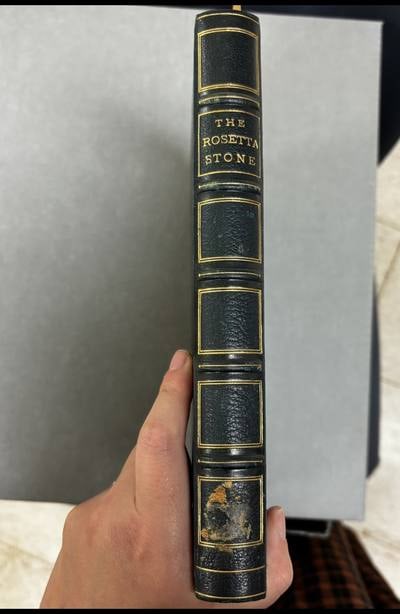
Both original cream-and-black decorated covers preserved within a later dark leather rebind
7 curated visuals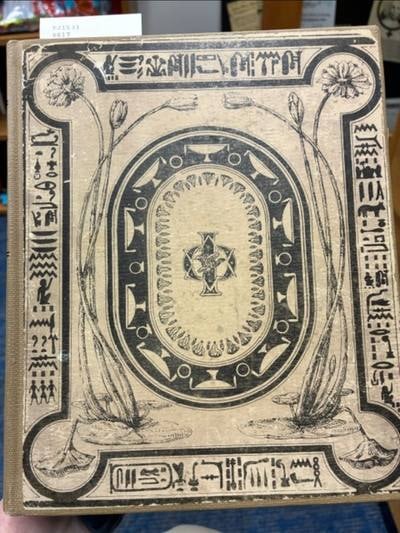
Presentation copy from John Jay Smith to Peter Force
8 curated visuals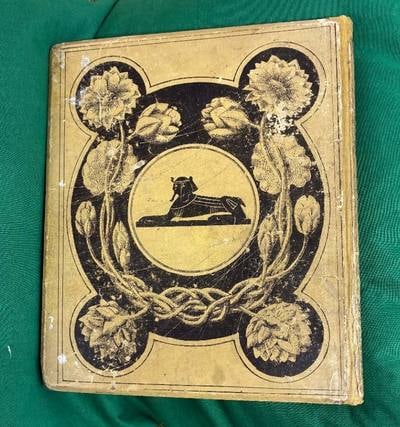
Presentation copy from Albert Rosenthal to Louis Stein, Esq.
6 curated visuals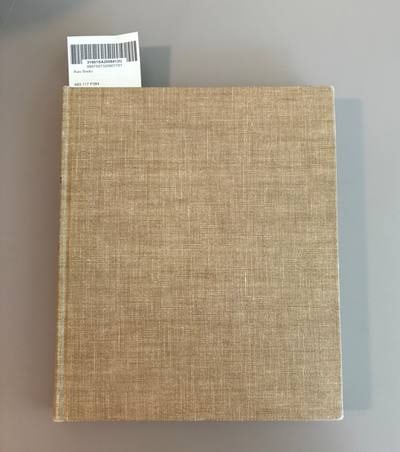
Rebound copy purchased from bookseller Harper, 1954
8 curated visuals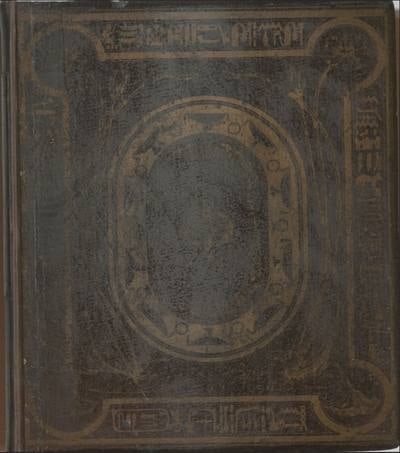
Original brown boards, Maria A. Hemphill inscription
5 curated visuals
Original cream boards; title page missing, identified on binding evidence
4 curated visuals
Wharton–Muñoz Nell family copy; established four-generation family descent to the donor
6 curated visuals
Robins / George S. Pepper Fund copy; later green cloth-and-leather rebind
8 curated visuals
Effingham B. Morris copy; original cream boards, 1875 ownership inscription
2 curated visuals
Documented in the Department of Egyptian Antiquities since at least 1892
5 curated visuals
Black buckram rebinding; Bureau of Ethnology property stamp dated 1883
6 curated visuals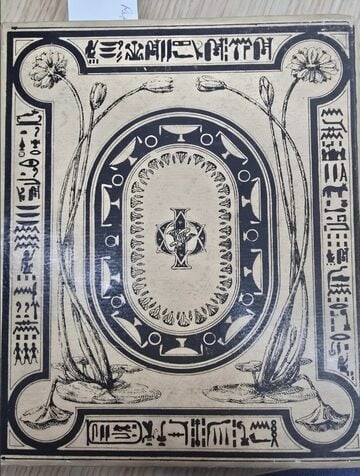
Cary Graphic Arts Collection; original Cream binding variant
6 curated visualsUndated authorial presentation from Henry Morton to Max Rosenthal.
Henry Morton, presenter (undated) → Max Rosenthal → Unrecorded subsequent ownership → Acquired by Crystal Bridges as part of a bulk purchase from William S. Reese, William Reese Company → Crystal Bridges Museum of American Art, LibraryAuthorial presentation by Charles R. Hale, Christmas 1858.
Charles R. Hale → Washington Irving → unresolved gap → Owen Family Medical Archive → Private CollectionNew Year’s 1859 gift from Ann Eliza Sibley Gilpin to “Mrs. Everett,” probably Charlotte Gray Brooks Everett; later owned and donated to Harvard by William Everett.
Ann Eliza Sibley Johnston Gilpin → probably Charlotte Gray Brooks Everett → William Everett → Harvard, 1878Gift of Reuben C. Hale to Edward C. Herrick, January 21, 1859.
Reuben C. Hale → Edward C. Herrick → Philomathean SocietyGift of Henry D. Gilpin to J. Francis Fisher, January 1859.
Henry D. Gilpin → J. Francis Fisher → Philomathean SocietyBirthday gift from Ellen Maria Camac to her uncle James Albert Bancker, February 4, 1859.
Ellen Maria Camac → James Albert Bancker → Richard Jenney → Haverford CollegeAuthorial presentation by Charles R. Hale to his aunt Mary J. Welles, Christmas 1858.
Charles R. Hale → Mary J. Welles → Alma Freeman Welles → Huntington LibraryPresentation inscription dated Baltimore, March 5, 1859, “ex dono amicitiae”; presenter unidentified.
Joshua I. Cohen → unresolved gap → Michael Zinman → George S. MacManus Co. / Michael Laird → University of Wisconsin–MadisonGift from George D. Morgan to his brother Rev. W. F. Morgan, New Year’s 1859.
George D. Morgan → Rev. W. F. Morgan → Willis Thornton → Western Reserve UniversityAuthorial presentation by Charles R. Hale.
Charles R. Hale → Archibald Campbell Tait → Lambeth Palace Library, received with Tait's books in 1883Later association gift from Ann Pamela Cunningham to Charles C. Jones, Mount Vernon, July 19, 1872.
Ann Pamela Cunningham → Col. Charles C. Jones → University of GeorgiaAuthorial presentation by Samuel Huntington Jones, one of the three report authors, January 10, 1859.
Samuel Huntington Jones → George William Childs → American Antiquarian SocietyPresented by Rev. Thomas K. Conrad to Mrs. B. G. Godfrey, his friend and parishioner/pastoral acquaintance.
Rev. Thomas K. Conrad → Mrs. B. G. Godfrey → Cambridge University LibraryStrongly identified 1859 gift from Maria Sophia Quincy to her sister Margaret Morton Quincy Greene. Both women were first cousins once removed of author Henry Morton.
Maria Sophia Quincy (strongly identified) → Margaret Morton Quincy Greene (strongly identified) → unresolved family transfer → Robert Cassie Waterston Library → Massachusetts Historical Society, 1899Later Egyptological presentation from John Henry Haynes to Albert Morton Lythgoe in 1908.
Unresolved early ownership → John Henry Haynes → Albert Morton Lythgoe, 1908 → Metropolitan Museum Department of Egyptian ArtChristmas 1858 presentation from Charles R. Hale to his aunt Caroline Amelia Hale Morgan.
Charles R. Hale → Caroline Amelia Hale Morgan → unresolved gap → George F. Wiedman → unresolved gap → Swann catalog 1108, item 333 → Woolmer → University of Delaware, 1978Dedicatee-family gift from Eliza Gilpin to her grandson William Stoddard Johnston II, May 21, 1859.
Ann Eliza Sibley Johnston Gilpin → William Stoddard Johnston II → unnamed recipient of William S. Johnston's December 1883 gift → unresolved gap → Mrs. M. A. Johnston → Tulane University, accession 169175, August 10, 1942Presentation from Henry K. Hoff to Charles D. Meigs, followed by a probable family route.
Henry K. Hoff → Charles D. Meigs → probable Meigs–Rogers family transfer → William Evans Rogers → Joanne S. Gill → American Antiquarian SocietyChristmas 1858 authorial presentation from Charles R. Hale to his uncle Dr. Elias White Hale.
Charles R. Hale → Elias White Hale → unresolved gap → Henry W. Popp → Pennsylvania State UniversityChristmas 1858 authorial presentation to Hale's maternal aunt, followed by a documented Mills-family transfer.
Charles R. Hale → Lucy Seymour Mills Faxon → Julia Lucy Faxon → Elizabeth “Lillie” Mills Harris → Marjorie Silliman Harris → Randolph CollegeLater gift from Emily Eliza "Emma" Stevenson to "Mrs. Tappan," Michigan, 1863; recipient strongly identified as Julia Livingston Tappan. Stevenson is strongly identified as report author Henry Morton's second cousin.
Probable Morton–Ludlow family route → Emma Stevenson → "Mrs. Tappan," Michigan, 1863 → unresolved gap → Princeton University LibraryMetropolitan Museum of Art Library presentation label recording a gift from the Rev. Harold Baxter Liebler; a separate 1895 manuscript gift inscription remains untranscribed.
Rev. Harold Baxter Liebler → unresolved gap → Metropolitan Museum of Art, Thomas J. Watson LibraryPaired 1858 authorial presentations from Charles R. Hale to his father and mother, both signed with “Charles” written in full.
Charles R. Hale → Reuben Charles Hale and Sarah Jane Mills Hale → unresolved gap → Colophon Book Shop → University of Melbourne, 2007Early Philadelphia ownership inscription reading “G. B. Allinson / Phila. Jan. 7/59”; the possible expansion to George B. Allinson remains provisional.
G. B. Allinson → unresolved gap → Temple University LibrariesSigned Philadelphia binding with inserted Humboldt portrait, letter facsimile and translation, and contemporary review.
Later Pawson & Nicholson binding → unresolved ownership → Dr. John Logue [probable: John J. Logue, 1923–2004] → Temple, July 1984Presented in New York on December 11, 1860 by Henry Morton's paternal uncle.
Alexander Hamilton Morton → Charles Wm. Van Benthuysen → unresolved gap → Temple University LibrariesThe New Year’s Day 1859 inscription to William Seymour Tyler is signed “Horace Binney Jr.”; the presenter has been independently authenticated through comparison with contemporary manuscript material at Amherst College.
Presenter signed “Horace Binney Jr.” → William Seymour Tyler → unresolved family transfer → Henry Mather Tyler → Smith College, 1928An unidentified parent presented the copy to a son named Alexander in 1859; George Wharton Pepper preserved the uncertainty in 1925.
Unidentified parent → “Alexander” → unresolved gap → Ernest Zantzinger → George Wharton Pepper → unresolved gap → Joslin Hall Rare Books → Charles J. Robertson → AthenaeumPresentation from John Jay Smith, Philadelphia librarian and antiquarian, to Peter Force, Washington, D.C. printer, historian, and mayor. The inscription itself is undated.
John Jay Smith → Peter Force → unresolved gap → Dunbarton College of the Holy Cross → Saint Mary’s CollegePresentation from Albert Rosenthal, Philadelphia portrait painter and son of the Report's decorative-border artist Max Rosenthal, to Louis Stein, Esq. in April 1928. The recipient is probably Philadelphia attorney and collector Louis Stein (1906–1996), a probable, not yet confirmed, identification.
Albert Rosenthal → Louis Stein, Esq. [probable: Louis Stein, 1906–1996] → unresolved gap → Lilly LibraryDocumented on a table in the Longfellow House library in the 1912 inventory. The evidence establishes extended-family and house-library association, not personal ownership by Henry Wadsworth Longfellow.
Longfellow family / house library → Longfellow House Trust, 1913 → National Park Service, 1973These profiles bring together the authors, recipients, family members, collectors, dealers, and later owners documented by inscriptions, bookplates, letters, institutional records, and project research. Qualified identifications remain visibly labeled.
Securely identified historical likenesses with traceable sources. Rights are documented for each image; a small number remain pending final institutional confirmation and are marked accordingly.
49 verified portraits
The students and craftspeople who created the Report, plus the figures whose work informed it.
One of the three Philomathean student authors of the 1858 Report. Hale and his co-author Samuel Huntington Jones were double fourth cousins once removed. Both descended from Lt. Samuel Hale and Mary Welles and from Benjamin Talcott and Sarah Hollister of Glastonbury, Connecticut, whose sons Benjamin and Jonathan Hale married the sisters Hannah and Sarah Talcott. Hale translated the Greek and Demotic texts and became the central figure in the surviving authorial presentation network, with documented gifts to Washington Irving, Mary Jane Hale Welles, Archibald Campbell Tait, his uncle Elias White Hale, Caroline Amelia Hale Morgan, and his parents Reuben Charles Hale and Sarah Jane Mills Hale. C060's paired parental inscriptions are the first in the current census where he writes “Charles” in full rather than “Chas.” After Penn he entered the Episcopal ministry. At the Civil War-era Naval Academy in Newport, Rhode Island, he served as deputy chaplain under command chaplain Mason Noble and as acting assistant professor of mathematics from July 1863 to January 1865. Naval Academy records include a June 10, 1864 order assigning Hale to the practice ship USS Macedonian and an October 7, 1864 letter detaching him to resume his academy duties. He later pursued liturgical and Eastern Christian scholarship and became coadjutor bishop of Springfield in 1892. His later career explains the literary, naval, ecclesiastical, and scholarly circles through which several copies circulated.
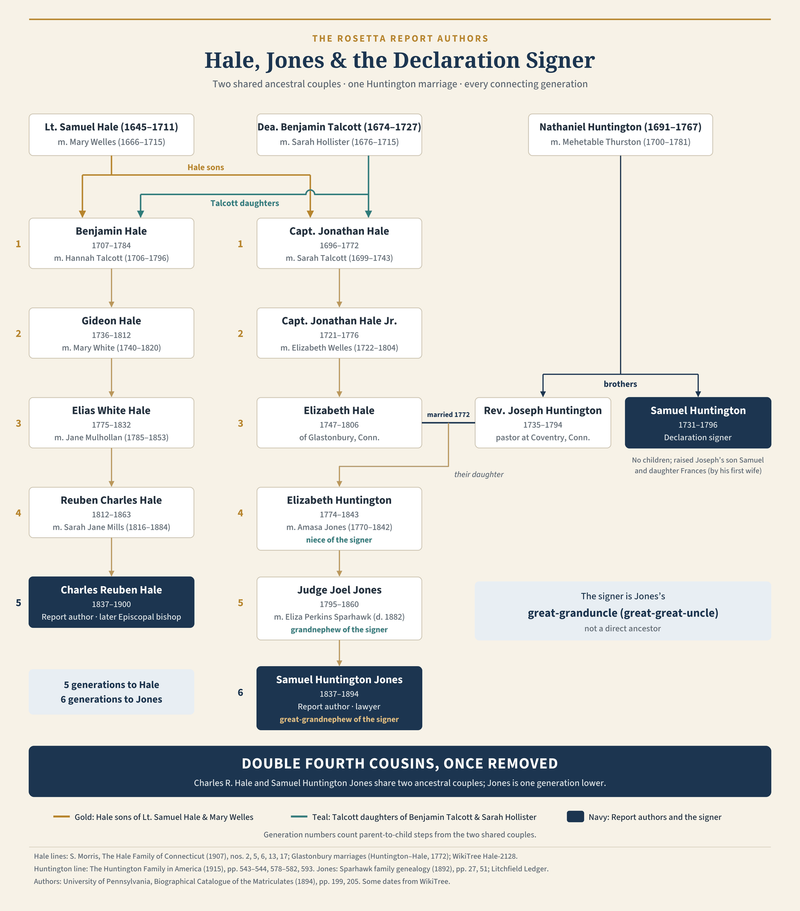 Tap to enlarge
Morton carried out the Report’s hieroglyphic work and helped design its illustrations and decorative borders. He later became a prominent lecturer in physics and chemistry, chaired chemistry at the University of Pennsylvania, and served from 1870 until his death as the first president of Stevens Institute of Technology. Morton later served as vice president of the American Society of Mechanical Engineers. Morton’s 1892 firsthand recollection of the Rosetta project remains the principal account of its origins, collaboration, illustrations, and difficult chromolithographic production.
C063 adds a newly documented Morton-family circulation route: Alexander Hamilton “Hamilton” Morton, who presented the volume in New York in 1860, was the brother of Henry's father, the Rev. Henry Jackson Morton, and therefore Henry Morton's paternal uncle. The inscription date—December 11, 1860—was Henry's twenty-fourth birthday, though the reason for that date remains unproved.
C089 preserves Henry Morton’s undated authorial presentation to Max Rosenthal, signed “with the sincere regards of Henry Morton.”
Born in Philadelphia on 13 June 1837, the son of the Hon. Joel Jones (1795–1860) and Eliza Perkins Sparhawk. Through his grandmother Elizabeth Huntington Jones (1774–1843), daughter of the Rev. Joseph Huntington of Coventry, Connecticut, he was a great-grandnephew of Samuel Huntington (1731–1796), signer of the Declaration of Independence. Through Joseph Huntington’s second wife, Elizabeth Hale of Glastonbury, he was also a double fourth cousin once removed of his co-author Charles Reuben Hale. Joel Jones was a Yale-educated lawyer, judge of the Philadelphia District Court, the first president of Girard College (1847–1849), and Mayor of Philadelphia (1849–1851), as well as a biblical scholar and prominent civic figure. Samuel entered the University of Pennsylvania in 1853, earned an A.M., and completed an LL.B. in 1861.
One of the three Philomathean student authors and writer of the Report’s historical introduction. As Moderator of the Philomathean Society and a member of the Rosetta Stone Committee, Jones framed the translation within the discovery of the Stone and the history of decipherment, complementing Hale’s language work and Morton’s hieroglyphic and visual work. He went on to practice law in Philadelphia. On January 10, 1859, he personally presented C037 to Philadelphia publisher George William Childs. The surviving signed letter makes that volume a documented authorial presentation rather than a later association. The existence of an authorial presentation copy signed by Jones alongside Hale and Morton situates him within a well-established Philadelphia legal and civic family, in contrast to his previously thin documentation among the Report’s three authors.
Tap to enlargeA Polish-born American artist who studied lithography, drawing, and painting before settling in Philadelphia. Penn’s catalog credits Max Rosenthal and Henry Morton with the Report’s decorative borders, while Louis N. Rosenthal’s establishment printed the volume. Max later became known for portraits, etchings, and ambitious lithographic work and was active in Philadelphia’s artistic community. Separating the brothers clarifies artistic design from shop production.
C089 preserves Henry Morton’s undated authorial presentation to Max Rosenthal, signed “with the sincere regards of Henry Morton.”
The Philomathean student who presented the Society with a plaster cast of the Rosetta Stone near the close of the 1855–56 college year and read an essay on hieroglyphic research—an event that sparked the translation project. He later became an Episcopal clergyman and gave C041 to a woman identified in the inscription as his friend and parishioner.
A Polish-born lithographer whose Philadelphia establishment printed the Report. Contemporary cataloging and surviving imprints distinguish Louis’s production role from the artistic contribution of his younger brother Max Rosenthal. Henry Morton’s firsthand account describes repeated color presswork and close collaboration with the lithographic shop. Later Chicago records identify Louis as a paper dealer at 163 LaSalle Street. An obituary reports that he died in Chicago on January 20, 1902, in his seventy-eighth year, after living on Vincennes Avenue, and was buried at Waldheim Cemetery.
Those who received, presented, or were named in a copy at or near the time of its original 1858-1860s circulation.
The inscription identifies only a son named Alexander. George Wharton Pepper explicitly stated in 1925 that he did not know who this Alexander was. No surviving evidence yet supplies a surname or establishes his relationship to Ernest Zantzinger. The census retains the name without converting it into an unsupported identification.
C061 bears a clearly legible penciled ownership inscription: “G. B. Allinson / Phila. Jan. 7/59.” The inscription establishes an owner using those initials in Philadelphia on January 7, 1859.
McElroy’s Philadelphia City Directory for 1847 lists George B. Allinson as a civil engineer on Locust Street above Schuylkill Eighth, at the same address as Samuel Allinson. George does not appear in the 1856 directory’s Allinson entries, while Samuel is listed at 356 Walnut Street. The Allinson Family Papers at Haverford document a substantial Philadelphia-area Quaker family but do not supply a direct link between George B. Allinson and this book. George is therefore the leading candidate, not a confirmed identification.
A Philadelphia insurance agent and son of Charles Nicoll Bancker. He received C015 from his niece Ellen Maria Camac on his thirty-eighth birthday. The embossed J.A.B. shield-and-wings ownership stamp independently supports the reading of the recipient’s name where the inscription had previously been uncertain.
A University of Pennsylvania graduate and senior partner in the banking firm Thomas A. Biddle & Co. The 1897 notice describing Julia Biddle’s bequest of her husband’s finely bound books closely matches this copy’s elaborate late-nineteenth-century rebinding, but no personal ownership inscription survives.
A physician and descendant of the prominent Philadelphia Binney family. He was the great-grandson of jurist Horace Binney. His identity and Wellesley residence help establish that the donor notes refer to his widow, Harriet Cutler Cunningham Binney, rather than another woman using the same formal name.
Born in Philadelphia and educated at Yale, Binney became a prominent member of the Philadelphia bar. During the Civil War he served as president of the Philadelphia Sanitary Commission and of the Union League. C069’s New Year’s Day 1859 inscription to William Seymour Tyler is signed “Horace Binney Jr.” and describes Tyler as the presenter’s friend. The identification has been independently authenticated: Amherst College compared the signature with a near-contemporary Horace Binney letter preserved in the William Seymour Tyler Papers and confirmed a match.
The “Doctor Brugsch” named in Humboldt’s letter is Heinrich Ferdinand Karl Brugsch. He published major work on Demotic writing while still very young and was encouraged by Alexander von Humboldt. He later became one of the central German Egyptologists of the nineteenth century.
His appearance in the inserted facsimile is part of the book’s intellectual context; it does not create a person-to-copy relationship.
A member of the extended Bancker–McIlvaine family and the niece of James Albert Bancker through her mother, Henrietta Maria Bancker McIlvaine. Her February 4, 1859 inscription records a family birthday gift made only weeks after publication, giving C015 a clearly documented domestic rather than institutional origin.
A major Philadelphia publisher and philanthropist who became proprietor of the Philadelphia Public Ledger and developed it into one of the country’s influential newspapers. Childs was also a prominent civic benefactor and moved among leading writers, politicians, and cultural figures. Samuel Huntington Jones’s signed January 10, 1859 presentation letter places C037 directly within Childs’s early publishing and cultural network.
Professor of Geology and Mineralogy at the University of Maryland when this copy was presented to him in Baltimore on March 5, 1859. The unidentified presenter inscribed “ex dono amicitiae,” or “as a gift of friendship,” making C020 a direct presentation to a nineteenth-century scientist.
The C046 gift inscription reads: "Revd. H. C. Swentzel / With kind regards of / John Cooper, M.D.; M.R.C.S. Eng. / 1895." The presenter is strongly identified as Brooklyn physician Dr. John Cooper, listed in a period medical directory at 79 St. James Place with the qualification "M.R.C.S.L., 1837" — matching the inscription's "M.R.C.S. Eng." No further biographical detail has yet been established beyond this directory record.
Founder and first regent of the Mount Vernon Ladies’ Association. Beginning in the 1850s, she led the national effort that purchased and preserved George Washington’s Mount Vernon. Her 1872 inscription to Charles C. Jones records a later association gift from one major American antiquarian figure to another.
Born February 7, 1797, Ducachet trained as a physician before entering the Episcopal ministry. He became the second rector of St. Stephen’s Church in Philadelphia in 1834 and remained there until his death in 1865. His signed C049 ownership inscription is dated February 7, 1859—his sixty-second birthday. The date establishes early ownership but does not reveal whether the volume was purchased, received as a gift, or acquired in another way. The 1859 Philomathean catalog lists the Rev. Henry William Ducachet as an honorary member and separately lists his son, Henry William Ducachet Jr., among the regular members.
Wife of Edward Everett—Massachusetts governor, U.S. secretary of state, and Harvard president—and mother of William Everett. The 1859 date, social context, and the volume’s subsequent ownership by William make Charlotte the strongest identification for “Mrs. Everett.” Because the inscription gives no first name, the attribution remains explicitly qualified.
Harvard Class of 1859 and the youngest son of Edward and Charlotte Everett. He studied at Trinity College, Cambridge and Harvard Law School; taught Latin at Harvard; served as master of Adams Academy; and represented Massachusetts in the U.S. House. The copy’s bookplate and acquisition note establish that he gave it to Harvard on September 25, 1878.
Named in the presentation inscription as "Mrs. Lucy S. Faxon," recipient of a Christmas 1858 gift from her nephew Charles R. Hale. Published genealogical records identify Lucy and Hale's mother, Sarah Jane Mills Hale, as daughters of Jedediah Wells Mills and Sarah Seymour, independently corroborating the relationship.
A Philadelphia lawyer, writer, historian, and philanthropist with strong interests in Pennsylvania history and cultural institutions. Fisher graduated from Harvard in 1825, was admitted to the Philadelphia bar in 1829 but never practiced, and became an incorporator of the Pennsylvania Institution for the Instruction of the Blind. He was elected to the American Philosophical Society on April 19, 1833, and sympathized with the Confederacy during the Civil War. APS proceedings for June 18, 1841 record Fisher presenting eleven rare Cotton Mather tracts dating from 1699–1725 at the same meeting where Henry D. Gilpin separately donated historical documents — placing both men within the same APS bibliophilic circle, though this does not by itself establish a personal relationship or explain Gilpin's 1859 presentation of C006 to Fisher. Fisher's daughters Sophia and Maria married Eckley Brinton Coxe and Brinton Coxe; his son Henry Middleton Fisher married Mary Elwyn Wharton, daughter of C080 owner Henry Wharton. These genealogical links provide family context, not a provenance chain for C006. The mechanism and date of the later Fisher-to-Philomathean transfer remain undocumented.
Twice elected mayor of Washington, D.C. (1836–1840), Force spent decades assembling what became known as the Peter Force Library, which contained more than 60,000 items, in support of his unfinished documentary project, American Archives. Congress purchased his library in 1867, and it became a foundation collection of the Library of Congress. C075 was his personal copy, presented to him by John Jay Smith.
Daughter of physician and Indian agent John Sibley, widow of Louisiana senator Josiah Stoddard Johnston, and wife of U.S. attorney general Henry D. Gilpin. Contemporary accounts described her intellectual influence and remembered the Gilpin home as a resort of artists, connoisseurs, and distinguished visitors. She later chaired a major women’s committee at Philadelphia’s Great Central Fair. Her January 1, 1859 inscription connects C003 to the Gilpins’ cultivated literary and political circle; her May 21, 1859 inscription in C055 records a gift to her grandson William Stoddard Johnston II.
Because both editions carry the same chromolithographed dedication leaf naming him, Gilpin appears in the front matter of every one of the 90 first-edition copies documented in this census, and every second-edition copy as well — not only the two copies specifically linked to his household below. He served as the fourteenth Attorney General of the United States under Martin Van Buren (1840–1841), argued the government’s side of the Amistad case before the U.S. Supreme Court, and edited the three-volume Papers of James Madison, purchased from Dolley Madison and published by order of Congress. He was president of the Pennsylvania Academy of the Fine Arts from 1852 to 1859 — spanning the years both editions of the Report were dedicated to him. The Philomathean Society's moderator roll lists him as its twenty-third moderator. Beyond that universal presence as dedicatee, the current reading identifies him personally as the giver of C006, and his wife Eliza’s 1859 gift of C055 to her grandson places that copy directly within the Gilpins’ household and family circle.
A Philadelphia merchant whose wife Emeline is identified as the recipient of the Rev. Dr. Thomas Kittera Conrad’s copy. Conrad was the Philomathean student whose presentation of a Rosetta Stone cast helped inspire the translation project. City-directory and census evidence places the Godfrey household within the Philadelphia and Germantown world in which Thomas Kittera Conrad later served as a clergyman.
Identified through Philadelphia directories, census research, and the Rev. Dr. Thomas Kittera Conrad’s parish network as the “Mrs. B. G. Godfrey” named in the inscription. She was the wife of merchant Benjamin G. Godfrey. Her copy creates a remarkable link between Thomas Kittera Conrad—the student whose presentation of a Rosetta Stone cast helped inspire the project—and the finished book.
A daughter of Josiah Quincy III and sister of Maria Sophia Quincy. She married Benjamin Daniel Greene, a Harvard-educated botanist, traveler, and patron of science. The inscription’s “Mrs. M. Greene” most plausibly identifies Margaret as the 1859 recipient. The married name and accompanying Quincy initials make the identification strong. Margaret’s mother, Eliza Susan Morton Quincy, was the sister of Henry Morton’s paternal grandfather Jacob Morton, making Margaret Henry’s first cousin once removed.
Von der Hagen was a pioneering scholar of medieval German literature, a professor at the University of Berlin, and an editor and translator associated especially with the Nibelungenlied. The Berlin wrapper mounted in C069 is addressed to "Professor von der Hagen" at "Louisenstrasse No. 23." The official 1841 Berlin address directory lists "v. Hagen, F., Dr., erb. Prof. d. phil. Fakultät a. d. Univers., Louisenstr. 23" — an exact match with name, title, and street address confirming Friedrich Heinrich von der Hagen as the wrapper's recipient. The separate manuscript note signed "A V Humboldt" mounted alongside the wrapper is recorded elsewhere in this census as a probable, not formally authenticated, Humboldt autograph — a distinct question from the wrapper's confirmed addressee.
Born in Lewistown, Pennsylvania, the son of Yale-educated lawyer Elias W. Hale Sr. (1775–1832). Attended the University of Pennsylvania Medical School from October 1846 to 1848 under preceptor Dr. Joseph B. Ard and received his M.D. in 1848. Returned to Lewistown and practiced medicine in Mifflin and Centre Counties, Pennsylvania, for the rest of his life, with brief service in the emergency Pennsylvania militia in 1863. A genealogical record for his brother, Reuben Charles Hale (1812–1863), lists Elias White Hale as a sibling alongside Mary Jane Hale Welles and Caroline Amelia Hale Morgan — confirming him as report author Charles R. Hale's uncle, exactly as the C056 inscription states.
The father of author Charles Reuben Hale. He was a Pennsylvania lawyer and public official whose career included federal service in Philadelphia and later service as quartermaster general of Pennsylvania. His gift to Yale librarian Edward C. Herrick shows the older Hale generation helping circulate the students’ work among established scholars. C060 preserves his son's direct 1858 presentation to him, signed “Charles R. Hale” in full.
He was also president of the Tyrone and Clearfield Railroad from 1860 until his death in 1863, succeeding his first cousin James Tracy Hale, who had held the same office 1856–1858 (their fathers, Elias White Hale and Reuben Hale of Towanda, were brothers). Reuben Charles Hale's presidency ended in the same year he died, matching the office's recorded succession to George Brooke Roberts in 1863 — a documented family succession in the railroad's own leadership, sourced to Coverdale & Colpitts (1946) and Bezilla & Gette, Branch Line Empires (Indiana University Press, 2017).
The mother of author Charles Reuben Hale. C060 preserves her son's Christmas 1858 presentation to “Sarah Jane Hale,” signed simply “Charles—.” The inscription is one of the first two examples in the current census where Hale writes “Charles” in full rather than “Chas.”
Named in the inscription as "cousin of Charles R. Hale," recipient of the book as a gift from Julia Faxon. Independently documented as the wife of George Wells Harris and mother of the philosopher Marjorie Silliman Harris, the family lived in Wethersfield, Connecticut. Published lineage records identify her father, Charles Seymour Mills, as a brother of Hale's mother, Sarah Jane Mills Hale, independently establishing the first-cousin relationship.
An American archaeologist and pioneering field photographer, Haynes served as field director of the Nippur excavations (1888–1900), America's first Mesopotamian dig, and has been called the father of American archaeological photography. He later worked for the University of Pennsylvania Museum, creating a genuine institutional Penn connection. A 1905 nervous breakdown led to his institutionalization, and he died in 1910; his 1908 gift of C047 to Lythgoe falls within that decline and reads as a colleague's parting gesture.
An early owner of C078, identified by her inscription: "Maria A. Hemphill." A second, fainter line of graphite beneath it is not confidently legible; it may read "West Chester, Pa." and a name beginning "John H," but neither the transcription nor her identity is established. Not yet identified beyond the inscription itself.
Born February 24, 1811, Herrick never attended Yale as a student: chronic eye disease prevented a collegiate course. Yale nevertheless awarded him an honorary A.M. in 1838 for his independently acquired scholarship. He became Yale’s first full-time librarian, serving from 1843 to 1858, and college treasurer from 1852 until his death in 1862. He also helped establish systematic meteor observation in the United States. Reuben Charles Hale’s January 21, 1859 gift therefore reached an accomplished scientist and bibliographer whose Yale standing was earned without an undergraduate degree.
Henry Bainbridge Hoff was the son of Commander Henry Kuhn Hoff. Penn’s 1858–59 catalog and the published Philomathean Society membership history place him at the University and in the Society precisely when the Report appeared. He therefore supplies the most likely route by which his father obtained C036 before presenting it to Dr. Charles D. Meigs. No surviving inscription records the father-son transfer, so that step remains a strong inference rather than a documented handoff.
The inscription’s “Comd. Hoff. U.S.N.” identifies Henry K. Hoff with compelling specificity. He had been a naval officer since 1823, commanded USS Independence, and returned from senior Pacific Squadron duty in 1858. In 1859 he was assigned to USS Princeton at the Philadelphia Navy Yard. Hoff later served during the Civil War, rose to rear admiral, and commanded the North Atlantic Squadron. His son Henry Bainbridge Hoff was a Penn senior and Philomathean Society member when the Report appeared, providing the missing direct route between the book and Commander Hoff. The exact father-son handoff is inferred, but the presenter’s identity is strongly established.
The internationally celebrated Prussian scientist praised the Philomathean committee’s independent work in a letter dated March 12, 1859. Five first-edition copies preserve manuscript-style, printed, tipped-in, pasted-in, or bound-in facsimiles, translations, and associated reception material. Those appearances remain documented in their copy records but are not counted as person-to-copy relationships.
C069 separately preserves a German manuscript dated February 4, 1841 and signed “A V Humboldt,” with an addressed Berlin wrapper to Professor von der Hagen. The census records that manuscript as attributed to Humboldt; no independent handwriting authentication has yet been established.
The elder Humboldt brother was a statesman and scholar associated with language, education, and the development of the modern research-university ideal. Alexander’s letter reproduced in C062 refers to his brother while discussing the history of hieroglyphic study.
He is part of the inserted document’s intellectual genealogy, not an owner or associate of the physical copy. The facsimile mention therefore does not create a person-to-copy relationship.
One of the first American writers to achieve an international reputation. Irving is best remembered for “Rip Van Winkle” and “The Legend of Sleepy Hollow,” but he also wrote history and biography and served as a United States diplomat. At Sunnyside in Tarrytown, he lived in the same neighborhood as Charles R. Hale’s aunt Caroline Amelia Hale Morgan and her husband George D. Morgan. Irving inscribed a copy of The Sketch Book to Caroline at Christmas 1856—exactly two years before Hale presented C001 to Irving at Christmas 1858. George D. Morgan later served as one of Irving’s pallbearers. That neighborhood and family connection places Hale’s gift within an established personal circle during the final year of Irving’s life.
Johnston was raised and educated in the Philadelphia household of his grandmother Eliza and her second husband, Henry D. Gilpin. C055 records Eliza’s gift to him on May 21, 1859. His father, William Stoddard Johnston I, had been a nominal Philomathean member in 1834.
Born in Savannah and educated partly in Philadelphia, where his father held church posts, Jones earned an A.B. from Princeton in 1852 and a law degree from Harvard in 1855. He served as mayor of Savannah from 1860 to 1861 and, during the Civil War, as a Confederate lieutenant colonel and chief of artillery for the military district of Georgia. After the war he became a prominent memorialist of the Confederate "Lost Cause" and one of the most productive historians of 19th-century Georgia, sometimes called "the Macaulay of the South" for an output of roughly eighty works, including Antiquities of the Southern Indians and History of Georgia. He was also a noted collector of autographs and manuscripts. Cunningham's inscription calls him her friend and dates the gift at Mount Vernon on July 19, 1872 — fourteen years after publication. A newly identified family network explains that connection: Jones's second wife, Eva Berrien Eve, was the daughter of Philoclea Edgeworth Casey Eve, Cunningham's own cousin and the Mount Vernon Ladies' Association's Georgia Vice Regent, who personally handled donor correspondence for the campaign under the pseudonym "The Committee." Eva Eve had been a bridesmaid at Jones's first wedding in 1858 before becoming his second wife in 1863.
The C046 presentation label abbreviates his name as “H. Baxter Liebler.” Ordained in 1914, Liebler spent 25 years at St. Saviour's Church in Old Greenwich, Connecticut, before leaving at age 53 to found St. Christopher's Mission to the Navajo at Bluff, Utah, in 1943. He learned Navajo beforehand, wore a traditional Navajo hairstyle, and incorporated Navajo Beauty Way elements into his liturgy, building a free-standing altar facing east to satisfy both Anglican and Navajo custom — possibly the first U.S. church to do so. He founded the area's only school, serving roughly 1,500 Navajo, and later a hospital and clinic that saw about 500 births after opening in 1956. He retired in 1962 but remained active, founding the Hat Rock Valley Retreat Center and St. Mary of the Moonlight Chapel in Monument Valley, Arizona (1966–71), where he died in 1982. He wrote three books: Moccasin Tracks, When We Look Around Us, and Boil My Heart for Me. The route into his possession of C046 and the date of his gift remain unresolved.
The acquisition note reads “g. of Dr. John Logue, 7/84.” The leading and probable identification is Dr. John J. Logue (1923–2004), the Villanova University political-science professor and founder of the World Order Research Institute, later the Common Heritage Institute. He was a Philadelphia-area academic, held a doctorate from the University of Chicago, and was active when Temple recorded the July 1984 gift — facts that make him substantially more plausible than the unrelated physicians and academics found in broad name searches.
No record yet explicitly connects him to this volume. The identification remains probable pending Temple's accession register, donor file, or correspondence.
Born in Providence, Rhode Island, Lythgoe took a Harvard A.M. in 1897 before continuing his studies at the University of Bonn. He became the first curator of Egyptian art at the Museum of Fine Arts, Boston, in 1902, and in 1906 J. Pierpont Morgan recruited him to become the Metropolitan Museum's founding curator of Egyptian Art, a post he held until 1929. He directed the Met's excavations at Lisht and released key staff to assist Howard Carter with the discovery of Tutankhamun's tomb. John Henry Haynes gave him C047 in 1908, making the volume part of the department's formative scholarly history.
One of nineteenth-century America’s most influential obstetricians. Meigs graduated in medicine from the University of Pennsylvania, became professor of obstetrics and diseases of women at Jefferson Medical College in 1841, and served as president of the College of Physicians of Philadelphia. His books helped shape American obstetrical teaching. His legacy is also controversial: he resisted the use of anesthesia in childbirth and rejected emerging evidence that physicians’ hands could transmit puerperal fever.
C059's name, Montgomery crest and “Garde Bien” motto, Philadelphia context, and date range strongly identify the owner as John Teackle Montgomery. The official Philomathean alumni list records John T. Montgomery as a nominal member in 1835, and American Philosophical Society authority data gives his full name and life dates. He married Alida Gouverneur Wharton in 1856; published Wharton genealogy identifies her as a first cousin of C080 owner Henry Wharton. The identification remains qualified pending repository confirmation or direct bookplate comparison.
A University of Pennsylvania graduate, Philadelphia lawyer, and documented member of the Philomathean Society. He was the father of Fannie Brock Montgomery’s husband and therefore her father-in-law. That relationship gives the probable donor a clear Philomathean family context, but it does not establish that William ever owned C048.
The sister of Reuben Charles Hale and paternal aunt of author Charles Reuben Hale. C051 preserves Hale’s Christmas 1858 presentation to her. Her marriage to George D. Morgan also connects that authorial gift to the Morgan family context documented by C021 and to the network surrounding C001.
A New York merchant whose marriage to Caroline Amelia Hale made him an uncle by marriage within Charles R. Hale's family network. His cousin and business partner Edwin D. Morgan served as governor of New York from 1859 to 1862 and then as a United States senator. At New Year's 1859 George presented a copy of the Report to his brother, Rev. William F. Morgan. Welles—his own brother-in-law and the sitting Secretary of the Navy—appointed him purchasing agent for the Union Navy in 1861, an assignment that became known as "the Morgan Purchases" and drew a Senate nepotism inquiry. Independently of that appointment, Morgan was Washington Irving's neighbor and friend at Sunnyside; Irving inscribed a copy of The Sketch Book to Morgan's wife at Christmas 1856. George also helped promote the village’s 1854 renaming as Irvington in Irving’s honor, was associated with Irving through the same Tarrytown savings bank, and served as one of Irving's eight pallbearers at his December 1859 funeral.
The brother of George D. Morgan and recipient of the New Year’s 1859 gift. The affectionate inscription records a family exchange rather than an author’s direct presentation, while the Morgan–Hale marriage places the gift within Charles R. Hale’s extended family network.
Effingham Buckley Morris graduated from the University of Pennsylvania with the Class of 1875, appearing by name in the University's own 1875 Record of that class. He began his legal career with P. Pemberton Morris and became general attorney of the Lehigh Valley Railroad Company and counsel of the Girard Trust Company before his election as the Girard Trust's president in 1887, a position he held for forty-one years while its assets grew enormously. He was the youngest elected director of the Pennsylvania Railroad, and served as a University of Pennsylvania trustee from 1911 to 1921, receiving an honorary degree from the University in 1928.
His ownership inscription, "Effingham B. Morris / U. of Pa / 1875," appears on the dedication leaf of C082, evidently added not long after his graduation.
Generally known as Hamilton Morton, he was a New York lawyer, joined the New York Yacht Club in 1849, served as its secretary from 1859 to 1871, and later became an honorary member. He died unmarried.
Compiled Morton family records identify him and the Rev. Henry Jackson Morton as sons of Jacob Morton and Catherine Ludlow Morton. The National Academy of Sciences identifies Rev. Henry Jackson Morton as the father of report author Henry Morton. This establishes Hamilton—not merely another man with the surname—as Henry Morton’s paternal uncle.
C063 records Hamilton’s presentation to Charles Wm. Van Benthuysen in New York on December 11, 1860. That date was Henry Morton’s twenty-fourth birthday; the coincidence is documented, but its purpose is not.
A long-serving Episcopal clergyman in Philadelphia and the father of report author Henry Morton. He was also an accomplished amateur artist. The Metropolitan Museum of Art holds his drawing Sphinx in the Louvre and states that it was made in association with drawings he executed for the University of Pennsylvania Rosetta Stone report.
His position as Alexander Hamilton Morton’s brother is the key genealogical link proving that the presenter of C063 was Henry Morton’s paternal uncle.
Daughter of Henry Wharton and Katharine Johnstone Brinley Wharton, born November 14, 1866, per the published genealogy Samuel Carpenter and His Descendants (1912) and independently confirmed by her own Pennsylvania certificate of death, which names Henry Wharton as father and Katharine Johnstone Brinley as mother. She married Adolfo Carlos Muñoz del Monte y Poey on June 29, 1891, and died November 1, 1943. Their daughter, Katharine Johnstone Muñoz, later Muñoz Nell, is the documented donor of C080 and signed as informant on Emily's death certificate from Emily's own residence.
Daughter of Emily Wharton Muñoz and Adolfo Carlos Muñoz del Monte y Poey, born March 20, 1894, per the published genealogy Samuel Carpenter and His Descendants (1912). A February 5, 1920 marriage notice and indexed Pennsylvania county marriage record confirm her marriage to William Nell. As "Katharine M. Nell," she signed as informant on her mother Emily's 1943 Pennsylvania death certificate, giving her own residence — 5623 Germantown Avenue — as the informant's address, matching Emily's own listed residence. The Free Library's printed gift bookplate in C080 records her as donor, "Mrs. Katharine Munoz Nell," and a separate Free Library donor/accession notation records the date August 4, 1949.
Born in St. Louis and based for most of his life in Philadelphia, Nicholson founded the bookbinding firm Pawson & Nicholson there in 1848 with the English binder James Pawson. His 1856 Manual of the Art of Bookbinding, cataloged by the Metropolitan Museum of Art, was the first practical bookbinding manual written by an American — it went further than its principal source, Hannett's 1835 Bibliopegia, and was regarded as the most complete treatise yet published in the United States, later republished in 1874 and 1882. Its marbling section reprints Charles Woolnough's 1853 manual, with marbled specimens supplied by Charles Williams of Philadelphia.
C062's impressed Pawson & Nicholson stamp documents the firm's later rebinding of the volume, not its original 1858 binding — a documented example of the firm's shop production.
James Pawson was the partner named with James Bartram Nicholson in the Philadelphia bindery Pawson & Nicholson. The firm’s stamp appears in C062. The Library Company of Philadelphia preserves a Nicholson photograph album that includes Pawson and employees outside the shop at 139 South Seventh Street.
The stamp is direct physical evidence for the present binding, but not for the book’s original 1858 binding.
Son of George Pepper (1779-1846) and Mary Catharine Seckel Pepper. His $225,000 bequest, secured through the efforts of his nephew Dr. William Pepper, provided the Free Library of Philadelphia's foundational funding when the library was chartered in 1891. George S. Pepper was also the uncle of William Platt Pepper, a Philomathean contemporary of Henry Morton and Samuel Huntington Jones.
George S. Pepper is not established as a private owner of C081. The George S. Pepper Fund bookplate in this copy is institutional acquisition evidence only, not evidence that he personally owned the volume.
Eldest son of David Pepper and Emily Platt Pepper, and grandson of George Pepper (1779-1846) and Mary Catharine Seckel Pepper. Entered the University of Pennsylvania in 1854, class of 1857 -- the same Philomathean class as committee members Samuel Huntington Jones and Henry Morton -- and was a member of the Philomathean Society and Zeta Psi fraternity, receiving his A.B. in 1857 and A.M. in 1860.
A Philadelphia lawyer and art collector, William Platt Pepper was president of the Pennsylvania Museum and School of Industrial Art from 1882 to 1894, and was a paternal nephew of George S. Pepper -- David Pepper and George S. Pepper were brothers, both sons of George Pepper and Mary Catharine Seckel Pepper -- making him a first cousin of Dr. William Pepper, the physician and Penn provost who persuaded their shared uncle to fund the Free Library. William Platt Pepper later served as a trustee of the Free Library himself; a contemporary 1902 Philadelphia biographical source also labels him "Dir. The Free Library."
No evidence establishes that William Platt Pepper personally acquired C081, arranged its transfer to the library, or knew William Bowdoin Robins.
Raymond Pitcairn (1885–1966) was the eldest son of Pittsburgh Plate Glass Company founder John Pitcairn, a lawyer and businessman, and a noted collector of ancient and medieval art who supervised the building of Bryn Athyn Cathedral and his own Glencairn estate in Bryn Athyn, Pennsylvania — both in the Philadelphia area.
A loose typescript in C073, excerpting Randolph G. Adams' 1924 essay on the Report's printing history, closes with a handwritten notation reading "R.P., 10/13/51." The initials probably refer to Raymond Pitcairn, but the identification remains unconfirmed. The notation is not automatically an ownership or presentation inscription, and Pitcairn is not added to this copy's confirmed provenance chain on this evidence alone.
A daughter of Josiah Quincy III—Boston mayor, congressman, and president of Harvard—and a member of a notably literary family of diarists and correspondents. The initials “M. S. Q.” in C045 most plausibly identify Maria as presenter to her sister Margaret in 1859. The initials, date, and family relationship strongly support the identification. Maria’s mother, Eliza Susan Morton Quincy, was the sister of Henry Morton’s paternal grandfather Jacob Morton, making Maria Henry’s first cousin once removed.
William Bowdoin Robins received his A.B. from the University of Pennsylvania in 1859 and his A.M. in 1862. Bowdoin College's own Robins family archive independently confirms him as a documented member of the historic Robins family of Maryland. He attended Penn during the years the Philomathean committee produced the Rosetta Stone Report: Samuel Huntington Jones and Henry Morton belonged to the Philomathean class of 1857, Charles Reuben Hale to the class of 1858, and Robins himself to the class of 1859.
Robins inscribed C081 in 1860, the year after his graduation, making it a genuine contemporary Philomathean association copy. No presentation inscription or manuscript signature from any of the three authors has been found, and no evidence establishes that the volume was personally presented to Robins by any of them.
The inscription securely reads "C. V. S. Roosevelt." Both Cornelius Van Schaack Roosevelt Sr. (1794–1871) — a hardware and plate-glass importer, co-founder of Chemical Bank, and one of the ten wealthiest men in New York at his death, father of Theodore Roosevelt Sr. and paternal grandfather of President Theodore Roosevelt — and his son of the same name, Jr. (1827–1887), were alive in 1858. Sr. is considered the more likely presenter given his generation's overlap with Robert Leighton Stuart's own circle, but the choice between father and son is not final. The Theodore Roosevelt Birthplace National Historic Site records a family account, drawn from family letters and photo captions, that young TR watched Lincoln's funeral procession pass by from a window of the Roosevelt family's Union Square mansion. The copy passed to Robert Leighton Stuart, a sugar-refining magnate and founding president of the American Museum of Natural History (1872–81), whose own library of 11,888 books went to the Lenox Library and then the New York Public Library — matching this copy's documented chain exactly. Robert L. Stuart's own 1884 printed library catalog independently confirms the Report's presence in his collection. No documented friendship or occasion for the gift has yet been found; the inscribed initials and Stuart ownership are certain, while the choice between the elder and younger Roosevelt awaits independent confirmation.
Son of Max Rosenthal, credited elsewhere in this census (with Henry Morton) for the Report's decorative borders. Albert studied under his father at the Pennsylvania Academy of the Fine Arts, later at the Académie Julian and the École des Beaux-Arts under Jean-Léon Gérôme. He became a well-known Philadelphia portrait painter, noted for portraits of U.S. Supreme Court justices and Revolutionary War-era French officers, and donated his collection of American drawings to the Free Library of Philadelphia in 1927. He inscribed and presented C076 to Louis Stein, Esq. in April 1928, the same year he moved from Philadelphia to Bucks County, Pennsylvania — a personal gesture presenting a copy of the very book his father helped design.
Schaeffer served St. Michael’s Lutheran Church in Germantown and helped shape the Lutheran seminary that later held C053. A Penn alumnus, he joined Penn’s trustees in 1859. His son Charles Ashmead Schaeffer overlapped at Penn with Hale, though the son joined the Philomathean Society only later.
Librarian of the Library Company of Philadelphia from 1829 to 1851 and publisher of the Pennsylvania Gazette. Smith founded and promoted Laurel Hill Cemetery, Philadelphia's first rural cemetery, which was designed by architect John Notman, and was a prolific memoirist and antiquarian in his later years. He presented C075 to Peter Force, inscribing it "Peter Force Esq. from his friend Jno. Jay Smith."
Recipient of Albert Rosenthal's 1928 presentation copy. The leading candidate is Philadelphia attorney, philanthropist, and collector Louis Stein (1906–1996). His profession, city, age in 1928 (21 or 22), and later, well-documented career as a significant collector and donor of rare books and manuscripts make him a strong fit for "Louis Stein, Esq." No transfer record or independent Rosenthal connection has yet confirmed the identification, so it remains probable rather than confirmed.
Emma Stevenson presented the volume to "Mrs. Tappan" in Michigan in 1863 — an inscription confirmed directly by the book itself. Born May 21, 1842, in Washtenaw County, Michigan, to Hay Stevenson and Eliza Ludlow, she shared a great-grandparents' generation (Cary Ludlow and Hester Lynsen) with report author Henry Morton, making the two second cousins. She lived at the Ludlow family estate Oldstone in Westchester County, New York, until her death on March 14, 1899; a month earlier, the property passed in bankruptcy proceedings to a Morton descendant of the same Ludlow family, evidence of a continuing family relationship beyond shared ancestry alone. Whether Henry Morton or the wider Morton–Ludlow family supplied the volume to Emma in the first place remains an open question; no direct inscription or letter linking the two has yet been found.
A wealthy New York sugar refiner, bibliophile, art collector, and philanthropist. The inscription records Roosevelt’s gift to “his friend R. L. Stuart.” Stuart’s library entered the Lenox Library in 1892 and passed into the New York Public Library when the Lenox became one of its founding collections in 1895.
The C046 gift inscription of 1895 names Rev. Dr. Henry C. Swentzel (1851–1926) as recipient, confirmed via a period Episcopal clergy index. The transfer of the volume between Swentzel and the later presenter, Rev. Harold Baxter Liebler, is unresolved, and no connection is established between Liebler's later Manhattan post at St. Luke's Chapel of Trinity Parish and Swentzel's own Brooklyn parish — the shared "St. Luke" name is treated as coincidence.
A Scottish-born churchman who served as archbishop of Canterbury from 1868 to 1882 and was the first Scottish priest to hold the office. Charles R. Hale’s accompanying letter documents the authorial gift. Lambeth Palace Library's Kershaw catalog records the Report among Tait's books received in 1883, establishing him as the final private owner before the volume entered the Library.
Henry Philip Tappan (1805–1881) served as the University of Michigan’s first president from 1852 to 1863 and helped shape the institution into a modern research university. He was removed by the regents in 1863, after which he and Julia left Michigan for Europe. The timing raises the possibility that Emma Stevenson’s gift was a farewell gesture, although that purpose is not stated in the inscription.
The “Mrs. Tappan” named in the 1863 Michigan inscription is very likely Julia Livingston Tappan (about 1809–1884), wife of Henry Philip Tappan, the first president of the University of Michigan. The identification rests on the Michigan location, the 1863 date, and the Tappans’ prominence in the state’s academic and cultural life at that exact moment. Because the book gives no first name, the identification remains strong rather than final.
The pencil inscription in C004 reads “Mrs Isaac Toucey / from / W. E. Whitman.” Catharine (also spelled Catherine) Nichols married the Hartford lawyer Isaac Toucey in Hartford on October 28, 1827; the couple had no children. Her husband was Secretary of the Navy when the Report appeared. She died on August 13, 1871, and is buried beside him in Hartford’s Cedar Hill Cemetery. Because the inscription gives only her married name, the identification remains strong rather than final. The presenter was William Elnathan Whitman (1801–1875), a Philadelphia lawyer and secretary of the Library Company of Philadelphia.
Named in C004 through the inscription to “Mrs Isaac Toucey.” A Hartford lawyer and Democrat, Toucey served in the U.S. House of Representatives (1835–1839), as Governor of Connecticut (1846–1847), U.S. Attorney General (1848–1849), U.S. Senator (1852–1857), and Secretary of the Navy under President James Buchanan (1857–1861). He was among the founders of the Connecticut Historical Society in 1825, became a trustee of Trinity College, Hartford, in 1860, and left a large share of his estate to Trinity. He died in Hartford on July 30, 1869. Most published sources give his birth year as 1796; some give 1792.
Tyler graduated from Amherst in 1830 and taught Latin, Greek, and Greek literature there for more than half a century. He wrote the college’s history and remained professor emeritus until his death. Smith College identifies him as one of its original trustees. C069 was inscribed to him on New Year’s Day 1859 by Horace Binney Jr., whose identification has been independently authenticated through comparison with contemporary manuscript material at Amherst College. A later Smith bookplate and accession record identify his son Henry Mather Tyler as the 1928 donor; the transfer between father and son is not documented.
The earliest inscription in C070 records a parent presenting the book “For my son Alexander” in Germantown on January 18, 1859. No signature or surname accompanies the inscription. The presenter therefore remains a documented participant in the copy’s history but cannot yet be assigned a personal identity.
The inscription clearly names “Charles Wm. Van Benthuysen,” but no exact biographical match has yet been proved. Searches covered exact-name variants, New York and Albany printing history, cemetery records, authority files, the published Van Benthuysen genealogy, and general genealogical databases.
A plausible lead is Charles Van Benthuysen (1817–1881), the prominent Albany printer. Library of Congress authority data and New York historical sources document that man, but they do not supply the “Wm.” found in the inscription, and no source yet links him to Hamilton Morton. The census therefore keeps the printer hypothesis qualified.
The younger sister of both Maria and Margaret, Anna married Robert Cassie Waterston in 1840 and joined him in forming the Waterston Library. She belonged to the family for whom Quincy, Massachusetts, was named and spent part of her youth at the ancestral Quincy House. Her mother’s Morton ancestry made her, like her sisters, Henry Morton’s first cousin once removed. Anna died on October 14, 1899; the Waterston Library reached the Massachusetts Historical Society the following month. That timing makes her the probable family conduit for C045, while stopping short of claiming a documented transfer.
Secretary of the Navy during the Civil War and a major figure in Abraham Lincoln's administration. Husband of Mary Jane Hale, sister of Reuben Charles Hale and paternal aunt of author Charles Reuben Hale, making Welles the author's uncle by marriage. His long correspondence with Reuben Charles Hale reveals how the Hale and Welles families connected the young author's household to national political life. Welles appointed his own brother-in-law, George D. Morgan, as the Navy's purchasing agent in 1861. Charles R. Hale was himself commissioned a U.S. Navy chaplain on March 10, 1863, within Welles's tenure.
The sister of Reuben Charles Hale and paternal aunt of author Charles Reuben Hale. She married Gideon Welles, who was also her first cousin. Hale’s inscription “from her nephew” is therefore independently confirmed by the family relationship. The gift joined the book to a family operating inside national political circles.
Son of Thomas Isaac Wharton and Arabella Griffith. A prominent Philadelphia real-property lawyer, Henry Wharton served eighteen years on the board of the Library Company of Philadelphia and was remembered at his death as one of the lawyers who "evolved the true law relating to property." He married Katharine Johnstone Brinley on October 21, 1858, the same year this copy is dated, and died November 11, 1880, buried at Laurel Hill Cemetery, Philadelphia. The Philomathean Society's alumni roll records him in the class of 1846. His daughter Mary Elwyn Wharton married Henry Middleton Fisher, son of C006 recipient Joshua Francis Fisher.
An American Quaker industrialist. Wharton managed the Pennsylvania and Lehigh Zinc Company near Bethlehem, Pennsylvania in the 1850s, establishing the first successful metallic zinc production in the United States; that Lehigh Valley industrial connection is distinct from Lehigh University itself, and no source ties Wharton to the university as a benefactor. Wharton founded the Wharton School of the University of Pennsylvania in 1881 with a $100,000 gift — the first collegiate business school in the United States — and was an early benefactor of Swarthmore College, where his daughter Mary Lovering Wharton's photographs are now held.
C072's front-pastedown pencil signature reading "Joseph Wharton" is strongly supported by comparison with his published facsimile signature — both share a long looped capital J, compressed "oseph," angular capital W, and matching terminal stroke — but it has not been authenticated from the original manuscript and remains a probable, not confirmed, identification.
Married Henry Wharton on October 21, 1858, the year this copy is dated. The 1870 U.S. census records her, age 30, born in Rhode Island, in their Philadelphia household with several children including a four-year-old daughter, Emily — consistent with the birth of Emily Wharton recorded in the published genealogy Samuel Carpenter and His Descendants (1912). Her name is inscribed alongside her husband's in this copy.
Daughter of Joseph Wharton (1826–1909) and Anna Corbit Lovering (1830–1914), and sister of Joanna Wharton Lippincott and Anna Wharton Morris. She never married. Photographs of her survive in the Anna Wharton Morris Family Photographs, PA.075, at the Friends Historical Library of Swarthmore College, including one in Box 1 captioned "Aunt Polly" and a dedicated file in Box 5. This is a physical, non-digitized collection; no downloadable portrait has yet been obtained.
A preliminary leaf in C072 bears an ink inscription reading "Mary Lovering Wharton, 1918" — an exact match to her name. Combined with the probable Joseph Wharton signature identification on the same volume, this supports a probable father-to-daughter family provenance, though it remains probable rather than an independently authenticated fact.
The undated pencil inscription in C004 reads “Mrs Isaac Toucey / from / W. E. Whitman.” The presenter was William Elnathan Whitman, born in Hartford, Connecticut, on April 17, 1801, the son of William Whitman of Hartford. He graduated from Middlebury College in 1820, practiced law in Philadelphia, sat for Philadelphia City as a Whig in the Pennsylvania House of Representatives in 1843 and 1844, and became secretary of the Library Company of Philadelphia in 1856. The Report’s handwritten preface, dated August 3, 1858, thanks “the Hon. Henry D. Gilpin and Wm. E. Whitman Esq.” for “the important aid they have rendered in many ways” and acknowledges “the officers of the Philadelphia and Astor Libraries.” The Philomathean Society’s 1859 catalog lists “Wm. E. Whitman, Esq.” among its honorary members. He died in Philadelphia on July 30, 1875.
Isaac Toucey, the recipient’s husband, was also a Hartford lawyer, so a shared Hartford background may explain the gift; no document connecting Whitman with the Touceys has been found. The inscription does not refer to the poet Walt Whitman.
Those who acquired, sold, donated, or otherwise came to hold a copy well after its original circulation.
A member of Philadelphia’s Biddle family and wife of Thomas Alexander Biddle Jr. Her bequest brought her husband’s handsomely bound books to the University of Pennsylvania in 1897. The bookplate securely documents the bequest; ownership by her husband before her death is a strong inference rather than a surviving inscription.
The widow of Dr. Horace Binney. Two surviving notes naming “Mrs. Horace Binney,” together with the Wellesley address, identify her as the donor. Her gift brought the cream copy into University of Pennsylvania custody, but the book’s earlier ownership remains undocumented.
A Philadelphia lawyer (University of Pennsylvania, class of 1855) and major collector of Greek and Latin classics, early printed books, and incunabula, housed in a purpose-built library behind his residence at 1710 Walnut Street — over 11,000 volumes, including some 433 incunabula and roughly 3,600 Greek and Latin classics. In 1908 his son sold the collection to Harvard, funded by Mary Bryant Pratt Brandegee, and shipped in seventy-two boxes — the largest single gift of books Harvard had received to that date. Harvard retained 398 of the 433 incunabula and, as permitted by the terms of the gift, released the rest as duplicates over the years. C028 carries this full chain: Bowie's armorial bookplate, the Bowie Collection/Brandegee gift stamp dated November 9, 1908, a Harvard duplicate marking dated November 6, 1939 (accession no. 438718), and Dartmouth's own acquisition through the Sanborn Library Fund. The exact administrative record of the Harvard-to- Dartmouth transfer has not been located.
Mary Bryant Pratt Brandegee, granddaughter of William Fletcher Weld through his daughter Sarah Minot Weld Pratt, acquired Richard Ashhurst Bowie’s library and gave it to Harvard on November 9, 1908, in memory of her grandfather. C028 later left Harvard as a duplicate and entered Dartmouth’s library.
A pencil note states “Boxed by L. Cameron 7/82.” It records a preservation action rather than ownership. Searches did not securely identify Cameron as Temple staff, an outside conservator, or a commercial box maker. Repository preservation files may resolve the name.
Born November 6, 1854, in West Hartford, Connecticut, to Chester Faxon and Lucy Mills Faxon. A longtime civic figure in the Elmwood section of West Hartford, she helped found the Elmwood Chapel Sunday school in 1876 and the Elmwood Literary Club in 1897, and died in 1947 at age 94. The inscription in this copy records her as the one who gave the book, inherited from her mother, to Elizabeth Mills Harris.
A Philadelphia lawyer, author, bibliophile, and judge of the Philadelphia Orphans' Court, Gest earned an A.B. in 1879 and an LL.B. in 1882 from the University of Pennsylvania. He was himself a member of the Philomathean Society, received Penn's matriculate Greek prize, and was selected as his class's "Spoon Man" — a direct institutional and personal connection to the Society responsible for the Report. Gest owned an extraordinary oversized volume built from two copies of the 1859 second edition, their pages individually mounted on larger sheets; Randolph G. Adams described it as bound in black tooled morocco with a gold sphinx on both covers. This volume is not an 1858 first edition and is not part of the numbered census — see the special-format artifacts note on the 1858 vs. 1859 page. Whether a similar oversized volume now held by Penn's Kislak Rare Book Collection is Gest's own copy remains an unresolved working hypothesis, not a confirmed identification.
The AAS gift plate identifies Gill as the donor of C036. The Society has separately described receiving numerous richly illustrated and color-plate books from her, placing this volume within a larger pattern of collecting and institutional philanthropy. Public evidence supports that donor context but not a fuller personal biography, so none is inferred.
A Philadelphia lawyer, legislator, education leader, Free Library trustee, and celebrated autograph collector. Gratz began collecting as a teenager and eventually assembled about 175,000 manuscripts, autographs, portraits, and prints. His papers and vast collections are preserved chiefly by the Historical Society of Pennsylvania. The Pennsylvania House Archives records his dates as August 19, 1837–August 21, 1925 and his University of Pennsylvania A.B. in 1855; the Philomathean Society alumni roll lists him in that same class.
Griffith became Oxford's first Professor of Egyptology in 1924. His research ranged across Egyptian language, inscriptions, and archaeology, and he is credited with deciphering the Meroitic script — an achievement contemporaries ranked alongside Champollion's decipherment of hieroglyphs. His ownership gives the American student translation an especially fitting later scholarly context. The copy passed with the Griffith library into the Ashmolean Museum Library.
An Egyptologist in her own right—not merely the wife or heir of Francis Griffith. Project research identifies her as an archaeologist, field photographer, illustrator, conservator, linguist, editor, and financial patron of Egyptological work. The 1937 Ashmolean stamp corresponds with the year of her death and the transfer of the Griffith library.
Born June 6, 1890, in Wethersfield, Connecticut, to George Wells Harris and Elizabeth Mills Harris. She earned a B.A. from Mount Holyoke College in 1913 and a Ph.D. in philosophy from Cornell University in 1921, writing her dissertation on Auguste Comte. She taught at Randolph-Macon Woman's College — now Randolph College — from 1922 to 1958, rising to full professor and chair of the Philosophy Department. Her decades-long tenure there is the most plausible explanation for why this family copy entered Randolph College's Lipscomb Library rather than another repository.
Haverford’s provenance identifies Richard Jenney as a later owner. The name, location, and period align with Richard Jenney (1901–1972), a professional engineer who lived in Haverford with his wife, Clementina Hartshorne Jenney. The College’s 1952 yearbook also lists Mr. and Mrs. Richard Jenney among acknowledged patrons. Together, these records make him a strong candidate, but the identification remains unconfirmed as the owner whose library contained C015.
Tulane's accession ledger, dated August 10, 1942, explicitly records Mrs. M. A. Johnston as the source of this copy (accession no. 169175). The ledger reading itself is confirmed; her personal identity and exact relationship to William Stoddard Johnston II remain unresolved, and she is not assumed to be the same person as the unnamed recipient of William S. Johnston's December 1883 gift.
The rare-book dealer who handled and described the Cohen copy during its modern market history. His documentation preserved important details about the original decorated boards, restoration, presentation inscription, and prior Zinman provenance.
The ex-libris establishes ownership by John Lambert, while Abington Library Society labels document later community-library custody and the 1959 deposit with the Library Company. The matching owner is strongly identified as John Lambert Jr.: Penn's alumni catalog records his A.B. in 1838, A.M. in 1841, and death at Abington on May 21, 1901, while the Philomathean alumni roll lists John Lambert Jr. in the class of 1838. Because the ex-libris gives no class year, the personal identification remains explicitly qualified. No presentation inscription has been found.
C064's McCormick Theological Seminary bookplate names “Miss Effie Lansden” as the donor to its Virginia Library. The identity is confirmed by the uncommon exact name and contemporary library records: Cairo Public Library identifies Effie A. Lansden as the daughter of attorney and local historian John M. Lansden and as the successor to the library's first librarian in 1922. Professional records also place her at the Cairo Public Library.
She served until her death in 1941 and was commemorated by the library with a memorial reference room, plaque, and likeness. No securely licensed online reproduction of that likeness was located, so no substitute portrait is used here.
A major collector of American printed ephemera, graphic arts, and social-history material. Last's own career began in an unrelated field: in 1957 he co-founded Fairchild Semiconductor as one of the "Traitorous Eight," the founding act of Silicon Valley, and personally led development of the first integrated circuit chips — built on photolithography. In retirement he assembled the largest private collection of 19th-century American color lithography in the country, donated to the Huntington. His 2005 gift placed the orange copy — a hand-colored, chromolithographed book — within the Huntington Library's Jay T. Last Collection, giving the rare binding variant a fitting twentieth-century collecting context: a lithographer's book, a century later, in a lithographer's collection.
Lawrence served as Principal Librarian at the Brooklyn Museum from 1983 to 2017. She established the Museum Archives, expanded access to its research collections, oversaw major collaborative and preservation projects, and built the artists’ book collection. The museum catalog records her 2024 donation of C050 “in loving memory” of friend and scholar Mary McKercher, establishing the date and purpose of the modern transfer into institutional custody.
The 1912 Longfellow House Inventory of Books places C086 on a table in the house library. The copy then passed with the house and its collections through the Longfellow House Trust and into National Park Service custody.
No inscription, bookplate, stamp, annotation, or other internal mark identifies the particular member of the extended Longfellow family who owned or acquired it. The profile therefore records the family and house-library association without assigning the book to Henry Wadsworth Longfellow or using his portrait as if it depicted the owner.
Named on this copy’s bookplate as the source of its gift to the New York Public Library. Project research has considered, and ruled out, an identification with Marion Olmsted (1861–1948), the unmarried daughter of landscape architect Frederick Law Olmsted, who is independently documented as having died under her birth surname. No Marion who married a Mahan appears in the standard published genealogy of the Olmsted family in America. The census therefore records Marion Olmstead Mahan exactly as the estate bookplate names her.
An American philanthropist and collector who assembled a major library of American history. The McGregor Fund transferred his collection to the University of Virginia in 1938, where C043 is now preserved in the Albert and Shirley Small Special Collections Library. The copy’s route to McGregor—and the date he obtained it—remain unresolved.
McKercher participated in the Brooklyn Museum’s work at the Precinct of Mut as a field scholar and photographer and supported the project with Richard Fazzini. Deirdre Lawrence’s 2024 gift of C050 honored McKercher as “a friend and scholar.” The catalog does not identify McKercher as a former owner.
American philanthropist, art collector, and heir to the Mellon banking and industrial fortune. A 1929 graduate of Yale, he became one of the twentieth century's most significant collectors of British and American art and rare books, and a major benefactor of Yale University. His library, assembled over decades, included C078; the book entered Yale's Beinecke Rare Book and Manuscript Library by bequest following his death in 1999. The bookplate's "Yale 1929" records his graduating class, not the date of acquisition or bequest.
Best identified as the owner of the C. C. Mellor Music Company, a major Pittsburgh piano and organ business. He took control of the family music store in 1863, became a Carnegie Library trustee in 1895, and is commemorated by the C. C. Mellor Memorial Library. A boyhood friend of Andrew Carnegie, Mellor also played organ at Pittsburgh's First Presbyterian Church for over twenty years and belonged to the Scalp Level School of painters. He donated his personal papers, an autobiography, and 500 music scores and books to the Carnegie Library of Pittsburgh. The surviving note connects his gift with Carnegie institutional custody.
The strongest present candidate for the donor recorded in Bryn Mawr’s July 10, 1965 annotation. If correct, she was the daughter-in-law of Penn graduate and Philomathean William Woodrow Montgomery. The family relationship is documented; her identification as the abbreviated “Mrs. W. W. Montgomery” remains probable rather than confirmed.
Born in Philadelphia to the Rev. James Montgomery and Mary Harrison White, Montgomery trained at the Philadelphia College of Pharmacy and received his diploma in 1851. After moving to Germantown in 1856, he pursued genealogical research that produced A Genealogical History of the Family of Montgomery in 1863. He later became a prominent insurance executive, serving as president of the American Fire Insurance Company from 1882 until his death, while continuing to publish historical and genealogical work. His books included a history of the Insurance Company of North America and a history of the University of Pennsylvania; Penn awarded him an honorary Doctor of Letters in 1901.
Montgomery inscribed C067 in January 1859, when he was already associated with the family of the late Dr. Samuel George Morton. He married Morton’s daughter Anna on October 31, 1860. In his own genealogy, Montgomery traced Anna’s Morton ancestry through Clonmel to Samuel Morton and Sarah Christy, married at Moyallan in 1697. Henry Morton descended from a separately documented Morton line at Ballynogher and Castledawson. Both are seventeenth-century Ulster branches, but their exact blood relationship has not been proved. The date and family context make C067 an important contemporary association copy without establishing that Henry Morton—or any member of Anna’s family—personally presented it to Montgomery.
Sources: Thomas Harrison Montgomery, A Genealogical History of the Family of Montgomery (Philadelphia, 1863), 100–101 and note; John Burke, A Genealogical and Heraldic History of the Commoners of Great Britain and Ireland, vol. 4 (1838), 365; John W. Jordan, ed., Colonial and Revolutionary Families of Pennsylvania (1911), 1048–1051; and Genealogy of the Descendants of Gabriel Ludlow (1919), Morton family note.
A Prussian-born American journalist and author who went to sea as a youth and wrote several maritime books before joining Harper & Brothers in 1857. Nordhoff later served as managing editor of the New York Evening Post (1861–1871) and as a Washington correspondent for the New York Herald (1874–1890). Two ownership inscriptions in C043 strongly resemble authenticated signatures from 1858 and 1881. No inscription date or acquisition record is known, so the identification remains strongly supported rather than final.
A specialist in books and manuscripts concerning science, medicine, technology, and the history of information, and one of this census's earliest and most generous supporters. Norman located C002, arranged for its binding to be carefully rebacked, and commissioned its protective box before supplying it to the present private collector. He has continued to offer his time, expertise, and encouragement throughout the census's development.
The book descended with the papers of a western North Carolina medical family. Dr. Robert Harrison Owen Sr. and Dr. Margaret Lineberry Owen earned medical degrees from the University of Pennsylvania in 1931 and 1932, respectively; Robert Sr. went on to serve as chief resident surgeon at Penn in 1934 before the couple maintained a shared medical practice in Canton for decades. Their son, Dr. Robert Harrison Owen Jr. (1937–2019), became an Asheville dentist and later held the family archive. The archive preserves medical records, correspondence, photographs, and diplomas, but no document yet explains how Washington Irving’s copy entered the family.
Asheville dentist (1937–2019) who later held the Owen Family Medical Archive, with which C001 descended. The route from Washington Irving to the Owen family is unrecorded.
Pepper earned his A.B. and law degree at the University of Pennsylvania, was a member of the Philomathean Society, taught law at Penn, served as a University trustee for fifty years, and represented Pennsylvania in the United States Senate. His October 1925 statement in C070 identifies the copy as the former property of his stepfather Ernest Zantzinger while candidly preserving the unresolved identity of the earlier Alexander.
Botanist and administrator, born November 19, 1892, in Millvale Branch, Pennsylvania. Earned a B.S. (1917) and M.S. (1922) from The Pennsylvania State College and a Ph.D. from the University of Chicago before returning to Penn State as a botany professor, becoming department head in 1950 and retiring in 1958. His ownership mark appears in C056's gutter margin. Penn State's finding aid records that his papers, including daybooks and ledgers, were donated to the university in 1991 by Mary Jean (Popp) Smeal, his daughter, two years after his death. The mechanism by which Elias White Hale's family papers came into Popp's possession — blood relation, marriage, or local antiquarian collecting in Centre County, where Hale also practiced medicine — has not been established and remains an open question.
Anna E. “Annie” Lloyd was born on 4 November 1849 in Hollidaysburg, Pennsylvania, and died in Philadelphia on 6 July 1937. She married John Reilly, Pennsylvania Railroad superintendent of transportation and U.S. congressman; their daughter Marion Reilly became dean of Bryn Mawr College. A pencil note below the C024 preface reads “From the libraries of Anna Lloyd Reilly.” No documented link to the Sayre family has been found.
Robertson served as a senior administrator at the Smithsonian American Art Museum and is identified by the museum as Deputy Director Emeritus. His scholarly and curatorial work includes American decorative arts and the history of invention. He acquired C070 from Joslin Hall Rare Books, 1998. As a former Athenaeum shareholder, he donated the volume to the Athenaeum in 2026.
Rogers entered Penn with the Class of 1865 and joined the Philomathean Society. He left for military service, graduated from West Point in 1867, served in the Army Corps of Engineers, and later became a businessman and chairman of New York’s Board of Railroad Commissioners; Rogers City, Michigan, bears his name. His sister Cornelia Rogers married Samuel Emlen Meigs, a son of Dr. Charles D. Meigs, creating a plausible family route for C036 from the Meigs household to Rogers. No transfer document has been found.
The C024 endpaper is signed “Robert H. Sayre” and dated October 16, 1907. That date excludes his grandfather, industrialist Robert Heysham Sayre, and his father, Robert Heysham Sayre Jr., both already deceased. Sayre III was fourteen. A 1917 draft-registration signature supplies a later comparison; the identification is strong but remains qualified pending a documentary provenance link.
The daughter of Henry W. Popp. Penn State’s finding aid records her 1991 gift of her father’s papers, including his daybooks and ledgers, two years after his death, and the C056 provenance chain records the volume’s passage from Popp to the university through that gift. Public evidence supports this donor context but not a fuller personal biography, so none is inferred.
A professor of chemistry, historian of chemistry, collector, and the University of Pennsylvania’s thirteenth provost. The “Gift of E. F. Smith” label documents his role in the acquisition. Project research distinguishes this copy from the chemistry-focused personal library later given by his widow.
A Cleveland collector whose estate bequeathed the copy to Western Reserve University’s Leonard Case Library. His bookplate and the later circulation evidence preserve the transition from private collecting into twentieth-century institutional use.
The son of William Seymour and Amelia Whiting Tyler, Henry graduated from Amherst in 1865 and joined Smith College in 1877 as professor and head of Greek. He became Smith’s first dean in 1900 and served until retiring in 1912. The bookplate and accession record identify him as the donor of C069 to Smith College in November 1928. How the volume passed from William Seymour Tyler to Henry remains undocumented.
A Boston clergyman, author, and bibliophile who married Anna Cabot Lowell Quincy in 1840. The Massachusetts Historical Society describes his library as extensive and records that he bequeathed it to the Society. C045’s Waterston Library bookplate and November 1899 receipt date provide confirmed institutional provenance. Because his widow Anna survived him by six years and died only one month before that receipt, the volume most probably reached the library through her Quincy family, although the precise transfer remains undocumented.
A major Boston merchant who operated one of the country’s largest private shipping fleets, traded through Asia and the Caribbean, and later invested in railroads and real estate. His benefactions included Harvard’s Weld Hall. His daughter Sarah Minot Weld Pratt was the mother of Mary Bryant Pratt Brandegee, who gave the Bowie Collection to Harvard in his memory in 1908. Weld was the memorial honoree, not an owner of C028.
Her 1910 ownership signature records continued custody within the Welles family after Mary Jane Hale Welles. The signature is an important bridge between the original Christmas 1858 presentation and the copy’s later institutional history.
George F. Wiedman was a South Bend, Indiana, bookseller and, with Ralph H. Longfield, co-proprietor of The Book Shop at 119 North Michigan Street. The 1921 city directory places Wiedman and his wife, Violet E., at 605 East Indiana Avenue. The store sold books, periodicals, stationery, and school and office supplies; a 1935 newspaper account described Wiedman speaking on “The Romance of Books” from his experience in the trade. His signed bookplate in C051 therefore records the volume’s passage through the library of a professional bookseller and bibliophile. The transfers into and out of his possession remain undocumented.
The University of Delaware’s acquisition record for C051 names “Woolmer” as purchasing proxy for Swann catalog 1108, item 333, and is dated July 25, 1978. The leading and probable identification is J. Howard Woolmer (1929–2022), the antiquarian bookseller, collector, and bibliographer of Revere, Pennsylvania, whose papers are held by the University of Delaware Library. The record gives only the surname, so the identification remains probable rather than confirmed.
Zantzinger was a University of Pennsylvania alumnus and an Athenaeum shareholder who served as president of the Athenaeum from 1911 to 1915. George Wharton Pepper’s own 1925 note in the volume identifies Zantzinger as his stepfather. Pepper’s 1925 statement identifies Zantzinger as an earlier owner of C070, although it does not explain how the volume passed from the unidentified Alexander to Zantzinger.
An important American collector whose interests included color-plate books and scientific works, Zinman was profiled in the New Yorker ("The Book Eater," February 5, 2001) for assembling the largest 20th-century private collection of pre-1801 American imprints — 11,500 to over 14,000 items, sold and donated to the Library Company of Philadelphia in 2000. He was known for an indiscriminate, "critical-mess theory" collecting style that took in defective and duplicate copies other collectors passed over. This copy passed through the documented dealer chain of Joshua I. Cohen, George S. MacManus Co., Zinman, and Michael Laird before reaching Wisconsin–Madison, forming one of the census's best-documented modern dealer-and-collector chains.
Every census record retains its own Sources and Documentation section. For complete review, the same evidence is also gathered below in a copy-by-copy register covering C001 through C090.
As of September 5, 2026, this census has involved direct outreach to over 1,700 unique institutions and identifiable individuals worldwide, including libraries, archives, museums, universities, collectors, booksellers, scholars, curators, and archivists. Repeated correspondence and alternate addresses for the same contact are counted only once.
The evidence behind this census comes from two distinct kinds of sources: published scholarship, listed here as a discrete bibliography, and the institutional correspondence, catalog records, and copy-specific photographs gathered for each individual copy, which remain organized within that copy's own record and in the copy-by-copy register below.
Most entries in this census are sourced directly to correspondence with the holding institution or private owner, verified by photographs of the physical object, rather than to prior published scholarship about the Report. This reflects the nature of the project: the great majority of the 90 documented copies had never previously been described in print, so there was no earlier scholarship to cite. Where published sources were consulted, they are listed below.
U.S. Naval Academy Special Collections & Archives correspondence, August 19, 2026, documenting Charles Reuben Hale's service as deputy chaplain under Mason Noble, his work as acting assistant professor of mathematics from July 1863 to January 1865, and June 10 and October 7, 1864 orders assigning him to and detaching him from the practice ship USS Macedonian. Precise archival item identifiers remain pending.
Every documented first-edition copy is listed below. Each entry presents the source information from that copy's census record, including repository correspondence, staff confirmation, catalog records, auction or dealer descriptions, owner documentation, and copy-specific photographs as applicable.
University at Buffalo Rare Books Collection examination, repository correspondence, eight reference scans of the physical copy, and the University at Buffalo catalog.
Crystal Bridges Museum of American Art Library examination and five copy-specific photographs, October 2026.
Current-owner physical examination and copy-specific photographs; estate-sale acquisition documentation for the Owen Family Medical Archive; inscription, binding, and provenance evidence reproduced in this census.
Private-owner and rare-book-dealer correspondence documenting the unidentified online-bookseller source, later spine rebacking, and fitted protective box; copy-specific photographs reproduced in this census.
Harvard University, Houghton Library catalog and acquisition documentation; the January 1, 1859 presentation inscription, William Everett gift bookplate, September 25, 1878 acquisition note, and copy-specific photographs reproduced in this census.
Arizona State University, Hayden Library catalog and holdings documentation; copy-specific photographs of the cream publisher binding, decoration, committee leaf, and dedication leaf.
Philomathean Society collection documentation and copy-specific photograph of C005’s cream publisher-issued front board; Yale University Archives, Edward Claudius Herrick papers; Thomas Anthony Thacher’s 1862 memorial biography documenting Herrick’s non-collegiate education, honorary Yale A.M. in 1838, librarianship, and treasurership.
Philomathean Society collection documentation and copy-specific photograph of C006’s red publisher-issued front board; Philomathean Society moderator and alumni rolls; Genealogy of the Fisher Family, 1682 to 1896; and Samuel Carpenter and His Descendants.
Philomathean Society collection documentation and representative photograph supplied for the Society’s red first-edition copies.
Philomathean Society collection documentation and copy-specific photograph of C008’s surviving brown rear board and missing front board.
Kislak Center for Special Collections, Rare Books and Manuscripts catalog and holdings documentation; first-edition holdings photograph identifying C009.
Kislak Center catalog and holdings documentation; copy-specific photographs of C010’s cream publisher binding and two ownership or donation notes.
Kislak Center catalog, bequest, and holdings documentation; copy-specific photographs of the Julia Cox Biddle bequest bookplate and rebound volumes.
Kislak Center catalog and holdings documentation; copy-specific photographs of the rebound volumes and Edgar Fahs Smith bookplate and interior markings; title page and dedication leaf confirmed via the University of Pennsylvania’s Colenda Digital Repository.
Library Company catalog, correspondence, and copy photographs; Pennsylvania Gazette, May 1974, ‘Never underestimate…’; Philomathean alumni roll; Penn General Alumni Catalogue. The clipping records 600 second-edition copies authorized in January 1859; it does not give the first-edition print run.
C014 handwriting comparison: the “Gift of the Authors” inscription was compared with confirmed Charles Reuben Hale inscriptions and Hale’s handwritten letter to Archibald Campbell Tait. The preface committee page was also examined for edition confirmation.
C015 Haverford provenance and local records used for the probable identification of Richard Jenney as the Haverford engineer (1901–1972).
The Huntington Library catalog, acquisition, and provenance documentation; copy photographs of the green rebound binding, first-edition title, Charles R. Hale presentation inscription, Alma Freeman Welles signature, and bookseller note.
The Huntington Library catalog and copy photographs of the binding, first-edition title, pasted bookseller clipping, and manuscript bibliographical note referring to Randolph G. Adams’s 1924 essay.
The Huntington Library catalog, Jay T. Last collection documentation, and copy photographs of the orange binding, first-edition title, and botanical dedication to Henry D. Gilpin.
Duke University, Rubenstein Library catalog and holdings documentation; copy-specific photographs of C019’s later binding, spine, and library titling.
University of Wisconsin–Madison catalog and provenance documentation; Michael Laird Rare Books description of the Joshua I. Cohen–Michael Zinman copy; copy-specific photographs supplied by University of Wisconsin–Madison.
Case Western Reserve University, Kelvin Smith Library catalog and provenance documentation; copy-specific photographs of the binding, presentation inscription, estate bookplate, and circulation slip; Hale and Morgan family records; Irvington local histories and historical Westchester County Savings Bank accounts documenting George D. Morgan’s Irving associations. The proposed Hale-family route into C021 is explicitly identified as a strong inference, not a documented transfer.
New York Public Library catalog and provenance documentation; copy-specific photographs of C022’s original brown boards and estate bookplate.
Lambeth Palace Library catalog and provenance documentation; Samuel Wayland Kershaw, Catalogue of Modern Books, ref. LR/F/31, p. 57; and seven copy-specific photographs documenting the original brown-and-gold Egyptianizing binding, spine, current shelfmark label, armorial bookplate, and Charles R. Hale’s presentation letter to Archibald Campbell Tait.
Copy photographs; Sayre family records and Robert Heysham Sayre III’s 1917 draft registration and signature.
State Library of Pennsylvania, Rare Collections Library catalog and holdings documentation; copy-specific photographs of C025’s cream publisher binding, spine, and rear board.
State Library of Pennsylvania photographs of C026 and C027 documenting their distinct institutional rebindings, shelfmarks, and associated reference material.
State Library of Pennsylvania photographs of C026 and C027 documenting their distinct institutional rebindings, shelfmarks, and associated reference material.
Correspondence and reference photographs from Dartmouth College, Rauner Special Collections Library, July 2026, including images of the front board, front pastedown bookplates, and ownership stamps; Harvard collection history establishing the November 9, 1908 Bowie Collection gift date.
Bodleian Library catalog and provenance documentation; copy-specific photographs of C029’s red publisher binding, annotations, and Griffith and Ashmolean ownership stamps.
Brown University, John Hay Library catalog and holdings documentation; copy-specific photographs of C030’s brown publisher-issued front and rear boards.
Brown University, John Hay Library catalog and holdings documentation; copy-specific photograph of C031’s red publisher-issued front board.
Boston Public Library catalog and holdings documentation; copy-specific photograph of C032’s later institutional binding, and the illuminated dedication leaf with pencil shelfmark.
Getty Research Institute catalog record and copy photographs for C033, including the November 1925 Simon Gratz gift stamp; title page and dedication leaf confirmed via the Internet Archive digitization of the Getty copy. Pennsylvania House Archives biography and the Philomathean Society alumni roll support Gratz's 1837–1925 dates, Penn class of 1855, and Society membership.
Carnegie Library of Pittsburgh catalog and Charles C. Mellor Collection documentation; copy-specific photographs of C034’s spine, title page, Mellor note, and back cover.
University of Georgia, Hargrett Rare Book and Manuscript Library catalog and provenance documentation; four copy-specific photographs confirming the retained front and rear boards, the library bookplate and shelfmark, and the Ann Pamela Cunningham inscription.
American Antiquarian Society catalog and copy photographs; Jefferson University Meigs materials; U.S. Navy officer registers; Penn catalog, 1858–59; Philomathean membership history; Library of Congress Meigs chronology; AAS donation account.
American Antiquarian Society catalog and provenance documentation; copy-specific photographs of C037’s brown publisher binding and the January 10, 1859 presentation letter.
Princeton University, Rare Books and Special Collections catalog and provenance documentation; copy-specific photographs of C038’s cream publisher binding, shelf labels, title page, and preliminary leaves.
C039 identification memorandum: Emma Stevenson's 1863 Michigan gift to Mrs. Tappan, with Julia Livingston Tappan identified as the strongest recipient candidate. Emma Stevenson's identity and Ludlow-family relationship to Henry Morton draw on published Ludlow genealogy records and documented Oldstone estate (Westchester County, NY) ownership history.
Villanova University, Falvey Library Special Collections catalog and holdings documentation; copy-specific photographs of C040’s later plain-cloth front and rear boards and the illuminated dedication leaf.
Cambridge University Library catalog, correspondence, and front- and rear-board photographs.
New York Public Library catalog and provenance documentation; copy-specific photograph of the Cornelius Van Schaack Roosevelt inscription to Robert Leighton Stuart, and the illuminated title page; Catalogue of the Library of Robert L. Stuart (1884), p. 409.
University of Virginia catalog, correspondence, and copy photographs; McGregor acquisition records; authenticated Nordhoff signatures dated 1858 and 1881. The photographs document poor condition and later protective housing.
Current-owner acquisition, physical examination, and copy-specific photographs.
Massachusetts Historical Society staff photographs and correspondence; Waterston Library bookplate and Quincy family collection guides; Massachusetts Historical Society account of Anna and Robert Waterston as bibliophiles; Historic New England and National Register documentation for the Quincy House and Quincy family.
Thomas J. Watson Library staff correspondence and copy-specific photographs; clergy record for Rev. Henry C. Swentzel (Lycoming College/United Methodist Archives clergy index); period Brooklyn medical directory entry for Dr. John Cooper, 79 St. James Place, M.R.C.S.L. 1837.
Metropolitan Museum of Art correspondence and eight reference scans supplied by Thomas J. Watson Library; Penn Museum Archives John Henry Haynes finding aid; and Metropolitan Museum Department of Egyptian Art history.
Bryn Mawr College Libraries, institutional correspondence and copy-specific photographs; St. David’s Episcopal Church cemetery register; and University of Pennsylvania Archives biography of William Woodrow Montgomery.
Newark Public Library correspondence and twenty-eight copy-specific photographs; Newark finding list, second supplement; and St. Stephen’s Episcopal Church historical records; 1859 Catalogue of Members of the Philomathean Society, distinguishing the honorary member Rev. Henry William Ducachet from Henry William Ducachet Jr.
Brooklyn Museum Libraries & Archives catalog, correspondence, copy photographs, and 2024 memorial-donation record. Images reproduced by permission of the Brooklyn Museum. Morton, H., & University of Pennsylvania. Philomathean Society. (1858). Report of the committee appointed by the Philomathean Society of the University of Pennsylvania to translate the inscription on the Rosetta Stone. SCR PE201 R72 R20 1858, Brooklyn Museum Libraries & Archives. Donated by Deirdre E. Lawrence in loving memory of Mary McKercher, a friend and scholar, 2024. Used with permission of the Brooklyn Museum.
University of Delaware Special Collections correspondence, acquisition and binding information, and six copy-specific photographs.
University of Edinburgh Heritage Collections correspondence, historical printed catalog, handwritten shelflist, and fourteen copy-specific photographs.
United Lutheran Seminary correspondence, nine scans, and three exterior photographs; University of Pennsylvania catalogs and trustee records; and Philomathean Society membership history.
Library of Congress Rare Book and Special Collections correspondence, catalog and digitized volume; acquisition, transfer, rebinding, and preservation records.
Tulane University Special Collections correspondence; accession ledger; circulation slip; six copy-specific photographs; Tulane Library Senate and collection-move documentation summarized by the curator; Historical Society of Pennsylvania Johnston and Gilpin papers; and Johnston family and Philomathean records.
Penn State catalog, correspondence, copy photographs, and Henry W. Popp finding aid; Penn Archives, Elias White Hale papers (UPT 50 H161); Hale family records.
Randolph College correspondence and copy photographs; Faxon and Daughters of the American Revolution lineage records; institutional biography of Marjorie Silliman Harris.
San José State University catalog, correspondence, and copy photographs. The January 26, 1978 catalog-card stamp is not a confirmed acquisition date.
University of Illinois catalog, correspondence, and copy photographs; Philomathean alumni list; American Philosophical Society authority data; Montgomery and Wharton genealogies.
University of Melbourne catalog, correspondence, acquisition documentation, and copy photographs. Images: Archives and Special Collections, University of Melbourne.
Temple University Libraries correspondence and copy photographs; McElroy’s Philadelphia City Directory (1847, 1856); Haverford Allinson Family Papers finding aid.
Temple University Libraries correspondence and copy photographs; Library Company Pawson & Nicholson album; Met catalog of Nicholson’s Manual of the Art of Bookbinding (1856); Deutsche Biographie.
Temple University Libraries correspondence and copy photographs; National Academy of Sciences memoir of Henry Morton; Morton family records; contemporary account of the 1854 Grand Excursion.
Newberry Library catalog 999668848805867, correspondence, page-by-page examination, and copy photographs; Cairo Public Library history and contemporary library records for Effie A. Lansden.
Newberry’s catalog cites “Rosetta Stone Census, C064” and notes: “Newberry copy is the first edition. Consult The Rosetta Stone Census.”
Enoch Pratt Free Library catalog record 511206; shelf check, correspondence with Enoch Pratt Free Library staff, and six copy-specific photographs. The photographs document the later institutional binding, spine label, reference-book plate, shelfmark, accession number, and illuminated first-edition title page.
Shippensburg University repository correspondence, and seven copy-specific photographs. The correspondence and photographs document the first-edition title page, later library binding, shelfmark, institutional bookplate, copy-specific numbers, and catalog dates.
Correspondence with East Stroudsburg University staff, and five copy-specific photographs.
Texas Tech University Libraries repository correspondence and ten copy-specific photographs. Six photographs are reproduced here, documenting the later binding, Texas Technological College bookplate and shelfmark, illustrated contents, Texas Book Bindery ticket, and legacy card-catalog entry.
Smith College catalog, accession records, and copy photographs; Amherst William Seymour Tyler Papers; Smith Tyler House history; Clements Horace Binney Jr. Papers; Deutsche Biographie; Berlin address directory (1841).
Correspondence with The Athenaeum of Philadelphia staff, and six copy-specific photographs; acquired from Joslin Hall Rare Books, 1998; The Athenaeum of Philadelphia, Presidents of the Athenaeum; University of Pennsylvania Archives, George Wharton Pepper; University of Pennsylvania, General Alumni Catalogue (1922), Ernest Zantzinger; and Smithsonian American Art Museum, Charles J. Robertson curatorial biography.
Correspondence with University of Florida Libraries staff, and six copy-specific photographs. Next sources for the "80964" number and fuller institutional history: University of Florida Archives and its published finding aids; Florida Museum (formerly Florida State Museum) institutional history.
Correspondence with Lehigh University Libraries staff, and five copy-specific photographs.
Correspondence with Penn Museum Library staff; University of Pennsylvania Libraries catalog record; and six copy-specific photographs.
Garrett-Evangelical Theological Seminary, Styberg Library catalog, accession records, correspondence, and copy photographs.
Saint Mary’s College correspondence and copy photographs; Historical Society of Pennsylvania Smith Family Papers finding aid; Library of Congress acquisition catalog, 1866–67.
Lilly Library catalog, correspondence, acquisition note, and copy photographs; Fordham Stein Center biography; Penn Louis Stein Papers finding aid.
University of Minnesota catalog, bindery records, correspondence, and copy photographs.
Yale University Library catalog, correspondence, and copy photographs.
University Club correspondence and photographs of both boards and two illuminated preliminary leaves.
Free Library catalog, donor records, and copy photographs; Samuel Carpenter and His Descendants (1912); Wharton memorial and Philomathean alumni records; 1870 census; Emily Wharton Muñoz’s death certificate; 1920 Nell marriage notice and county record.
Free Library catalog, correspondence, and copy photographs; Bowdoin Robins family archive; Colonial Families of Philadelphia, vol. 2 (1911); Philadelphia biographical directory (1902); Pepper family records.
Photographs and correspondence supplied by the present owner; University of Pennsylvania 1875 Record of the Class of '75, confirming Effingham B. Morris's membership; University of Pennsylvania Archives biography of Effingham Buckley Morris.
Correspondence with British Museum staff; British Museum Collections Online bibliographic record; five copy-specific photographs.
Smithsonian catalog, physical examination, correspondence, and three interior photographs.
RIT Libraries catalog record; correspondence with the Cary Graphic Arts Collection; and six copy-specific photographs documenting the original binding, title, dedication, and dated acknowledgment leaf.
National Park Service catalog, correspondence, copy photographs, ownership chronology, and 1977–1978 conservation records; Longfellow House Trust Records LONG 16174, Inventory of Books (1912), p. 180.
Kansas City Public Library examination and four copy-specific photographs documenting the later binding, first-edition title, Ptolemy V plate, and fore-edge stamp.
Owner correspondence, detailed copy description, and three copy-specific photographs documenting the original cream binding, first-edition title, and 1858 ownership inscription.
Rosetta Stone Bibliographical Census: 90-Copy Edition. Compiled and edited by Marshall Hicks. Version 27.3, revised October 9, 2026. https://rosettastonecensus.org.
“C001: Washington Irving Presentation Copy.” Rosetta Stone Bibliographical Census: 90-Copy Edition. Compiled and edited by Marshall Hicks. Version 27.3, revised October 9, 2026. https://rosettastonecensus.org/#C001.
90-Copy Edition · Version 27.3 · Revised October 9, 2026. C001–C090 are stable copy identifiers within this release; C088 is a copy number, not the release version.